
The artificial intelligence boom has produced numerous billion-dollar startups, but few have sparked curiosity as quickly as Project Prometheus. In existence for less than a year, the company has already attracted attention as a potential leader in industrial technology. Public information remains scarce, yet the venture’s aggressive hiring, unusual focus on factories, robotics, and spacecraft, and high-profile leadership thrust it into the center of the AI conversation in 2026.
Bezos Returned to Active Leadership

Credit: Wikimedia Commons
After stepping down as Amazon’s CEO, Jeff Bezos spent years focused on rockets, investments, and public engagements. Project Prometheus appears to have drawn him back into an operational role. Reports indicate Bezos is working directly as co-CEO alongside former Google X executive Vik Bajaj. The return to hands-on leadership attracted immediate attention given how rarely Bezos assumes day-to-day executive responsibilities these days.
A Rapid, High Valuation

Credit: Instagram
Project Prometheus reportedly reached an eye-catching $38 billion valuation following a fundraising round of roughly $10 billion. The striking part is how few concrete public details accompany that number. With minimal interviews, demonstrations, or product showcases available, investor enthusiasm has been notable for its speed and scale.
Focusing on Physical AI and Real-World Physics

Credit: pixabay
While many AI firms concentrate on language models and chat interfaces, Project Prometheus is reported to emphasize “physical AI.” Rather than building conversational agents, the company’s work reportedly simulates industrial environments—modeling aerodynamics, material stress, and other physical forces. Such simulation capabilities could enable engineers to test and iterate designs digitally, reducing the need for expensive physical prototypes and accelerating development for spacecraft parts, factory machinery, and other complex equipment.
Major Financial Institutions Backed the Effort Early

Credit: Wikimedia Commons
Reports connected major financial institutions, including JPMorgan and BlackRock, to Project Prometheus’ funding discussions. Large investment firms typically seek durable, infrastructure-style opportunities rather than short-lived consumer trends, so their early involvement lent the startup considerable credibility. Such backing signals confidence in potential long-term applications as much as in near-term technology promise.
Recruiting Fueled a Competitive Talent Rush

Credit: Wikimedia Commons
Project Prometheus has recruited talent from OpenAI, Meta, Google DeepMind, xAI, SpaceX, and other leading organizations. The move intensified competition for experienced AI researchers, whose demand far outpaces supply. Bezos’ public involvement likely amplified the company’s visibility and appeal to prospective hires, turning recruitment into a high-stakes arms race across Silicon Valley.
A Broader Industrial Ambition

Credit: Wikimedia Commons
Reporting suggests Bezos’ ambitions extend beyond a conventional AI startup. He is reportedly associated with a separate investment effort that could raise as much as $100 billion to acquire manufacturing and engineering assets. This approach resembles an industrial consolidation strategy more than a typical tech startup plan. Owning or partnering with manufacturing companies could provide operational data and real-world use cases that strengthen Prometheus’ physical-AI capabilities.
Industrial Data Presents a Unique Challenge

Credit: Getty Images
While consumer AI systems benefit from vast public data—text, video, and web content—industrial AI faces a scarcity problem. High-value factory data, semiconductor manufacturing metrics, aerospace test logs, and engineering simulations are typically proprietary and tightly guarded. Securing extensive, high-quality industrial datasets could offer a major competitive advantage for any company aiming to build reliable physical-AI systems.
San Francisco Office Space as a Strategic Move

Credit: pexels
After many companies reduced office footprints in favor of remote work, Project Prometheus reportedly expanded its presence in San Francisco. AI researchers and engineers continue to cluster around established research communities and academic centers, so a centrally located office can accelerate hiring and collaboration. In competitive talent markets, physical location still matters for attracting top researchers and executives.
A Name with Symbolic Ambition

Credit: Wikipedia
Named after the mythological figure who brought fire to humanity, Project Prometheus’ branding signals big intentions. The name evokes transformation and technological empowerment, and it set high expectations before any public product demonstrations. Observers quickly speculated that the company aims to reshape manufacturing and engineering through AI-driven tools.
Experience with Large-Scale Automation
Credit: Canva
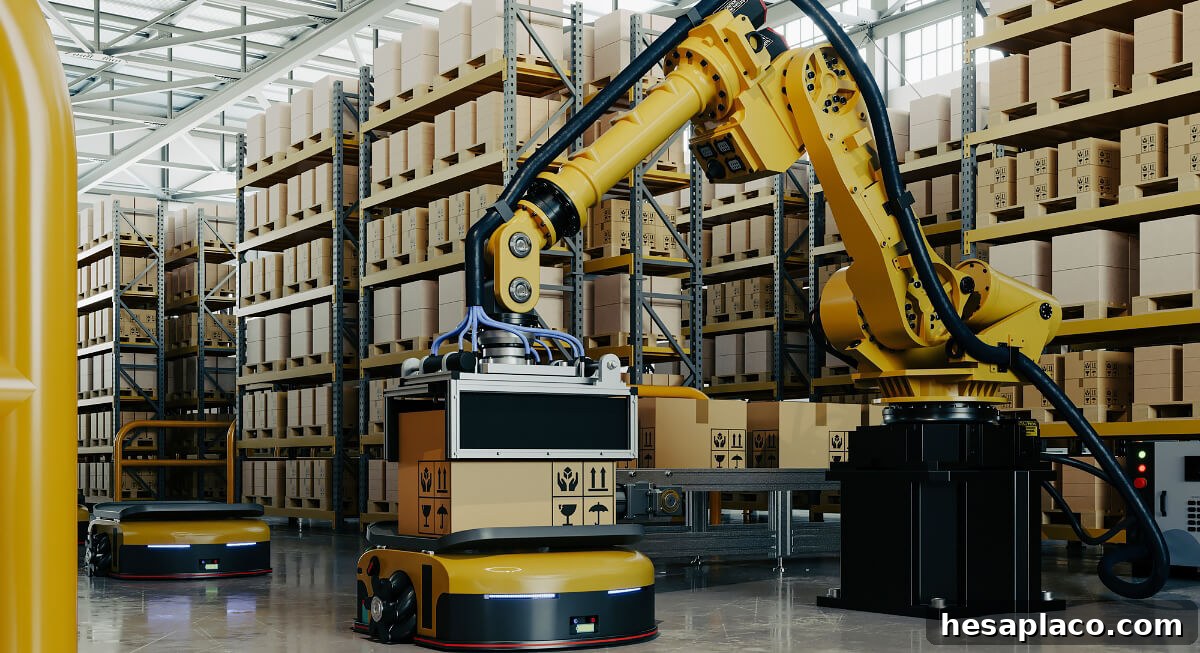
Amazon’s extensive investment in warehouse automation offers a relevant background. The company reportedly operates around one million robots across its fulfillment network, giving Bezos firsthand insights into how automation reshapes labor, productivity, and supply chains. Although Prometheus is a separate venture, many of its conceptual ties—to automation, logistics, and industrial efficiency—mirror systems developed and refined in Amazon’s operations over many years.
Ultimately, Project Prometheus combines ambitious leadership, deep pockets, and a focus on industrial-scale AI that differs from the consumer-facing models dominating headlines. Whether its emphasis on physics-driven simulation and proprietary industrial datasets will yield transformative products remains to be seen, but the company’s rapid rise has already shifted conversations about where AI’s next major breakthroughs might come from.