
On June 22, 1978, the quiet at Robert and Helen Stoddard’s Worcester estate was shattered when thieves forced their way in and stole twelve works of art. Robert Stoddard, a prominent industrialist and former trustee of the Worcester Art Museum, discovered the loss the following morning: pieces by renowned artists such as Camille Pissarro, Pierre-Auguste Renoir, and J.M.W. Turner were missing from his home.
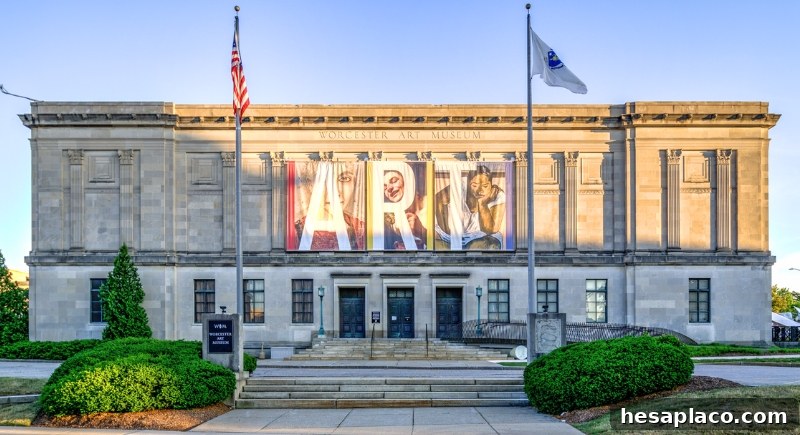
Image via Wikimedia Commons/Kenneth C. Zirkel
Among the missing works, one stood out: Hendrick Avercamp’s “Winter Landscape with Skater and Other Figures,” a finely observed winter scene featuring skaters and a stone arch. Over the years, several stolen pieces were recovered—Pissarro’s “Bassins Duquesne et Berrigny” among them—but the Avercamp remained elusive. The investigation grew cold, with few leads and no arrests, until an unlikely series of events revived the search.
The $18 Pillow: An Unusual Lead
In 2021 the case took an unexpected turn. Warren Fletcher, a nephew of the Stoddards, contacted Cliff Schorer, a well-known art dealer and amateur sleuth who had a track record of recovering stolen works. Schorer concentrated on tracking the Avercamp because of its distinctive visual elements.
While searching online, Schorer noticed a throw pillow listed for just $18 on a marketplace site. The pillow was not a precise reproduction, but its image included fragments of the Avercamp painting—the skaters, the stone bridge, and a gray winter sky—enough to draw his attention and spark further investigation.
Following the Image Trail
Schorer used reverse image search to trace the pillow’s design back to a color reproduction of the painting on Pixels.com. That reproduction had been photographed years after the theft, suggesting the painting had surfaced publicly. Schorer’s research led him to a 1995 art fair in the Netherlands where the work had been shown and properly attributed to Hendrick Avercamp, although the purchaser at the time believed it to be by Avercamp’s student and nephew, Barent.
From there, Schorer tracked the sale to a Dutch art dealer and then to the dealer’s descendants. He contacted them, and the Stoddard family—supported by legal counsel—formally requested the painting’s return. After a year of negotiations, the family’s persistence paid off: in May 2025 the Avercamp was returned, ending nearly five decades of uncertainty.
A Homecoming and New Resolve
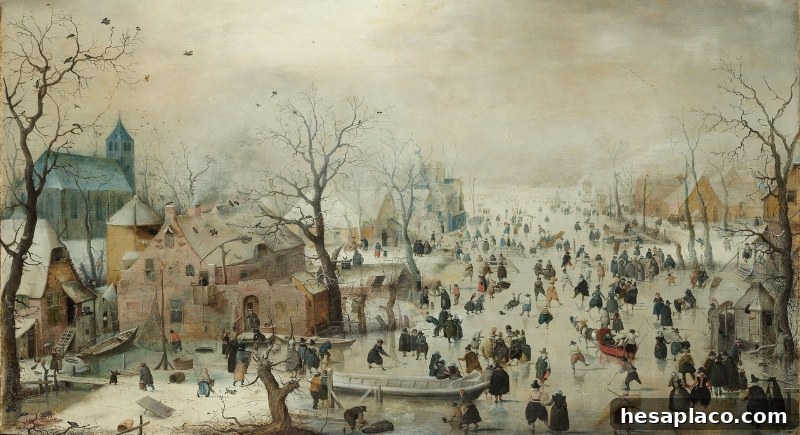
Image via Wikimedia Commons/Rijksmuseum
The Avercamp has been returned to the Worcester Art Museum, where it will go on display. Matthias Waschek, the Jean and Myles McDonough Director of the museum, described the recovery as “profoundly meaningful,” noting that it restores a long-lost work to the family that once owned it and underscores the enduring connection between the Stoddard family and the museum.
For Cliff Schorer, the recovery represents a personal victory, but he’s not finished. He continues to pursue the remaining missing works from the Stoddard collection, convinced that other pieces from the theft may still be found. The case illustrates how persistence, modern research tools, and unexpected clues can converge to reunite families and institutions with pieces of their cultural heritage.