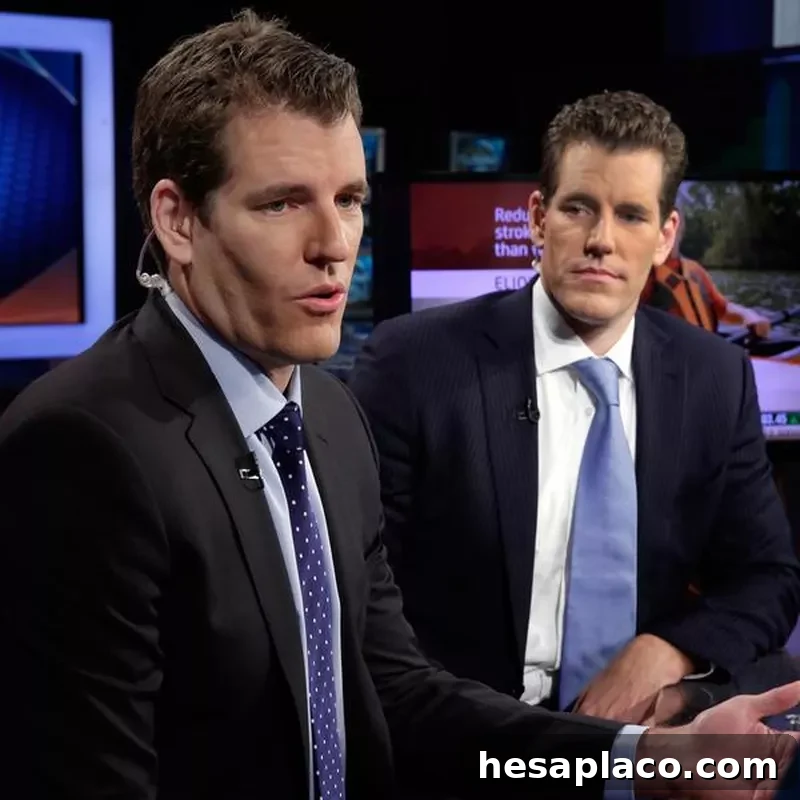
People don’t often speak kindly of the Winklevoss twins.
Larry Summers, who served as Harvard’s president while the identical pair attended, once called them “a**holes.” The twins were depicted in the film The Social Network as burly, privileged figures lacking social grace. Nicknames like “Twinklevoss,” “Winklevii,” and “Testosterone Titans” have followed them for years.
That caricature may fit some perceptions of Cameron and Tyler Winklevoss, but it isn’t the whole story. Today they are widely known as crypto billionaires, though their financial fortunes face new pressures as markets and regulators change.
Starting With Advantages

Kevork Djansezian / AP Images
Physically imposing and intensely competitive, the twins grew up in Greenwich, Connecticut, a wealthy New York suburb. They launched a local sculling club, rowed for Harvard and later Oxford, and competed for the U.S. Olympic team. Their public image is a blend of polished style and relentless drive: they are rarely seen apart, often finishing each other’s sentences and projecting an unflinching confidence.
Seed Financing
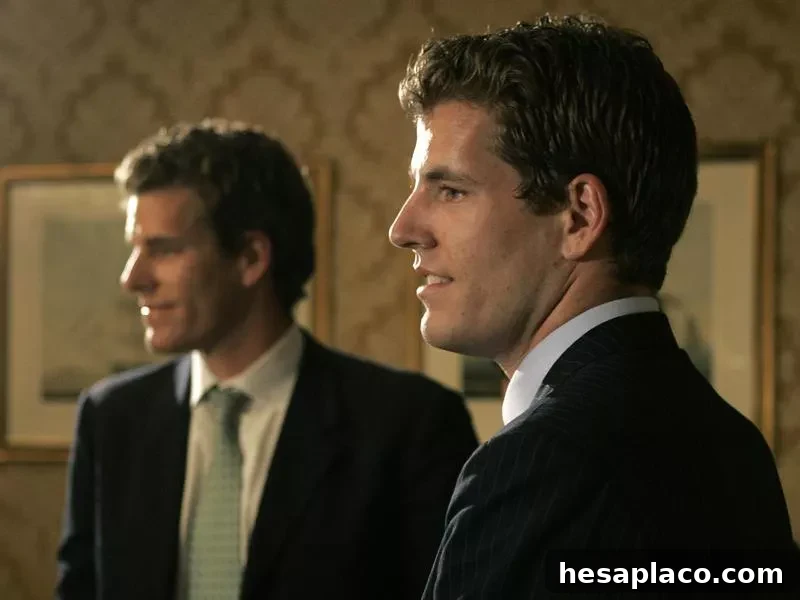
Charles Krupa / AP
The settlement they secured over the founding of Facebook provided a significant windfall, but it was strategic investing—especially in cryptocurrency—that built their wealth. Although Bitcoin has experienced major price swings, the coin remains worth far more than when they began buying in earnest.
Silver Spoons and Golden Oars
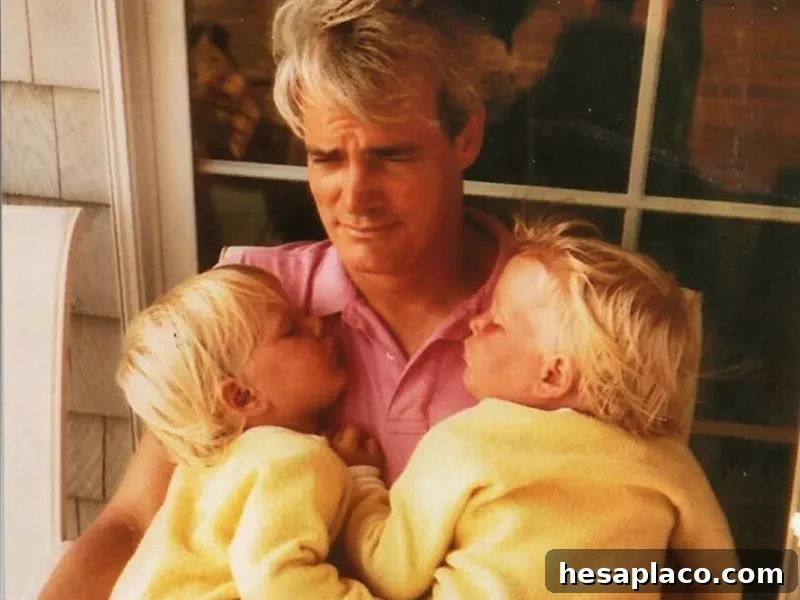
Cameron and Tyler were born in Southampton, New York, on August 21, 1981, to Howard and Carol Winklevoss. They describe humble elements in their family background, yet their upbringing included enrollment at elite private schools—Greenwich Country Day and later the Brunswick School—where they discovered and pursued rowing competitively.
Their mother, Carol, played an instrumental role getting them into the sport; when Greenwich lacked a rowing club she drove them to Saugatuck and later helped them establish a rowing program at Brunswick.
Off to Harvard, then Oxford
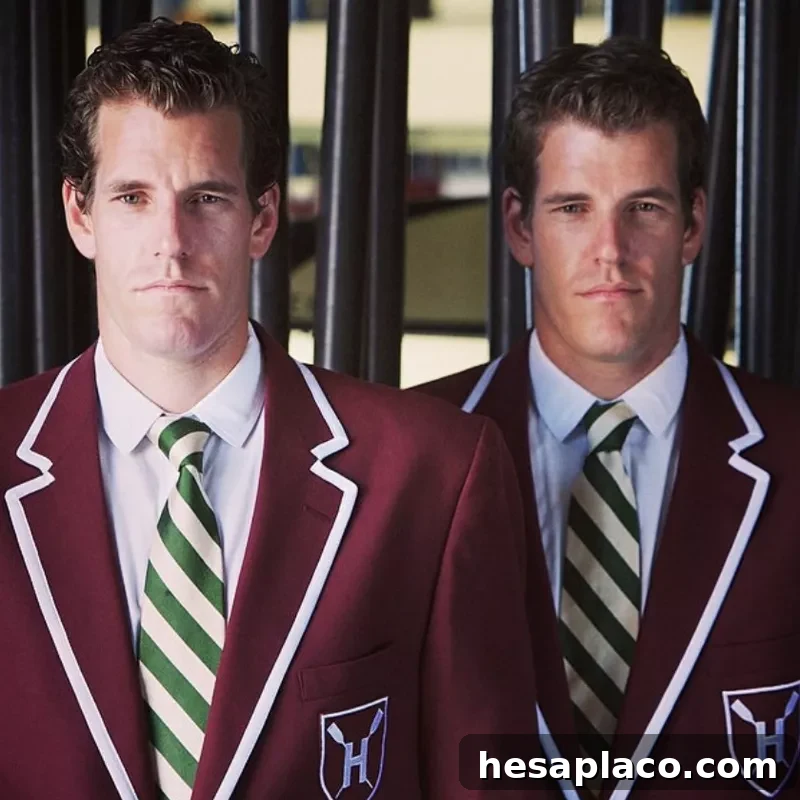
The twins enrolled at Harvard in 2000 and graduated in 2004 with business degrees, participating actively in rowing and campus social clubs. They later attended Oxford’s Said Business School, earning MBAs in 2010, and continued rowing at a high level, competing in the Oxford-Cambridge Boat Race.
It was at Harvard where they met Mark Zuckerberg and began developing what they called HarvardConnection, a concept that would set the stage for a long and contentious legal battle.
How the Twins Met Zuckerberg

Paul Sakuma / AP Photo
In late 2002 Cameron and Tyler, along with Divya Narendra, developed a plan for a social network called HarvardConnection. They recruited programmers and, in early 2003, brought Mark Zuckerberg on board to help build the platform. Zuckerberg, already known for campus projects like Facemash, initially communicated interest but then shifted focus to his own site, Facebook.
That shift—combined with email and messaging exchanges—led the Winklevosses to accuse Zuckerberg of stalling on their project while developing a competing platform. Facebook launched in early 2004 and quickly outpaced ConnectU, the site the twins later completed.
The Facebook Lawsuit
Charles Krupa / AP Photo
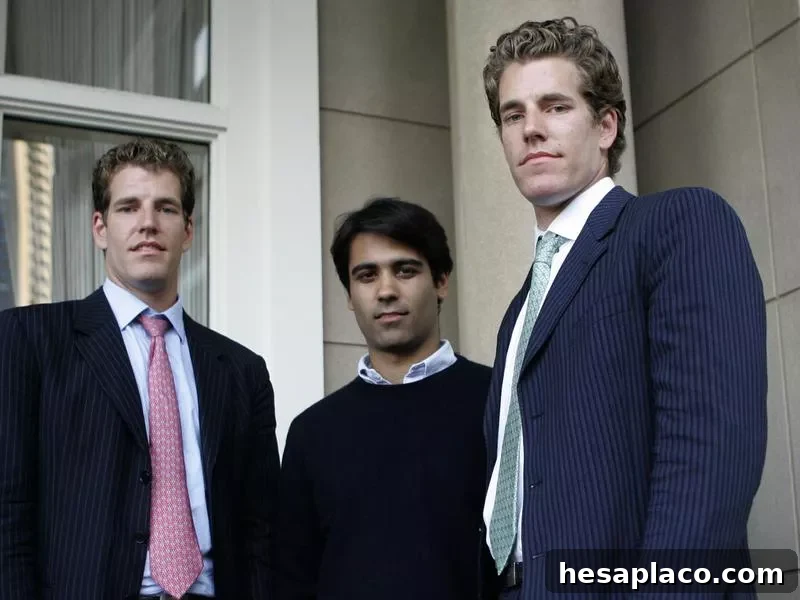
By September 2004 ConnectU sued Facebook for breaching an alleged agreement and stealing the idea. Zuckerberg and Facebook countersued. After years of litigation, the parties settled in 2008 for $65 million in cash and stock—an amount that the Winklevosses later challenged as undervalued. Courts ultimately denied their further challenges, and the dispute closed, allowing the twins to focus on other pursuits.
Olympic Hopefuls

Gregory Bull / AP Photo
In 2008 the twins competed as rowers in the Beijing Olympics. They reached the final in the coxless pair event and finished sixth. The experience was a capstone of their athletic ambitions and, by their own account, helped them persevere through the prolonged legal battles surrounding Facebook. They considered trying for subsequent Games but gradually shifted focus to business and investment activities.
Time to Decompress

Mel Evans / AP Photo
After 2008 they took time to regroup and explore new opportunities. Within a few years they discovered Bitcoin, a turning point that would define their financial trajectory.
No Risk, No Reward

The brothers first learned about Bitcoin while vacationing on Ibiza. Intrigued by the technology and its potential, they began accumulating coins. By 2013 they disclosed owning roughly $11 million in Bitcoin, purchased when prices were around $10 per coin. Over the following years, as Bitcoin’s value surged and then fluctuated, the twins continued to hold and expand their crypto positions.
The Rise of Bitcoin
AP Photo
By late 2017, Bitcoin reached mainstream visibility and elevated the Winklevosses to billionaire status on paper as prices peaked. Even after subsequent downturns, their early purchases yielded stunning returns. They also diversified within crypto, holding significant amounts of Ethereum and other assets, and in 2015 launched the Gemini exchange to serve as a regulated platform for trading digital currencies.
Banking on Crypto
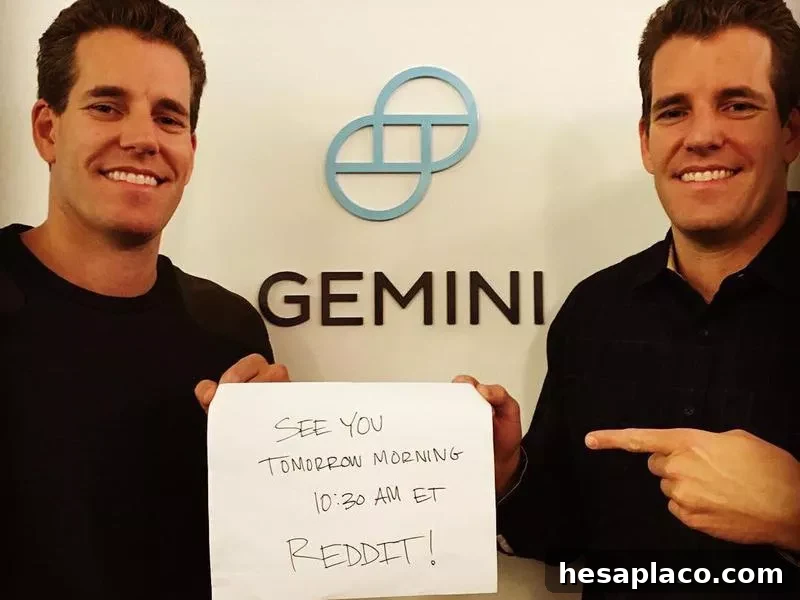
Rather than cashing out and diversifying into conventional assets, the twins doubled down on digital currency. They became majority owners of Gemini and invested in other crypto companies and infrastructure. Their early insistence on taking part of their Facebook settlement in stock options also helped grow their financial base when Facebook went public.
A Different View of Cryptocurrency
Craig Ruttle / AP Photo
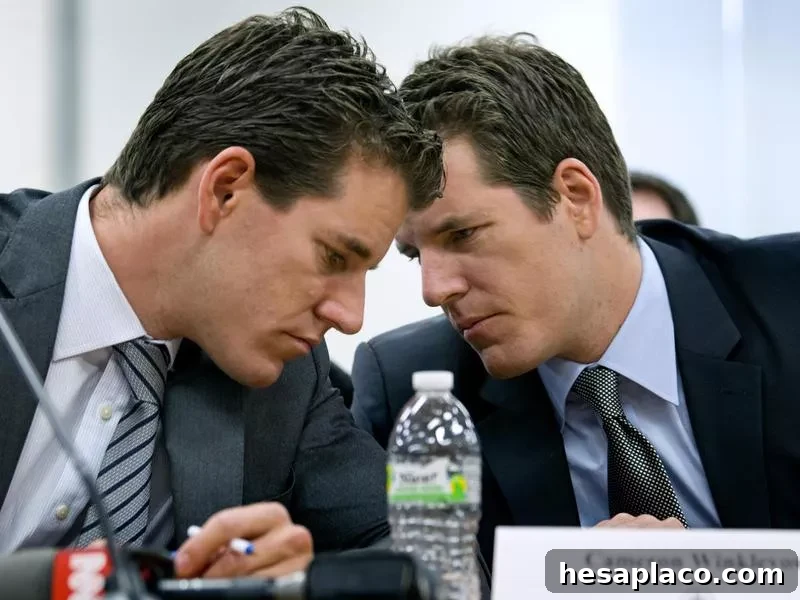
Unlike many bitcoin purists who oppose oversight, the Winklevosses have embraced regulation as a path to mainstream adoption. Their goal with Gemini was to create a licensed, trustworthy venue where institutional and retail investors could safely trade crypto within a regulated framework. They also pursued a Bitcoin exchange-traded fund (ETF), an idea rejected by the U.S. Securities and Exchange Commission in 2017.
Where’s Their Wallet?
Securing private crypto keys is critical. The twins devised a backup system for their holdings and applied similar custodial principles to Gemini’s protection of customer assets. In one reported approach, they printed their private keys, divided them into pieces, and stored those pieces in multiple safe-deposit boxes, reducing the risk of total loss.
Mirror Image
Evan Agostini / Invision/AP
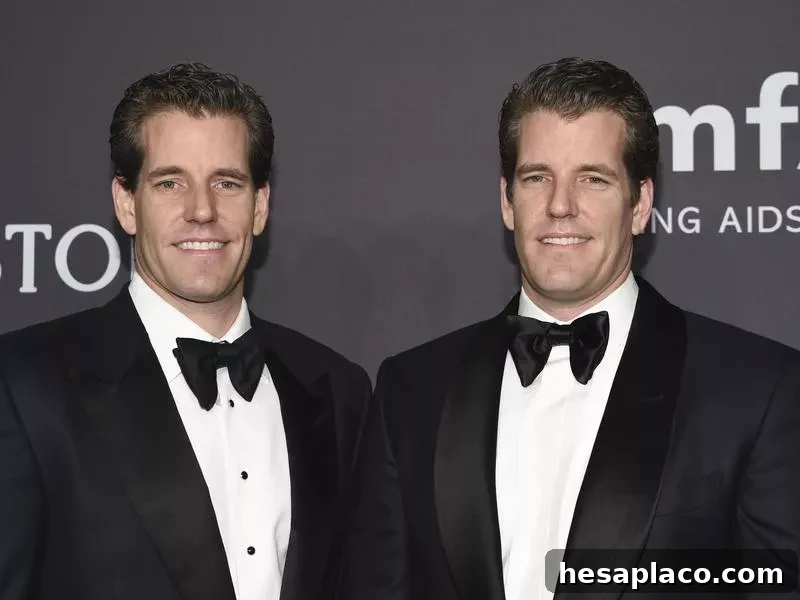
Cameron and Tyler live and work closely together, sharing many aspects of life. Small differences exist—Cameron is left-handed, Tyler is right-handed—but their public personas, business interests, and routines remain tightly aligned.
The Winklevosses Today
Evan Agostini / AGOEV/AP Photo
The twins have invested in companies across the crypto ecosystem, including mining firms, wallet providers, and major exchanges. Gemini remains a central part of their business, and they have adjusted operations to meet shifting global regulations, including establishing a European base in Dublin. As regulatory scrutiny of cryptocurrencies intensifies, Gemini and related firms have faced investigations and legal challenges; for example, U.S. regulators charged Gemini and Genesis in early 2023 over allegations related to sales of crypto assets, and those matters remain under regulatory review.
From elite rowing lanes to high-stakes litigation and pioneering roles in cryptocurrency markets, the Winklevoss twins’ story is one of ambition, controversy, and reinvention. Their continued influence on crypto markets and regulatory conversations ensures they remain prominent figures in the evolving digital-asset landscape.