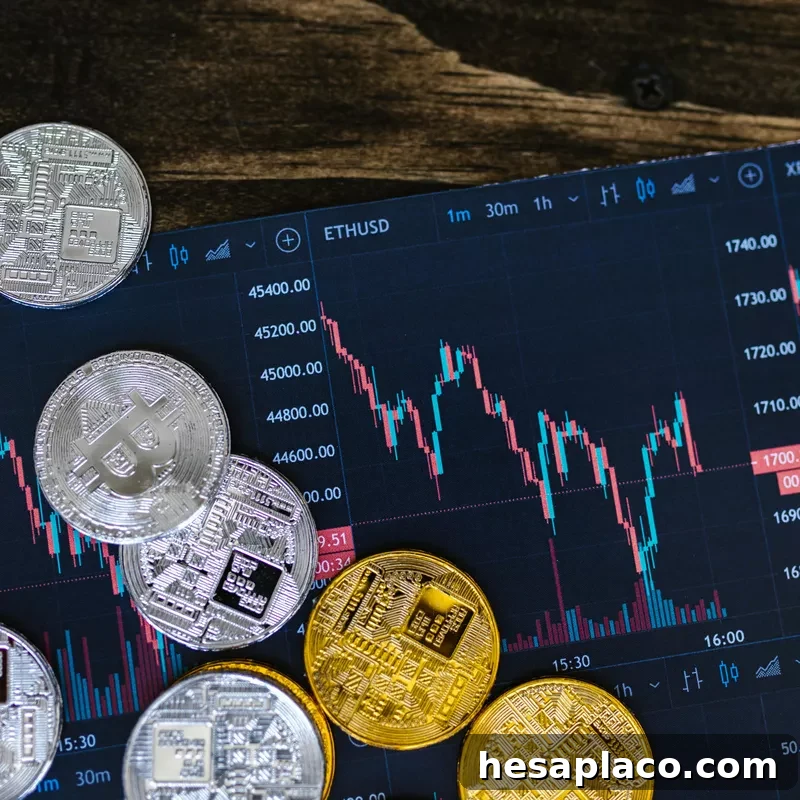
The trading world offers a wide range of opportunities, from traditional stock markets to newer digital assets such as cryptocurrencies. For aspiring day traders, one of the most important decisions is whether to focus on stocks or trade crypto. Both markets can offer profit potential, but they differ significantly in volatility, liquidity, accessibility, regulation, research methods, and tax treatment.
Choosing between day trading stocks and cryptocurrencies should depend on your financial goals, risk tolerance, available time, trading experience, and preferred strategy. Below is a clear comparison of the key factors to consider before deciding which market may be better suited to your approach.
1. Volatility and Risk Management

Richard Drew / AP Photo
Volatility is one of the biggest differences between day trading stocks and day trading cryptocurrency. Stocks, especially shares of large and established companies, have traditionally been viewed as more stable than most digital assets. While stock prices can move sharply, particularly around earnings reports, economic data releases, or major company news, they are generally considered less unpredictable than crypto prices.
For beginners, stocks may be easier to approach because many well-known companies have long trading histories, public financial statements, and established analyst coverage. Blue-chip stocks are often associated with greater stability, which can make risk management more straightforward for traders who prefer a more conservative style.
Cryptocurrencies, on the other hand, are known for rapid and sometimes extreme price swings. This volatility can create opportunities for short-term traders, but it can also lead to substantial losses if positions are not managed carefully. A cryptocurrency can rise or fall dramatically within a short period, and sudden market sentiment shifts can happen at any time.
Successful crypto day trading requires strict risk management, including position sizing, stop-loss planning, and emotional discipline. Traders must be prepared for fast-moving markets and should never risk more than they can afford to lose. Even in stock trading, however, risk cannot be ignored. Market events, earnings surprises, and broader economic uncertainty can all cause significant price movements.
2. Liquidity and Trade Execution

Oleksandr Shatyrov / Getty Images
Liquidity is essential for day traders because it determines how easily an asset can be bought or sold without causing a major price change. In highly liquid markets, traders can usually enter and exit positions quickly, with tighter spreads and fewer execution problems.
Established stocks, especially those listed on major exchanges and traded in large volumes, often provide strong liquidity. This makes it easier for traders to place orders and close positions efficiently. High liquidity can also reduce slippage, which occurs when a trade is executed at a different price than expected.
Cryptocurrency liquidity varies widely depending on the asset. Bitcoin and Ethereum typically have high trading volumes and are among the most liquid digital currencies. However, smaller and lesser-known altcoins may have much lower liquidity. In these markets, traders may experience wider spreads, slower execution, and greater price impact when entering or exiting trades.
Because liquidity can change quickly in crypto markets, day traders need to monitor volume, order books, and market conditions carefully. The ability to move in and out of positions is directly connected to liquidity, making it one of the most important practical considerations when comparing stocks and cryptocurrencies.
3. Market Hours and Accessibility

tdub303 / Getty Images
Stock trading usually requires a brokerage account, which may involve identity verification, fees, and compliance with financial regulations. However, online brokerages have made stock trading more accessible than in the past, allowing many traders to open accounts and manage trades through web platforms or mobile apps.
One important limitation of stock trading is market hours. Traditional stock exchanges operate during set times, which vary by country and region. For example, the New York Stock Exchange is open from 9:30 a.m. to 4 p.m. Eastern Time on regular trading days. Some brokers also offer pre-market and after-hours trading, but liquidity may be lower during those sessions.
Cryptocurrency markets are different because they operate 24 hours a day, seven days a week. This around-the-clock access can be attractive to day traders who want flexibility or who live in time zones that make traditional stock market hours inconvenient. Crypto trading generally requires an exchange account, an internet connection, and a way to fund the account.
The constant availability of crypto markets can be both an advantage and a challenge. While traders have more flexibility, they may also feel pressure to monitor the market continuously. Without clear opening and closing times, maintaining discipline and avoiding overtrading becomes especially important.
4. News and Analysis Tools

Richard Drew / AP Photo
Stocks are often analyzed through both fundamental and technical methods. Fundamental analysis may include reviewing a company’s earnings reports, balance sheet, revenue growth, management updates, industry conditions, and broader economic factors. Public companies are required to disclose certain information, which is then reviewed by investors, analysts, and financial media.
This flow of information can help traders make better-informed decisions. However, it also means that stock prices often react quickly to new developments. By the time news becomes widely available, much of its impact may already be reflected in the market price.
The cryptocurrency market operates differently. News can influence prices strongly, but information is often less standardized and may spread through social media, online communities, exchange announcements, and market speculation. This can make crypto markets more reactive and sometimes more difficult to evaluate using traditional research methods.
Many crypto day traders rely heavily on technical analysis, chart patterns, volume indicators, momentum tools, and market sentiment. Crypto-specific tools and indicators continue to develop as the market matures. Whether trading stocks or digital currencies, traders should use reliable information, test their strategies, and avoid making decisions based solely on hype or emotion.
5. Regulatory Environment and Security

inkoly / Getty Images
Stock markets are heavily regulated in many countries. These regulations are designed to support transparency, protect investors, and reduce fraudulent activity. Public companies must follow disclosure rules, and brokerages are typically subject to oversight by financial authorities.
This regulated structure can provide a level of confidence for traders, although it does not remove market risk. Stock traders can still lose money, and regulations cannot guarantee profitable outcomes. However, the framework around traditional securities markets is more established than the regulatory environment for cryptocurrencies.
The cryptocurrency market is newer and less consistently regulated across different jurisdictions. Some countries have begun developing clearer rules, while others still have uncertain or limited oversight. This lack of consistency can expose traders to greater risks, including scams, exchange failures, market manipulation, and security breaches.
Crypto traders must be especially careful when choosing exchanges and storing assets. Using secure wallets, enabling account protections, and conducting thorough research are important steps. Security should be treated as a core part of any crypto trading strategy, not as an afterthought.
6. Tax Implications

Nikada / Getty Images
Taxes are another important consideration for day traders. Stock trading profits are often subject to capital gains taxes, although the exact rules depend on the country or region. Tax rates may also vary based on how long an asset is held and whether trading is classified as short-term or long-term activity.
Cryptocurrency taxation can be more complex because rules are still evolving in many places. Some countries treat cryptocurrencies as property, while others may classify them differently. Crypto traders may need to track every transaction, including purchases, sales, conversions, and transfers, depending on local tax laws.
Understanding tax obligations is essential before actively trading either stocks or cryptocurrencies. Poor record-keeping can create problems later, especially for traders who make frequent transactions. Consulting a qualified tax professional may be helpful for anyone unsure about how trading activity is treated in their jurisdiction.
In conclusion, the decision between day trading stocks and day trading cryptocurrencies depends on your personal goals, risk tolerance, market knowledge, and trading style. Stocks may appeal to traders who prefer a more established and regulated market with structured trading hours and extensive financial data. Cryptocurrencies may attract traders who want 24/7 market access, high volatility, and exposure to digital assets.
Both markets offer opportunities, but both also involve significant risks. Aspiring day traders should study each market carefully, practice disciplined risk management, and avoid entering trades without a clear plan. By understanding the differences between stocks and crypto, traders can make more informed decisions and choose the market that best fits their strategy.
This article is a partnership with Bazoom.