
How Much a High School Diploma Is Worth in Every State
As the cost of higher education continues to rise, many Americans are asking whether a college degree is worth the debt that often comes with it. The answer depends on personal goals, location, career path and financial circumstances. One thing remains clear, however: earning a high school diploma still matters.
Across the United States, people who complete high school earn a median annual salary of $42,835, while those without a diploma earn about $29,800. That difference can shape long-term financial stability, job options and lifetime earnings. Still, the value of a high school diploma is not the same everywhere. According to data cited by the U.S. Career Institute, the wage gap between high school graduates and non-graduates varies significantly by state.
Below is a state-by-state ranking of how much a high school diploma is worth, starting with the places where the salary advantage is smallest and ending with the places where finishing high school has the greatest financial impact.
51. Iowa
Heather Comparetto / Far & Wide
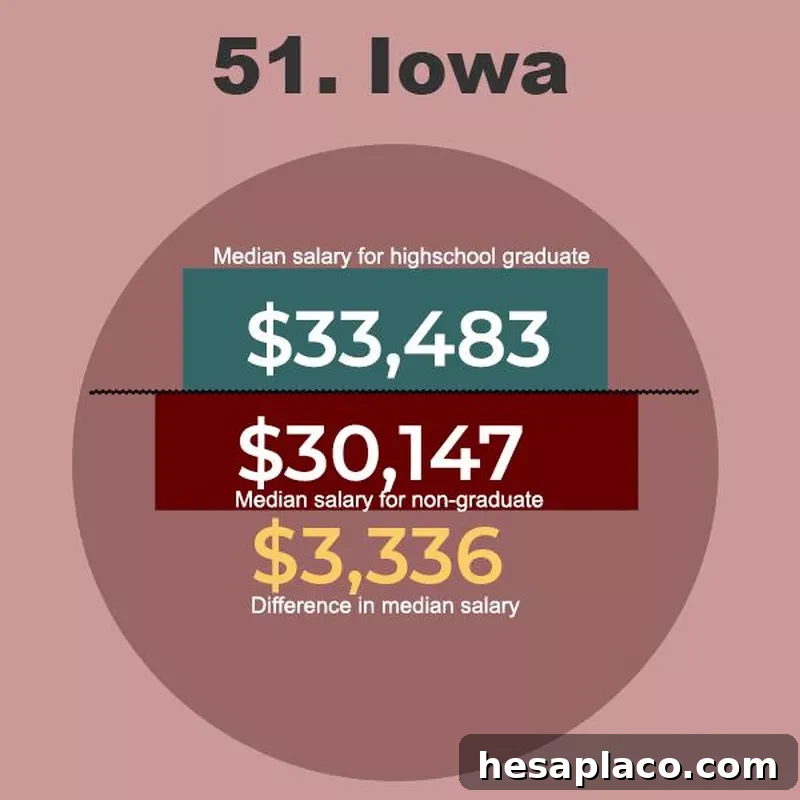
Iowa has one of the highest high school graduation rates in the country, with about 94 percent of residents receiving a diploma. Even so, it has the smallest salary gap between graduates and non-graduates. High school graduates earn only about $3,336 more per year. Interestingly, Iowa non-graduates still earn relatively well compared with those in many other states, with a median salary of about $30,147.
50. Nebraska
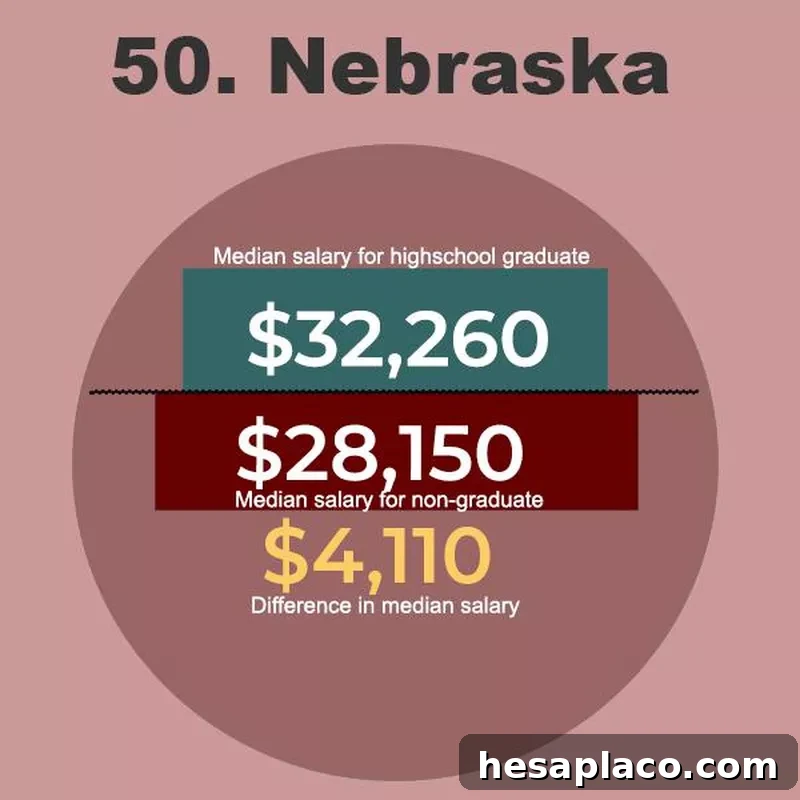
Nebraska also has a strong high school graduation rate, at around 92 percent. The state’s economy is closely tied to manufacturing and agriculture, two sectors where hands-on experience can matter as much as formal education. Because many jobs in these fields do not always require a diploma, non-graduates in Nebraska face a smaller wage penalty than workers in many other states.
49. Idaho
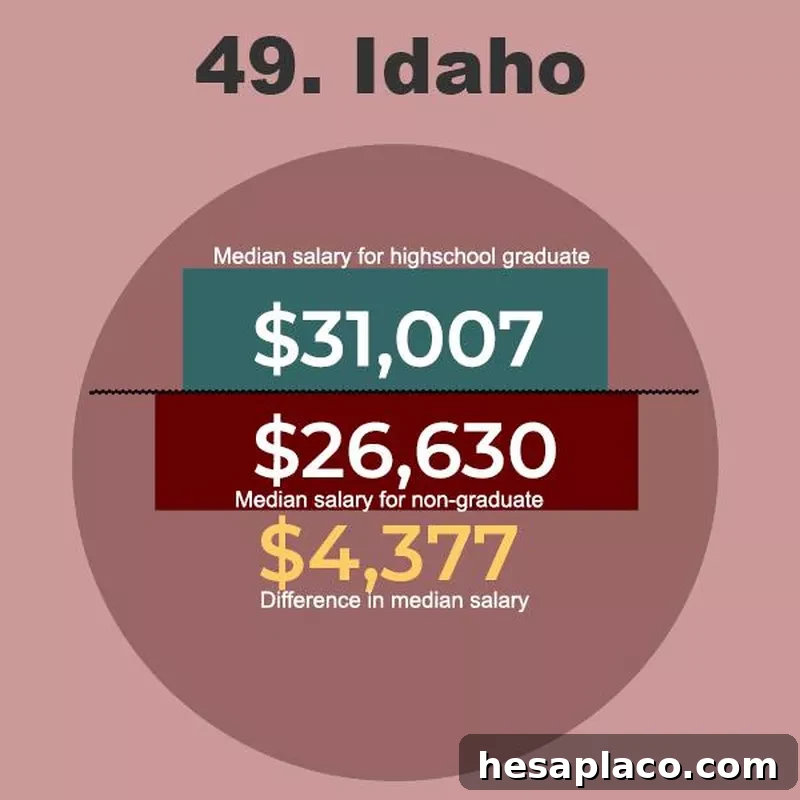
Idaho has a lower high school graduation rate than some nearby states, at about 87 percent. Agriculture remains important, but real estate, manufacturing and retail trade are also major parts of the economy. These industries can offer entry-level jobs that do not always require a high school diploma, which helps explain why the wage difference is relatively modest.
48. Nevada
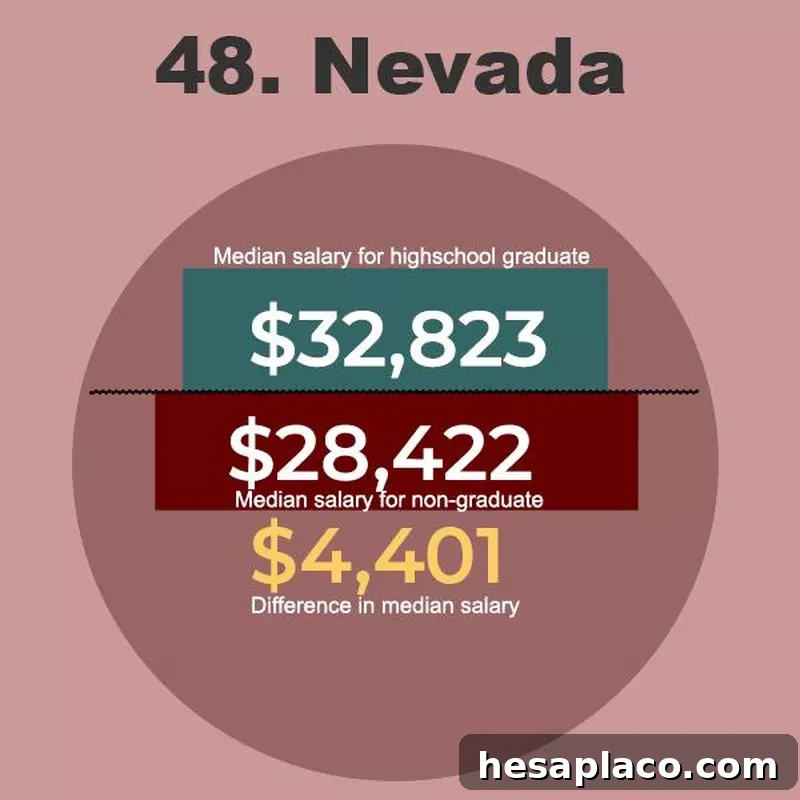
Nevada’s economy is strongly shaped by tourism, hospitality and gaming, especially in Las Vegas. These industries create many service jobs, some of which do not require a diploma. The state’s graduation rate is about 87 percent. While non-graduates can find work in tourism, manufacturing and mining, higher-paying sectors such as aerospace, information technology and health typically require more education.
47. Kansas
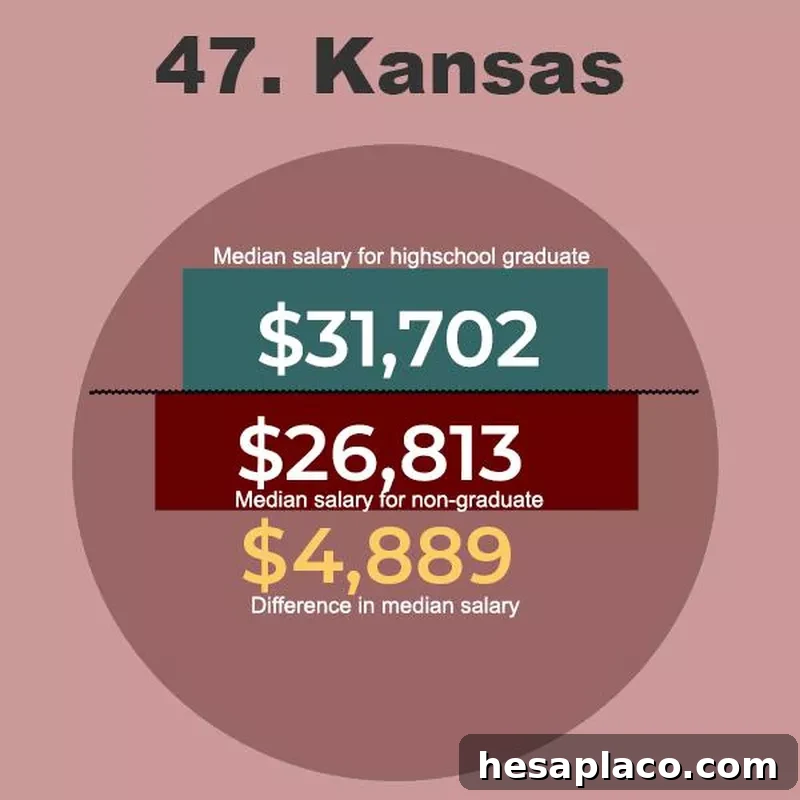
In Kansas, the wage gap between high school graduates and non-graduates is about $4,889 per year. That difference is meaningful, but it is still lower than in most states. The state’s mix of agriculture, manufacturing and local service work provides opportunities for people without a diploma, though finishing high school still improves earning potential.
46. Washington, D.C.
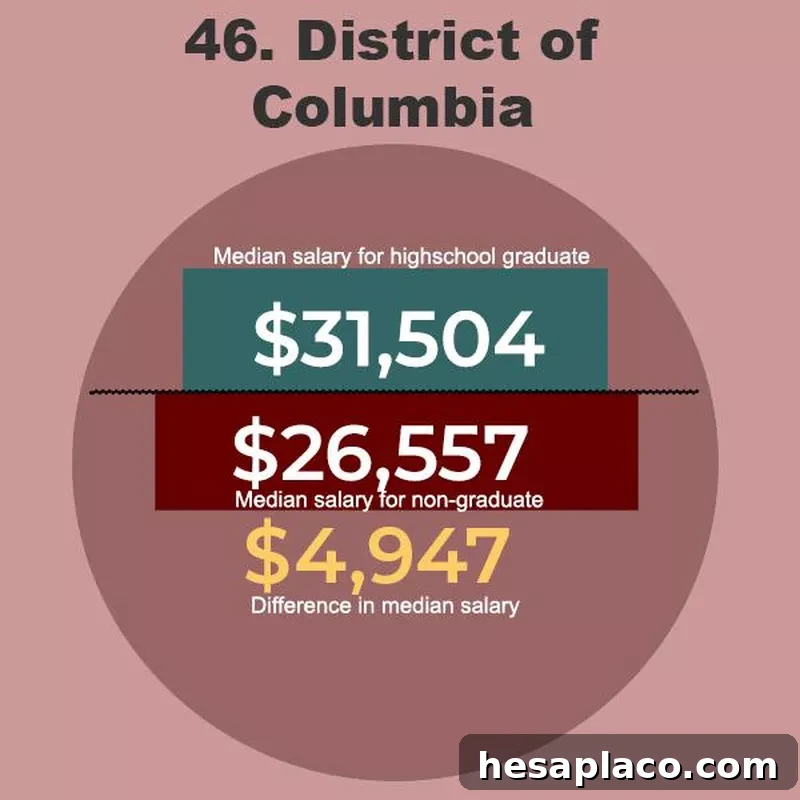
Washington, D.C., is one of the most educated places in the country, with a large share of residents holding advanced degrees. Yet the district’s broad economy, including service, tourism and hospitality jobs, does provide work for people without diplomas. The challenge is affordability. A median non-graduate salary of about $26,557 is difficult to live on in one of the nation’s most expensive urban areas.
45. Arkansas
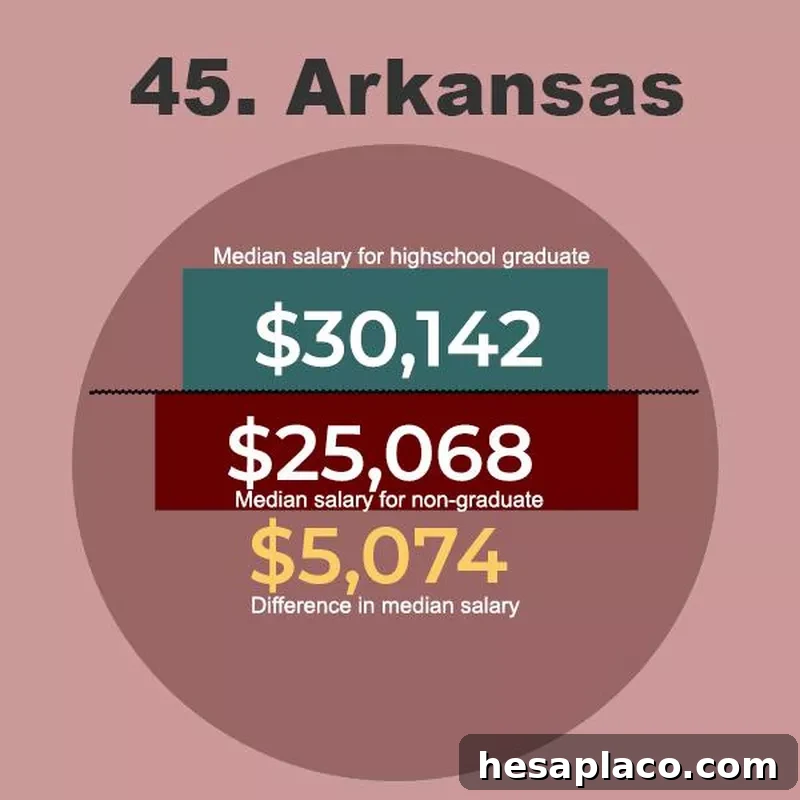
Agriculture is a major part of Arkansas’ economy, which means some workers can enter the labor force without completing high school. Still, earning a diploma makes a noticeable difference. High school graduates in Arkansas earn about $5,074 more per year than non-graduates, a gap that can significantly affect household stability over time.
44. Vermont
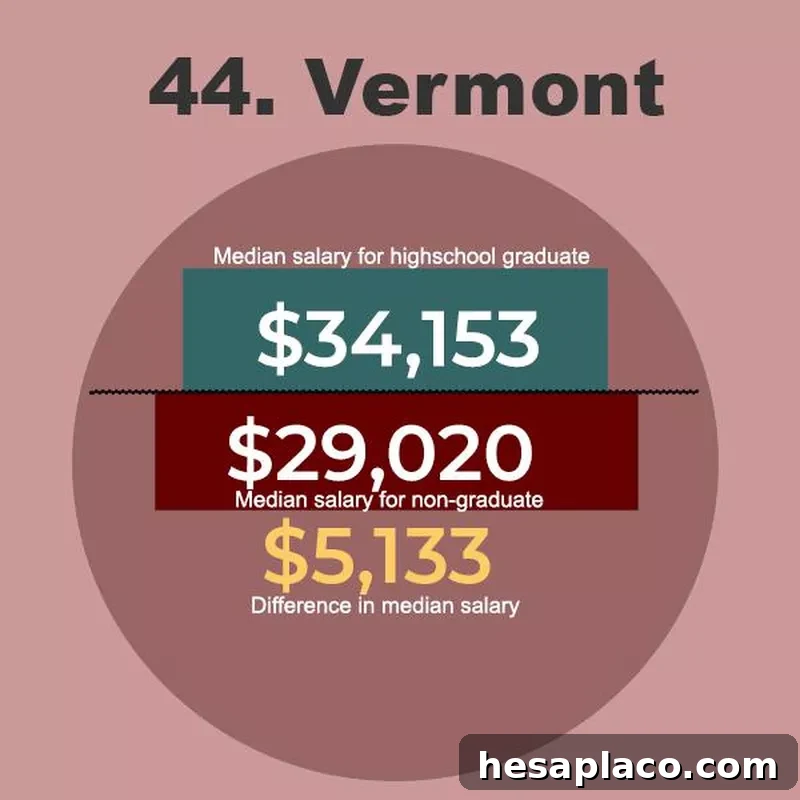
Vermont’s economy is supported by healthcare, manufacturing and real estate, along with the state’s natural resources and aging population. Hospitals are major employers. While professional medical roles require extensive education, healthcare facilities also create service, maintenance and custodial positions that may be available to workers without a high school diploma.
43. South Dakota
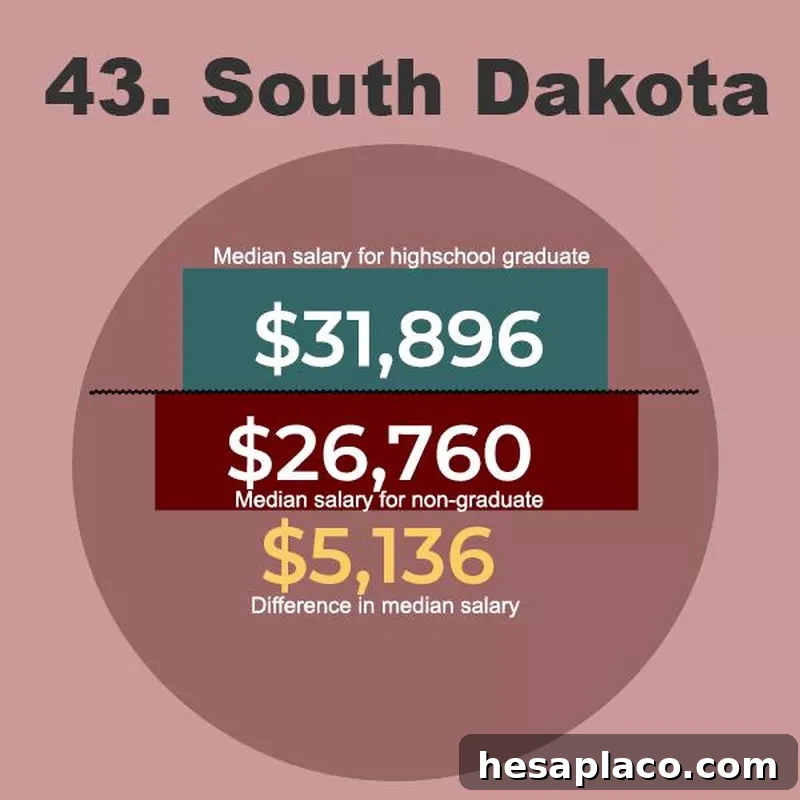
South Dakota is a largely rural state where agriculture, forestry, fishing and hunting play important roles. Many of these jobs value practical experience and physical skill over classroom credentials. Even so, about 90 percent of residents graduate from high school, and a diploma still provides better long-term access to higher-paying work.
42. Oregon
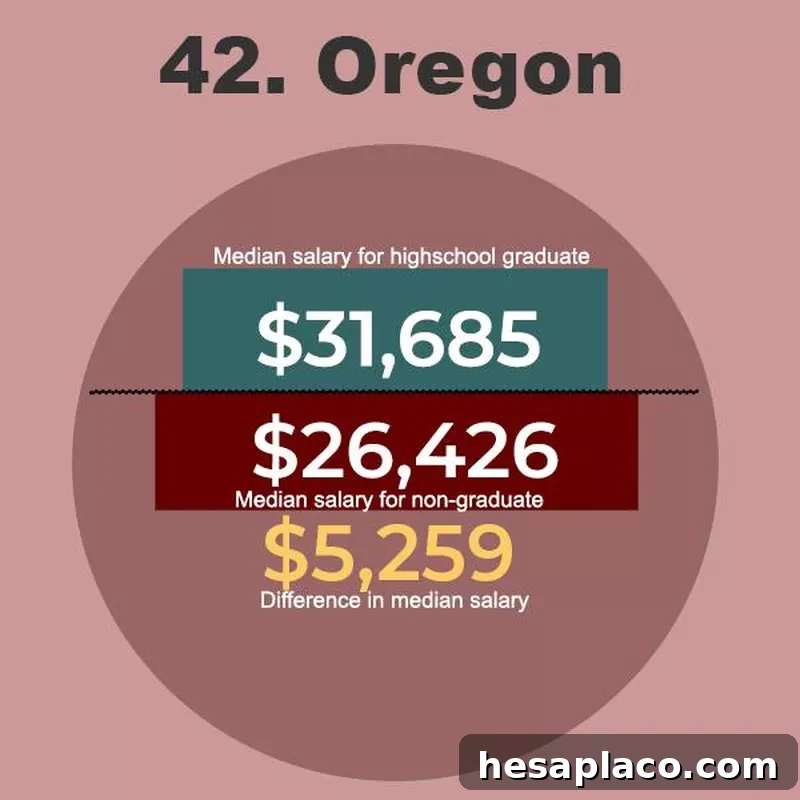
Oregon’s economy includes real estate, manufacturing and healthcare, all of which can offer some opportunities to workers without diplomas. Outside expensive urban areas such as Portland, the cost of living may also be more manageable. Still, a high school diploma remains an important advantage for anyone seeking stable wages and better career mobility.
41. Utah
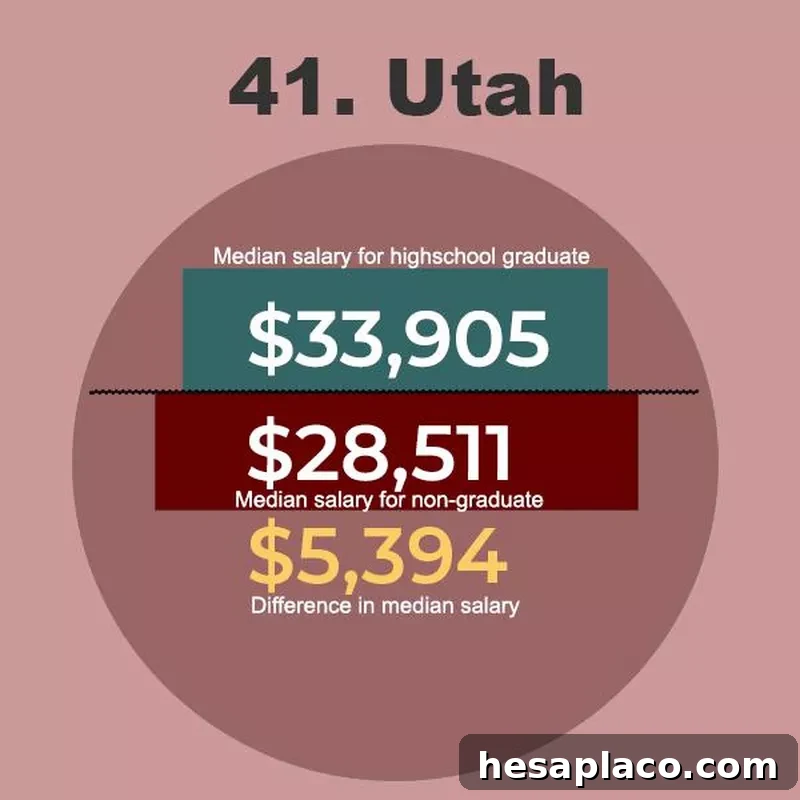
Utah follows a familiar pattern among states with smaller diploma wage gaps: it has a relatively high graduation rate and an economy supported by manufacturing and real estate. Outdoor recreation also creates jobs for guides and tourism workers. These roles may depend more on experience and local knowledge than formal education, although a diploma still improves prospects.
40. Wisconsin
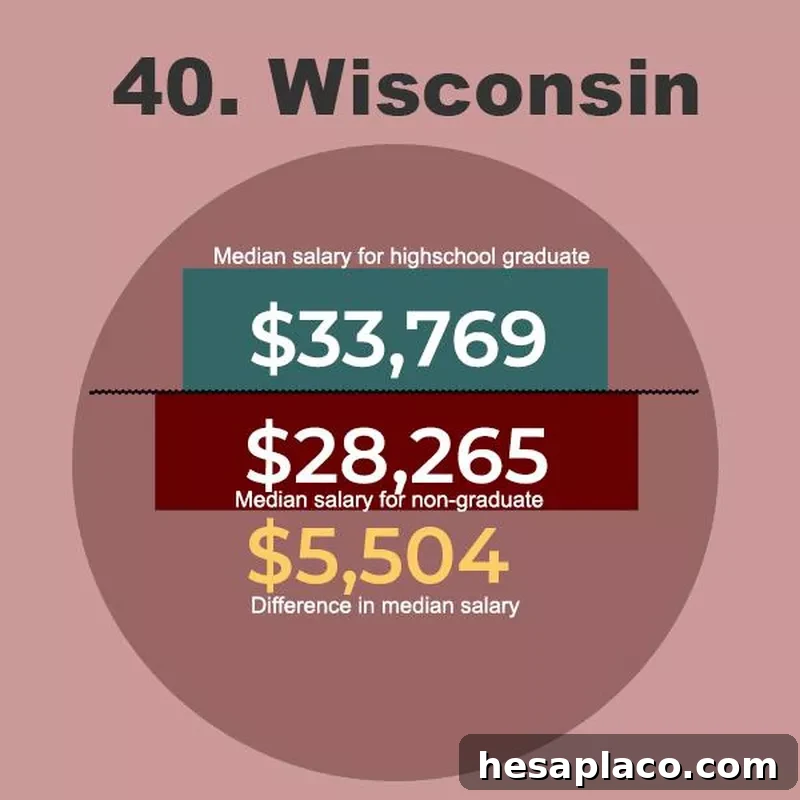
Wisconsin is known for agriculture, especially dairy production. Many residents work on family farms or in industrial agriculture, where experience can carry significant weight. Manufacturing and tourism are also major employers. While non-graduates can find work in these sectors, finishing high school generally leads to more stable and better-paid opportunities.
39. Montana
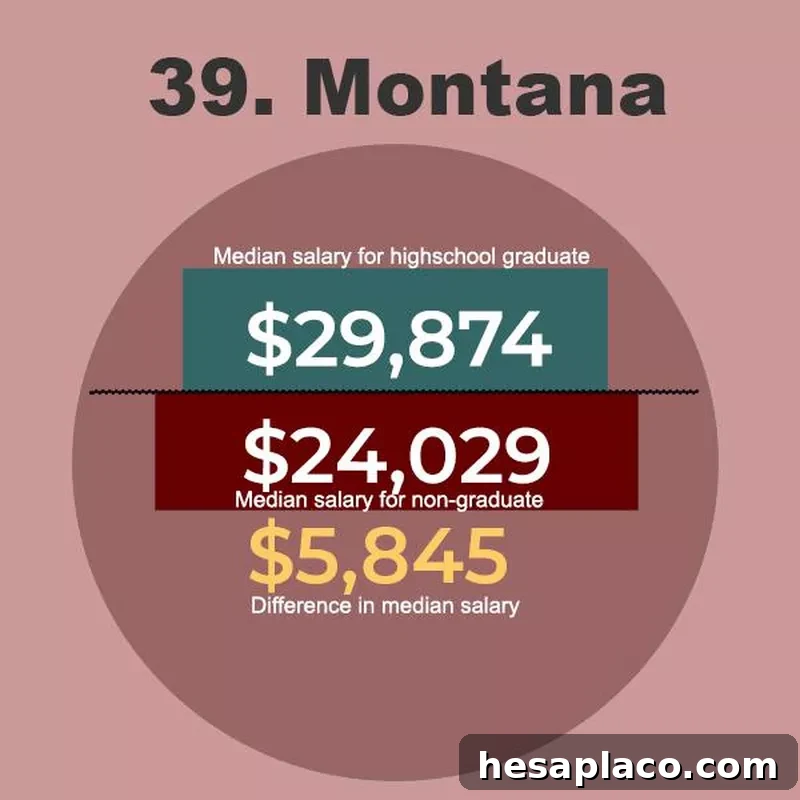
Montana has a high school graduation rate of about 88 percent. Non-graduates may find jobs on working farms, ranches, tourist-focused dude ranches, mines and manufacturing sites. The real estate market has also grown in recent years, increasing demand for agents. In Montana, a real estate license requires education and training, but applicants do not necessarily need a high school diploma.
38. Colorado
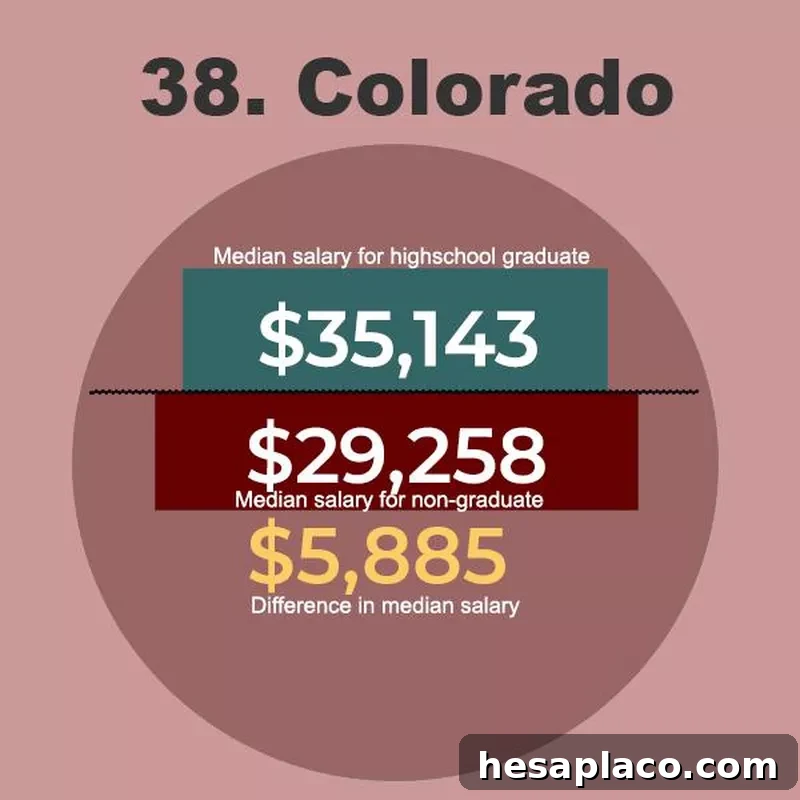
Although cities such as Boulder and Denver can be expensive, much of Colorado includes ranches, farms, mines and outdoor recreation areas. Non-graduates may struggle to afford life in urban centers, but rural areas and tourism jobs can provide options. Outdoor guiding, hospitality and seasonal work often require practical knowledge more than academic credentials.
37. North Dakota
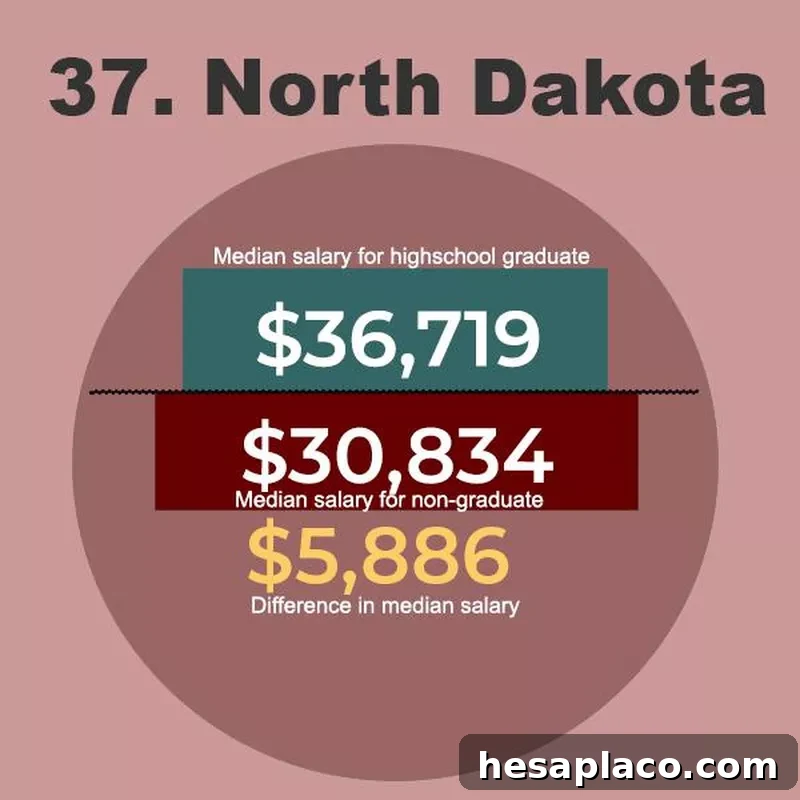
North Dakota offers one of the highest median salaries for non-graduates, at about $30,834. However, high school graduates still earn around $5,885 more per year. Agriculture and mining are central to the state economy, creating jobs for workers with practical skills while still rewarding those who complete high school.
36. Oklahoma
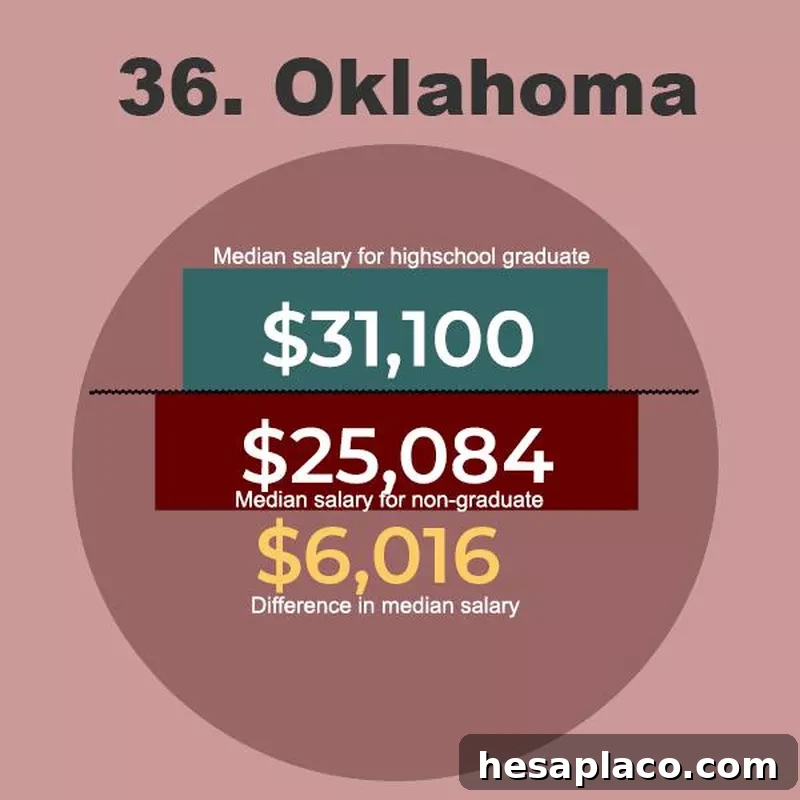
Oklahoma is largely rural, but its economy is not based only on agriculture. The state is also involved in specialized industries, including aircraft maintenance, repair and overhaul. While non-graduates may find work, the value of a diploma becomes more apparent here, with the annual wage gap rising above $6,000.
35. Maine
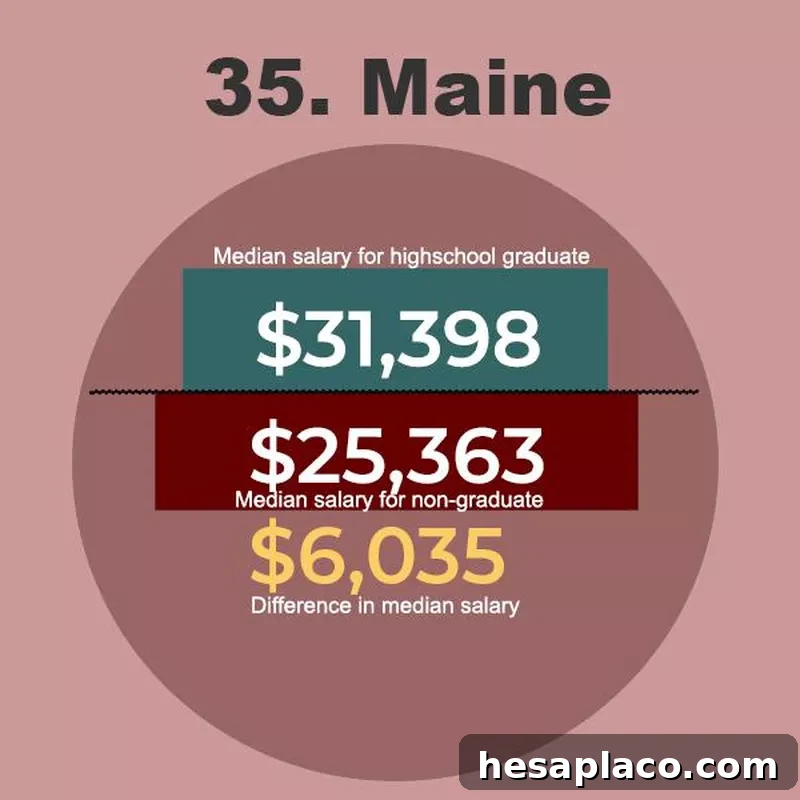
About 85 percent of Maine residents graduate from high school. The state is famous for its rugged coastline, but it also has extensive farmland and rural communities. Workers without diplomas may find opportunities in agriculture, fishing and local services, while those seeking jobs in coastal towns or cities generally benefit from completing high school.
34. Georgia
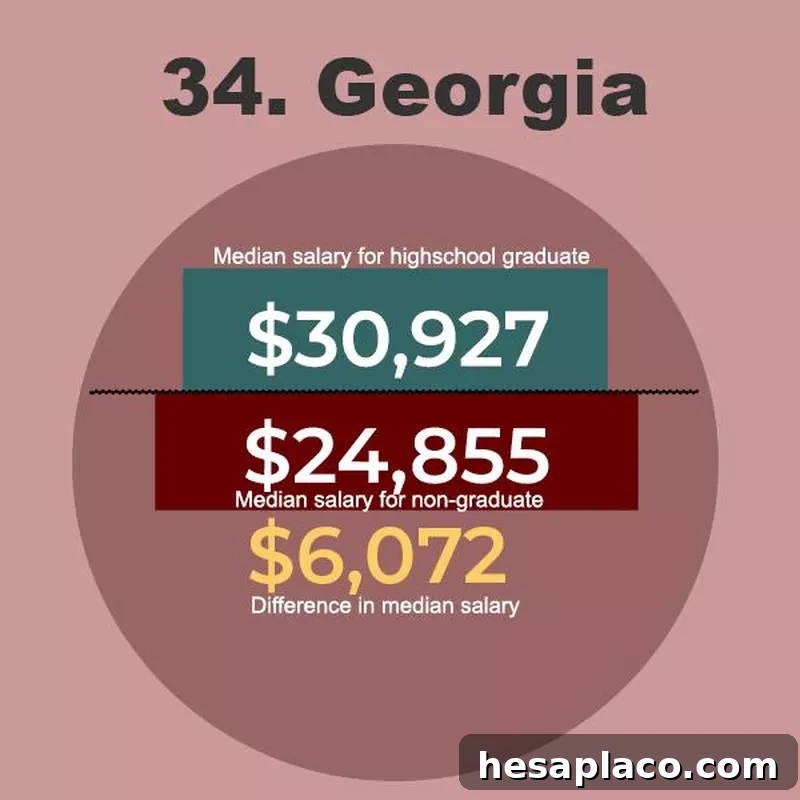
Georgia has a diverse economy anchored by Atlanta, a major center for business, healthcare, pharmaceuticals, tourism and film. Much of the state remains rural, so agriculture and outdoor-related work also provide opportunities. A diploma is not always required for entry-level jobs, but it gives workers a better chance at higher pay and career advancement.
33. Florida
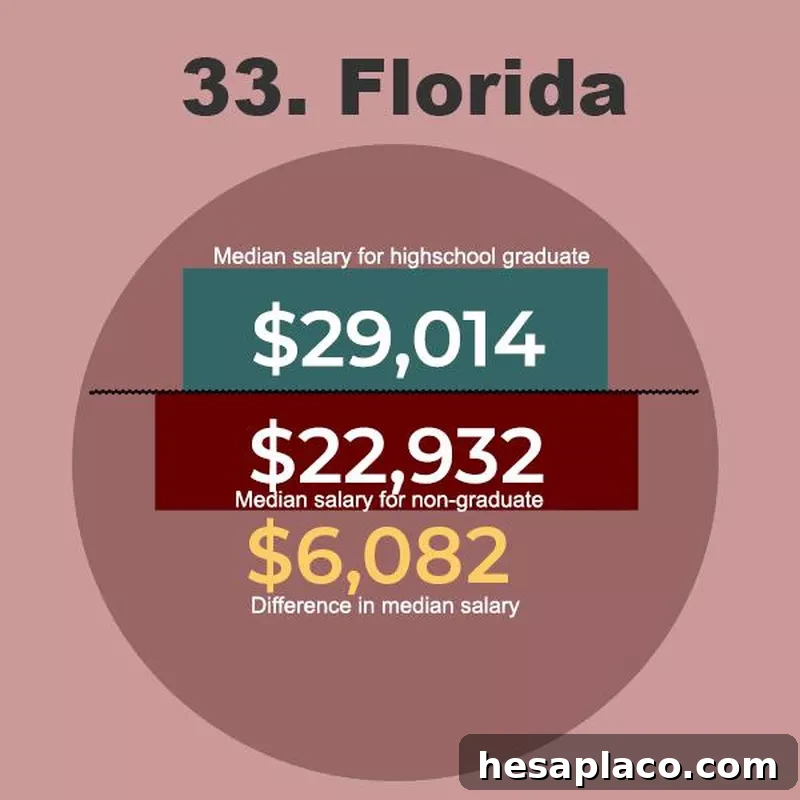
Florida’s hospitality, tourism, service, fishing and farming sectors create many jobs for people without a diploma. The state also has a large immigrant population, including workers whose education may not be recognized in the United States. Non-graduates earn about $22,932 per year, which may be manageable in some areas but is difficult in major cities.
32. Illinois
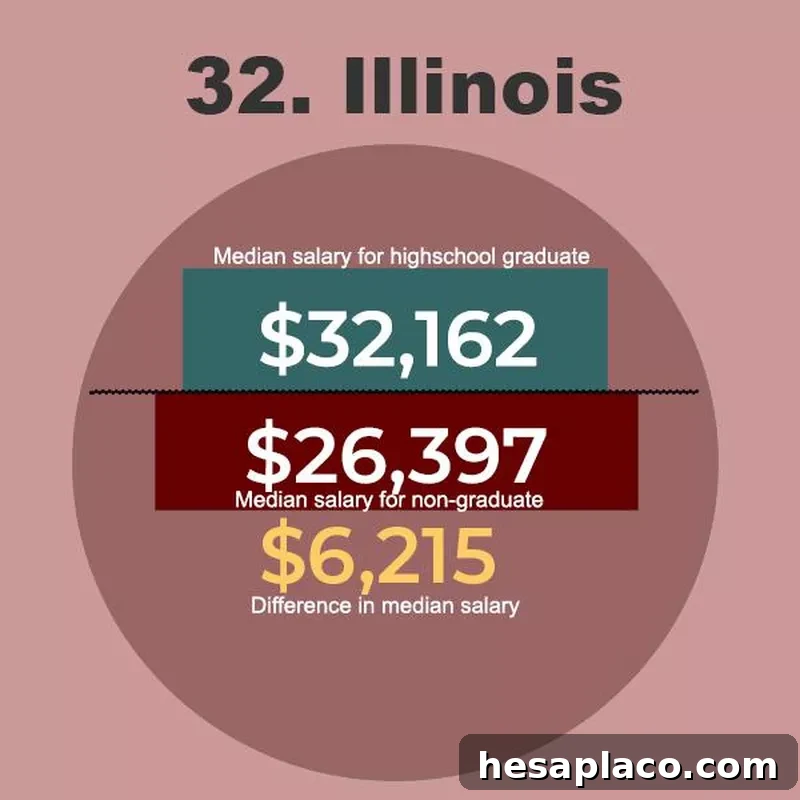
Chicago gives Illinois a much more diverse economy than its rural areas alone would suggest. Finance, insurance, manufacturing and real estate are all important sectors. Some jobs are available to workers without diplomas, especially in manufacturing and services, but the state remains fairly average in terms of opportunities for non-graduates.
31. North Carolina
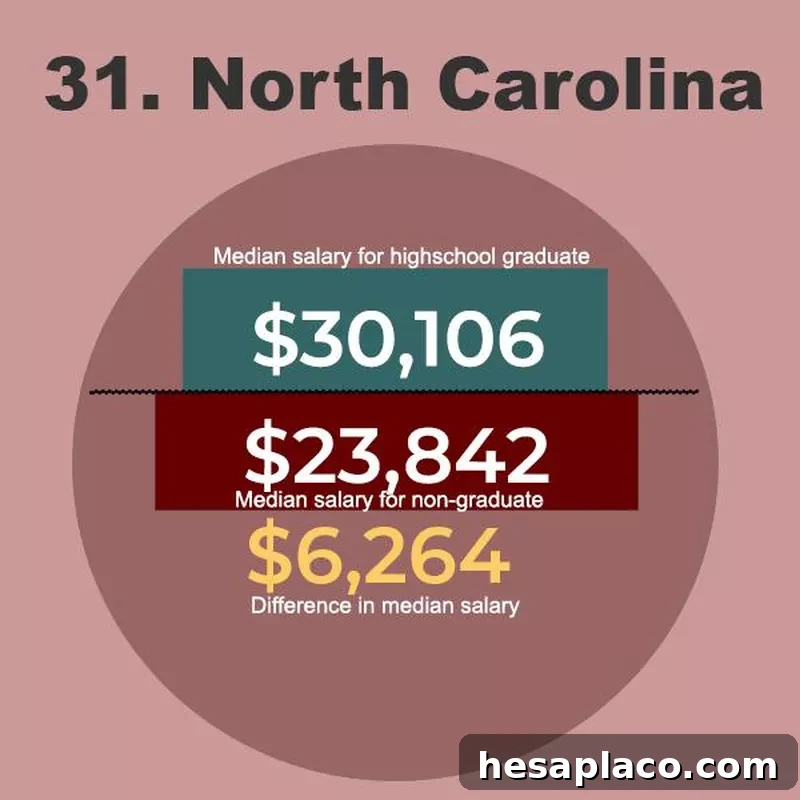
North Carolina has an impressively varied economy. The Research Triangle supports education, research and information technology, where non-graduates are at a clear disadvantage. At the same time, agriculture, automotive work and tourism remain important, giving residents without diplomas some access to jobs that depend more on experience than formal education.
30. Missouri
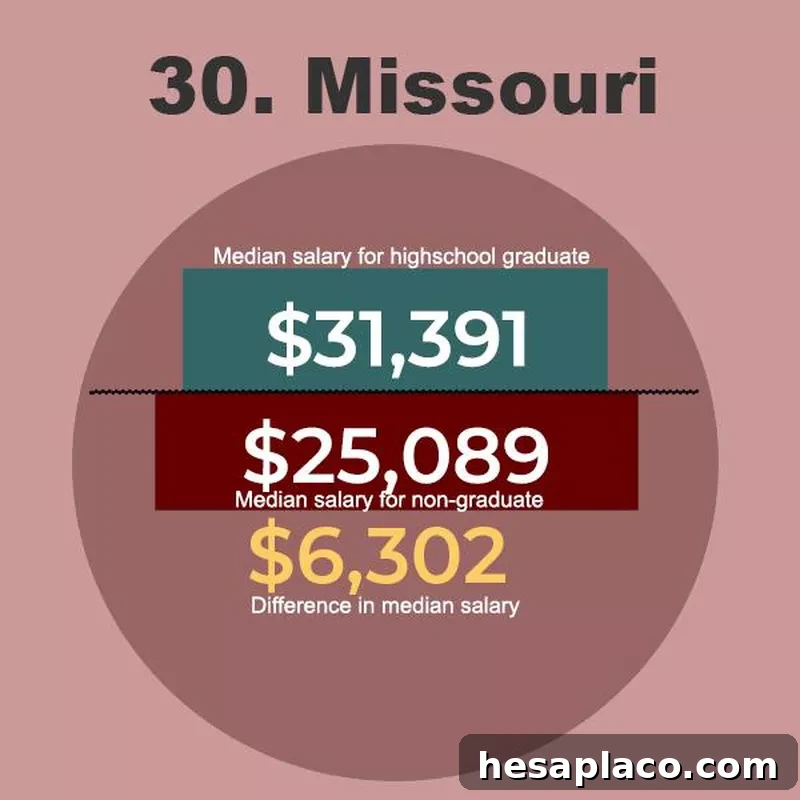
Missouri’s economy is closely tied to the automobile industry, including manufacturing and dealerships. Hospitals and insurance providers are also major employers. Non-graduates earn a median salary of about $25,089, which may allow a single person to live modestly in some parts of the state, though a diploma still provides a noticeable advantage.
29. Texas
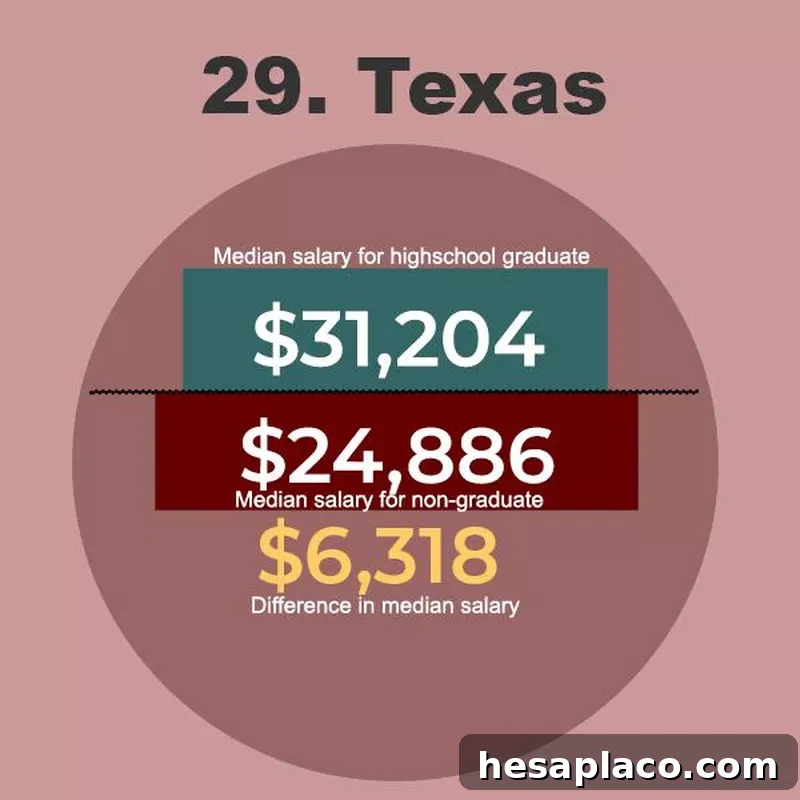
Texas has one of the highest high school graduation rates in the nation, at around 94 percent. Its economy is broad, ranging from ranching and agriculture to major metropolitan job markets in Houston, Dallas and Austin. This diversity helps non-graduates find work, though the growing presence of skilled workers and technology companies increases competition for better-paying positions.
28. Arizona
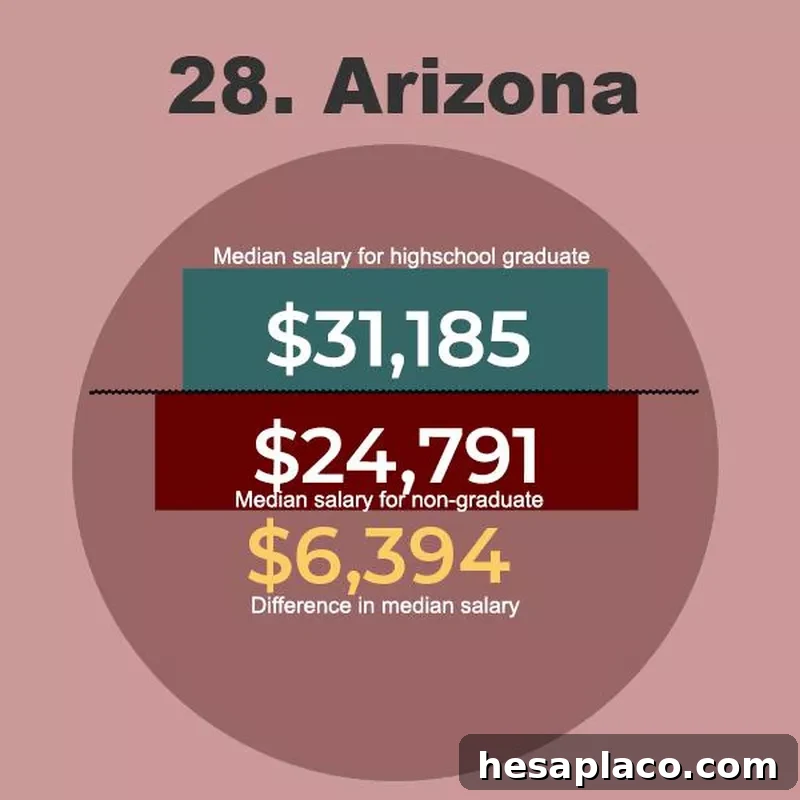
Arizona has the lowest high school graduation rate in the ranking, with about 74 percent of residents holding a diploma. Agriculture, mining, tourism and retail provide jobs for people without one. However, many of these jobs offer limited benefits and modest wages, making it difficult for non-graduates to achieve long-term financial security.
27. Indiana
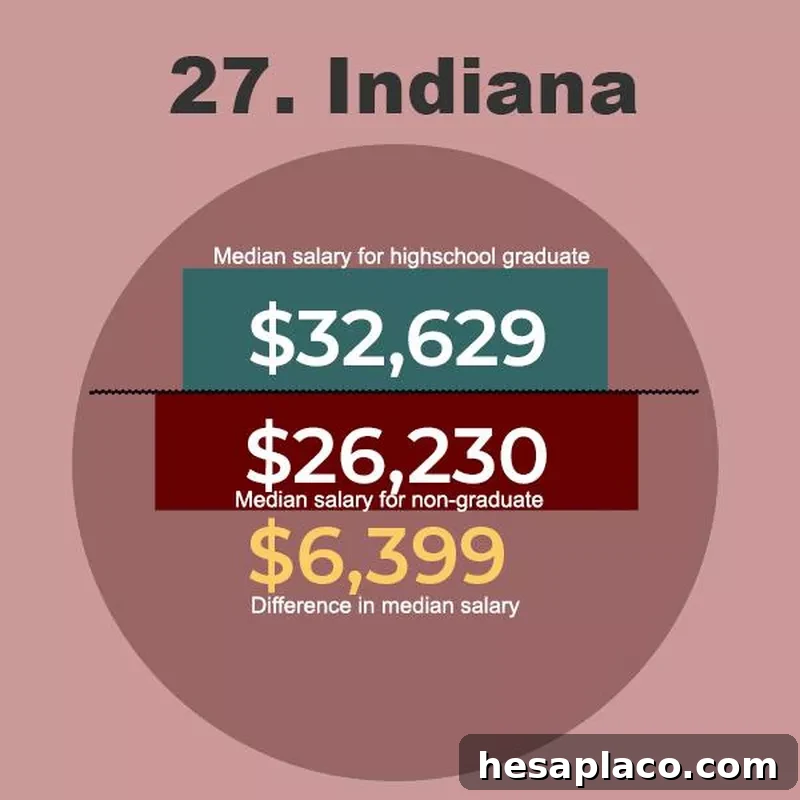
Indiana’s economy resembles that of several other Midwestern states, with real estate, manufacturing and healthcare playing major roles. The annual wage gap between high school graduates and non-graduates is about $6,400, close to the differences seen in neighboring states. A diploma remains a practical investment for better earnings.
26. Hawaii
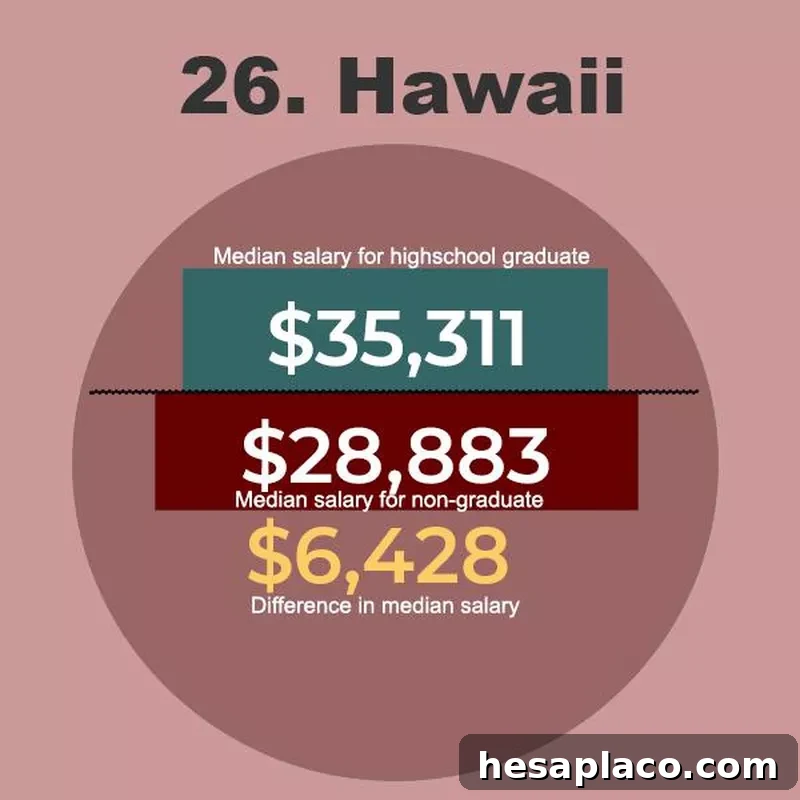
Tourism is Hawaii’s largest industry, and many jobs are concentrated in service and hospitality. Only about 81 percent of residents have a high school diploma. Some people enter the workforce early because a diploma is not always required for tourism jobs, but the state’s high cost of living makes the median non-graduate salary of about $28,883 difficult to live on.
25. New Mexico
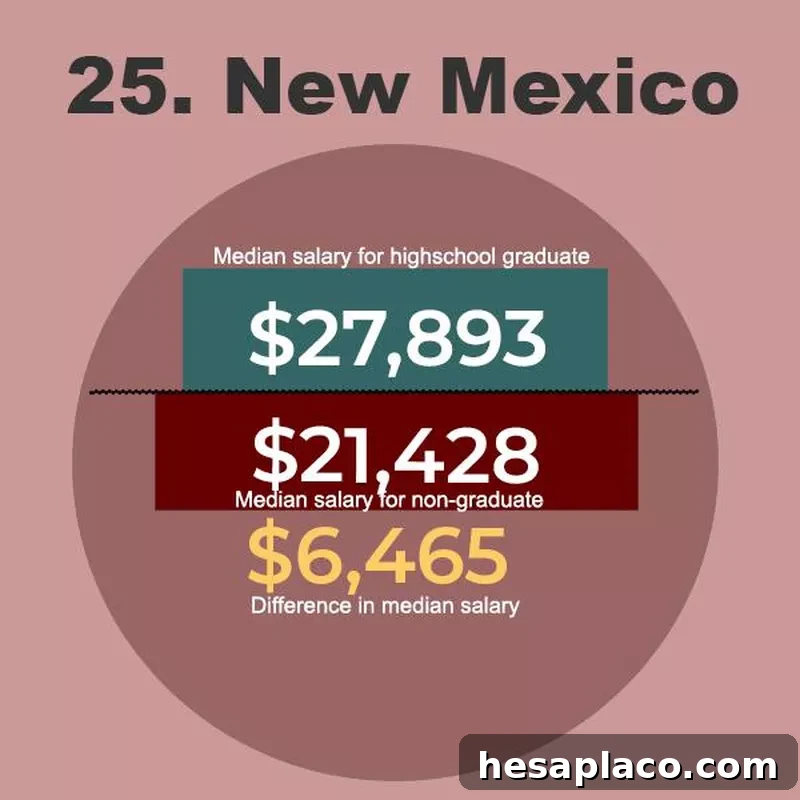
New Mexico has the lowest median salary for non-graduates among the states listed, at about $21,428. It also has one of the lowest graduation rates, around 78 percent. Although the cost of living is relatively low, surviving on that income is challenging anywhere in the United States.
24. Pennsylvania
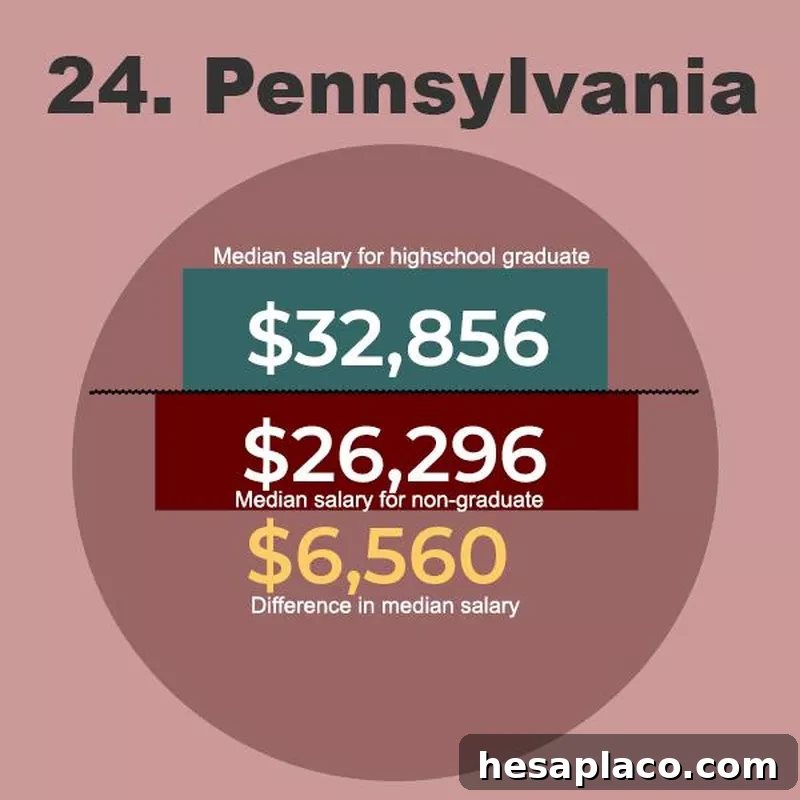
Pennsylvania remains shaped by its Rust Belt history, with manufacturing and agriculture still important to the economy. At the same time, the state has expanded into energy production, medical technology and robotics. These newer sectors increase the value of a high school diploma and make additional education even more valuable.
23. Tennessee
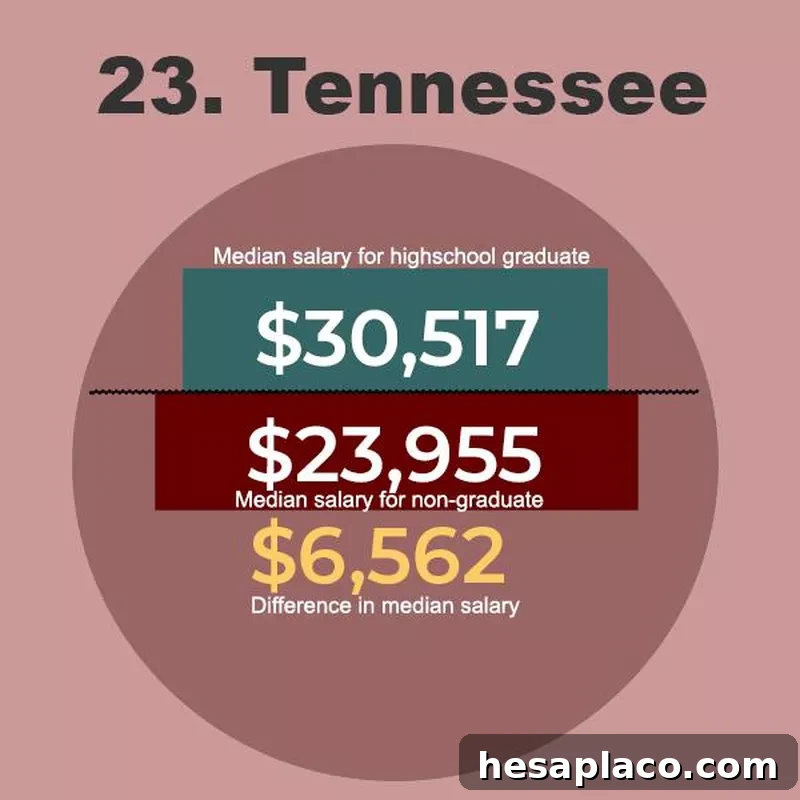
Tennessee shares some traits with other rural states, including a solid graduation rate and employment in mining and manufacturing. Yet its wage gap is higher than in states with similar economies. The median salary for non-graduates is nearly $24,000, leaving many workers with limited financial flexibility.
22. Delaware
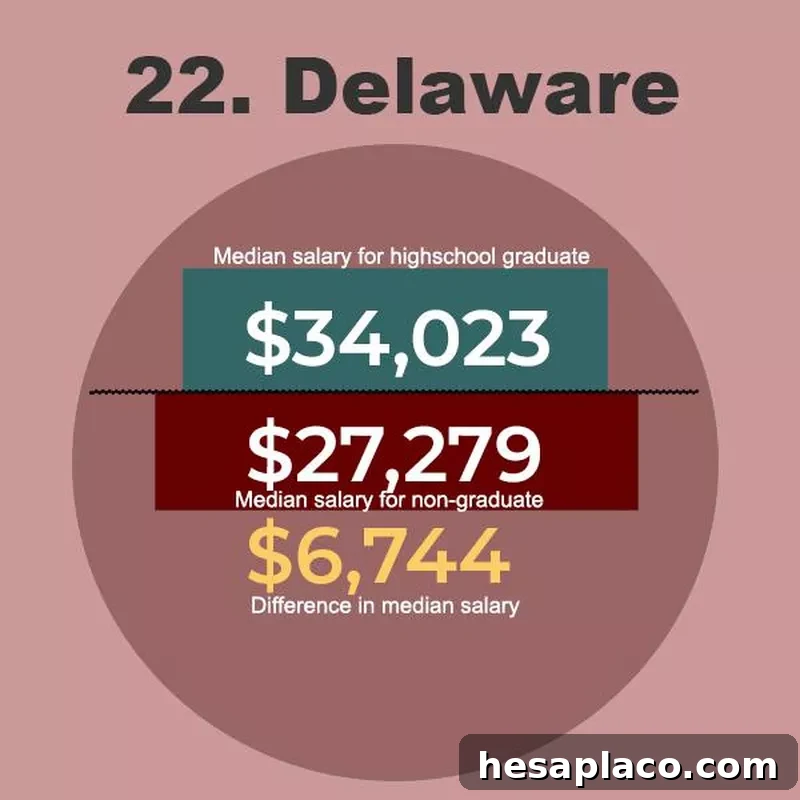
Delaware’s small size limits the number of available jobs and can make competition more intense. In that environment, a high school diploma gives applicants an advantage. The state has opportunities in manufacturing, healthcare and business services, but workers without diplomas may have fewer options and lower wages.
21. Virginia
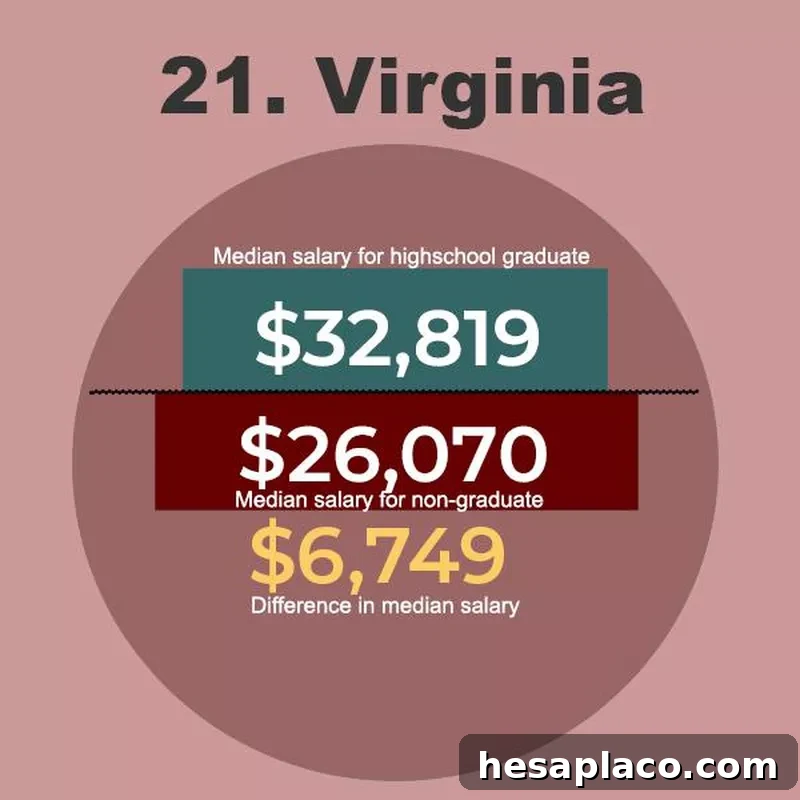
Virginia has a strong secondary education system, especially in the northern part of the state, and about 93 percent of students graduate. Northern Virginia is closely tied to the Washington, D.C., job market, while other parts of the state are more rural. Agriculture and tourism offer work, but a diploma is still quite valuable.
20. Mississippi
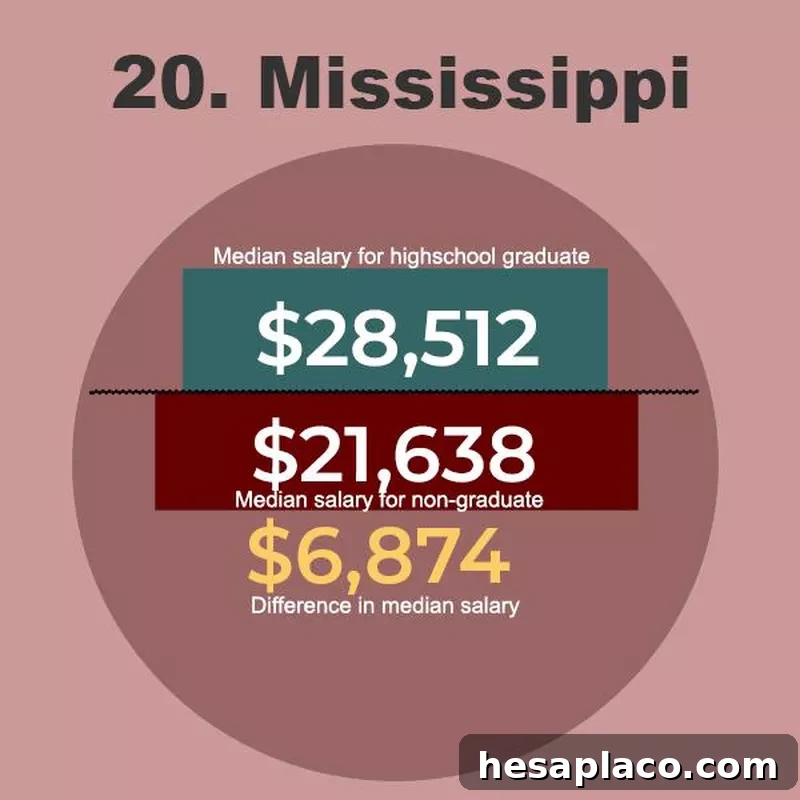
Mississippi has one of the lowest median salaries for non-graduates, and even workers with diplomas earn less than their counterparts in many other states. The state’s high poverty rate affects wages broadly, but non-graduates are hit hardest because their access to better-paying opportunities is more limited.
19. Minnesota
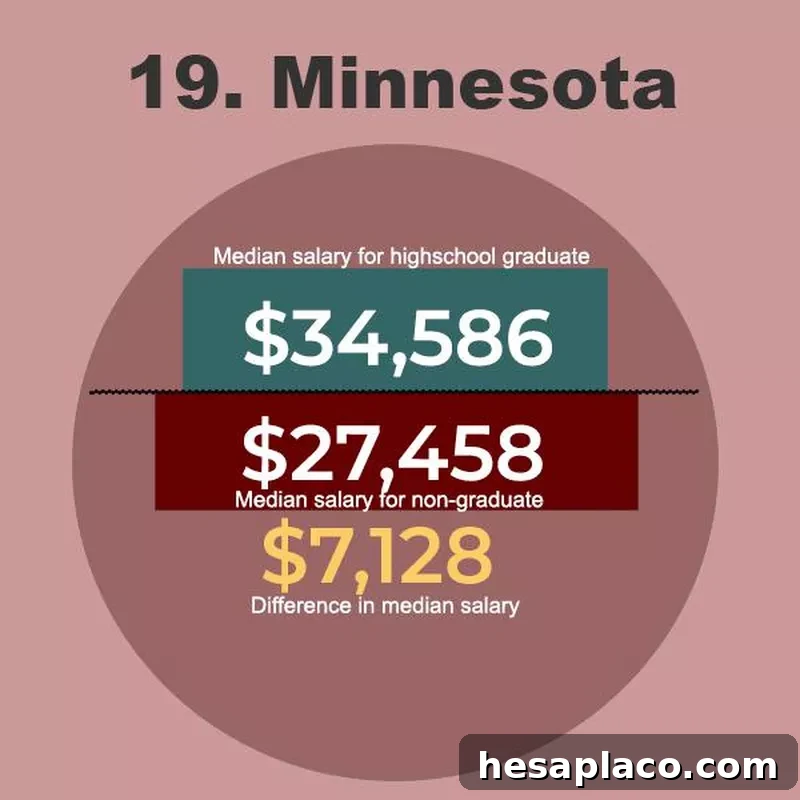
Minnesota is the first state in this ranking where the wage gap exceeds $7,000. Non-graduate earnings are similar to those in nearby Midwestern states, but high school graduates in Minnesota earn more than many regional peers. The state’s focus on renewable energy, life sciences and clean technology may contribute to this difference.
18. California
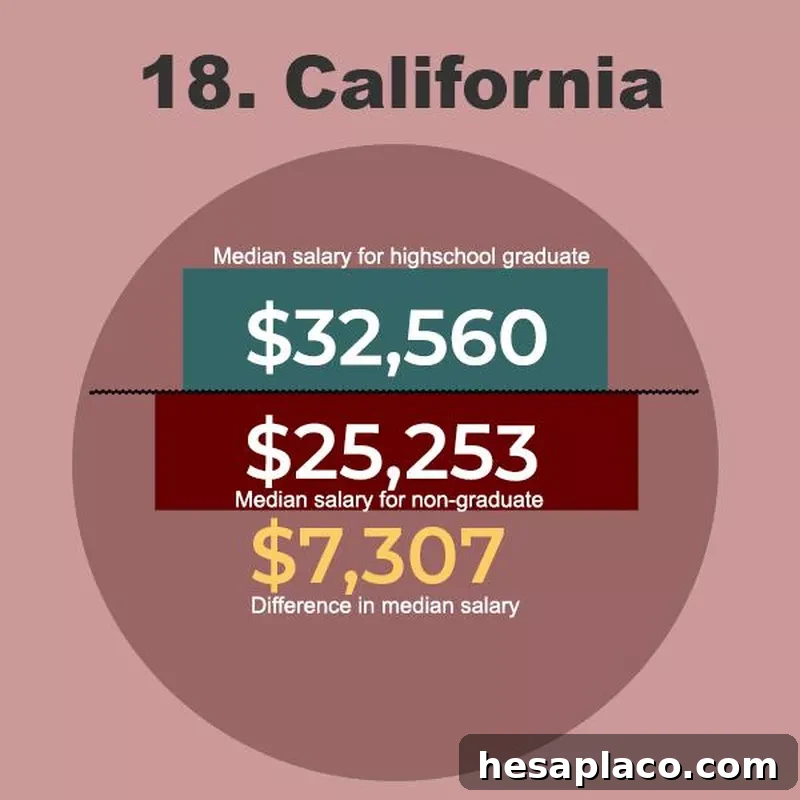
California has extreme economic contrasts. Wealth and opportunity are concentrated in places like Los Angeles and San Francisco, while other communities face job shortages and rising living costs. About 86 percent of students graduate from high school. In such a competitive and expensive state, lacking a diploma can be a serious disadvantage.
17. New Hampshire
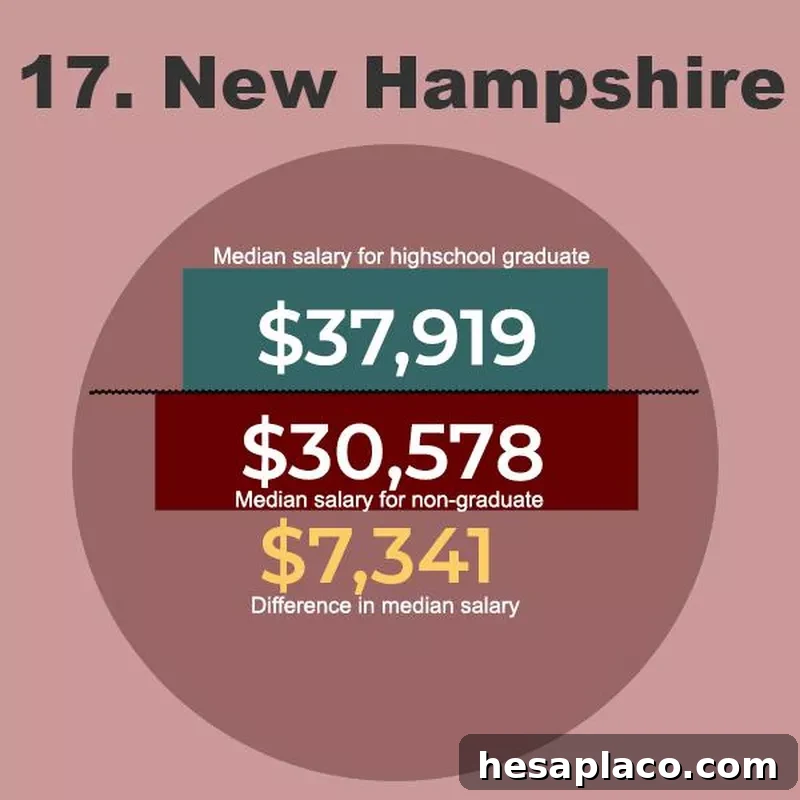
New Hampshire has an 88 percent graduation rate. Technology, health sciences and advanced manufacturing support the state’s economy and provide strong earning potential for graduates. Although the wage gap is wide, New Hampshire also offers one of the higher median salaries for non-graduates, making it somewhat more forgiving than other highly educated states.
16. Rhode Island
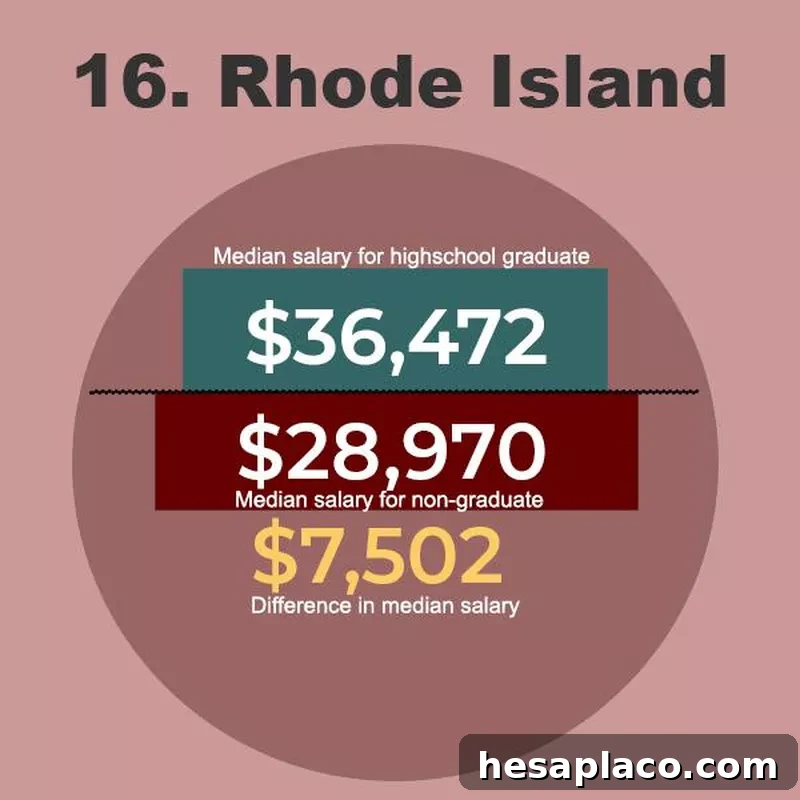
Rhode Island has diversified its economy despite its small size. Coastal tourism, universities, biomedicine and data analytics all play important roles. Many of the best-paying jobs require more than a diploma, while non-graduates are more likely to find work in tourism, services and manufacturing. Covering basic costs can still be difficult without higher wages.
15. South Carolina
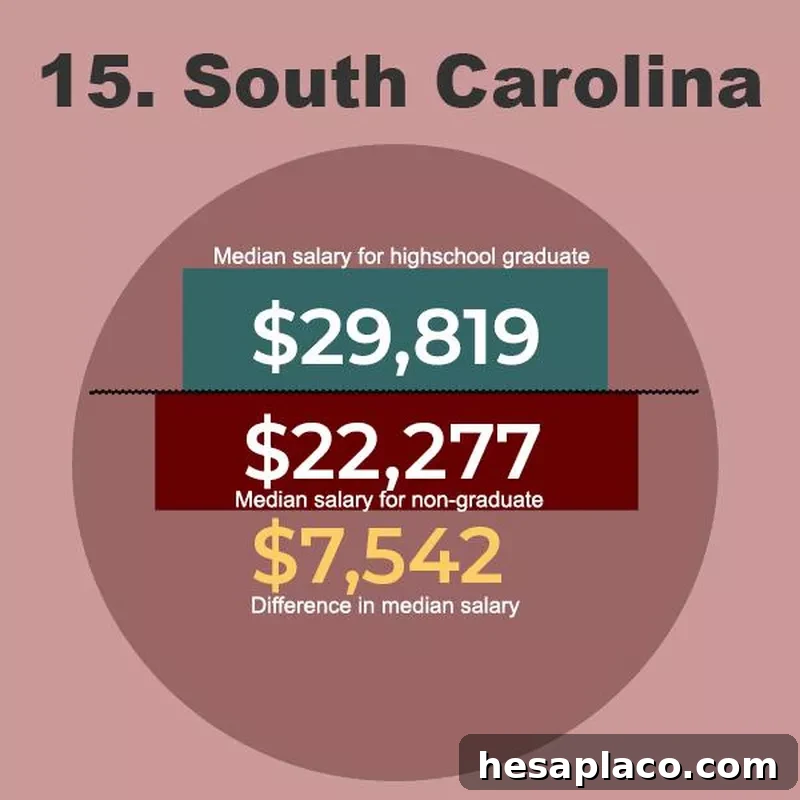
South Carolina has industries such as advanced manufacturing, biotechnology, life sciences and aerospace, but it remains one of the poorer states in the country. Wages are low for many workers. If high school graduates struggle to reach $30,000 annually, non-graduates face even greater challenges, with a median salary of about $22,277.
14. Alabama
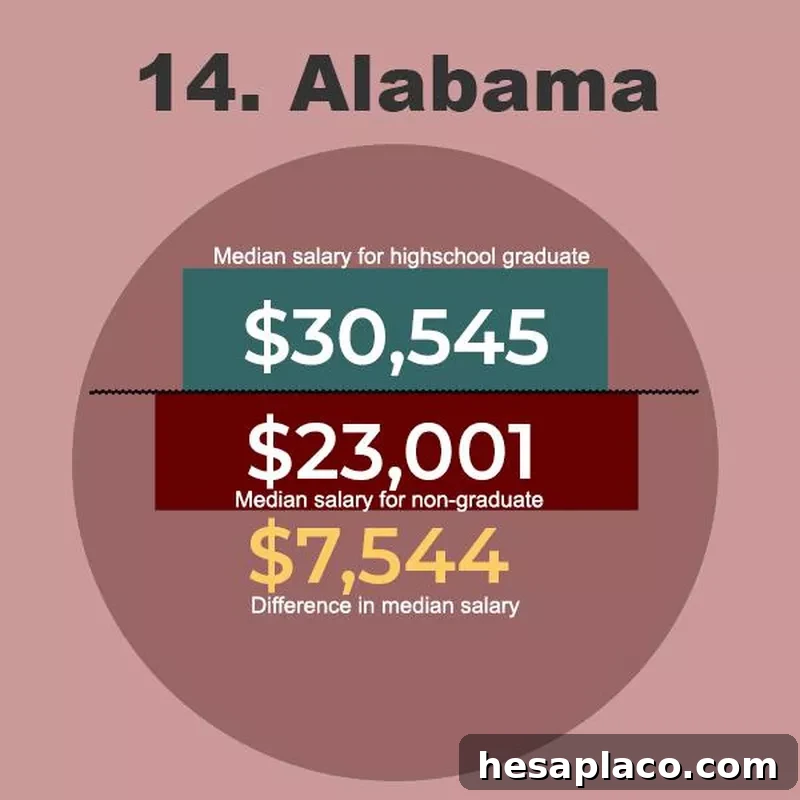
Agriculture and automobile manufacturing are important in Alabama, but the state also works in aviation, bioscience and information technology. These more technical industries help explain the wider wage gap between graduates and non-graduates. As one of the poorer states, Alabama offers limited earnings for workers without a diploma.
13. Washington
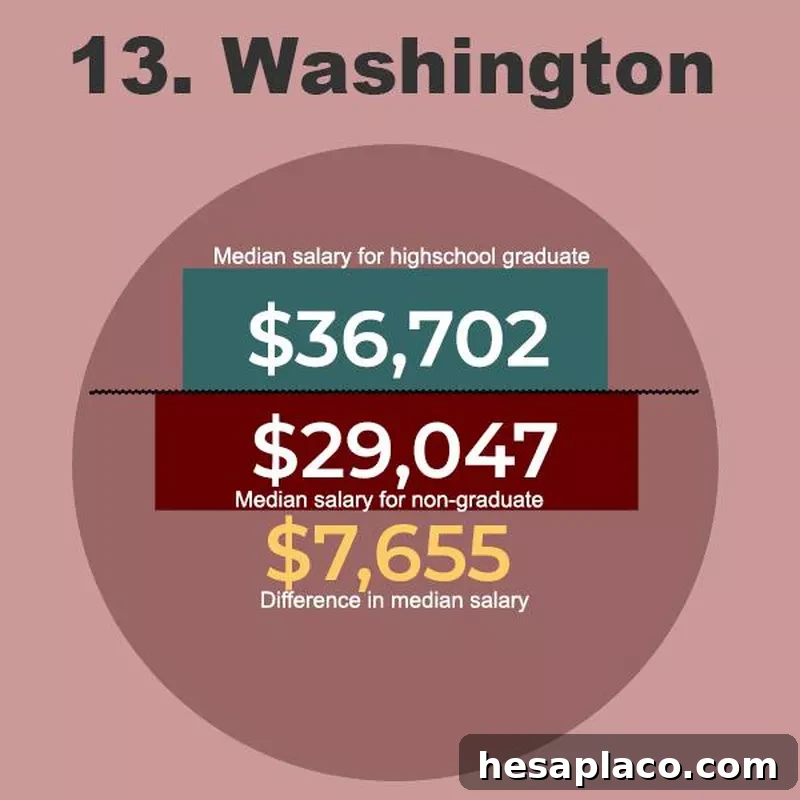
Washington’s economy combines agriculture with technical sectors such as life sciences, information technology and clean energy. Seattle is home to major companies, including Amazon, Starbucks and REI. While some jobs do not require a diploma, higher-paying positions usually expect applicants to have completed high school and often some college education.
12. Michigan
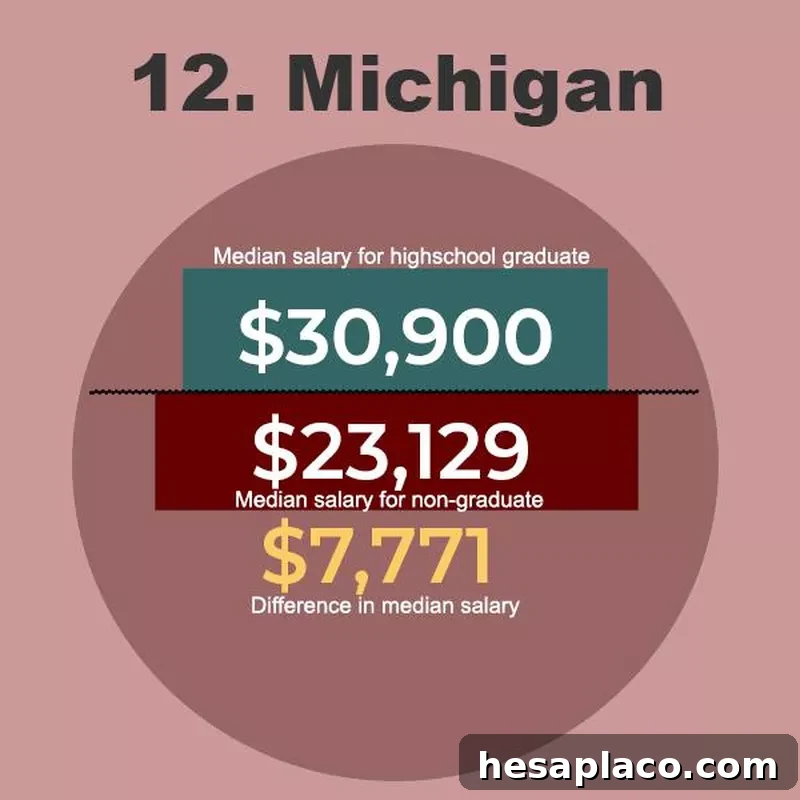
Michigan was deeply affected by the decline of the automobile industry in the Rust Belt. Detroit has made progress since declaring bankruptcy in 2013, but the state continues to rebuild. Agriculture, manufacturing and tourism remain major industries. High school graduates earn nearly $31,000 annually, while non-graduates earn a little over $23,000, creating a notable gap.
11. Ohio
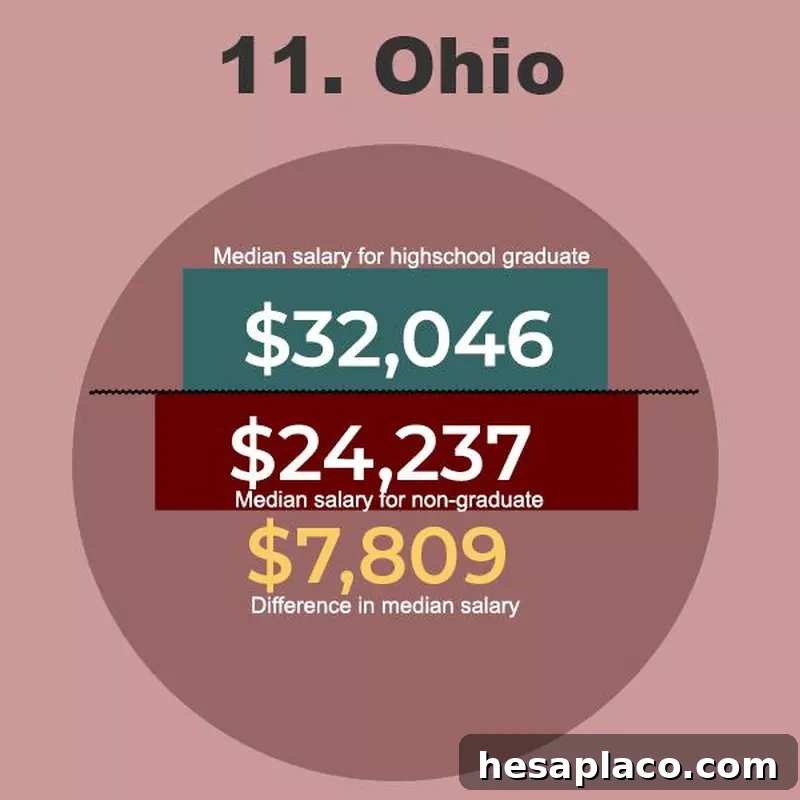
Ohio still relies heavily on manufacturing, including plastics, fabricated metals, electrical equipment and some automobile production. These industries can offer jobs to workers without advanced education, but completing high school significantly improves earning potential. Even in hands-on fields, a diploma can make workers more competitive.
10. Kentucky
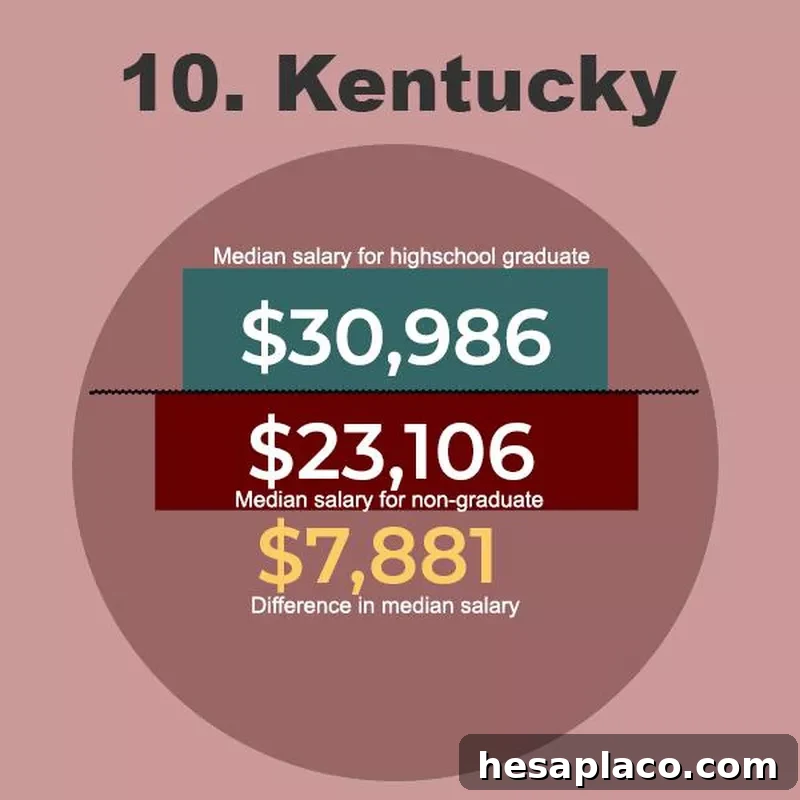
Kentucky ties with Iowa and Texas for the highest graduation rate, at about 94 percent. However, the small share of residents without diplomas experiences a much larger wage penalty than non-graduates in those states. As one of the poorest states, Kentucky has difficulty providing strong wages, and non-graduates are especially affected.
9. Louisiana
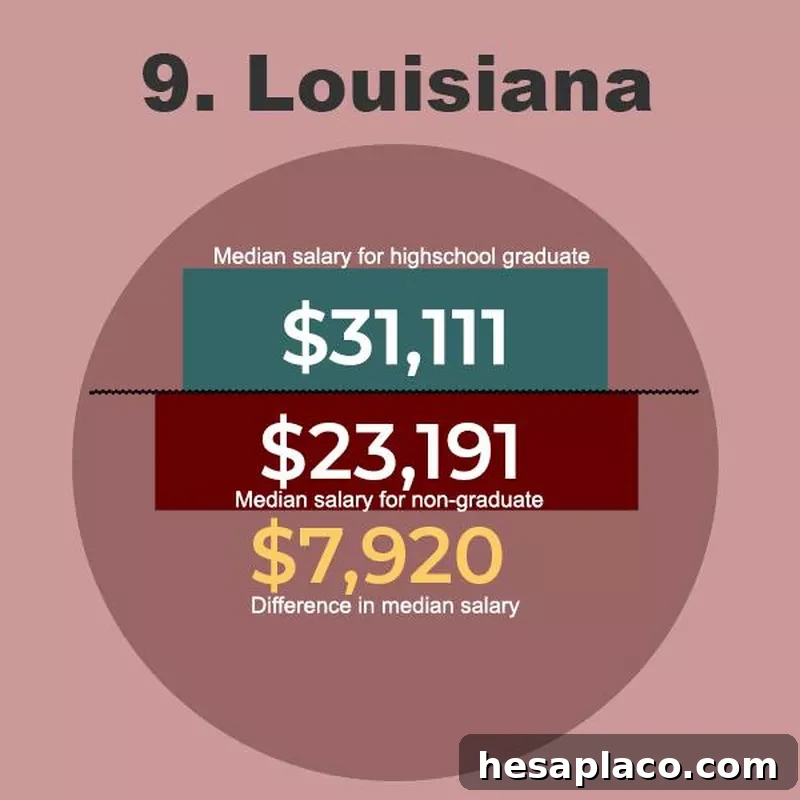
Louisiana has one of the highest poverty rates in the country, and only about 83 percent of students graduate from high school. Major industries include oil extraction, chemical production and coal mining. In these fields, even entry-level work can require credentials or training, so not having a diploma can lead to a major loss of income.
8. Wyoming
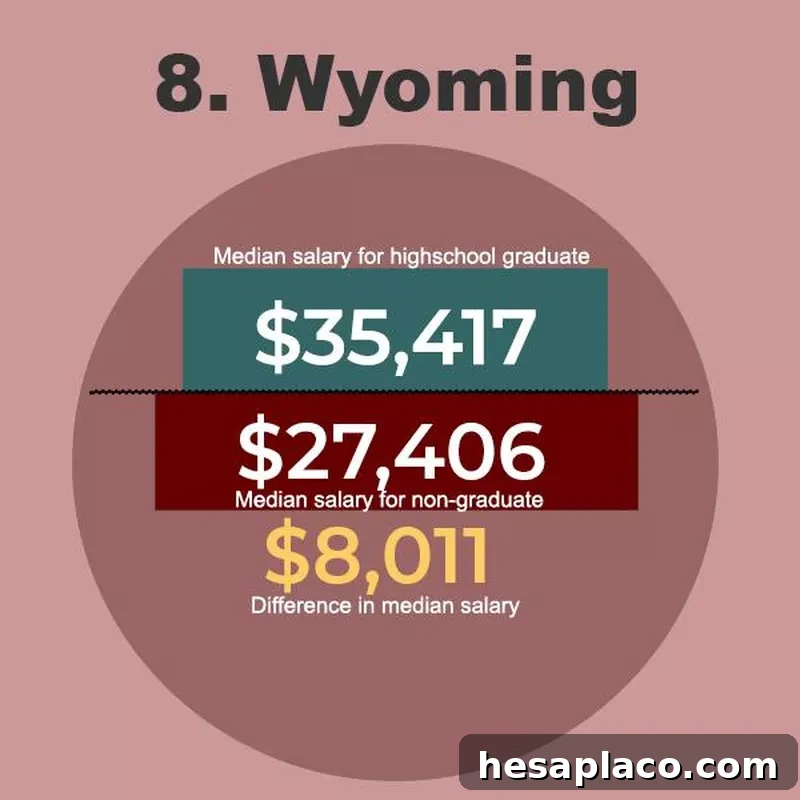
Wyoming’s graduation rate is about 82 percent. Oil extraction and petroleum refining are among the state’s most important industries. Even lower-paid refinery jobs often require a high school diploma, which reduces opportunities for non-graduates. Workers without diplomas earn roughly $8,000 less per year than those who graduate.
7. New York
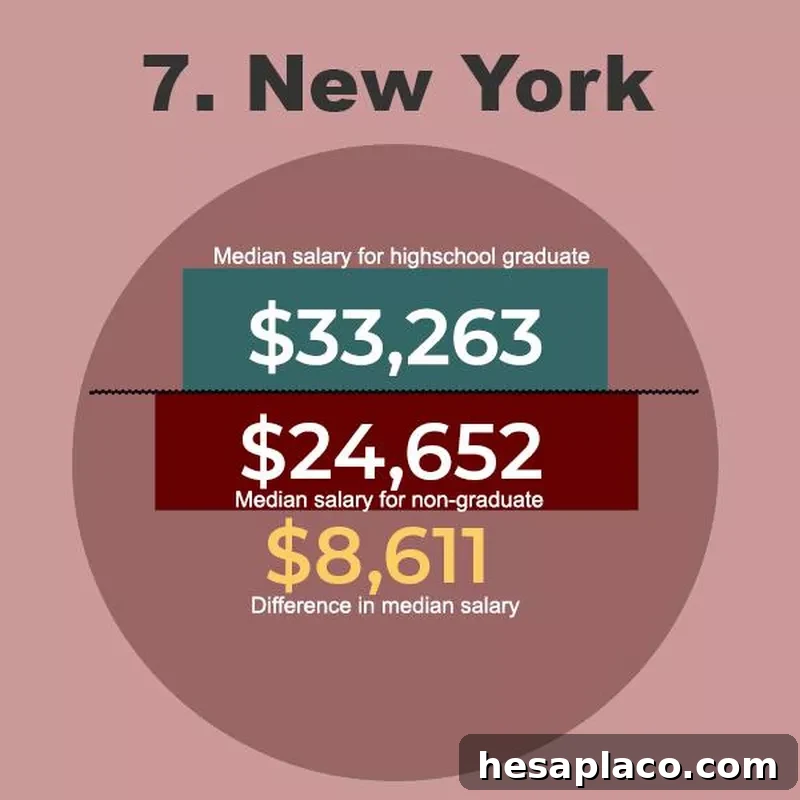
New York is more than New York City, but the city remains the state’s main economic engine. Commercial banking, hospitals, portfolio management and investment banking are major industries. Many workers rely on informal or service jobs, especially in the city, but these can be unstable. Outside the metropolis, some former industrial areas continue to face economic challenges.
6. Maryland
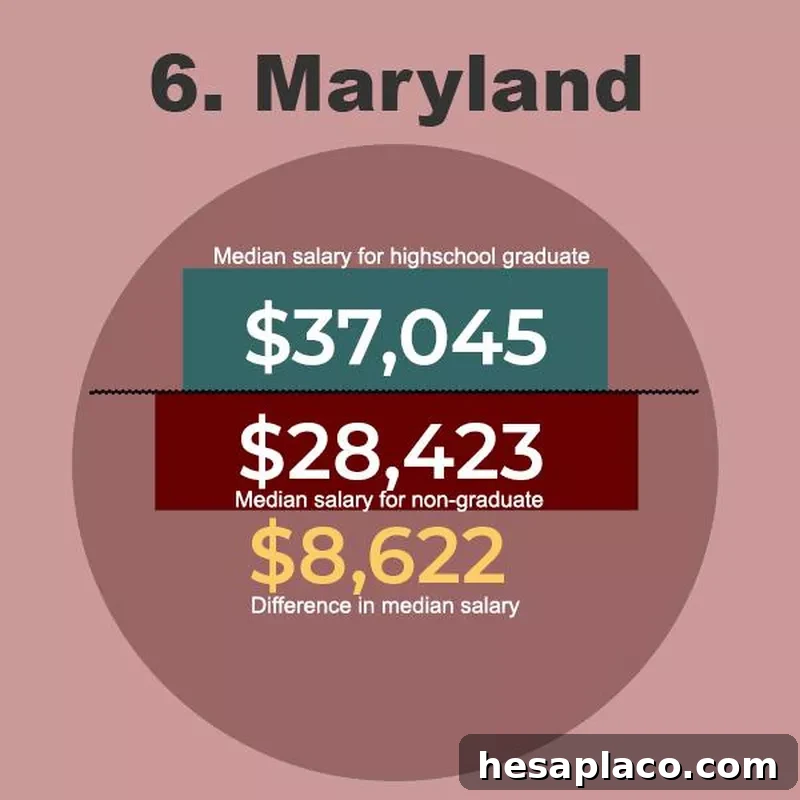
Maryland has a graduation rate of about 83 percent. Baltimore remains an important economic center with a history of shipyard manufacturing. The state’s leading industries include biopharma, cybersecurity and energy production, where diplomas are commonly required. Construction and manufacturing provide some opportunities for non-graduates, but they generally do not pay as well.
5. West Virginia
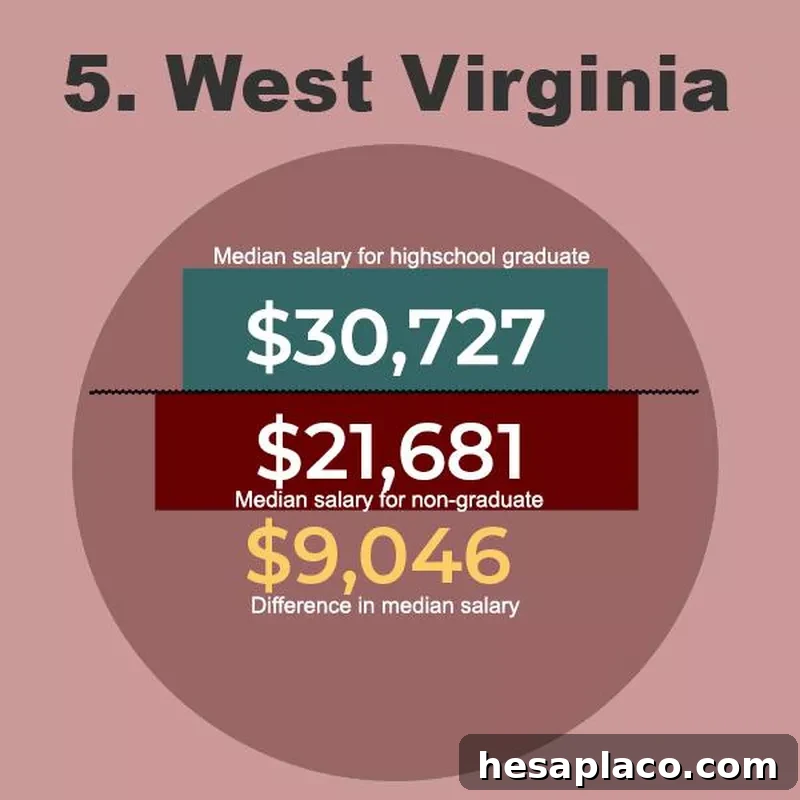
West Virginia has a high graduation rate of about 93 percent, and its major industries include manufacturing and mining. Based on that alone, the wage gap might seem like it should be smaller. However, high poverty rates appear to affect non-graduates most strongly. Not having a diploma can cost workers more than $9,000 per year.
4. New Jersey
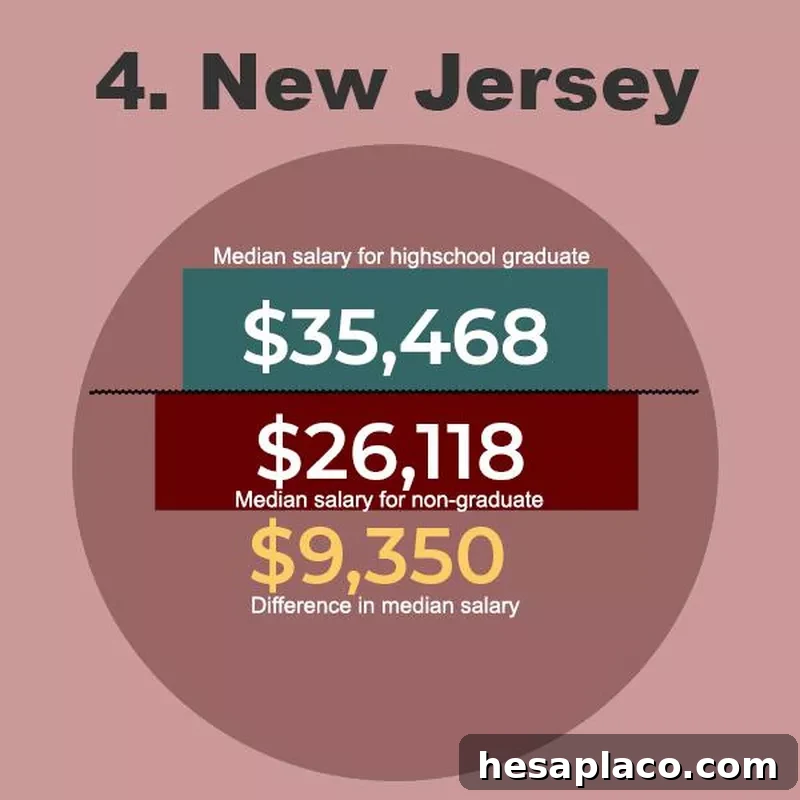
New Jersey is difficult to define in a single way. It functions as a New York City suburb, a coastal destination and a center for pharmaceuticals, transportation, information technology and life sciences. Many active sectors require formal education or training, which helps explain why opportunities are more limited for people without high school diplomas.
3. Massachusetts
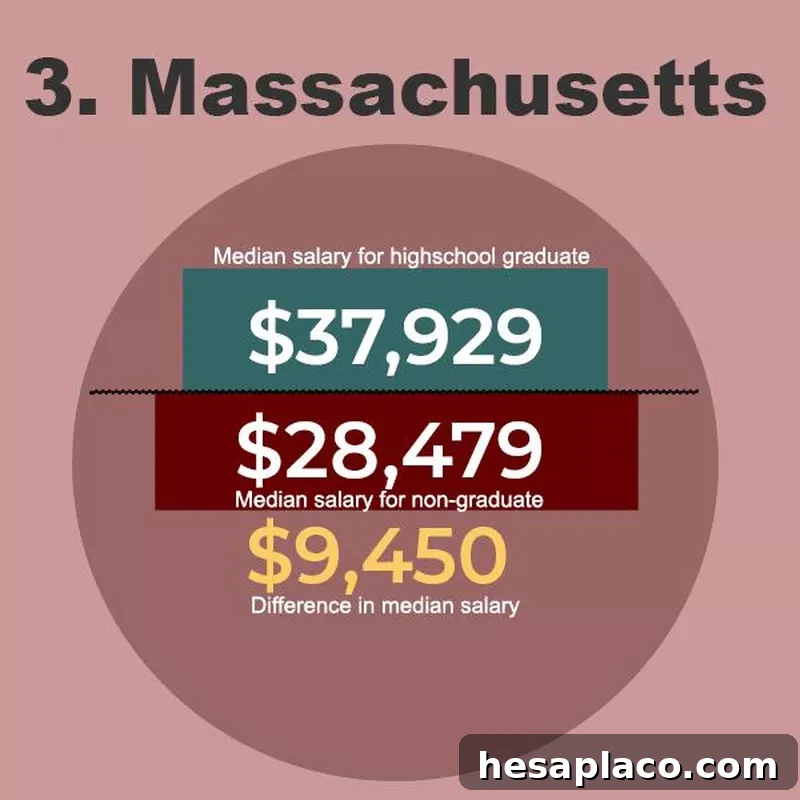
Massachusetts is home to Harvard University and the Massachusetts Institute of Technology, and the state places a strong emphasis on education. Around 93 percent of students graduate from high school. Its economy is centered on pharmaceuticals, research, cosmetics and universities, so non-graduates face a difficult labor market and a substantial wage disadvantage.
2. Alaska
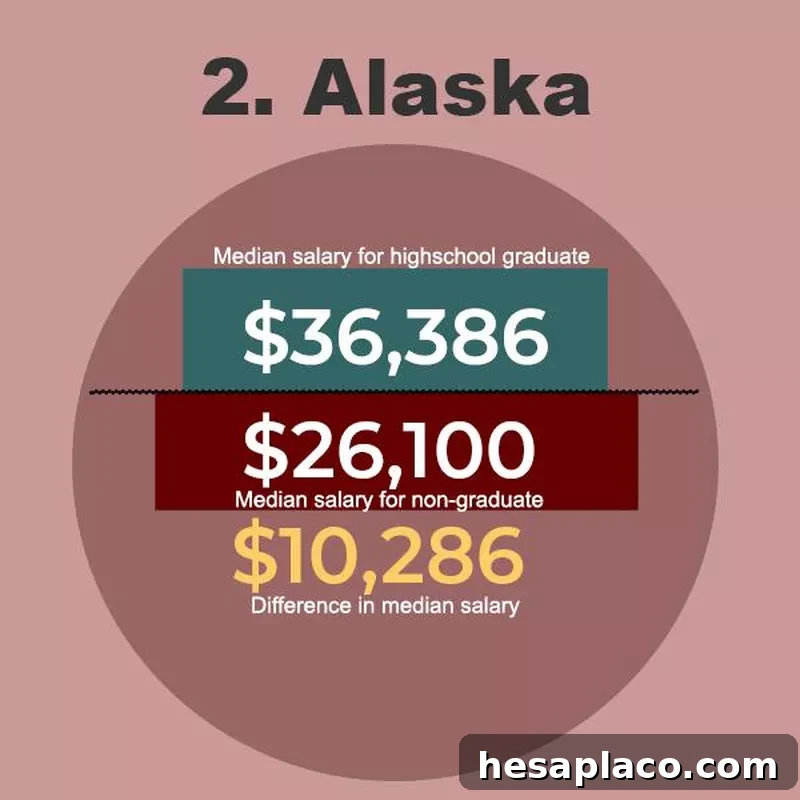
Oil companies play a major role in Alaska’s economy, but even entry-level jobs in that sector often require a high school diploma. Only about 81 percent of Alaskans obtain one, leaving many residents outside the state’s most important economic activity. Fishing, hunting and tourism offer alternatives, but a diploma can mean more than $10,000 in additional annual income.
1. Connecticut
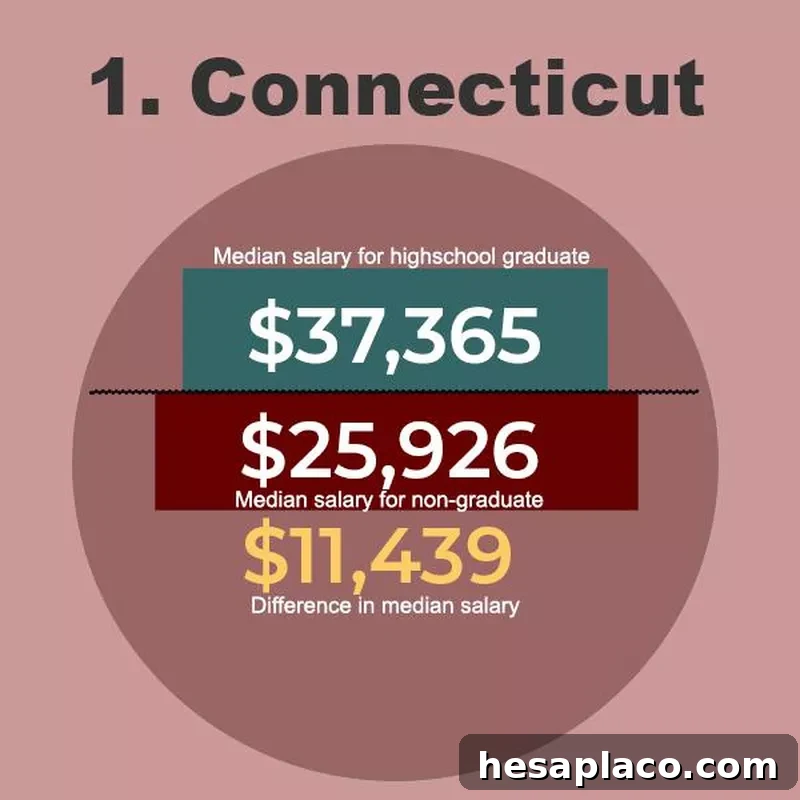
Connecticut has the largest wage gap between high school graduates and non-graduates, at about $11,439 per year. Insurance, aircraft manufacturing, pharmaceuticals, cosmetics and higher education are major parts of the economy, especially around New Haven, where Yale University is located. Fortunately, around 93 percent of residents finish high school, but for those who do not, the financial penalty is severe.