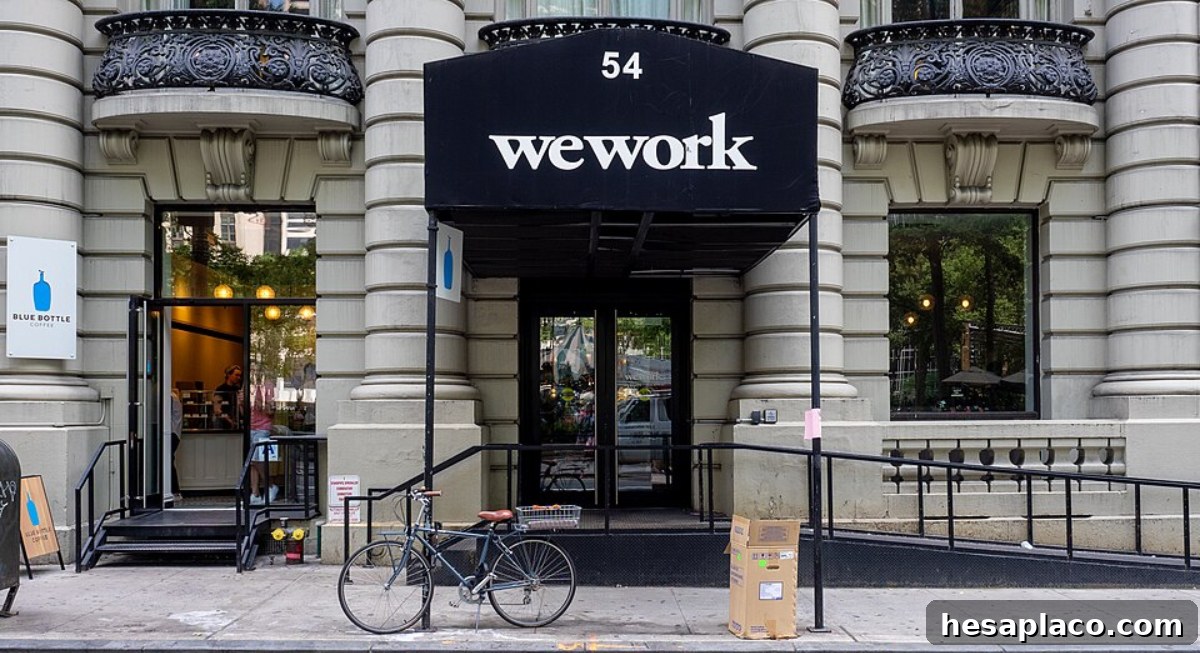
WeWork began as a fresh, community-focused idea: flexible workspaces for freelancers, startups, and a new generation of professionals. Adam Neumann, the charismatic and unpredictable founder, framed the company as revolutionary—speaking grandly about “changing the world” and “elevating consciousness.” In reality, however, WeWork was a real estate company that leased large office spaces, renovated them, and sublet desks. Investors treated it like a tech firm, and that mislabeling helped inflate its valuation to as high as $47 billion, driven largely by optimism, aggressive marketing, and hype.
Inside WeWork locations, the look and feel were carefully curated for social media: hardwood floors, kombucha taps, neon slogans about hustle, and design-forward communal areas. The aesthetic was aimed at projecting a modern, millennial-friendly version of productivity. But appearances could not change the underlying economics. The company committed to long-term, often expensive leases and invested heavily in build-outs, while subleasing workspace to smaller tenants at rates that frequently failed to cover the company’s costs. Despite that, investors continued to pour money into the business—most notably SoftBank’s Masayoshi Son, who invested billions and publicly praised Neumann. Amid that enthusiasm, few asked the basic question: how exactly would this business generate sustainable profits?
The Cult Of Adam Neumann
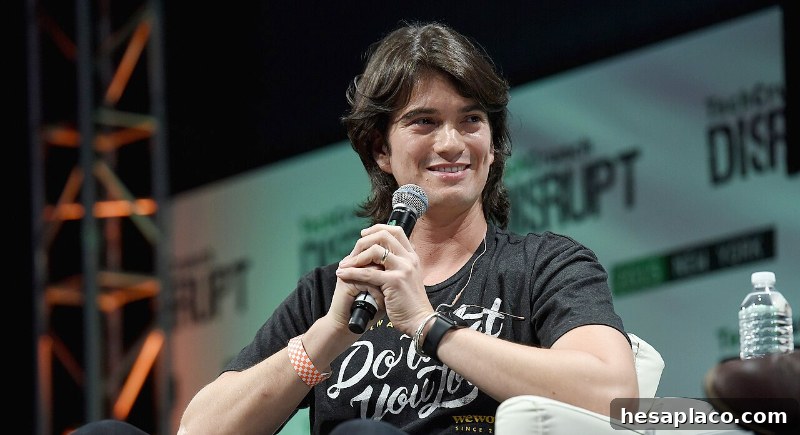
Image via Wikimedia Commons/TechCrunch
Neumann’s personality was both an asset and a liability. He cultivated an intense persona—often appearing barefoot in offices, encouraging late-night tequila shots at meetings, and organizing extravagant company retreats with headline performers. For many employees, he was a larger-than-life leader; for the company as a whole, his style contributed to a chaotic culture. Friends and family members were placed into key roles, and even a self-described “spiritual advisor” was given influence in leadership decisions. In one controversial move, Neumann trademarked the word “We” and sold that trademark to the company for $5.9 million. He spoke in sweeping terms about longevity and legacy, painting a vision of WeWork as a movement rather than a conventional business. That blend of personality and branding made the company feel more like a cult than a typical corporation.
Part of the problem was how easily startup culture enabled such behavior. The ecosystem often celebrates rule-breakers and bold founders, and Neumann’s eccentricities were frequently interpreted as visionary risk-taking. But when WeWork filed for an initial public offering in 2019 and potential investors could examine the company’s financials more closely, the narrative unraveled. The firm was reporting massive losses and its positioning as a tech company did not match the reality of its business model. Within weeks of the filing, Neumann was ousted from his executive role. He reportedly left with substantial financial gains, while thousands of employees faced layoffs and a destabilized company.
Bigger Pattern Of Wealthy Scams
WeWork’s collapse fit into a wider pattern of high-profile ventures that relied more on persuasion than on durable business fundamentals. Other headline cases included Theranos, where Elizabeth Holmes pushed a provocative but unproven medical technology; the fraudulent Fyre Festival organized by Billy McFarland; and the experiences around Evergrande in China, which exposed deep problems in property development and financing. In each case, influential backers were seduced by bold promises and the prestige of being early investors in something that seemed transformative.
These failures reveal a common dynamic: they are not purely the result of ordinary consumers being misled, but rather of investor hubris. Wealthy and sophisticated insiders can be vulnerable when their desire to spot the next big thing outpaces careful, skeptical analysis. The appeal of disruption and charisma sometimes overwhelms financial diligence.
When The Glitter Fades

Image via Getty Images/D-Keine
By 2023, WeWork’s financial troubles culminated in bankruptcy. The company that marketed itself as a reinvention of the workplace ultimately relied on costly leases, aggressive expansion, and branding more than sustainable economics. Adam Neumann left with considerable personal wealth, major investors absorbed steep losses, and many employees were left to pick up the pieces. The broader lesson is straightforward: attractive branding, charismatic leadership, and clever storytelling are not substitutes for a viable business model. When enthusiasm fades and investors demand proof, companies built on hype can collapse quickly—revealing that sometimes the “next big thing” is merely an older model dressed up in better lighting.