For years, Tesla symbolized the electric vehicle revolution. Its sleek Model S sedans and Model Y crossovers became shorthand for a greener future, attracting investors who expected a dominant global automaker. By mid-2025, however, that narrative has evolved. Tesla’s vehicle deliveries fell to 384,112 in the second quarter, one of its sharpest declines, yet the stock rose. The market reaction signaled a shift: investors are increasingly wagering on Tesla’s potential in artificial intelligence rather than on car deliveries alone.
A Car Company That Wants to Be an AI Giant
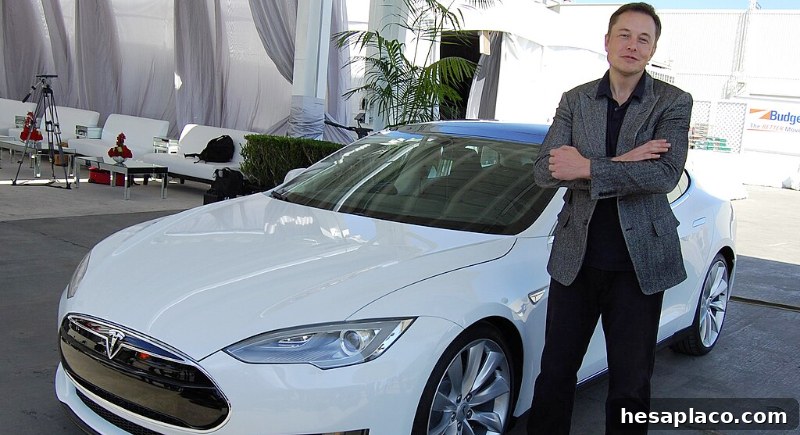
Image via Wikimedia Commons/Maurizio Pesce
Elon Musk has increasingly framed Tesla as more than a carmaker, emphasizing robotaxis, humanoid robots, and AI-driven factories. Tesla presents itself as a technology company building an integrated AI ecosystem that connects mobility, robotics, and energy. A key strength is the vast amount of real-world data streaming from millions of Tesla vehicles, used to train and refine its Full Self-Driving (FSD) system.
Unlike some competitors such as Waymo and Zoox, Tesla depends primarily on cameras and software rather than radar or LiDAR. That camera-centric approach reduces hardware costs and simplifies scaling, but it has also attracted regulatory scrutiny and criticism from safety investigators, including inquiries into incidents of sudden braking and other safety anomalies.
Robotaxis, Robots, And Beyond
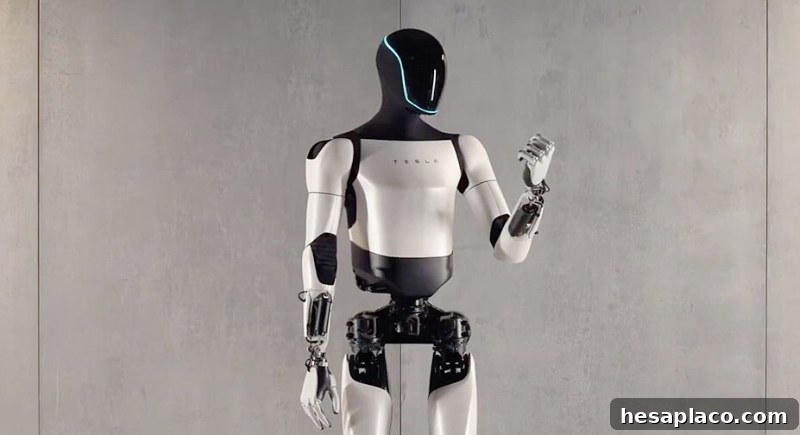
Image via Wikimedia Commons/Tesla
Robotaxis are central to Tesla’s autonomy vision. In June 2025, Tesla began a limited pilot fleet of robotaxis in Austin. Footage soon emerged showing traffic violations by vehicles in the pilot, prompting a National Highway Traffic Safety Administration review. The pilot indicates technological progress but also highlights the work required to scale safely and gain broader regulatory approval.
Tesla is also advancing Optimus, its humanoid robot project announced in 2021. Optimus leverages the same AI architecture used in Tesla vehicles and is intended for repetitive or hazardous tasks. The robots have been trialed in Tesla’s factories to support manufacturing operations. Musk has suggested Optimus could become an important revenue stream for the company, though mass production timelines remain ambitious and uncertain.
Energy Is Part Of The AI Story Too
Tesla’s AI ambitions extend into renewable energy and grid services. The 2016 acquisition of SolarCity helped Tesla develop solar products and energy storage systems. In 2024, Tesla contracted a 15.3 gigawatt-hour (GWh) energy storage project with Intersect Power, illustrating its role in large-scale, software-integrated grid resilience projects that combine Tesla’s hardware and energy management software.
The Road Ahead
Tesla faces growing competition and regulatory challenges. Its U.S. EV market share slipped into the upper 30% range by 2025, down from a more dominant position in earlier years, while legacy automakers such as General Motors have broadened their electric portfolios under brands like Cadillac, Chevrolet, GMC Hummer, and Buick.
On the global stage, BYD of Shenzhen surpassed Tesla in 2024, holding roughly 22.2% of the market versus Tesla’s 10.3%. Other manufacturers, including Wuling, BMW, and Li Auto, are also expanding their presence. Meanwhile, U.S. regulators continue monitoring Tesla’s FSD safety performance and autonomous vehicle trials closely. Despite these headwinds, Tesla’s AI-driven strategy—spanning autonomous vehicles, humanoid robots, and integrated energy solutions—remains the primary narrative attracting investor interest and shaping expectations for the company’s future.