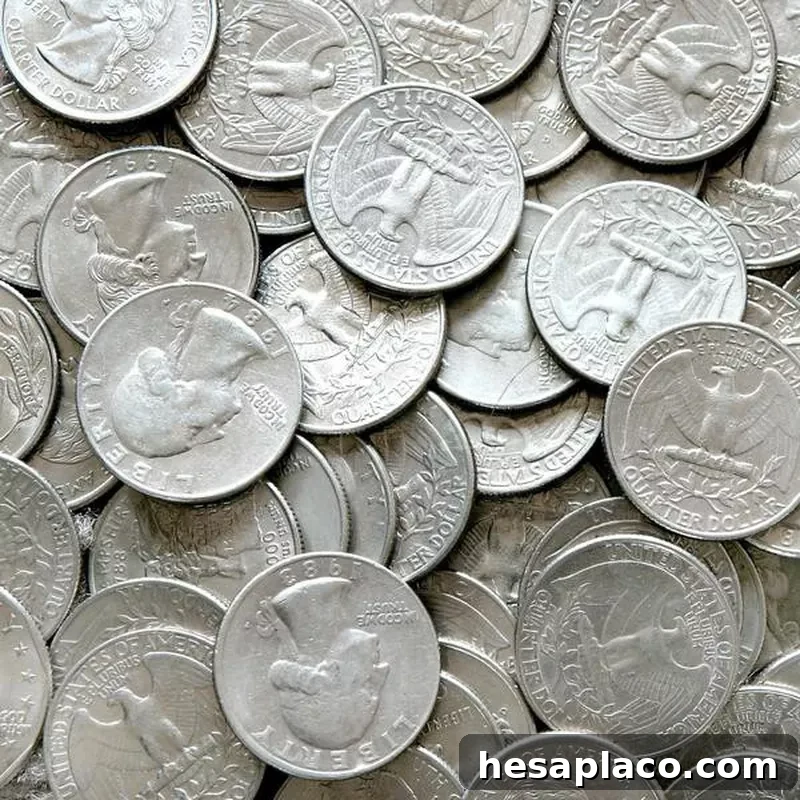
The quarter was authorized by the Mint Act of April 2, 1792, along with four other silver denominations: half dimes, dimes, half dollars and silver dollars. The new coins were introduced gradually, with dimes and quarters first issued in 1796. Low demand led to a gap in production: no quarters were struck again until 1804.
Over U.S. history there have been seven major quarter designs. Most are known by the image on the obverse, while the Barber quarter is named for its designer, Charles E. Barber. In 1932 a commemorative quarter honoring George Washington’s 200th birthday proved so popular that its obverse design has remained on the quarter to the present day.
Collectors are often inspired by commemorative releases, but true value is driven by rarity and condition. Many of the most valuable quarters are some of the earliest issues that survived in exceptional condition long before coin collecting became widespread.
Below are 20 of the most valuable quarters, which together have realized multimillion-dollar prices at auction.
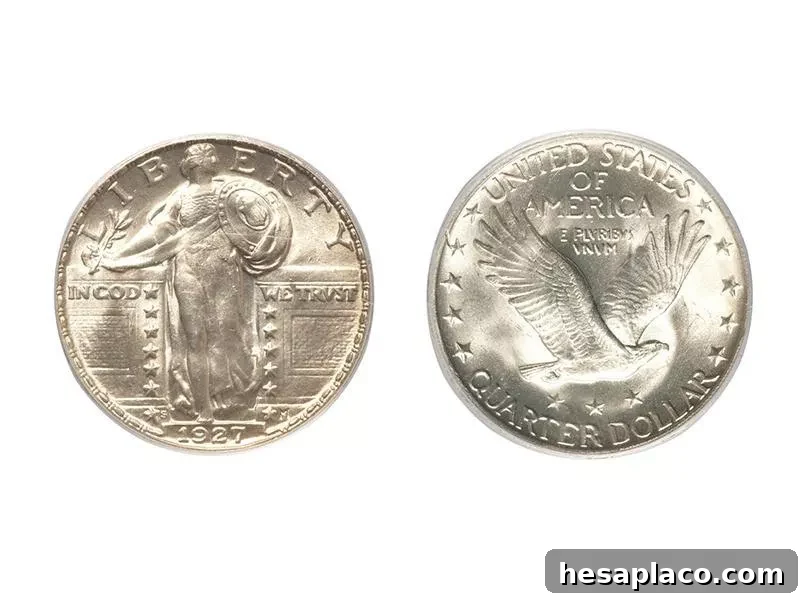
20. 1927-S Full Head Standing Liberty Quarter
Heritage Auctions
Sold at auction: $175,000
Bottom Line: 1927-S Full Head Standing Liberty Quarter
Heritage Auctions
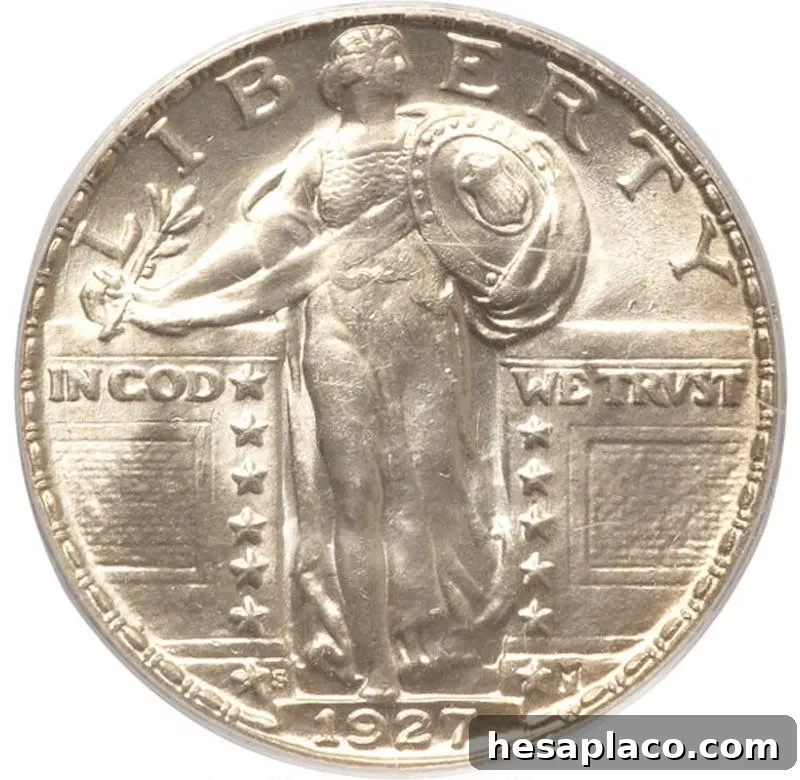
With a mintage of just 396,000, the 1927-S is the lowest-mintage issue among Standing Liberty quarters. Approximately 3,900 of these were originally considered Full Head examples, but only a small fraction retain that designation today. Some 65 Full Head specimens are known, and only two grade higher than the one that sold, which helps explain its high value among collectors.
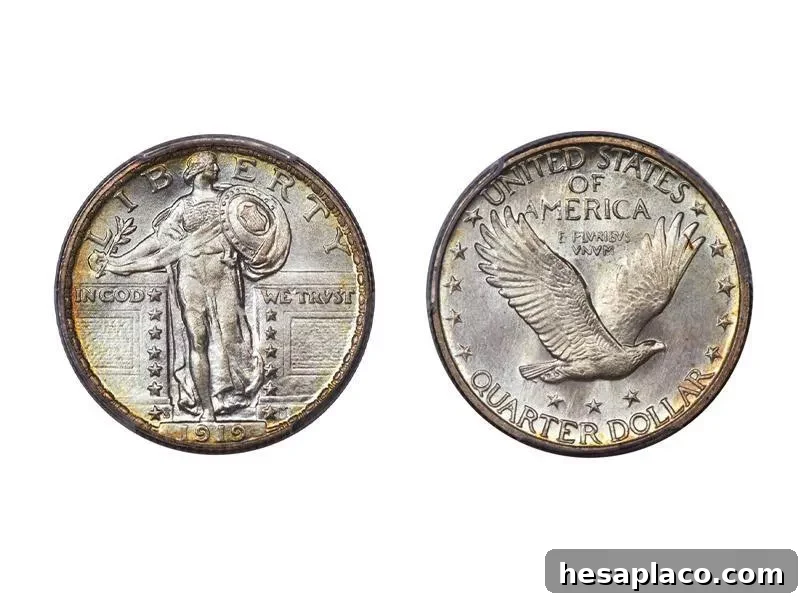
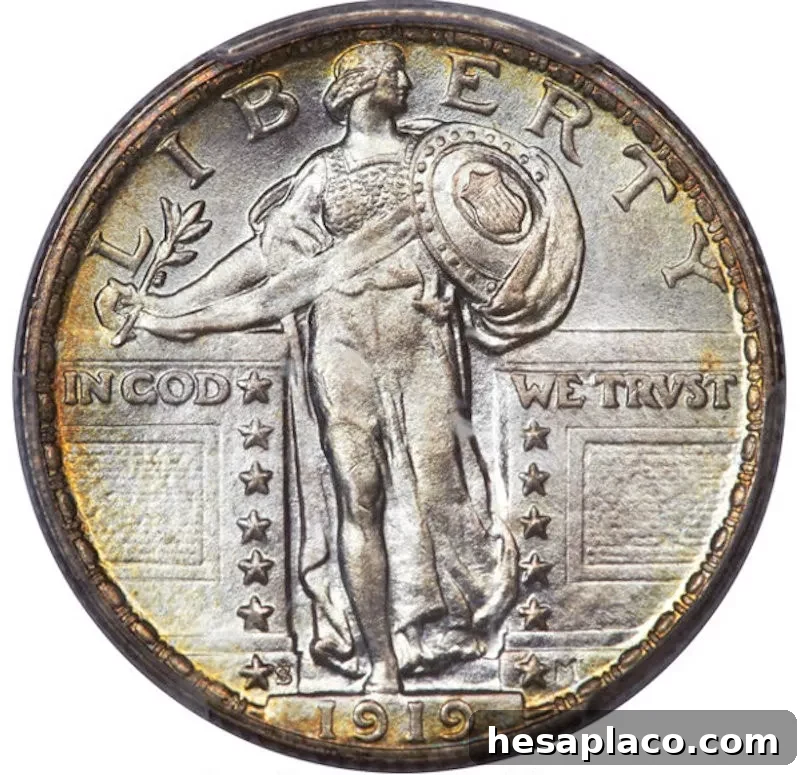
19. 1919-S Full Head Standing Liberty Quarter
Heritage Auctions
Sold at auction: $235,000
Bottom Line: 1919-S Full Head Standing Liberty Quarter
Heritage Auctions
San Francisco struck 1,836,000 quarters in 1919, but many examples lost their date through circulation wear. Very few survived in mint condition; only a handful match the quality of the coin that fetched six figures at auction.
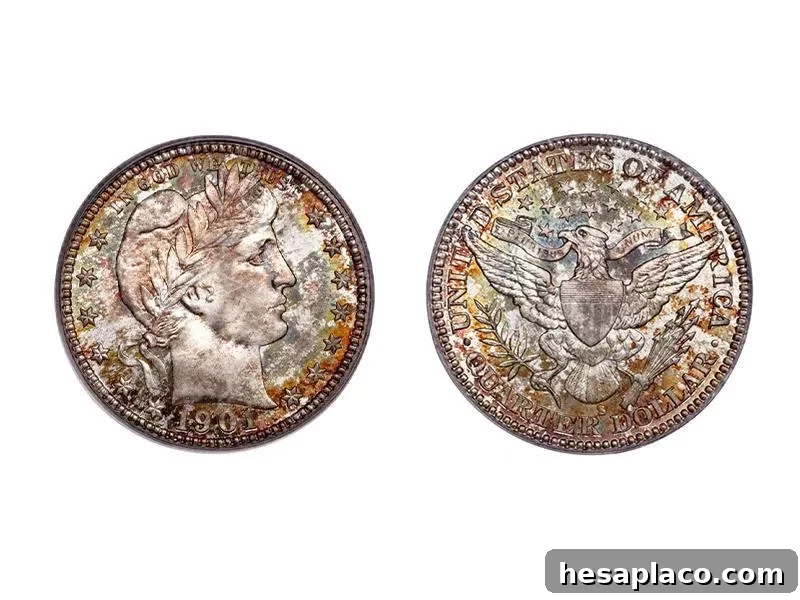
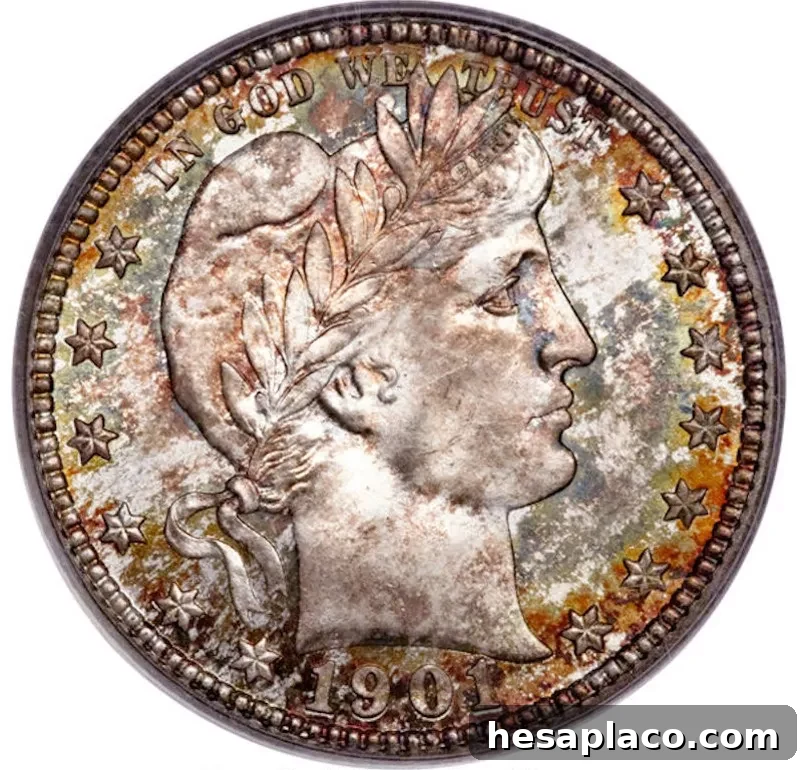
18. 1901-S Barber Quarter
Heritage Auctions
Sold at auction: $258,500
Bottom Line: 1901-S Barber Quarter
Heritage Auctions
The San Francisco Mint struck 72,664 Barber quarters in 1901 and most entered circulation. Regional use, especially heavy in the West, meant few survived in mint state; only two have been certified by PCGS and two are graded Superb Gem by NGC. The example at auction was the lower-rated of the two Gem coins but remains extremely rare.
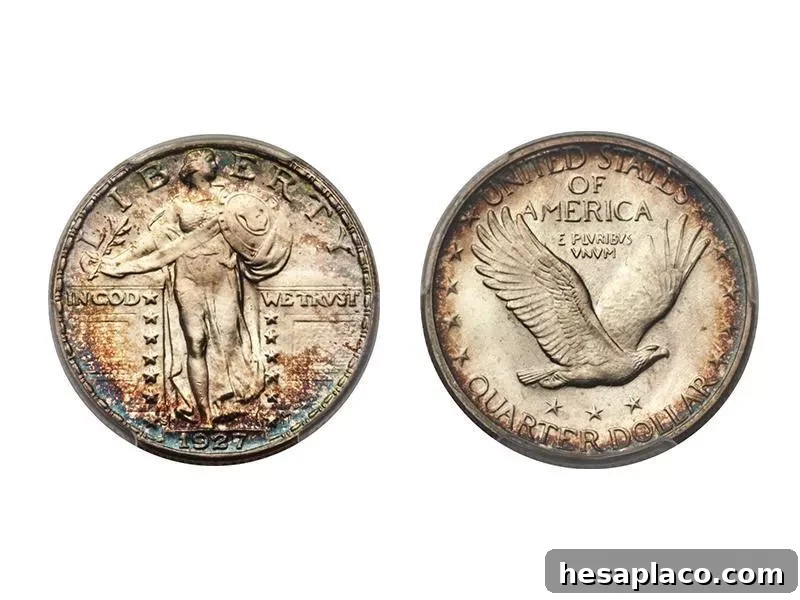
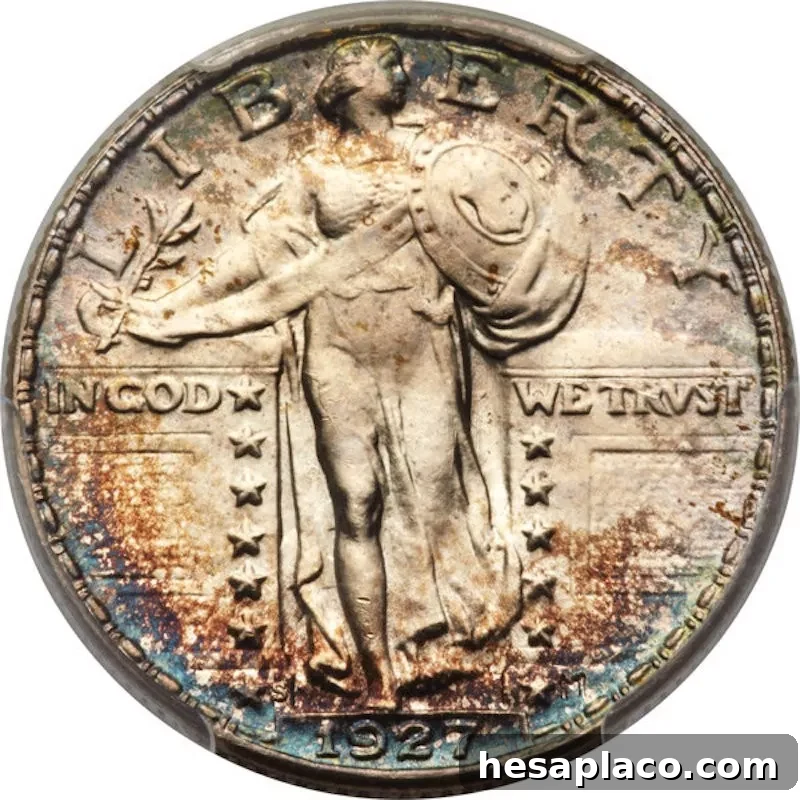
17. 1927-S Full Head Standing Liberty Quarter (another example)
Heritage Auctions
Sold at auction: $258,500
Bottom Line: 1927-S Full Head Standing Liberty Quarter
Heritage Auctions
The 1927-S series shows some of the weakest strikes among Standing Liberty quarters. Complex design elements often clogged dies with metal, and San Francisco examples frequently suffered quality control issues. It’s estimated that fewer than 1% of the 396,000 mintage show sufficient detail in Liberty’s head to earn the “Full Head” designation. The coin above ranks among the two finest known.
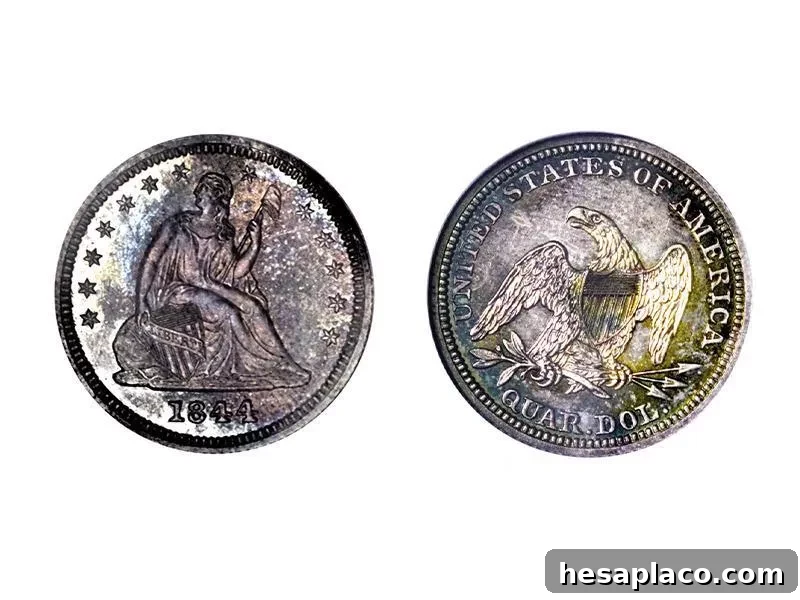
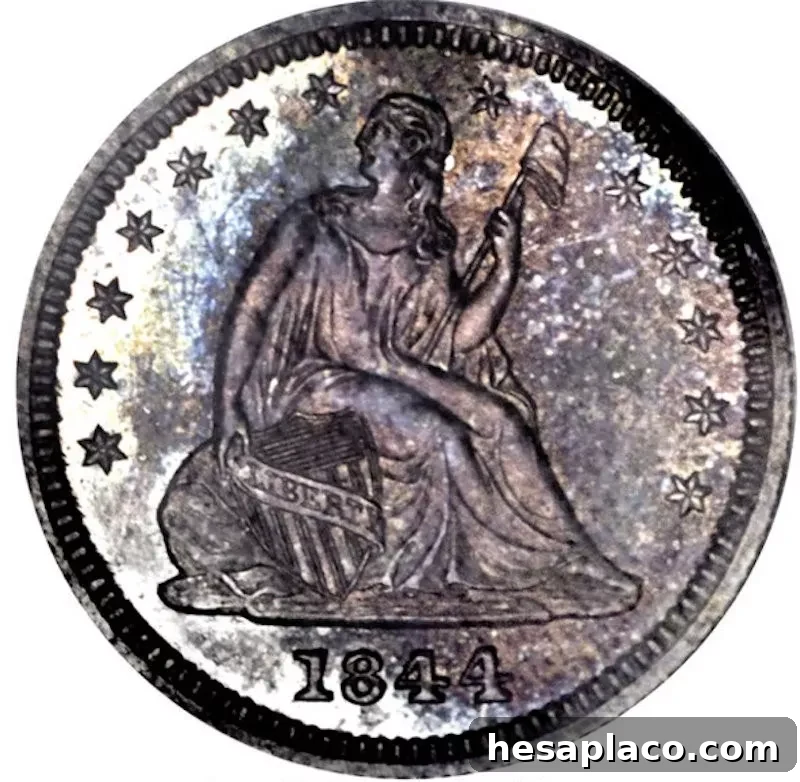
16. 1844 Proof Liberty Seated Quarter
Heritage Auctions
Sold at auction: $322,000
Bottom Line: 1844 Proof Liberty Seated Quarter
Heritage Auctions
This is the only proof example certified of its kind, though two additional examples are believed to exist—one reportedly in the Smithsonian and another in an original proof set. Proof quarters from this era are scarce, and this piece’s uniqueness explains its strong market value.
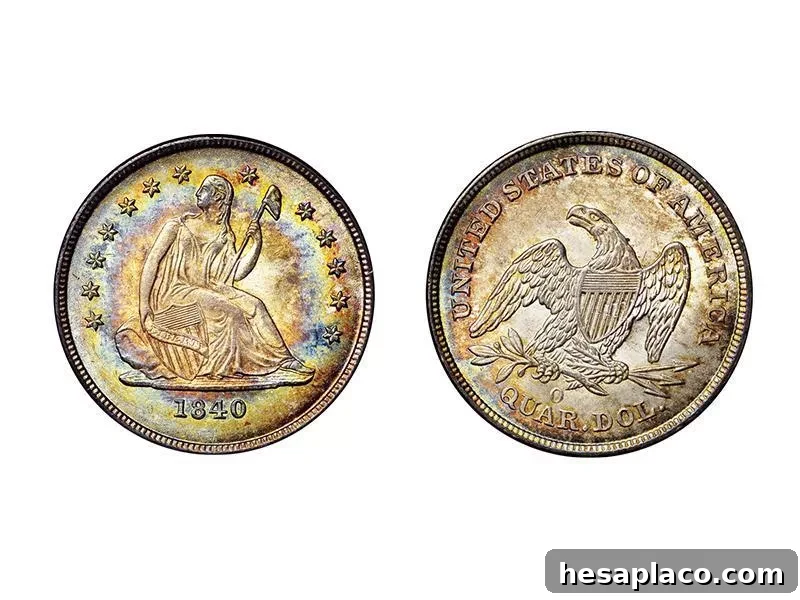
15. 1840-O Seated Liberty No Drapery Quarter
Heritage Auctions
Sold at auction: $329,000
Bottom Line: 1840-O Seated Liberty No Drapery Quarter
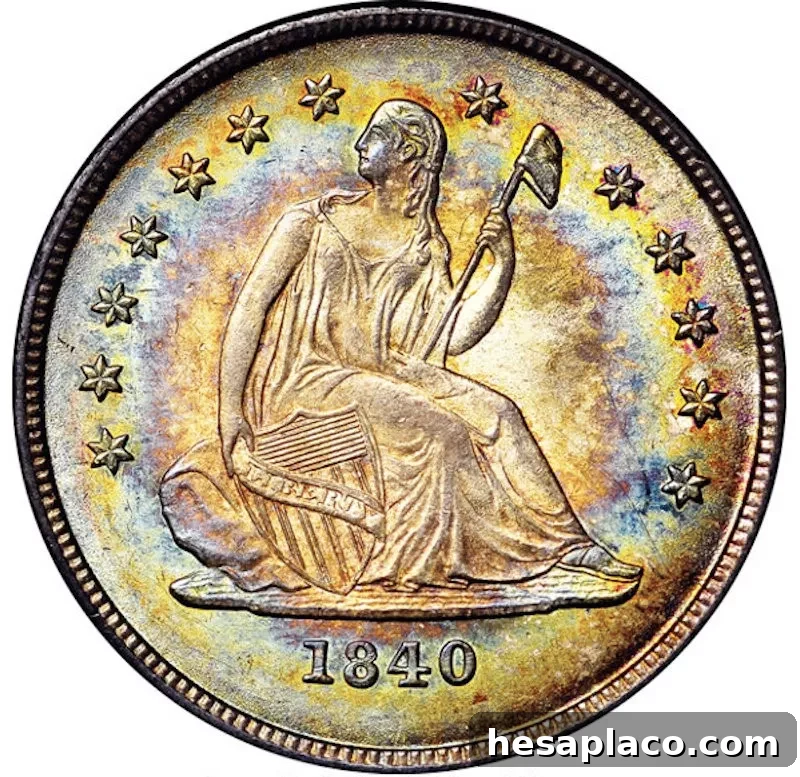
Heritage Auctions
The No Drapery variety was produced briefly from 1838–1840. The New Orleans Mint struck roughly 382,200 pieces before a design change added a fold of drapery under Liberty’s right elbow. Most circulated heavily, so few survive in mint state. This specimen is the Briggs 1-A variety, notable for a recut 8 in the date and a mintmark placement between the letters A and R of “QUARTER.”
14. 1841 Proof Liberty Seated Quarter
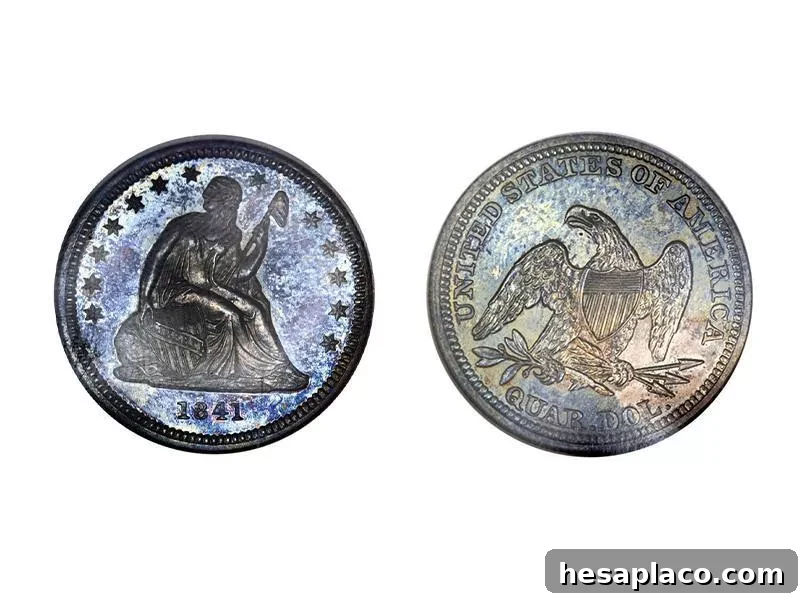
Heritage Auctions
Sold at auction: $345,000
Bottom Line: 1841 Proof Liberty Seated Quarter
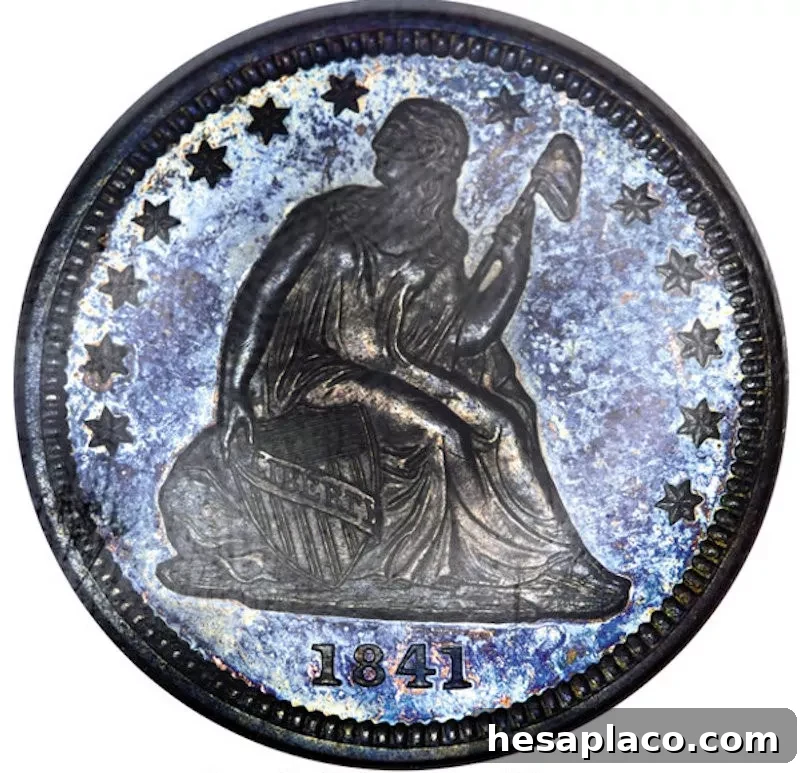
Heritage Auctions
Only four proof quarters from 1841 are known; this coin is the finest of that small group. One example from this year resides at the Smithsonian Institution.
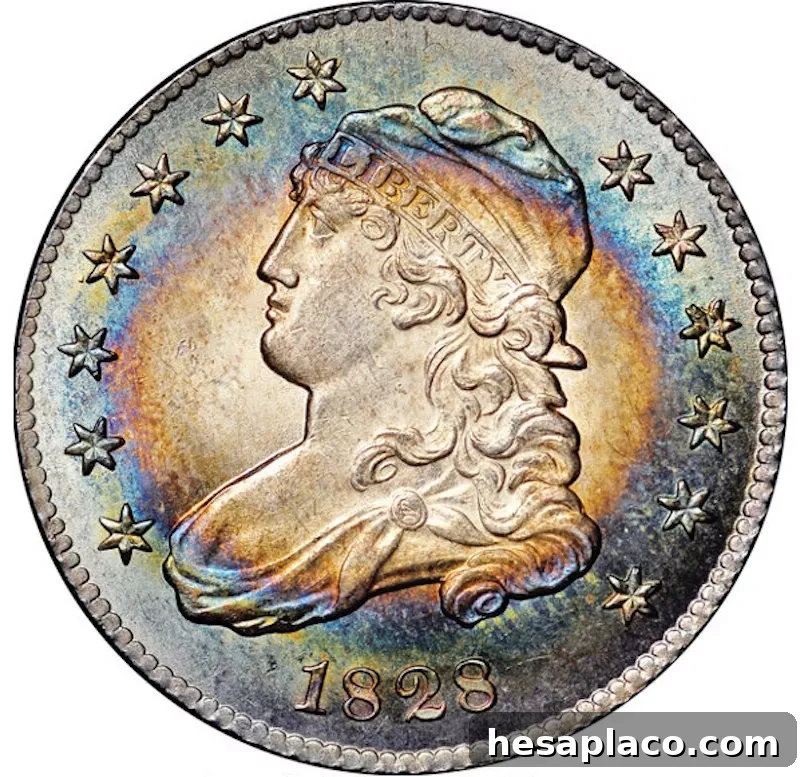
13. 1828 B-3 25/5/50 Error Reverse Capped Bust Quarter
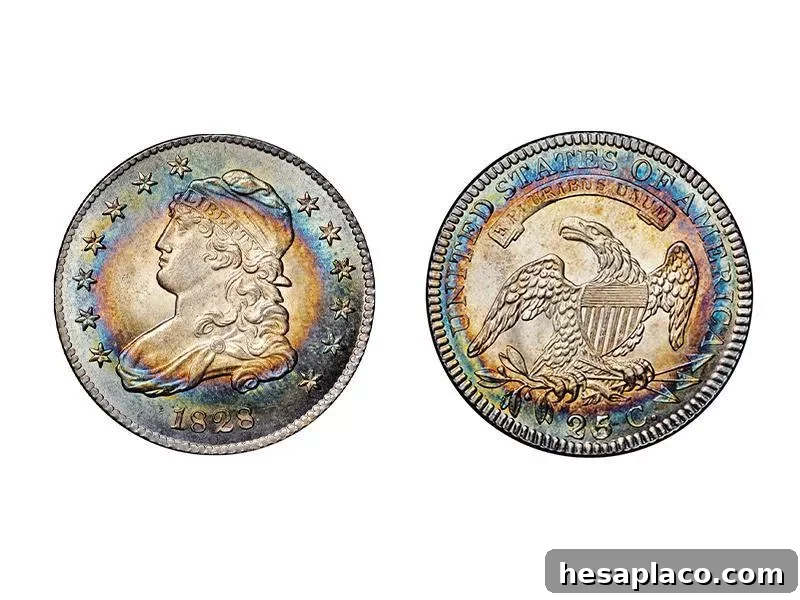
Heritage Auctions
Sold at auction: $352,500
Bottom Line: 1828 B-3 25/5/50 Error Reverse Capped Bust Quarter
Heritage Auctions
Quarters struck in 1828 used four different die marriages; the B-3 marriage is the rarest. The obverse uses the 1828 B-1/B-2 obverse, while the reverse is a die last used in 1822. Die storage and rust affected some pieces from this combination, but this particular coin shows excellent preservation and may be the finest certified example of the B-3 marriage and of all 1828 quarters.
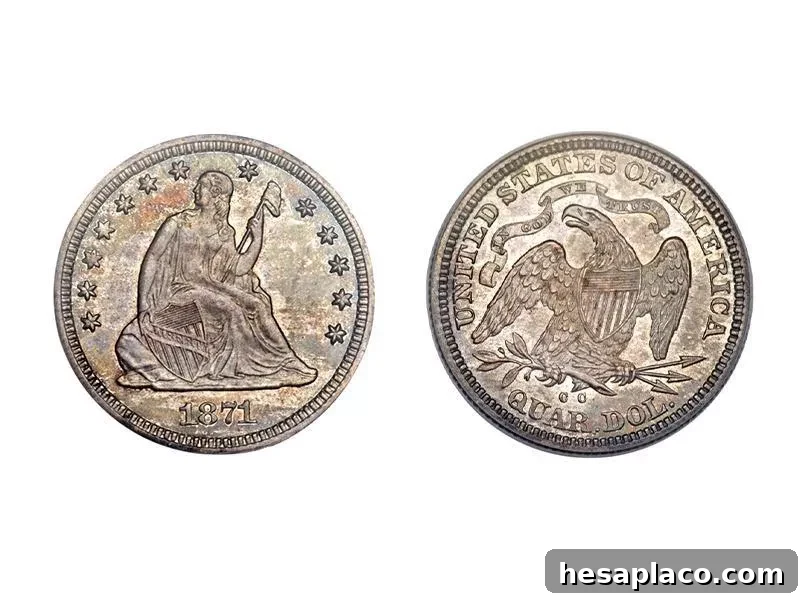
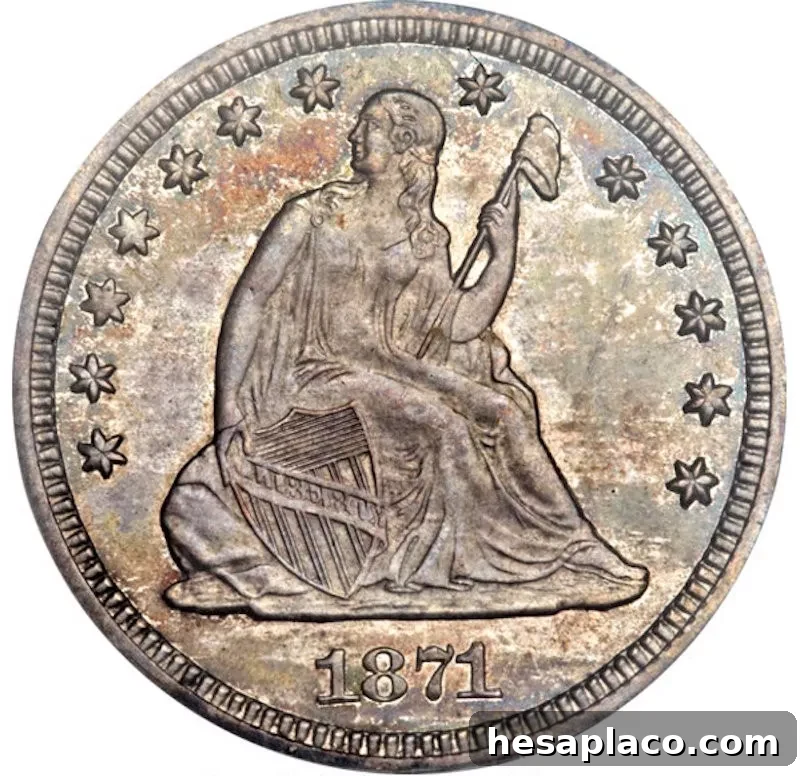
12. 1871-CC Liberty Seated Quarter
Heritage Auctions
Sold at auction: $352,500
Bottom Line: 1871-CC Liberty Seated Quarter
Heritage Auctions
Carson City produced a small mintage of 10,890 for 1871. This example shows evidence of repunched 1s in the date and was struck with a reverse die used on CC quarters from 1870–1873. The surfaces are pristine and the reserve is fully struck. Only three mint-state examples from 1871-CC are known, and this specimen is considered the most valuable of that scarce group.
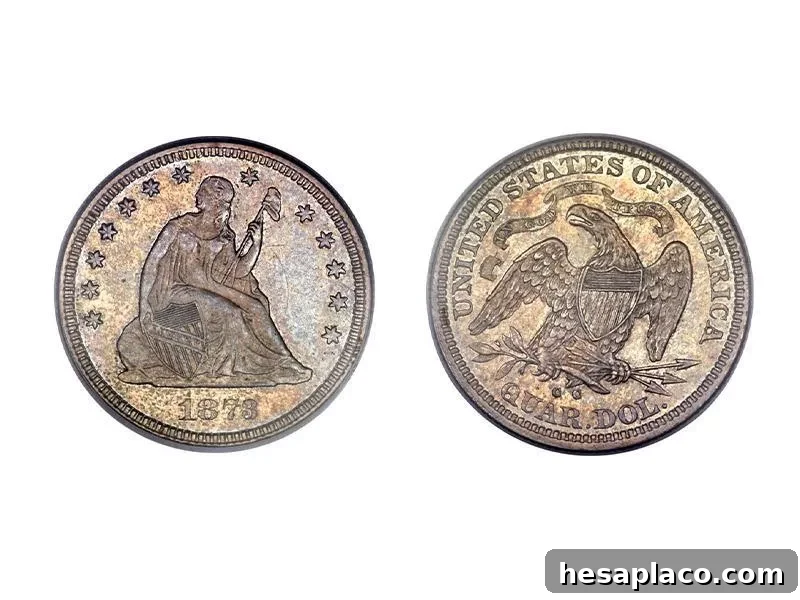
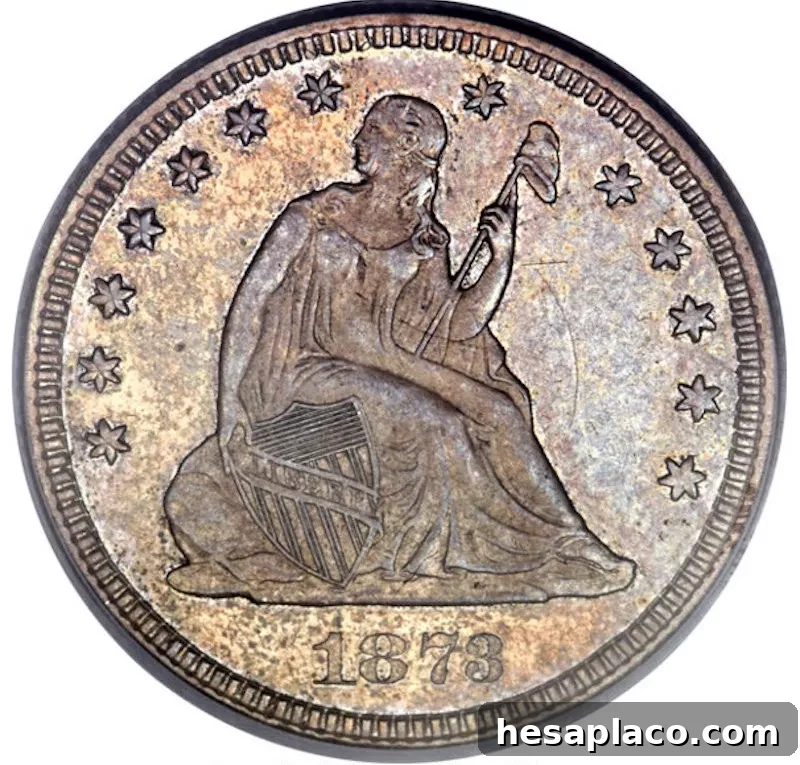
11. 1873-CC No Arrows Liberty Seated Quarter
Heritage Auctions
Sold at auction: $376,000
Bottom Line: 1873-CC No Arrows Liberty Seated Quarter
Heritage Auctions
In January 1873 the Carson City Mint struck about 4,000 No Arrows quarters, but changes in the Mint Act that year increased silver weight and led to many pieces being melted before circulation. Only five examples of the 1873-CC No Arrows quarter are known in any condition, and just three are in mint state, making this among the rarest quarters.
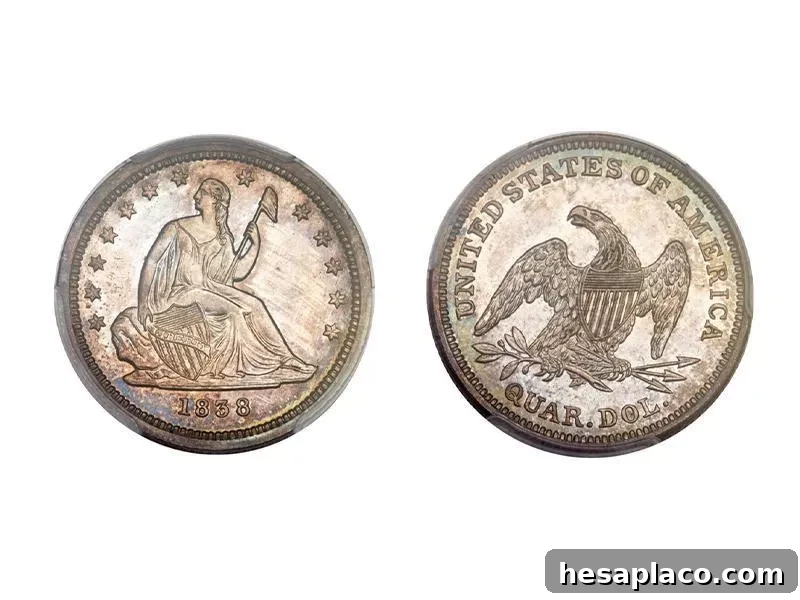
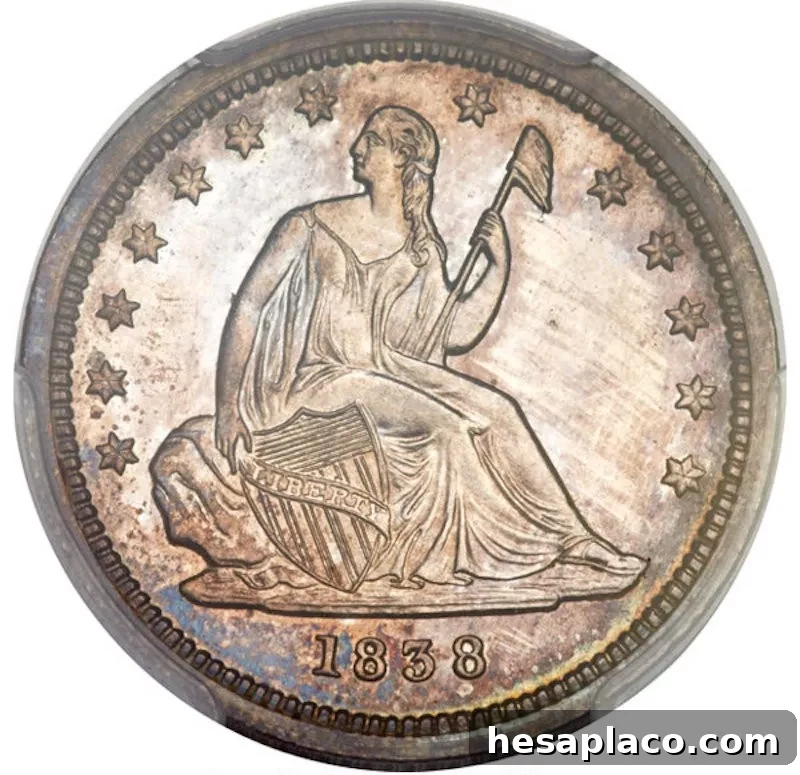
10. Proof 1838 Seated Liberty Quarter
Heritage Auctions
Sold at auction: $381,875
Bottom Line: Proof 1838 Seated Liberty Quarter
Heritage Auctions
The Seated Liberty design debuted in 1838 after Treasury Secretary Levi Woodbury requested sample issues. These proof coins were likely distributed to lawmakers and prominent individuals. This particular 1838 proof quarter is the only known proof of its year and is in exceptional condition; it has a documented sale history earlier in the 19th and 20th centuries. It’s both the first No Drapery issue and the first year Seated Liberty quarters were produced.
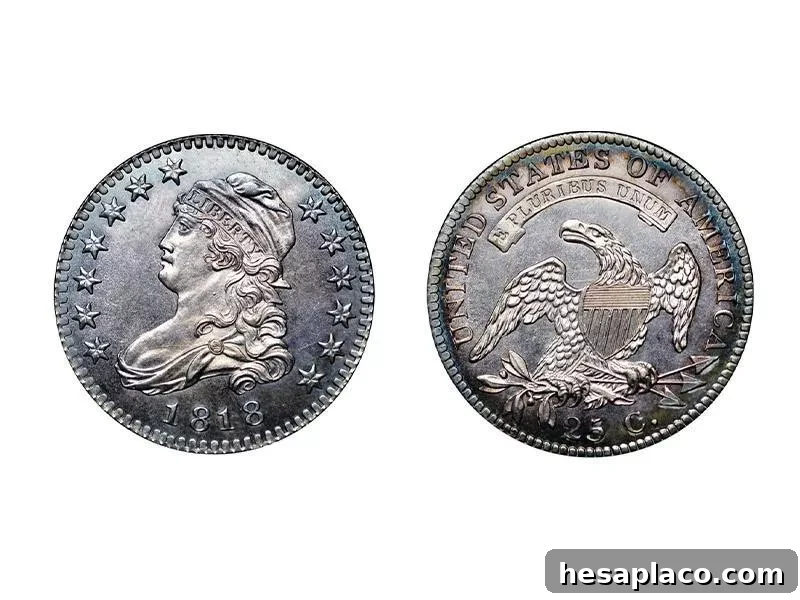
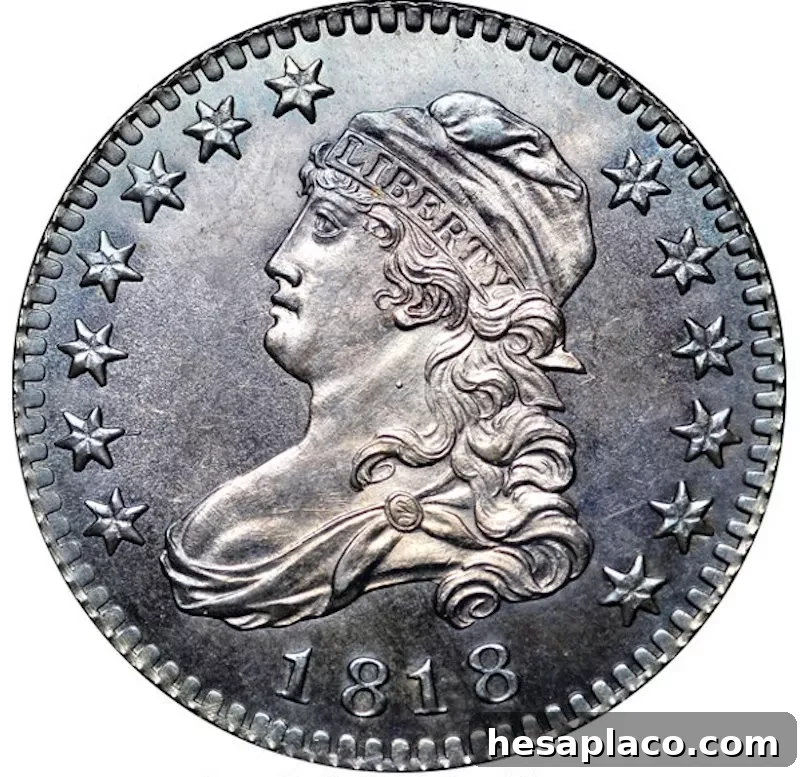
9. 1818 B-8 Capped Bust Quarter
Heritage Auctions
Sold at auction: $381,875
Bottom Line: 1818 B-8 Capped Bust Quarter
Heritage Auctions
A Mint fire in 1816 led to production changes; the first proof quarters appeared in 1818. Very few proof quarters from that year were struck and only two are known today. The other example is in the Smithsonian. The piece that sold is the finer of the two surviving proof quarters from 1818.
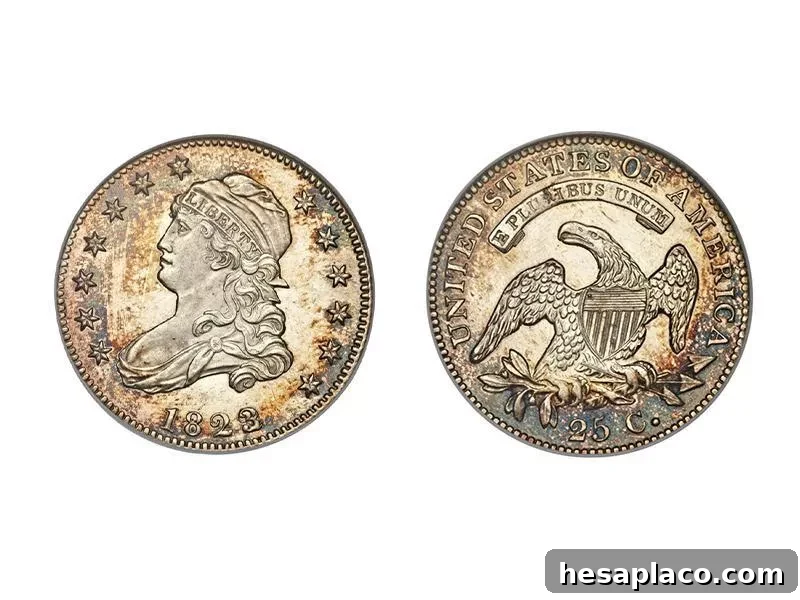
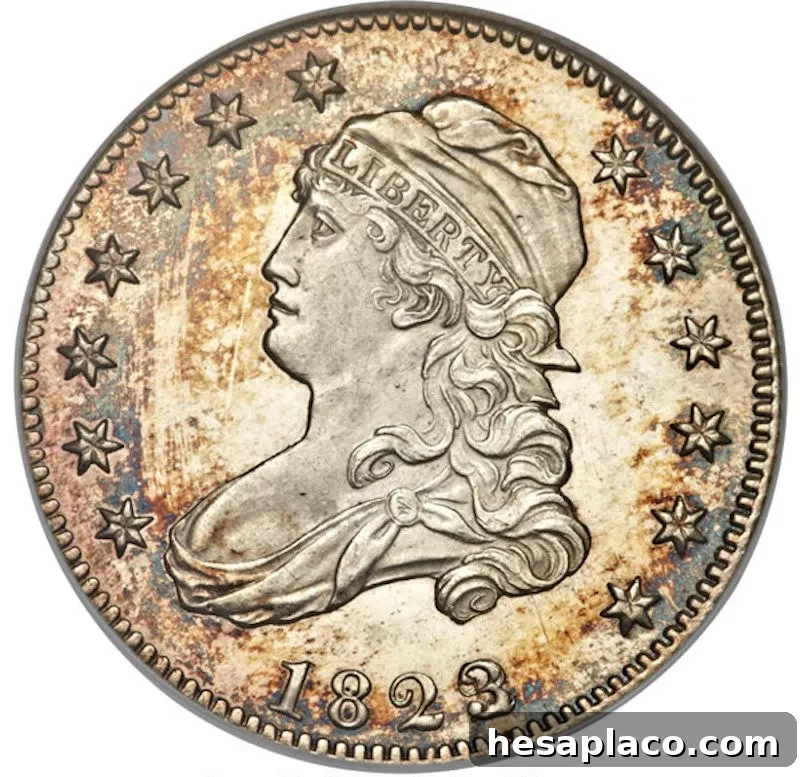
8. 1823/2 Proof Capped Bust Quarter
Heritage Auctions
Sold at auction: $396,562.50
Bottom Line: 1823/2 Proof Capped Bust Quarter
Heritage Auctions
The 1823 piece is an overdate: a digit 2 remains visible under the 3 in the date. The reverse appears incomplete, which numismatists attribute to Chief Engraver Robert Scot—late in his career—using the previous year’s obverse while unable to fully finish a new reverse. This was the last quarter engraved by Scot before his death in November 1823. The coin is the only proof quarter of its year certified by PCGS.
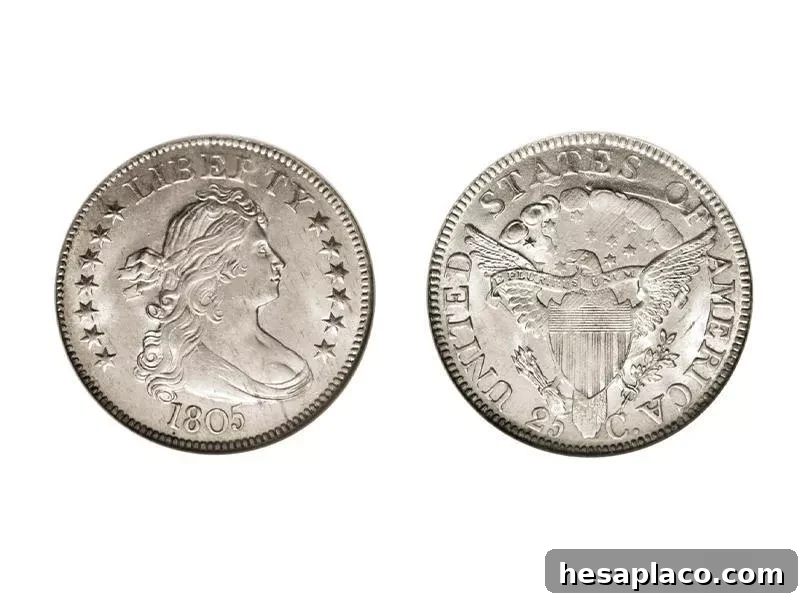
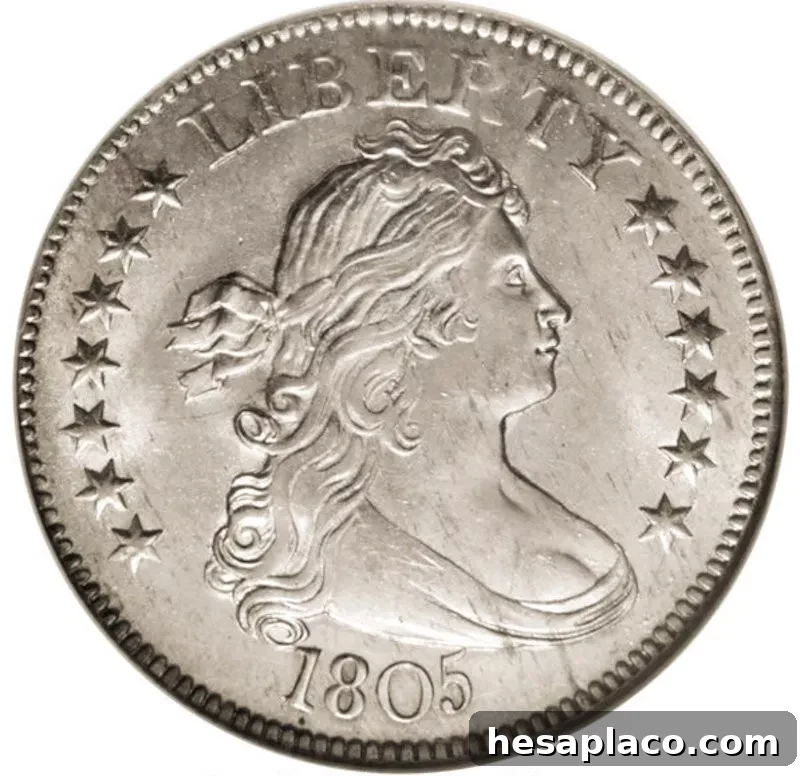
7. 1805 B-2 Draped Bust Quarter
Heritage Auctions
Sold at auction: $402,500
Bottom Line: 1805 B-2 Draped Bust Quarter
Heritage Auctions
Production increased in 1805 after only sparse output in prior years. That year’s mintage was 121,394 across four known varieties. The B-2 variety pictured above is notable for its “mint frost” luster—normally seen on later coins—rather than the satin finish typical of its era. It is regarded as the finest graded quarter from 1805.
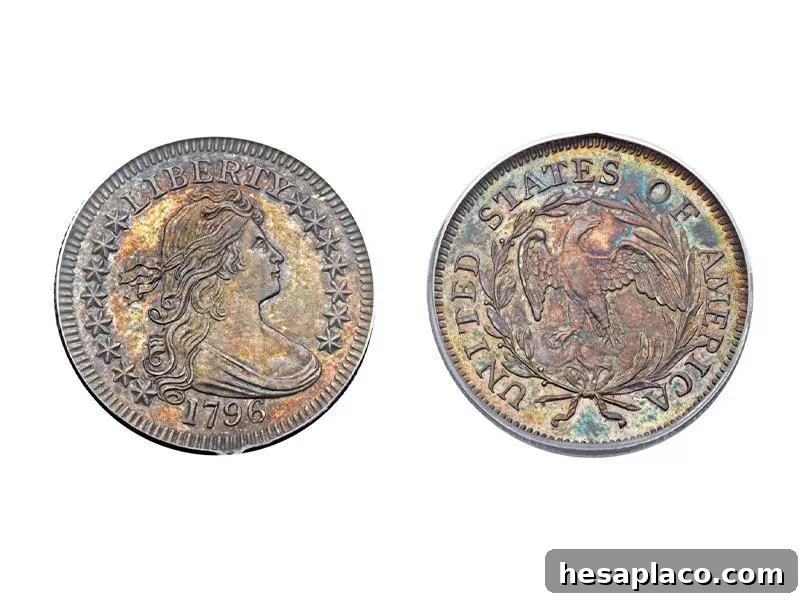
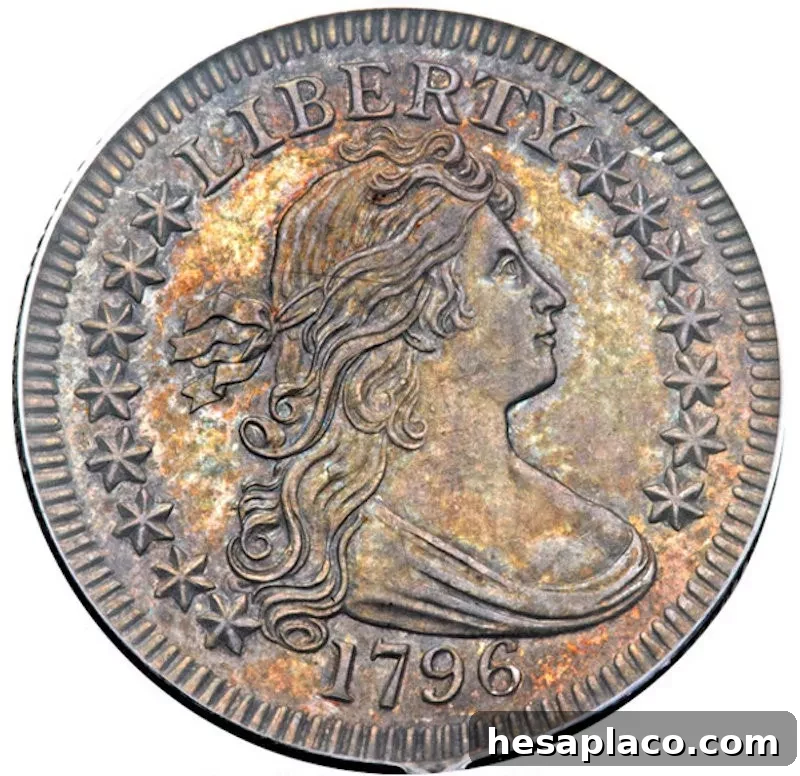
6. 1796 Proof-Like B-2 Draped Bust Quarter
Heritage Auctions
Sold at auction: $411,250
Bottom Line: 1796 Proof-Like B-2 Draped Bust Quarter
Heritage Auctions
The first quarter ever minted, the 1796 Draped Bust quarter used a Small Eagle reverse. Production in late 1796 amounted to 5,894 coins, with another small run in February 1797. The B-2 (Browning-2) examples are believed to have been struck early. Collectors describe this specimen as “proof-like” because of the distinct strike and reflectivity in its surfaces.
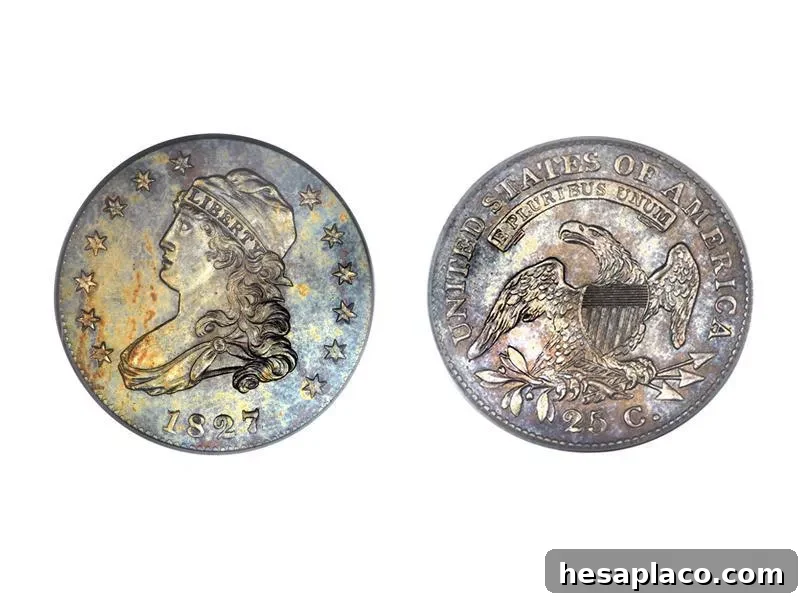
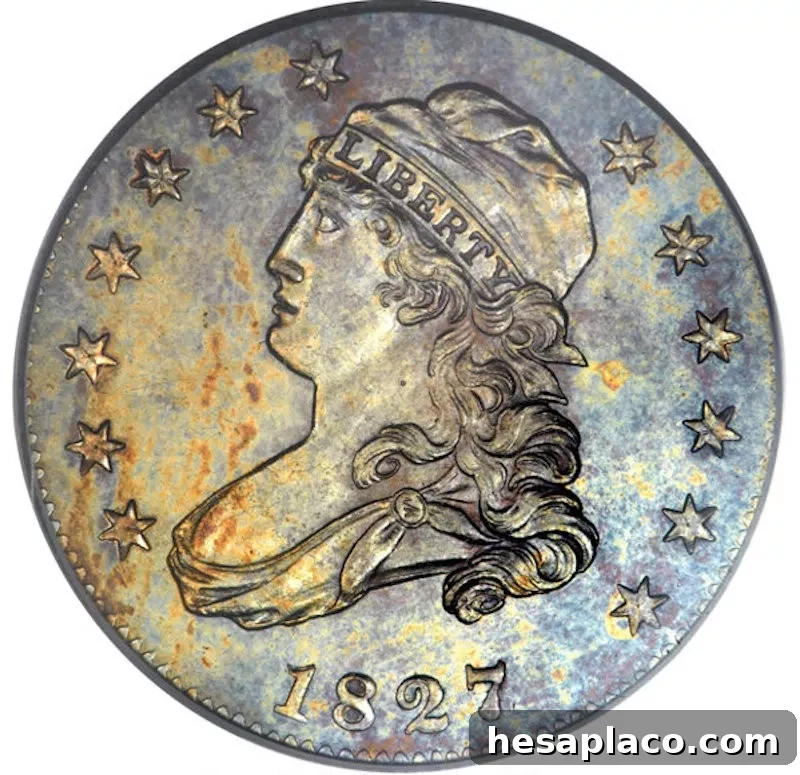
5. 1827/3/2 Capped Bust Quarter
Heritage Auctions
Sold at auction: $411,250
Bottom Line: 1827/3/2 Capped Bust Quarter
Heritage Auctions
The 1827 quarter is an overdate showing a 3 beneath the 7. Initially about 4,000 were struck; at some point before 1860 the Mint restruck coins using an 1827 obverse with an 1819 reverse. Original 1827 pieces can be identified by the curl-based 2 in the date, as opposed to the flat-based 2 of 1819 reverses. Only nine original 1827 Capped Bust quarters are known; one resides at the Smithsonian. The auctioned coin ranks among the top four known examples.
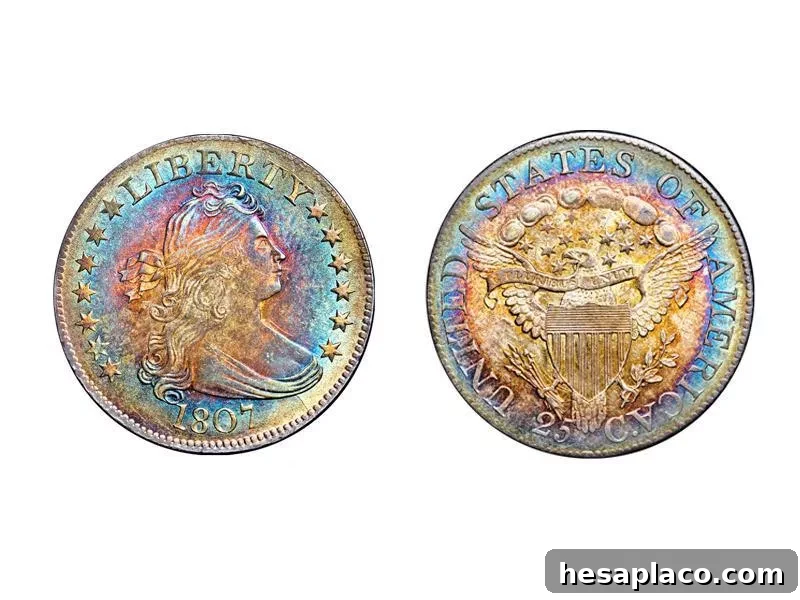
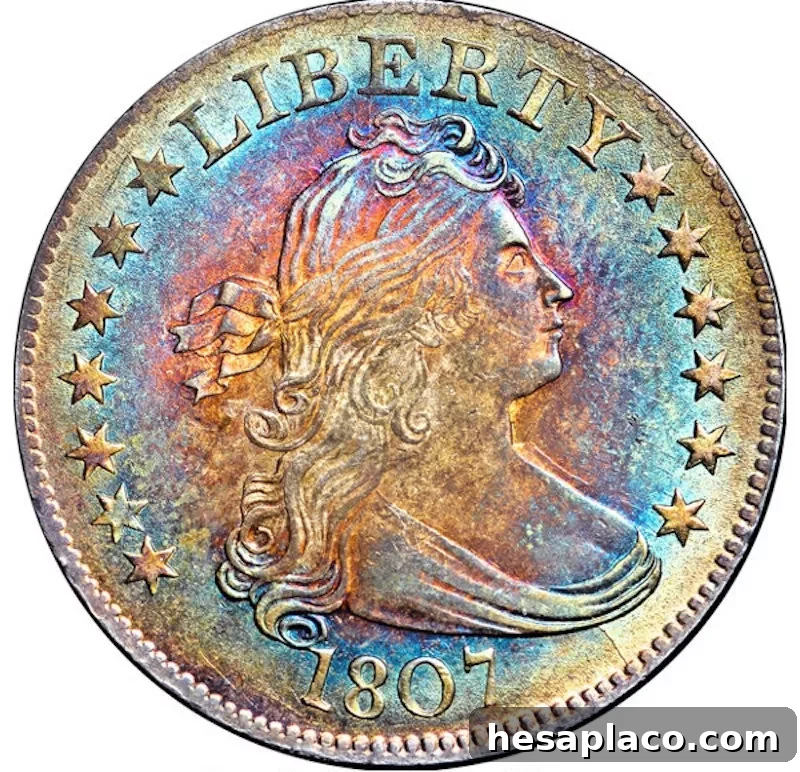
4. 1807 B-2 Draped Bust Quarter
Heritage Auctions
Sold at auction: $411,250
Bottom Line: 1807 B-2 Draped Bust Quarter
Heritage Auctions
The 1807 issue used dies unique to that year’s B-2 pairing and those dies were not used for other early-quarter varieties. Both dies later developed cracks and eventually shattered in later states. Only about one quarter of surviving 1807 quarters were struck from the B-2 die pair. This example is the finest B-2 1807 quarter and the second-highest graded 1807 quarter overall.
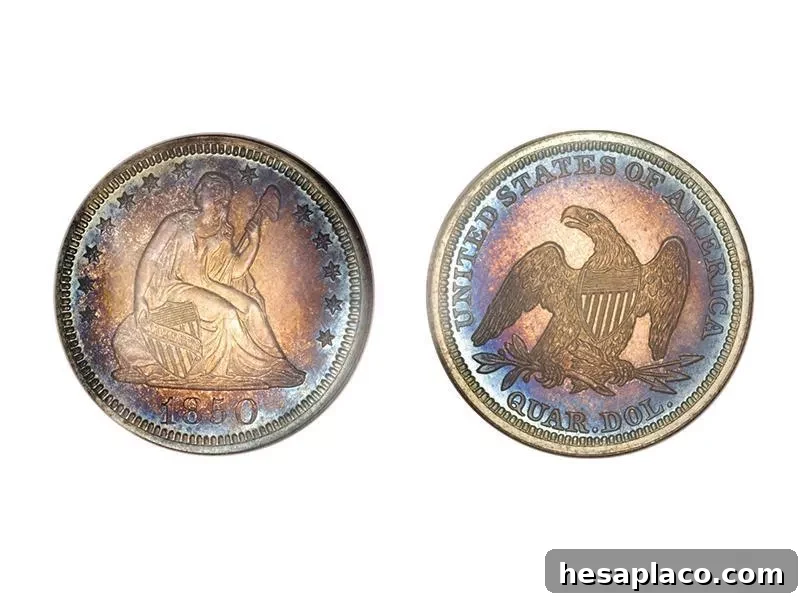
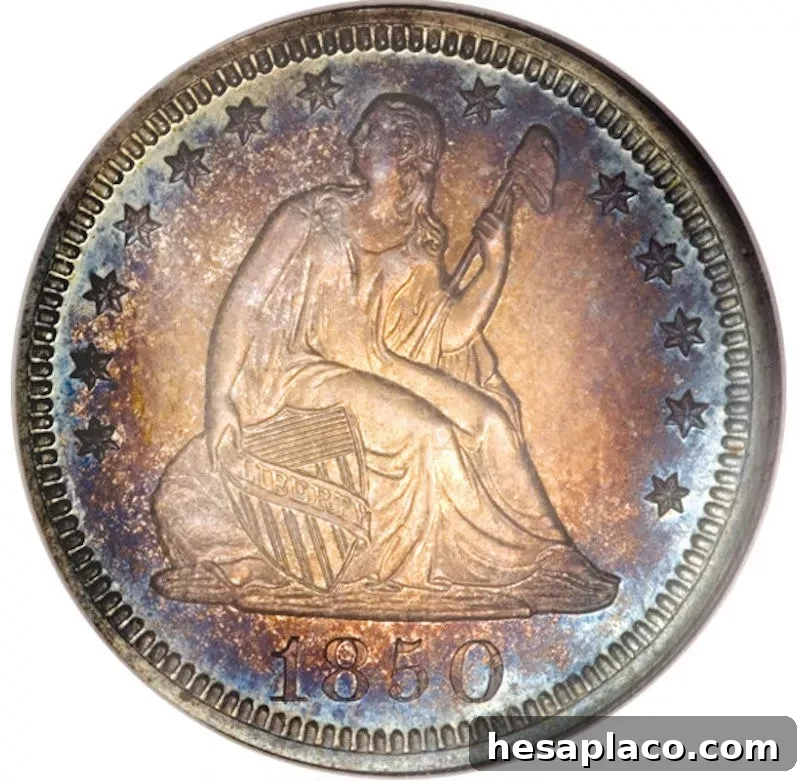
3. 1850 Proof Liberty Seated Quarter
Heritage Auctions
Sold at auction: $460,000
Bottom Line: 1850 Proof Liberty Seated Quarter
Heritage Auctions
Only two or three proof quarters from 1850 are believed to exist. The example sold at auction is considered the highest quality known from that extremely scarce group.
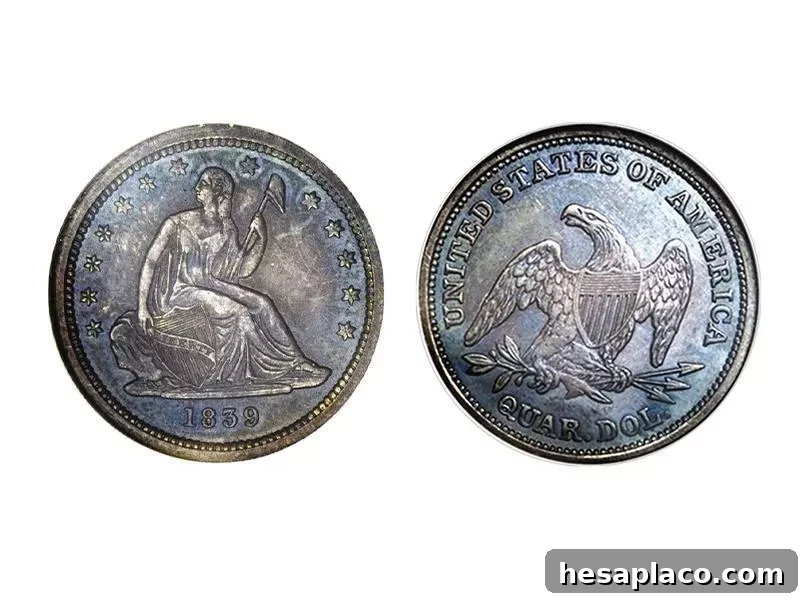
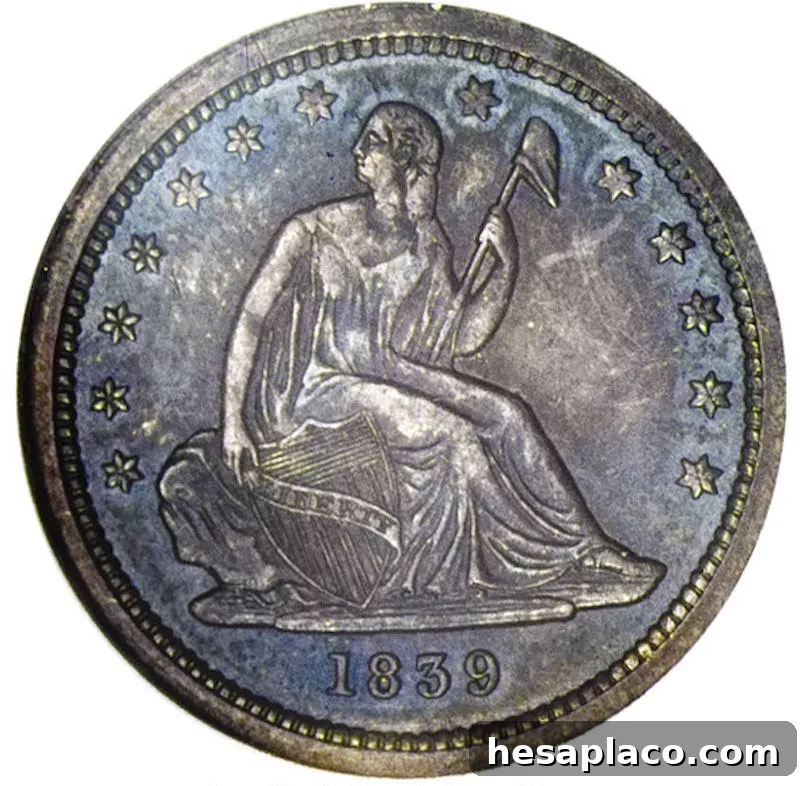
2. 1839 Proof Seated Liberty Quarter
Heritage Auctions
Sold at auction: $517,500
Bottom Line: 1839 Proof Seated Liberty Quarter
Heritage Auctions
This coin may be unique. Proofs before 1858 are rare, and 1839 proofs are particularly scarce. There is no contemporary record of a proof set for 1839, so some experts believe this might be the only proof quarter produced that year.
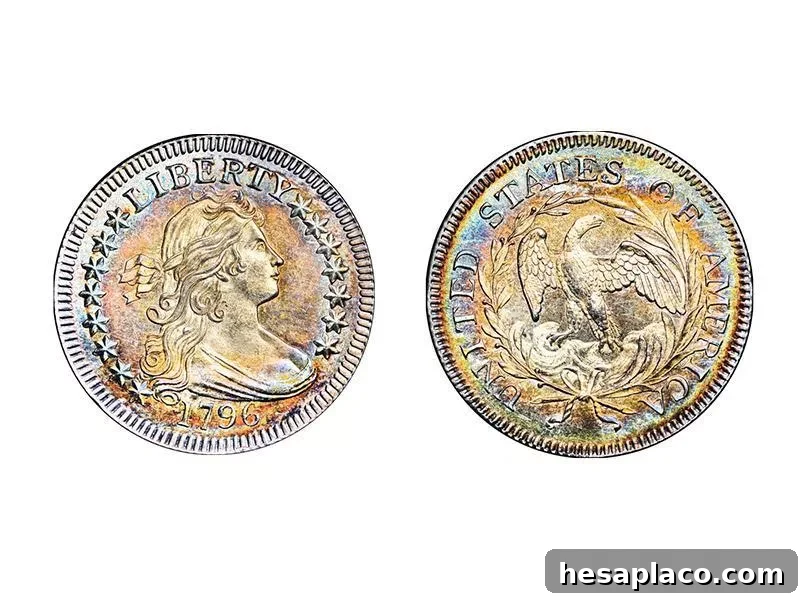
1. 1796 B-2 Draped Bust Quarter
Heritage Auctions
Sold at auction: $1,527,500
Bottom Line: 1796 B-2 Draped Bust Quarter
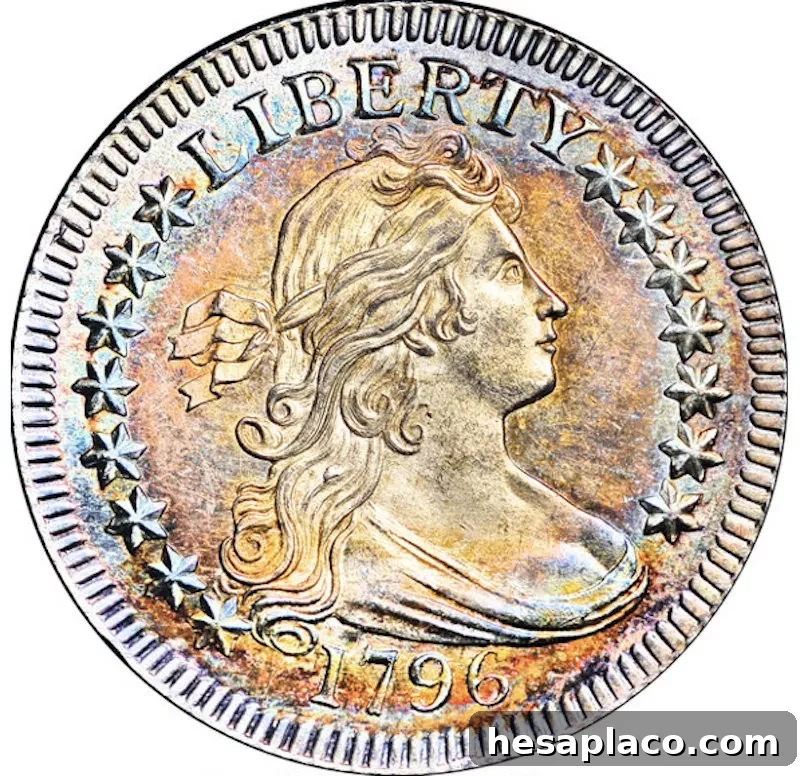
Heritage Auctions
The Philadelphia Mint struck 6,146 quarters in 1796. It’s estimated that around 700 survive and roughly 75 remain in mint condition. This particular coin was struck from the earlier B-2 die pair and shows evidence of doubling on both sides. As one of the earliest quarters produced at the Philadelphia Mint, its rarity and condition place it at the top of the market.