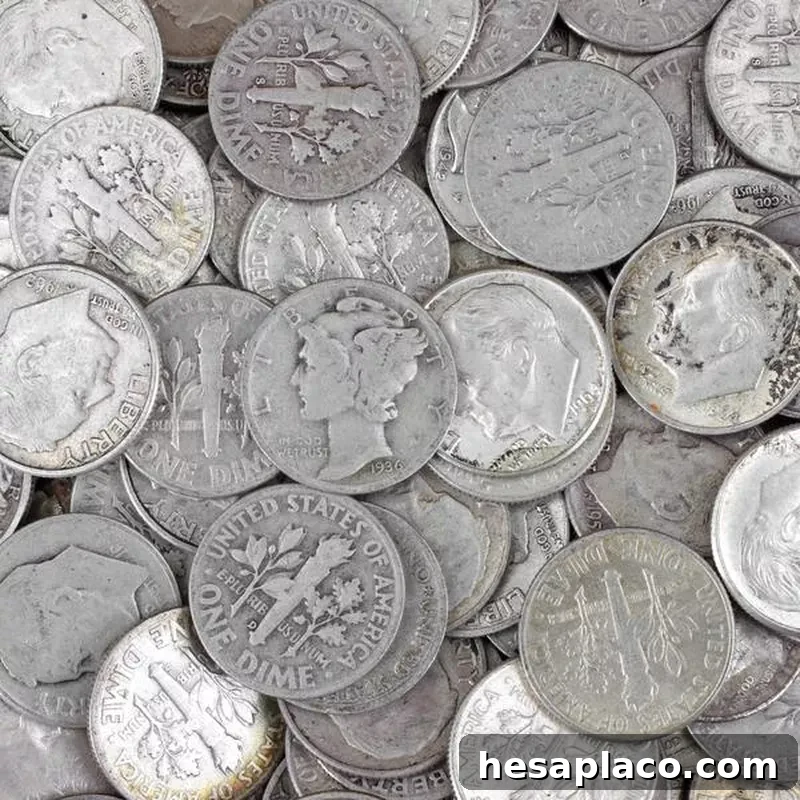
The dime was the first coin produced under authority of the U.S. Mint, even before the Mint had its own building. In 1792, George Washington ordered the first run of dimes, which were struck on a borrowed press kept in the owner’s basement.
The first dime struck inside an official U.S. Mint facility was produced in 1796. Early 10-cent coins depicted Lady Liberty, either as a bust or in full profile. From 1916 to 1945, Liberty was depicted with winged cap elements that led many to mistake the design for the Roman god Mercury; those coins are commonly called Mercury dimes today. President Franklin D. Roosevelt’s portrait first appeared on the dime in 1946.
For most of their history, dimes were made primarily of silver, though some early issues included a higher copper content during periods of silver shortage. The Coinage Act of 1965 eliminated silver from circulating dimes, replacing it with a copper-nickel clad composition.
As with other collectible coins, the highest values are reserved for dimes preserved in mint state. Mint condition refers to the coin’s grade on the numismatic Sheldon Scale rather than unchanged surface color—natural toning and color variation are expected and often preferred. Improper cleaning can reduce a coin’s value significantly. Dimes command top prices for reasons including low original mintages, production anomalies, minting errors, or having been largely melted for their metal content.
Two major third-party grading services, the Professional Coin Grading Service (PCGS) and the Numismatic Guaranty Corporation (NGC), assign grades using the Sheldon Scale from 1 to 70. Coins graded MS60 and above are called mint state and typically attract the strongest collector demand.
Below are 25 of the most valuable U.S. dimes, with highlights on provenance, rarity and auction results. Combined, these coins represent millions of dollars in realized value and illustrate important turning points in U.S. coinage history.
1945 S Micro S Full Band Mercury Dime
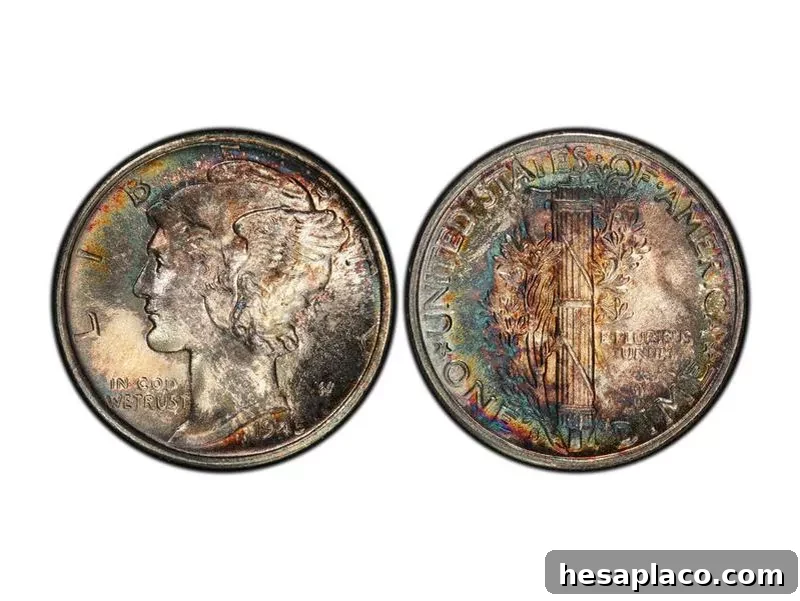
PCGS
Sold at auction: $25,850 (2019)
Only one 1945-S dime is known with the rare “Micro S” mintmark on the reverse. While many 1945-S dimes exist, few survive in mint state—just over 1,200 have been graded mint state by NGC—and San Francisco strikes from this year are often poorly struck. Dimes with fully defined bands on the fasces reverse are particularly scarce and desirable; this example was offered in mint condition.
1860 Liberty Seated Dime
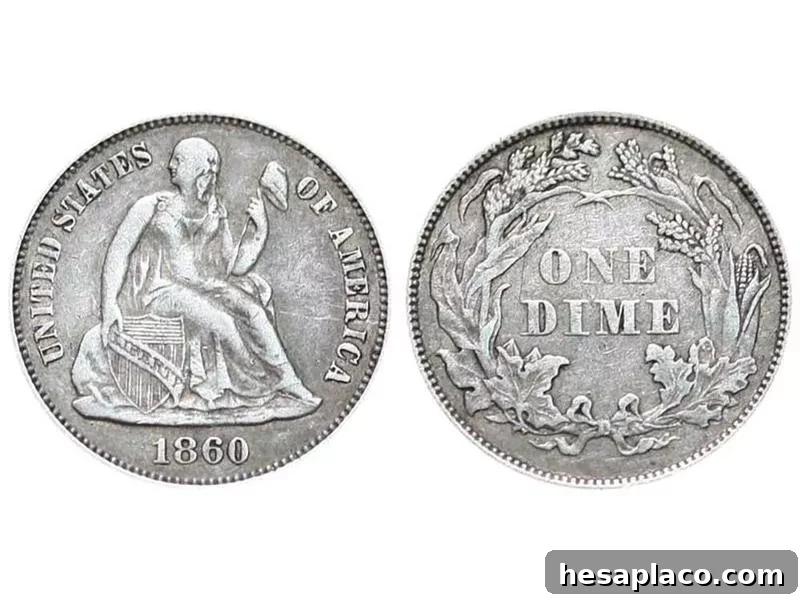
USA Coin Book
Sold at auction: $27,600 (2006)
In 1860 the legend “UNITED STATES OF AMERICA” moved to the obverse and replaced the stars, while the wreath on the reverse was enlarged. Philadelphia produced more than 600,000 dimes that year, so most surviving examples are common in circulated grades. However, mint-state examples are scarce; this coin is one of over 100 1860 dimes certified in mint state.
1968 No S Roosevelt Dime Proof
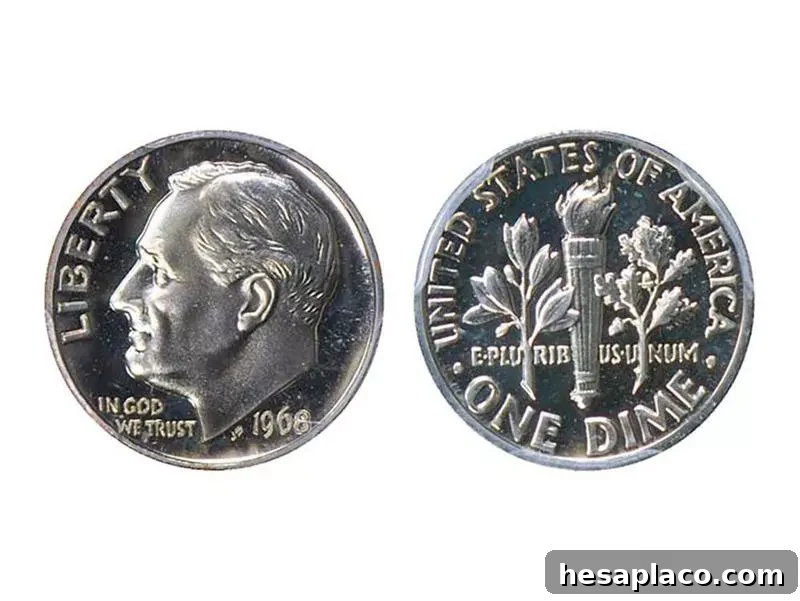
Coin World
Sold at auction: $31,102 (2015)
This proof Roosevelt dime is one of only about a dozen known examples struck without the San Francisco “S” mintmark. It appears the San Francisco Mint corrected the die soon after, so no official production records exist for these mistakes, heightening their mystery and collector appeal. The handful that survive in pristine condition are extremely valuable.
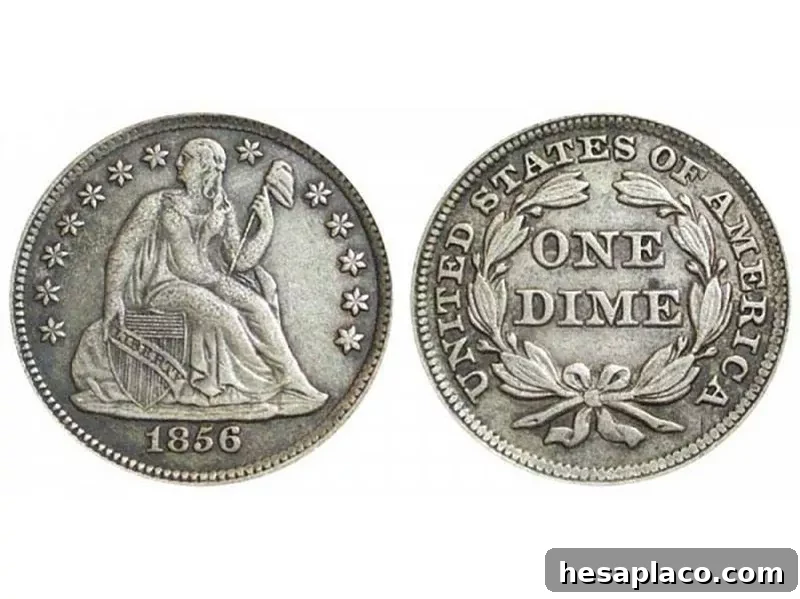
1856 S Seated Liberty Dime
USA Coin Book
Sold at auction: $43,700 (2003)
1856 marked the first year the San Francisco Mint produced dimes. With a mintage of only about 70,000, even worn examples are scarce, and mint-state pieces are exceptionally rare and prized by collectors.
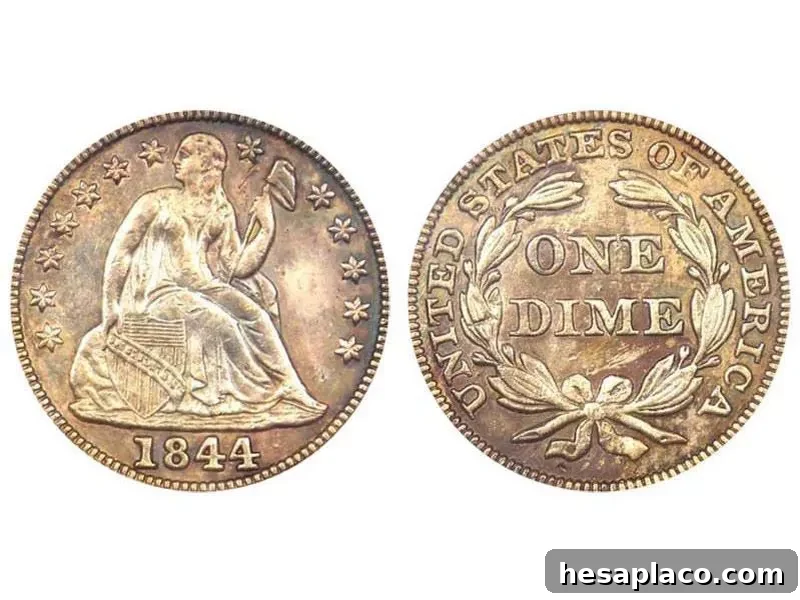
1844 Seated Liberty Dime
USA Coin Book
Sold at auction: $51,750 (2008)
Although the 1844 dime had a relatively modest mintage of 72,500, many surviving examples show wear. Only about 15 certified examples are known in uncirculated condition; this specimen ranks among the finest certified by PCGS.
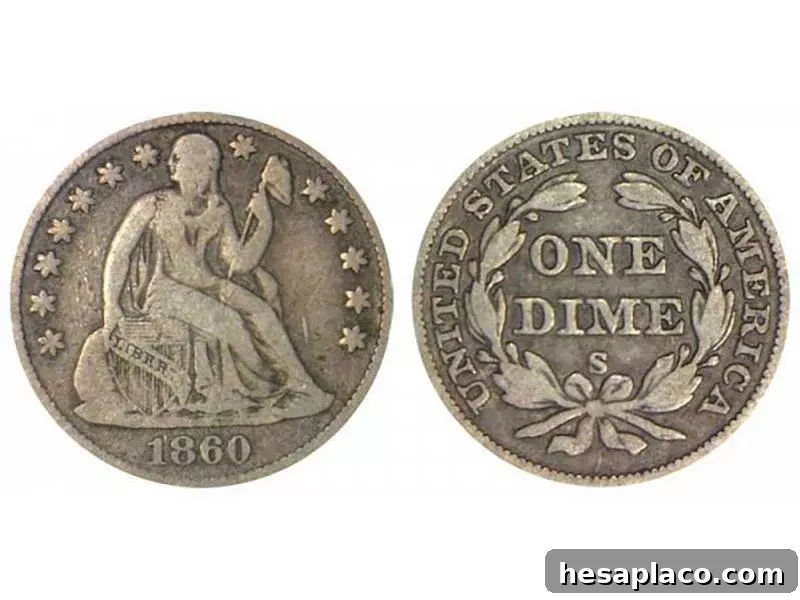
1860 O Seated Liberty Dime
USA Coin Book
Sold at auction: $64,625 (2015)
The 1860 design updates included a new obverse legend. New Orleans-minted examples (marked “O”) had a low mintage of around 40,000, and many were reportedly melted during the Civil War era. Only a handful of mint-state examples survive.
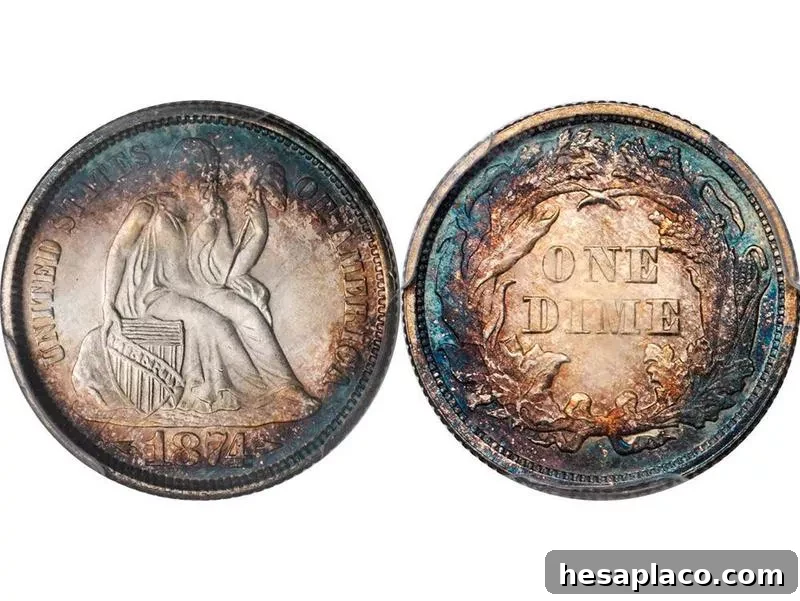
1874 Seated Liberty Dime With Arrows Proof
Stack’s Bowers
Sold at auction: $67,562.50 (2013)
Only 700 proof dimes were struck in Philadelphia in 1874. This example has been certified at the highest grade for the date by both PCGS and NGC, making it a standout among proof issues of the era.
1798 Large 8 Draped Bust Dime
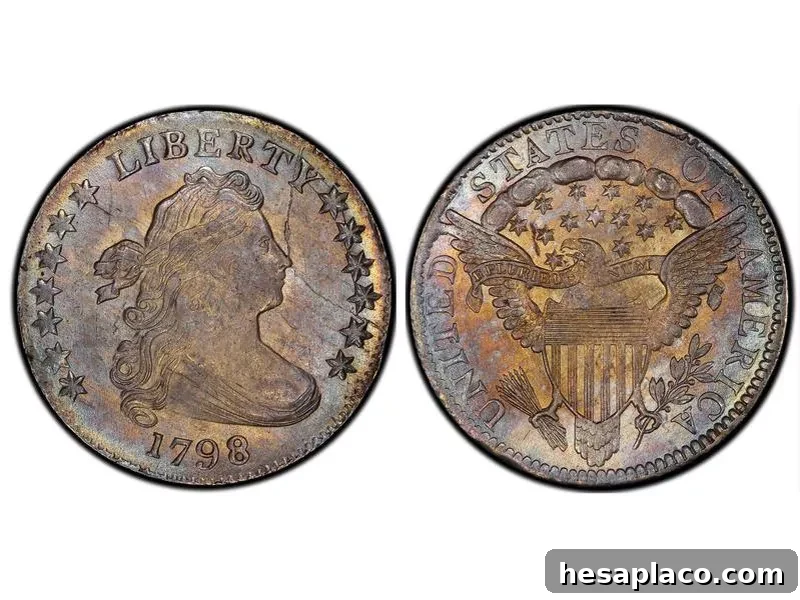
Stack’s Bowers
Sold at auction: $82,250 (2008)
The “Large 8” 1798 dime is scarcer than many later issues. With a mintage of about 27,550, mint-state examples are uncommon. This coin is notable for being struck from a reverse die previously used for a 1798 quarter.
1846 Seated Liberty Dime
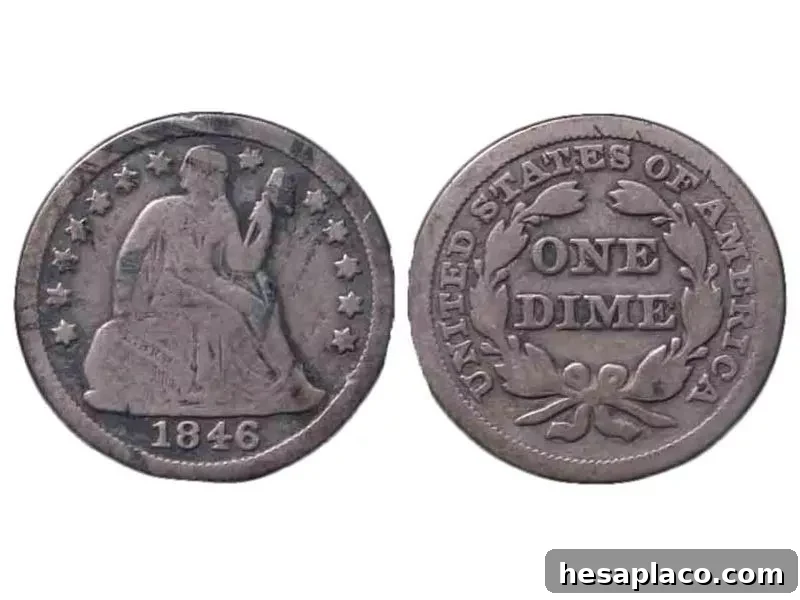
PCGS
Sold at auction: $86,250 (2009)
Only about 31,000 dimes were minted in 1846, making any surviving example relatively scarce. This piece is one of only three 1846 seated liberty dimes certified in mint state by both major grading services and ranks among the two finest known.
1859 S Seated Liberty Dime
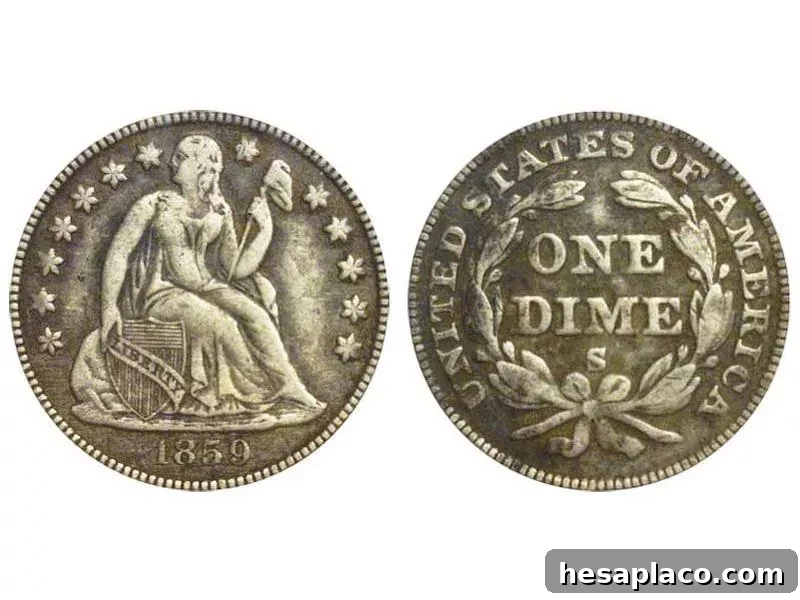
USA Coin Book
Sold at auction: $100,000 (2009)
With a mintage of only 60,000 and just one obverse die pair used, the 1859-S dime is among the rarer issues of the 1850s. Mint-state examples are especially rare; this specimen was offered in mint condition.
1874 CC Seated Liberty Dime With Arrows
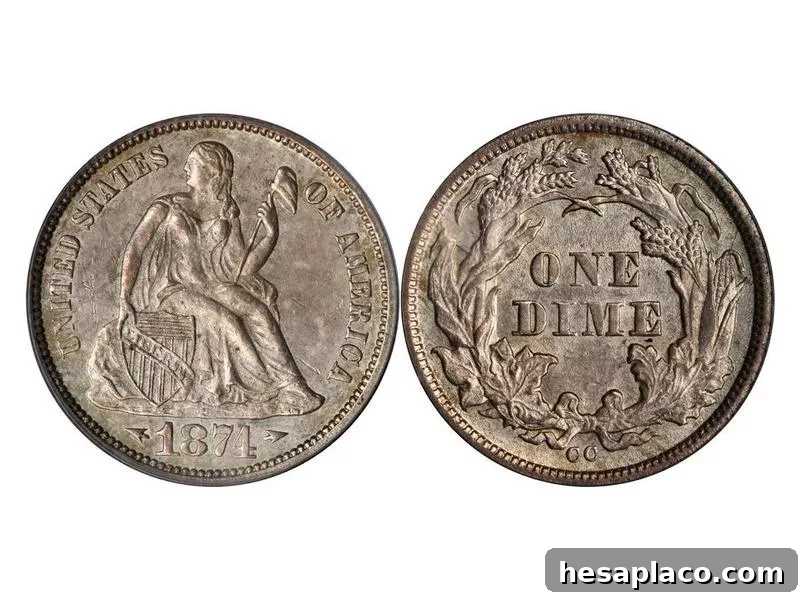
Stack’s Bowers
Sold at auction: $117,500 (2012)
Arrows beside the date denote a weight change beginning in 1873. Struck at the Carson City Mint, this issue is scarce: estimates put surviving examples at 35–50 in all grades, with only five known in mint state. Original mintage was 10,817.
1918 D Full Band Mercury Dime
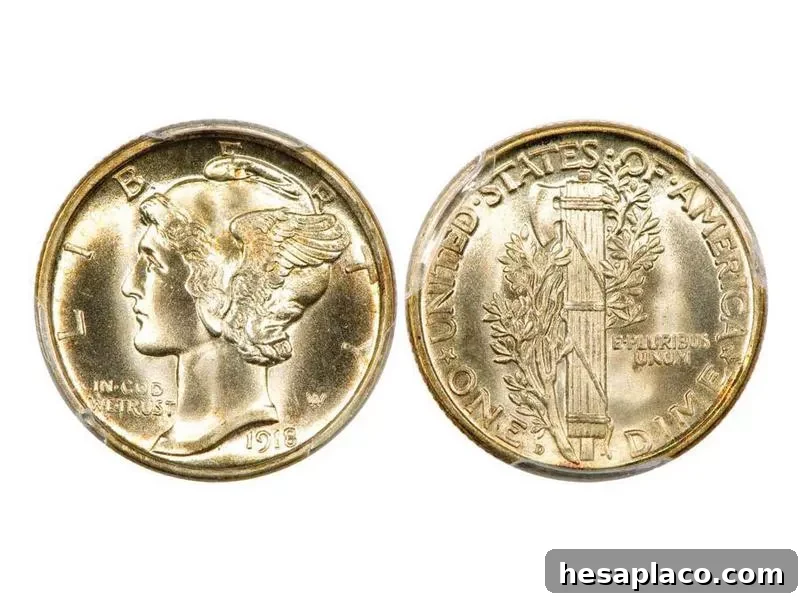
Legend Rare Coin Auctions
Sold at auction: $182,125 (2015)
Denver-minted 1918 dimes with full bands on the fasces reverse are rare because the bands are a high-relief area that wears quickly. Only a few dozen examples have been certified by PCGS with full bands, and mint-state coins like this one command strong prices.
1872 CC Seated Liberty Dime
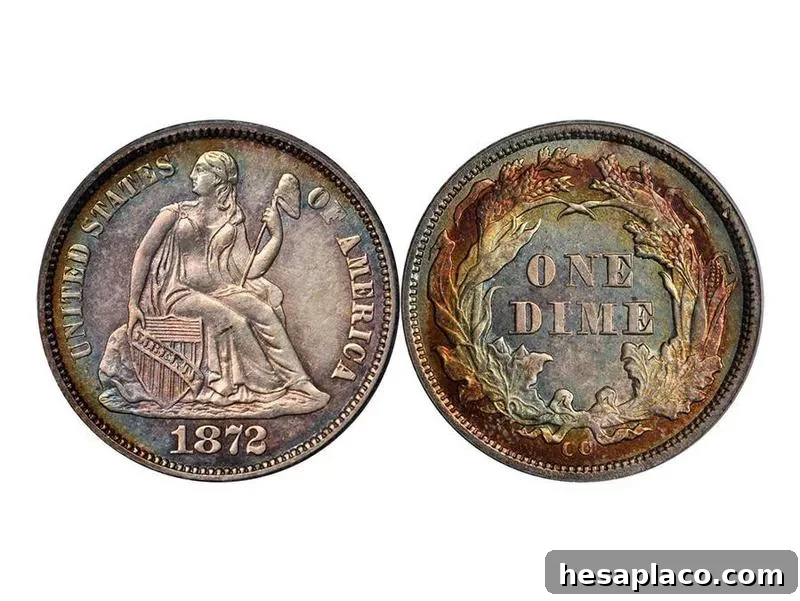
Stack’s Bowers
Sold at auction: $188,000 (2012)
Carson City dimes from 1872 are scarce in higher grades. The reverse die used for Liberty Seated dimes between 1871 and 1874 developed a crack later in the run; this coin was struck before that crack appeared and survives in mint condition.
1805 4 Berries Draped Bust Dime
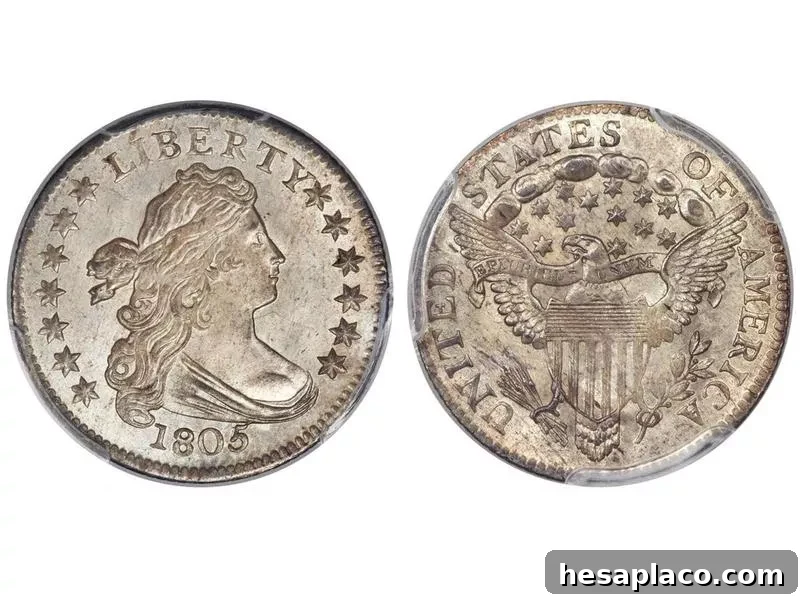
USA Coin Book
Sold at auction: $188,000 (2014)
In 1805 the Mint produced two varieties distinguished by the number of berries on the reverse olive branch. The 4-berries reverse is less common than some varieties, and well-preserved examples like this one are among the finest known.
1797 16 Stars Draped Bust Dime
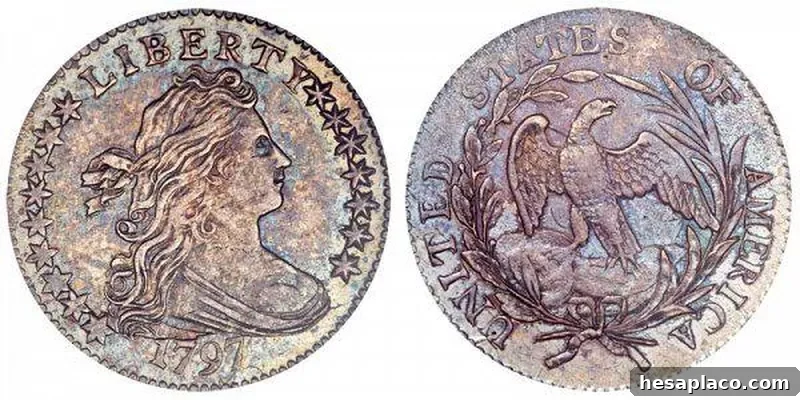
USA Coin Book
Sold at auction: $199,750 (2015)
The 1797 Draped Bust dime appears in two main star-count varieties. The 16-star obverse differs from the more common 13-star variety; pristine examples can approach six-figure prices, while average worn pieces still hold value in the thousands.
1916 D Full Band Mercury Dime
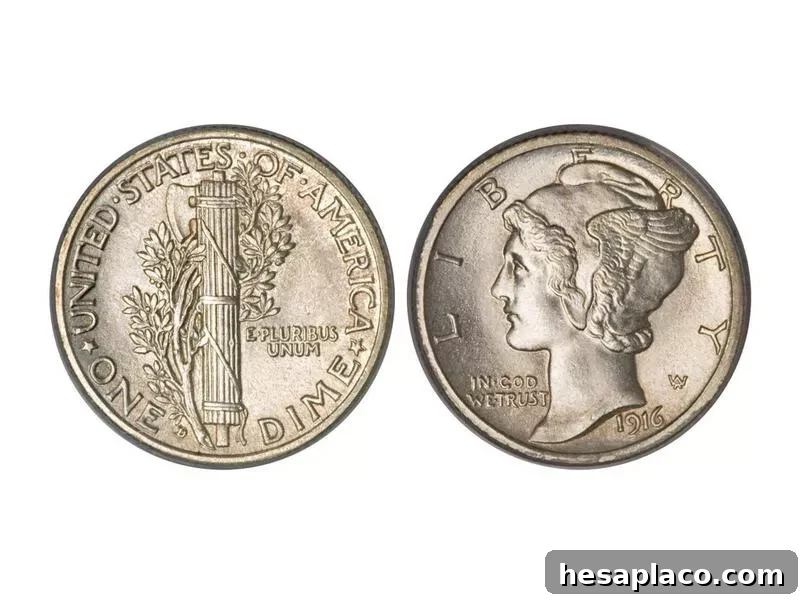
Heritage Auctions
Sold at auction: $207,000 (2010)
Adolph A. Weinman’s new dime design debuted in 1916. The Denver Mint produced only the new design that year and stopped production when supply met demand. With just 264,000 minted, the 1916-D is scarce; full-band mint-state examples—struck from fresh dies that retain detail in the fasces bands—are among the most sought-after Mercury dimes.
1798 Small 8 Draped Bust Dime
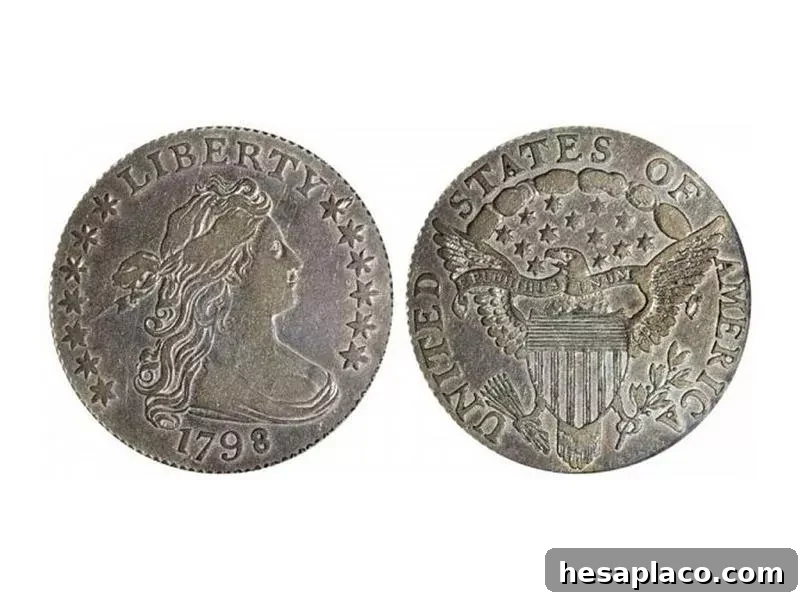
USA Coin Book
Sold at auction: $253,000 (2008)
In 1798 both “Small 8” and “Large 8” date styles were struck. The Small 8 is somewhat rarer and thus more valuable. Early Draped Bust dimes also show distinguishing letterform differences—for example, the R in LIBERTY can have a curved tail on certain issues.
1871 CC Seated Liberty Dime
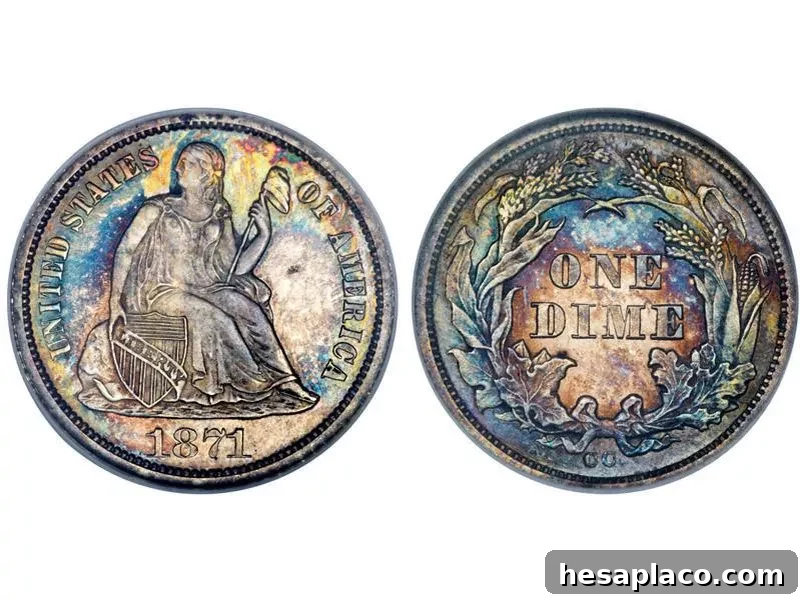
Heritage Auctions
Sold at auction: $270,250 (2014)
1871 was the first year Carson City produced dimes; just 20,000 were struck. Since most entered circulation, only a handful of mint-state examples survive—perhaps four or five—making mint examples extremely valuable.
1975 No S Roosevelt Dime Proof
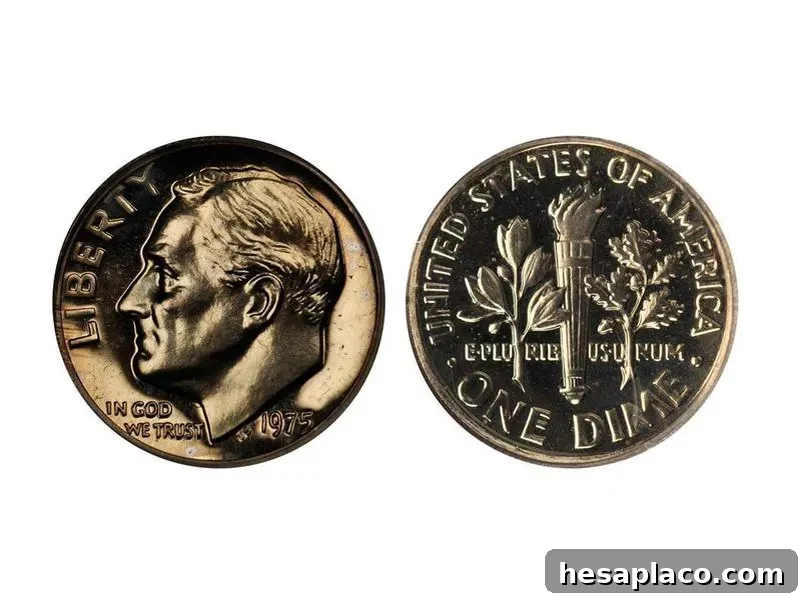
Stack’s Bowers
Sold at auction: $349,600 (2011)
Only two examples of the 1975 proof Roosevelt dime are known to be missing the San Francisco “S” mintmark, making them among the rarest modern U.S. dimes. The specimen offered here had been part of a private set for decades before sale and set a record for coin prices among second-half 20th century issues.
1800 Draped Bust Dime
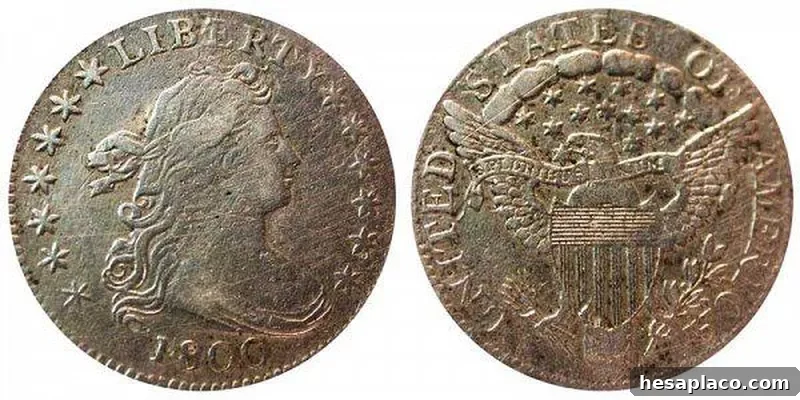
USA Coin Book
Sold at auction: $352,500 (2014)
This Draped Bust dime from 1800 sold for more than $350,000 at auction and is part of a series of early dimes that command high prices in quality grades. Even about-uncirculated examples of certain early dates can be worth tens of thousands.
1797 13 Stars Draped Bust Dime
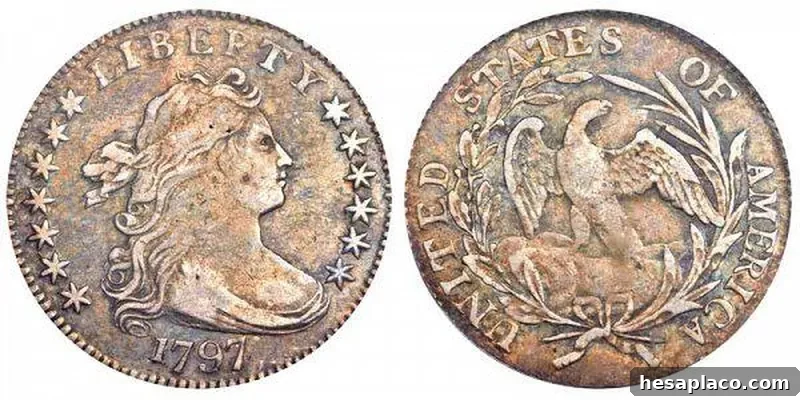
USA Coin Book
Sold at auction: $402,500 (2008)
The 13-star 1797 Draped Bust dime is the other major star-count variety for that year and typically commands higher prices than the 16-star version. High-grade examples can exceed $400,000 at auction.
1804 14 Star Reverse Draped Bust Dime
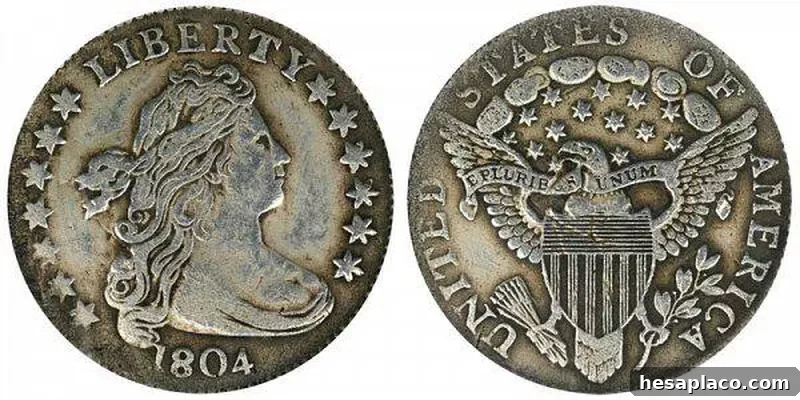
USA Coin Book
Sold at auction: $632,500 (2008)
The 1804 Draped Bust dime exists in 13- and 14-star reverse varieties; the 14-star reverse is considerably scarcer. High-grade examples can reach six figures, and exceptional specimens have realized sums well above half a million dollars.
1796 Draped Bust Dime
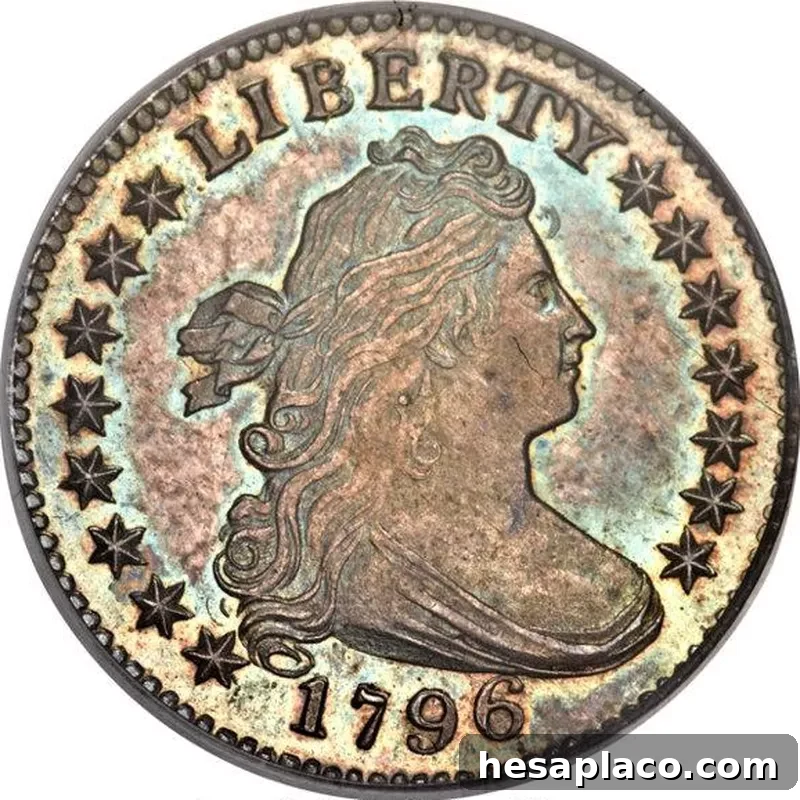
Heritage Auctions
Sold at auction: $881,250 (2014)
As the first year regular dimes were issued, 1796 examples are highly prized. One fine specimen from a notable New York collection realized nearly $900,000 at auction; even about-uncirculated pieces of this date are worth many thousands.
1873 CC No Arrows Seated Liberty Dime
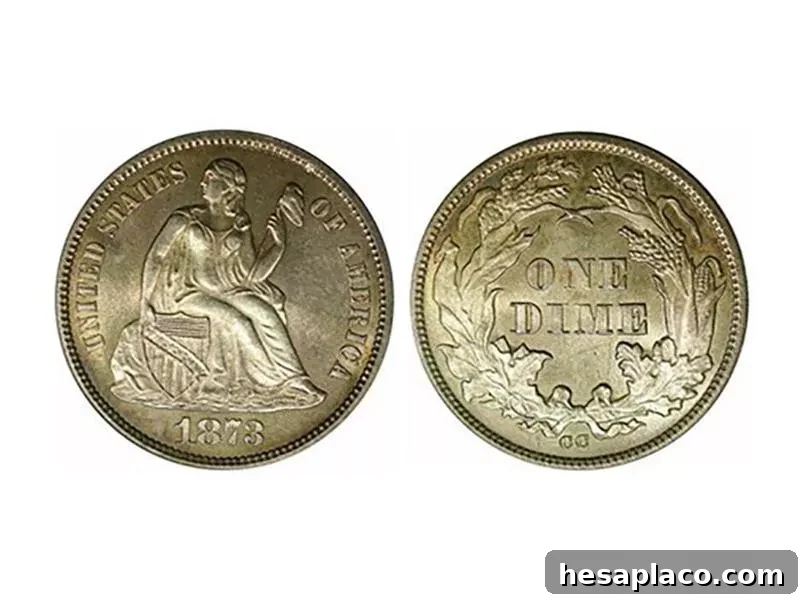
Liberty Seated Dime
Sold at auction: $1,840,000 (2012)
Struck at Carson City, the 1873 No Arrows dime is famously rare. Only 12,400 were originally issued, and surviving mint-state examples are nearly unique. When the official weight standard changed in 1873, arrows were later added to new issues to mark the change; remaining older-weight coins were to be recoined. This particular mint-state example is the only one of its quality known and has a documented history of fetching very high prices at auction.
1894 S Barber Dime
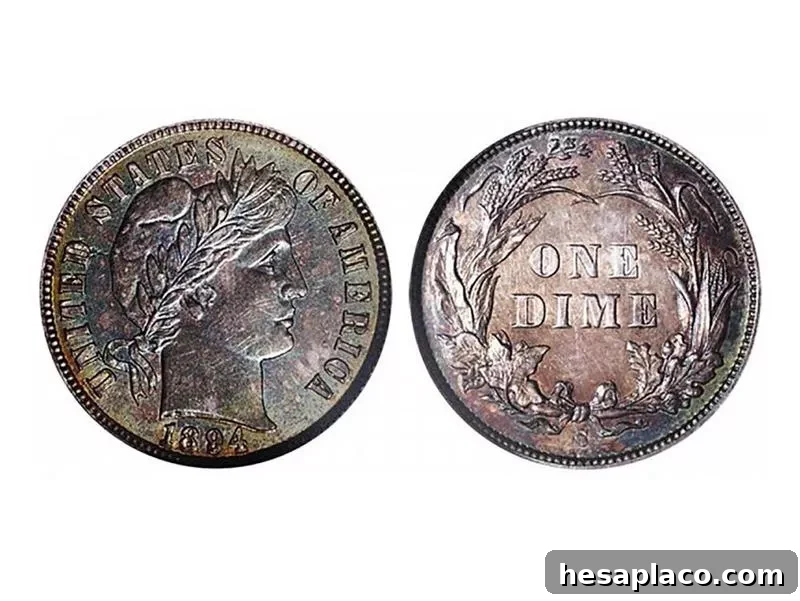
USA Coin Book
Sold at auction: $1,997,500 (2016)
Although the overall 1894 Barber dime mintage totaled in the millions, the San Francisco 1894-S issue appears to have been produced in far smaller quantity—estimates suggest as few as 24 original coins—with only a handful surviving. This rarity, combined with provenance and condition, has made the 1894-S Barber dime one of the most valuable U.S. dimes ever sold.