
Most of us have opened Wikipedia to look up one thing and somehow ended up reading about three completely different topics. Wikigacha captures that familiar experience and turns it into a collectible card game. Instead of chasing fictional characters or athletes, players collect cards based on real Wikipedia articles. The concept may sound unusual at first, but there’s more going on than it appears. Below are ten clear facts that explain why Wikigacha has drawn attention from digital collectors and curious players alike.
The Game’s Background
Credit: Wikimedia Commons
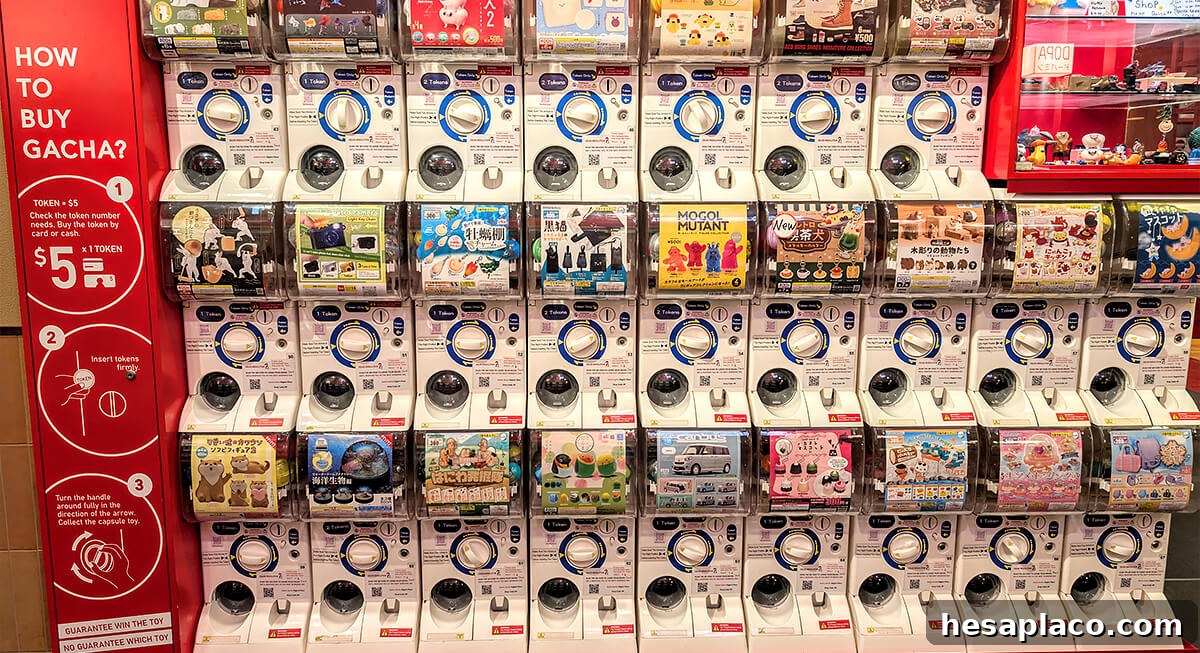
The term “gacha” comes from Japanese onomatopoeia imitating the noise of a toy capsule dispenser. Those machines originated in the 1960s when entrepreneur Ryuzo Shigeta adapted a US-style vending machine to deliver toys inside sealed plastic capsules. The concept became wildly popular across Japan and later influenced mobile gaming mechanics. Wikigacha borrows that structure—randomized packs of collectible items—but replaces paid loot with free booster packs and swaps fictional IPs for Wikipedia content.
More Than 6.7 Million Unique Cards
Credit: Reddit
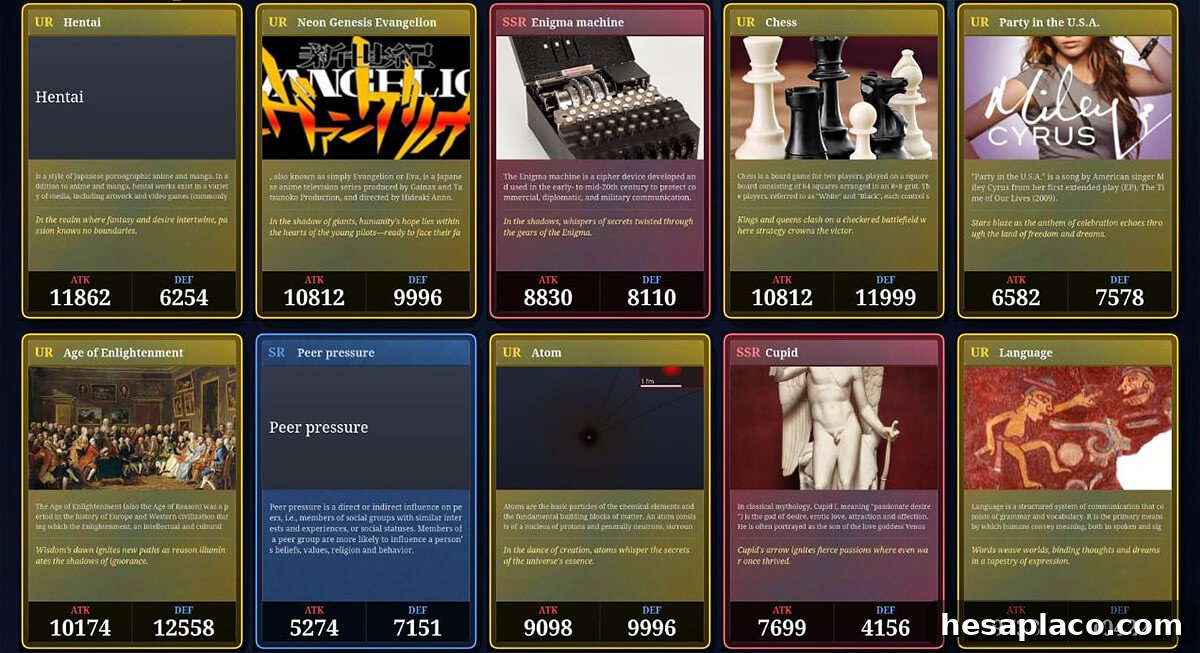
Wikigacha contains 6,746,498 unique cards generated directly from Wikipedia’s article database, making duplicate collections between players unlikely. The Common rarity tier alone includes 2,795,159 cards. The scope is extraordinary: media coverage of the project noted it is likely one of the largest card games ever assembled, on a physical or digital scale.
Card Trading
Credit: Reddit
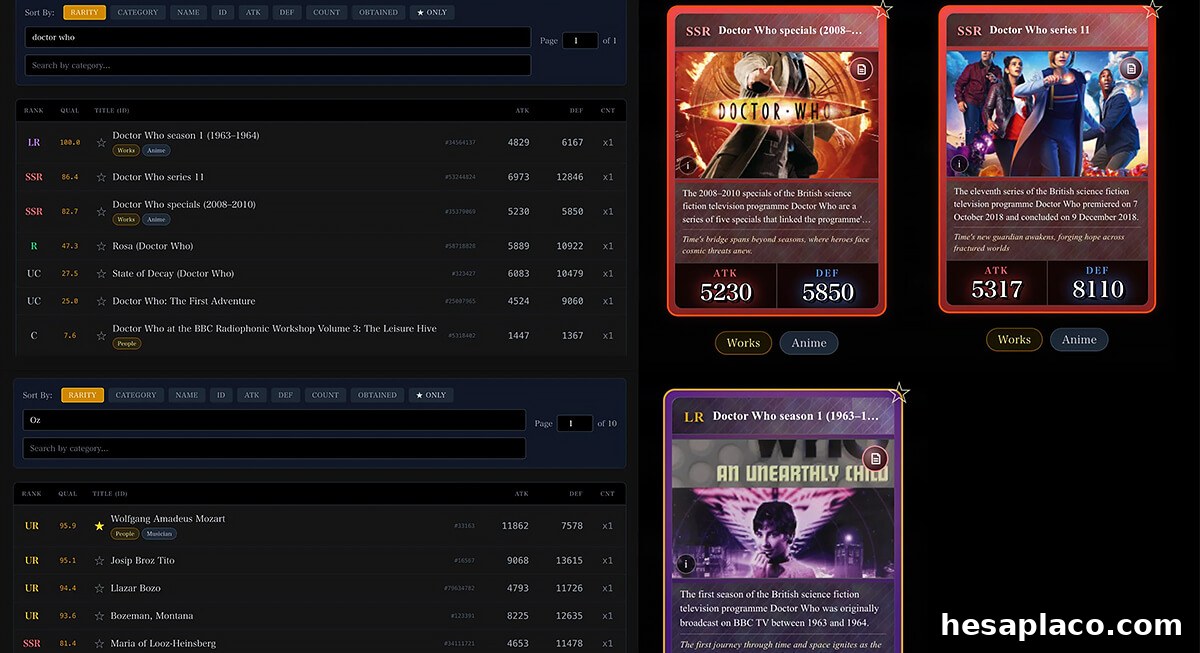
Wikigacha.net includes a trading interface built into the site, though some mirror versions may not support trading yet. When a player lists a card for trade, it is removed from their collection and posted to a public feed where others can propose exchanges. Each offer shows the other player’s name and the offered card’s rarity, ATK, and DEF values, allowing the lister to accept or decline.
A Scoring System Determines Rarity
Credit: Reddit
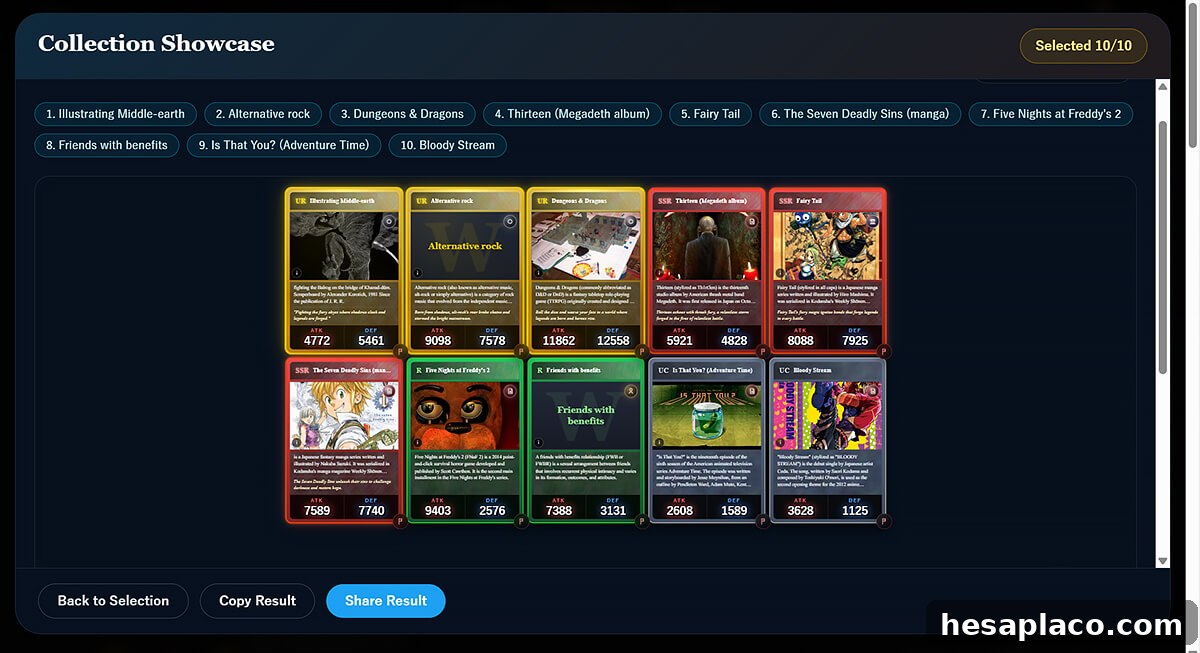
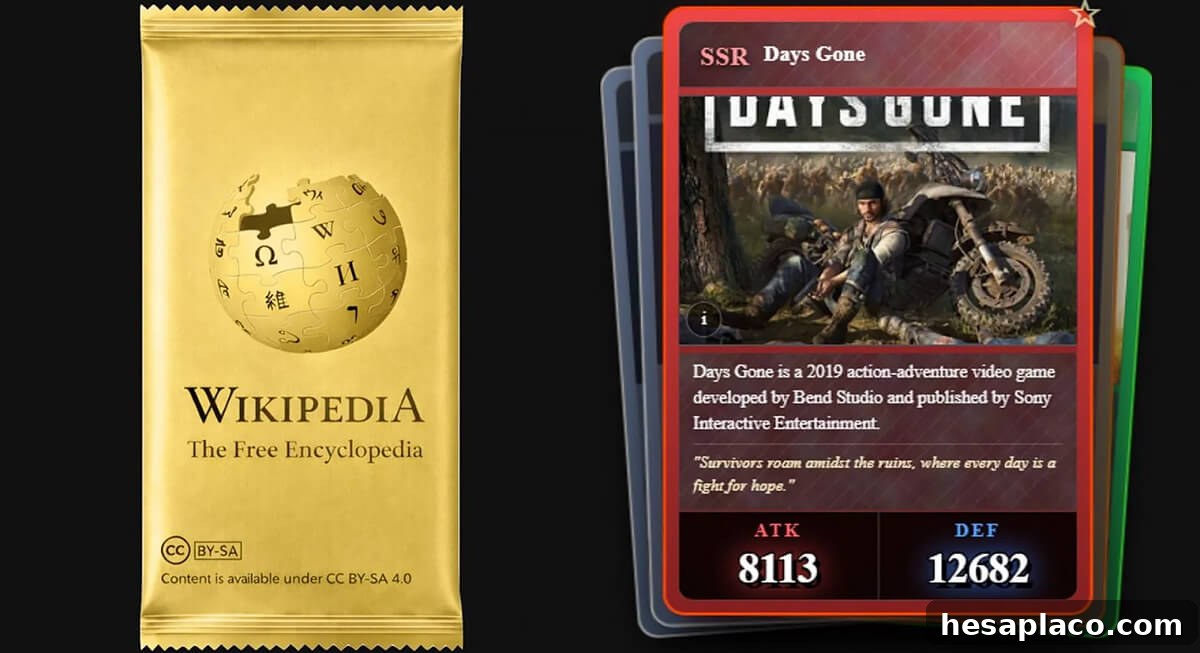
Rarity in Wikigacha isn’t random alone. Each Wikipedia article receives a quality score derived from measurable factors such as article length, number and quality of references, images, page views, and editor activity. That score places the card into a rarity tier that ranges from Common and Uncommon up through Rare, Super Rare, Super Special Rare, Ultra Rare, and Legend Rare.
How Attack and Defense Are Calculated
Credit: Reddit
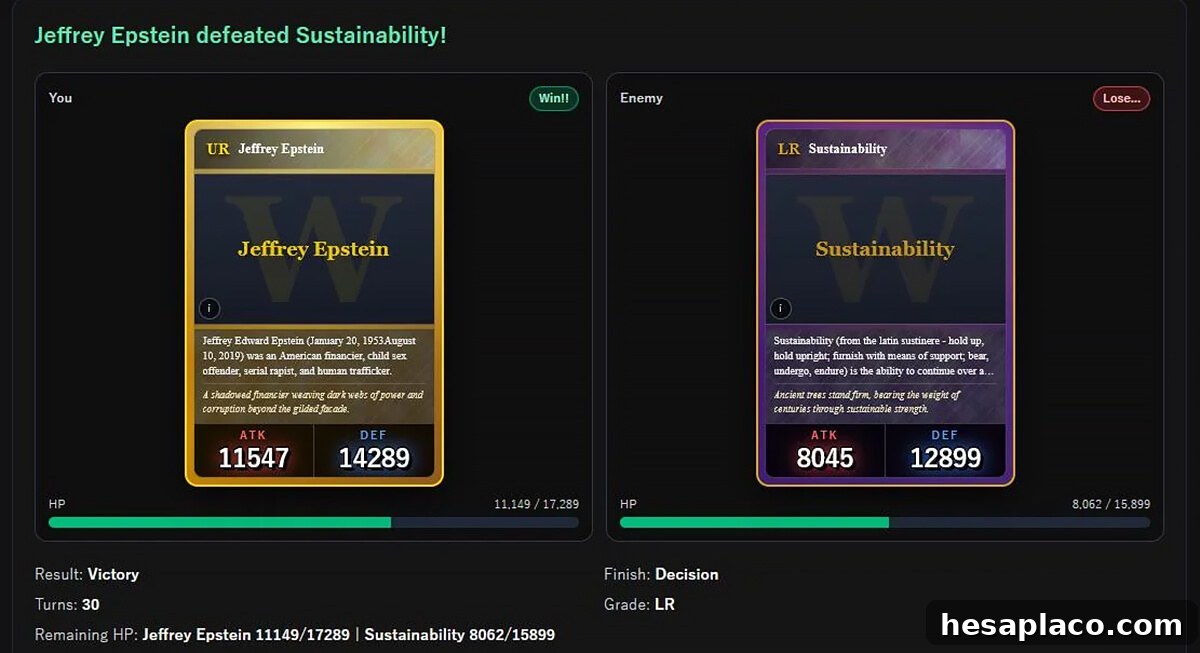
Card stats come directly from Wikipedia metrics. Attack (ATK) is derived from an article’s page view counts, while Defense (DEF) is calculated from article length. Those base figures are modified by multipliers tied to rarity and are capped at a maximum value of 15,000. As a result, a long, well-developed article will tend to yield higher DEF, while high-traffic articles produce stronger ATK—higher rarities amplify those values further.
All Progress Is Saved Locally
Credit: Reddit
Wikigacha stores every collected card, each achievement, and all progression data in the player’s browser rather than on a central server. There’s no mandatory account creation or login required. For players who want to back up their collection or transfer it to another device, the game offers built-in export and import tools that let users save and restore their local progress.
The Daily Raid Boss
Credit: Reddit
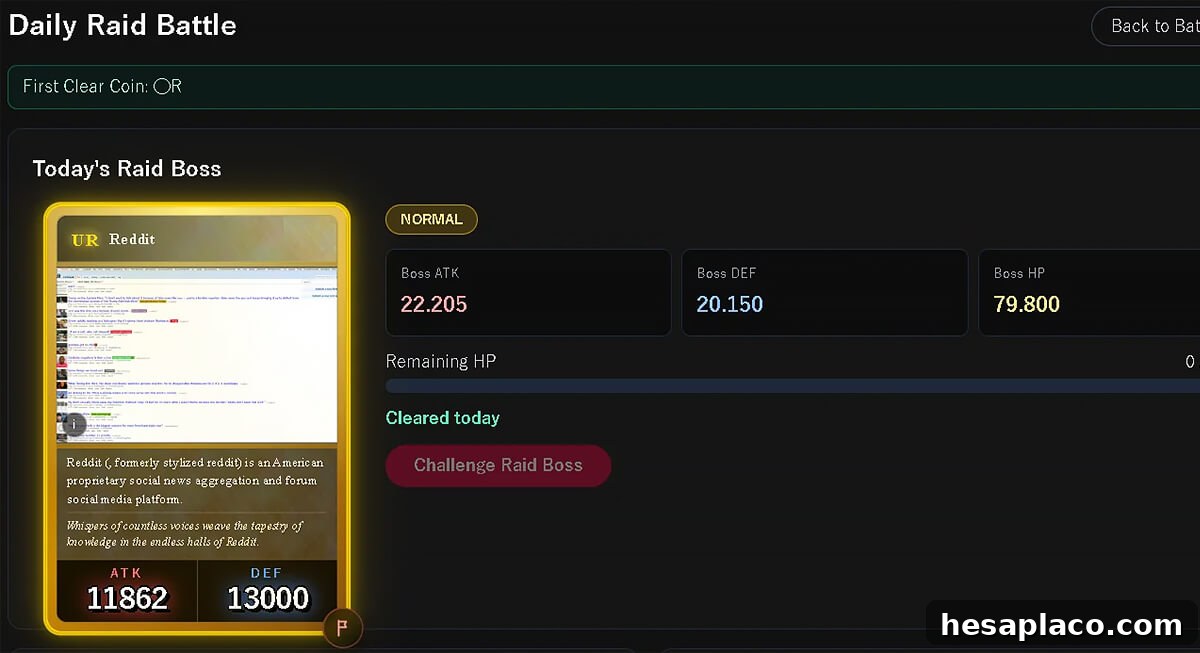
Every day the game presents a raid boss represented by a single powerful card. Players choose up to ten cards from their collection to challenge the boss; battles are then resolved automatically based on participating cards’ ATK and DEF stats. Winning the raid awards a raid coin stamped with the first letter of the defeated article’s title, encouraging players to participate daily.
Monetization Approach
Credit: Reddit
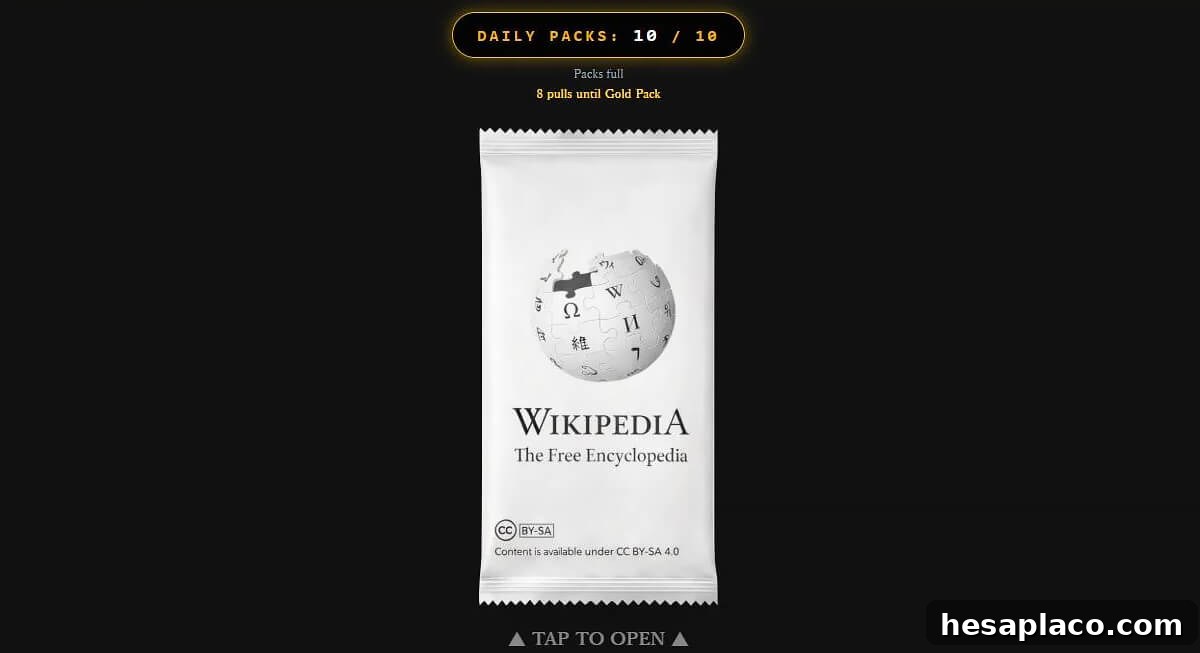
Unlike many modern games, Wikigacha currently contains no microtransactions, no paid loot boxes, and no premium currency. Players earn packs through daily allocations, watching optional ads, and completing missions. One limited funding mechanism appeared in the form of an optional donation link after server costs increased during viral demand—a voluntary contribution intended to help cover scaling expenses rather than a core monetization feature.
Language-Specific Versions
Credit: Reddit
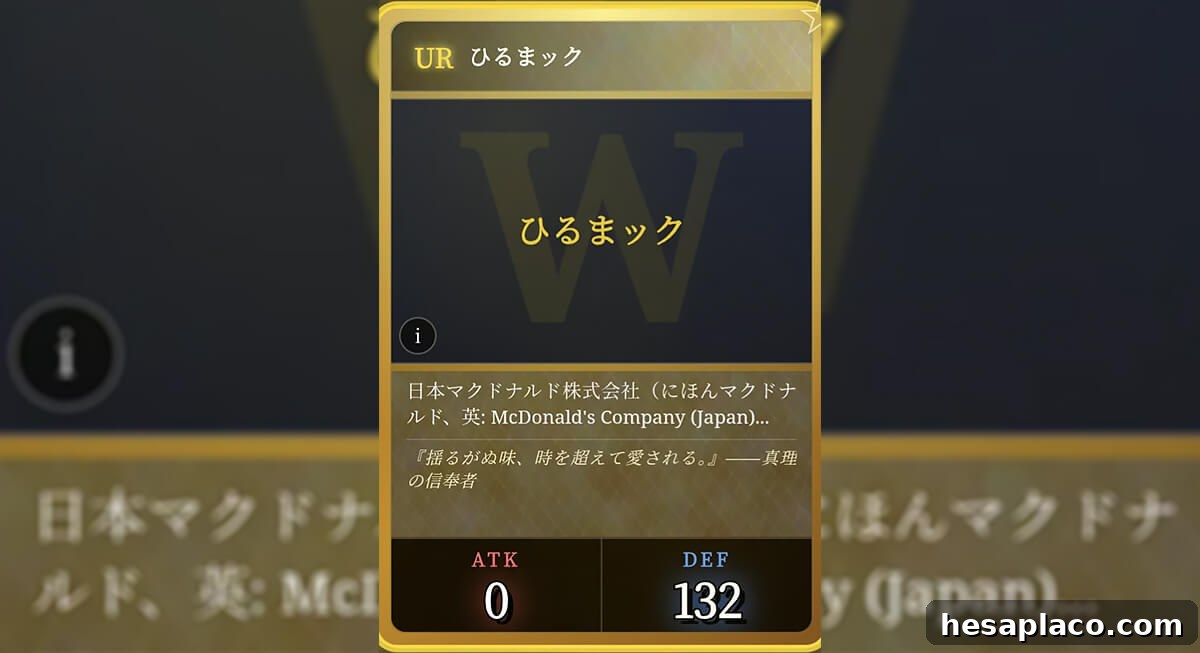
Wikigacha runs in several languages, including English and Japanese, and additional localized versions have been reported. Each language client draws from its respective Wikipedia edition rather than a shared global dataset. Because article quality and coverage differ between language editions, the same subject can result in cards with different rarity tiers depending on the chosen language.
Team Battle Mode
Credit: Kotaku
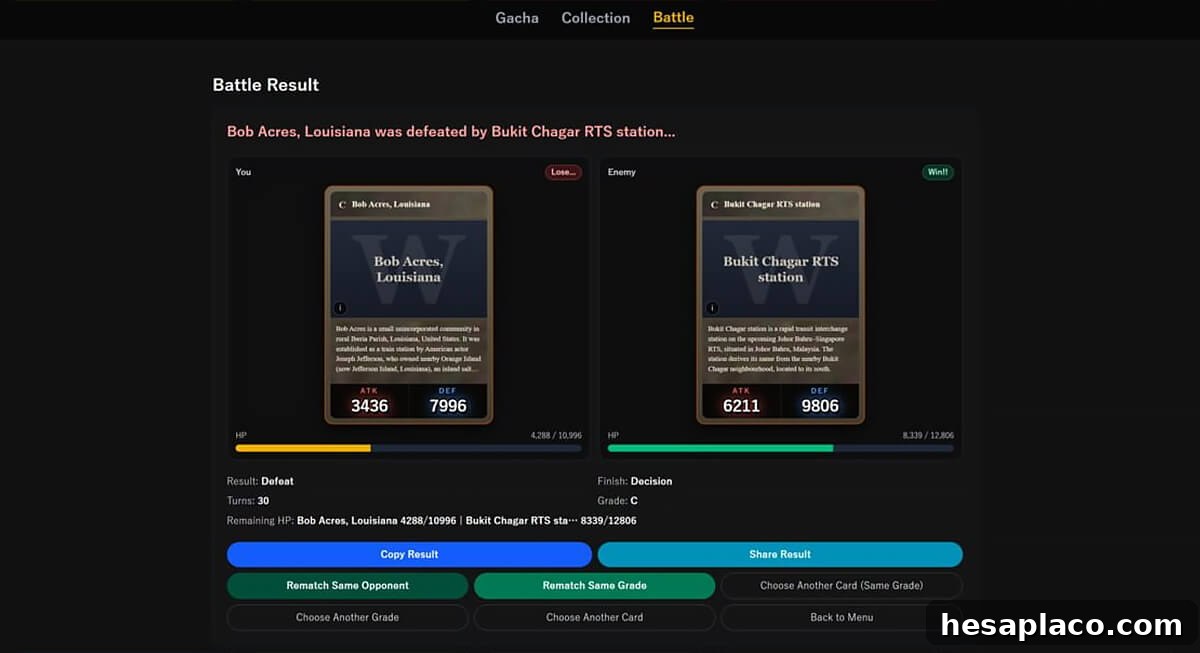
In addition to the daily raid and single-card matchups, Wikigacha includes a Team Battle mode where players pick five cards to form a team and face another player’s five-card team. Matches resolve automatically using each card’s ATK and DEF statistics. The developers have also announced a Story Mode in development that will string individual fights into a connected sequence of encounters.