
Every credit card number follows a precise structure. The digits and their layout serve distinct purposes, and even the final digit—often overlooked—plays an important role. That digit is part of a decades-old system designed to catch entry mistakes and keep transactions flowing smoothly.
The Secret Code Behind the Digits
@modernday_eratosthenes Humans aren’t so good at random #stem #didyouknow ♬ original sound – ashley
Your card number is deliberately organized. The very first digit is called the Major Industry Identifier: 4 commonly indicates Visa, 6 indicates Discover, 2 or 5 typically denotes Mastercard, and 3 is used by American Express. The next block of digits—usually five to seven numbers—identifies the issuing bank or institution. After those comes the individual account number that belongs to the cardholder.
The last digit is not arbitrary; it’s computed using a checksum method known as the Luhn algorithm. This brief mathematical check is used by virtually all mainstream cards and helps prevent many common input mistakes when people enter card numbers online or over the phone.
Meet Hans Peter Luhn’s Clever Shortcut
The Luhn algorithm, developed by IBM researcher Hans Peter Luhn in 1960, performs a simple validation that catches most common errors. The process works like this:
- Exclude the final digit initially—this is the check digit.
- Starting from the right-hand side of the remaining number, double every second digit.
- If doubling produces a two-digit number, add those digits together (for example, doubling 7 yields 14 → 1 + 4 = 5).
- Sum all digits, including those that were doubled (after reducing any two-digit results as described) and those left untouched.
- Add the original check digit back into the total.
- If the resulting total is divisible by 10, the entire number passes the Luhn check; if not, it is invalid.
This lightweight check allows websites and payment systems to catch most single-digit typos and many instances where adjacent digits are swapped, without having to contact the issuing bank. The algorithm does have limitations: for example, it may fail to detect the swap of 09 and 90 in some contexts, but it still removes a vast majority of accidental errors up front.
Why Businesses Love This Trick
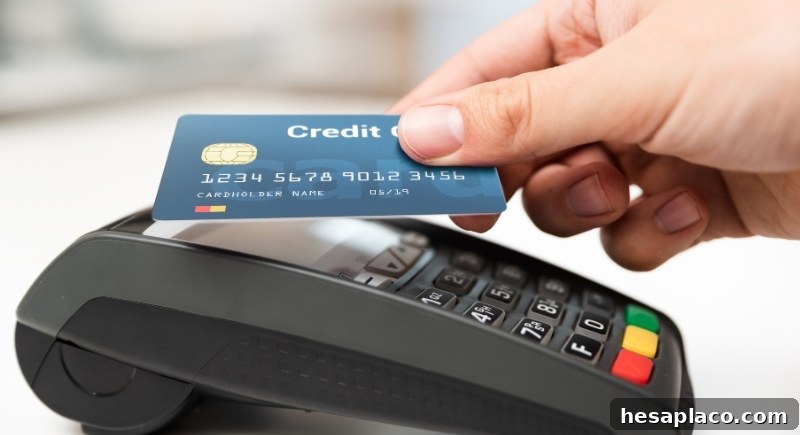
Image via Canva/Proxima Studio
The Luhn algorithm helps businesses reduce both cost and friction. Full validation of a card number typically requires contacting payment networks or verification services, which can be slower and may incur fees. By running the Luhn check first, merchants filter out obvious input mistakes immediately, saving on unnecessary verification attempts and speeding up the checkout experience.
It’s important to remember that passing the Luhn check does not prove a card number is real, active, or authorized for use. The Luhn test only confirms that the number is mathematically plausible. Actual authorization and account verification still require communication with the card issuer or payment processor.
The Algorithm That Almost Replaced It
In 1969, Dutch mathematician Jacobus Verhoeff proposed a more sophisticated checksum algorithm that could detect single-digit errors, most adjacent transpositions, and even the specific 09/90 swap that the Luhn method can miss. Although the Verhoeff algorithm is mathematically stronger, it never gained the same widespread adoption. By the time it appeared, the Luhn algorithm was already entrenched across payment systems and proved to be simple, fast, and effective enough for practical use. In many real-world systems, the advantage of simplicity and compatibility outweighed the incremental error-detection benefits of switching to a more complex method.
Today, the Luhn algorithm remains a small but vital part of card-based payments. It’s a low-cost, immediate filter that reduces clerical errors at the point of entry and helps keep millions of transactions running smoothly every day.