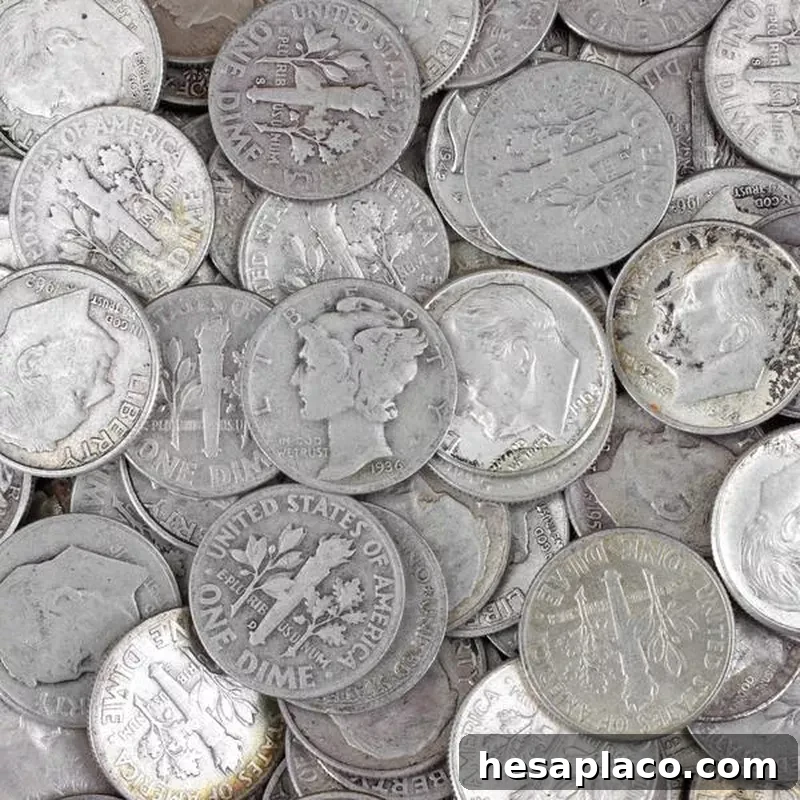
The dime was the first U.S. coin struck for circulation, produced even before a permanent Mint building existed. George Washington ordered the first run of dimes in 1792; they were struck on a borrowed press located in the owner’s basement.
The first dime struck inside an actual U.S. Mint building was dated 1796. Early 10-cent coins featured Lady Liberty in various bust or full-profile poses. From 1916 through 1945, Liberty was depicted with a winged cap, a design commonly mistaken for the Roman god Mercury; these pieces are now known as Mercury dimes. President Franklin D. Roosevelt’s portrait first appeared on the dime in 1946.
Throughout most of their history, dimes were primarily silver, though production occasionally included copper during silver shortages. The Coinage Act of 1965 eliminated silver from circulating dimes, replacing it with a copper-nickel clad composition.
As with other collectible coins, the most valuable dimes are those that survived in near-mint condition. “Mint state” does not necessarily mean the coin looks exactly as it did on the day it was struck—natural toning and color changes are expected and often preferred. Cleaning coins can reduce their value. Rarity—caused by low mintage, production errors, or large-scale melting for bullion—combined with superior condition typically drives the highest auction prices.
Two principal third-party grading companies certify rare coins: Professional Coin Grading Service (PCGS) and Numismatic Guaranty Corporation (NGC). Both use the Sheldon Scale, which assigns a numeric grade from 1 to 70. Coins graded 60 and above are considered mint state and command the greatest interest and prices among collectors.
Below are 25 of the most valuable dimes in U.S. numismatics, presented with auction results and brief explanations of why each piece is rare or significant. Combined, these coins represent millions in realized value and showcase a range of important dates, mints, and varieties.
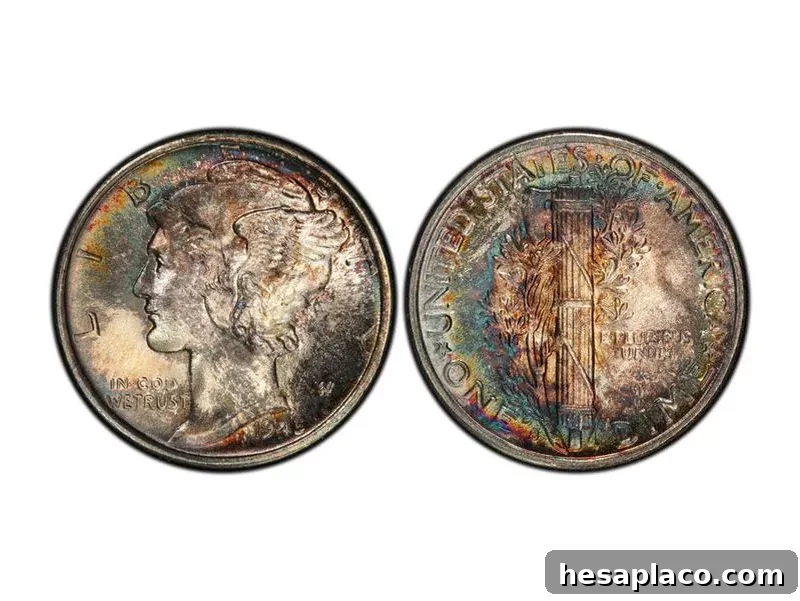
1945-S Micro S Full Band Mercury Dime
PCGS
Sold at auction: $25,850 (2019)
Only one 1945-S dime is known with the tiny “Micro S” mintmark on the reverse, making it a unique variety. While many 1945-S dimes exist, relatively few have survived in mint state, and San Francisco strikes from that year are often weakly struck—so examples showing full bands on the fasces are especially prized.
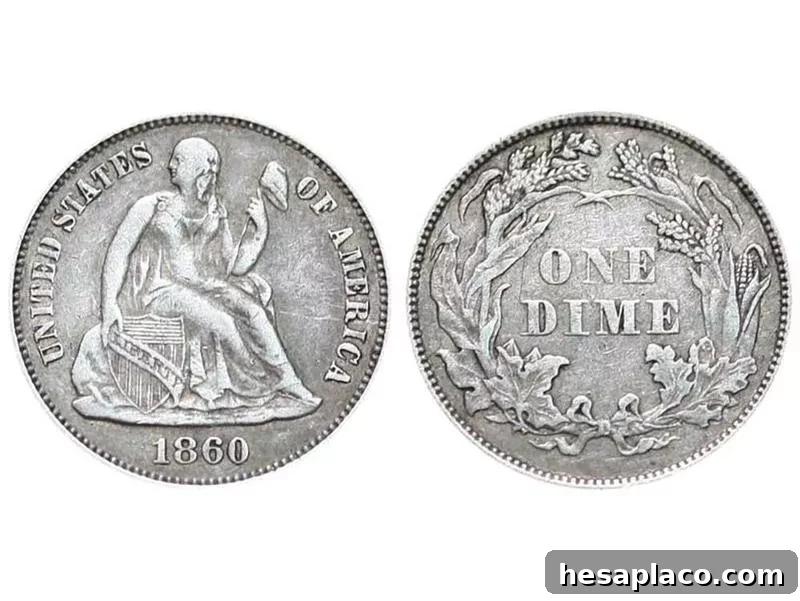
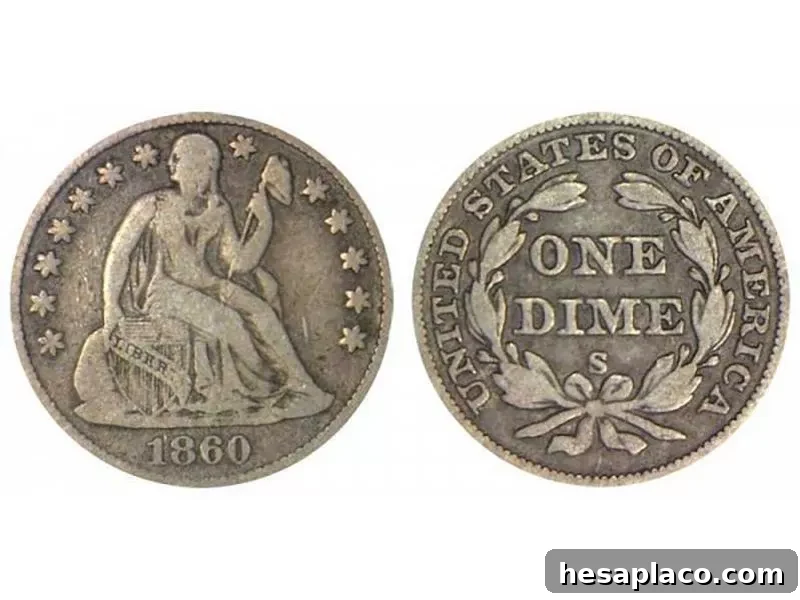
1860 Liberty Seated Dime (Philadelphia)
USA Coin Book
Sold at auction: $27,600 (2006)
In 1860 the obverse legend was changed to place “United States of America” on the front; the reverse wreath was also enlarged. Philadelphia produced more than 600,000 dimes that year, so common circulated examples are not especially rare, but mint-state survivors are limited and therefore valuable.
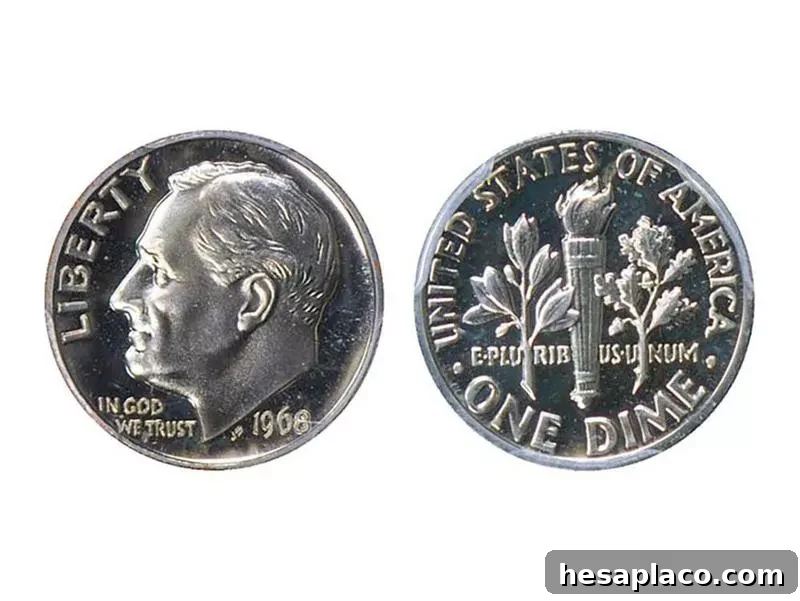
1968 No S Roosevelt Dime, Proof
Coin World
Sold at auction: $31,102 (2015)
A small number—around a dozen—of 1968 proof dimes were struck without the “S” mintmark. The San Francisco Mint reportedly corrected the die quickly, but the lack of official mint records and the scarcity of these No-S proofs make them highly collectible.
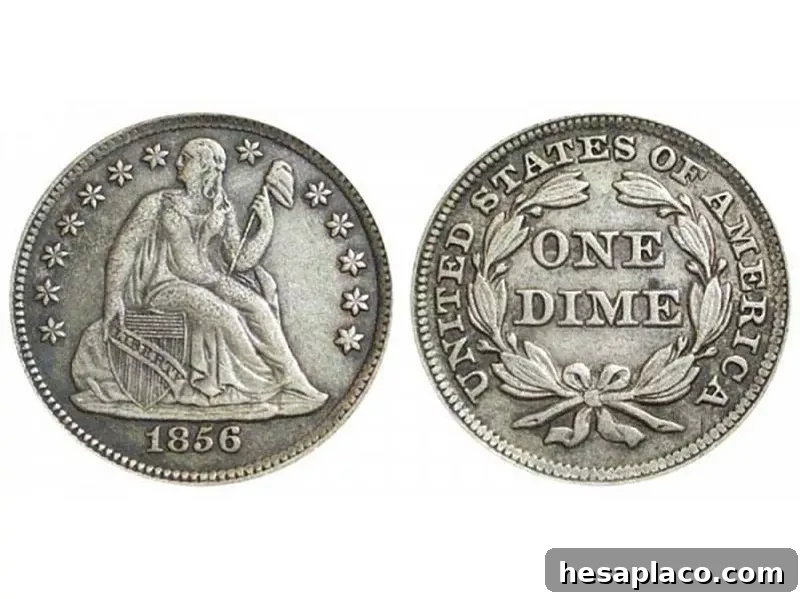
1856-S Seated Liberty Dime
USA Coin Book
Sold at auction: $43,700 (2003)
1856 marked the first year dimes were struck at the San Francisco Mint, with a relatively small mintage of about 70,000. That limited production makes surviving examples rare in all grades, and mint-state specimens command premium prices.
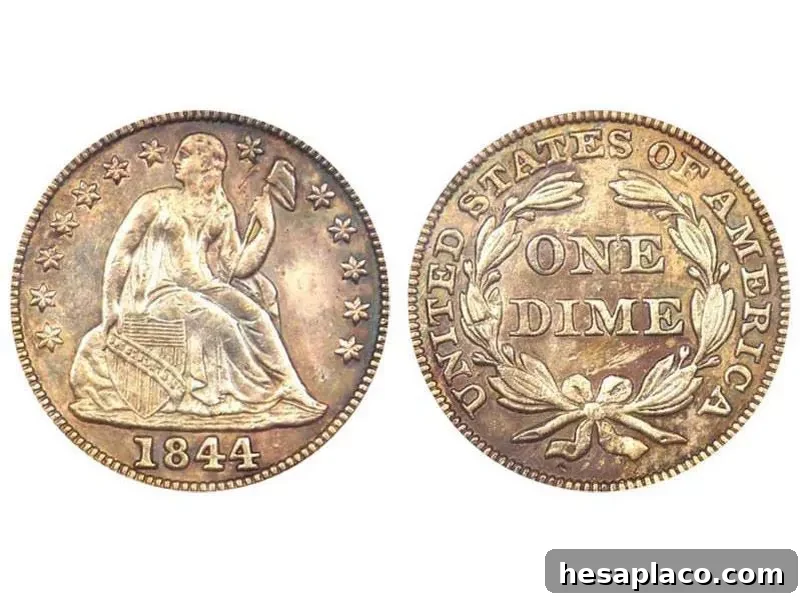
1844 Seated Liberty Dime
USA Coin Book
Sold at auction: $51,750 (2008)
With a modest mintage of about 72,500, the 1844 dime is scarce in mint state. Only a handful of certified uncirculated examples survive, and the finest pieces are especially coveted by collectors.
1860-O Seated Liberty Dime
USA Coin Book
Sold at auction: $64,625 (2015)
Minted at New Orleans with the “O” mintmark, only 40,000 of these dimes were struck. Many were reportedly melted after Louisiana’s secession, and only a few mint-state survivors are known, making high-grade examples extremely valuable.
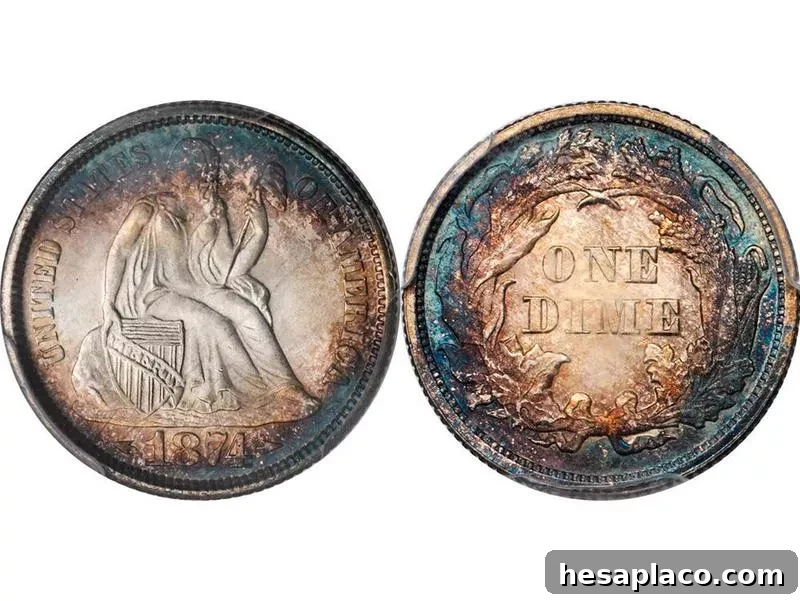
1874 Seated Liberty Dime with Arrows, Proof
Stack’s Bowers
Sold at auction: $67,562.50 (2013)
Only about 700 proof dimes were struck in Philadelphia in 1874. The proofs are rare and the highest-graded examples are chased by advanced collectors; this coin was certified as one of the finest known.
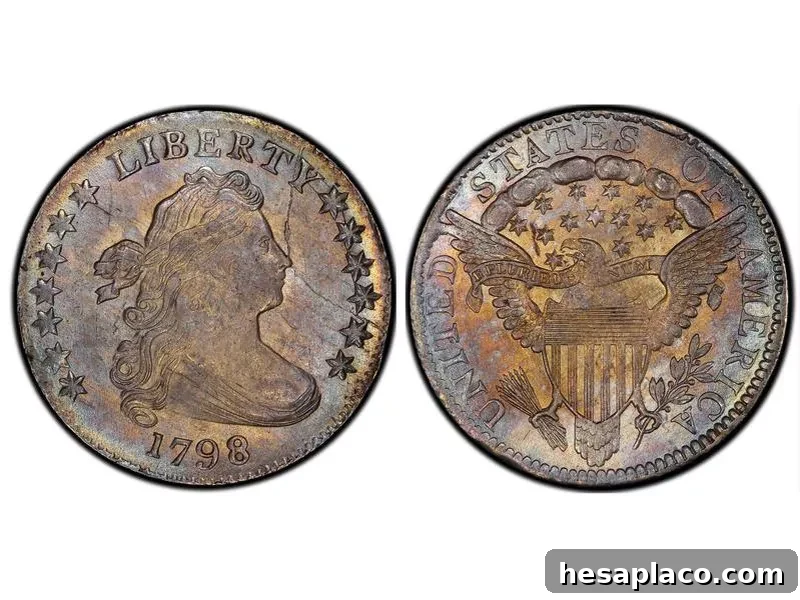
1798 Large 8 Draped Bust Dime
Stack’s Bowers
Sold at auction: $82,250 (2008)
Issued in two date varieties—Large 8 and Small 8—1798 dimes are significant early issues. Though the Small 8 is rarer, Large 8 examples are also scarce in mint condition, and some dies used on these dimes were shared with contemporary quarters, further increasing interest among specialists.
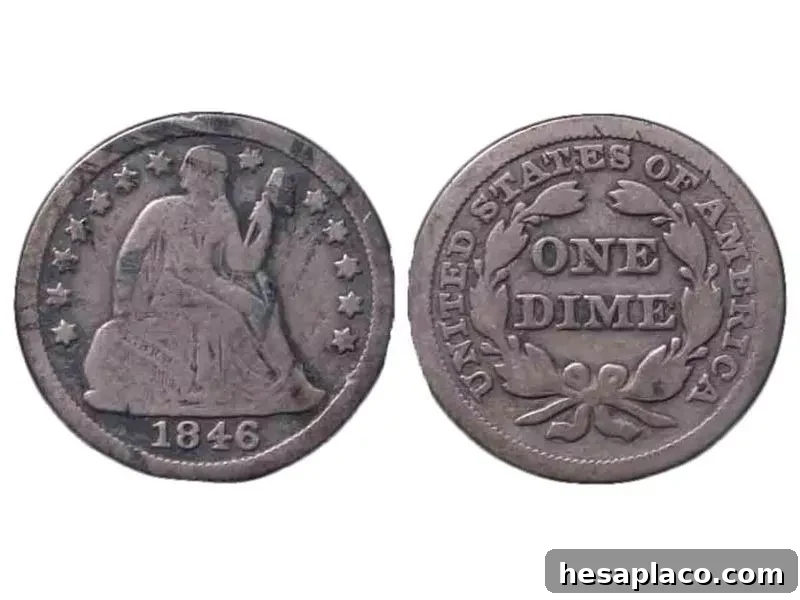
1846 Seated Liberty Dime
PCGS
Sold at auction: $86,250 (2009)
With only about 31,000 struck in 1846, this date is rare in any grade. Only a few examples have been certified in mint state by both major graders, and the finest survivors are among the most valuable Seated Liberty dimes.
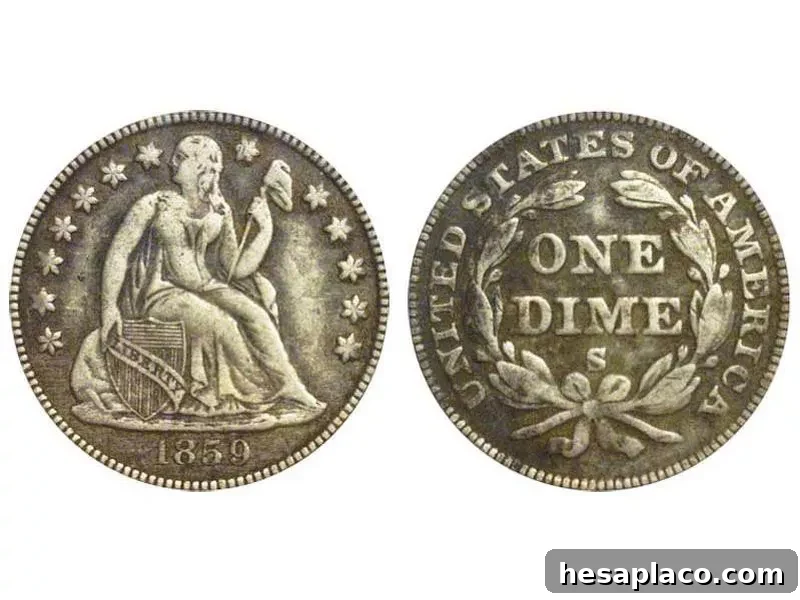
1859-S Seated Liberty Dime
USA Coin Book
Sold at auction: $100,000 (2009)
Produced from a single set of dies with a mintage of roughly 60,000, the 1859-S dime is the rarest of the 1850s series. High-grade survivors are particularly scarce, and mint-state pieces command substantial premiums.
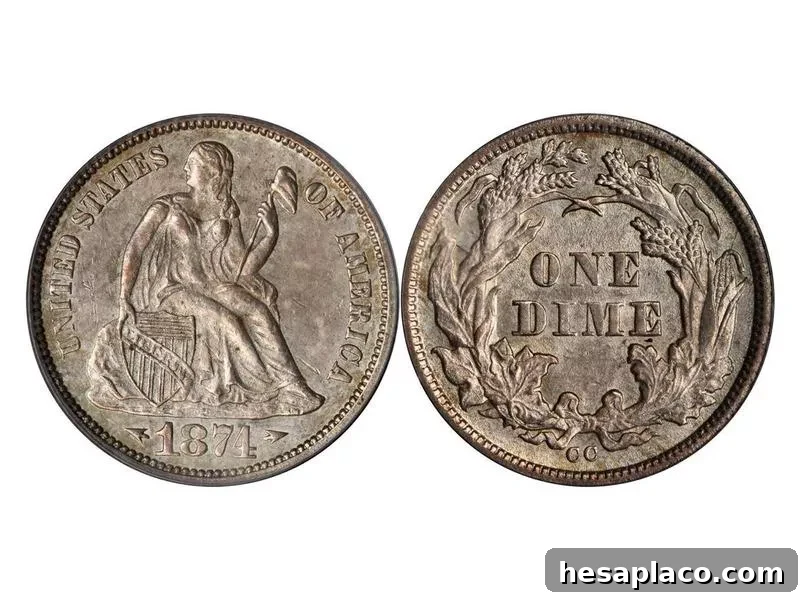
1874-CC Seated Liberty Dime with Arrows
Stack’s Bowers
Sold at auction: $117,500 (2012)
Carson City struck only about 10,817 of these dimes. The arrows flanking the date indicate a weight adjustment; mint-state examples are extremely rare, with just a handful known to survive.
1918-D Full Band Mercury Dime
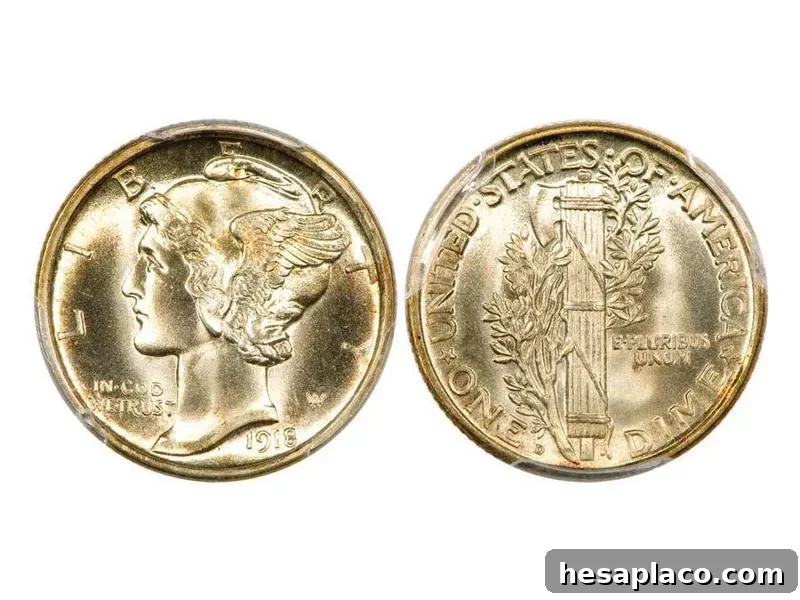
Legend Rare Coin Auctions
Sold at auction: $182,125 (2015)
Denver Mint strikes of 1918 are known for weak central strikes, so dimes with full bands on the fasces are scarce. Only a few dozen examples have been certified with the full-band designation, and mint-state coins in this category are highly sought after.
1872-CC Seated Liberty Dime
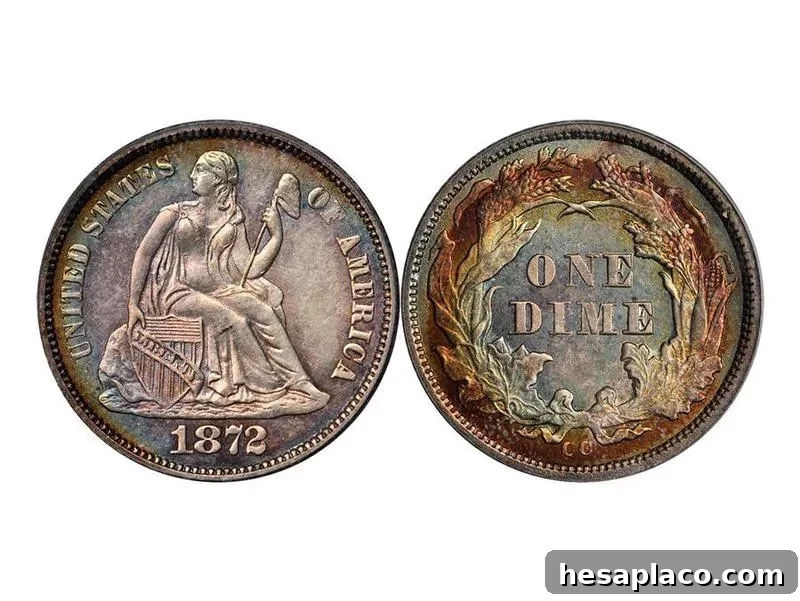
Stack’s Bowers
Sold at auction: $188,000 (2012)
Carson City produced relatively few dimes, and 1872 examples in very fine condition or better are uncommon. This coin was struck before a reverse die developed a crack during the issue run, making early struck pieces especially desirable.
1805 Draped Bust Dime, 4 Berries
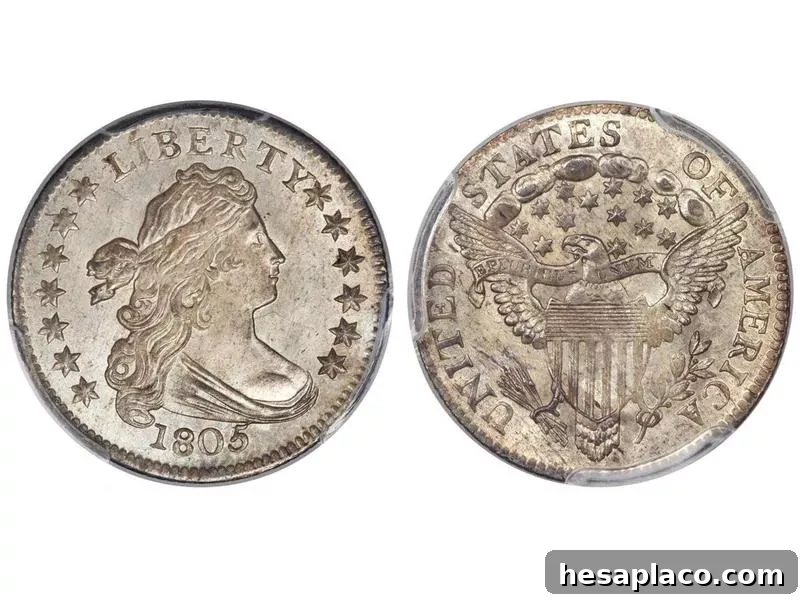
USA Coin Book
Sold at auction: $188,000 (2014)
In 1805 two varieties were struck; the 4-berries reverse is the less common of the pair. The obverse was produced from a die also used for the 5-berries variety, but the reverse is distinct. Mint-state survivors are exceedingly rare and valuable.
1797 Draped Bust Dime, 16 Stars
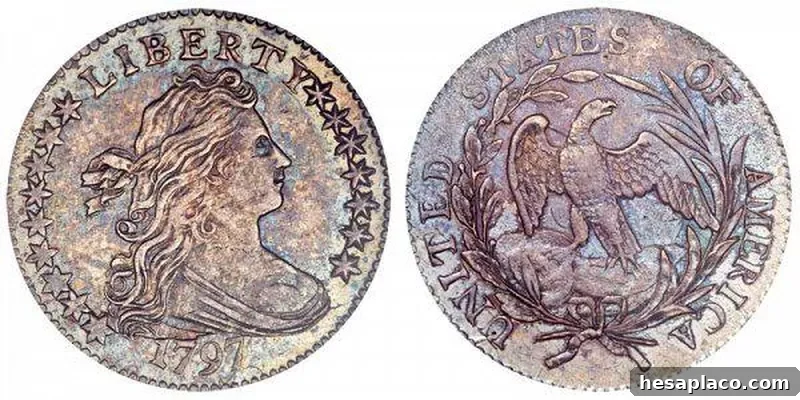
USA Coin Book
Sold at auction: $199,750 (2015)
One of two principal 1797 varieties, the 16-star Draped Bust dime features 16 stars around the obverse rim rather than the more common 13. Pristine examples bring strong prices at auction; even circulated pieces retain significant value.
1916-D Full Band Mercury Dime
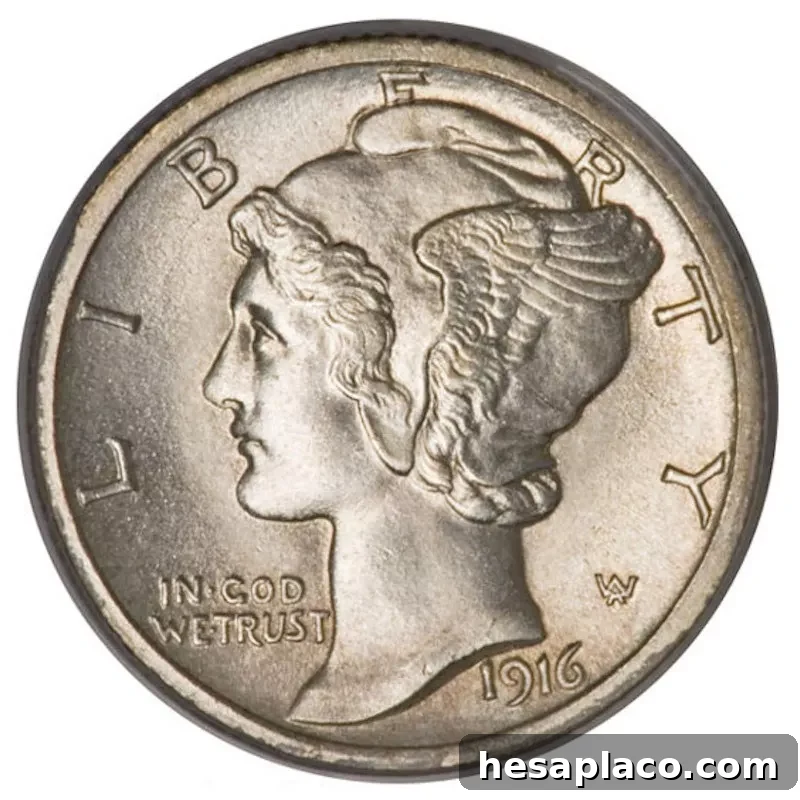
Heritage Auctions
Sold at auction: $207,000 (2010)
The 1916-D Mercury dime is one of the great rarities of the series. Only 264,000 were struck at Denver, and far fewer show full bands on the reverse. High-grade full-band specimens are among the most sought-after Mercury dimes.
1798 Draped Bust Dime, Small 8
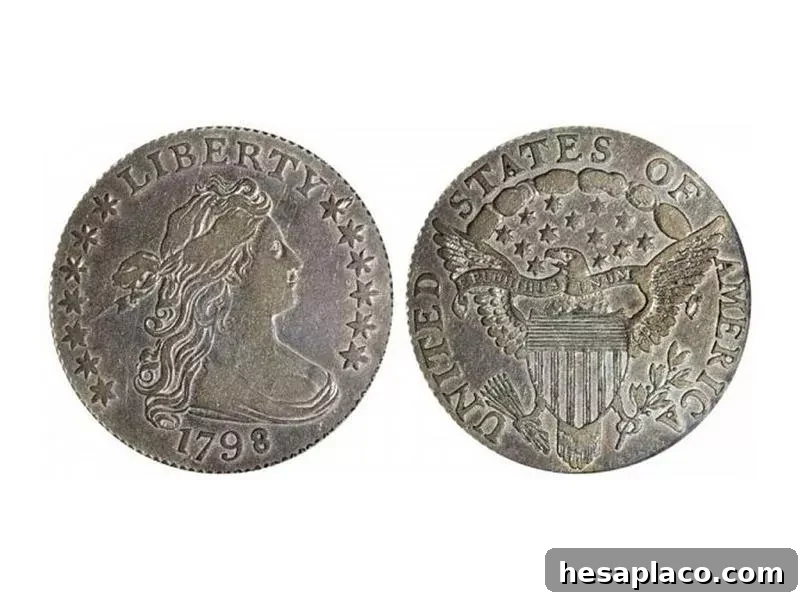
USA Coin Book
Sold at auction: $253,000 (2008)
The Small 8 variety of 1798 is scarcer than the Large 8, and early-die characteristics—such as unique letterforms in LIBERTY and AMERICA—add to the numismatic interest. High-grade examples command strong prices.
1871-CC Seated Liberty Dime
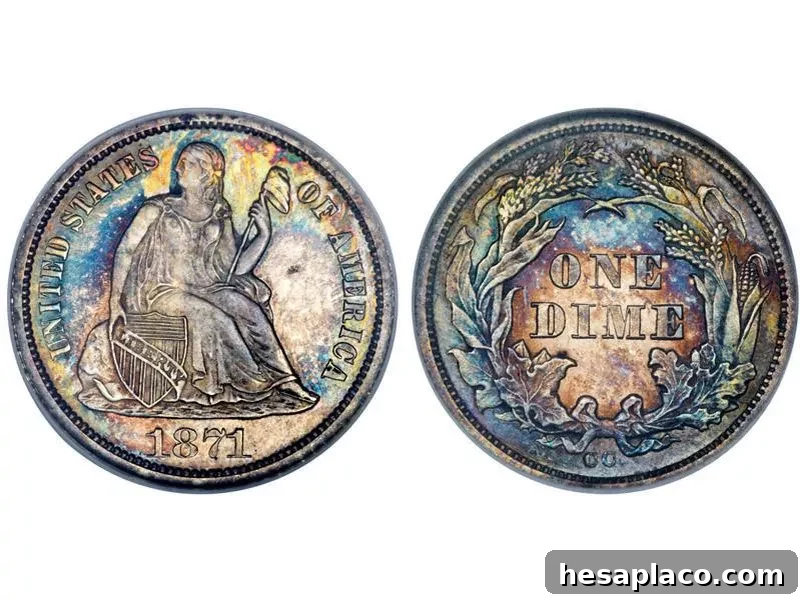
Heritage Auctions
Sold at auction: $270,250 (2014)
1871 marked the first year Carson City struck dimes; only about 20,000 were produced. Since most entered circulation, mint-state survivors are vanishingly rare—likely only a handful remain—contributing to the very high values for top examples.
1975 No S Roosevelt Dime, Proof
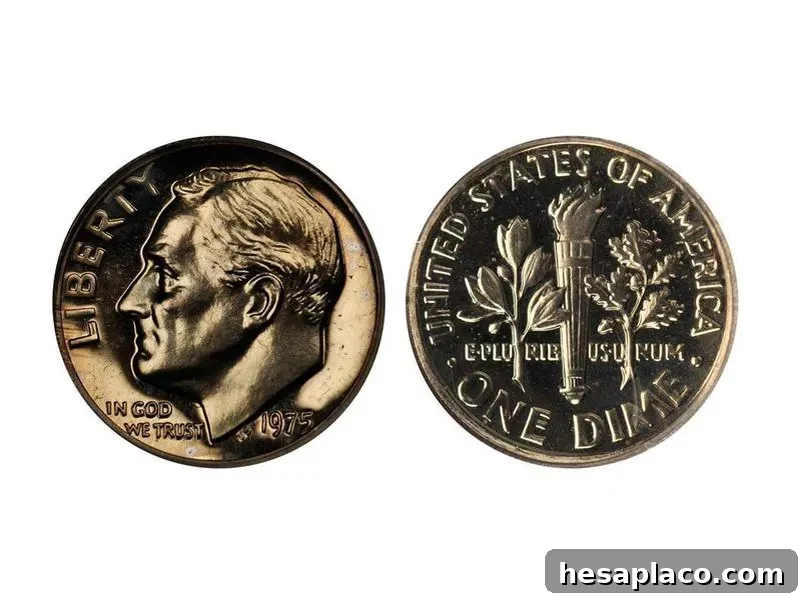
Stack’s Bowers
Sold at auction: $349,600 (2011)
Only two examples of the 1975 proof dime lacking the San Francisco “S” mintmark are known, making this one of the rarest modern U.S. dimes. Its scarcity and high-grade condition produced a record sale for a mid-20th-century U.S. coin.
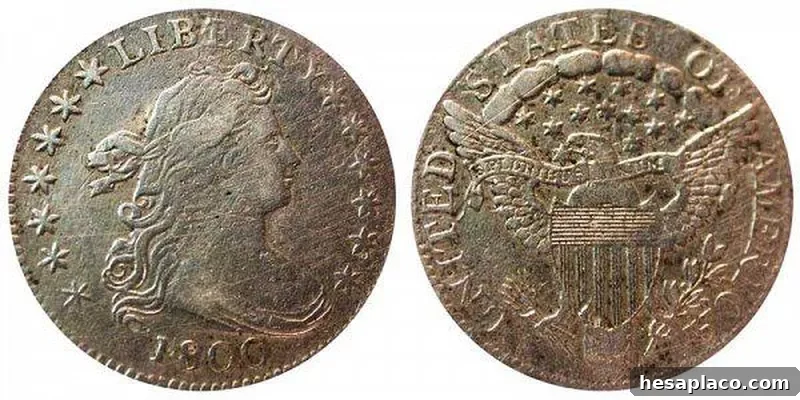
1800 Draped Bust Dime
USA Coin Book
Sold at auction: $352,500 (2014)
A fine example from the Draped Bust series, the 1800 dime is scarce in high grades. Exceptional specimens have brought strong prices at major auctions and remain highlights for early U.S. coin collectors.
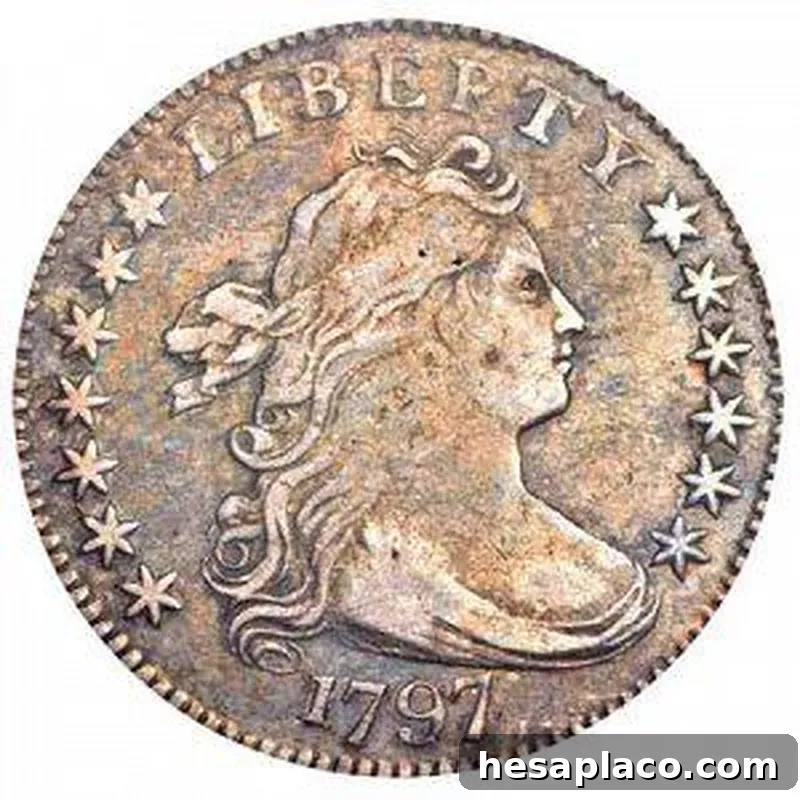
1797 Draped Bust Dime, 13 Stars
USA Coin Book
Sold at auction: $402,500 (2008)
This alternate 1797 variety has 13 stars on the obverse and is typically more valuable than the 16-star variant. High-grade survivors are extremely desirable and fetch premium prices at auction.
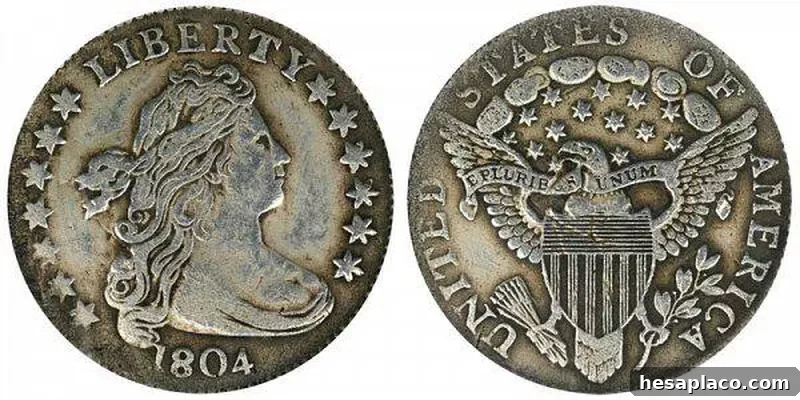
1804 Draped Bust Dime, 14-Star Reverse
USA Coin Book
Sold at auction: $632,500 (2008)
The 1804 dime exists in two reverse star arrangements; the 14-star reverse is much scarcer than the 13-star version. Auction results for high-grade examples are among the most impressive of early U.S. dime issues.
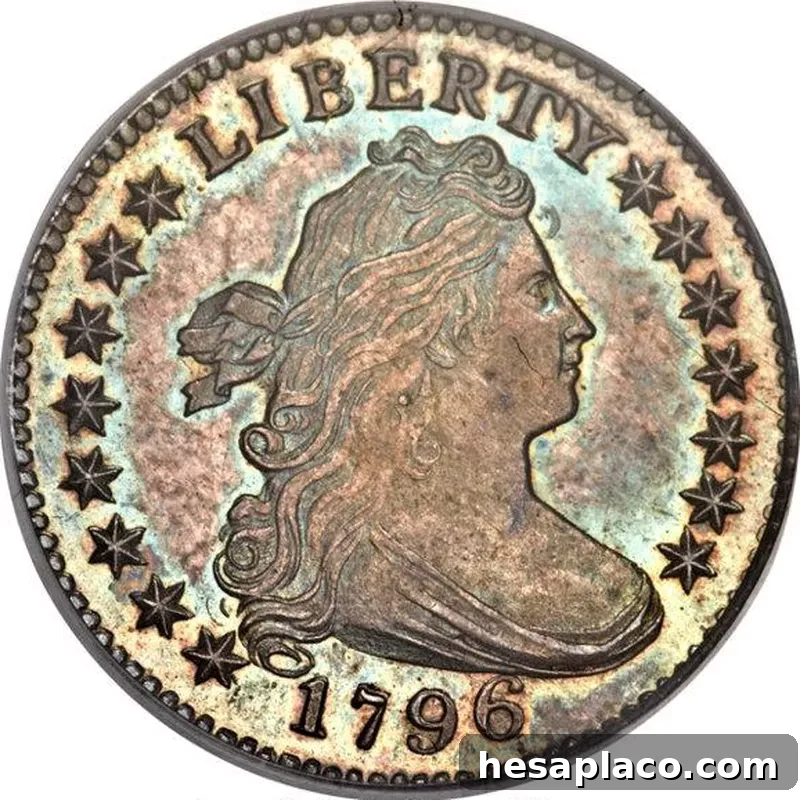
1796 Draped Bust Dime
Heritage Auctions
Sold at auction: $881,250 (2014)
As the first year dimes were struck in the United States, 1796 Draped Bust dimes are historically significant and highly prized. Exceptional examples can reach into the high six-figure range at auction.
1873-CC Seated Liberty Dime, No Arrows
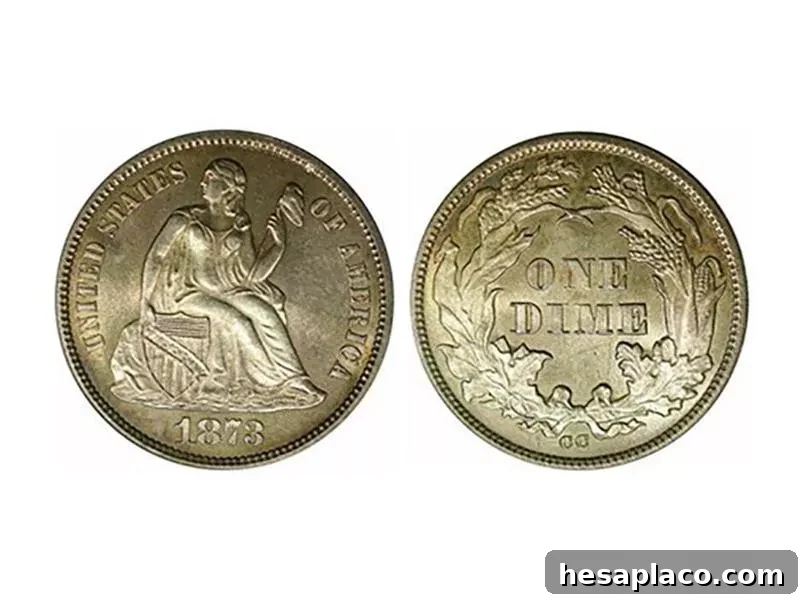
Liberty Seated Dime
Sold at auction: $1,840,000 (2012)
Only 12,400 were originally issued by the Carson City Mint. In 1873 the standard weight of the dime changed and arrows were added to indicate the heavier standard; most older-weight coins were supposed to be melted and recoined. This mint-state No-Arrows example is unique at its grade and one of the most famous and valuable U.S. dimes.
1894-S Barber Dime
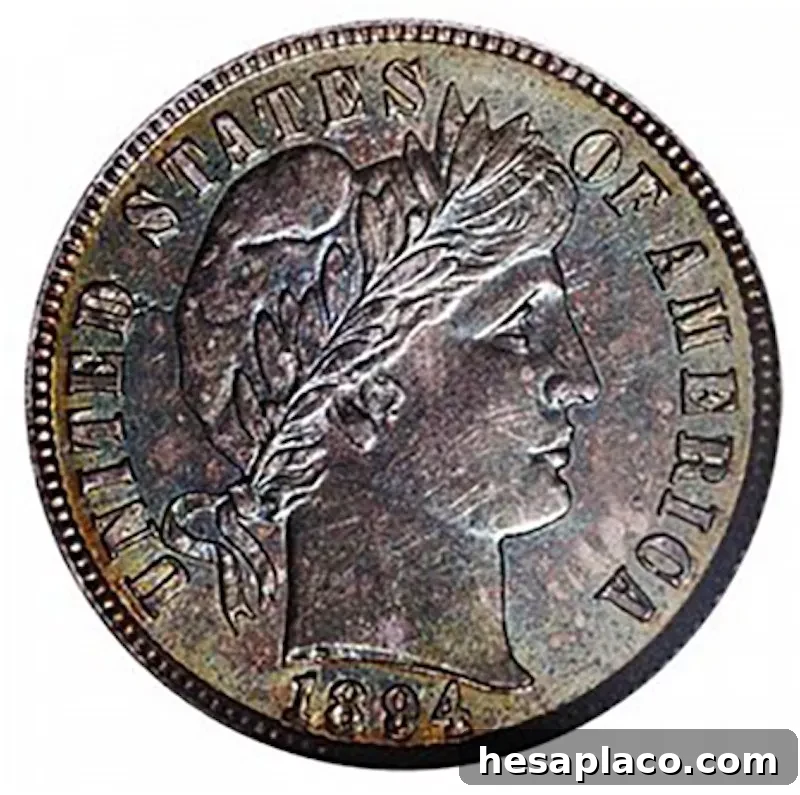
USA Coin Book
Sold at auction: $1,997,500 (2016)
Although over two million dimes carry an 1894 date, the San Francisco Mint reportedly produced only a very small number—often cited as 24—making surviving 1894-S Barber dimes extraordinarily rare. Only a handful of examples are known, and mint-state survivors trade for multi-million-dollar prices.