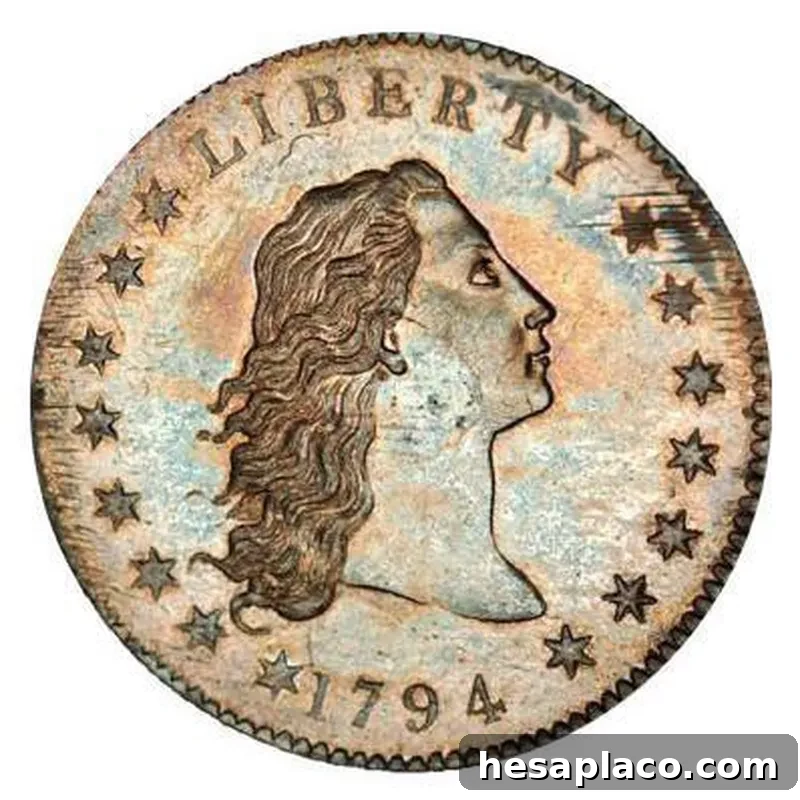
Coin collecting dates back to medieval Mesopotamia. Because of that long history, many people assume older coins are automatically more valuable. That’s not necessarily true. Some relatively modern coins—particularly rare or historically significant issues—can command far higher prices than many ancient examples. In fact, U.S. coins, despite the nation’s youth, appear frequently among the world’s most valuable coins.
Which coins have fetched the highest prices at auction or private sale? The following 50 examples represent some of the most valuable coins ever sold, collectively totaling about $125 million. Many of these coins once held records as “the highest price ever paid” for their type.
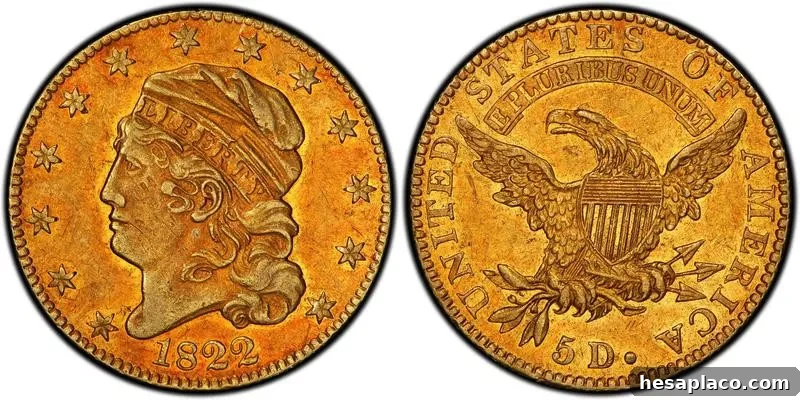
50. 1822 Half Eagle (U.S.)
PCGS
Sold at auction: $687,500
Seventeen thousand seven hundred ninety-six half eagles were minted in 1822, but only three are known today—most were melted after the 1834 reduction in gold content. This example, the Eliasberg specimen, is considered the finest of the three. It was regular issue coinage, not a commemorative or error piece; its extraordinary value comes from its extreme rarity. The recorded sale was in 1982; experts now believe an example of this quality would sell for far more.
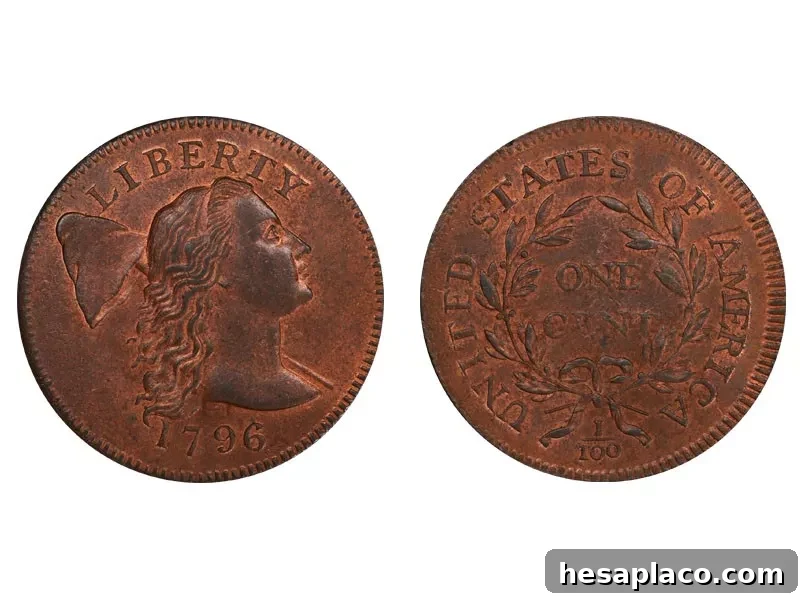
49. 1796 Liberty Cap Cent (U.S.)
PCGS
Sold at auction: $705,000
The Liberty Cap cent, produced 1793–1796 and inspired by Dupre’s Libertas Americana medal, exists in many die varieties. The 1796 Liberty Cap was struck from six obverse dies before the design changed mid-year. Of the 109,825 struck, few survive in high grade. This gem-quality piece is the finest known example.
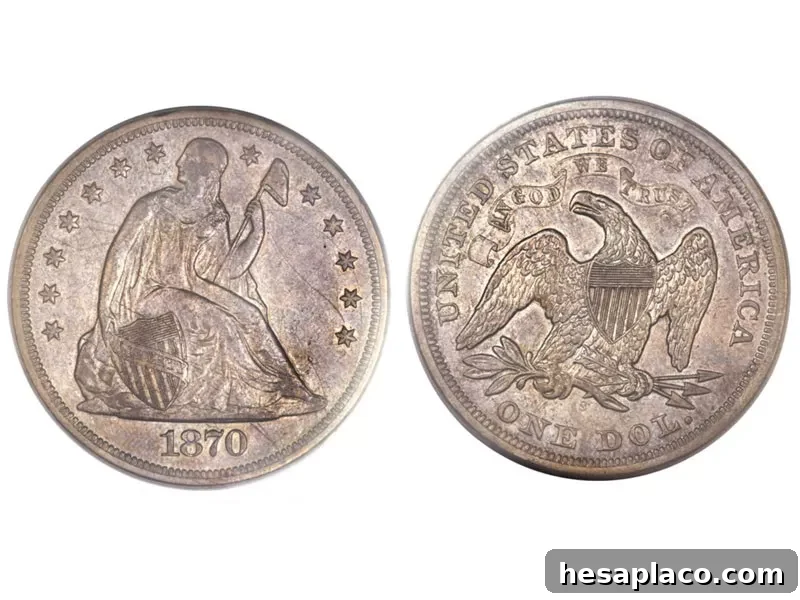
47. 1870-S Seated Liberty Silver Dollar (U.S.) (Tie)
Heritage Auctions
Sold at auction: $763,750
When the San Francisco Mint completed construction in May 1870, a full set of coins dated 1870 was placed in the cornerstone. No official mint records show dollar production that year, so surviving examples are believed to be mementos or presentation strikes. Experts estimate about a dozen were made; only a few remain in collectible condition.
47. 1838-O Half Dollar (U.S.) (Tie)
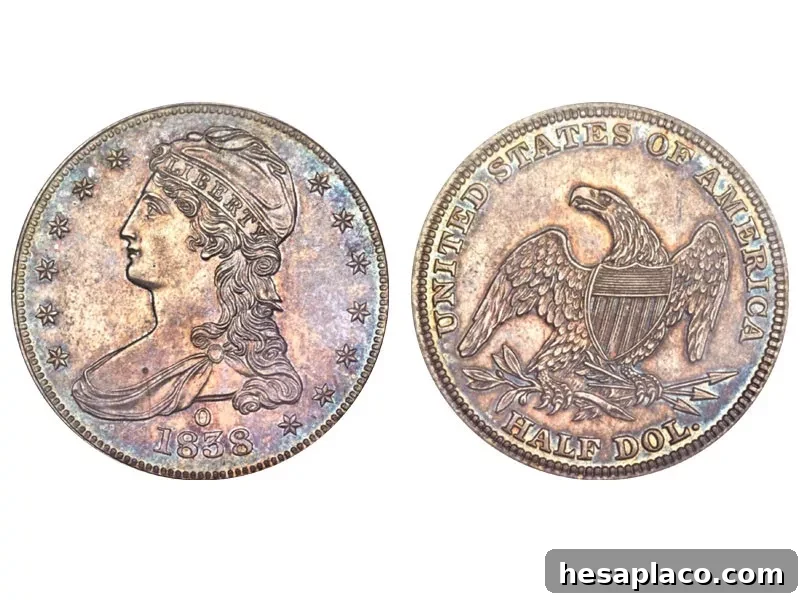
Heritage Auctions
Sold at auction: $763,750
The 1838-O half dollar is believed to be the first branch-mint proof of any denomination, though official records are silent. New Orleans production in 1838 was sporadic due to equipment failures and yellow fever; it’s likely a small number of half dollars were struck in early 1839 with prior-year dies to test the press. Only nine specimens are known, and this one ranks among the finest.
46. 1344 Edward III Gold “Double Leopard” Florin (England)
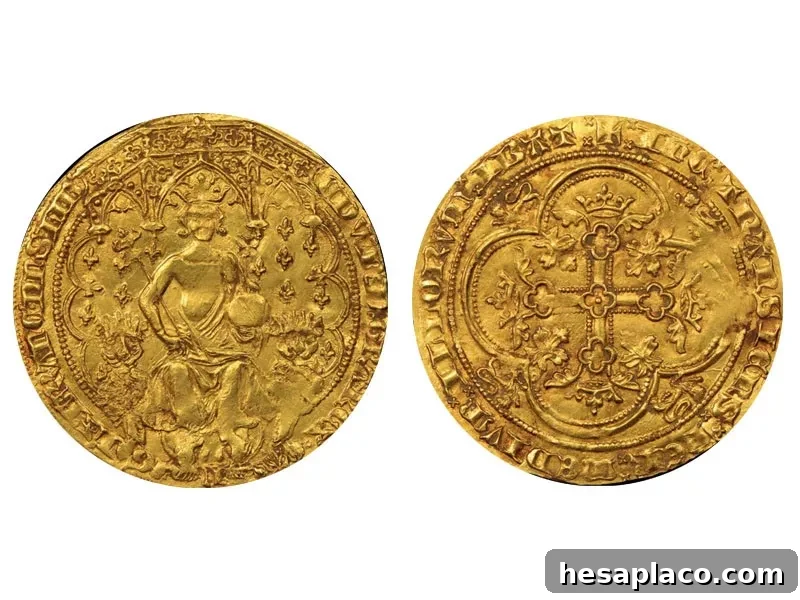
NGC
Sold privately: $841,800
In 1344 King Edward III issued three gold denominations, including the double florin (double leopard) worth six shillings. Produced only between January and July of 1344 and quickly replaced, many were melted down. Few survived; two were found in the Tyne River in 1857 and are now in the British Museum. A specimen discovered in southern England in 2006 became one of the most valuable English coins.
45. 1829 Capped Head Left Half Eagle (U.S.)
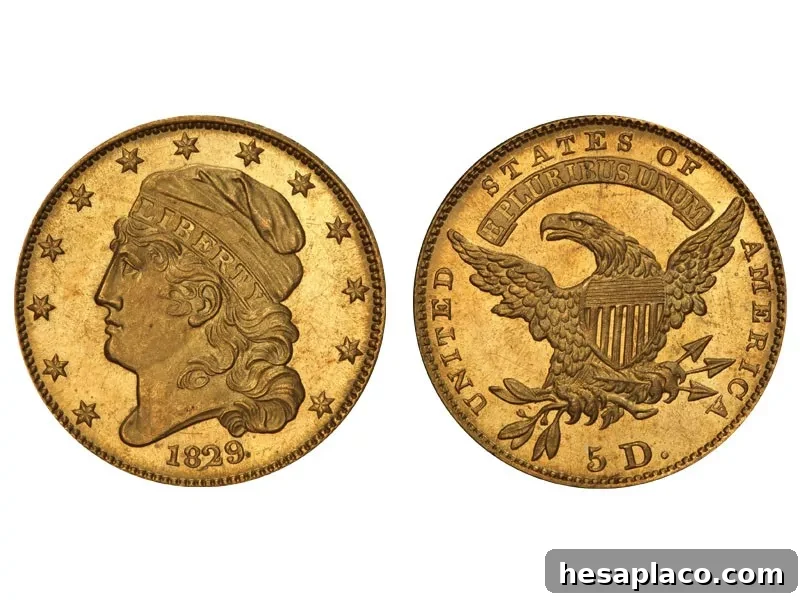
PCGS
Sold at auction: $881,250
The small-planchet Capped Head half eagle was introduced in 1829 after press upgrades required design changes. Although over 15,000 were produced, most didn’t circulate and many were later melted. Only a handful of examples survive; this piece is one of the finest known.
43. 1794 Liberty Cap Half Cent (U.S.) (Tie)
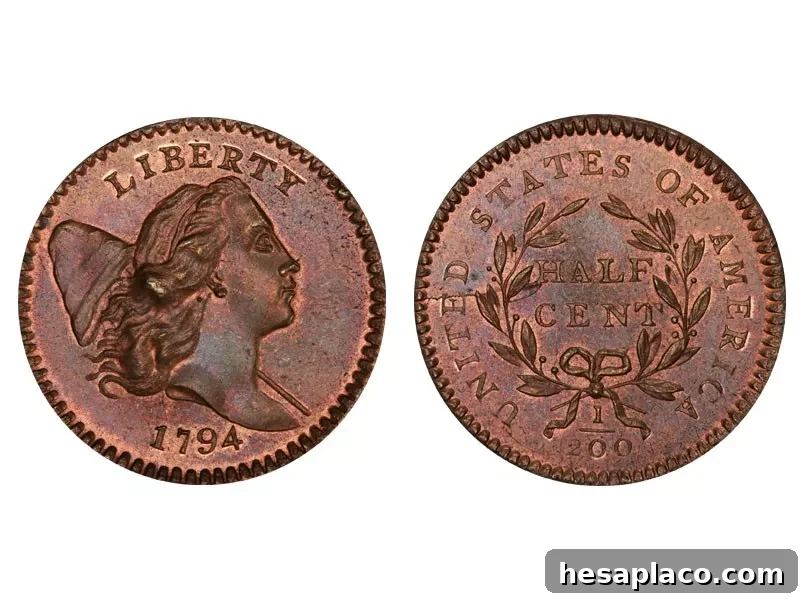
PCGS
Sold at auction: $940,000
This half cent retains original mint red color and luster on both sides, with bold high-relief details—an unusually well-preserved copper coin from the 18th century. It’s recognized as the finest surviving example; only one other uncirculated specimen exists, held by the British Museum but darkened with age.
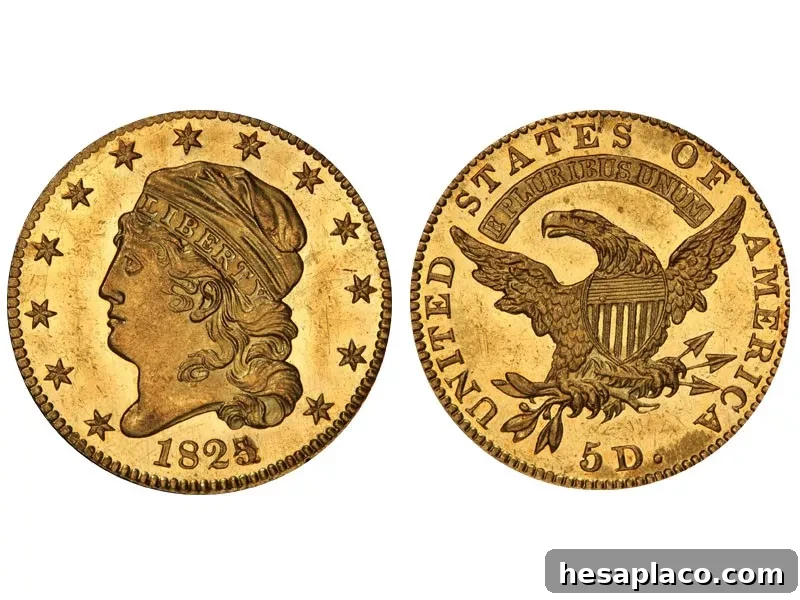
43. 1825/4 Capped Head Left Half Eagle (U.S.) (Tie)
PCGS
Sold at auction: $940,000
This overdate half eagle clearly shows the underlying 4 beneath a 5 in the date. For decades it was believed unique until a second example surfaced in 1978. The coin displays strong reflectivity, excellent luster and sharp strike detail, making it a prized rarity among Capped Bust $5 varieties.
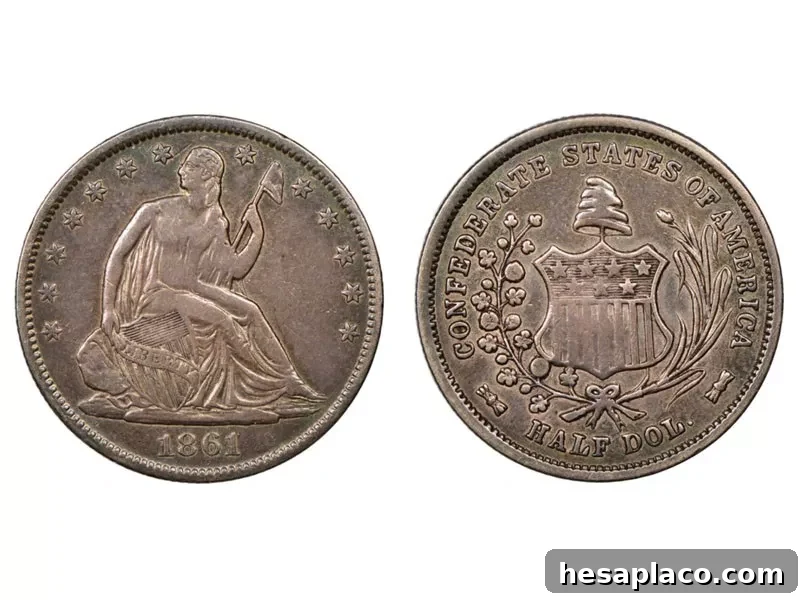
42. 1861 Confederate States of America Half Dollar (U.S.)
Heritage Auctions
Sold at auction: $960,000
When the New Orleans Mint fell under Confederate control in early 1861, production continued briefly. Though plans existed to produce Confederate coinage, only four half dollars were struck as samples before the mint closed. This coin is the second-finest known example.
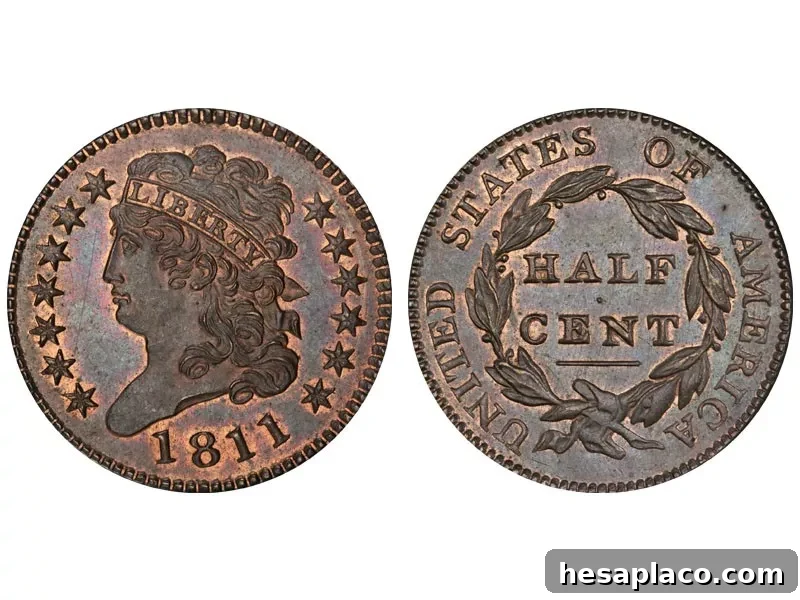
39. 1811 C1 Classic Head Half Cent (U.S.) (Tie)
PCGS
Sold at auction: $998,750
An early strike from its dies, this half cent shows sharp, proof-like details and cartwheel luster, suggesting it may have been a presentation strike. Only five 1811 half cents are known in mint condition; this is the finest.
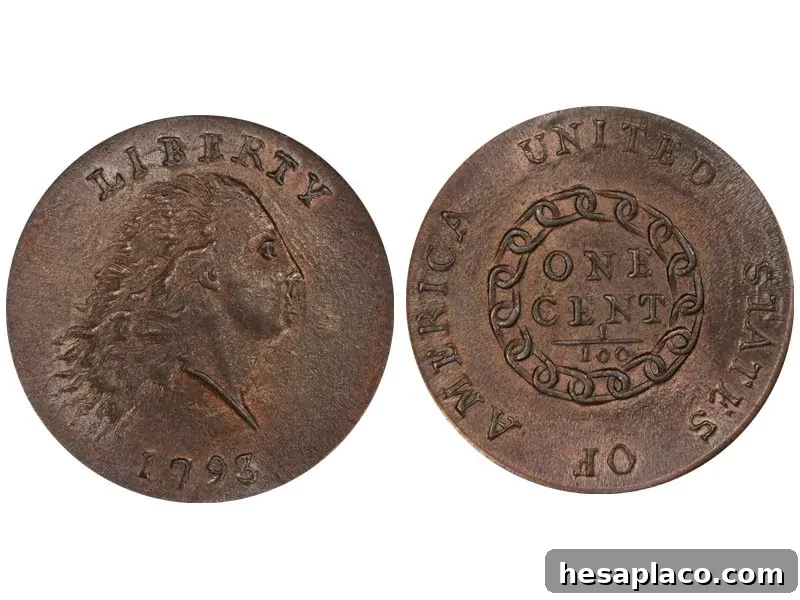
39. 1793 Chain Flowing Hair Cent (U.S.) (Tie)
PCGS
Sold at auction: $998,750
Only 36,103 Chain cents were struck in 1793, and roughly 800 survive. This example is the finest known Chain cent, retaining mint color and cartwheel luster around Liberty’s portrait.
39. 1792 Disme Pattern (U.S.) (Tie)
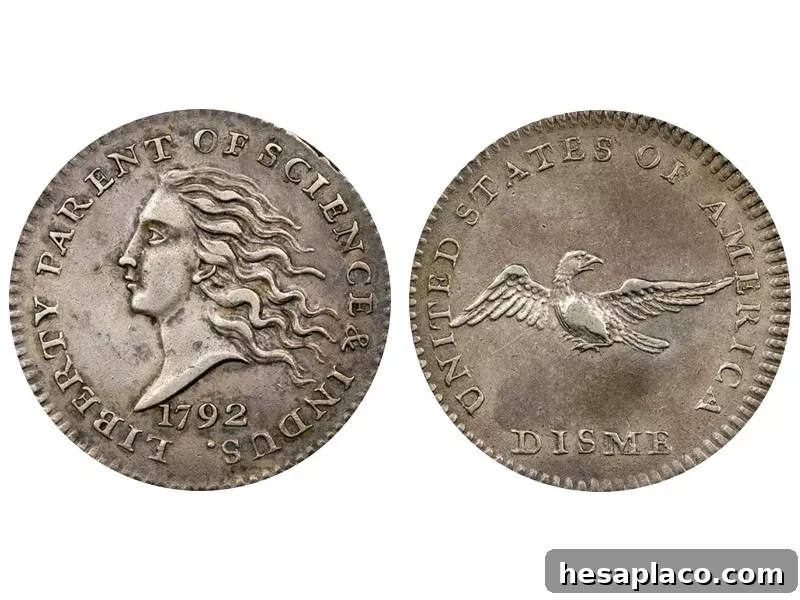
Heritage Auctions
Sold at auction: $998,750
The 1792 “disme” (dime) was authorized by George Washington and reportedly struck in July 1792—possibly using silver from his own tableware. Mint records are incomplete; estimates place the mintage between 1,500 and 2,500, but only a few survive. This specimen is graded About Uncirculated.
38. 1795 Draped Bust Silver Dollar (U.S.)
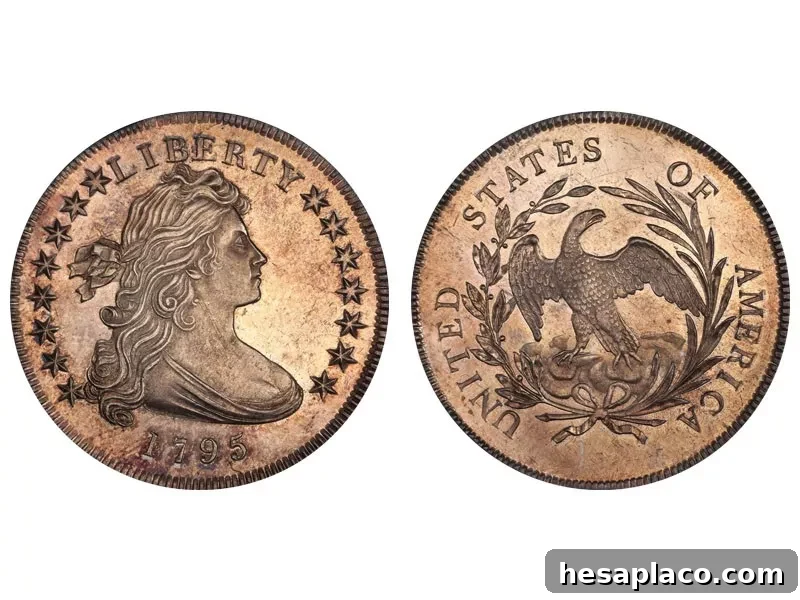
PCGS
Sold at auction: $1,057,500
This proof-like Draped Bust dollar may be among the earliest in that series. The design later appeared on smaller denominations, but in 1795 it was used on dollars only. This is the only certified proof example of its type.
37. 1992 Gold 2000 Yuan (China)
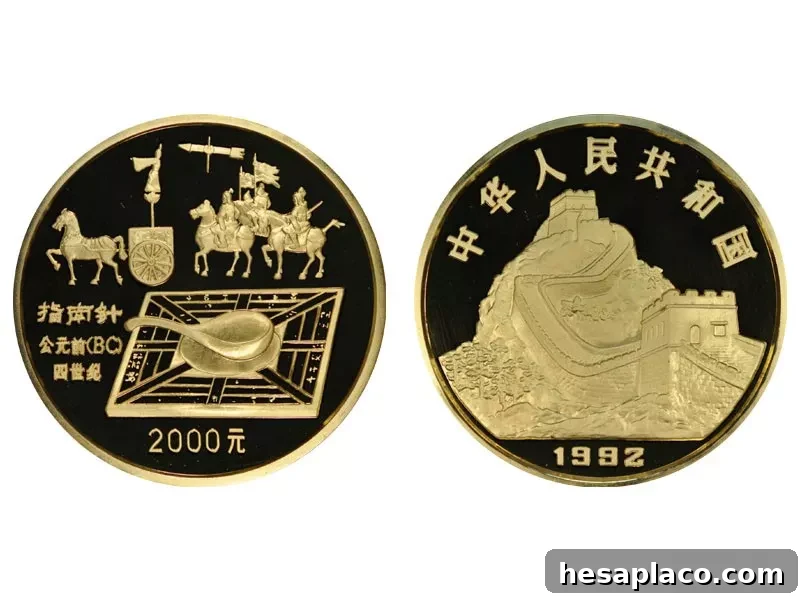
NGC
Sold at auction: $1,298,000
Mintage from the Shenyang Mint, this proof-quality 2000 Yuan gold coin commemorates Chinese inventions and discoveries. Numbered 06 of a maximum of 10, it’s one of the rarest modern Chinese issues. The obverse shows a compass; the reverse features the Great Wall.
36. 1833 Capped Head Left Half Eagle (U.S.)
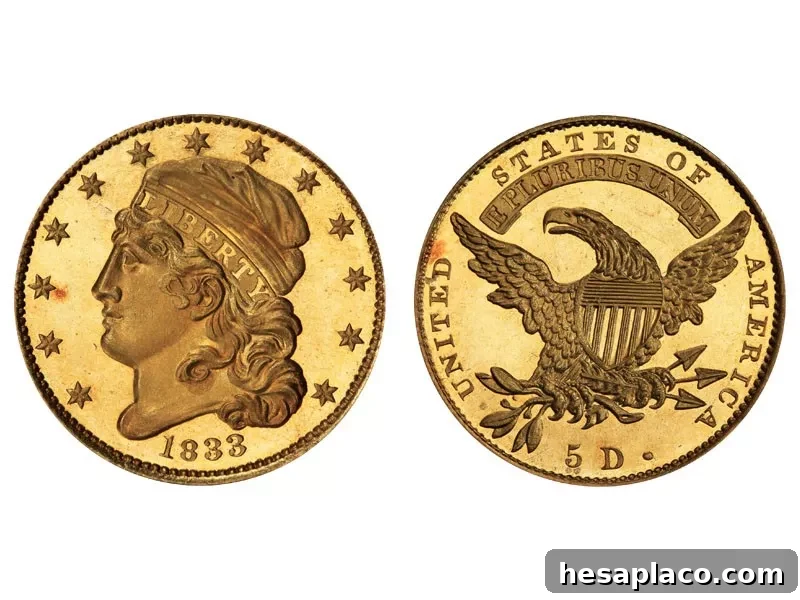
Stack’s Bowers
Sold at auction: $1,351,250
Although 193,630 half eagles were minted in 1833, only around 75 are known to survive—the rest were shipped overseas and melted for their gold. This specimen is considered the finest proof example from before 1835.
35. 1796 B-2 Draped Bust Quarter (U.S.)
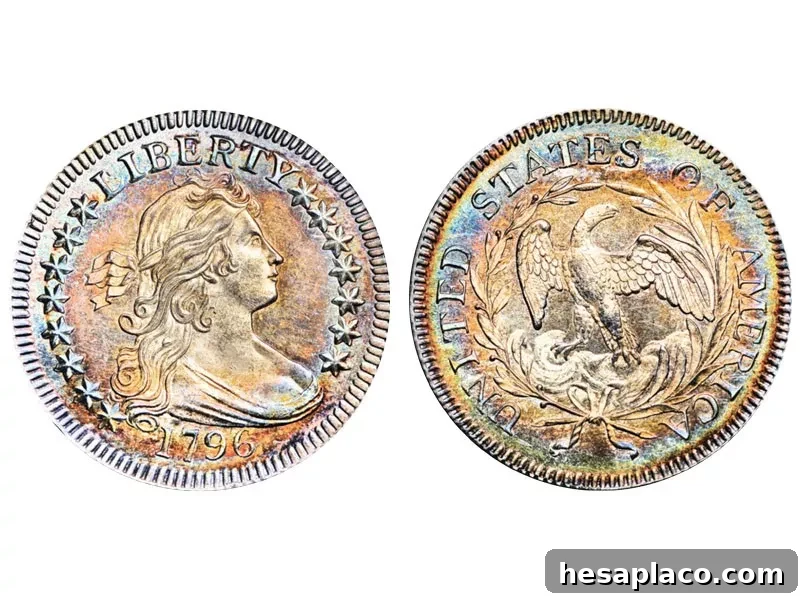
Heritage Auctions
Sold at auction: $1,527,500
One of the first quarters struck at the Philadelphia Mint, only 6,146 were produced in 1796. About 700 survive, and only roughly 75 remain in mint state. This coin is considered the finest of its variety.
34. 1991 Gold 10,000 Yuan Coin (China)
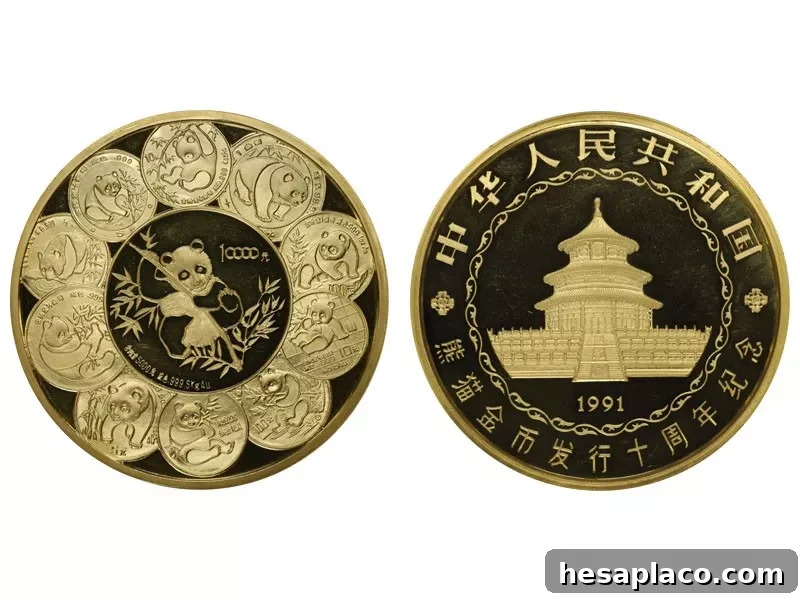
PCGS
Sold at auction: $1,600,000
A proof coin struck for the 10th anniversary of the Chinese Panda series, this massive 150 mm diameter coin was produced at the Shenyang Mint in a limited run of 10. It displays the series’ ten historic Panda designs on its reverse and was sold with its original box and certificate as coin No. 006.
33. 1943-D Lincoln Bronze Cent (U.S.)
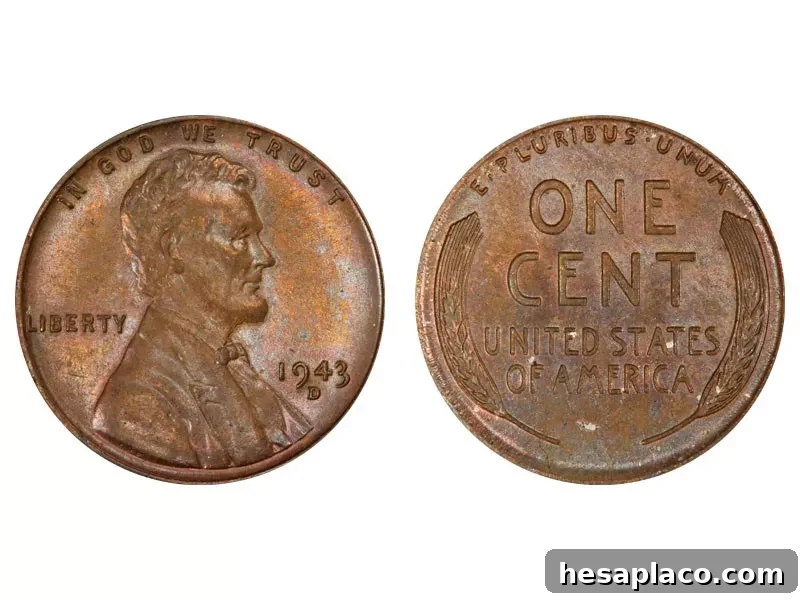
PCGS
Private sale: $1,700,000
During World War II, most U.S. pennies in 1943 were struck on zinc-plated steel to conserve copper. The Denver Mint accidentally produced at least one bronze cent that year; this is the only confirmed bronze cent from Denver and one of the rarest modern U.S. errors, with estimates suggesting a tiny number may have been struck elsewhere.
32. 1792 Washington Gold Eagle Pattern (U.S.)
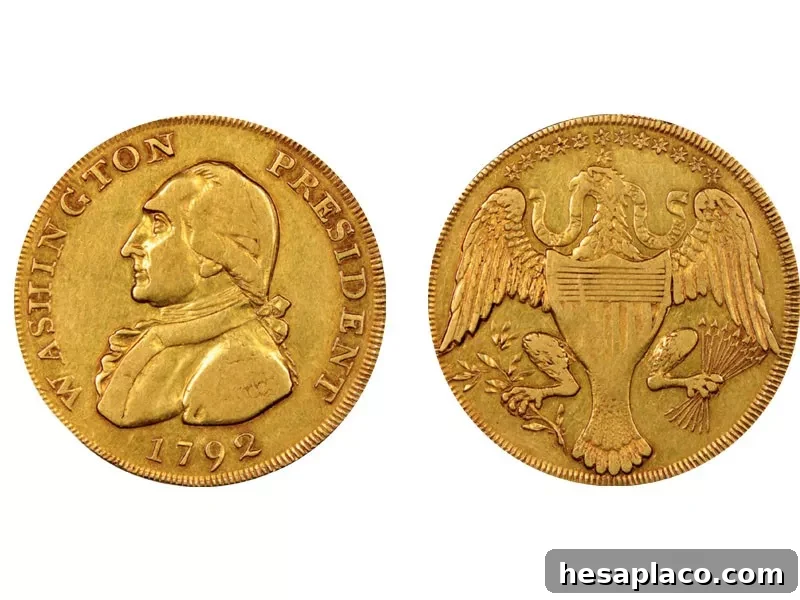
Heritage Auctions
Sold at auction: $1,740,000
This early $10 gold pattern may have been associated with George Washington and is the earliest gold pattern submitted for U.S. coinage. Only a single gold example of its kind is known to exist.
30. 1873 CC No Arrows Seated Liberty Dime (U.S.) (Tie)
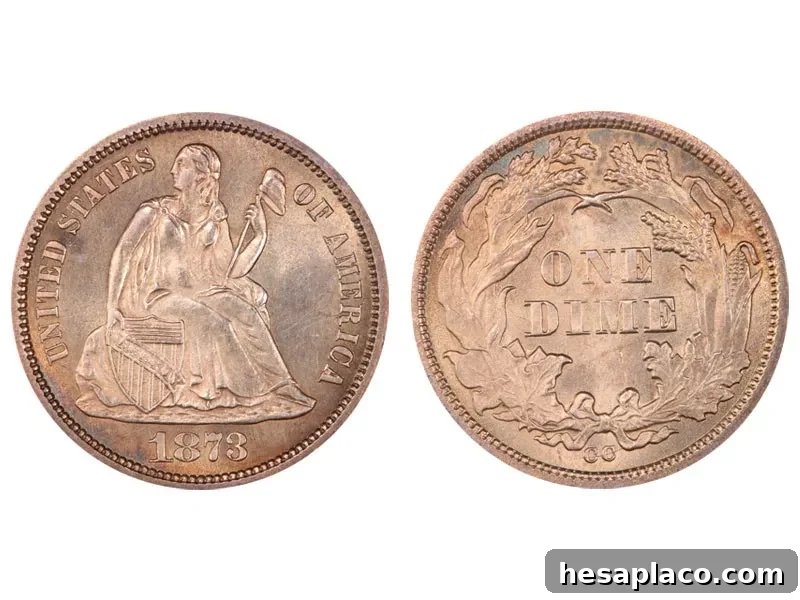
PCGS
Sold at auction: $1,840,000
Carson City-minted “no arrows” dimes of 1873 were struck before a change in standard weight, when arrows were later added to indicate compliance. Only 12,400 no-arrow dimes were produced and most were slated to be recoined; this is the only known mint-state specimen.
30. 1907 Saint-Gaudens Ultra High Relief Double Eagle Lettered Edge (U.S.) (Tie)
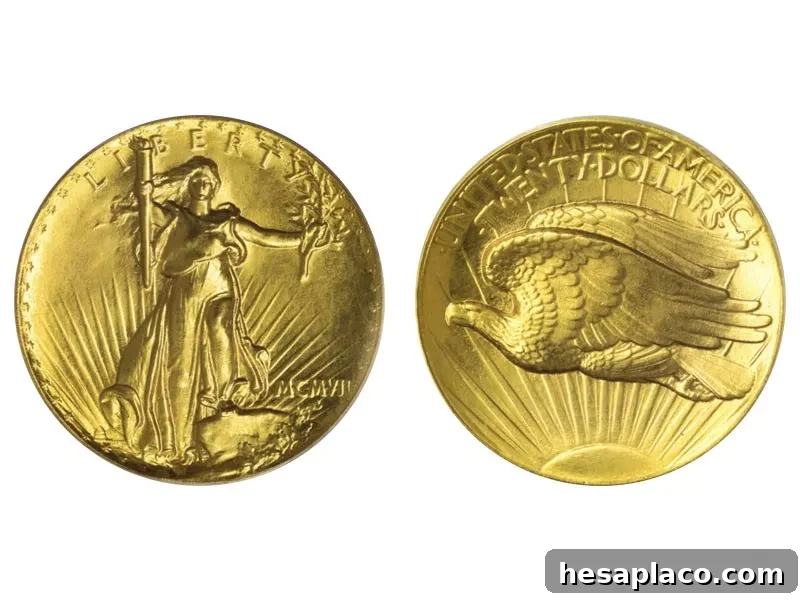
Heritage Auctions
Sold at auction: $1,840,000
Commissioned by President Theodore Roosevelt and designed by Augustus Saint-Gaudens, the 1907 ultra high relief $20 pieces were notoriously difficult to strike. A handful of lettered-edge examples were produced; this coin is one of the scarce survivors from that experimental series.
29. 1879 Double Eagle Proof (U.S.)
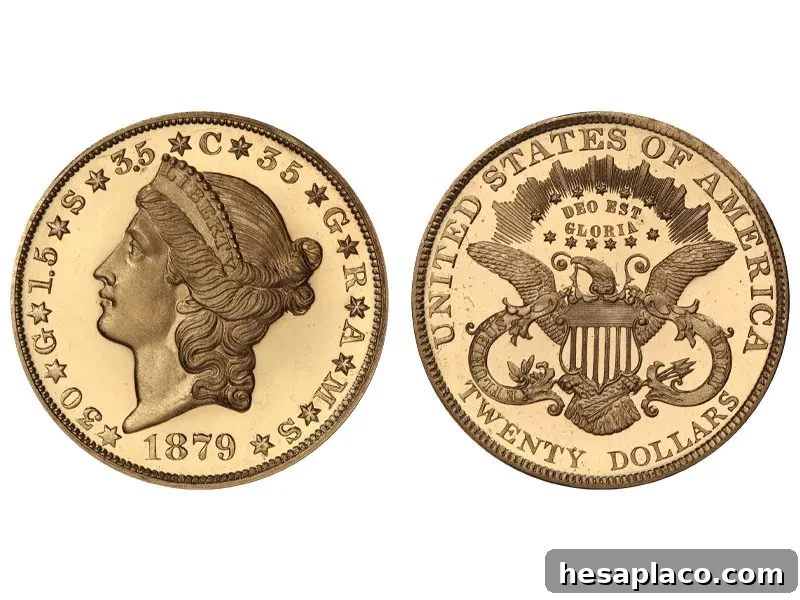
PCGS
Sold at auction: $1,880,000
An experimental double eagle intended to metricate coin weights, this proof carries the motto DEO EST GLORIA rather than IN GOD WE TRUST. Only five or six specimens are known.
28. 1927-D Saint-Gaudens Double Eagle (U.S.)
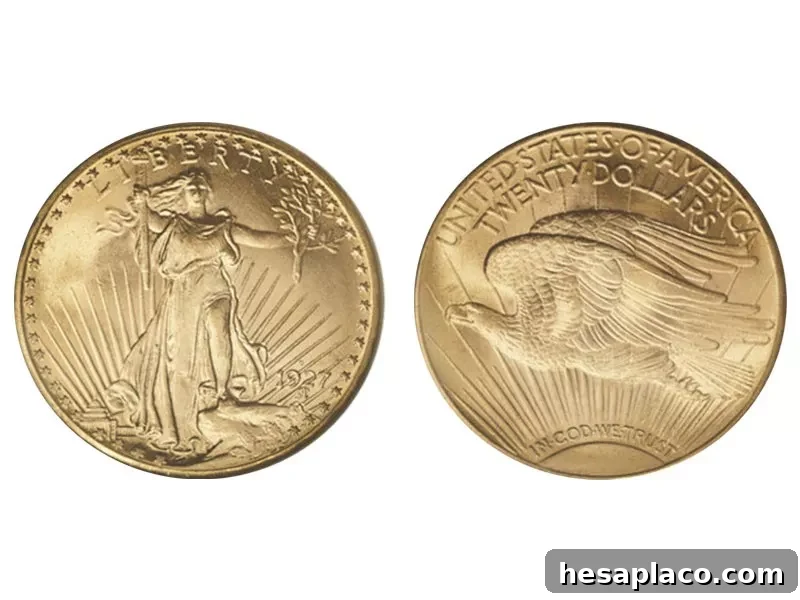
Heritage Auctions
Sold at auction: $1,897,500
Although 180,000 of these $20 coins were minted, only about a dozen survived—many were melted in the 1930s. Of those in private hands, this specimen is among the finest and displays exceptional luster and detail.
25. 1927-D Saint-Gaudens Double Eagle (U.S.) (Tie)
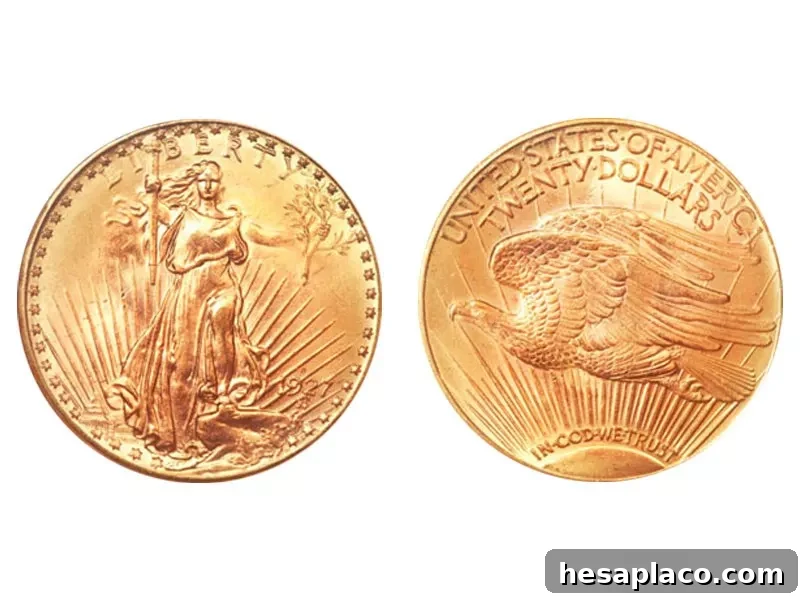
Coin Update
Sold at auction: $1,997,500
The Saint-Gaudens design, used 1907–1933, includes several rare date/mint combinations. The 1927-D is among the scarcest and most sought after by collectors; many remaining examples were melted in Mint purges.
25. 1894-S Barber Dime (U.S.) (Tie)
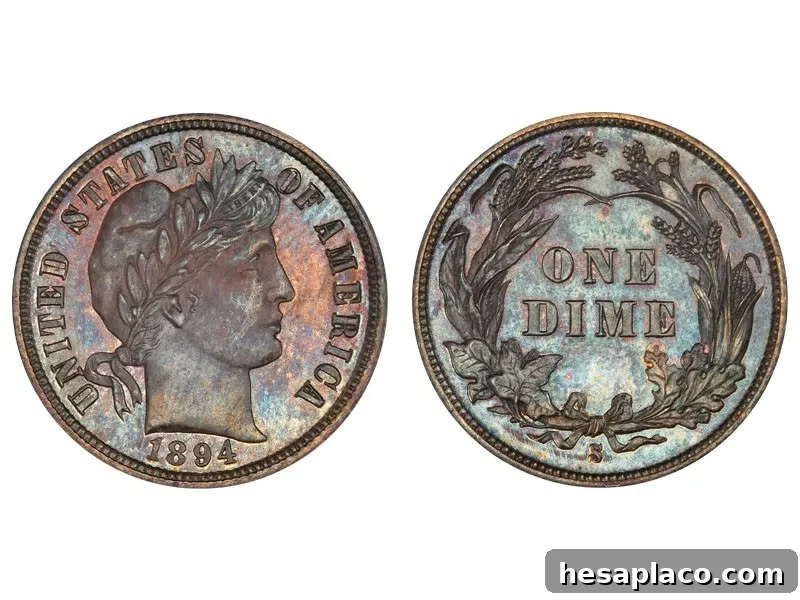
PCGS
Sold at auction: $1,997,500
Of roughly two million dimes dated 1894, only 24 were struck at the San Francisco Mint—and all were proofs. Why so few were made remains a numismatic mystery. Today only nine examples are known; this gem is among the finest.
25. 1792 Silver Center One Cent Pattern (U.S.) (Tie)
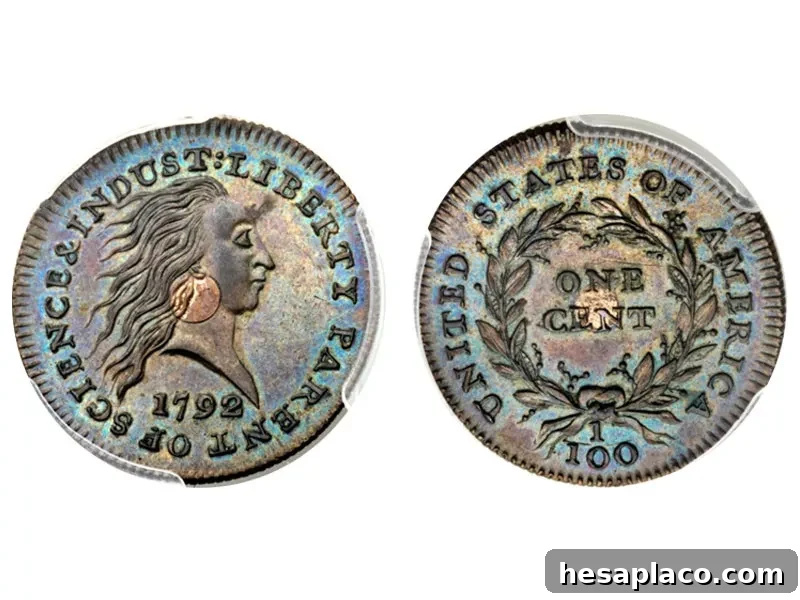
Heritage Auctions
Sold at auction: $1,997,500
Known as Judd-1, the Silver Center cent was among the earliest samples struck at the new Philadelphia Mint. About a dozen specimens survive. Though attractive and resistant to counterfeiting, the silver-center design was difficult to produce in quantity and was soon abandoned in favor of large copper cents.
24. 1907 Saint-Gaudens Ultra High Relief Double Eagle Inverted Edge Letters (U.S.)
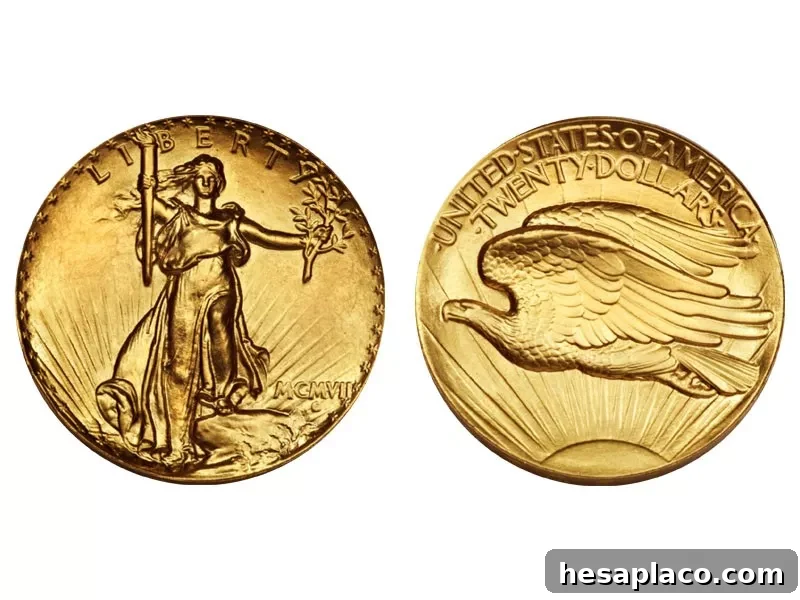
Heritage Auctions
Sold at auction: $2,115,000
A variation produced after a collar change, this ultra high relief example features differences in the edge lettering and star arrangement. Only a handful of such presentation examples exist, some marked with the initials ASG for Augustus Saint-Gaudens.
23. 1621 100 Ducats (Polish-Lithuanian Commonwealth)
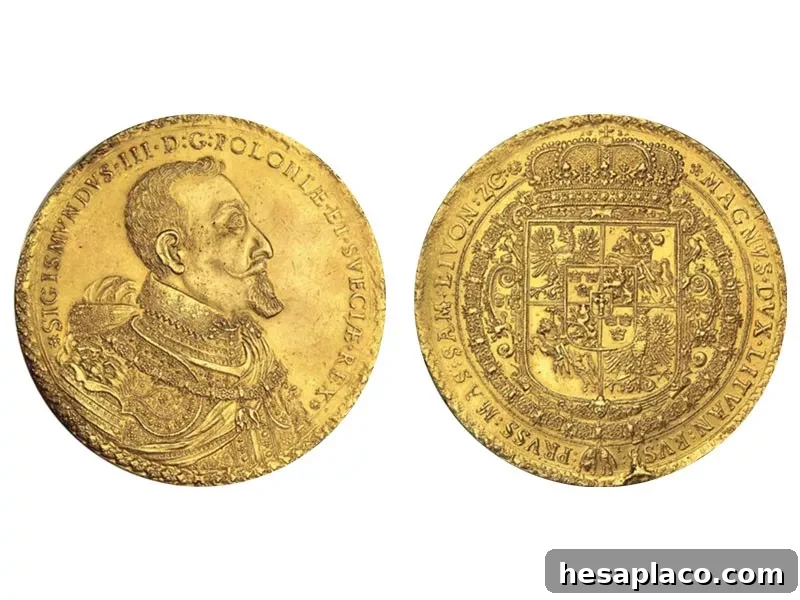
Heritage Auctions
Sold at auction: $2,160,000
Issued for King Sigismund III Vasa to commemorate the victory over the Turks at Chocim, the massive 100 ducat gold coin measures roughly 2¾ inches in diameter and weighs about 12.3 ounces. Only six examples from the same dies are known.
22. 1792 Eagle on Globe Copper Pattern Quarter (U.S.)
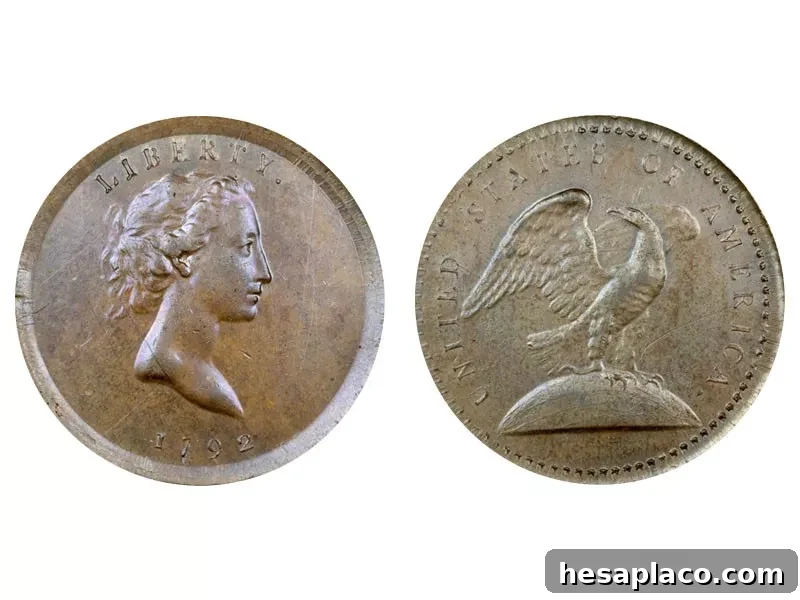
Heritage Auctions
Sold at auction: $2,232,500
This rare pattern features an eagle perched on a globe and differs stylistically from later 1792 issues. It’s one of only two known examples; the other is held by the Smithsonian, making this a highly prized pattern piece.
21. 1804 Draped Bust Dollar (U.S.)
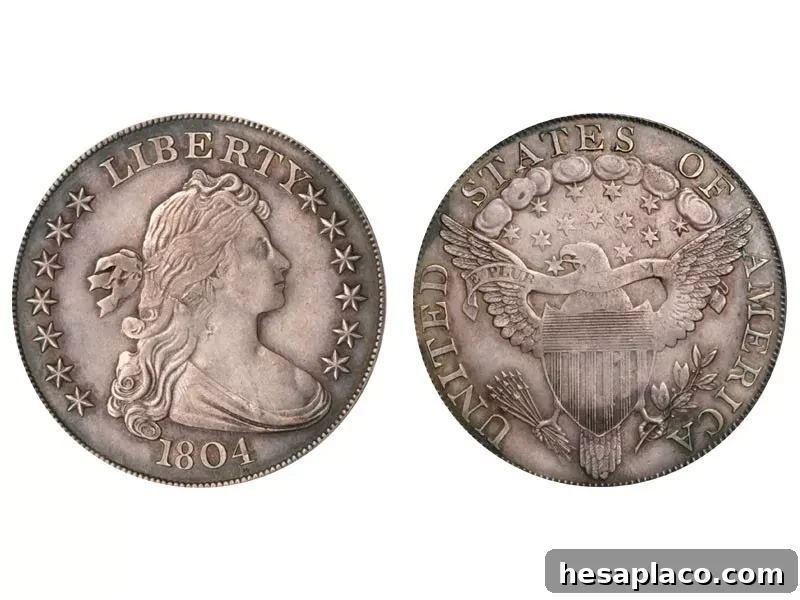
Heritage Auctions
Sold at auction: $2,300,000
Although dated 1804, many of these dollars were struck later, in the 1830s, as diplomatic proof sets. Class II and Class III issues exist; this example is a Class III and is among the finest of that group. The 1804 dollar remains one of the most famous rarities in American numismatics.
19. 1808 Capped Bust Left Quarter Eagle (U.S.) (Tie)
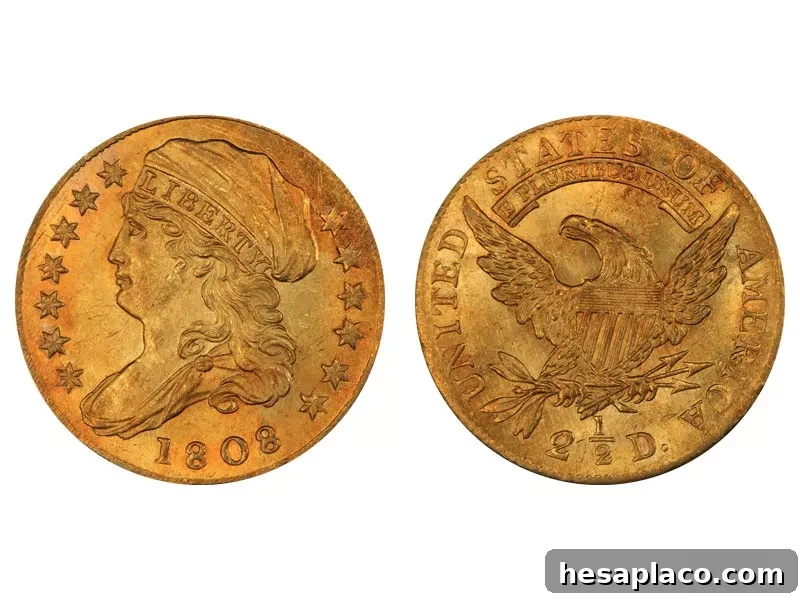
PCGS
Sold at auction: $2,350,000
This $2.50 gold coin, struck in 1808, is the finest known example of a scarce issue. Early Mint practices meant coins were produced on private bullion orders, and only 2,710 quarter eagles were struck that year; the design was produced only in 1808 and then discontinued until 1821.
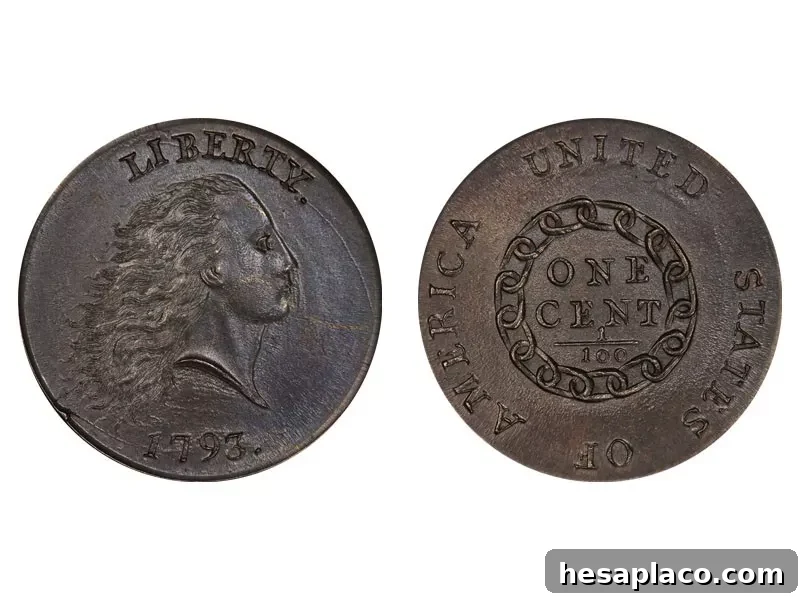
19. 1793 Chain Cent (U.S.) (Tie)
PCGS
Sold at auction: $2,350,000
The Chain cent was the first federal one-cent coin struck for circulation in March 1793. Of the original 36,103 pieces, only a small number survive, and mint-state Chain cents are especially rare. This certified example set a record in 2012 for a U.S. cent sold publicly.
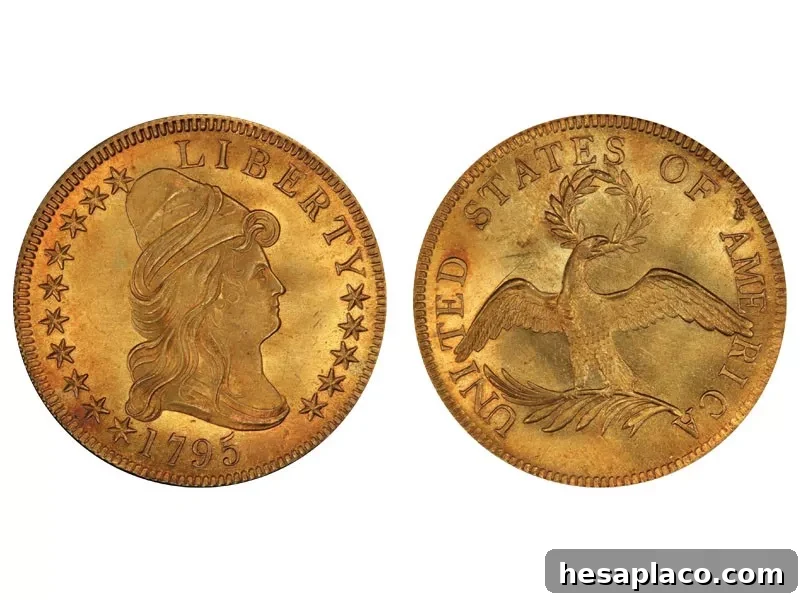
17. 1795 Capped Bust Right Eagle 13 Leaves (U.S.) (Tie)
Stack’s Bowers
Sold at auction: $2,585,000
The 1795 “Eagle” was the largest gold denomination authorized by the Mint Act of 1792. This example with 13 leaves on the eagle’s branch is a superb specimen with bold details and is regarded as the finest of its type.
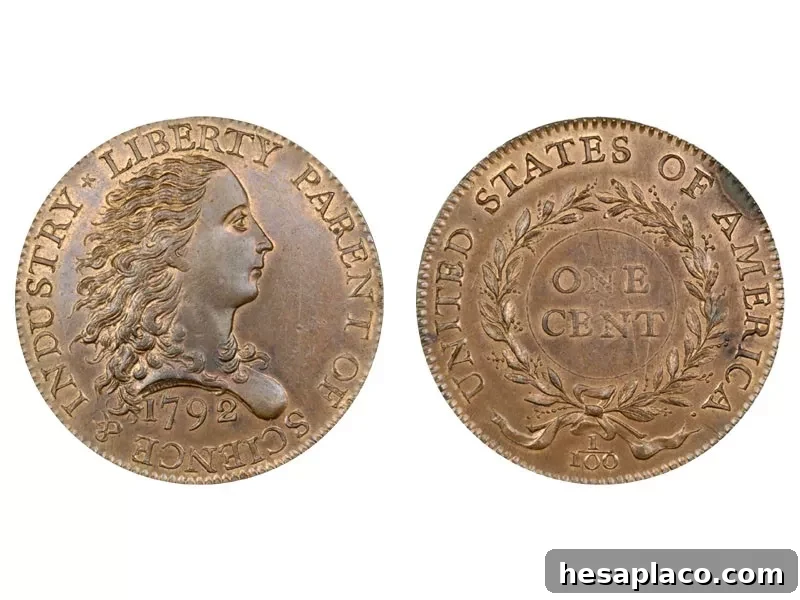
17. 1792 Birch Cent (U.S.) (Tie)
Heritage Auctions
Sold at auction: $2,585,000
Designed by Robert Birch, the Birch cent prototypes were an early step toward U.S. coinage. Four types were produced; this gem uncirculated example is considered the finest Birch cent known.
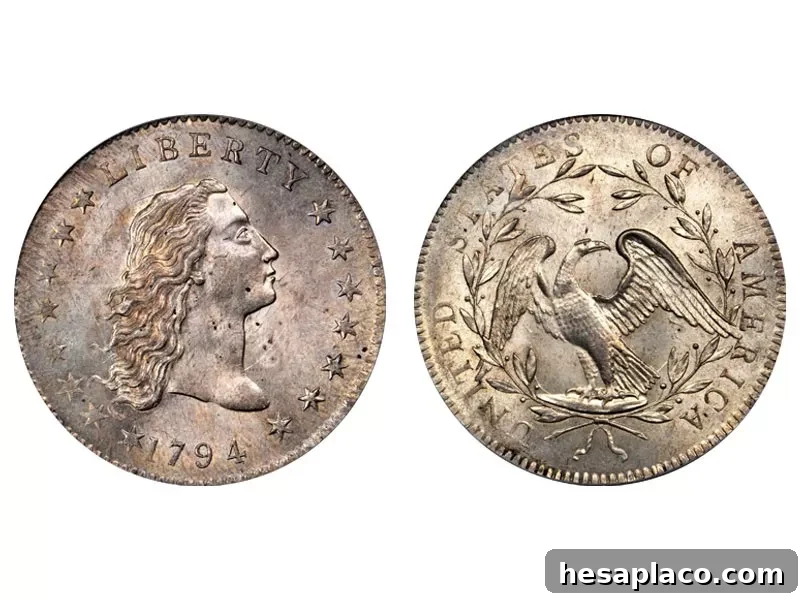
16. 1794 Flowing Hair Silver Dollar (U.S.)
Stack’s Bowers
Sold at auction: $2,820,000
The 1794 Flowing Hair dollar was among the first dollars struck at the Philadelphia Mint, likely in a single day. About 150 examples survive. Many are softly struck due to press limitations; this mint-state example ranks among the top certified survivors.
14. 1907 Saint-Gaudens Ultra High Relief Double Eagle Lettered Edge (U.S.) (Tie)
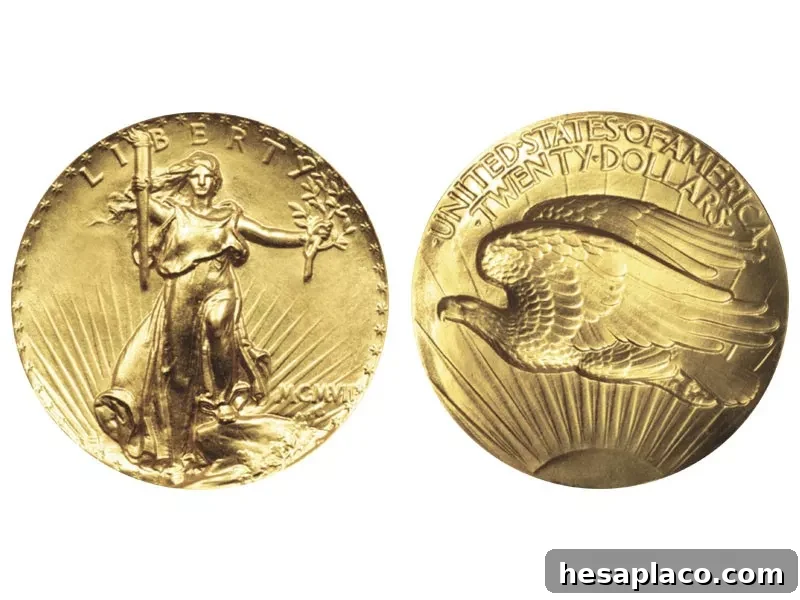
Heritage Auctions
Sold at auction: $2,990,000
Ultra high relief double eagles were struck multiple times and annealed between strikes, producing exceptional surface quality. Only 19–20 examples are known; this near-perfect piece is unique in its high grade and was one of the early coins to surpass six-figure prices.
14. 1787 Brasher Doubloon EB on Breast (U.S.) (Tie)
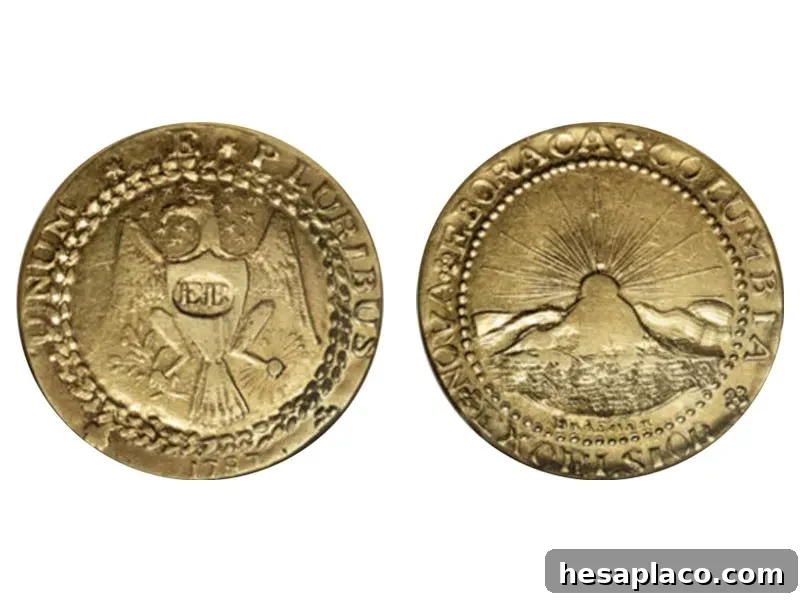
Heritage Auctions
Sold at auction: $2,990,000
Ephraim Brasher, a New York silversmith and neighbor of George Washington, produced privately issued gold pieces known as Brasher doubloons. This is the only known example with the EB punch on the eagle’s breast; most examples bear EB on the wing. Its rarity and historical association make it a premier colonial rarity.
13. 1913 Liberty Head Nickel (U.S.)
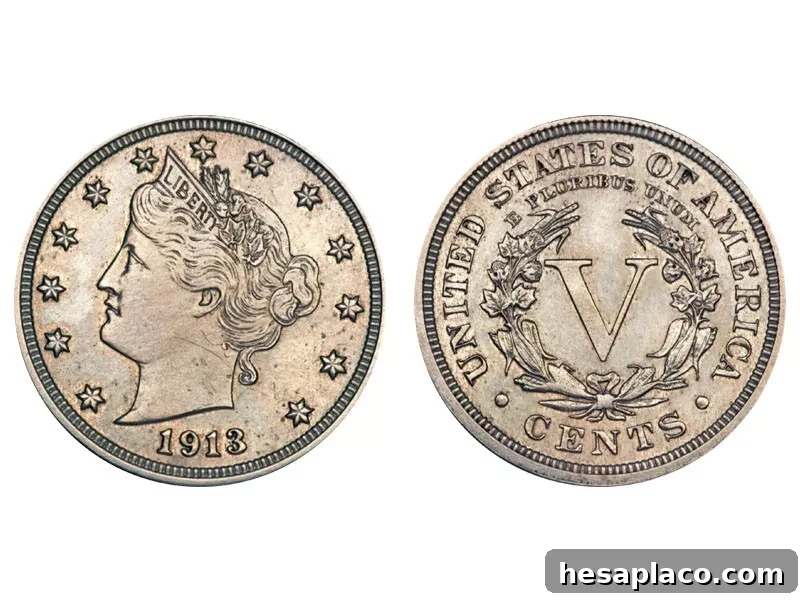
Heritage Auctions
Sold at auction: $3,172,500
Only five Liberty Head nickels dated 1913 are known, making them among the most coveted U.S. coins. Ownership history is storied: Samuel W. Brown, Col. Edward H.R. Green, King Farouk, and major collectors. This “Walton” specimen is one of the five uncirculated coins and is prized for its eye appeal.
12. 1804 Draped Bust Dollar (U.S.)
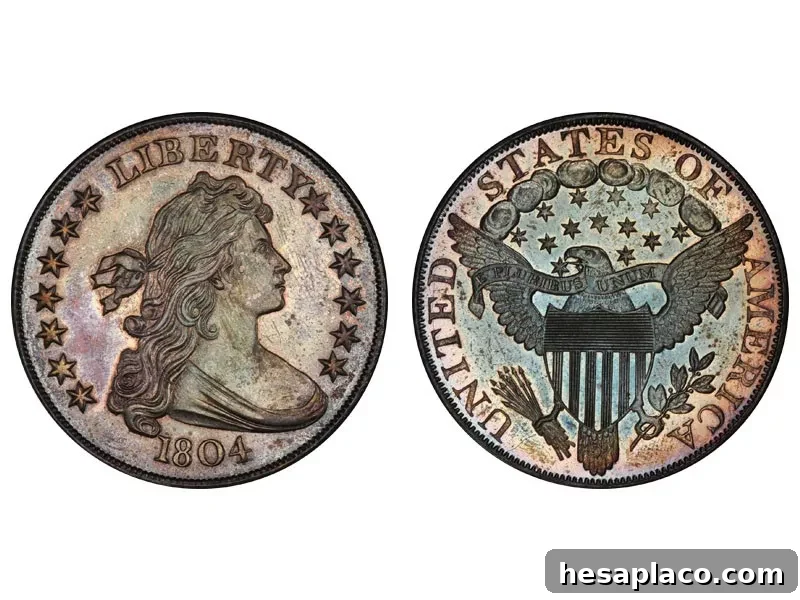
Stack’s Bowers
Sold at auction: $3,290,000
Called the “Dexter specimen” for a small D mark on the reverse cloud, this 1804 dollar is a Class I example—one of the eight originally struck for diplomatic presentation in 1834. It retains proof-like surfaces and a storied ownership history.
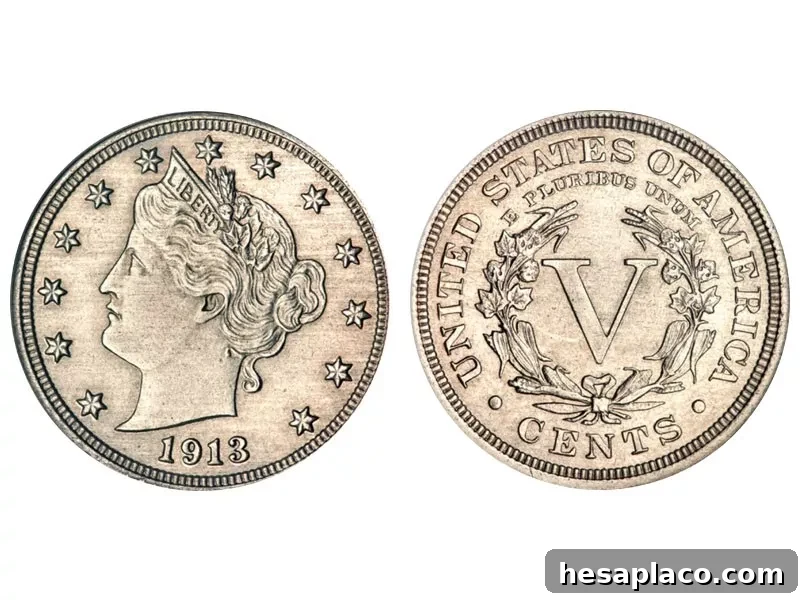
11. 1913 Liberty Head Nickel (U.S.)
Heritage Auctions
Sold at auction: $3,737,500
This Olsen specimen is another of the three privately held 1913 nickels. Captured in the hands of prominent collectors and even royalty, these nickels rank among the most famous U.S. rarities. This particular coin is considered the second-finest of the privately held examples.
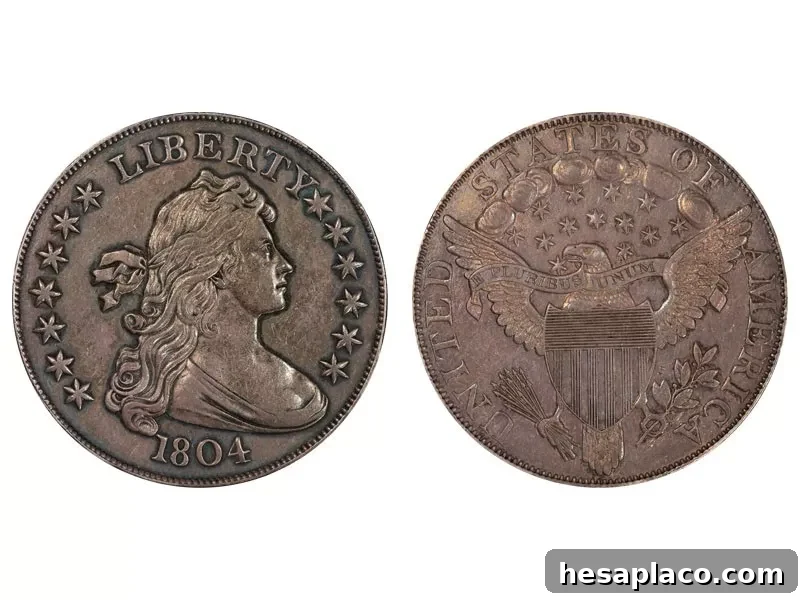
10. 1804 Draped Bust Dollar (U.S.)
PCGS
Sold at auction: $3,877,500
Known as the Mickley coin, this Class I 1804 dollar is one of eight produced for diplomatic presentation. It may have circulated at one point after acquisition by Joseph J. Mickley and remains one of the most renowned 1804 dollars.
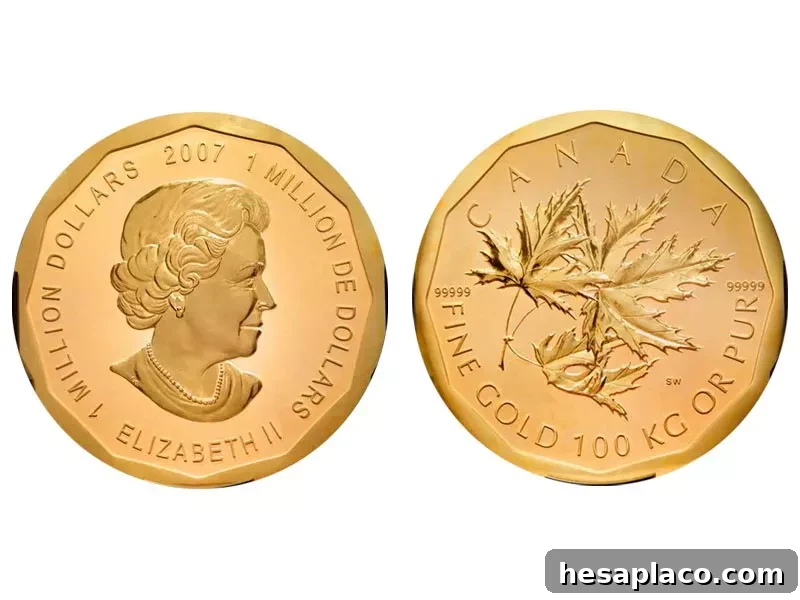
8. 2007 Queen Elizabeth II Million Dollar Coin (Canada) (Tie)
Dorotheum
Sold at auction: $4,000,000
At 220 pounds and 21 inches in diameter, this is the world’s largest coin and the first coin denominated at one million dollars. Created as a showpiece to promote the Gold Maple Leaf, it was produced in limited quantity and later sold at auction as a major numismatic novelty and investment piece.
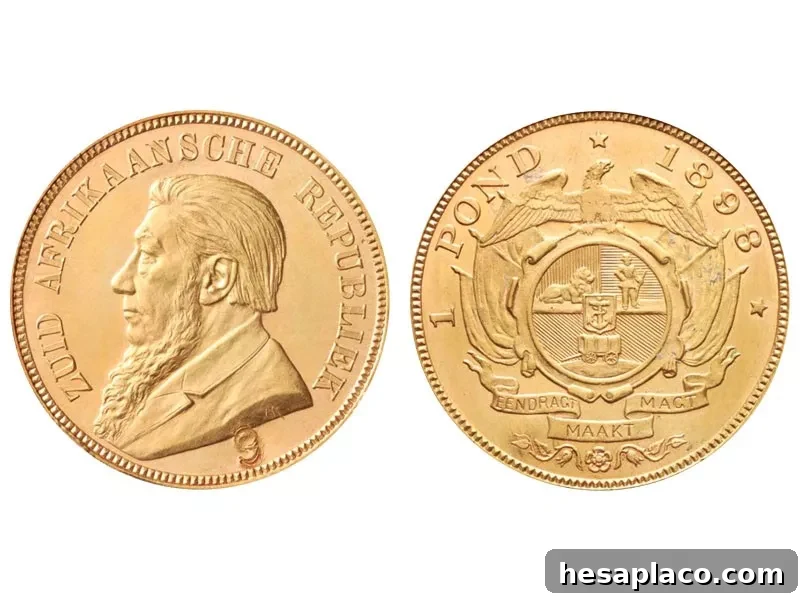
8. 1899 Single 9 Pond (South Africa) (Tie)
NGC
Private sale: $4,000,000
Struck during the Anglo-Boer War, the “Single 9” pond resulted from an early die punch where the date’s “9” was too large. The error was corrected with the Double 99 design, making the Single 9 exceptionally rare. This example traveled through prominent collections, including King Farouk’s, before commanding a record private sale.
7. 1804 Draped Bust Dollar (U.S.)
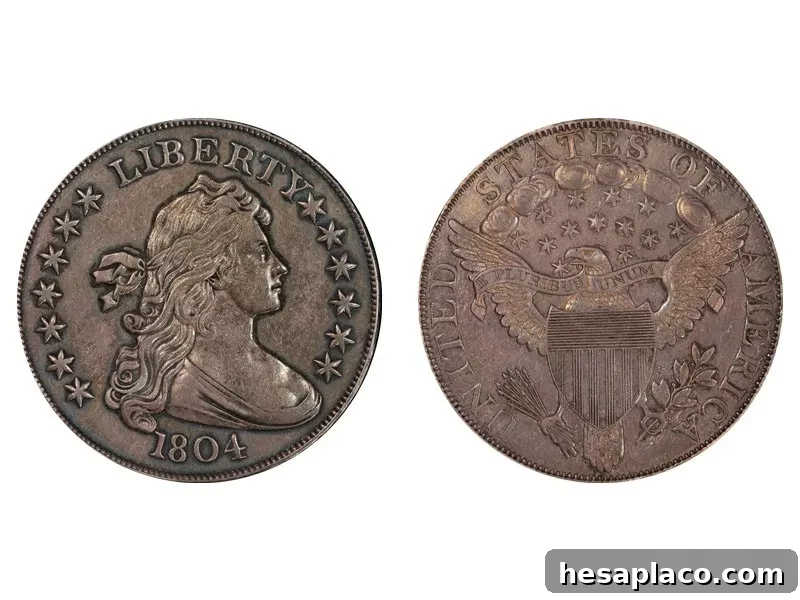
PCGS
Sold at auction: $4,140,000
Another superb 1804 dollar—this one given to the Sultan of Muscat as part of the diplomatic proof sets created in the 1830s. Among the finest preserved, it showcases why the 1804 dollar remains a centerpiece of high-end numismatics.
6. 1913 Liberty Head Nickel (U.S.)
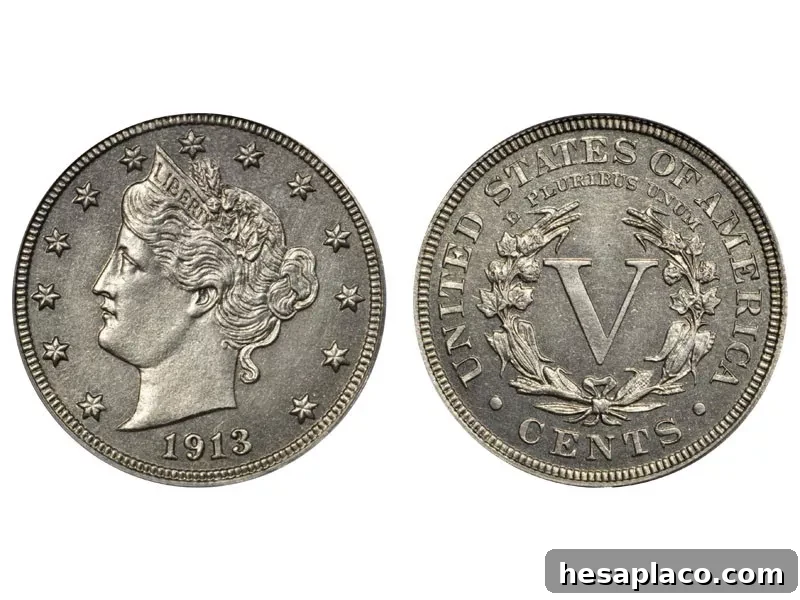
Stack’s Bowers
Sold at auction: $4,560,000
The most valuable of the five 1913 Liberty Head nickels, the Eliasberg specimen was purchased by Louis E. Eliasberg Sr. in 1948. With a surface like a proof and the highest grade among the five known examples, it has led the category and was the first 1913 to break the million-dollar threshold in public sale.
5. 1794 Flowing Hair Silver Dollar (U.S.)
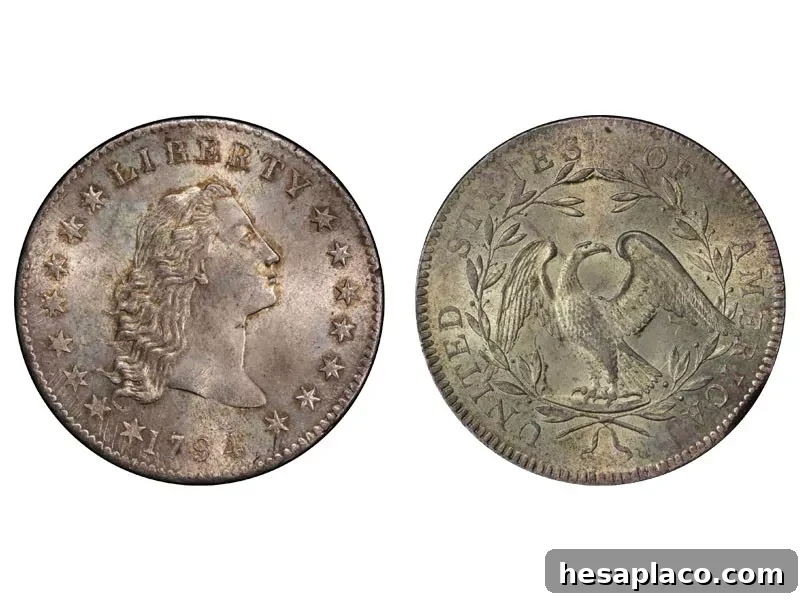
Stack’s Bowers
Sold at auction: $4,993,750
This mint-state 1794 dollar is one of the earliest U.S. silver dollars, notable for its exceptionally crisp strike—especially the first three stars—and proof-like surface. Kept for nearly 170 years in a Chippendale cabinet, it ranks among the most celebrated early American coins.
4. 1787 Brasher Doubloon, EB Punch on Wing (U.S.)
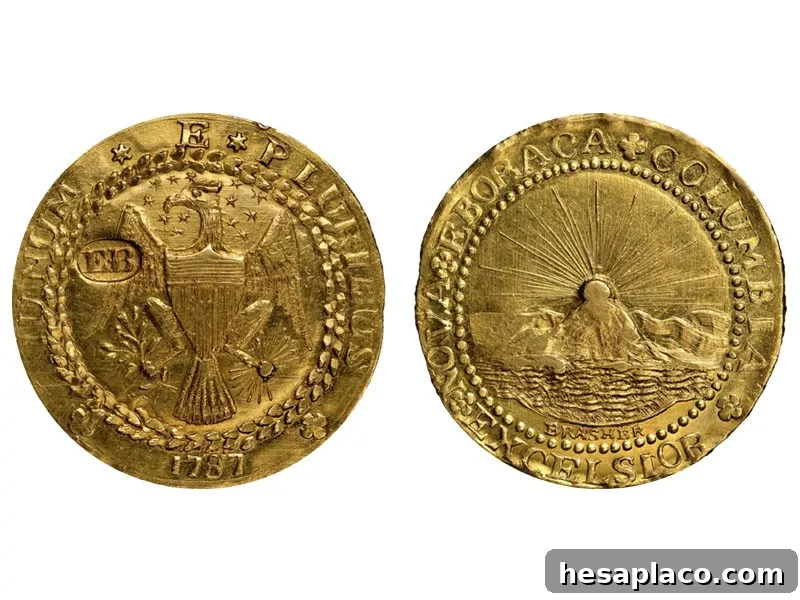
Heritage Auctions
Private sale: $5,000,000+
One of the seven known Brasher doubloons with the EB hallmark punched on the wing, this example in mint condition is considered the finest among its type. Brasher doubloons are iconic early American rarities due to their private origin and association with post-Revolutionary New York.
3. 723 Umayyad Gold Dinar (Islamic Umayyad Kingdom)
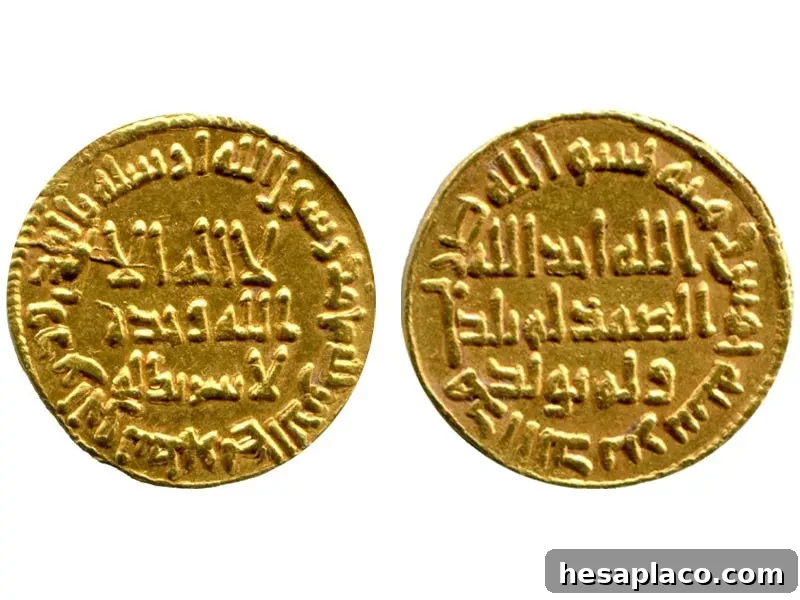
Stanley Gibbons
Sold at auction: $6,013,157
Struck in A.H. 105 (about 723–724 AD) from gold reportedly sourced from the caliph’s mine, this Umayyad dinar is one of the rarest early Islamic gold coins. It may have been struck for a pilgrimage or special issue and is notable as the earliest Islamic coin that mentions a location in what is now Saudi Arabia.
2. 1933 Saint-Gaudens Double Eagle (U.S.)
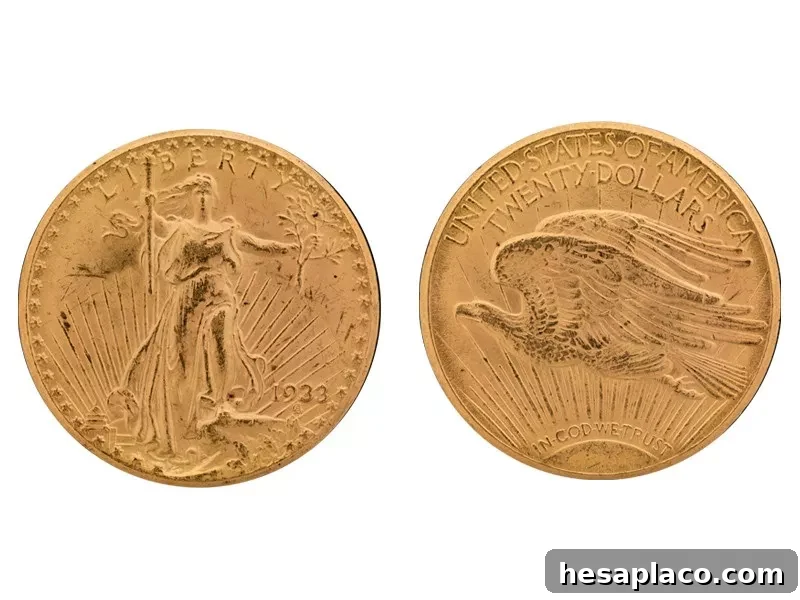
Jaclyn Nash / Wikimedia Commons
Sold at auction: $7,590,020
The 1933 double eagle is surrounded by myth and legal battles. Though many were struck, President Roosevelt ordered their destruction before they were declared legal tender. Nearly all examples were seized and melted, with just a few surviving under unusual circumstances. One coin—eventually declared the only legally issued 1933 double eagle—sold for more than $7.5 million after litigation resolved ownership issues.
1. 1794 Flowing Hair Silver Dollar (U.S.)
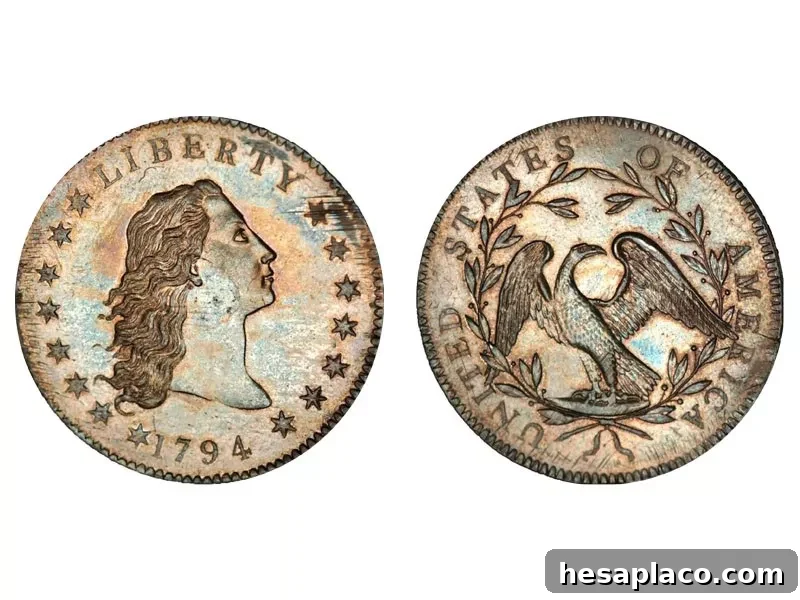
Stack’s Bowers
Sold at auction: $10,016,875
Topping the list, this 1794 Flowing Hair silver dollar realized over $10 million. As one of the earliest U.S. dollars, it represents a pivotal moment in the nation’s numismatic history. This specimen, graded as a “Specimen” strike with proof-like surfaces and exceptionally crisp features, is essentially unique in its overall quality and historical importance—factors that combined to produce the highest recorded sale price among the coins on this list.