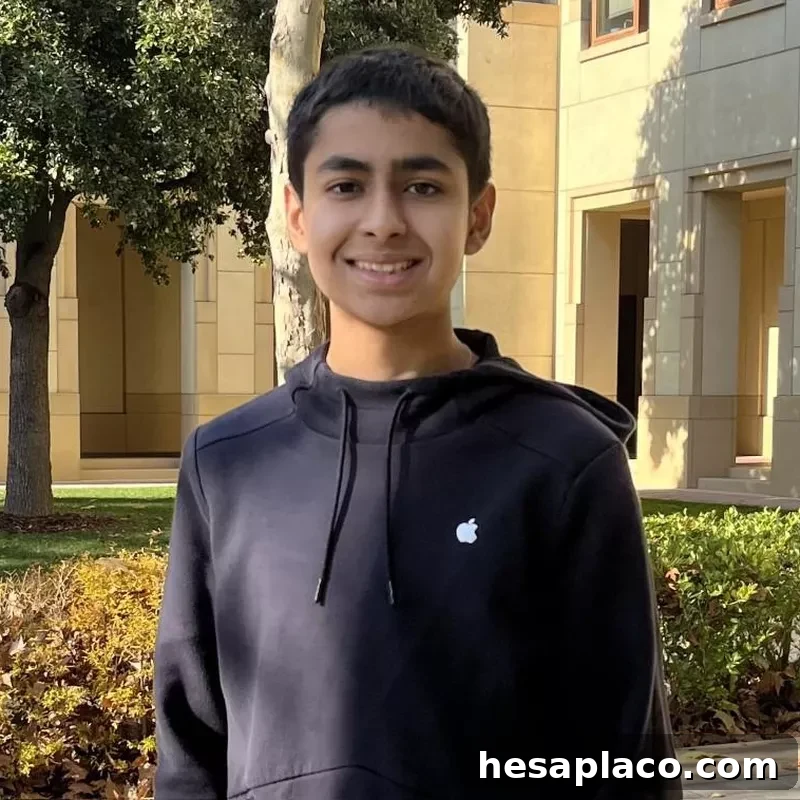
Adrit Rao is not a typical teenager. At 15, he attends high school like many students his age, but his schedule also includes writing peer-reviewed medical research papers during a Stanford internship, building AI-powered tools for healthcare, managing five apps he created, and leading a nonprofit organization he founded, Arètech Inc.
Rao began programming when he was 8 years old and moved into app development at 12. By 13, he was interning at Stanford University and presenting his work at medical conferences. His achievements are impressive at any age, but they are especially striking for someone still in high school.
Some people might describe Adrit Rao as a genius. Yet his success is not only the result of intelligence. It also comes from persistence, curiosity, confidence and a strong belief that technology can solve real-world problems. Work + Money spoke with Rao about his latest app for the deaf community, his path into medical technology and what young students can learn from his journey.
His Journey Begins With STEM, Block Programming and Swift

bedo / Getty Images
Interview has been edited for clarity and conciseness.
Work + Money: How did you get started with block programming, and how did that lead to building your own apps?
Adrit Rao: Schools around Palo Alto try to include a lot of STEM in their programs, so block programming was introduced to us when we were young. But when I was about 8 years old, I wanted to move from block programming into text-based programming, so I tried a few different languages.
What I realized was that simply writing code did not fascinate me as much as seeing a finished product that could be used to solve a problem. That is when I started thinking about apps.
Through Apple’s programming language, Swift, I was introduced to app development. At first, it seemed intimidating, but there were many online courses that helped me learn. I started when I was around 12 years old, and because there are so many strong resources available, it became much easier than I expected. What excited me most was being able to write code in Swift and immediately see an app come to life beside it.
About two weeks after I began developing apps, Apple held its annual developer conference, WWDC. Each year, Apple hosts a Swift Student Challenge. When I saw the opportunity, I decided to try. To my surprise, I won that year, and I was one of the 12 students who got to meet Tim Cook. It was incredibly exciting.
Using Technology to Improve Lives
Adrit Rao
Work + Money: A lot of your work, both in app development and Stanford research, focuses on using technology to improve lives. What makes you so passionate about that?
Adrit Rao: I realized how accessible apps are. From my computer at home, I could create a program that could reach many people through their iPhones. That made me think, “I can make a difference, even though I’m young.” I could identify a problem in my community, a broader social issue or, through my Stanford internship, a healthcare challenge, and then try to create an app to address it.
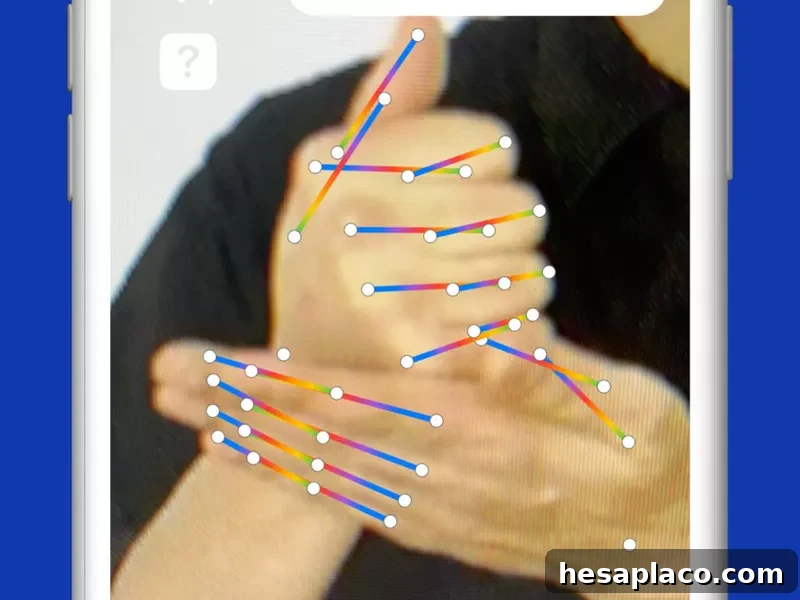
That has been the goal behind my apps. I now have five apps in the App Store. My most recent app is called Signer. I had read about the gap between the number of people who communicate using American Sign Language and the number of people who cannot communicate with it. There is a significant communication barrier between those two groups.
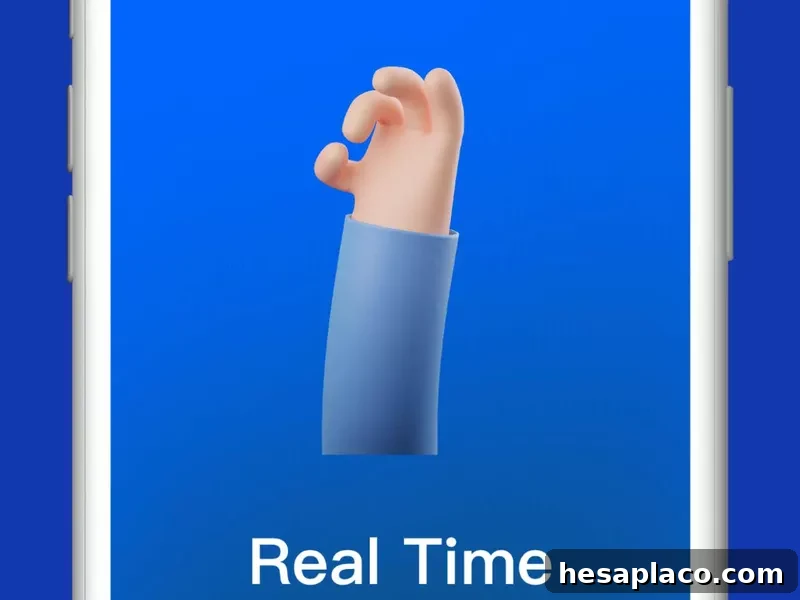
To work on that problem, I used one of Apple’s frameworks called Core ML. I had experimented with it before, but this was the first time I used it in one of my apps. I trained a model to look at videos of people’s hands and automatically interpret gestures in ASL. So far, I have included around 10 gestures, and I am continuously working to update the app and expand the library.
Creating Real Solutions That Can Make an Impact
Sundry Photography / Getty Images
Work + Money: Your first apps focused on problems like helping students track community service hours or calculating wait times in grocery store lines. How did you move from those ideas into medical technology?
Adrit Rao: When I started developing apps, I focused on social change and on problems I could identify myself. Later, I realized I wanted to work on something with a larger impact. That did not mean I wanted to stop making social change apps. I still want to continue doing that.
At the same time, I was reading about how artificial intelligence is being used in medicine to solve serious problems. Researchers were developing AI systems that could detect diseases, analyze chest X-rays and support many other medical tasks. I started thinking about whether I could take a unique approach by combining my app development experience with my AI knowledge to create apps that doctors could use directly.
Accessibility is very important to me, especially when it comes to building tools that can be placed directly at the point of care. That is what led me to reach out to several Stanford professors about internship opportunities. I contacted around eight professors, and to my surprise, about six of them replied.
The first professor who responded was a professor of vascular surgery and also the director of digital health at Stanford. That was exactly the area I wanted to explore. Through working with him, I was introduced to a condition called peripheral arterial disease, which involves arteries in the legs becoming blocked or narrowed over time.
After that, I developed an app called AutoABI. It is currently being tested in a clinical setting, and hopefully it can become a real medical solution one day.
The Benefits and Opportunities of Being a Young Student at Stanford

diegograndi / Getty Images
Work + Money: What have been the challenges of being in high school while interning in a university environment?
Adrit Rao: It has all been a learning experience. After getting the internship, I was able to grow my network and expand my knowledge. I can share ideas with PhDs and doctors, which has been an incredible opportunity. It is amazing that simply by reaching out to professors, I now have the chance to develop an app in Swift that can actually make a difference. That really surprised me.
I got the internship when I was around 13, and it has now been more than two years. During that time, I developed an app that is being used in a clinical setting. I have even had the chance to visit hospitals and see my app being used in an office, which has been very meaningful.
Seeing my app used in real life validates the work I have done. From the beginning, I knew I wanted to make a difference through Swift and app development. Working hard toward that goal helped me reach this point. Watching the app being used is very exciting.
Learning by Doing and Proving Doubters Wrong
Adrit Rao
Work + Money: Have you faced resistance from people at Stanford or in the technology field who did not take you seriously because of your age?
Adrit Rao: Yes, sometimes I have met people who do not take me seriously because of my age. But if they present me with a problem, I show them that I can build a real app that works toward solving it. I think that is how they begin to take me seriously.
Overall, people have been very open. Recently, I passed 10 research publications with Stanford faculty, and I have first-authored most of them. That has been very exciting because they are giving me the opportunity to write research papers that can have an impact. I usually write the paper, then they edit it, and we have meetings to go back and forth on revisions. They have given me the flexibility to write, and the environment has been very supportive.
I have also attended many conferences to present my work. I think the faculty members have shown trust in me by allowing me to represent the work publicly as a 13-, 14- and now 15-year-old.
Pro Tip: Define Your Skills and Self-Teach to Set Yourself Apart

gorodenkoff / Getty Images
Work + Money: How did you develop the confidence to email Stanford professors and present at conferences filled with people who have doctorates while you are still in high school? How can other students follow a similar path?
Adrit Rao: The first important step is to become familiar with a specific skill. When I contacted the professors, I explained that I could develop apps, that I had some knowledge of AI and that I wanted to combine those two areas. Students should be clear about what their skills are and work to become strong in those areas.
For app development, I am completely self-taught. I have never taken a formal class. But there is so much content online, including YouTube videos and courses, that it became fairly simple for me to watch many tutorials and build my knowledge.
Some parents may push their children toward a particular path, but in my case, my parents never told me I had to do something specific. This came from my own interest. I do think self-teaching is very important because that is how you truly learn. You explore, experiment, make mistakes and gradually improve.
He Is Not Forgetting About Work-Life Balance

Capuski / Getty Images
Work + Money: You are still in school, doing your internship and managing five apps. How do you balance your time?
Adrit Rao: I work on apps after I finish my schoolwork. When I come home, I try to complete my school assignments as quickly as possible, and then I focus on my internship. I might check emails, meet with my professor or work on an app. Most of my app development happens over the weekend.
To relax, I am a competitive fencer. I have been fencing for a few years, although because of COVID, it stopped for a while, so I am waiting for it to start again. Besides that, I like playing basketball with my friends. Recently, I have also become interested in cinematography.
Big Things Ahead for This Young Technologist and Entrepreneur
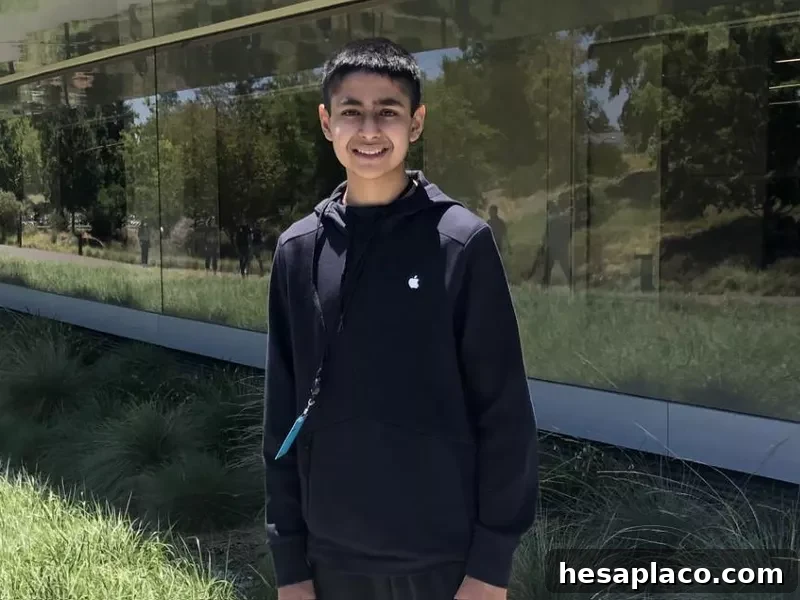
Adrit Rao
Work + Money: What plans do you have for the future?
Adrit Rao: My main goal for the rest of high school and even into college is to continue doing what I am doing now: developing apps. I think apps are amazing because so many people use iPhones today. By creating apps, you can reach a large population.
There are many great technologies being developed, but if we cannot put them into the world and make them useful for people, then what is the point? I am especially interested in medical research, but I plan to keep developing apps with Swift and continue improving my skills because I think that is very important.
I would really like to go to Stanford. It has been my dream school since I was little. I want to study something related to biomedical engineering, not just computer science, because I want the medical side to be part of whatever I do.