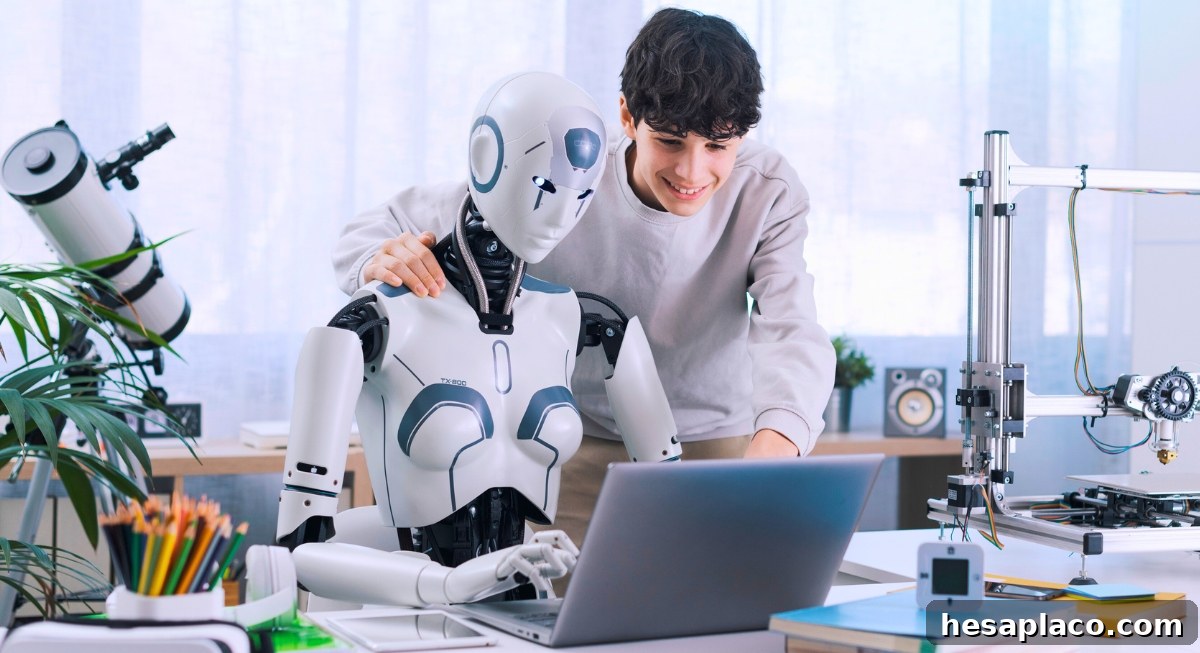
Today’s newborns will grow up in a world where artificial intelligence is woven into everyday life. Sam Altman has raised serious concerns about that reality. He observes that children born now will never experience a time before capable AI, and the technology will continuously outpace them in speed and capability. Just a few years ago many believed humans might keep pace with machines; Altman says that window of opportunity has already closed.
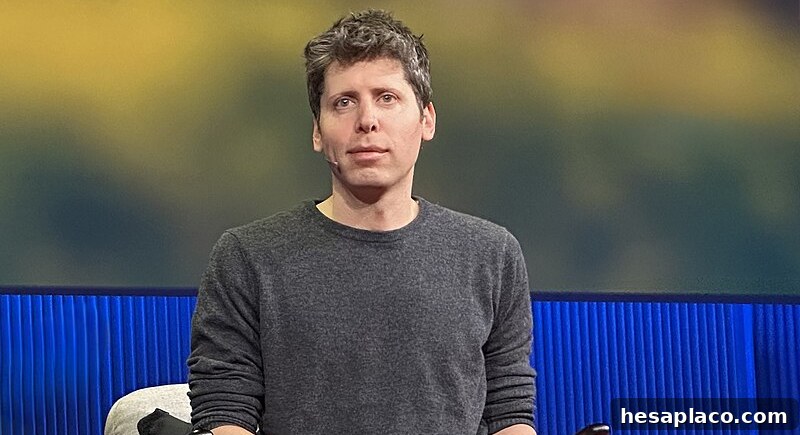
Image via Wikimedia Commons/Steve Jurvetson
Public concern about this shift is widespread. A recent Reuters/Ipsos poll of 4,446 U.S. adults found 71 percent worry AI could permanently displace workers. Nearly 80 percent fear realistic fabricated videos will disrupt politics, and more than half are uneasy about AI companions replacing genuine human interaction. Those figures underscore the scale of social anxiety about the technology’s reach.
Altman put the situation bluntly: “My kid will never be smarter than an AI.” He did not frame this as purely tragic; rather, he used it to illustrate how quickly the balance of intellectual advantage has shifted toward machines.
“My Kid Will Never Ever Be Smarter Than An AI”
For generations people have expected each new cohort to build on the last—through education, tools, and invention. That expectation hinged on the idea that human learning accumulates over time. But when machines can acquire in hours what takes humans years to master, the ladder of progress looks different. Altman’s stark claim reflects that altered reality: newborns today will encounter AI that is consistently faster and more capable than most humans.
The implication is not just technological but cultural. If intelligence and expertise are increasingly mediated by machines, how societies define achievement, authority, and competence will change. Parents and educators will need to rethink what it means to prepare a child for a future where raw cognitive speed is no longer solely a human advantage.
Parenting In A Machine-Smart World
Altman acknowledges the practical role AI already plays in family life. He has said he used ChatGPT during the early days of parenting for practical tips on newborn care, showing how AI can serve as a household tool for everyday problems. But he also emphasizes limits.
He warns against treating AI as a surrogate for human relationships. Love, empathy, moral guidance, and the emotional work of parenting remain distinctly human responsibilities. The challenge is less about shielding children from AI and more about teaching them how to live with it—how to use AI as a tool without allowing it to replace the human connections and ethical instruction that shape character.
That reframing—raising children to coexist with, understand, and critically use AI—may be one of the most profound shifts in parenting this century. It will require new routines, norms, and educational approaches that balance technical fluency with emotional and moral development.
Beyond The Home
Image via iStockphoto/Vanessa Nunes
Altman’s position as CEO of OpenAI gives weight to his predictions. His company helped popularize and accelerate the development of systems that now draft articles, influence investment decisions, and assist in medical analysis. That influence raises broader questions about the future of work, learning, and personal identity in a world where intelligent systems regularly outperform humans at many tasks.
Already, AI exceeds human performance in a growing list of specialized tasks, yet it still has limitations. Areas such as creative insight, flexible problem-solving, complex judgment, and ethical reasoning remain distinctive human strengths. These are the domains where people can contribute uniquely alongside machines.
Many educators and industry leaders argue that schools and workplaces should pivot to emphasize those human qualities. Instead of trying to outcompete AI on speed or data processing, the next generation should learn how to collaborate with AI in ways that highlight creativity, empathy, critical thinking, and ethical decision-making—skills that machines cannot fully replicate.
Preparing children for this future means rethinking curricula, training, and workplace expectations. It also means fostering resilience and adaptability: the ability to ask meaningful questions, evaluate AI-generated outputs critically, and apply human judgment where it matters most. In that sense, the goal is not simply to coexist with smarter machines, but to define and amplify the human roles that remain essential.