The world still occasionally produces advertisements that shock for all the wrong reasons. Not long ago, German carmaker Audi ran an ad in China comparing buying a used car to finding a wife, and the Co-op supermarket in the UK drew outrage with a print campaign suggesting parents should “treat” their daughters for doing the washing up.
These recent missteps show we haven’t entirely left the sexist, tone-deaf era behind, but today’s lapses pale beside the offensive advertising of the past. Looking back at vintage ads reveals not only rampant misogyny but also racism, medical authorities endorsing harmful products, and reckless parenting advice. It’s hard to believe that smart, professional people allowed these campaigns to run, yet they did — and reviewing them reminds us that things have improved, even if they’re not perfect.
“You mean a woman can open it?”
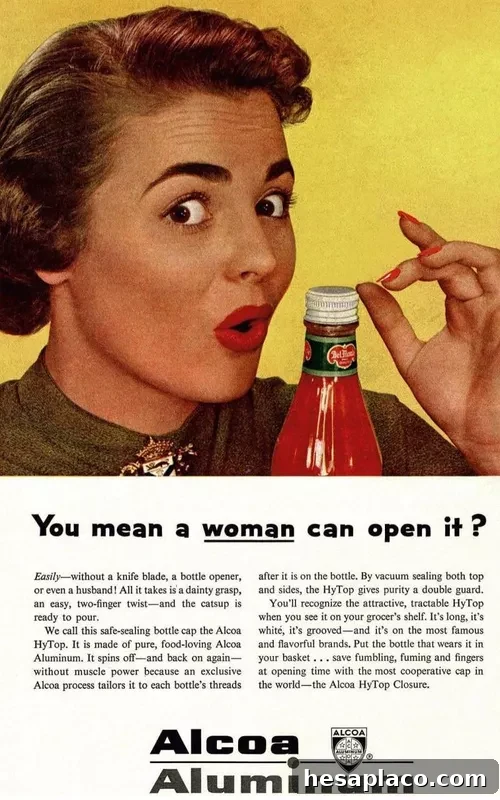
Alcoa Aluminum
Sexism dominated 1950s culture, and a 1953 Alcoa Aluminum ad captures that era perfectly. Showing a woman holding a ketchup bottle with the headline “You mean a woman can open it?” (with “woman” underlined), the ad implies women are too weak to open ordinary bottles — thank goodness for HyTop twist-off caps, or men would be forced to put ketchup on their own hot dogs.
“This is no shape for a girl”
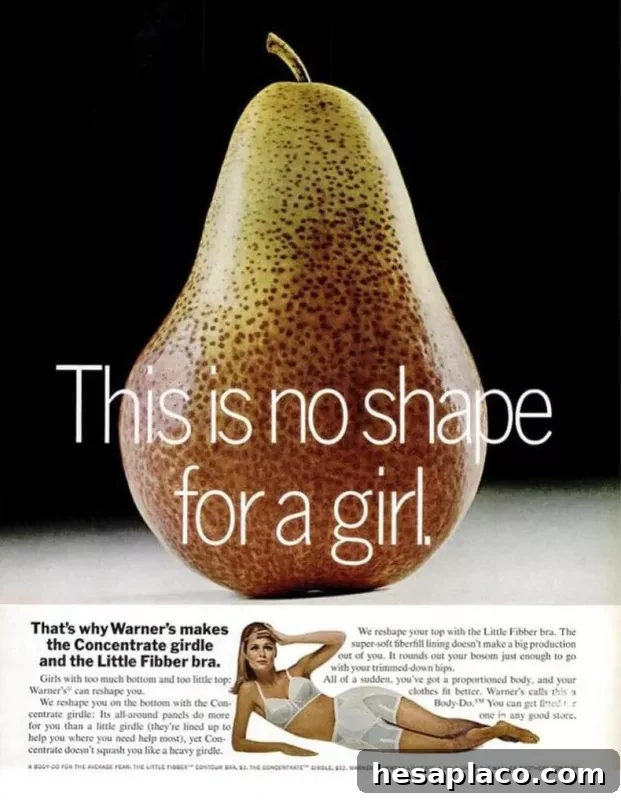
Warner’s
Body-shaming long predates social media. In the 1970s, ads often sold insecurity as a path to profit: make women dislike their bodies and they’ll buy products to “fix” them. A Warner’s ad for the “Concentrate” girdle and “Little Fibber” bra promised acceptance to “girls with too much bottom and too little top,” reinforcing narrow beauty standards.
“Begin Early. Shave Yourself.”
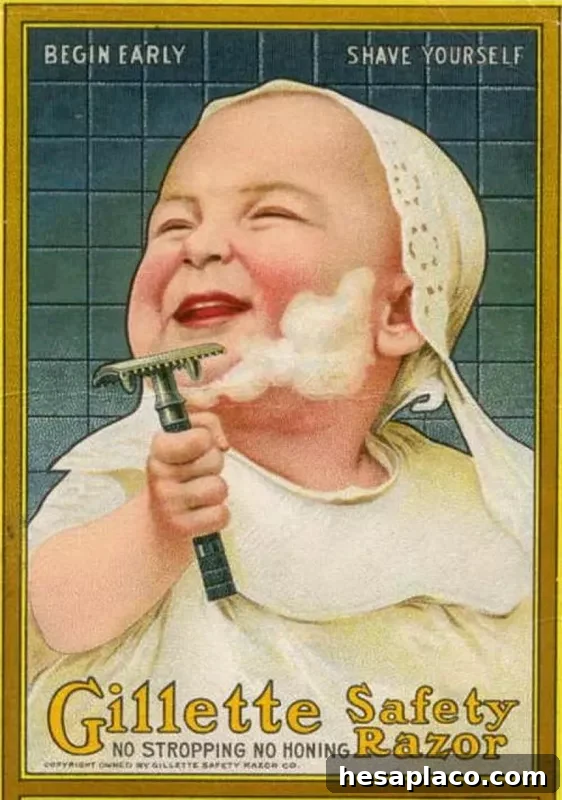
Gillette
A seemingly cute image of a baby lathered up for shaving hides a creepy undertone. This early-20th-century Gillette ad promoting a “safety” razor looks alarming today — the razor appears unsafe and the image of a child with it is unsettling. Despite that, reproductions of vintage ads like this remain popular decor for some.
“Cocaine Toothache Drops”
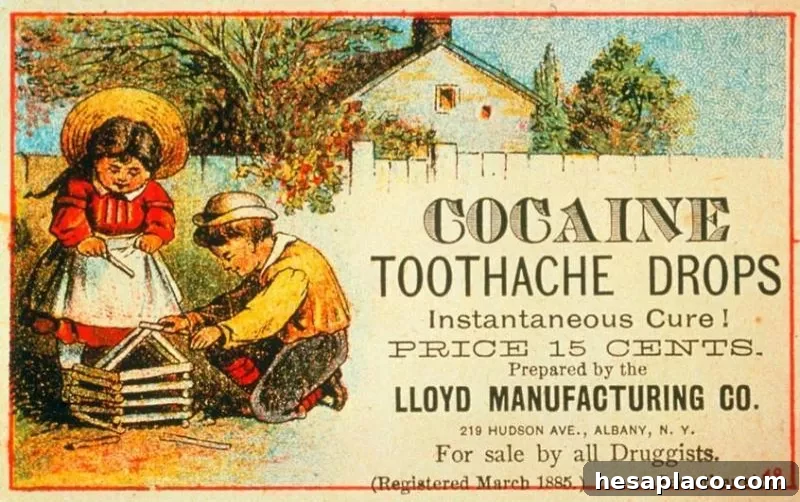
Lloyd Manufacturing
Old advertisements show startling health practices. In the late 19th century, many “miracle cures” included dangerous substances like cocaine, morphine, and alcohol. Cocaine toothache drops sold in 1885 for 15 cents were touted as an “instantaneous cure,” a reminder of how far medical understanding and regulation have come.
“More Doctors Smoke Camels”
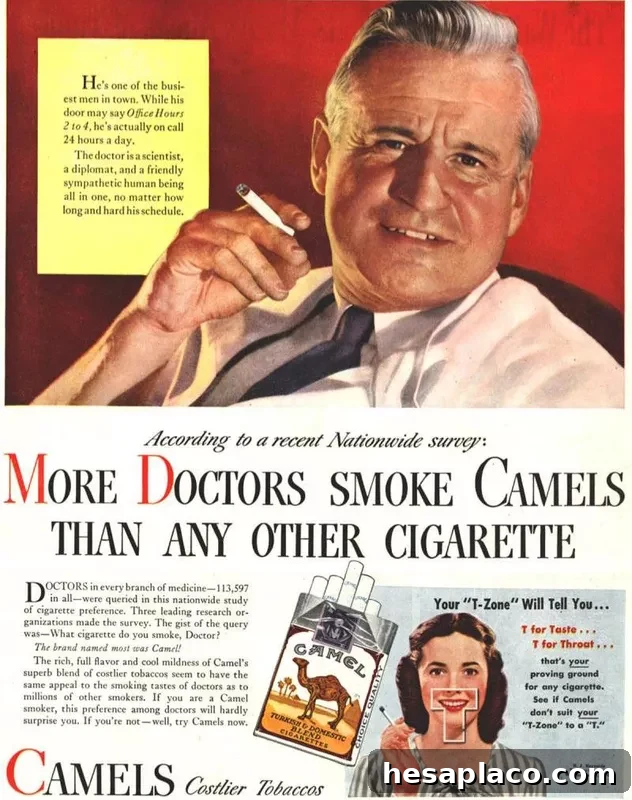
Camel
Today, medical advice rarely includes brand endorsements, but mid-20th-century advertising often used doctors to promote harmful products. A 1946 R.J. Reynolds campaign claimed “More Doctors Smoke Camels,” a statement that now reads as dangerously irresponsible but once carried weight with consumers.
“Blow in her face”
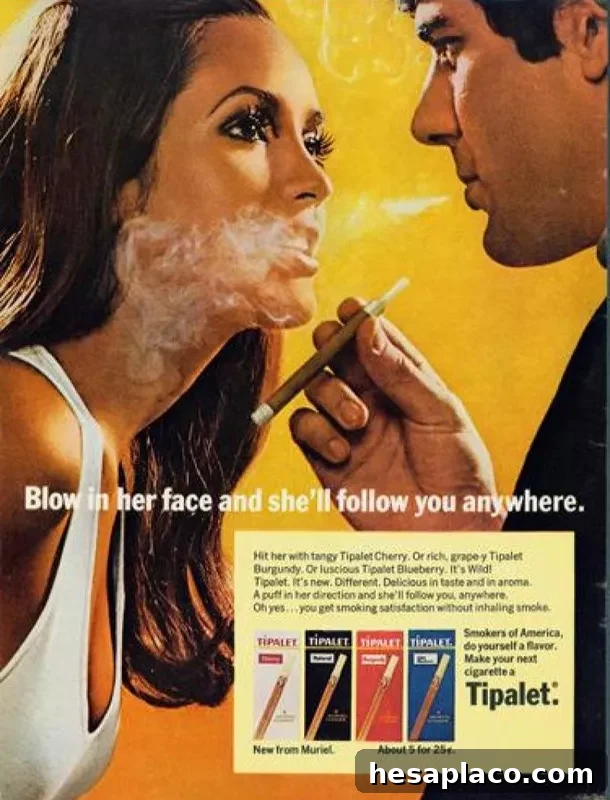
Tipalet
Even into the 1960s, cigarette makers used sexualized imagery to sell products. A 1969 Tipalet ad implies that blowing smoke in a woman’s face is attractive, combining sexism with a cavalier attitude toward health. Such ads helped normalize smoking despite mounting evidence of its dangers.
Smoking Santa

Marlboro
Cigarette marketing even co-opted beloved cultural figures. Using Santa Claus to endorse smoking played on the idea that if Santa smokes, it must be harmless or desirable. Campaigns that equated holiday cheer with cigarettes show how pervasive and tone-deaf early tobacco advertising could be.
“Does your husband yawn at the table?”
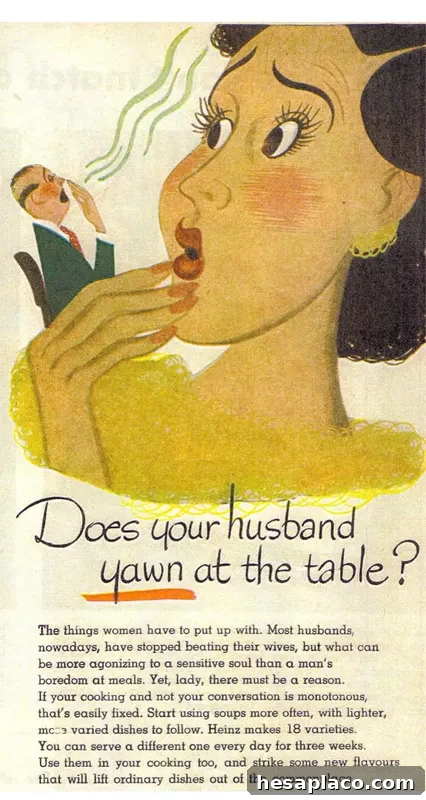
Heinz
A 1950 Heinz ad tackled domestic life with a patronizing tone: if your husband seems unimpressed at dinner, the ad suggested, improve mealtimes with Heinz’s “18 varieties.” This treatment reduces family dynamics to a product solution while reinforcing gendered expectations of women’s roles at the table.
“If your husband ever finds out…”
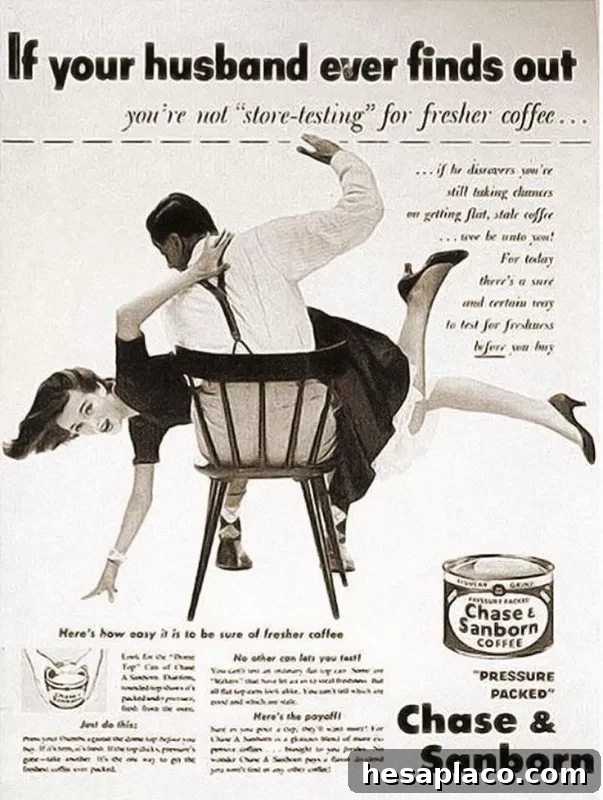
A 1952 Chase & Sanborn coffee ad crossed a troubling line by trivializing domestic violence. It suggests dire consequences for wives who fail to serve fresh coffee, reflecting cultural attitudes that minimized or excused wife abuse. Historical accounts show domestic violence was widespread then, and some professionals even rationalized it.
“Keep her where she belongs”
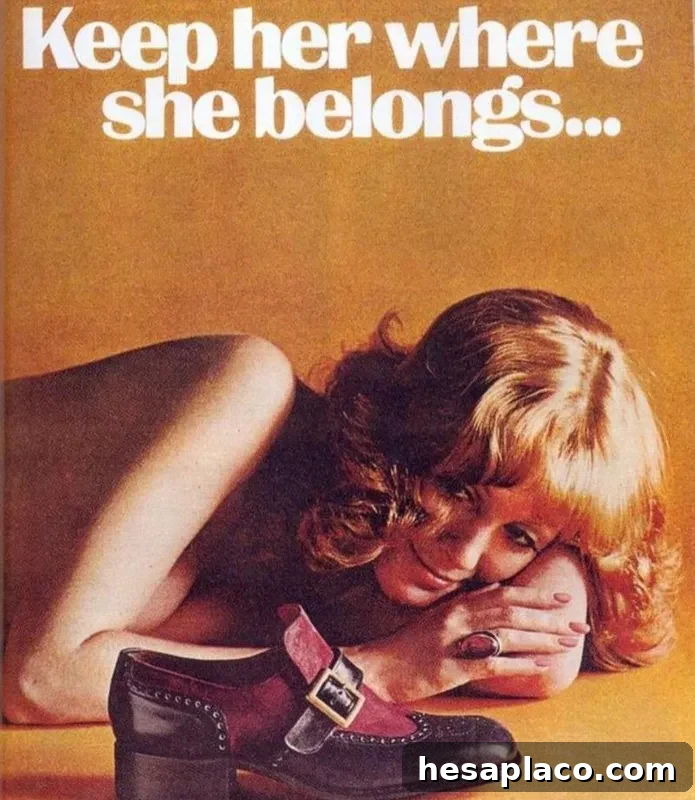
Weyenberg Shoes
A 1974 Weyenberg Shoes ad reinforces the stereotype that women belong in the kitchen while objectifying them. The image of a nearly naked woman swooning over a man’s footwear treats her as decorative, reducing her value to an object of male desire.
“Why we have the youngest customers in the business”
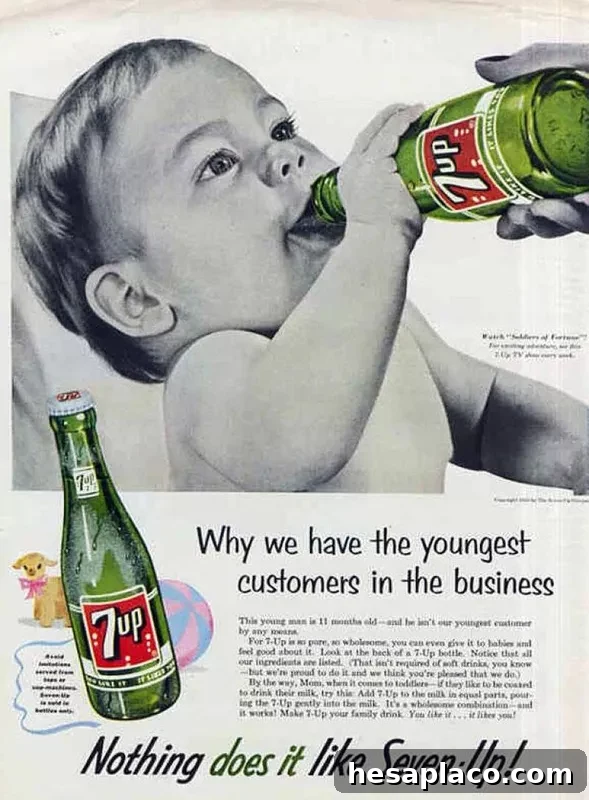
7Up
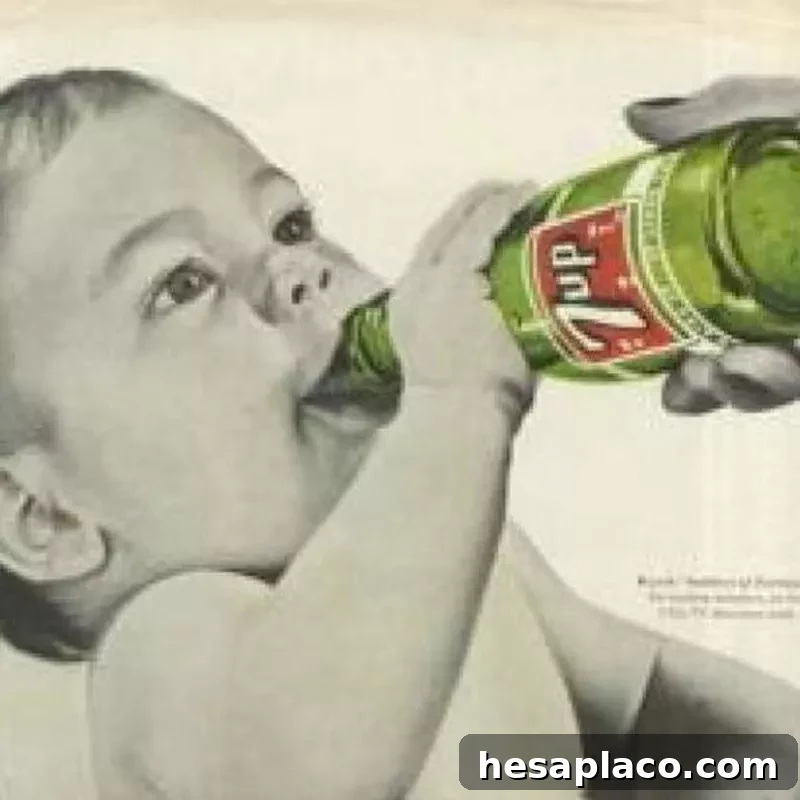
In the 1950s, soda was sometimes promoted as a remedy for everyday ailments. A 7Up ad suggested that giving soda to infants or mixing it with milk could “help” toddlers — a notion that now seems irresponsible and medically unfounded.
“Is it always illegal to kill a woman?”
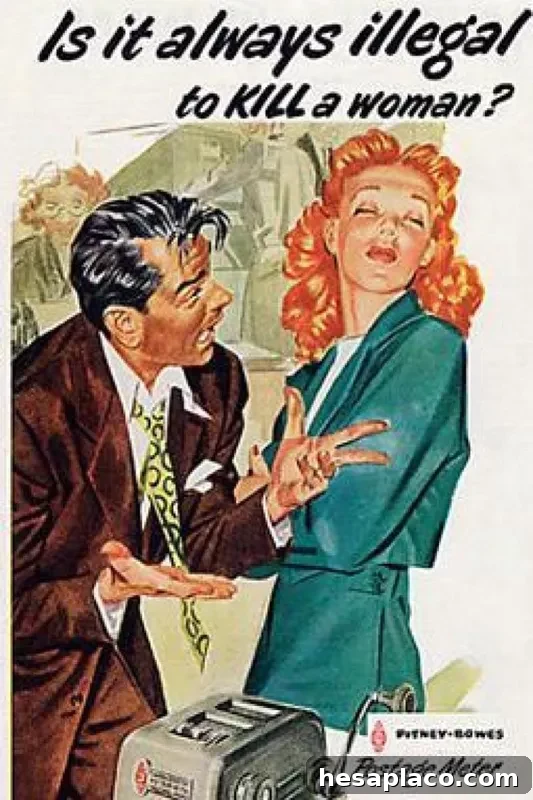
Pitney-Bowes
A 1947 Pitney-Bowes postage meter ad used dark humor in a way that now feels alarming, posing the provocative question, “Is it always illegal to kill a woman?” The ad’s long copy tells a story of workplace frustrations escalating to violent fantasy — a tone that would be unacceptable today.
“Why doesn’t your mama wash you with Fairy Soap?”
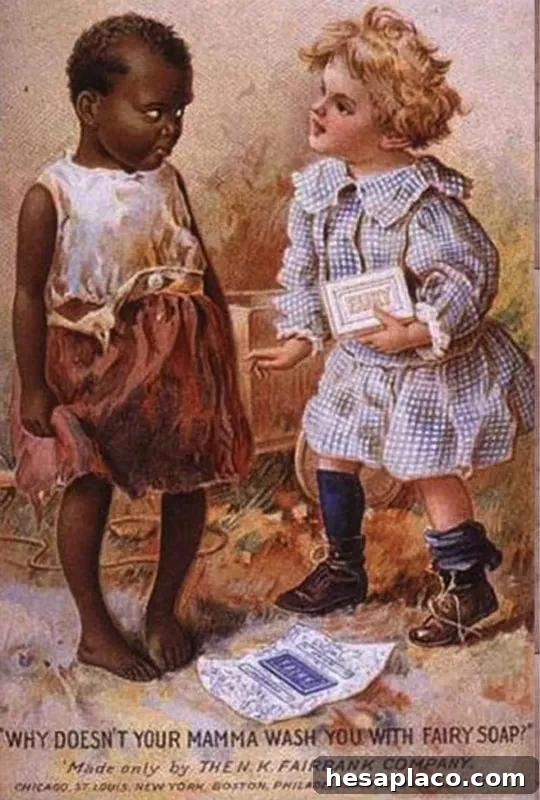
An 1897 Fairy Soap ad exposes the racist propaganda embedded in some Victorian advertising. It contrasts a clean white child with a dirty black child and asks, “Why doesn’t your mama wash you with Fairy Soap?” — a clear example of racial demeaning disguised as a household product pitch.
“Get out of the kitchen sooner!”
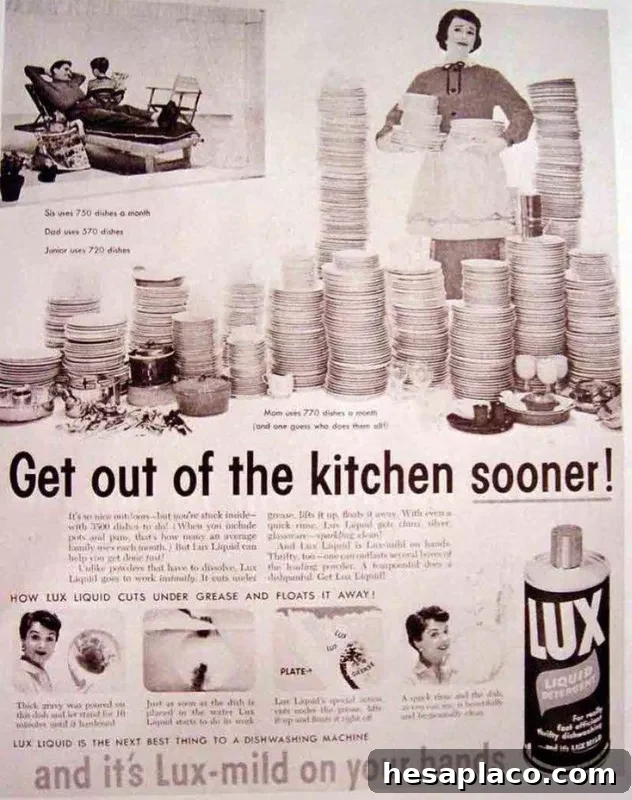
Lux
A 1955 Lux detergent ad urged women to finish chores quickly so they could leave the kitchen, implying domestic perfection is their responsibility and portraying husbands relaxing while wives toil — a snapshot of the era’s unequal domestic expectations.
“Pull the Cords”
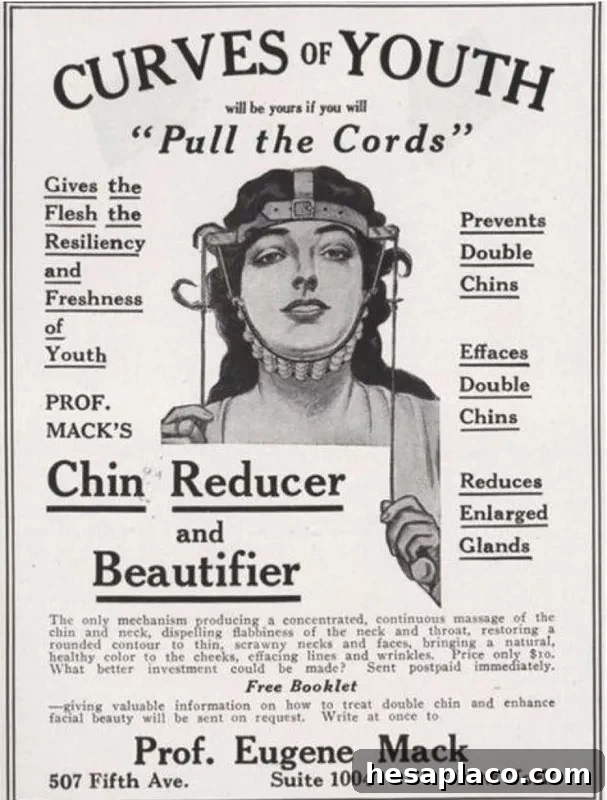
Prof. Mack’s Chin Reducer and Beautifier
Before modern skincare, bizarre mechanical devices promised to reshape faces. “Prof. Mack’s Chin Reducer and Beautifier” claimed to banish double chins and “enlarged glands,” showing how far beauty marketing went to exploit insecurities long before reality TV culture amplified those pressures.
“It’s nice to have a girl around the house”
Mr. Leggs
A disturbing Mr. Leggs ad from the 1950s depicts a man with his foot on a woman’s head, a clear visual of dominance and dehumanization. The image implies women are meant to be subdued and controlled, an attempt at humor that falls flat and reads as explicit misogyny.
“Sooner or later your wife will drive home”
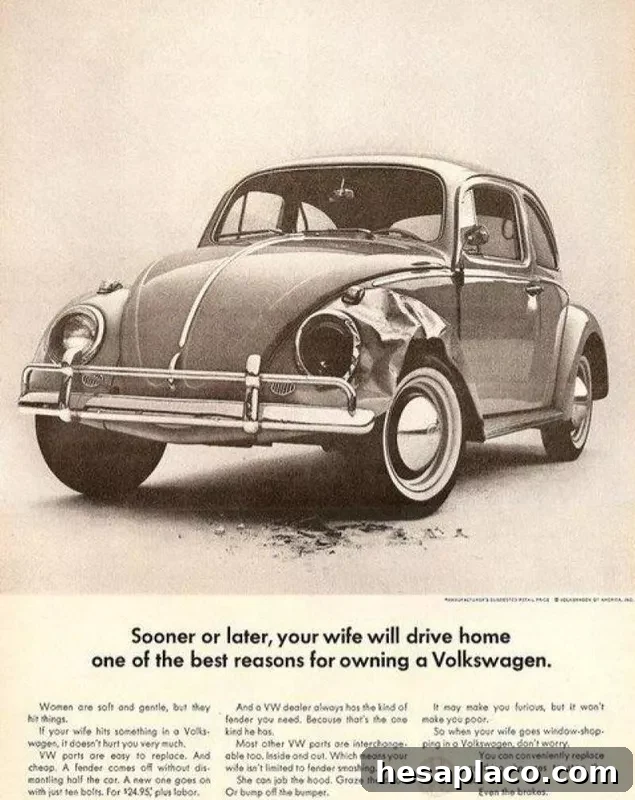
Volkswagon
A Volkswagen ad mocked women drivers with stereotypes about fender-benders and poor braking, suggesting men should fear letting their wives drive. The ad relied on sexist tropes to sell cars by appealing to male anxieties.
“The More You Play the Harder It Gets”
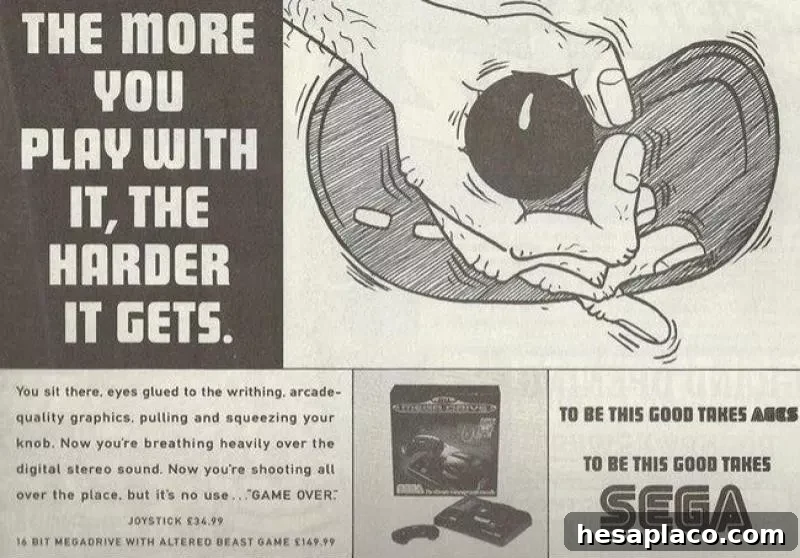
Sega
Even in the 1990s some campaigns pushed tasteless sexual innuendo. Sega’s Mega Drive ads used crude double entendres and suggested women would struggle with higher skill levels, while other materials resorted to explicit jokes — a reminder that shock tactics sometimes overshadowed good judgment.
“Don’t worry darling, you didn’t burn the beer!”
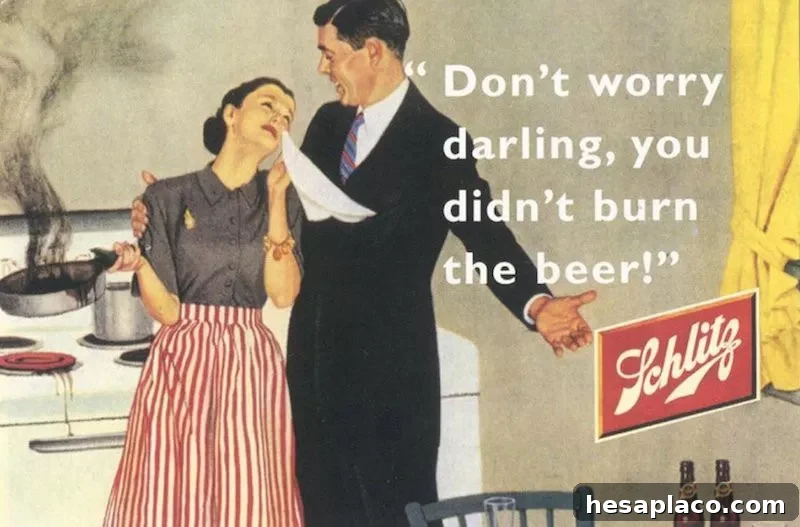
Schlitz
A 1940s Schlitz beer ad joked about a wife burning dinner while reassuring her that she couldn’t ruin his beer. The scene reinforces the stereotype of the incompetent housewife and the indulgent, forgiving husband who values his drink above culinary competence.
“Another Love-match Shipwrecked…”
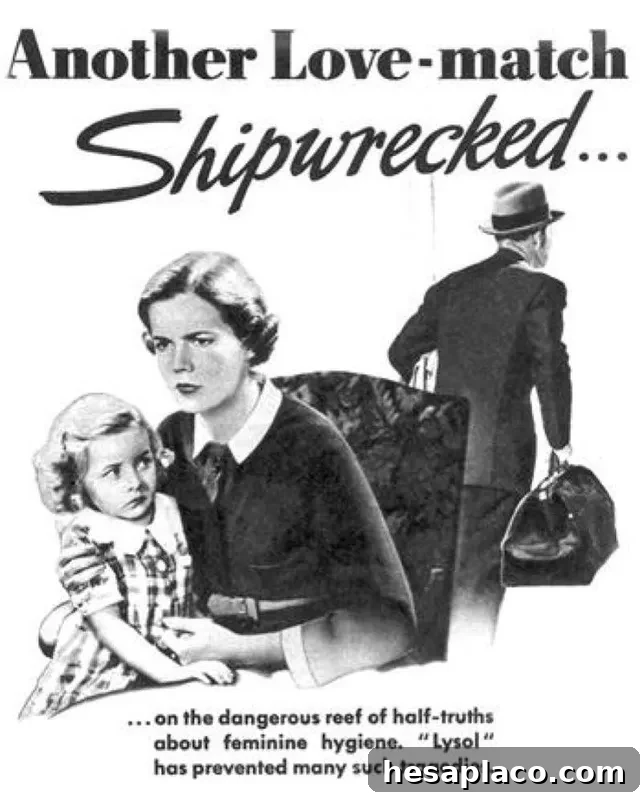
Lysol
In the 1930s, Lysol marketed its disinfectant as a vaginal douche, publishing ads that blamed women’s “hygiene” for marital breakdowns. The campaign dangerously medicalized and moralized women’s bodies, claiming Lysol could “prevent” romantic tragedies.
“If Men ‘Hate the Sight of You’ Read This”
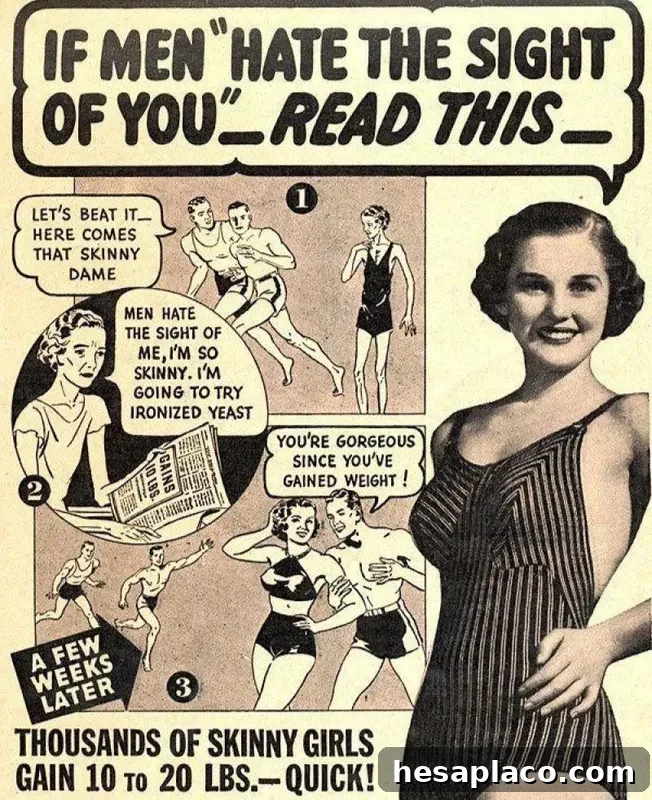
During the Depression, weight-gain products targeted women with promises to restore curves and desirability. Ads for ironized yeast promoted selective weight gain — supposedly adding volume to hips and breasts but nowhere else — reflecting rigid beauty ideals that pressured women to change their bodies for male approval.
“Romance dies at the touch of DISHPAN HANDS”
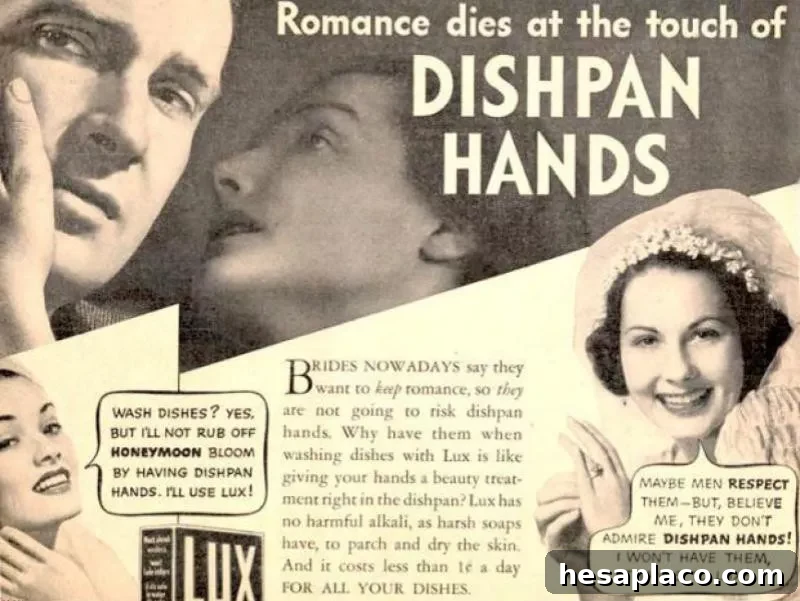
Lux
When housework was assumed to be a woman’s fate, Lux soap ads claimed their product could preserve the “honeymoon bloom” of hardworking hands. These messages tied a woman’s attractiveness and marital happiness to her ability to look spotless despite endless chores.
“Presenting The Losers”
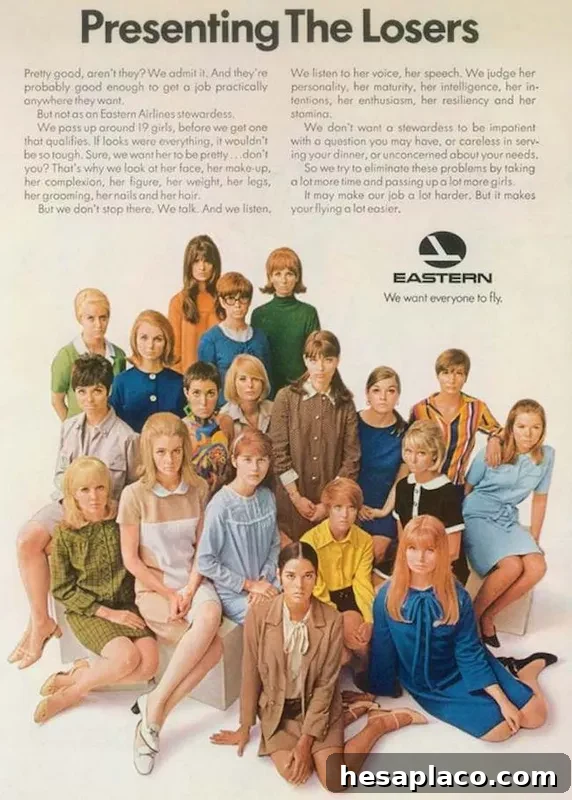
Eastern Airlines
By the 1970s, flight attendants faced intense scrutiny over appearance and demeanor. Eastern Airlines ads listed a near-impossible checklist — patience, enthusiasm, poise — reinforcing narrow standards and treating women in service roles as image commodities rather than professionals.
“Married? No reason to neglect S.A.” (Stocking Appeal)
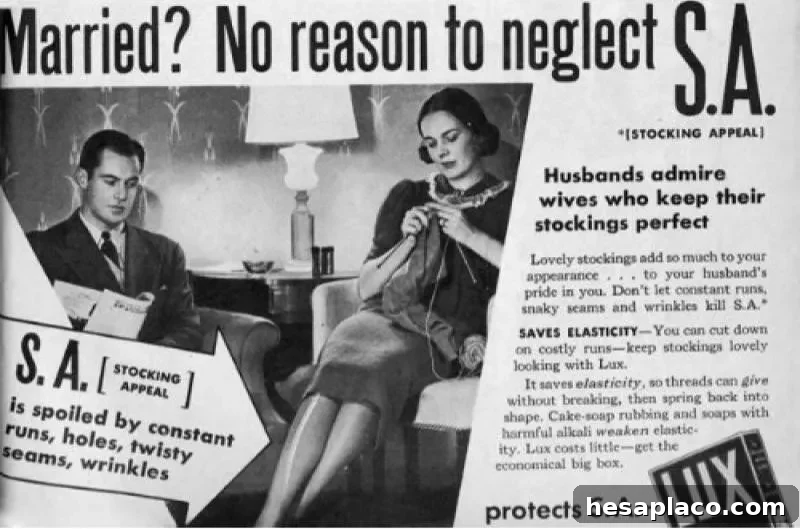
Lux
Another Lux ad urged married women to preserve their “stocking appeal,” as if a run in hosiery could jeopardize a marriage. Such messages reduced complex relationships to superficial appearance standards and placed blame squarely on women.
“The best things in life come in Cellophane”
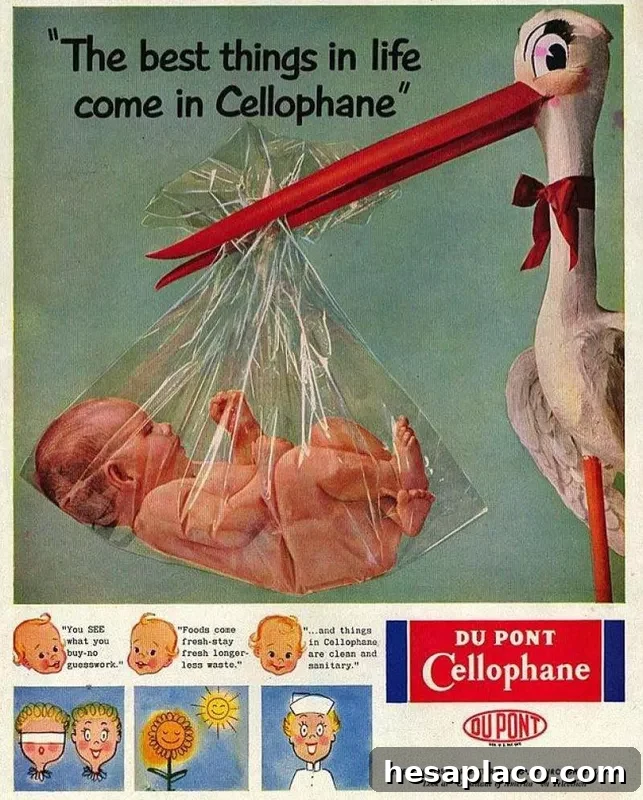
DuPont
DuPont’s 1950s cellophane advertising included an unsettling image of a naked baby wrapped in plastic to sell household wrap. The choice to use a child for shock value demonstrates how advertisers sometimes pushed boundaries without sensitivity to safety or taste.
“Because innocence is sexier than you think”
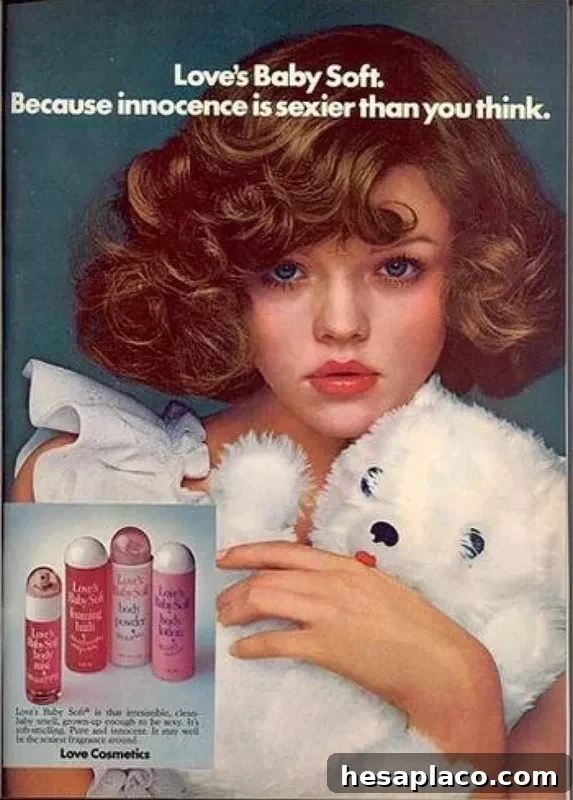
Love’s Baby Soft
One of the most disturbing vintage ads promoted Love’s Baby Soft fragrance in the mid-1970s by sexualizing a pre-teen girl, suggesting a “clean baby smell” could be “sexier.” This reversal of the usual adult-infant dynamic is especially troubling and highlights how sexual messaging can be misapplied.
“Men are better than women!”
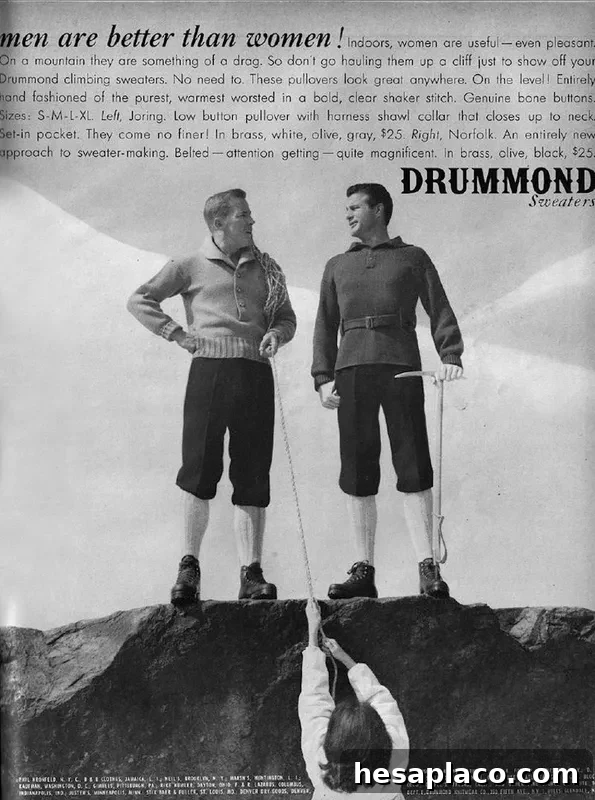
Drummond Sweaters
A late-1950s Drummond Sweaters ad bluntly declared “Men are better than women!” and dismissed women as “a drag,” promoting a blatantly sexist message that had little to do with the product itself but reflected cultural biases of the era.
“Husband Pleasing Coffee”
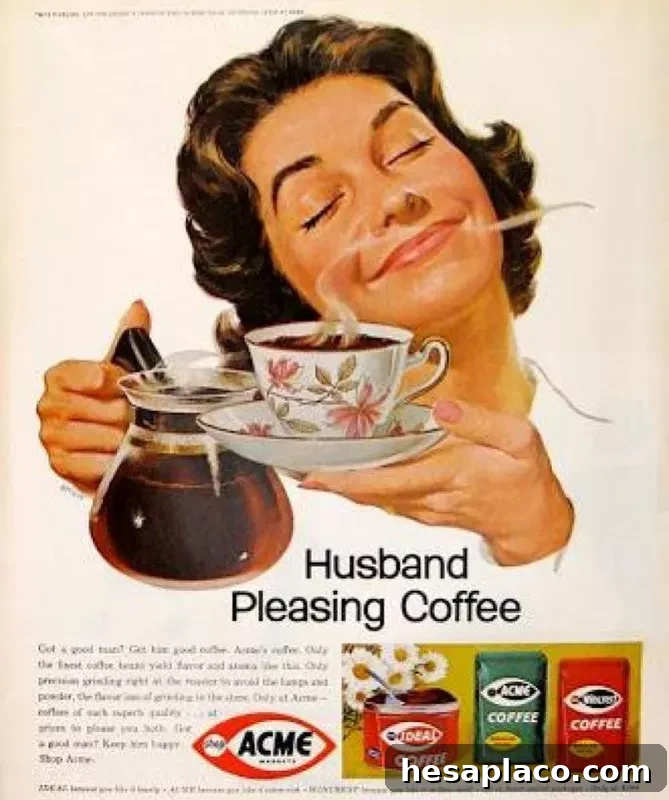
Acme Coffee
In the 1960s, coffee ads sometimes touted a brew’s ability to satisfy husbands above taste or quality. Acme Coffee labeled its product “Husband Pleasing,” reinforcing the idea that a woman’s domestic role is to cater to her spouse’s preferences.
“It’ll Blow Your Mind Away”

Burger King
Not all problematic ads are ancient. In 2009, a Burger King campaign in Singapore promoted the “BK Super Seven Incher” with overt sexual innuendo. By combining food and sexual desire in a crude way, the campaign demonstrated that shock tactics and sexist humor can persist in modern marketing.
Reviewing these ads offers a stark view of past attitudes and marketing practices. While times have changed and regulations, public awareness, and cultural standards have advanced, these historical examples remind us to remain vigilant about the messages advertising conveys and the values they normalize.