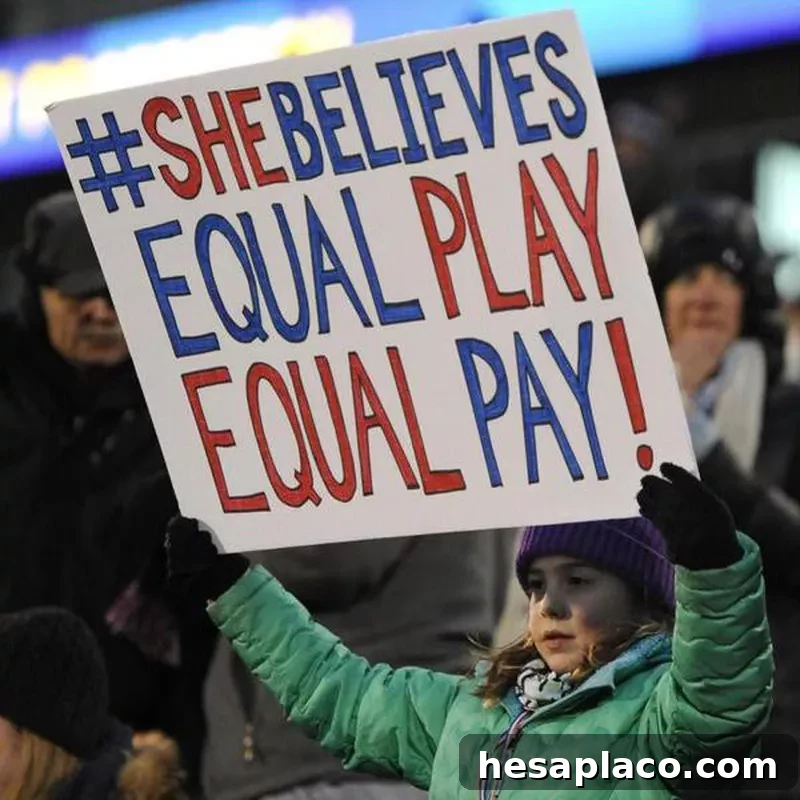
It’s been widely reported, but it isn’t a new issue: women often earn less than men for performing the same work.
Even elite athletes face this disparity. Players on the United States Women’s National Soccer Team have been paid far less than their male counterparts, despite significantly greater on-field success. Recent reporting by The Wall Street Journal showed that, over a recent three-year period, the women’s team’s games generated more profit than the men’s—a compelling example of the problem.
But unequal pay extends well beyond sports. U.S. Senator Kamala Harris (D-CA) has proposed an “Equal Pay Certification” plan aimed at combating persistent pay inequality across many industries.
Although progress has been made over the decades, the gap remains substantial. According to equalpaytoday.org, on average women earn about 80 cents for every dollar earned by men for similar work.
Below is a historical overview of major events and milestones in the struggle for equal pay, showing how far the movement has come and how much remains to be done.
1869 — The First Public Complaint
One of the earliest recorded public complaints about pay inequality appeared in a letter to the New York Times in 1869. The writer argued that while many accepted the principle that equal work should receive equal pay regardless of sex, actual practice lagged far behind that ideal.
The letter called attention to women employed by the U.S. Treasury Department, noting that women often earned roughly half what men did for the same grade of work, even though many were sole providers for their families.
1883 — A Strike for Equal Pay

When telegraphy created new job opportunities in the late 19th century, many women became operators. In 1883, workers at the Western Union Telegraph Company struck to protest mistreatment and to demand equal pay for women telegraph operators. The strike failed, and employees did not secure the changes they sought.
1911 — A NYC Mayor Fulfills a Promise

At the turn of the 20th century, New York City teachers faced stark pay disparities. In 1900, a city pay schedule set a female teacher’s annual salary at $600 versus $900 for a male teacher. Women’s annual raises were also lower, which widened the gap over time.
In 1910 a mayoral candidate promised equal pay for teachers; after winning, he signed an equal pay bill in 1911. However, the law applied only to teachers hired in 1912 or later, limiting its immediate impact.
1942 — WWII and a Recommendation
During World War II, women took on many jobs vacated by men serving in the military. In 1942, President Franklin D. Roosevelt established the National War Labor Board to help maintain production. The board advised employers to voluntarily pay women equally, but the recommendation was largely ignored and pay disparities persisted.
1945 — The First Equal Pay Act Attempt
Congress proposed the Women’s Equal Pay Act in 1945 to make it illegal to pay women less than men for comparable work. The bill did not pass, so legal protections remained limited at that time.
1963 — The Equal Pay Act of 1963
By the 1960s the movement for pay equality gained momentum. In 1963, Congress passed the Equal Pay Act as an amendment to the Fair Labor Standards Act. The law required equal pay for jobs that require equal skill, effort, and responsibility and are performed under similar working conditions. While an important milestone, the law largely relied on employees to identify disparities and to take legal action.
1970s — Judicial Clarifications and Protections
The 1970s produced several key court rulings that strengthened equal pay protections. Schultz v. Wheaton Glass Co. (1970) expanded the concept of “equal work” to include “substantially equal” work, preventing employers from using minor title differences to justify pay gaps. Corning Glass Works v. Brennan (1974) required equal pay for day and night shift inspectors performing the same duties. The Pregnancy Discrimination Act of 1978 added protections for pregnant workers, ensuring they be treated like other employees and applicants.
April 6, 1996 — The First Equal Payday
The National Committee on Pay Equity created Equal Payday to highlight the gender pay gap. Equal Payday marks the additional time into the new year that the average woman must work to earn what the average man made the prior year, drawing public attention to the ongoing disparity. It continues to be observed annually.
2009 — The Lilly Ledbetter Fair Pay Act

Lilly Ledbetter sued her employer after discovering she had been paid less than male colleagues. The Supreme Court ruled against her on a statute-of-limitations technicality, but in 2009 Congress passed—and President Barack Obama signed—the Lilly Ledbetter Fair Pay Act. The law reset the 180-day filing period after each discriminatory paycheck, making it easier for employees to bring timely claims.
2019 and Beyond — Progress, but Plenty of Work Remains
Contemporary workplace disparities are less extreme than a century ago, yet significant gaps persist. Studies by the American Association of University Women (AAUW) show women are less likely than men to negotiate salaries. Some states have banned employers from asking job applicants about prior pay to prevent past lower wages from perpetuating future pay gaps. The AAUW also notes that pay disparities contribute to higher debt burdens among women, who may have less disposable income to repay loans.
Pay Gaps Are Larger for Women of Color
Racial and ethnic disparities compound gender-based wage gaps. Compared with white men’s earnings, median female earnings fall at different rates across groups: Black women and Hispanic women earn significantly less as a percentage of white men’s pay, while white women and Asian women fare closer to (but not equal with) that benchmark. These differences illustrate how race and gender interact to widen economic inequality.
The Cost of Motherhood
Research shows mothers often earn less than women without children, even when they remain in the workforce—a disparity not mirrored for fathers. Mothers are also less likely to be hired in some cases, and career interruptions or reduced hours for caregiving can have long-term effects on earnings and promotion prospects. Financial planners and advocates point to these factors as major contributors to the ongoing gender pay gap.
Policies That Can Help: Paternity Leave and Childcare
One way employers can reduce motherhood-related penalties is by offering paternity leave alongside maternity leave, signaling shared caregiving responsibilities and helping to normalize time off for parents of any gender. Subsidized childcare and supportive family benefits can also help more women stay continuously engaged in their careers and preserve upward mobility.
The “Equal Pay Certification” Proposal
Senator Kamala Harris’ Equal Pay Certification would require larger employers to obtain certification from the Equal Employment Opportunity Commission showing they do not have unjustified gender-based pay disparities. Companies with 100 or more employees would have three years to comply; those with 500 or more would have two years. Firms that fail to certify would face a penalty tied to the size of their pay gap—a 1 percent fine on profits for every 1 percent of unexplained disparity.
Harris has argued the proposal shifts the burden from individual employees to corporations: rather than forcing workers to prove discrimination, employers would need to demonstrate equitable pay practices. If enacted, this would be one of the most assertive policy attempts to close the gender pay gap. Its effectiveness will depend on implementation, enforcement, and how companies respond.
While legal advances and public awareness have reduced some inequities, persistent gaps—especially for women of color and for working mothers—show substantial work remains. Policy changes, corporate practices that support families, and stronger enforcement can all contribute to narrowing the divide.