Top-Selling Songs of the 1960s by Year
The 1960s were a defining decade in popular music. It was an era that introduced many of the artists, bands and sounds that still influence listeners today. During this period, singles were one of the main ways fans bought music, and the biggest releases often became cultural landmarks as well as commercial successes.
From polished instrumentals at the start of the decade to British Invasion anthems, California harmonies, movie themes and bubblegum pop, each year of the 1960s produced a song that stood above the rest. According to Billboard’s year-end charts, these were the top-selling songs of the 1960s, year by year.
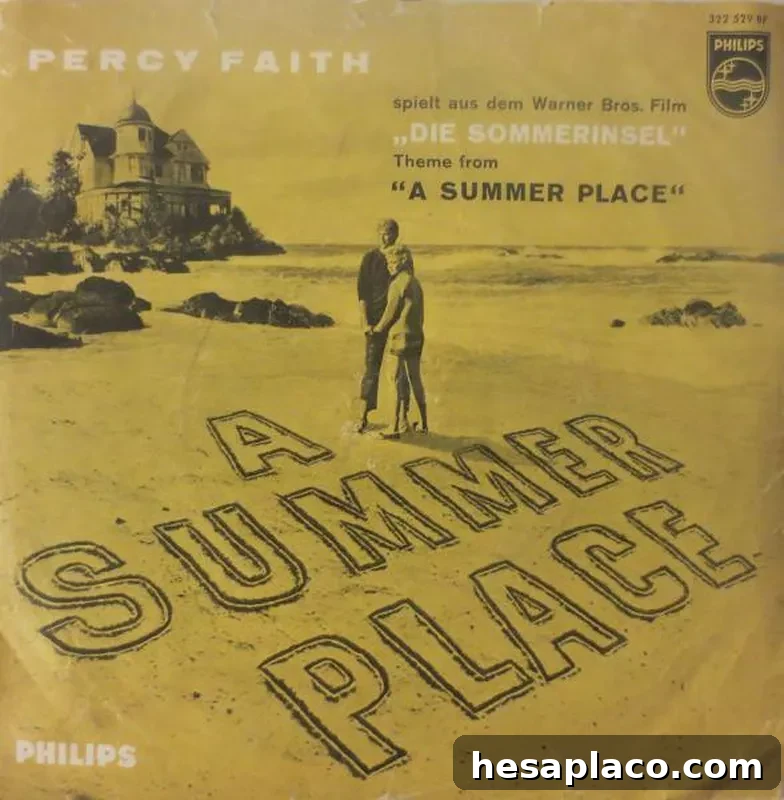
1960: Theme from A Summer Place by Percy Faith
Discogs
Release date: September 1959
“Theme from A Summer Place” was composed by Max Steiner for the 1959 film A Summer Place, which starred Sandra Dee and Troy Donahue as young lovers. Although it was not the central focus of the movie, the instrumental theme soon developed a life of its own.
Percy Faith, the Canadian bandleader, arranger and composer, reworked and recorded the piece for his 1960 album Percy Faith’s Greatest Hits. His lush orchestral version became a major success and spent nine weeks at No. 1 on the Billboard Hot 100.
The recording became one of the most recognizable instrumentals of the era. Over time, it was covered by many artists and used in films, television shows and commercials, helping it remain familiar to generations of listeners.
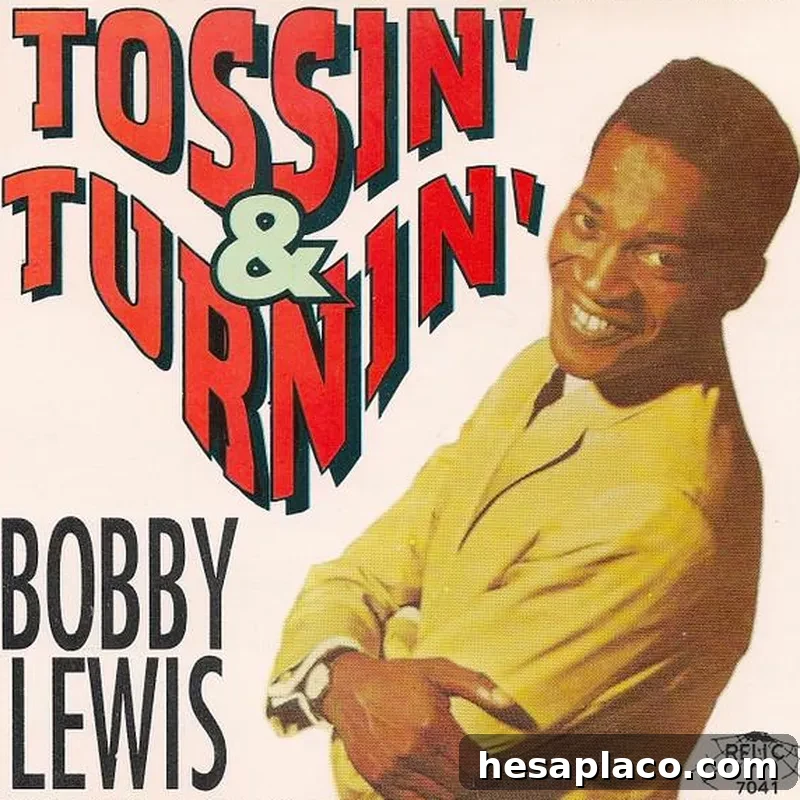
1961: Tossin’ and Turnin’ by Bobby Lewis
Discogs
Release date: April 30, 1961
“Tossin’ and Turnin’” is a lively, soulful single about a sleepless night caused by heartbreak. Its opening lines immediately set the mood, as the narrator admits he could not sleep because he was thinking about a troubled romance.
Bobby Lewis delivered the song with energy and feeling, and listeners connected with its simple but relatable theme. The track became the standout hit of 1961 and turned Lewis into a national name.
Lewis became the first artist to reach No. 1 on the Billboard Hot 100 with a debut single. Although he never matched the success of “Tossin’ and Turnin’,” the song remained one of the memorable pop and R&B hits of the early 1960s. It has also appeared in films, television programs and commercials, including the movie Animal House.
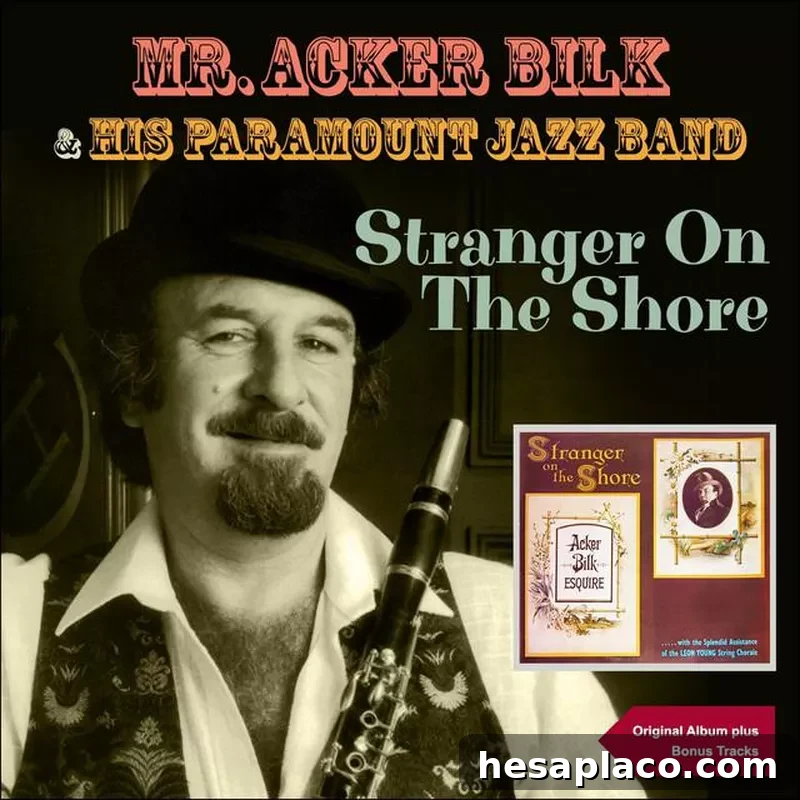
1962: Stranger on the Shore by Acker Bilk
Discogs
Release date: October 1961
“Stranger on the Shore” is a clarinet-led instrumental by Acker Bilk, and while it may not be as frequently discussed today as some other 1960s hits, it was the biggest song of 1962.
Bilk originally called the composition “Jenny,” naming it after his daughter. The title changed after the melody was used as the theme for the BBC children’s television series Stranger on the Shore. With its new name, the song became an international chart success.
The track even made an unusual journey beyond Earth. In May 1969, “Stranger on the Shore” went into space with the Apollo 10 crew when astronaut Gene Cernan included it on a cassette carried in the command module.
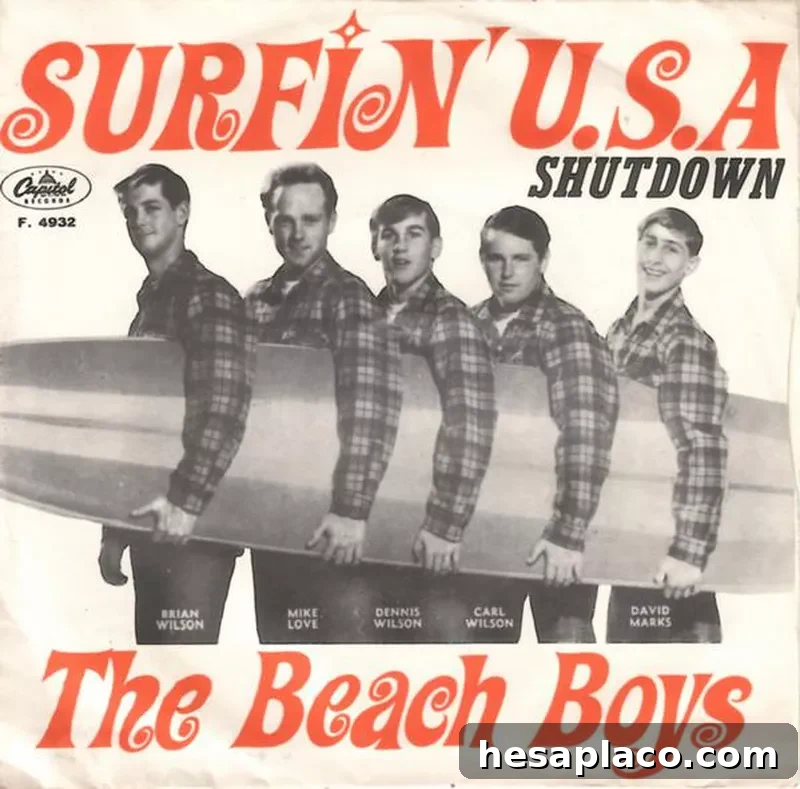
1963: Surfin’ U.S.A. by the Beach Boys
Discogs
Release date: March 4, 1963
“Surfin’ U.S.A.” was the title track and lead single from the Beach Boys’ second studio album. Bright, energetic and instantly catchy, the song celebrated Southern California surf culture and helped define the band’s early image.
The lyrics name several well-known surfing locations, creating a musical travelogue of beaches and surf spots. With its upbeat rhythm and sunny harmonies, the single captured the carefree mood that became closely associated with the Beach Boys.
The song also led to controversy because of its musical similarity to Chuck Berry’s “Sweet Little Sixteen.” Berry’s publisher filed a lawsuit, and later releases credited both Brian Wilson and Chuck Berry as songwriters.
Although the band became closely linked with surfing, Dennis Wilson was the only member of the Beach Boys who actually surfed.
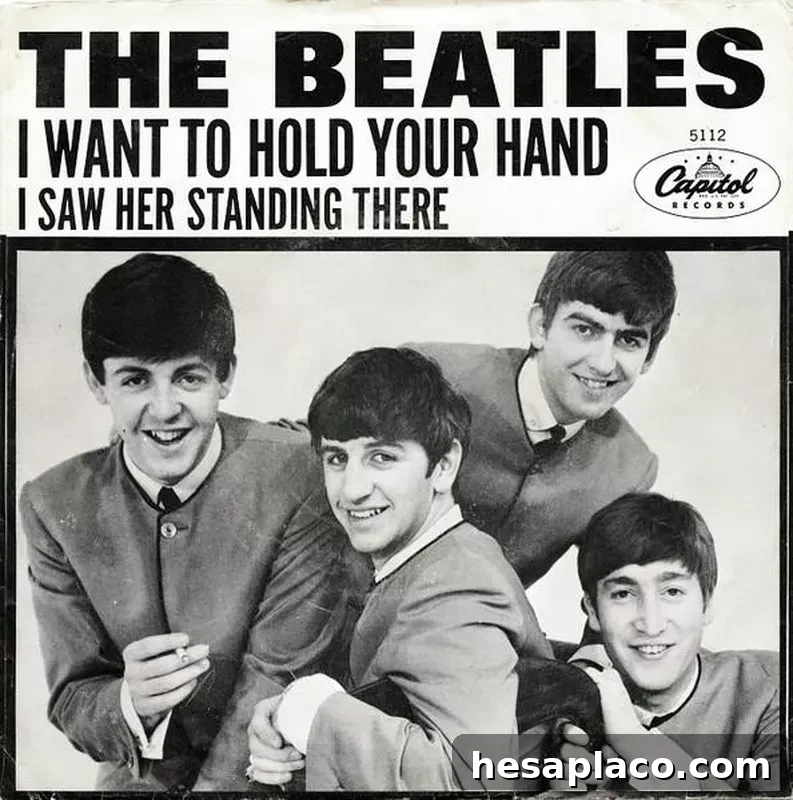
1964: I Want to Hold Your Hand by The Beatles
Discogs
Release date: Dec. 26, 1963
“I Want to Hold Your Hand” helped transform popular music in the United States. Its release and enormous success marked the beginning of Beatlemania in America and played a major role in launching the British Invasion.
In February 1964, the Beatles performed the song on The Ed Sullivan Show. That television appearance became one of the most famous moments in music history, introducing the band to a massive American audience and confirming their status as international stars.
The song’s direct lyrics, energetic performance and irresistible melody made it a landmark single. It remains one of the essential recordings in the Beatles’ catalog and one of the defining pop songs of the 1960s.
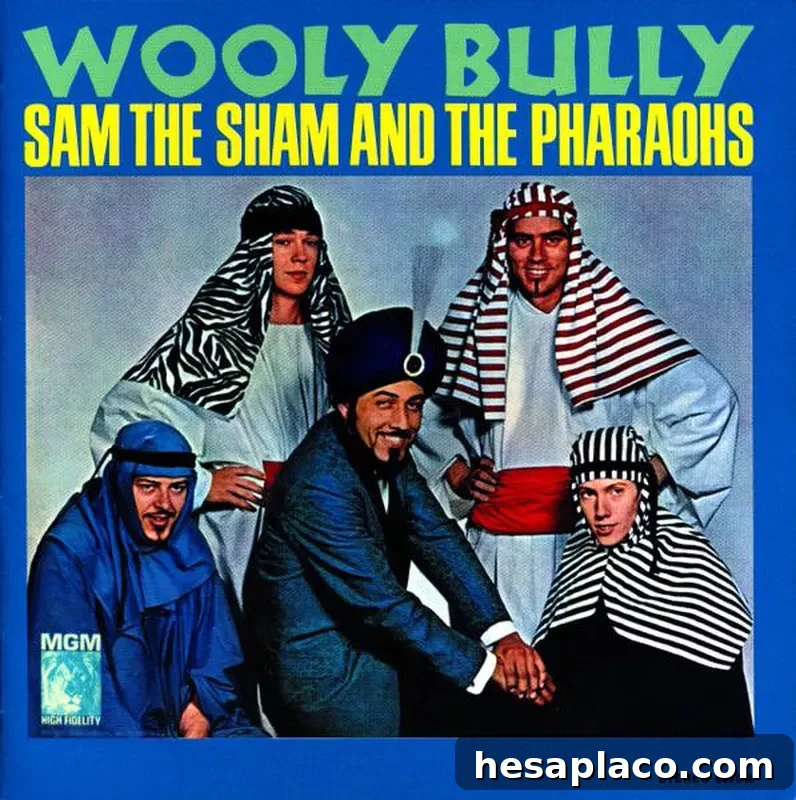
1965: Wooly Bully by Sam The Sham and The Pharaohs
Discogs
Release date: March 12, 1965
“Wooly Bully” was written by Domingo “Sam” Samudio, the frontman of Sam The Sham and The Pharaohs. The song reworked elements of an earlier, lesser-known tune called “Hully Gully Now” by Big Bo and The Arrows. Samudio changed the lyrics, replacing “Hully Gully” with “Wooly Bully,” and created one of the most recognizable party records of the decade.
The lyrics were partly difficult to understand, which led some radio stations to ban the song. Despite that reaction, the record was not especially controversial; its words are largely playful and nonsensical, with references to dancing and a “Wooly Bully,” described as a bison.
Although “Wooly Bully” did not reach No. 1 on the Billboard charts, it still became the best-selling single of 1965. Its popularity was strengthened by the band’s lively performances and by later appearances in television and film, including Stanley Kubrick’s Full Metal Jacket.
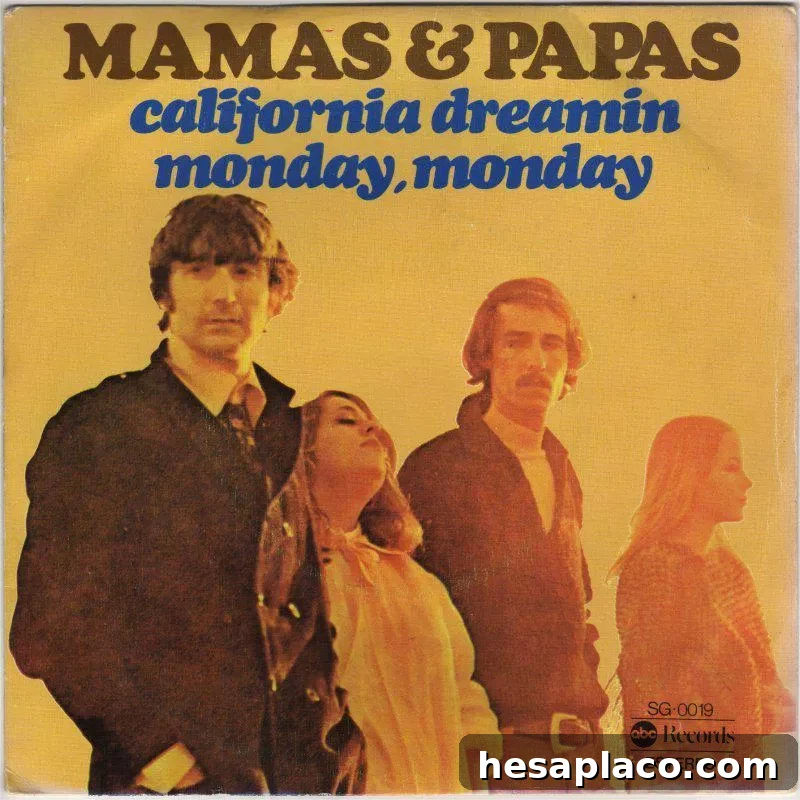
1966: California Dreamin’ by The Mamas and the Papas
Discogs
Release date: Dec. 8, 1965
Many songs have been written about California, but “California Dreamin’” remains one of the most vivid expressions of longing for the Golden State. With its haunting harmonies and winter imagery, the song captured the feeling of wanting sunshine while being trapped in the cold.
In 1963, Michelle Phillips, who was from California, was newly married to John Phillips. The couple was living in New York City during a harsh winter, and John wrote the song about Michelle’s homesickness and her struggle with the cold weather after arriving with clothing better suited to California.
John Phillips later recalled that they were staying at the Hotel Earle in New York. Michelle had been asleep while he played guitar, and they had gone for a walk that day after snow had fallen overnight. The lyrics reflected much of what happened during that walk, including stopping inside a church to get warm.
The result was one of the signature folk-rock recordings of the 1960s and a defining hit for The Mamas and the Papas.
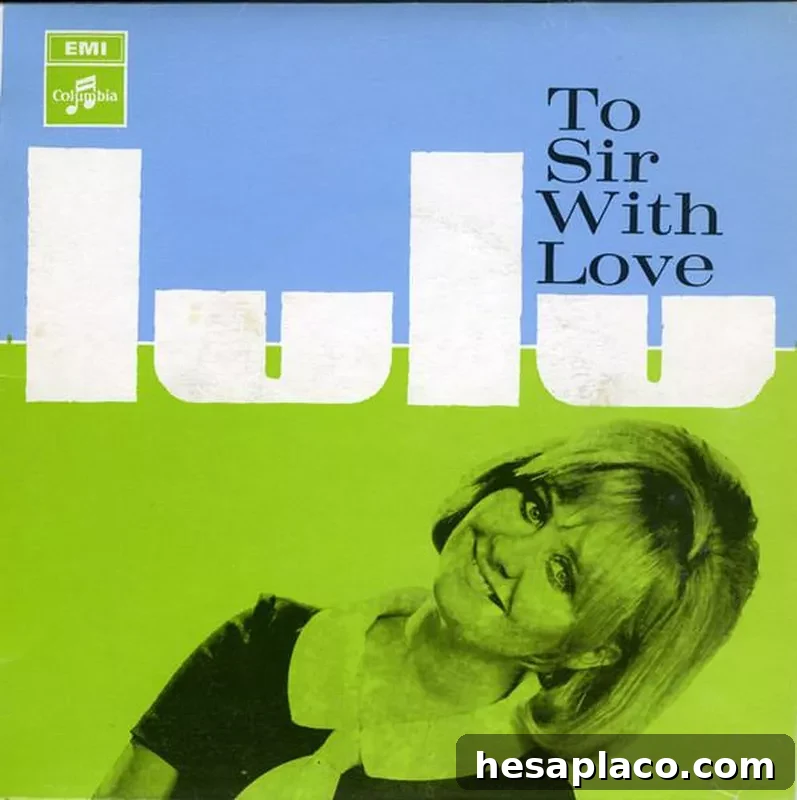
1967: To Sir With Love by Lulu
Discogs
Release date: September 1967
“To Sir With Love” was recorded by British singer and actress Lulu for the film of the same name. The movie starred Sidney Poitier and Lulu, who also performed the song in the film.
The story follows an idealistic young teacher, played by Poitier, whose methods are challenged by a group of unruly working-class students. Many of the students believe they have limited prospects, but their teacher’s patience and guidance help change the way they see themselves and their futures.
The song functions as both the film’s theme and an emotional statement of gratitude. It reflects the students’ appreciation for the teacher who helped shape their lives, which gave the recording an emotional power beyond a typical movie theme.
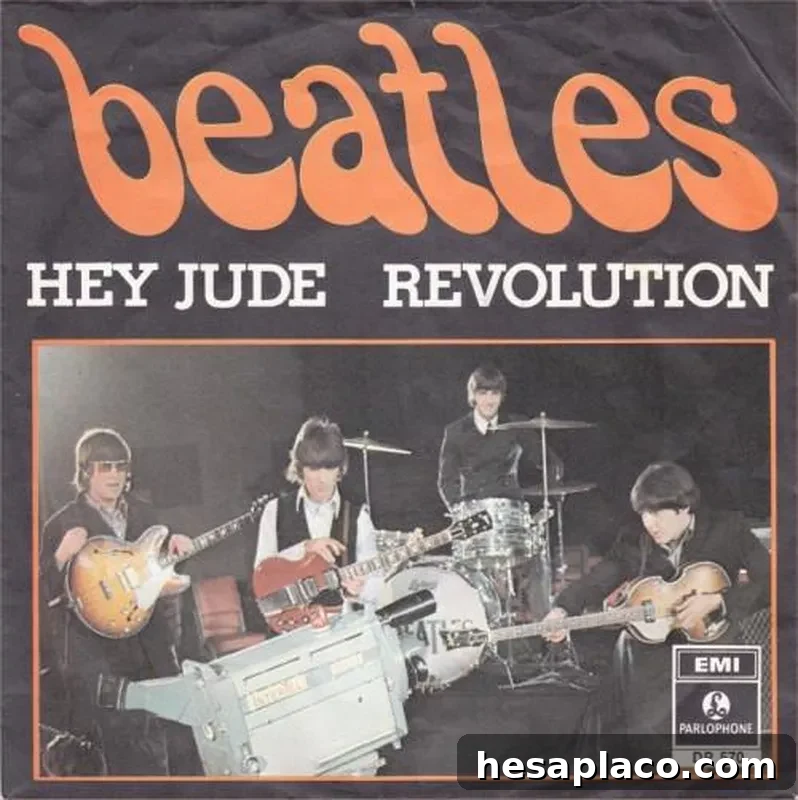
1968: Hey Jude by The Beatles
Discogs
Release date: Aug. 26, 1968
At seven minutes and 11 seconds, “Hey Jude” is the longest single on this list. At the time, a song of that length was unusual for radio, but its extended running time did not stop it from becoming one of the Beatles’ greatest successes.
Paul McCartney wrote “Hey Jude” for John Lennon’s son, Julian, as a gesture of comfort and encouragement while Julian was dealing with the divorce of John Lennon and his first wife, Cynthia.
The song begins as a tender ballad and builds into a long, communal singalong. That structure helped make it feel both personal and universal. Within the first six months of release, “Hey Jude” sold more than 8 million copies worldwide, making it one of the best-selling singles of all time.
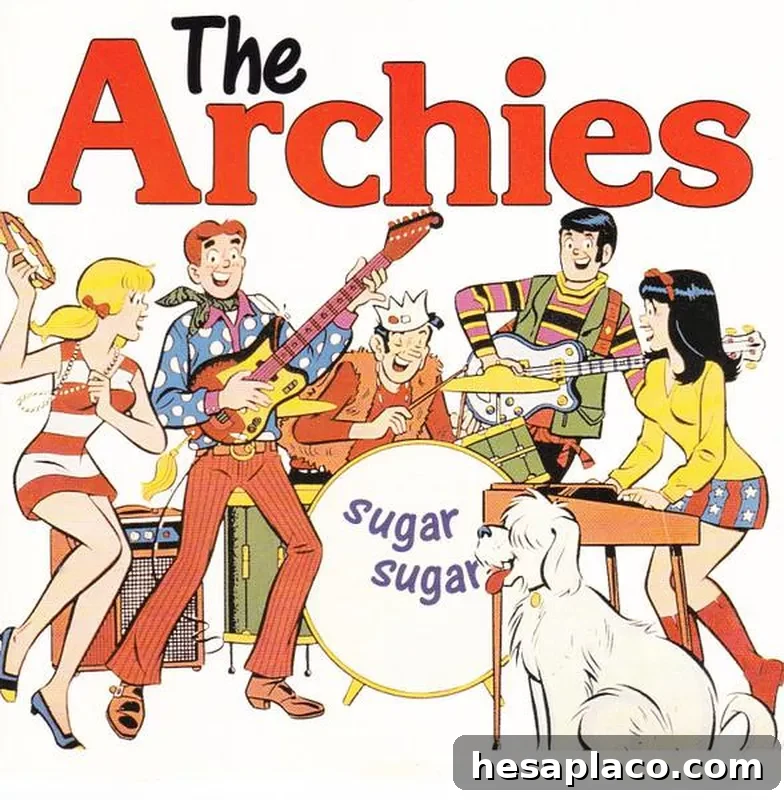
1969: Sugar, Sugar by The Archies
Discogs
Release date: May 24, 1969
The Archies were a fictional band created for the animated television series The Archie Show in the late 1960s. The characters were based on Archie Comics, which dated back to the 1940s. Although the band was fictional, the music was recorded by real session musicians and singers, including lead vocalist Ron Dante.
Some radio stations were reluctant to play “Sugar, Sugar” because it was connected to a cartoon group. Don Kirshner, whose label Calendar released the record, promoted the single by visiting stations and playing it without immediately revealing who the artist was.
Songwriter Andy Kim later said the approach worked because audiences responded immediately. Once listeners heard the song, its bright melody and simple hook caught on quickly. “Sugar, Sugar” became a massive hit and one of the defining examples of late-1960s bubblegum pop.