All U.S. currency remains legal tender regardless of its issue date, but designs, denominations and production decisions have changed over time. Some coins and bills were discontinued because public needs and preferences shifted; others were altered or never reached wide circulation due to lack of public acceptance. Below is a concise, SEO-friendly overview of notable discontinued or short-lived U.S. coins and bills, presented in clear, natural English.
$2 Bill
chrisbradshaw / Getty Images
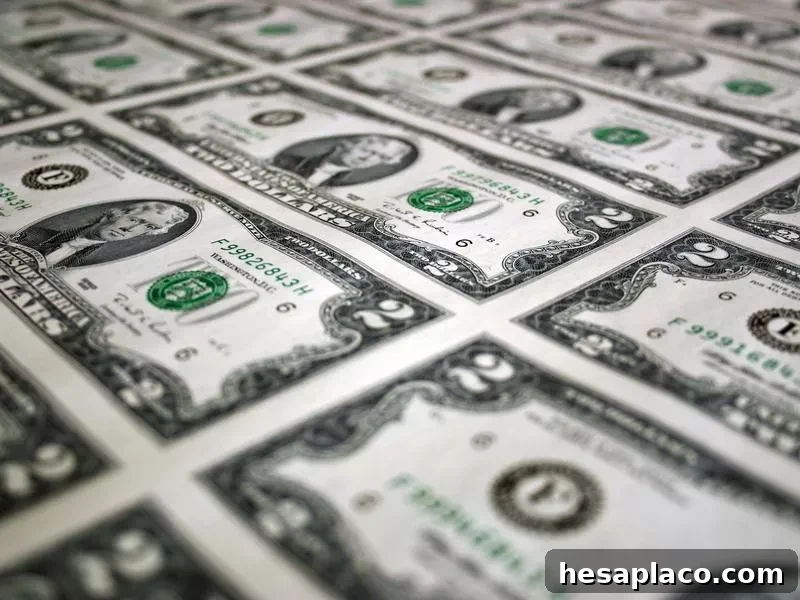
The U.S. issued the first $2 bill in 1862 with Alexander Hamilton on the obverse. In 1869 Thomas Jefferson replaced Hamilton, and Jefferson’s portrait has appeared on $2 notes ever since. Beginning in 1928 Monticello appeared on the reverse; in 1976 that image was replaced by a vignette of the presentation of the Declaration of Independence. The current $2 bill shows a portion of John Trumbull’s painting “Declaration of Independence.”
Although produced intermittently for more than 150 years, the $2 bill has never been widely accepted. Many people find it unusual and some unfamiliar users mistake it for a counterfeit, which has limited its everyday use.
$3 Coin
Jaclyn Nash / Wikimedia Commons
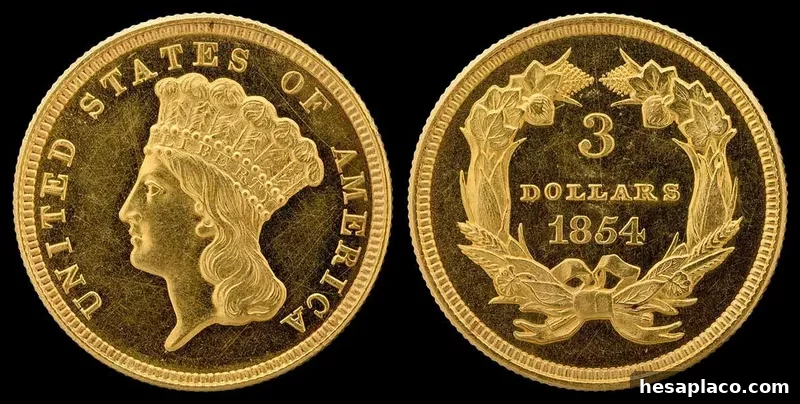
The $3 gold coin was introduced in 1854, intended primarily to facilitate purchases of three-cent postage stamp sheets. Although over 100,000 were struck in its first year, demand was low—especially after the Civil War reduced gold availability in many regions. The coin was mainly used as jewelry or presentation pieces rather than everyday change. From 1854 to 1889 roughly 539,792 $3 coins were produced. Congress made the denomination obsolete in 1890, and tens of thousands were melted, making surviving examples relatively rare today.
$4 Stella
Jaclyn Nash / Wikimedia Commons
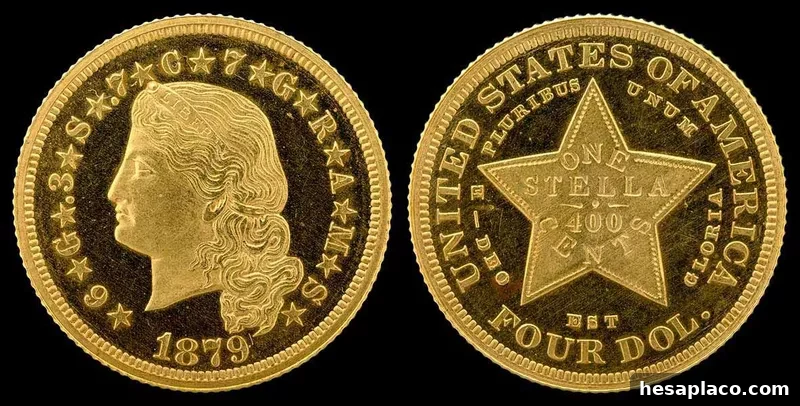
The stella, a $4 gold pattern coin produced in 1879 and 1880, was proposed in response to international currency efforts such as the Latin Monetary Union. Designed to align U.S. coinage with foreign gold standards, it never received congressional authorization for circulation. Only pattern examples exist, so the stella never reached the public as a circulating coin.
Eisenhower Dollar
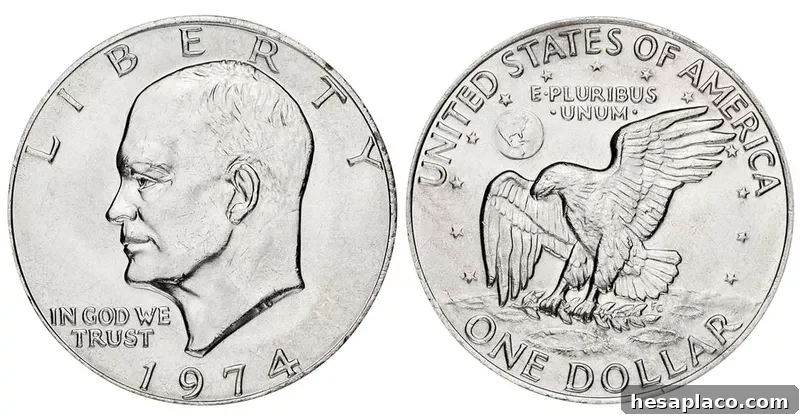
rusm / Getty Images
Issued beginning in 1971, the Eisenhower dollar commemorated President Dwight D. Eisenhower and the Apollo 11 moon landing. Circulating versions used standard copper-nickel clad composition; special collector versions used 40% silver. Although millions were minted, the coin’s large size made it impractical for everyday use. Production ended in 1978 after hearings on dollar coin size and design.
Susan B. Anthony Dollar
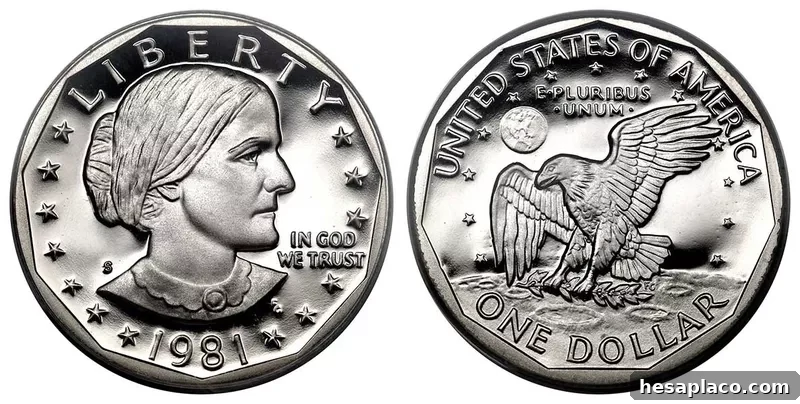
Heritage Auctions / Wikimedia Commons
Released in 1979 to encourage use of dollar coins, the Susan B. Anthony dollar was much smaller than the Eisenhower dollar. Despite research and recommendations for a distinctive design and color, only the reduced size was adopted. Activists successfully lobbied to feature suffragist Susan B. Anthony on the obverse. The coin was widely confused with the quarter, causing public frustration and costly vending machine conversions. Production for circulation stopped by 1981; large Mint stockpiles lasted until 1999.
Sacagawea Dollar
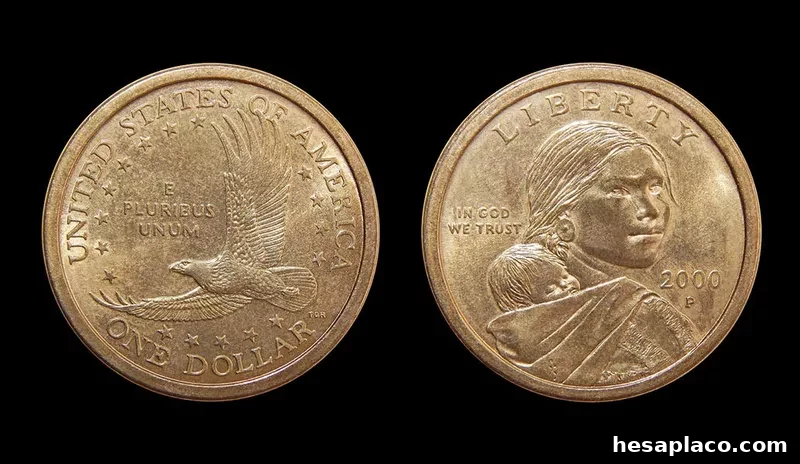
alex55 / Getty Images
Authorized by the Coinage Act of 1997 and released in 2000, the Sacagawea golden dollar matched the Susan B. Anthony coin’s dimensions but featured a golden color and smooth edge. The obverse depicts Sacagawea; the reverse initially showed an eagle and later adopted annually changing designs honoring Native American contributions. A substantial marketing push and promotional distribution generated early interest, but the coin’s similarity to other denominations led many people to hoard the pieces rather than spend them. Regular circulation production paused in the early 2000s and resumed later primarily for collector sets.
Presidential Dollar Series
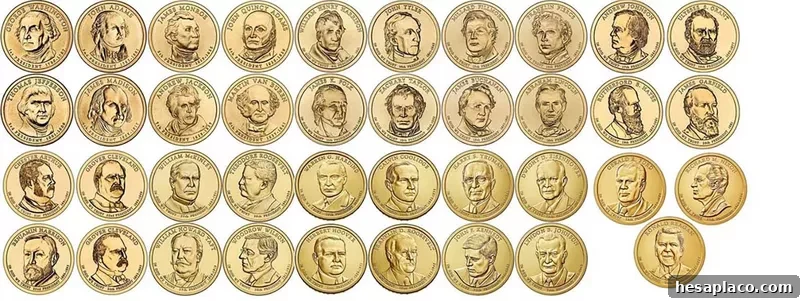
SmyrnaCoin / Amazon
Enacted in 2005, the Presidential $1 Coin program issued four new presidential designs annually, honoring deceased U.S. presidents, with the Statue of Liberty on the reverse. Produced through 2016, the coins failed to catch on with the public: by 2011 the Mint held more than 1.4 billion uncirculated presidential dollars. Production for general circulation was suspended that year; later issues were struck only for collectors.
Half Cent
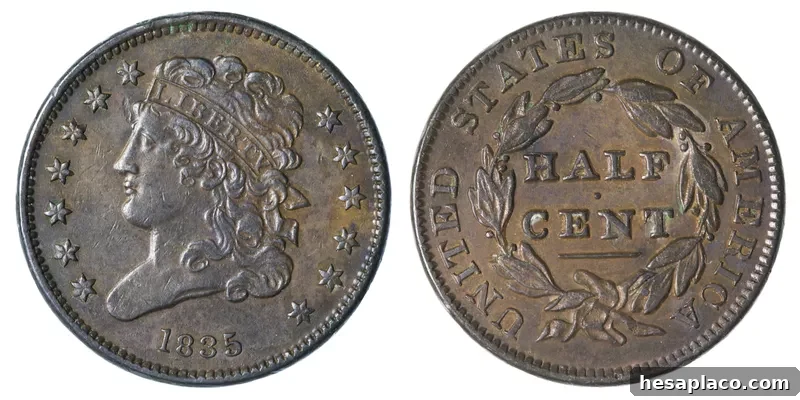
Mark Kostich / Getty Images
Produced from 1793 through 1857 (with a brief gap from 1837–1839), the half cent was useful when daily wages were low and small denominations mattered. Inflation and rising prices eventually made the half cent impractical, and the denomination was retired in 1857. Most remaining pieces were melted for their copper content.
Large Cent
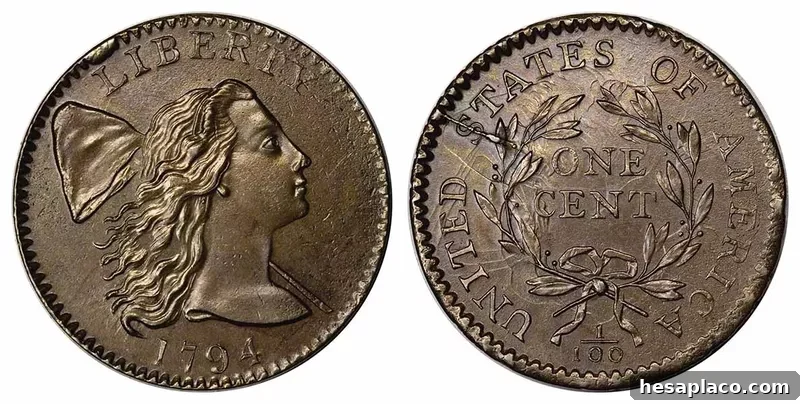
Heritage Auctions / Wikimedia Commons
The large cent, first struck in 1793, came in several early designs such as the Chain, Wreath and Liberty Cap varieties. Although it was a one-cent coin by value, its physical size and weight made it cumbersome. The large cent series ended in 1857 when the smaller, more convenient small cent replaced it.
Quarter Eagle
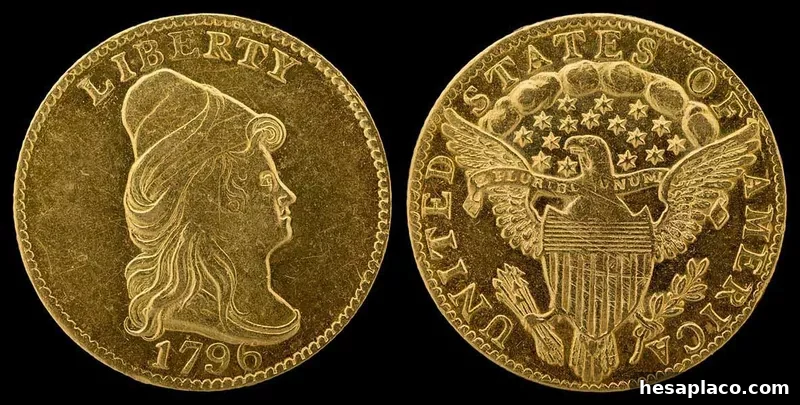
Jaclyn Nash / Wikimedia Commons
The quarter eagle, a $2.50 gold coin authorized by the Coinage Act of 1792, was first struck in 1796. Its gold content was adjusted over time, and production continued intermittently until 1929. The abandonment of the gold standard in 1933 ended the coin’s production. Its unusual denomination made it less convenient than more common values.
Half Union
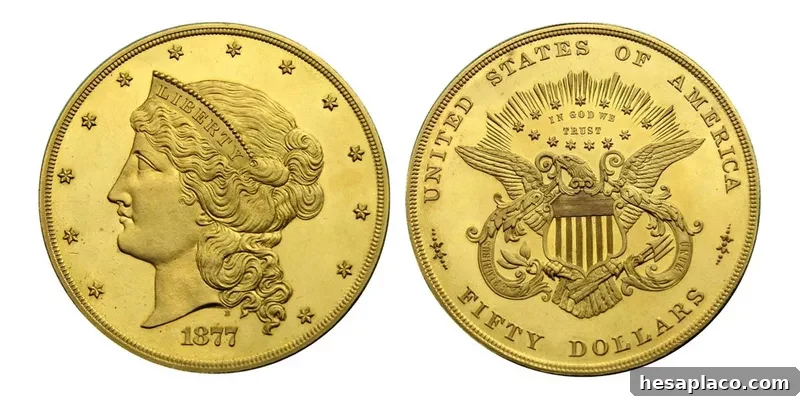
Godot13 / Smithsonian Institution / Wikimedia Commons
The half union was a proposed $50 gold coin produced as a pattern in 1877. Backed by some merchants and bankers in California, legislation to authorize the denomination passed the Senate but failed in the House. The coin never circulated; pattern examples remained part of Mint collections and a few surfaced at auction in the early 20th century before returning to institutional holdings.
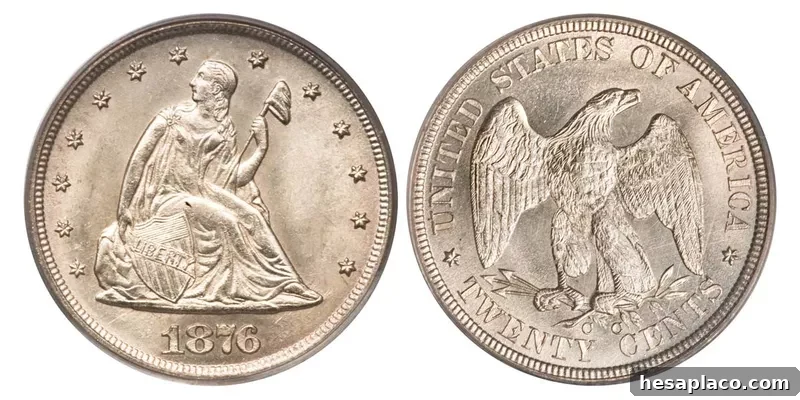
20 Cent Piece
Heritage Auctions / Wikimedia Commons
The 20-cent coin was introduced in 1875 to help make change in the Far West, where quarters were more common and exact change could be difficult. Because the new coin’s size closely resembled the quarter, it was often mistaken for one. Confusion and limited demand led Congress to abolish the denomination in 1878; many pieces were melted within a few years of production.
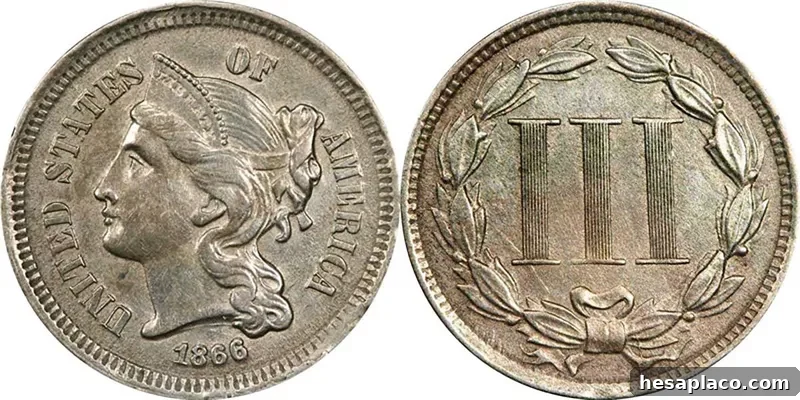
3 Cent Coin
Bobby131313 / Wikimedia Commons
Authorized in 1851, the three-cent silver coin (nicknamed “fish scale”) was created to facilitate small postage purchases and make change. In 1865 it was redesigned as a larger three-cent nickel coin. Postal rate changes and declining demand led to the denomination’s discontinuation in 1889; many were returned to the Mint and melted.
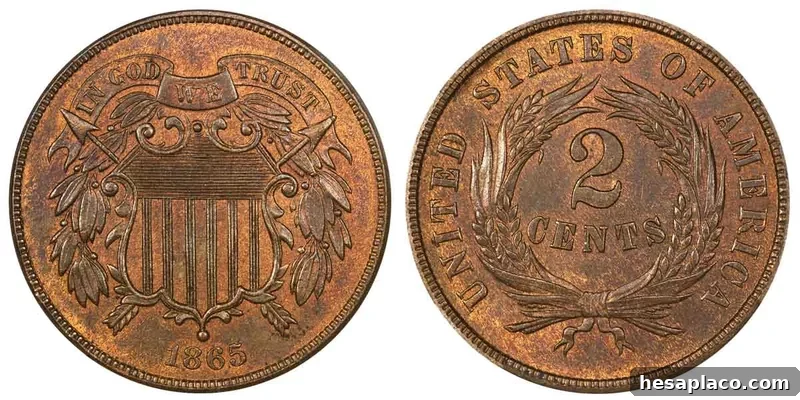
2 Cent Coin
Brandon Grossardt / Wikimedia Commons
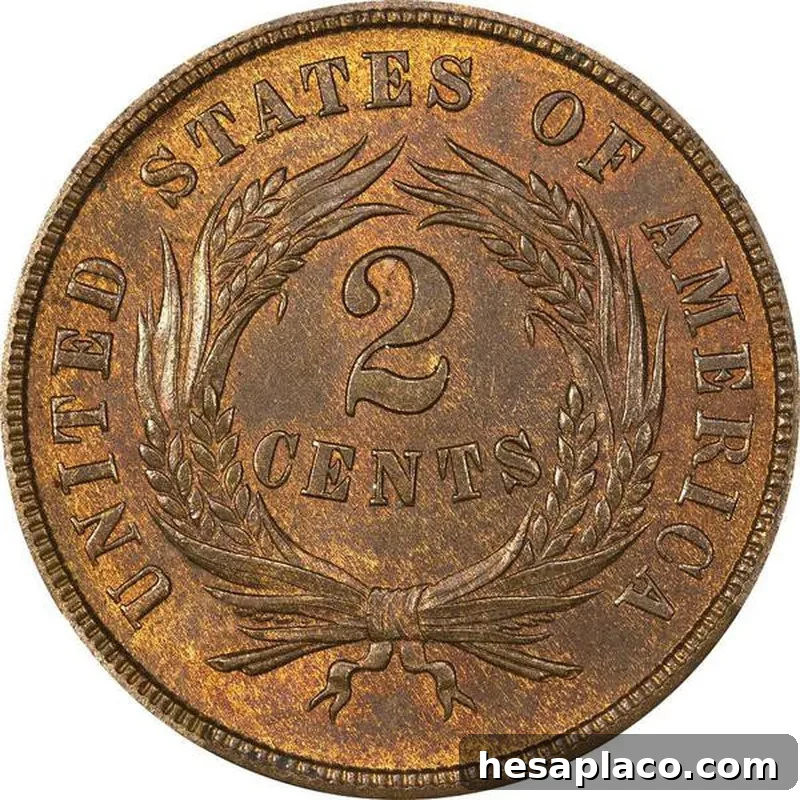
Created by the Coinage Act of 1864, the two-cent coin was the first U.S. coin to bear “In God We Trust.” It enjoyed brief popularity during the Civil War when coin hoarding left smaller denominations scarce. After the war, circulation returned to normal and demand dwindled; production ended in 1873.
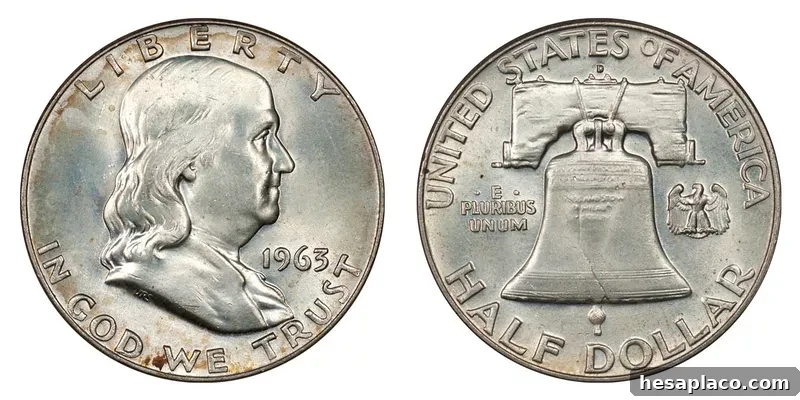
Franklin Half Dollar
John Baumgart / Wikimedia Commons
Minted from 1948 to 1963, the Franklin half dollar featured Benjamin Franklin on the obverse and the Liberty Bell on the reverse, with a small eagle added to satisfy legal requirements for a half-dollar eagle depiction. Initial demand was limited because earlier Walking Liberty halves were still plentiful. After President John F. Kennedy’s assassination, a new half dollar honoring Kennedy replaced the Franklin half in 1964.
Fractional Currency
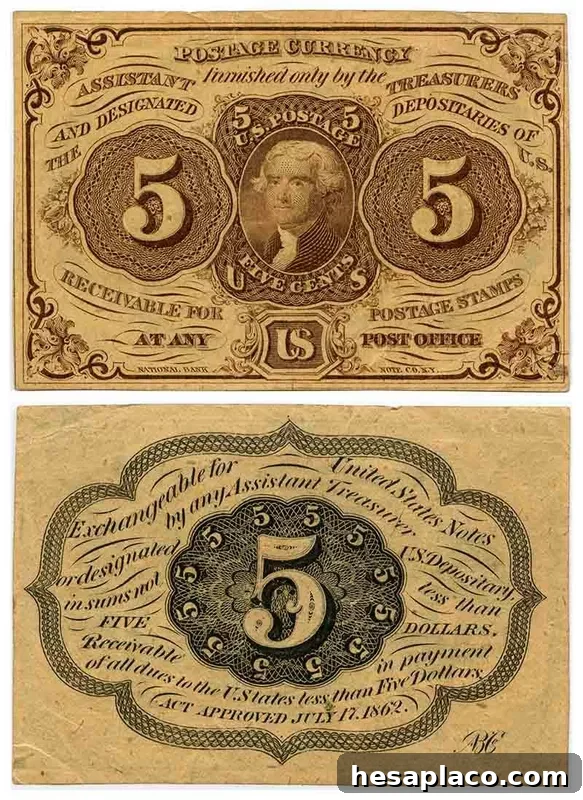
United States Post Office Department / Wikimedia Commons
During the Civil War, coin shortages led the government to authorize postage stamps for small transactions. That solution created stamp shortages, prompting issuance of fractional paper currency in denominations of 3, 5, 10, 15, 25 and 50 cents between 1862 and 1875. Over multiple issues, the notes’ sizes, seals and portraits changed. Controversy erupted when a living official’s portrait appeared on a five-cent note, which prompted Congress to ban living persons from appearing on U.S. currency.
This summary highlights how changes in public demand, practical circulation issues and legislative decisions shaped which denominations and designs endured—and which became historical footnotes.