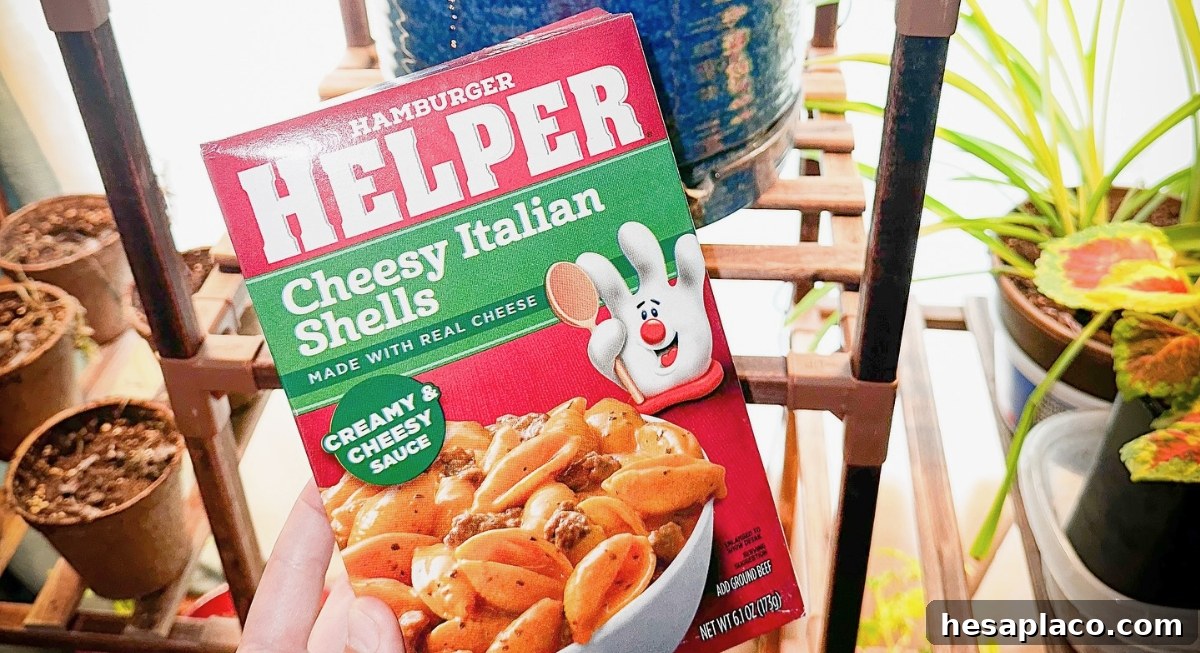
Hamburger Helpers first arrived in American kitchens in 1971, introduced at a time when rising beef prices pushed families to find ways to stretch a single pound of ground meat. The boxed pasta-and-seasoning mix has resurfaced during other periods of financial strain—most notably during the 2008 recession and again in the early months of the COVID-19 pandemic—each time becoming a practical, low-cost option for households tightening their budgets.
More than fifty years after its debut, the product is back in the spotlight: sales have climbed more than 14 percent over the past year. That resurgence follows a predictable pattern—when grocery bills rise and budgets tighten, Hamburger Helper often returns to dinner tables as an affordable way to make a modest amount of meat go further.
What’s Driving the Sales Spike

Image via Getty Images/marrio31
According to Eagle Foods, the company that owns the brand, sales of Hamburger Helper rose 14.5 percent in the year through August. That growth makes it one of the few packaged foods gaining momentum while many other categories shrink. The timing of the surge is tied to broader cost pressures: U.S. grocery prices remain elevated, and food eaten at home costs roughly 21 percent more than it did in 2020, according to Bureau of Labor Statistics data.
Beef has been a particular pain point. A nationwide shortage of cattle has driven ground beef prices up about 13 percent in the past year, reaching a record average of $6.63 per pound—the highest level recorded since tracking began. Faced with higher meat costs, families looking to include protein in meals have turned to products that stretch a single pound of meat farther—exactly the purpose Hamburger Helper was created to serve in 1971.
A Bigger Pattern in the Grocery Aisle
The renewed interest in Hamburger Helper reflects a broader shift in grocery spending. Research firm Circana has documented increased sales of staples such as rice, beans, canned tuna and salmon, sardines, and boxed macaroni and cheese through 2025. These pantry items tend to sell faster during tougher economic times because they are inexpensive, filling, and shelf-stable. At the same time, sales of discretionary items like desserts and other indulgences have declined, signaling that many households are prioritizing essentials over luxuries.
Market researchers describe shoppers’ behavior as reflecting two themes: uncertainty and resilience. While inflation has eased from the peaks seen in 2022, consumer confidence has not fully recovered. Many Americans say they expect continued financial pressure, and that caution shows up in their food choices—favoring reliable, budget-friendly options that stretch grocery dollars.
Pop Culture Boost and Brand Updates
The brand also benefited from a pop-culture moment. A June episode of the TV series “The Bear” showed a character preparing a Cheeseburger Macaroni mix and elevating it with fresh ingredients. The scene prompted TikTok users to post their own versions, generating renewed attention and social media buzz for a product that hadn’t enjoyed that level of organic publicity in years.
Since acquiring the brand in 2022, Eagle Foods has refreshed the lineup to suit contemporary tastes. New offerings include flavors like Spicy Jalapeño Cheeseburger, single-serve microwave cups for quick meals, and a breakfast extension with a Cheesy Hashbrowns product. Despite these updates, the product remains widely available at a modest price point—roughly $2 per box—making it an easy choice for budget-conscious shoppers seeking quick, satisfying meals.
In short, Hamburger Helper’s revival is less a flash-in-the-pan trend and more a recurring response to economic reality: when grocery prices rise and families need to trim costs, affordable, adaptable pantry products that stretch ingredients tend to come back into favor. The brand’s recent sales lift reflects both those economic pressures and savvy changes to the product lineup, along with a timely boost from cultural exposure that reminded consumers how one inexpensive box can help feed a family without breaking the budget.