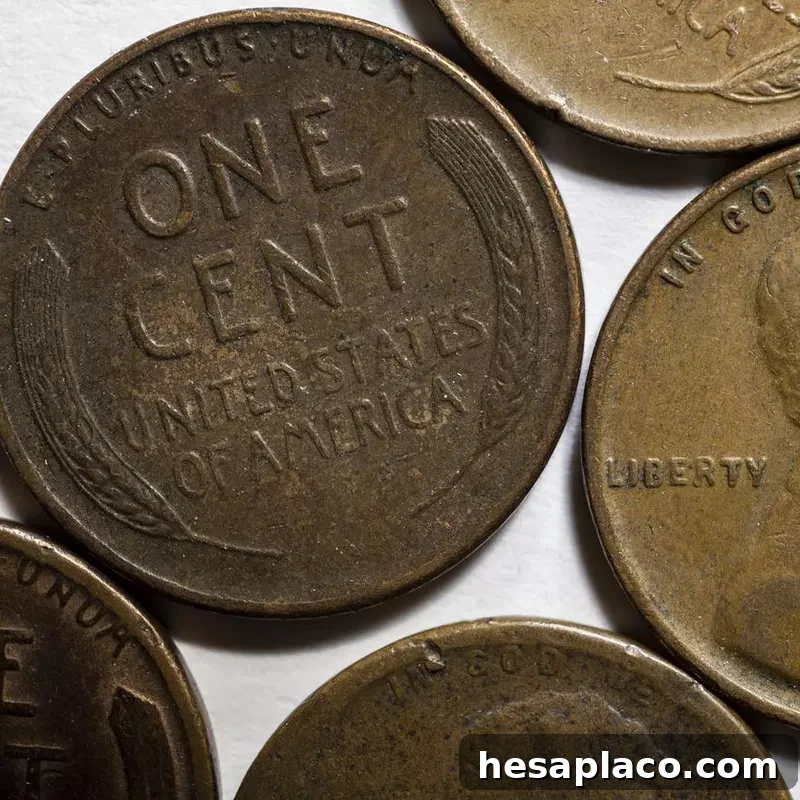
The wheat penny series began in 1909 and marked the first widely circulated U.S. coin to feature a president. Sculptor Victor D. Brenner was commissioned by the U.S. Mint to design a Lincoln portrait in honor of Abraham Lincoln’s centennial. Although Lincoln remains on the penny today, the wheat ears on the reverse were replaced by the Lincoln Memorial in 1959. Wheat cents, however, remain extremely popular with collectors, and certain rare dates and mint errors can be worth significant sums.
Below are some of the most valuable and sought-after wheat pennies, with details on why each coin is prized and what to look for when assessing condition and rarity. If you find an old penny in circulation, check the date and any unusual markings—you might have a collectible coin.
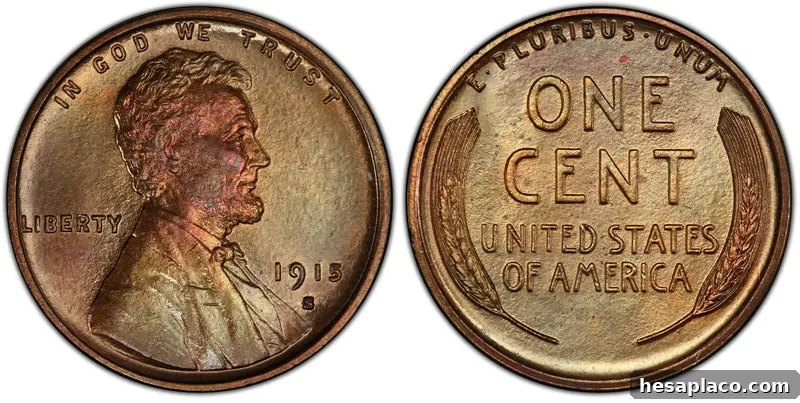
15. 1915 S Penny
PCGS
Value: Up to $1,500
Bottom line: The San Francisco 1915-S wheat cent is a good entry point for collectors. In average condition it’s modestly priced, but well-preserved examples—especially in reddish-brown coloration—typically command higher prices. Collectors prefer the red-brown color over the darker brown finish.
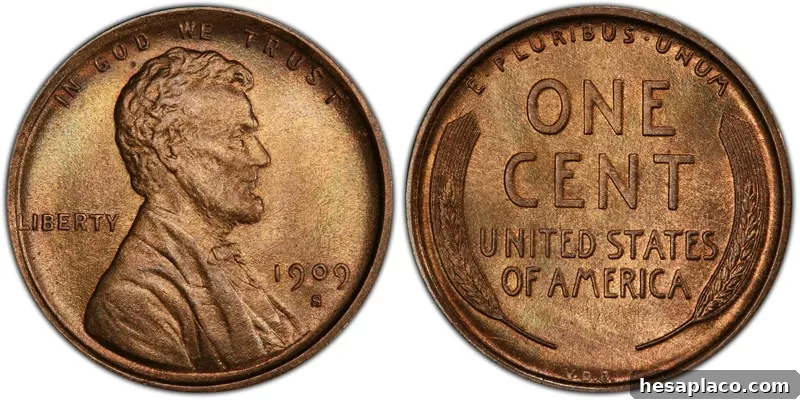
14. 1909 S VDB Penny
PCGS
Value: Up to $2,200
Bottom line: The original 1909 design included Victor David Brenner’s full name on the reverse. After controversy over the prominent initials, the Mint removed the full name and later applied the shortened “V.D.B.” Only 484,000 of the 1909-S VDB cents were produced, making them collectible—especially in high grades.
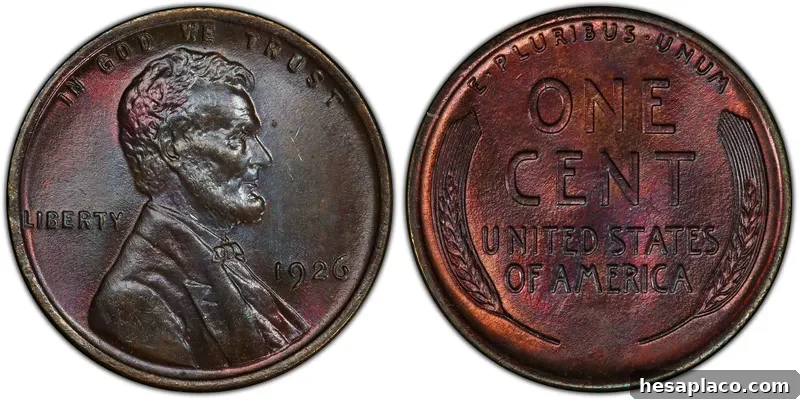
13. 1926 Penny
PCGS
Value: Up to $3,000
Bottom line: Ordinary 1926 wheat cents are common in low grades and are affordable for new collectors. However, mint-state examples with original surfaces and sharp detail can reach into the thousands. This issue was struck without a mint mark at Philadelphia.
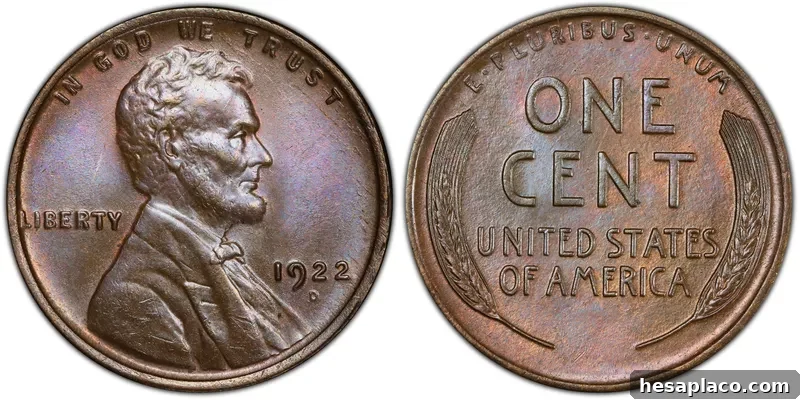
12. 1922 D Penny
PCGS
Value: Up to $5,000
Bottom line: The 1922-D wheat cent is common overall, but value increases dramatically when the mintmark is weak, partially missing, or absent. Coins with a visible “D” are the least valuable; those with faint “ghost” mintmarks or no mintmark (the “plain” variety) are sought after by specialists.
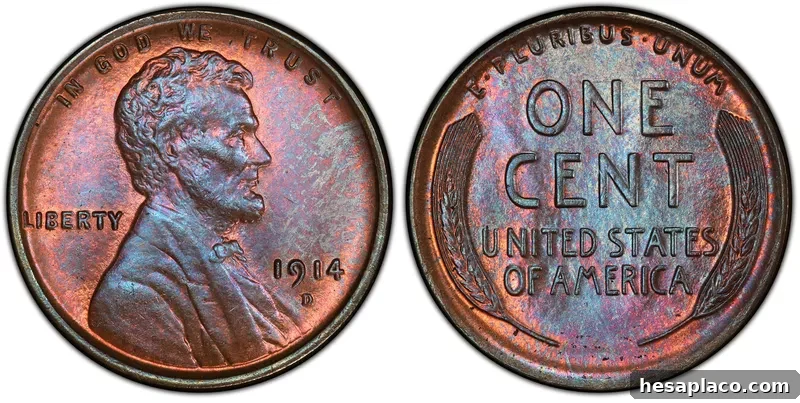
11. 1914 D Penny
PCGS
Value: Up to $5,500
Bottom line: The Denver 1914-D wheat cent had a much smaller mintage compared with Philadelphia issues, which makes it rarer and more valuable, especially in higher grades. Beware of counterfeits; this key date is commonly forged.
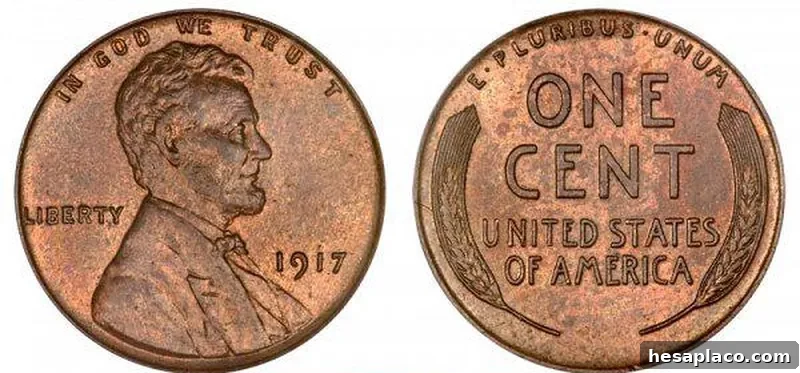
10. 1917 Doubled Die Penny
USA Coinbook
Value: $3,000 – $6,000
Bottom line: This doubled-die obverse shows doubling on elements such as “IN GOD WE TRUST” and the date “1917.” Even subtle doubling on a high-grade example can produce significant collector interest and value.
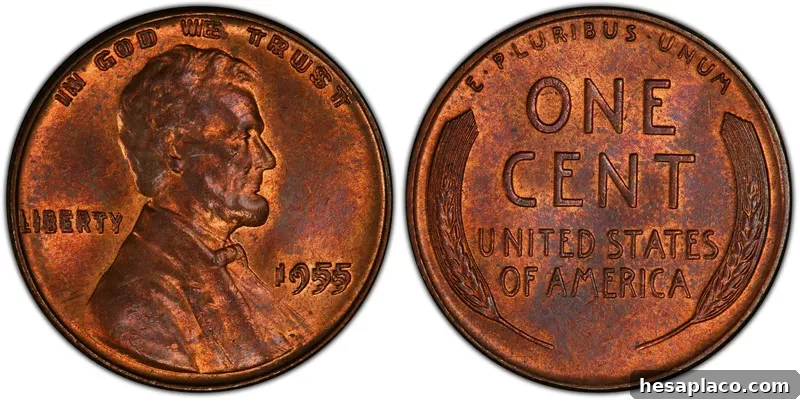
9. 1955-P DDO Penny
PCGS
Value: $4,000 – $16,000
Bottom line: The 1955 doubled-die obverse is the most famous modern doubled-die penny. Noticeable doubling appears on “IN GOD WE TRUST,” “LIBERTY,” and the date. Less dramatic varieties exist but are far less valuable.
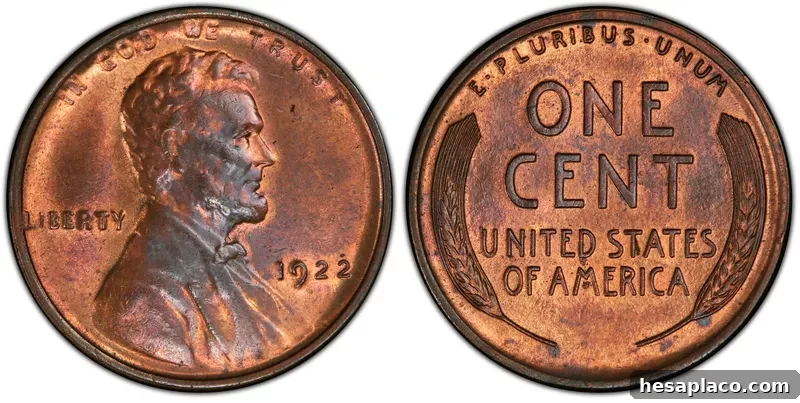
8. 1922-D No D Strong Reverse Penny
PCGS
Value: $12,000 – $30,000
Bottom line: Produced during a year when Denver was the only mint striking pennies, some 1922-D dies suffered damage or were overly polished. That led to weak or missing “D” mintmarks and strong reverse strikes—varieties that are highly desirable to specialists.
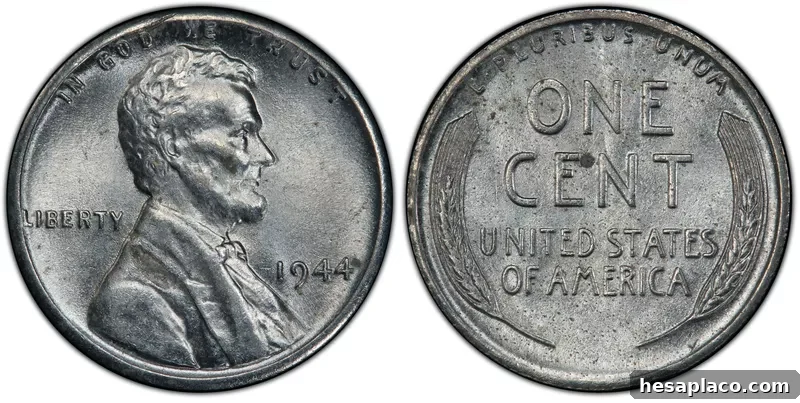
7. 1944-P Steel Penny
PCGS
Value: $50,000+
Bottom line: In 1944 the Mint intended to return to copper-based planchets after wartime steel usage in 1943, but a few zinc-coated steel planchets were accidentally struck in 1944. Steel 1944-P examples are rare and valuable, with Philadelphia pieces generally more common than Denver or San Francisco survivors.
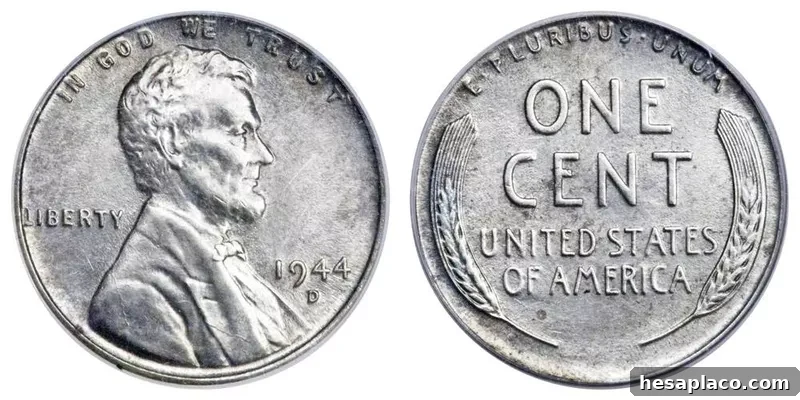
6. 1944-D Steel Penny
USA Coinbook
Value: $60,000+
Bottom line: Steel cents from the Denver Mint are extremely scarce. Only a handful are recorded, making any authenticated 1944-D steel penny a major find that can fetch six figures depending on condition and provenance.
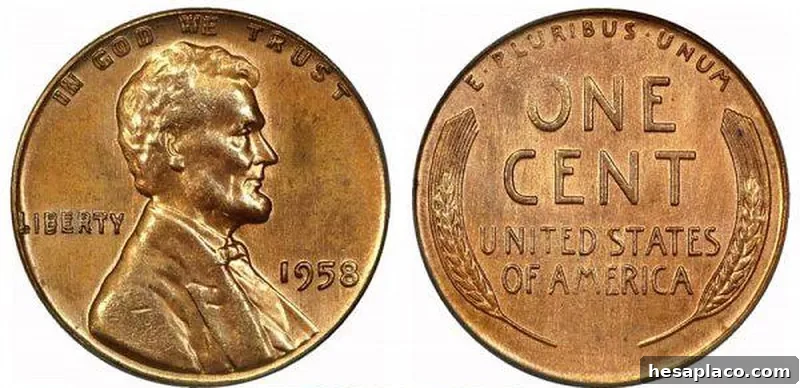
5. 1958-P DDO Penny
USA Coinbook
Value: $100,000 – $200,000
Bottom line: One of the rarest doubled-die obverse (DDO) errors among wheat cents, the 1958-P DDO shows doubling on “IN GOD WE TRUST” and “LIBERTY.” A few authenticated pieces exist, and high-grade examples are extremely valuable.
4. 1943 Bronze Penny
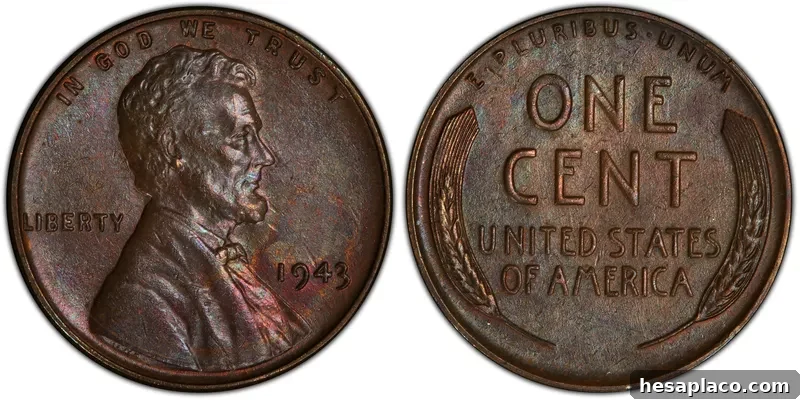
PCGS
Value: $300,000+
Bottom line: Due to wartime copper needs, most 1943 cents were produced on steel planchets, but a few bronze planchets from 1942 were mistakenly used in 1943. Bronze 1943 pennies are highly prized; because counterfeits are common, magnet tests and professional authentication are recommended.
3. 1943-S Bronze Penny
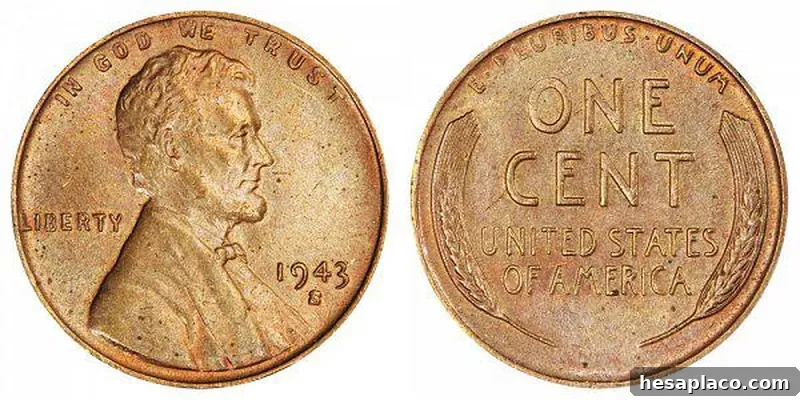
USA Coinbook
Value: $500,000+
Bottom line: San Francisco 1943-S bronze cents are even scarcer than Philadelphia examples. Only a tiny number are known to exist, and authenticated specimens can achieve very high prices at auction.
2. 1944-S Steel Penny
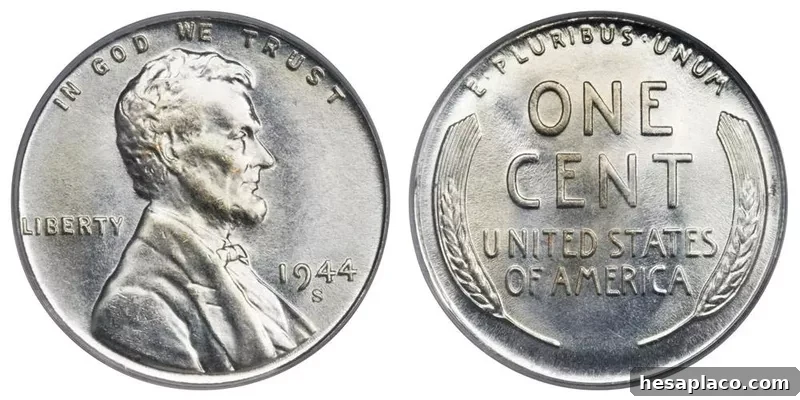
USA Coinbook
Value: $700,000 – $1,000,000
Bottom line: Like other 1944 steel cents, these resulted from leftover steel planchets from 1943 being struck in 1944. The San Francisco steel cents are among the rarest of these errors, with very few known examples and correspondingly high market values.
1. 1943-D Bronze Penny
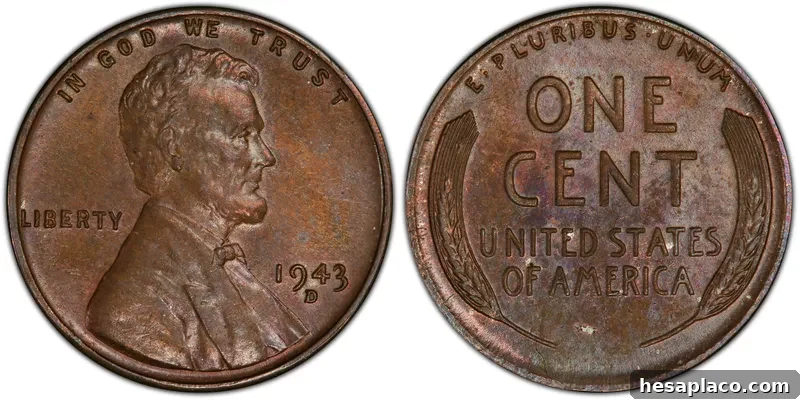
PCGS
Value: $800,000 – $2,000,000
Bottom line: The 1943-D bronze cent is widely regarded as the Holy Grail of wheat pennies. Only a tiny number of authentic specimens are known, and their origin has long been debated among numismatists. Some researchers suggest the coin may have been deliberately struck from a bronze planchet by a Mint employee, while others point to provenance linking the piece to a Denver Mint source. Because of its rarity and intrigue, any authenticated 1943-D bronze penny commands extraordinary attention and high auction prices.
If you collect wheat pennies or inspect old change, focus on the date, mintmark, metal composition, and any doubling or irregularities in the lettering and numbers. For valuable or unusual finds, seek professional grading and authentication to establish condition and provenance before buying, selling, or insuring a rare piece.