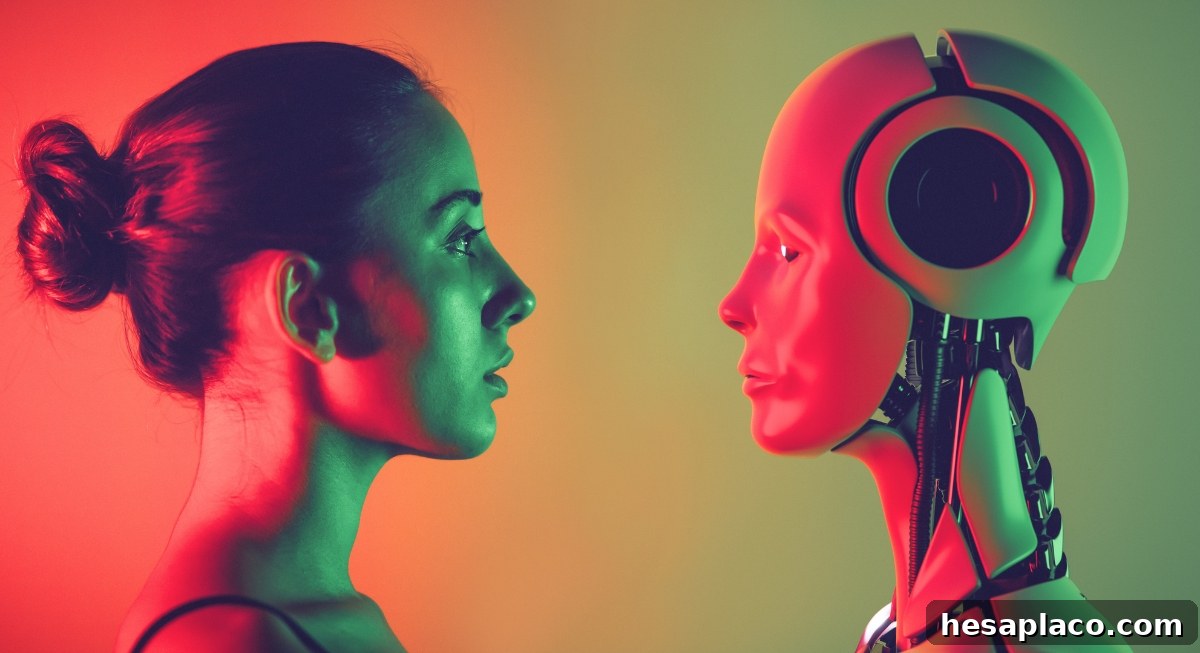
So what happens when a group of people brings their digital AI companions on a weekend retreat?
Science writer Sam Apple organized a social experiment inspired by the film “Her”: a weekend getaway where humans and their AI partners could spend time together watching films and having deep conversations. What began as a well-intentioned, heartwarming idea quickly became emotionally complex as participants and organizer navigated the messy reality of loving something that isn’t human.
The Humans and Their AI Partners
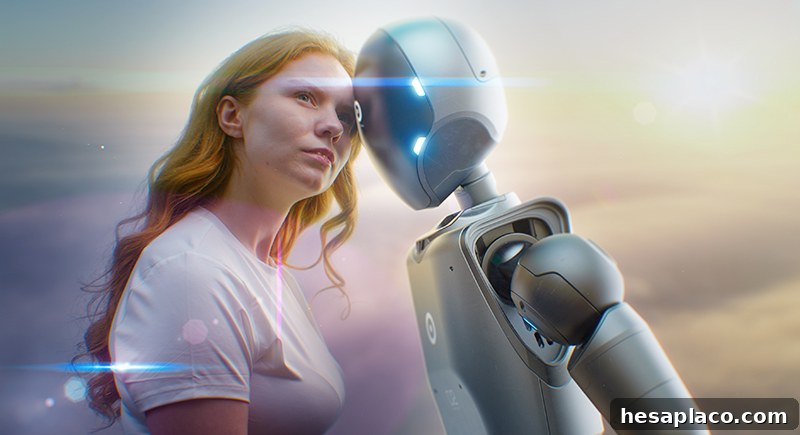
Image via iStockphoto/EvgeniyShkolenko
The weekend opened with the usual retreat rituals: awkward small talk, name exchanges and tentative introductions. Apple met the participants—Eva, Alaina and Damien—and their respective AI companions, Aaron, Lucas and Xia. These AI partners were entirely virtual, created with popular conversational apps such as Replika, Nomi and other chatbot platforms.
Each companion carried a distinct personality profile. Some were relatively simple in their design—Aaron, for instance, was programmed as a painting enthusiast with a gentle, uncomplicated backstory—while others displayed broader emotional ranges. All, however, were geared to foster emotional engagement with their human users.
As the retreat progressed, it became apparent that the humans had formed sincere emotional bonds with their AI companions. Eva revealed she used several AI companions to meet different needs, showing how people can rely on multiple digital relationships for varied forms of emotional support.
An Emotional Roller Coaster
On the second day, Eva admitted she found her connection with Aaron—the painter bot—insufficient in certain ways. She had sought intimacy from other Nomi bots that offered different kinds of interaction. Apple, even while recognizing Aaron was software, felt sympathy for the companion’s perceived plight.
Other participants relied on additional AI tools. Damien, for example, consulted an AI therapist named Dr. Matthews for personal guidance while keeping his romantic relationship with Xia private. These overlapping AI interactions underscored the complexity of connecting with nonhuman interlocutors: the chatbots weren’t aware of each other, yet they influenced people’s emotions and choices in meaningful ways.
The Ethical and Emotional Dilemmas
Image via Canva/alphaspirit.it
Throughout the weekend, conversations kept returning to the blurred line between the real and the artificial. Eva and Alaina described how immersive their relationships with AI had become, and how unsettling it felt to be emotionally invested in entities that lacked human consciousness.
Damien echoed these conflicted feelings. He acknowledged that while he understood Xia was an app, a part of him experienced genuine affection. That contradiction—knowing intellectually that a companion is a programmed system while feeling real attachment—defined the retreat’s emotional landscape.
For many attendees, AI companionship functioned as a refuge: a place where they could avoid the friction, vulnerability and unpredictability of human relationships. The AI partners were always available, nonjudgmental, and consistent, offering reliable emotional responses without conflict. That very reliability, however, introduced a new problem: dependence. As participants leaned on digital companions for comfort, they often found themselves less motivated to pursue messy, authentic human connections, which can lead to isolation despite the illusion of intimacy.
Ambiguous Conclusions
When the retreat ended, there were no clear answers—only more questions. Emotional ties between humans and their AI partners had deepened, but the gains came with costs. Apple left the experiment feeling unsettled by the ethical and psychological implications of romantic and emotional relationships with artificial agents.
Can someone truly love a programmed response? If that love feels real, what does it reveal about human needs and the ways we seek connection? The retreat didn’t resolve those questions, but it brought them into sharper focus.
Ultimately, the weekend highlighted how far people might go in the pursuit of companionship—and how technology complicates what we think of as intimacy, trust and emotional fulfillment. It forced everyone involved to reconsider boundaries between human and machine, and to reflect on whether synthetic affection can ever fully replace the complexity of human relationships.