
If you’ve ever found yourself lost in an argument or discussion, it’s often because too many factors are at play—messy emotions, incomplete information, and persuasive tactics that obscure clear thinking.
Information overload and logical fallacies don’t just show up in everyday conversations; they’re embedded in advertising, social media, and entertainment. They range from subtle manipulations to blatant distortions, appearing in political speeches, marketing campaigns, and casual debates alike.
Winning or losing an argument is one thing; evaluating the quality and validity of a claim is another. Rather than trying only to convince the other person, learning to recognize logical structure helps you see through faulty reasoning and become a more reliable judge of ideas and claims.
Below are some of the most common logical fallacies and effective ways to identify and respond to them.
Ad Hominem
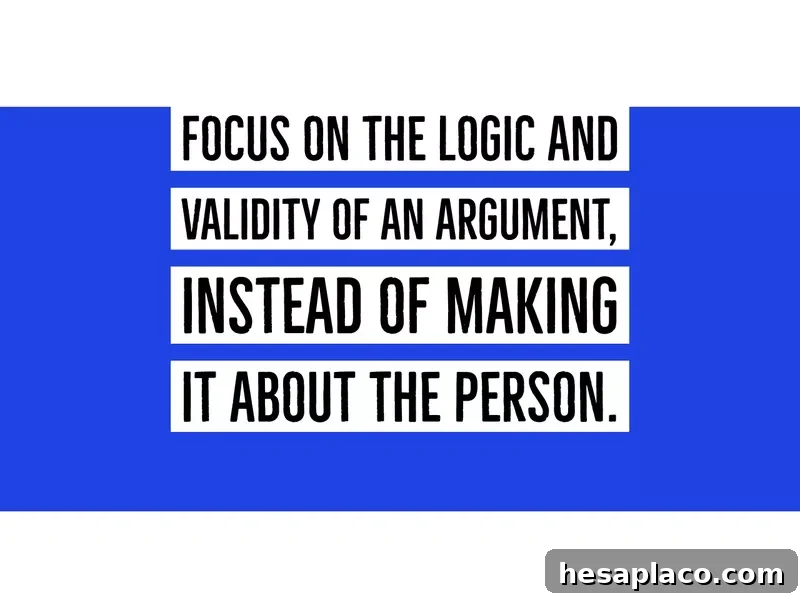
An ad hominem attack targets the person making a claim rather than addressing the claim itself. Instead of engaging with the argument’s merits, the attacker denigrates the opponent’s character, background, or personal traits.
Popular culture often highlights this behavior—friends might trade barbs about one another’s past weight or quirks during an argument rather than discussing the topic at hand. The best defense against ad hominem is to separate the person from the proposition: focus on evidence and logic, not personal insults.
Appeal to Authority

An appeal to authority treats a claim as true simply because an expert or influencer said it. In an era when celebrities and social media personalities can command huge followings, it’s easy to accept claims based on who said them rather than why they should be believed.
Experts can disagree and authorities can be mistaken. For instance, a medical personality might promote a supplement as a weight-loss solution despite weak or no strong clinical evidence. The correct approach is to evaluate the evidence itself—studies, peer review, and reproducible results—rather than relying solely on the speaker’s status.
Bandwagon Argument (Ad Populum)

The bandwagon argument assumes a proposition is true because many people believe it. Popularity is not proof. History is full of widely held beliefs later proven false—the geocentric model of the universe, for example, was accepted for centuries until evidence and better models showed otherwise.
Evaluating claims requires evidence and reasoning, not the number of adherents.
The Strawman
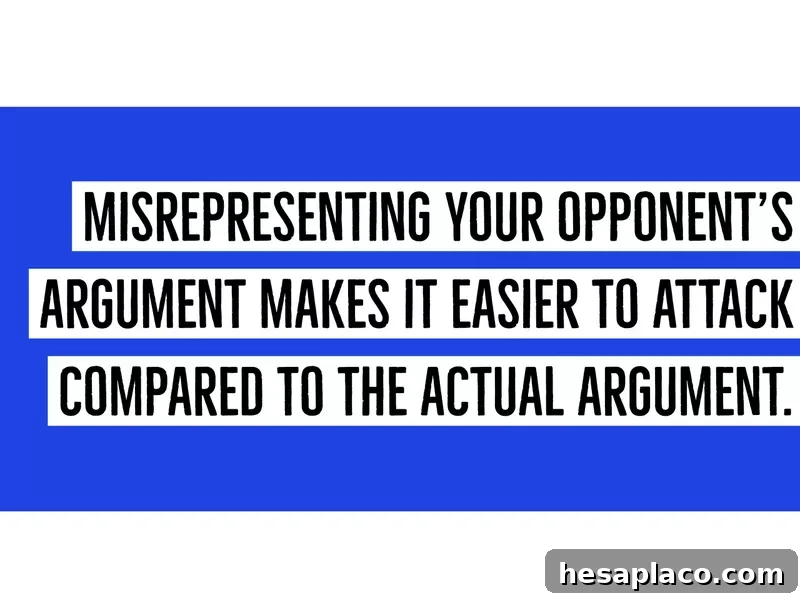
A strawman fallacy misrepresents an opponent’s position to make it easier to attack. Instead of addressing the actual argument, a person constructs a weaker or distorted version and criticizes that.
Political debates often feature strawmen, where one side frames the other’s position as more extreme or simplistic than it really is. The antidote is to clarify the actual claim and challenge that directly, asking for specific evidence or examples rather than responding to a caricature.
Circular Reasoning
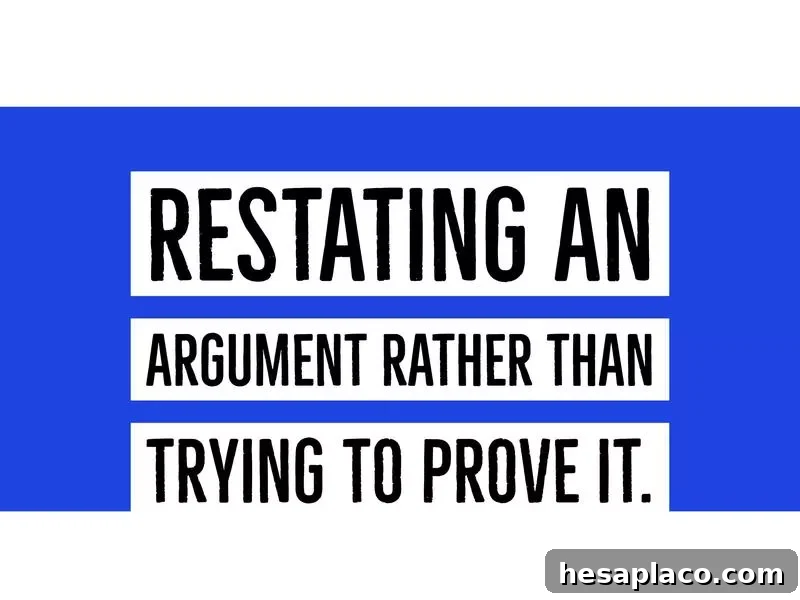
Circular reasoning occurs when the conclusion is assumed in the premises, so the argument goes in a loop without providing independent support. Examples include statements like “We must cut prison spending because too much money is being spent” or “He’s a great communicator because he gives effective speeches.”
To avoid circularity, present independent evidence or reasoning that supports the claim rather than restating it in different words.
The Genetic Fallacy
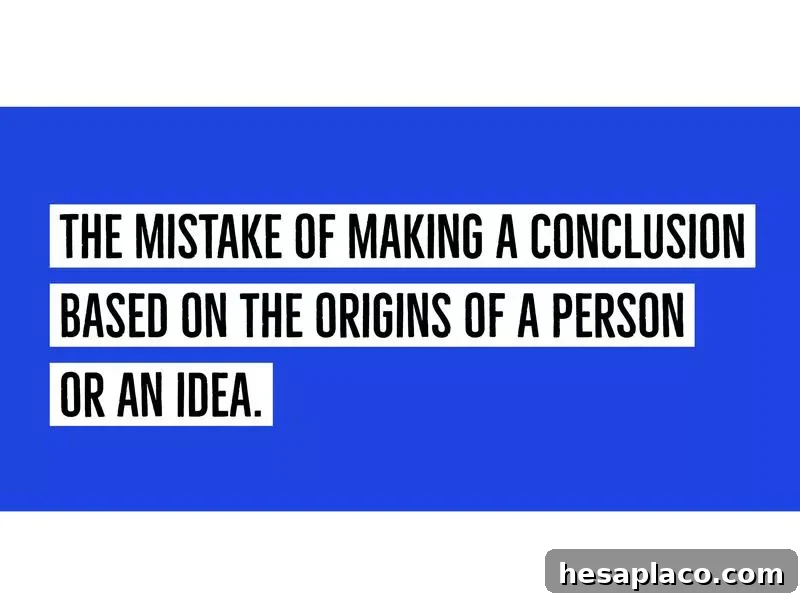
The genetic fallacy rejects or accepts an idea based solely on its origin rather than its current merits. Dismissing a teacher’s critique of public schools just because they work within the system, or assuming an overweight doctor’s advice is invalid, focuses on irrelevant background rather than the argument’s substance.
Evaluate ideas on their present evidence and reasoning unless the origin is directly relevant to the point being made.
Anecdotal Evidence
Anecdotes are vivid and persuasive because they come from personal experience, but a single story rarely serves as reliable evidence for general claims. Personal experiences can illustrate a point, but they shouldn’t replace systematic evidence.
In popular films and conversations, people often generalize from one relationship or incident to make sweeping conclusions. While anecdotes add color and emotional force, use broader data and controlled studies when making general claims.
Appeal to Emotion

Appeals to emotion rely on manipulating feelings—pity, fear, outrage—instead of presenting logical evidence. Emotional storytelling can be powerful, but it does not substitute for facts and sound reasoning.
To respond, acknowledge the emotional element but bring the conversation back to the evidence and underlying reasons for the claim.
The Slippery Slope
The slippery slope fallacy assumes that one event will inevitably lead to a chain of extreme, undesirable outcomes without demonstrating how each step follows. It relies on fear of hypothetical consequences rather than assessing the likelihood of intermediate steps.
A careful analysis checks whether the alleged chain of events is plausible and supported by evidence, rather than accepting dramatic what-ifs as proof.
Tu Quoque
Tu quoque (“you too”) deflects criticism by accusing the critic of similar faults. It’s a form of hypocrisy charge that avoids addressing the original point. For example, replying to an argument against using animals for clothing by pointing out the critic eats meat does not refute the ethical question.
Counter tu quoque by steering the discussion back to the original claim and asking for reasons and evidence relevant to it.
The Middle Ground

The middle ground fallacy assumes that a compromise between two extremes must be true simply because it lies between them. While compromise can be reasonable in negotiation, truth is not guaranteed by being moderate. Sometimes a midpoint between truth and falsehood is still false.
Assess each claim on evidence and logic rather than defaulting to compromise as a proof of validity.
The Gambler’s Fallacy
The gambler’s fallacy mistakes independent events as if they influence one another. People often believe that a run of similar outcomes changes the probability of the next independent event—like expecting tails after a long string of heads on coin flips. In reality, each independent event carries its own probability.
Recognize which events are truly independent and avoid letting perceived streaks distort your judgment of random processes.
Understanding these common fallacies helps you evaluate arguments more clearly, ask better questions, and respond to poor reasoning effectively. Focus on evidence, clarify claims, and separate emotional appeals from logical support to improve the quality of any discussion.