
Some places are built to be nearly impenetrable: reinforced vaults, armed guards, coded access systems, surveillance cameras, and restricted airspace. Each layer is intended to close off another potential entry. Yet history shows that determined thieves can study those defenses, identify weaknesses, and find a way through. These high-profile breaches span museums, banks, aircraft, and even open landscapes. Many remain unsolved for decades, and each case reveals how human error, ingenuity, or insider knowledge can defeat elaborate security systems.
Isabella Stewart Gardner Museum Robbery

Credit: Wikimedia Commons
In 1990, two men dressed as police officers gained late-night access to the Isabella Stewart Gardner Museum in Boston. Despite policies that should have prevented their entry, guards let them in. The intruders tied up the guards and spent roughly 81 minutes inside, removing thirteen works including paintings attributed to Rembrandt and Johannes Vermeer. The stolen pieces, valued at hundreds of millions of dollars, remain missing; the empty frames still hang in the museum as a haunting reminder of the unsolved crime.
Antwerp Diamond Center Break-In

Credit: Wikipedia
The Antwerp Diamond Center vault was long held up as an example of layered security—heat sensors, motion detectors, magnetic field systems, coded locks, and cameras all tied to a control room. In 2003, a group of thieves bypassed those defenses and emptied dozens of safes over the course of a weekend, in what was estimated to be about $100 million in diamonds. One person, Leonardo Notarbartolo, was later convicted, but most of the gems vanished into global markets, illustrating how valuable contraband can quickly be laundered and dispersed.
D.B. Cooper Hijacking

Credit: Wikipedia
On a routine flight in 1971, a man using the alias D.B. Cooper hijacked a Boeing 727, demanded $200,000 and four parachutes, and obtained the ransom in Seattle. After takeoff, he opened the aircraft’s rear stairs and parachuted into the night, disappearing without conclusive trace. Most of the ransom money was never recovered. The incident prompted changes in aviation security, including mandatory passenger screening and aircraft design modifications to prevent the rear stairs from being lowered in flight.
Banco Central Tunnel Operation
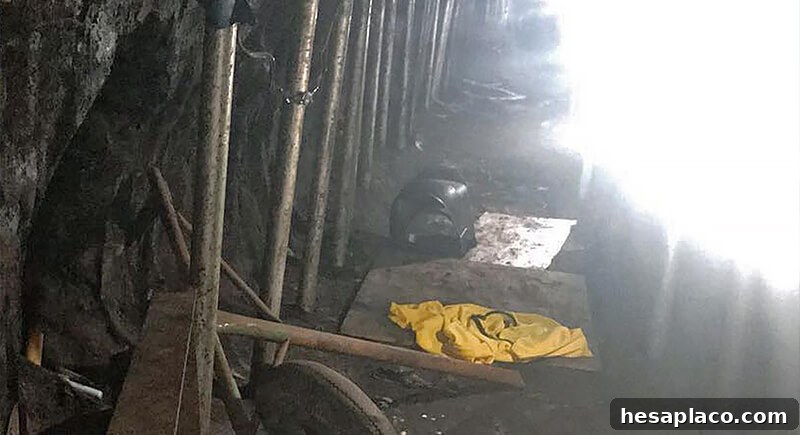
Credit: NDTV
In 2005, a team covertly rented a property near a Banco Central branch in Fortaleza, Brazil, posing as a landscaping company while they dug a tunnel roughly 256 feet long. The tunnel reached beneath the vault floor, allowing the criminals to access the bank’s cash reserves directly. Over a single weekend they removed around 3.5 tons of currency, an amount valued at roughly $70 million. Police later traced suspects through forensic evidence including chalk residue, and dozens were eventually convicted in connection with the operation.
Royal Mail Train Theft

Credit: Wikimedia Commons
In 1963, criminals exploited manual railway signaling to stop a Royal Mail train on a bridge in England. A gang of 15 men attacked the driver and unloaded bags of used banknotes in about 15 minutes. The stolen sum—approximately £2.6 million at the time—was one of the largest cash robberies in British history; adjusted for inflation, the haul would be worth tens of millions of dollars today. The audacity and precision of the operation made it one of Britain’s most notorious crimes.
Dunbar Armored Depot Inside Job

Credit: Wikimedia Commons
In 1997, $18.9 million disappeared from a Dunbar armored facility in Los Angeles in an operation planned by a former employee, Allen Pace. His insider knowledge of camera placement and security routines enabled the crew to enter during a shift change, restrain employees, and remove the cash. While most of the money was eventually recovered and several participants were prosecuted, the heist remains one of the largest and most brazen U.S. armored-car robberies on record.
Brink’s-Mat Gold Warehouse Robbery

Credit: Wikipedia
In 1983, thieves broke into a warehouse near London’s Heathrow Airport expecting cash but instead discovered gold bullion worth over £26 million. The gang melted the bars and laundered the metal through criminal networks; profits were tied to drug operations, property purchases, and other illicit activities. British authorities spent decades investigating the complex web of transactions stemming from the theft, which spurred closer scrutiny of gold trading and vault security.
Harry Winston Jewelry Store Raid

Credit: Harry Winston
In 2008, a group of men disguised as women entered a Harry Winston jewelry boutique in Paris. Using insider information—staff names and knowledge of security blind spots—they moved quickly through display cases and backroom safes, escaping with an estimated $100 million in jewels. Authorities later recovered some items, but many pieces have never been found, underscoring how professional planning and inside knowledge can defeat even well-protected retail security.
The Stealing of the Mona Lisa

Credit: Wikimedia Commons
In 1911, a Louvre employee hid inside the museum overnight and walked out with Leonardo da Vinci’s Mona Lisa the next morning, concealing the painting under his coat. He kept it hidden for two years before being caught. The dramatic theft made the painting an international sensation and revealed that even world-famous art pieces were once protected less rigorously than they are today. The incident led to improvements in museum security and changed how museums safeguard high-value works.
Jamaican Sand Theft

Credit: NPR
In 2008, thieves removed roughly 500 truckloads of white sand from a Jamaican beach overnight, using heavy equipment to haul away a natural resource rather than valuables or cash. The sand was never recovered. The theft stands out as one of the more unusual unsolved crimes and highlights that theft can target environmental assets as readily as artworks or money. It also raised awareness of the vulnerable nature of coastal resources and the need for monitoring and legal protections.
Together, these incidents demonstrate that no security system is infallible. Whether exploiting procedural lapses, using insider knowledge, or applying careful planning, criminals have repeatedly shown they can breach sophisticated defenses. Each case prompted reforms—tighter museum protocols, improved banking security, aviation safeguards, and enhanced forensic methods—though some treasures and answers remain lost to time.