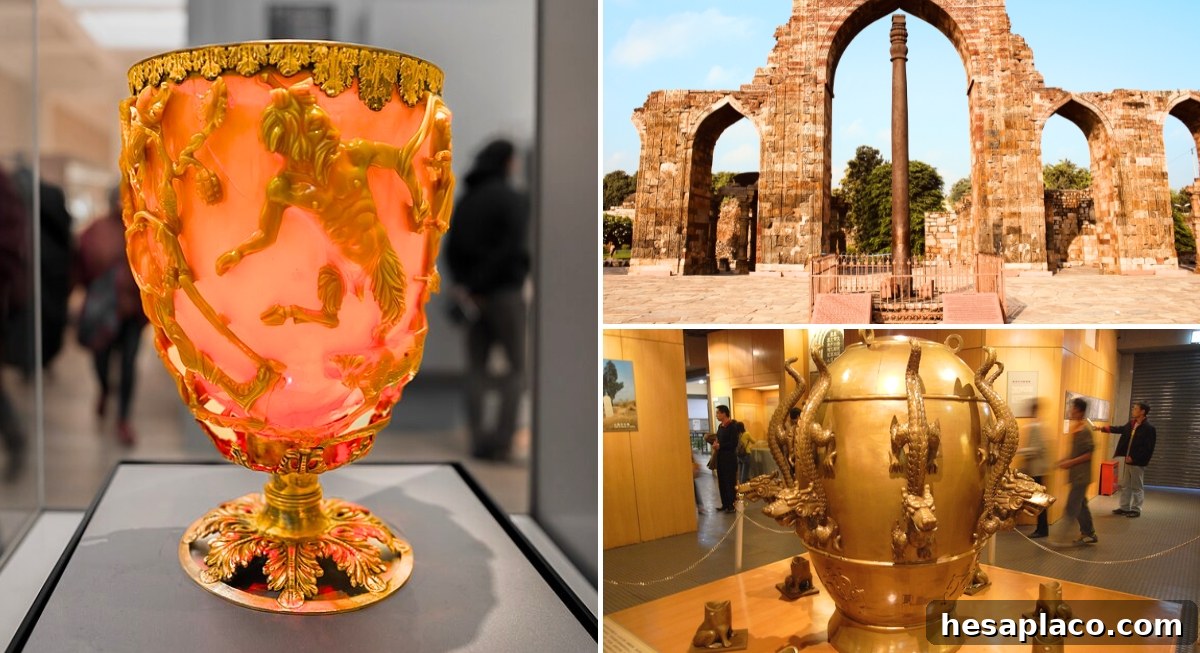
We can split atoms, sequence entire genomes, and send vehicles into deep space. Yet some ancient technologies—crafted centuries or millennia ago—remain difficult to reproduce or fully explain. These items may look simple at first glance, but they reveal extraordinary skills and knowledge. Many are preserved in museums, still stand in cities, or persist as enigmas researchers continue to study. Below are ten remarkable ancient inventions and feats that modern science and craftsmanship have only partially recreated or understood.
Greek Fire

Credit: Wikipedia
Greek fire was the Byzantine Empire’s secret weapon and a decisive naval technology from the 7th century onward. It burned even on water, adhered to timber and skin, and was notoriously difficult to extinguish with ordinary methods. Deployed through bronze siphons on war galleys, it provided Byzantium with a potent defensive advantage. When Constantinople fell in 1453, the recipe for Greek fire was lost. Historical texts offer hints about ingredients and delivery systems, and modern experiments have produced mixtures that exhibit similar properties, but the original formula and production techniques remain uncertain.
Roman Concrete
Credit: Wikimedia Commons
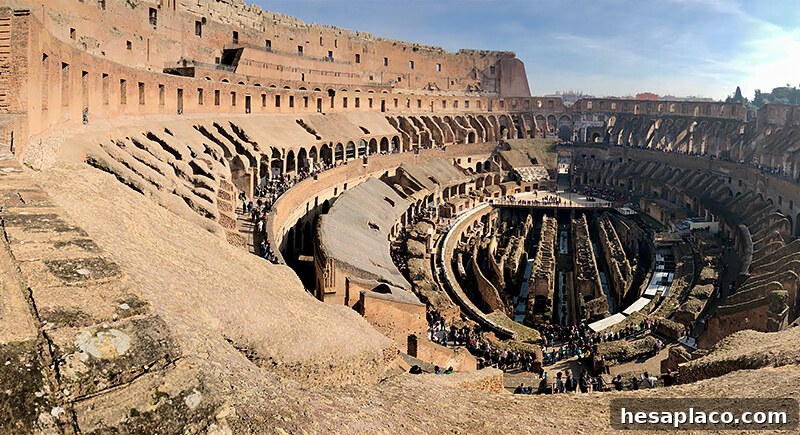
Some Roman harbor piers and breakwaters have endured for nearly two millennia, while many modern concrete structures deteriorate within decades. Studies by MIT, Harvard, and other institutions found that Roman builders combined volcanic ash (pozzolana) with lime and seawater-reactive aggregates to form a chemically active matrix. This matrix can produce new minerals over time, helping seal cracks and strengthen structures. Laboratory teams have reproduced the self-healing reactions on a small scale, but adapting those methods consistently and economically for large-scale modern construction remains uncommon.
The Lycurgus Cup
Credit: Youtube
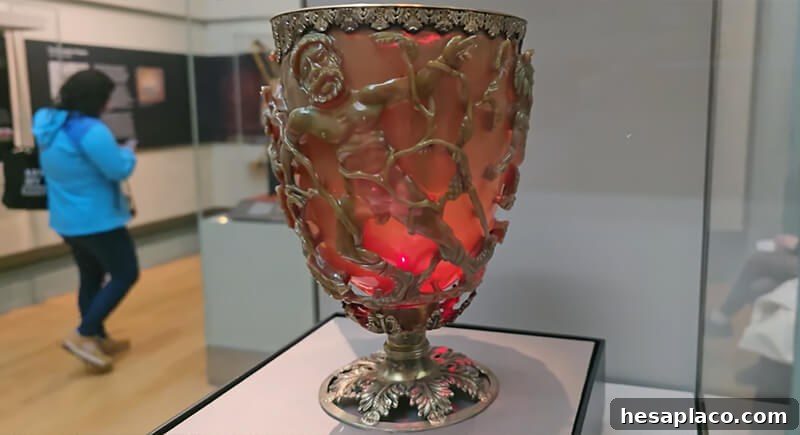
The Lycurgus Cup, a 4th-century Roman glass object, appears green in reflected light but glows deep red when light passes through it. Modern analysis revealed microscopic gold and silver nanoparticles embedded in the glass, which change absorption and scattering of light depending on illumination. Scientists have replicated the optical effect through sophisticated nanoparticle fabrication in laboratories, but how Roman glassmakers consistently produced such a finely controlled dispersion of metal particles by hand is astonishing and still provokes curiosity.
The Antikythera Mechanism
Credit: Wikimedia Commons
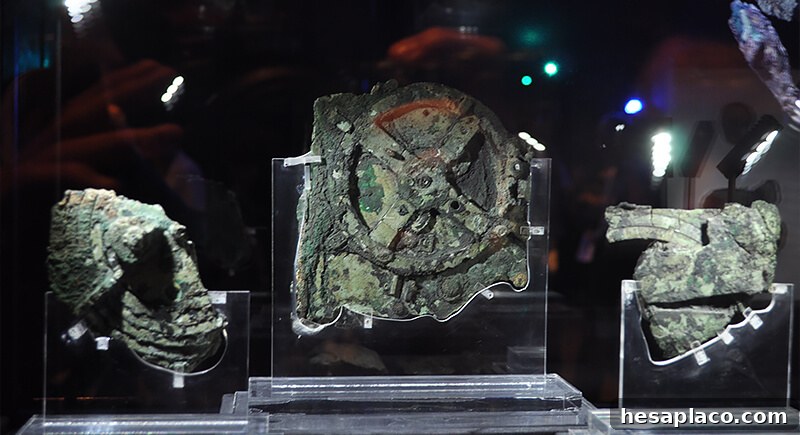
Recovered from a 2,000-year-old shipwreck in 1901, the Antikythera Mechanism looked like a corroded lump until X-rays and detailed study revealed a complex set of interlocking bronze gears. This hand-cranked device predicted solar and lunar eclipses, tracked planetary cycles, and could compute athletic festival dates. In 2021, researchers at University College London produced an advanced digital reconstruction of its gear trains. Though modern reconstructions demonstrate the device’s astonishing sophistication, the exact manufacturing methods, tolerances, and workshop processes used by ancient Greek artisans remain subjects of active research and debate.
Inca Polygonal Masonry

Credit: Wikimedia Commons
The massive stone walls of Sacsayhuamán near Cusco feature irregularly-shaped blocks, some weighing multiple tons, fitted together with millimeter precision and no mortar. These interlocking walls have survived major earthquakes that damaged nearby colonial structures. Archaeologists have suggested various techniques—from careful dressing and abrasion to trial-and-error fitting—but the precise combination of tools, transport methods, and construction sequencing the Inca used is still not fully agreed upon. While modern teams have reproduced similar joints using contemporary tools, the original logistics and skill remain impressive.
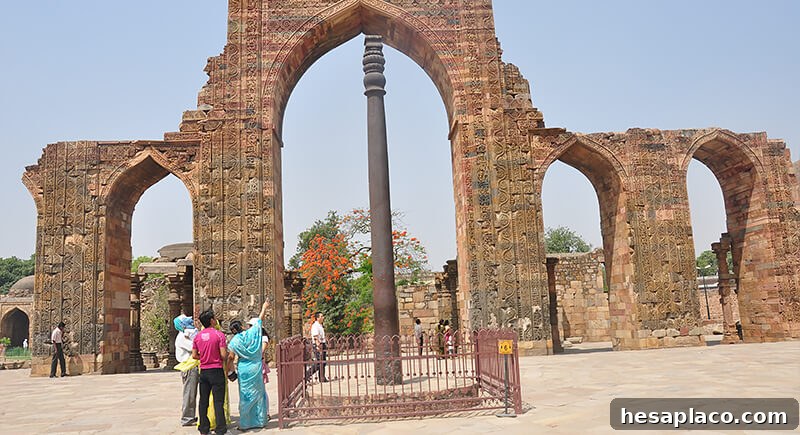
The Iron Pillar of Delhi
Credit: Wikimedia Commons
Standing in open air since roughly the 5th century CE, the six-ton Iron Pillar of Delhi exhibits remarkable resistance to rust. Modern iron structures often corrode quickly under milder conditions. Researchers at IIT Kanpur and other institutions found the pillar’s iron contains relatively high phosphorus and minimal sulfur and slag; historical forge-welding techniques appear to have driven phosphorus to the surface, forming a thin, protective crystalline film. Recreating the exact metallurgical conditions and workmanship is possible in controlled experiments, but the combination of metallurgical knowledge and long-term environmental stability embodied by the pillar continues to interest materials scientists.
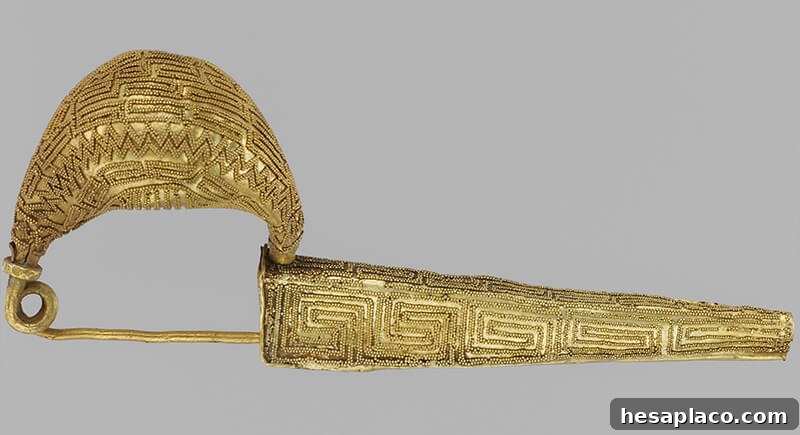
Etruscan Gold Granulation
Credit: Wikimedia Commons
Around 700 BCE, goldsmiths in Etruria perfected granulation: arranging thousands of tiny gold spheres—many under a millimeter across—into intricate, durable patterns on jewelry. Modern researchers understand several possible methods for attaching such minute spheres without melting or distorting them, including diffusion bonding and the use of copper compounds that form eutectic alloys at relatively low temperatures. While artisans today can reproduce granulation with careful technique, the original empirical mastery exhibited by Etruscan workshops is notable for its consistency and artistry.
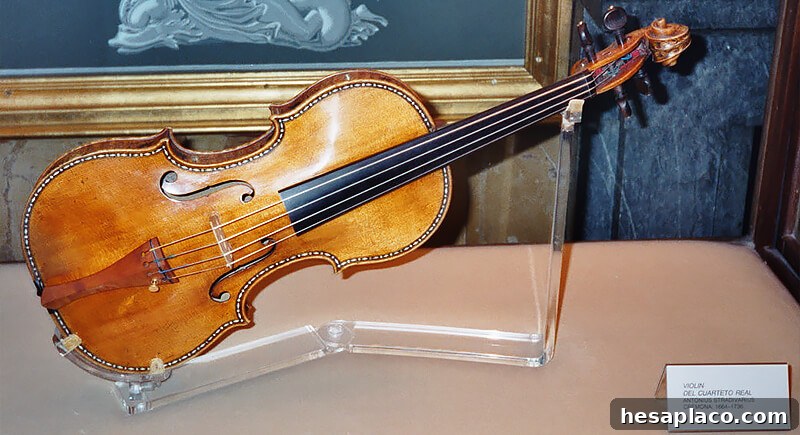
Stradivarius Violins
Credit: Wikimedia Commons
Antonio Stradivari crafted roughly 1,100 instruments between the late 17th and early 18th centuries. The perceived superiority of Stradivarius violins—long a topic of reverence—has been examined by blind listening tests and acoustic studies. Some controlled experiments found that professional players and audiences often could not reliably distinguish a Stradivarius from a high-quality modern instrument, and many listeners preferred modern violins. Nevertheless, the combination of materials, varnish, age-related changes, and Stradivari’s craftsmanship continues to inspire luthiers and scientists who study tone production, wood treatment, and historical workshop methods.
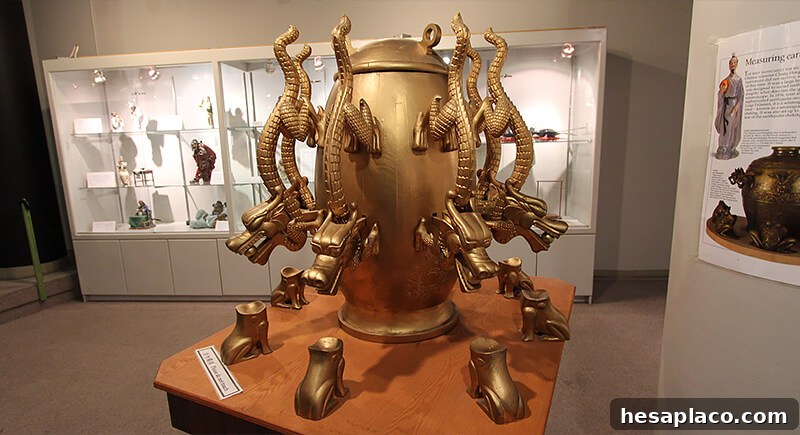
Zhang Heng’s Seismoscope
Credit: Wikimedia Commons
In 132 CE, Chinese polymath Zhang Heng presented an instrument to the Han court: a large bronze vessel encircled by eight dragon heads, each gripping a ball above a toad. When distant earthquakes occurred, a ball would drop into a toad’s mouth, indicating the quake’s direction. This is regarded as the first seismoscope. Modern replicas built by seismologists have demonstrated working directional detection mechanisms based on similar mechanical ideas, but details about the original’s sensitivity, internal design, and operating principles remain inferred from historical descriptions rather than surviving complete hardware.
Nan Madol
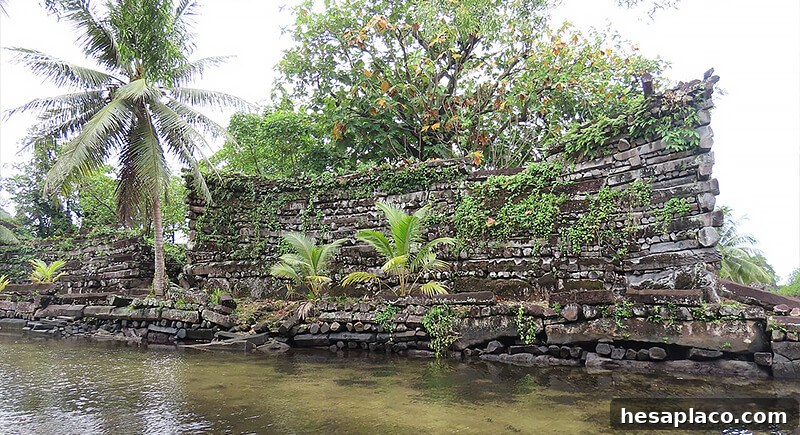
Credit: Wikimedia Commons
Off the eastern shore of Pohnpei, Nan Madol is a sprawling ancient city made of nearly 100 artificial islets formed with massive basalt columns. Builders moved and stacked an estimated half a million metric tons of stone without iron tools, cranes, or pulleys, placing multi-ton columns across water to build ceremonial and administrative complexes. The engineering logistics—transport, flotation, alignment, and construction sequencing—are still debated. Various hypotheses propose the use of rafts, levers, coordinated labor, and ingenious local techniques, but a definitive explanation for how such a scale of stonework was accomplished remains a compelling archaeological problem.
These ten examples illustrate that ancient societies possessed specialized knowledge and practical skills often overlooked by modern assumptions. While scientists and craftspeople have replicated many of the effects and principles involved, the original production methods, workshop practices, and cultural contexts frequently remain only partially reconstructed. That continuing gap between what we can reproduce in laboratories and workshops and the subtleties preserved in these artifacts is part of what makes ancient technology so fascinating.