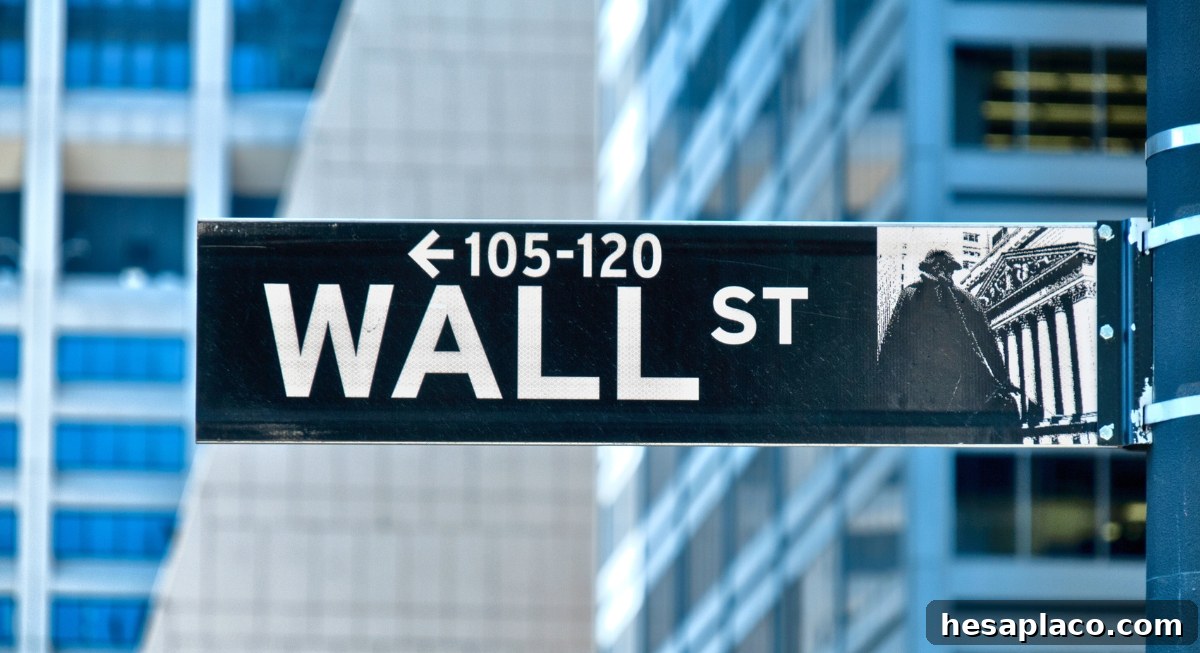
You’ve likely heard the name “Wall Street” many times—in news reports, films, or discussions about the economy. It has long stood as shorthand for American finance and, by extension, global markets. Yet the name traces back to a very literal wall that once crossed lower Manhattan long before banks and stockbrokers came to define the area.
That wall was a defensive barrier built in the 17th century. Although it never fulfilled its intended military purpose, the memory of the structure endured and eventually gave its name to one of the world’s most recognizable streets.
The Dutch Built a Defensive Barrier
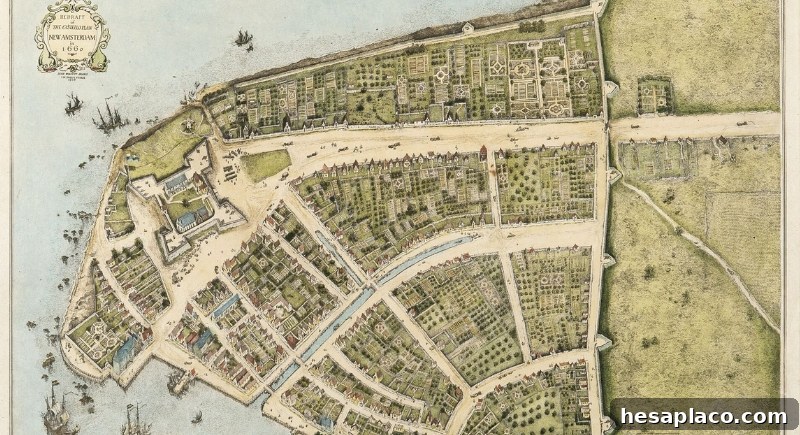
Image via Wikimedia Commons/New-York Historical Society Library, Maps Collection
In 1653, Peter Stuyvesant, governor of the Dutch colony of New Amsterdam, ordered construction of a barrier across the northern edge of the settlement. The aim was to protect the colony from English encroachment to the north and from potential alliances between rival colonists and Native groups. Wealthier residents financed the project, while enslaved Africans provided most of the labor that built the structure.
The wall ran roughly along the line of today’s Wall Street, standing about 12 to 15 feet high and reinforced with earth and stone. Timber for the structure came from merchants including an English trader named Thomas Baxter, who later switched allegiances and took part in raids on Dutch shipping—an ironic twist in the wall’s story.
The Wall Never Faced the Battle It Was Built For
Equipped with brass cannon and gates at important thoroughfares such as Broadway and Pearl Street, the barrier looked formidable. Yet it was never truly tested in open battle. In 1664, the English took control of New Amsterdam and renamed it New York without a direct assault on the wall itself.
By the close of the 17th century the wall had outlived its usefulness. In 1699 colonial authorities ordered it demolished. Some of the reclaimed wood and stone were repurposed in local construction, including a new City Hall, but the name “Wall Street” persisted in mapping and common usage.
How the Name of the Street Came to Be
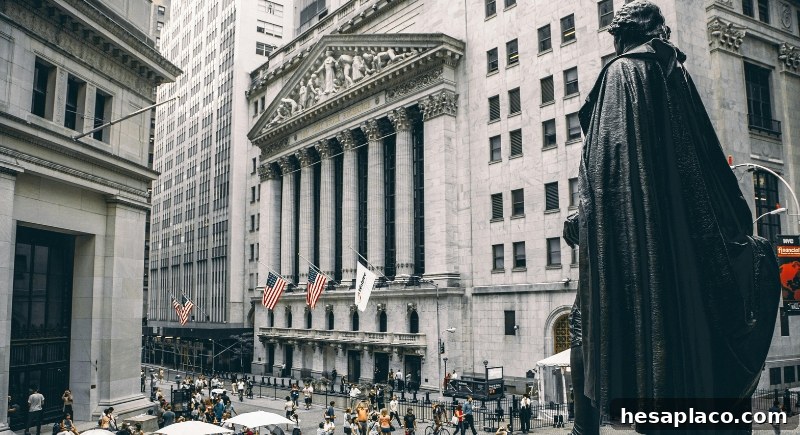
Image via Pexels/Дмитрий Трепольский
Early Dutch records show the area under different names. Some documents call it the “Cingel,” a Dutch term meaning an encircling or boundary street. Other sources refer to “De Waal Straat,” possibly honoring Walloon settlers—French-speaking Belgians who lived in the colony. Over time, English-speaking residents simplified the name to the straightforward “Wall Street,” and that name stuck.
Wall Street Became a Market Center
During the 18th century, Wall Street shifted from a defensive boundary into a center of commerce. Vendors and markets lined the street, and in 1711 municipal authorities authorized an official slave market at the eastern end of Wall Street. That market operated until 1762 and tied the area’s commercial life to the institution of slavery.
Important institutions also settled along or near Wall Street. City Hall and Trinity Church served civic and spiritual needs, and the site later became home to Federal Hall. It was at Federal Hall in 1789 that George Washington took the oath of office as the first president of the United States.
Traders Signed the Buttonwood Agreement

Image via Canva/kanchanachitkhamma
After the American Revolution, merchants and brokers regularly met beneath a buttonwood tree near Wall Street to conduct business. On May 17, 1792, twenty-four of these traders signed the Buttonwood Agreement, which established rules and procedures for trading securities. That compact laid the groundwork for the organization that evolved into the New York Stock Exchange.
With the growth of organized securities trading, banks, brokerage houses, and financial institutions increasingly congregated in the area. Over the following decades Wall Street transformed from a local commercial center into the symbolic heart of American finance, a place whose name now evokes markets, capital flows, and global economic influence.
Today, the name “Wall Street” carries layered meanings: a literal reference to a vanished defensive wall, a reminder of early colonial and commercial history, and a shorthand for the financial systems that developed on and around that street. Its origins are a reminder that modern institutions often arise from ordinary, even humble, beginnings—and that historical context can change how we understand the places we take for granted.