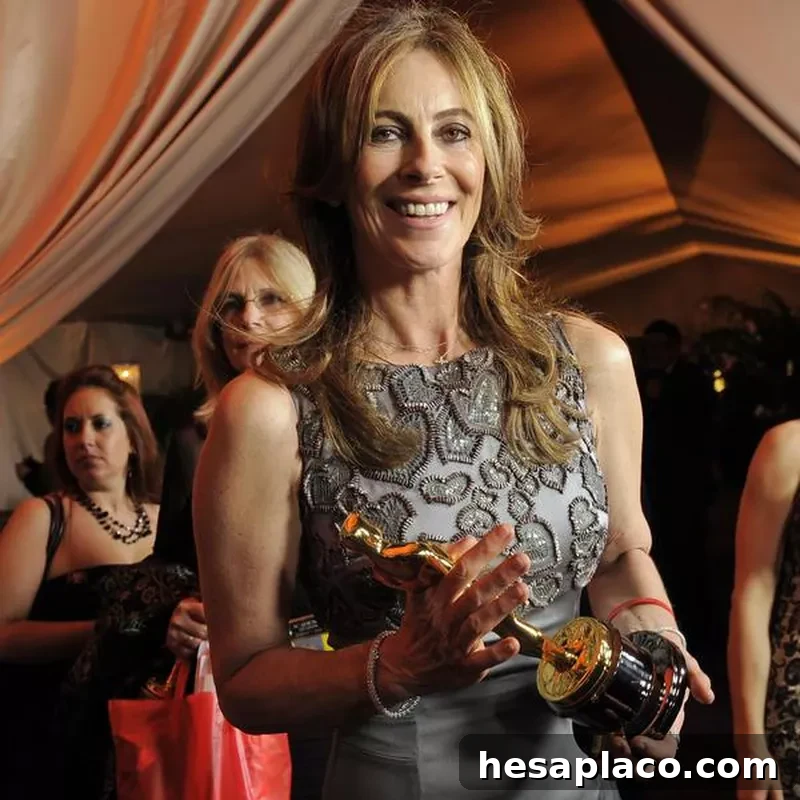
If there’s one thing you can say about Kathryn Bigelow, it’s that she does not back down.
The accomplished filmmaker is the first — and, to date, the only — woman to win the Academy Award for Best Director for The Hurt Locker (2008). She consistently makes bold choices in her projects (Zero Dark Thirty, Detroit) and demonstrates a strong visual sensibility established early in films like Near Dark and Strange Days.
When people discuss Bigelow, conversation often centers on controversies tied to some of her films or on projects that didn’t perform as well with critics. Fiercely independent in both life and work, she is not the typical public figure, even though she describes herself as shy.
Born and raised in Northern California, Bigelow gravitates toward traditionally masculine genres and themes, a stance that has exposed her to considerable criticism — sometimes warranted, sometimes misplaced. There is little middle ground in public perception of her: she is both private and enigmatic, widely admired, and routinely a lightning rod for debate. Her films provide most of the clues about who she is.
Growing Up Fast
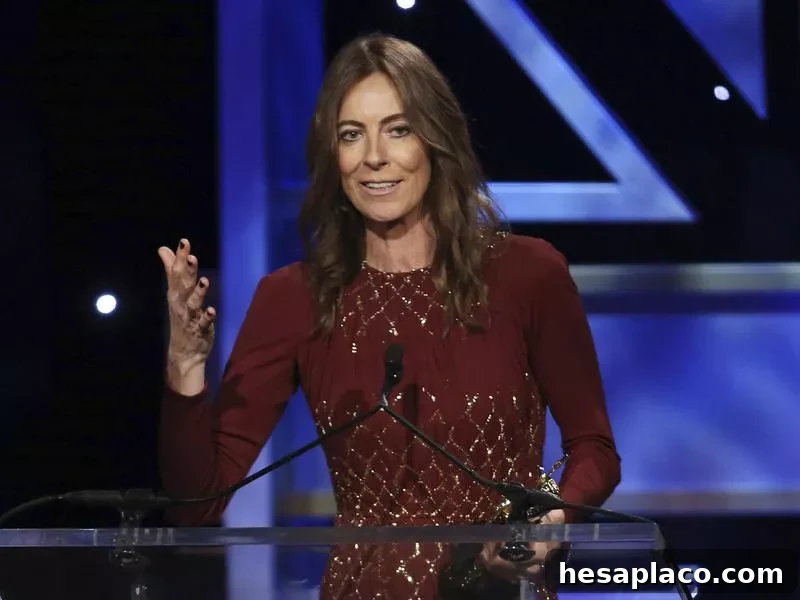
Bigelow accepts the John Schlesinger Britannia Award for Excellence in Directing during the 2013 BAFTA Los Angeles Britannia Awards in Beverly Hills, Calif. Matt Sayles / Invision/AP
Kathryn Bigelow was born on November 27, 1951, in San Carlos, California, the only child of Gertrude and Ronald Bigelow. She has said her parents raised her with an unusually high degree of independence, allowing her to make her own choices from a young age — a freedom she credits with fostering her sense of self-reliance.
Her parents were creative in different ways: her mother, a Stanford graduate, worked as an English teacher and librarian, while her father managed a paint factory and drew cartoons. Bigelow has recalled that her father’s unrealized dream of becoming a cartoonist influenced her interest in art.
She began her formal art education at the San Francisco Art Institute in the late 1960s and later moved to New York on a Whitney Museum fellowship. That path led her to Columbia University, where she discovered her calling as a filmmaker.
Exposed to Brilliance
During her Whitney fellowship in New York, Bigelow studied with notable figures in the arts, including Susan Sontag, Richard Serra, and Robert Rauschenberg. She befriended composer Philip Glass and worked for performance artist Vito Acconci, experiences that helped her transition into filmmaking.
At Columbia, where Milos Forman served as co-chairman of the film division, she made a 20-minute master’s thesis short called Set-Up (1978), which is now in the Museum of Modern Art’s cinema library. The film examines cinematic violence, pairing staged physical aggression with voiceover commentary from prominent semioticians, and foreshadows the thematic concerns that would recur throughout her career.
This Is a Man’s World
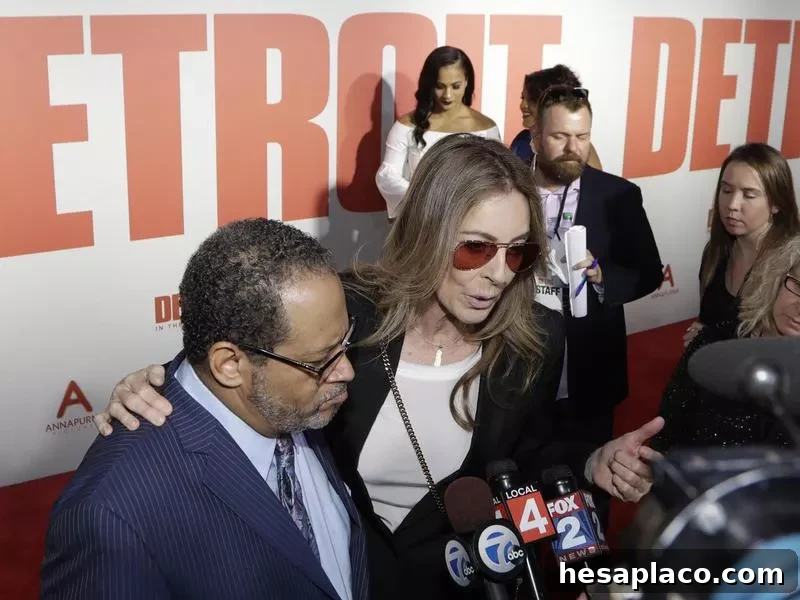
Bigelow and Michael Eric Dyson are interviewed on the red carpet before the premiere of Detroit at the Fox Theatre on July 25, 2017. Carlos Osorio / AP Photo
When Bigelow made her first feature, The Loveless, which premiered in the U.S. in 1982, she entered a film industry overwhelmingly dominated by men. Between 1939 and 1979, out of more than 7,000 studio feature films, only a tiny fraction were directed by women. Bigelow was part of a small cohort of women making feature films at the time, and the industry’s entrenched gender assumptions shaped the offers she received after that debut.
Although The Loveless earned critical praise and launched Willem Dafoe’s career, the scripts Hollywood sent her afterward often reflected stereotyped thinking — lighter, teen-focused material that didn’t align with her dark, postmodern sensibilities. Rather than accept pigeonholing, she took a teaching position at California Institute of the Arts, delaying her return to feature filmmaking.
Bigelow Is Born
Bigelow returned with Near Dark (1987), a vampire-Western hybrid that has since become a cult classic. Released during a revival of vampire films, Near Dark stood apart by blending action, western, and horror elements into a visually striking and morally complex picture. Notably, the word “vampire” is never used; the film relies on atmosphere, character, and genre fusion — an approach that would come to define much of her work.
More Movies and a Brief Marriage
Between 1989 and 1991, Bigelow released two more notable films: Blue Steel and Point Break. Blue Steel, which she wrote, centers on a rookie NYPD officer played by Jamie Lee Curtis who becomes entangled with a dangerous admirer. Point Break, now a cult favorite, follows an undercover FBI agent (Keanu Reeves) who infiltrates a surfer gang of bank robbers led by Patrick Swayze. Both films emphasize action and suspense while exploring themes of identity, risk, and obsession.
Kathryn and James
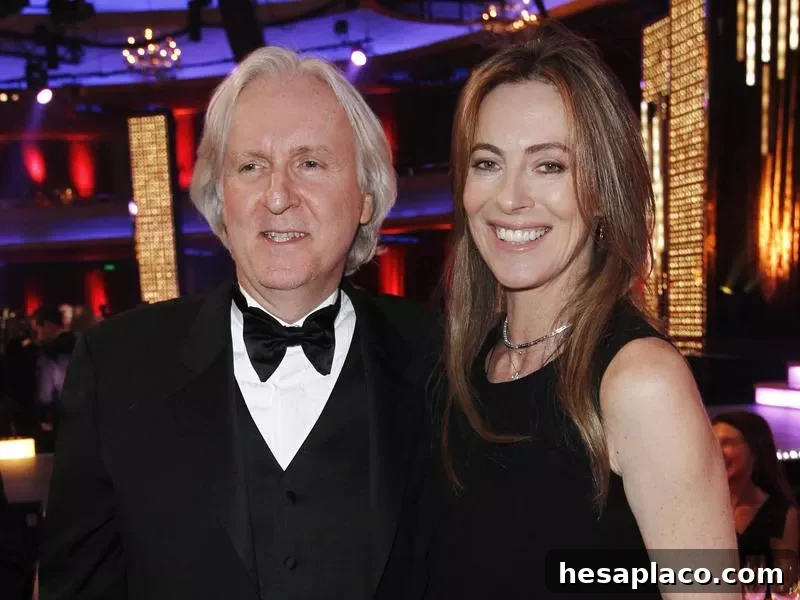
Bigelow poses with her former husband James Cameron at the 15th Annual Critics Choice Movie Awards in 2010 in Los Angeles. Matt Sayles / AP Photo
Bigelow married fellow director James Cameron in 1989; they divorced two years later. The relationship has sometimes been framed in public discussion as though she benefited from his prominence, a characterization that understates her accomplishments and agency. They have remained on friendly terms.
Her next feature, Strange Days (1995), was written by Cameron years earlier but found new resonance in Bigelow’s hands after the early 1990s riots in Los Angeles. The sci-fi noir examines voyeurism, power, and social tensions and demonstrated her willingness to tackle difficult, provocative material.
Breaking Through
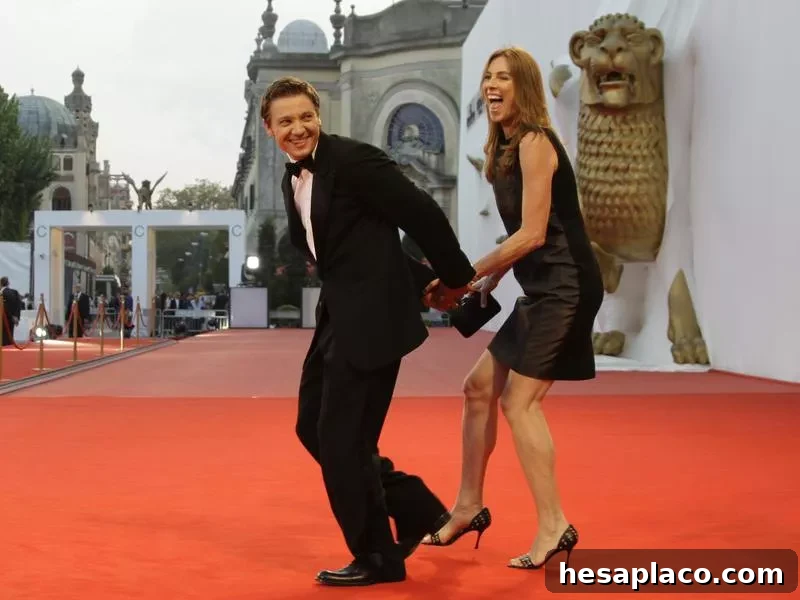
Actor Jeremy Renner and Bigelow arrive for the screening of The Hurt Locker at the 65th Venice Film Festival in 2008. Joel Ryan / AP Photo
After a couple of uneven releases in the early 2000s, Bigelow reemerged with The Hurt Locker (2009), a gritty, tense drama about U.S. Army bomb technicians in Iraq. The screenplay, written by Mark Boal, and Bigelow’s direction combined to create a film praised for its authenticity, visual energy, and psychological depth. She chose relatively unknown actors to heighten the film’s suspense and avoid the audience’s assumptions about star personas.
The Hurt Locker was filmed largely in Jordan, and production placed the cast and crew near real Iraqi refugee camps, which added an extra dimension of realism. Bigelow deliberately preserved the film’s independent spirit, retaining creative control and final cut while shooting on location and casting emerging actors.
Shattering the Glass
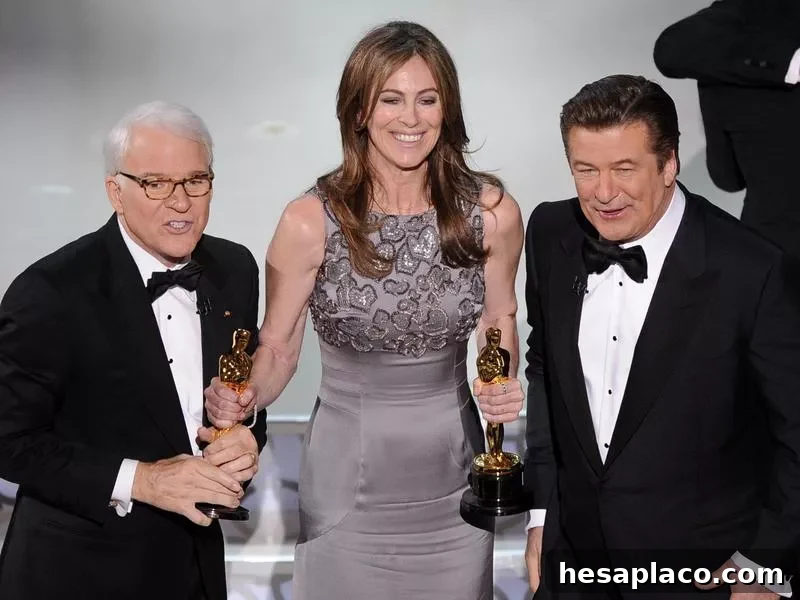
Bigelow holds her Oscars for best motion picture and best achievement in directing for The Hurt Locker with hosts Alec Baldwin and Steve Martin at the 82nd Academy Awards in 2010. Mark J. Terrill / AP Photo
The Hurt Locker earned nine Academy Award nominations and won six, including Best Picture and Best Director, making Bigelow the first woman to win the Oscar for directing. The film also won multiple BAFTAs and the Directors Guild of America’s top prize — another milestone for a woman director. Her Best Director win was especially notable because it came in the same year her former husband, James Cameron, was nominated for Avatar.
Living Legend
The success of The Hurt Locker catapulted Bigelow into the spotlight in ways she had not experienced before. Time magazine named her one of the 100 most influential people in the world the same year, and critics praised her willingness to probe difficult subjects with unflinching clarity. While acclaim brought heightened attention, it also intensified scrutiny of her choices and the themes she explored.
Under a Microscope
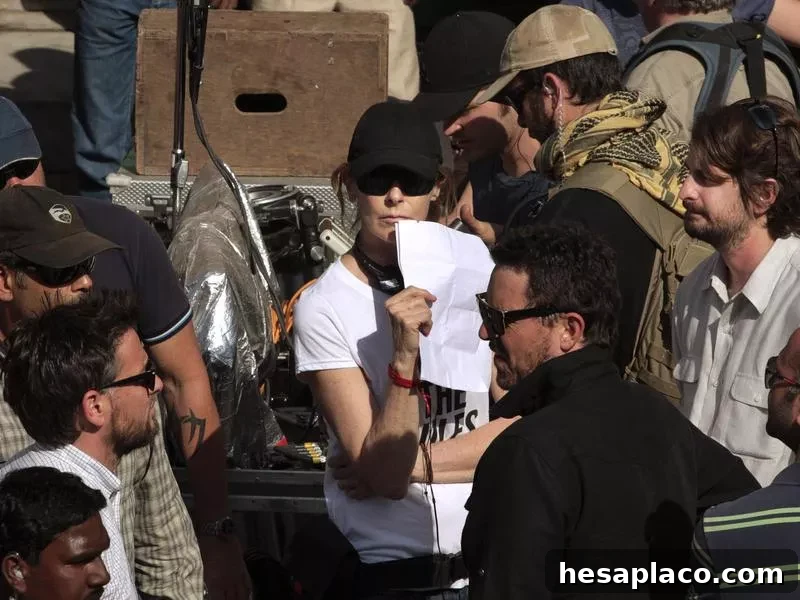
Bigelow stands on the set during shooting for Zero Dark Thirty about Osama bin Laden in Chandigarh, India, in March 2012. Anil Dayal / AP Photo
In 2012, Bigelow reunited with screenwriter Mark Boal for Zero Dark Thirty, a dramatization of the decade-long effort to find and capture Osama bin Laden. The film was widely praised and commercially successful, but it also ignited intense debate over its depiction of CIA interrogation techniques, including whether it underplays or implicitly endorses torture. Critics questioned the film’s treatment of waterboarding and other practices, and some called for greater transparency about the facts behind such interrogations. Bigelow responded by noting the film’s commitment to portraying ambiguity where the real-world record is ambiguous, and she urged a public conversation about transparency in government.
Keeping Her Private Life Private
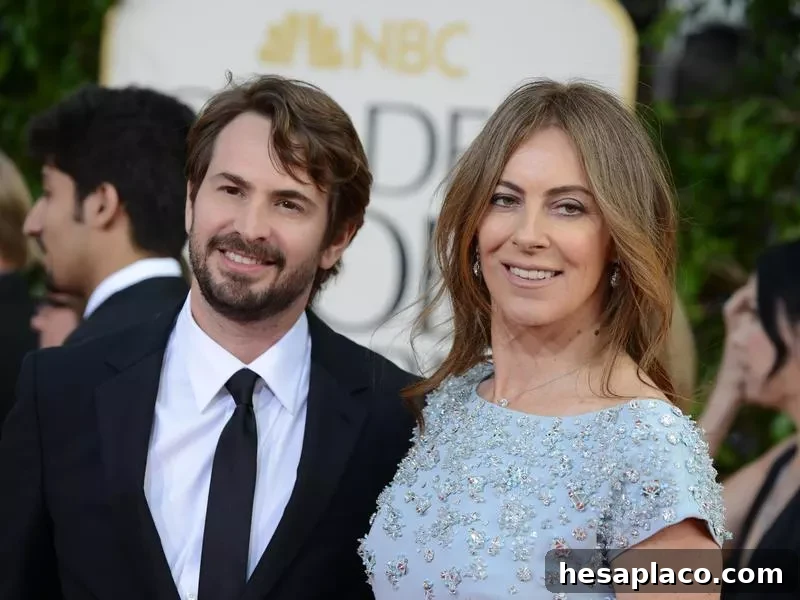
Bigelow and Mark Boal arrive at the 70th Annual Golden Globe Awards in 2013 in Beverly Hills, Calif. Jordan Strauss / Invision/AP
Bigelow maintains a deliberately private profile: no social media presence and no official personal website. She does not have children, and she continues to pursue painting and the visual arts alongside filmmaking. She chooses projects carefully, sometimes waiting many years between films, and keeps her personal life largely out of the public eye.
Another Bold Choice
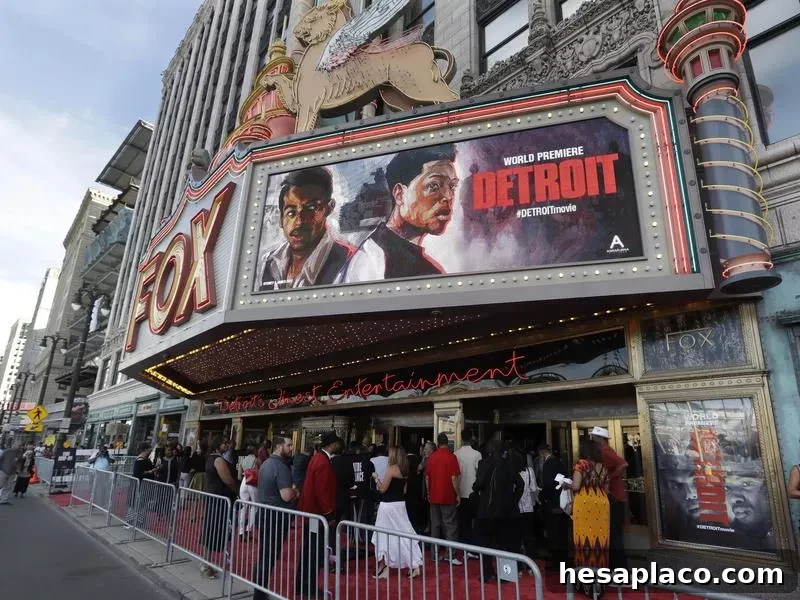
Moviegoers arrive at the Fox Theatre in Detroit for the premiere of the 2017 film Detroit, about the rioting and unrest of the summer of 1967. AP Photo/Carlos Osorio
In 2017 Bigelow released Detroit, a film that revisits the Algiers Motel incident during the 1967 Detroit riots. The film was praised for its unflinching depiction of a racially charged event and for bringing attention to a painful chapter of American history, but it also sparked controversy. Some critics argued that a white director should not helm a film focusing on Black suffering; others countered that the film’s relevance to current conversations about race made it vital viewing. Bigelow maintained that telling the story and getting it into the public conversation was the most important goal.
Fighting Back
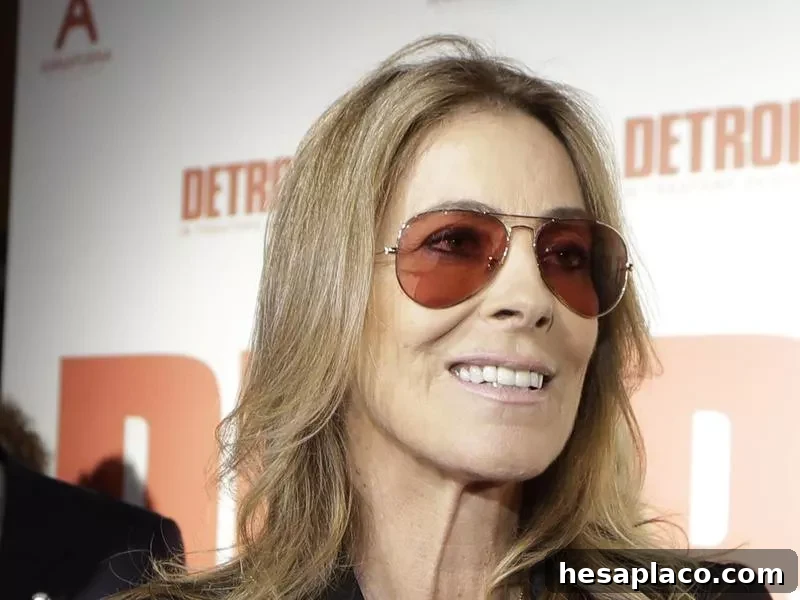
Bigelow on the red carpet before the premiere of Detroit at the Fox Theatre. Carlos Osorio / AP Photo
Controversy and criticism have followed Bigelow throughout her career, from debates about representation and perspective to questions about how history and violence are portrayed. She has shown a consistent willingness to tackle difficult subjects and to accept the intense scrutiny that comes with doing so. For many, that persistence and the quality of her work define her legacy: a filmmaker who takes risks, refuses easy answers, and continues to shape the conversation about film, power, and morality.