
America has a serious debt challenge. The national debt now exceeds $27 trillion, and for the first time since World War II the nation’s debt is larger than its entire economy.
Debt isn’t a new phenomenon for the United States — the country began with debt. In 1790, the nation’s debt-to-GDP ratio was roughly 30 percent. For many Americans, debt has been a persistent part of economic life.
Debt can be hard to grasp in abstract numbers. The charts, maps and graphics below make that scale easier to understand, from the $27 trillion national debt to the debts carried by households, corporations and states.
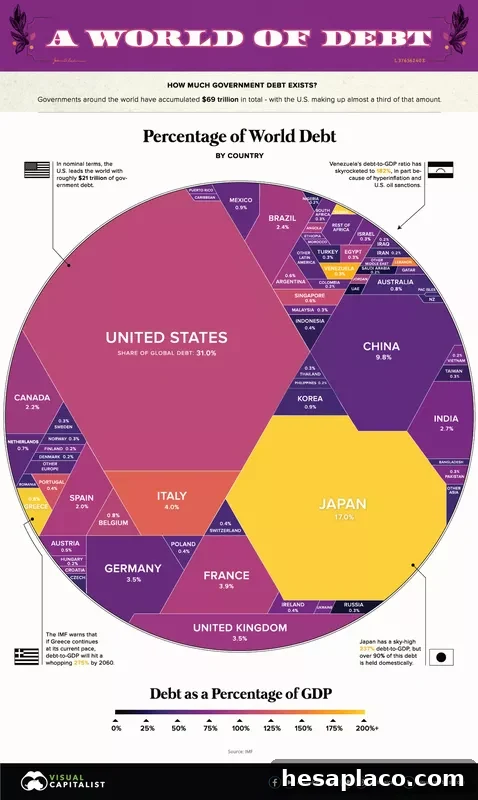
Percentage of World Debt by Country
Visual Capitalist
The United States holds more than one-third of the world’s $69 trillion in sovereign and government debt. That share has only increased since the source data, which used 2018 figures. U.S. federal debt has risen past $27 trillion and continues to grow.
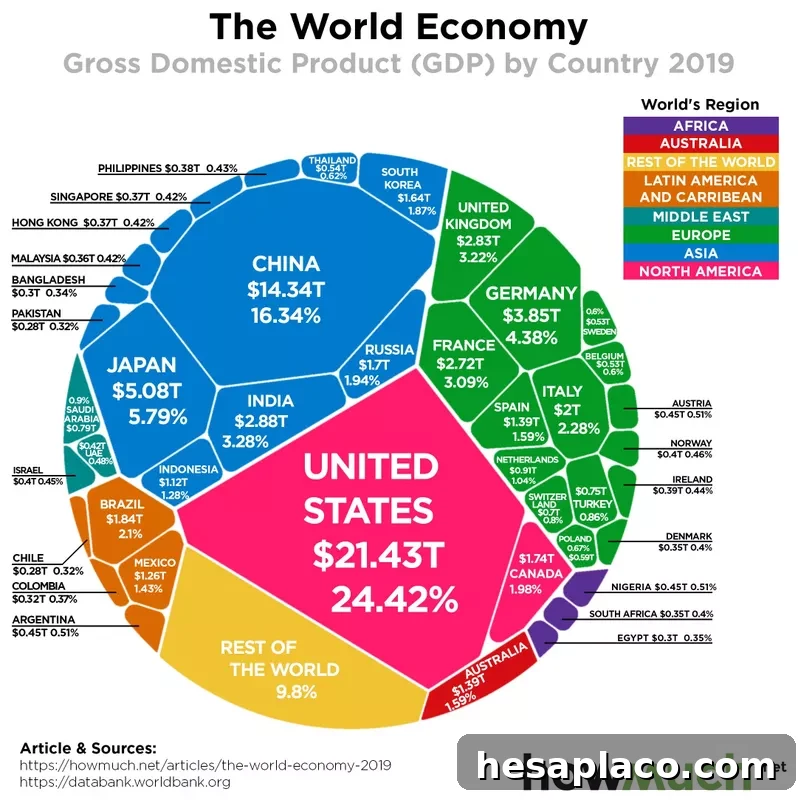
GDP by Country: The World’s Biggest Players
Howmuch.net
For perspective, this graphic shows each country’s GDP by relative size. The United States accounts for about one-quarter of global GDP, followed by China, Japan, Germany, India and the United Kingdom.
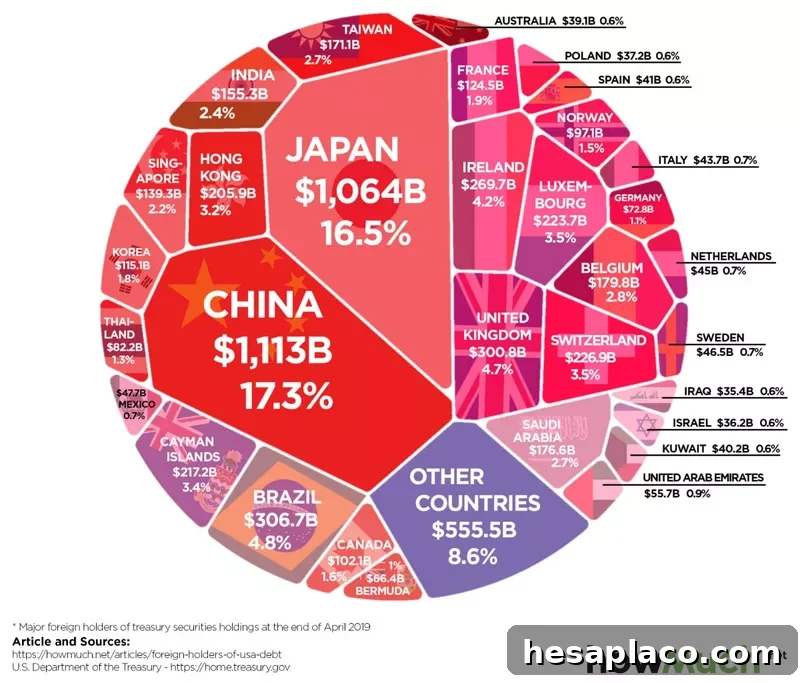
Who Owns America’s Debt?
Howmuch.net
It’s a common misconception that any single foreign country “owns” the majority of U.S. debt. In reality, Japan is the largest foreign holder, followed by China. Japan holds roughly 18.7 percent of foreign-held Treasuries and China about 15.9 percent. Foreign investors buy U.S. Treasuries because they are viewed as safe assets, and that sustained demand helps keep U.S. interest rates low. If a major holder abruptly sold off large holdings, it would depress Treasury prices and raise global borrowing costs, harming both the United States and the seller.
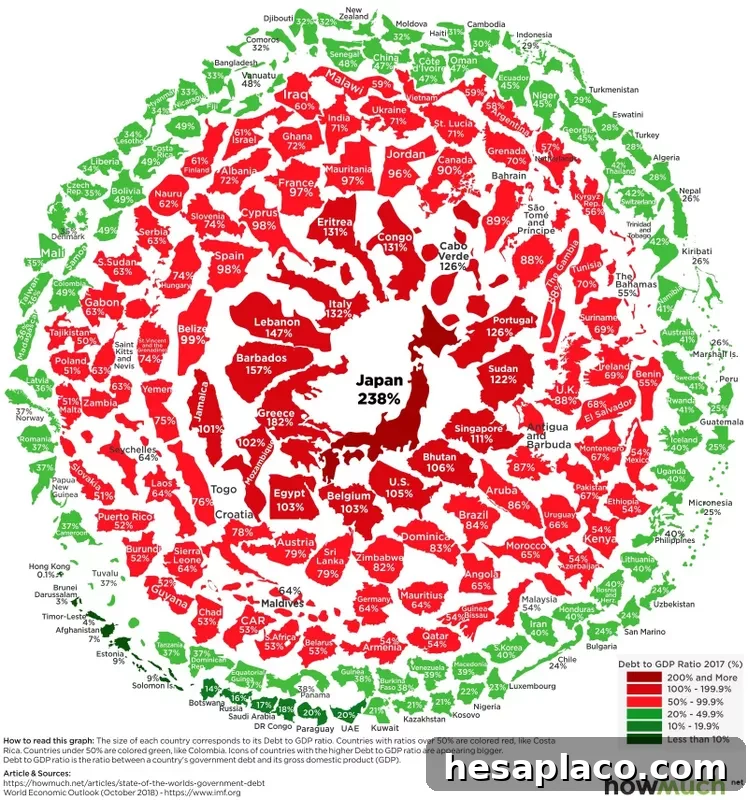
Debt-to-GDP Ratio Around the World
Howmuch.net
Debt-to-GDP maps reveal which countries carry relatively large government debts. Japan stands out with an extreme debt-to-GDP ratio — over 200 percent in recent years — and represents a significant share of global government debt despite having a smaller economy than the United States. Much of Japan’s debt is domestically held and financed via the central bank, which affects how its risk is perceived. This map reflects pre-pandemic 2018 data, so recent changes are not shown here.
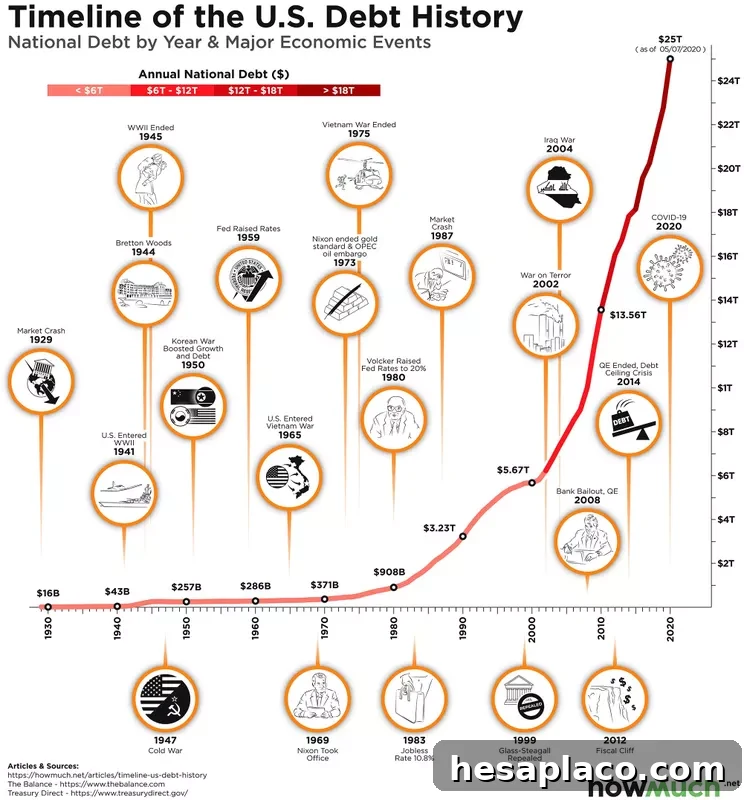
Major Events That Increased U.S. Debt
Howmuch.net
The United States has carried debt since its founding. In 1790 the debt-to-GDP ratio was near 30 percent. The ratio rose through the 20th century, spiking after World War II when it reached about 106 percent in 1946. More recently, large increases followed tax cuts, wartime spending in the 2000s, the Great Recession and, most dramatically, the COVID-19 pandemic.
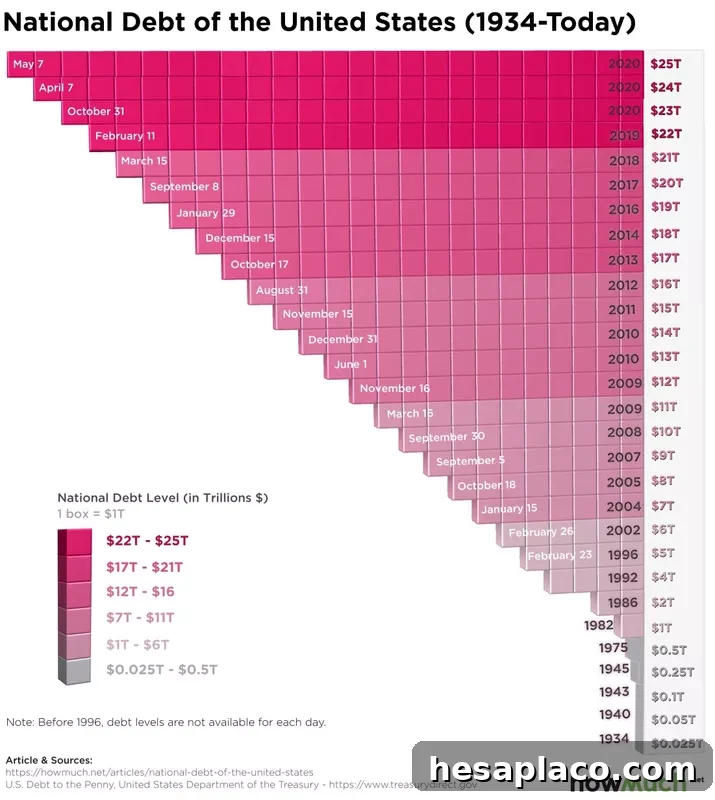
COVID-19’s Impact on the National Debt Levels
Howmuch.net
The pandemic sharply increased federal borrowing. From spring through winter 2020, the U.S. spent an estimated $5.5 trillion on economic relief measures. While much of that spending supported businesses and unemployed workers, direct stimulus checks comprised a relatively small fraction of the total relief.
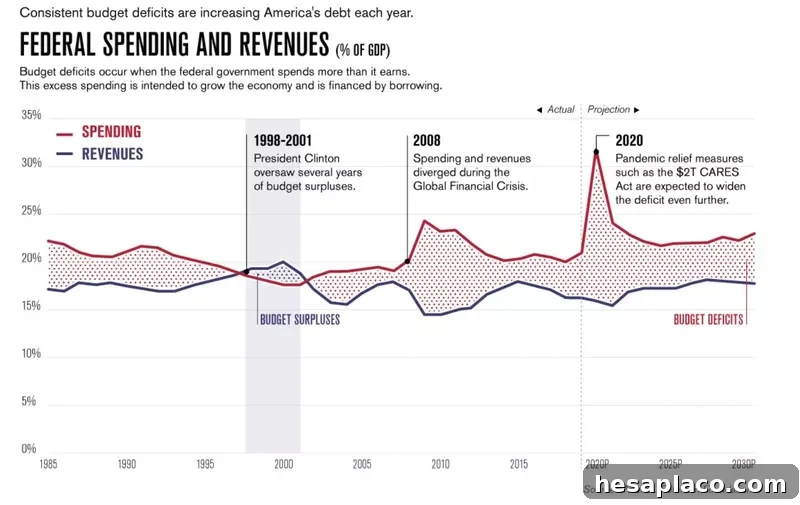
Federal Spending Vs. Revenue Since 1985
Peter G. Peterson Foundation
The United States has not consistently run budget surpluses since the late 1990s. Major downturns such as the Great Recession required significant fiscal support, and pandemic relief spending was even larger. These policy responses increased deficits and added substantially to the national debt.
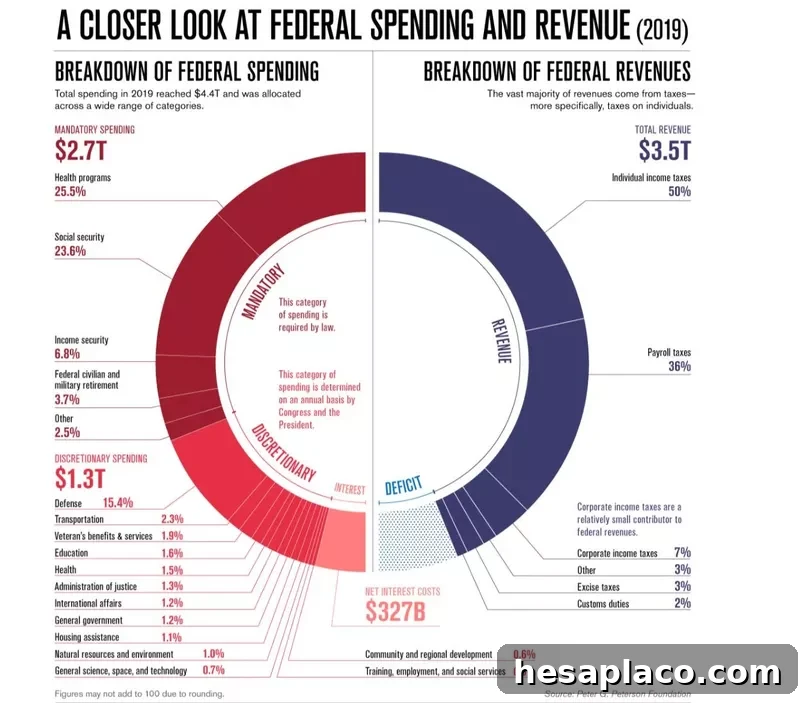
Federal Spending Vs. Revenue: A Breakdown
Peter G. Peterson Foundation
About half of federal revenue comes from individual and payroll taxes; corporate taxes contribute a far smaller share. Discretionary spending accounts for a portion of the budget, with the largest single component of discretionary outlays going to defense. Social programs, education and health occupy significant shares of mandatory spending.
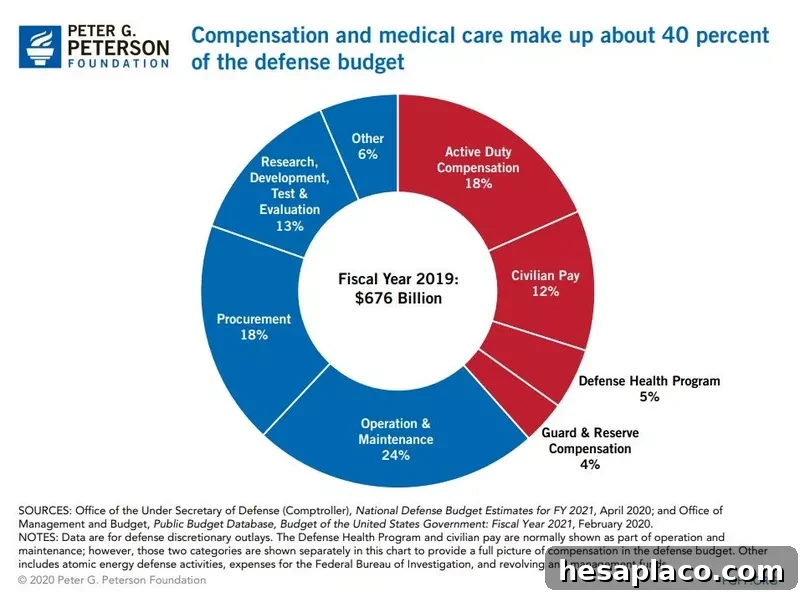
Breaking Down the Defense Budget
Peter G. Peterson Foundation
The largest portions of the defense budget go to personnel compensation and medical care, which together account for a large share of total defense costs. Research and development represent another notable slice, funding new technologies and modernization efforts.
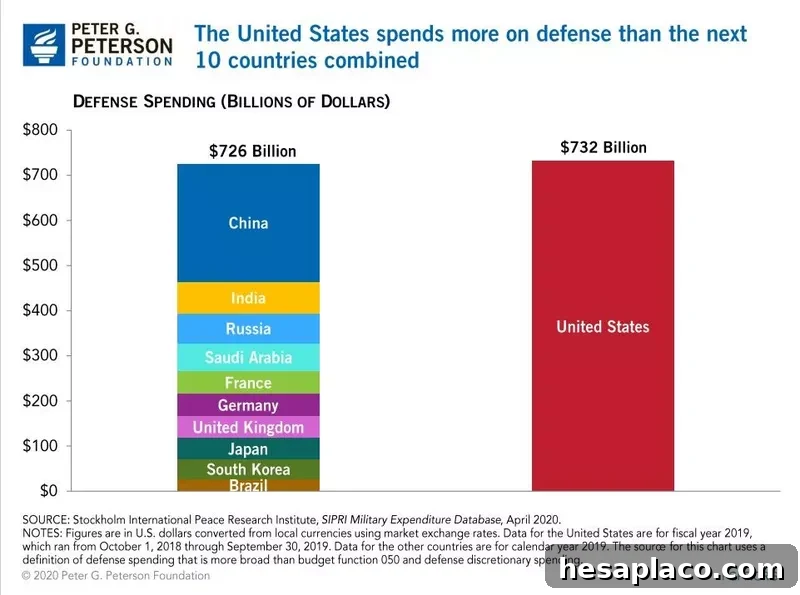
Defense Spending Compared to Other Countries
Peter G Peterson Foundation
The United States spends more on defense than any other nation by a wide margin. Even when adding together the defense budgets of the next 10 highest-spending countries, the U.S. still spends more annually than all of them combined.
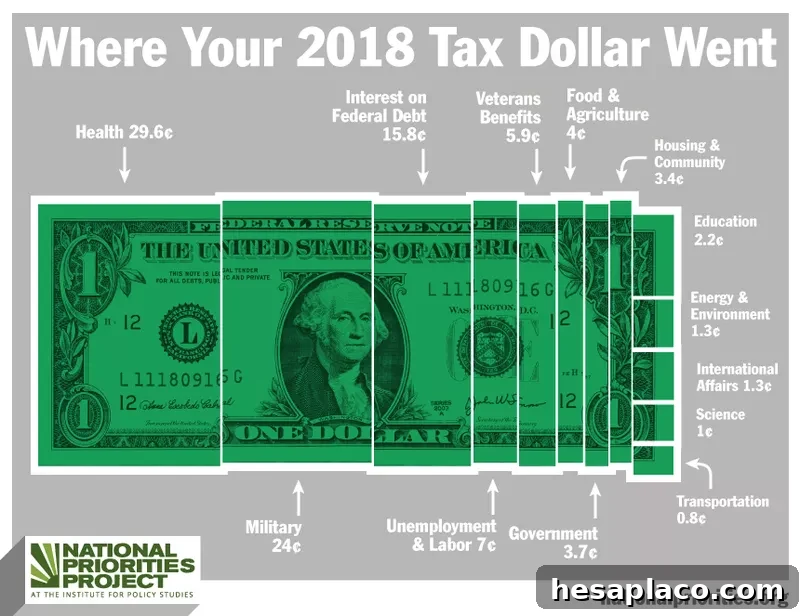
Breaking Down the Federal Tax Dollar
National Priorities Project
This visualization shows how a single federal tax dollar is allocated. Major health spending includes Medicare, Medicaid and other federal health programs, but much of the public concern about health care stems from how that spending translates into access and affordability for individuals. Social Security, retirement programs and veterans’ programs also take up significant shares of mandatory spending.
Visualizing $1 Million

Visual Capitalist
Large dollar amounts are difficult to imagine. Visual Capitalist represents cash in stacks of $100 bills to help visualize scale. A single stack of $10,000, for example, helps illustrate what $1 million looks like in physical currency. For many households, earning $1 million in gross pay takes decades — the median U.S. household would take roughly 19 years at current incomes.
Visualizing $100 Million

Visual Capitalist
A pallet containing $100 million in $100 bills provides perspective on how quickly sums scale from millions to billions.
Visualizing $1 Billion

Visual Capitalist
$1 billion in $100 bills occupies a vast physical footprint. To picture multi-hundred-billion net worths, you would need many times the space shown here.
Visualizing $1 Trillion

Visual Capitalist
A trillion dollars in cash is almost unfathomable: it can cover enormous areas and would require massive logistics to store and transport. Visual comparisons help communicate the scale in more tangible terms.
Visualizing $20 Trillion

Visual Capitalist
In 2017 the U.S. national debt was around $20 trillion. That sum, illustrated with stacks of bills, underscores how quickly public debt has grown in recent years.
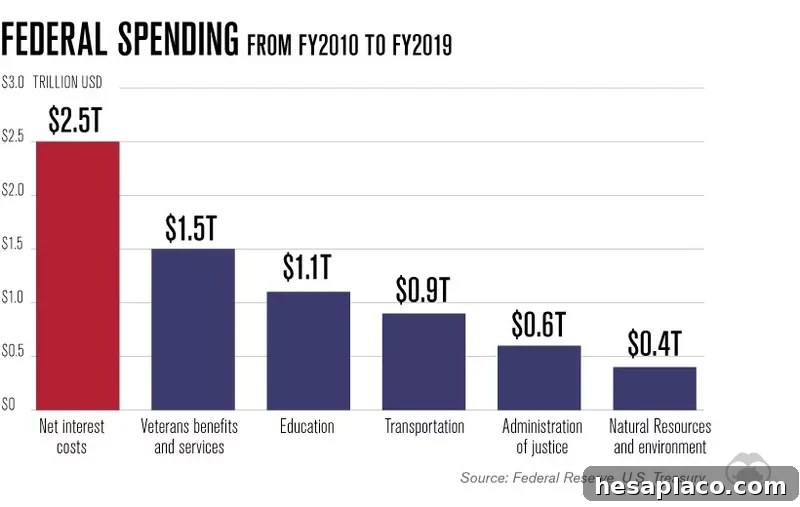
Spending on Interest Vs. Other National Priorities
Peter G. Peterson Foundation
Debt generates interest costs that must be paid each year. Even with relatively low interest rates, the sheer size of the debt means interest spending is substantial. From 2010 to 2019, net interest costs totaled about $2.5 trillion — a sum comparable to or larger than many federal programs combined.
Debt Owned by the Public Vs. Debt Owned by the Government
U.S. Government Accountability Office
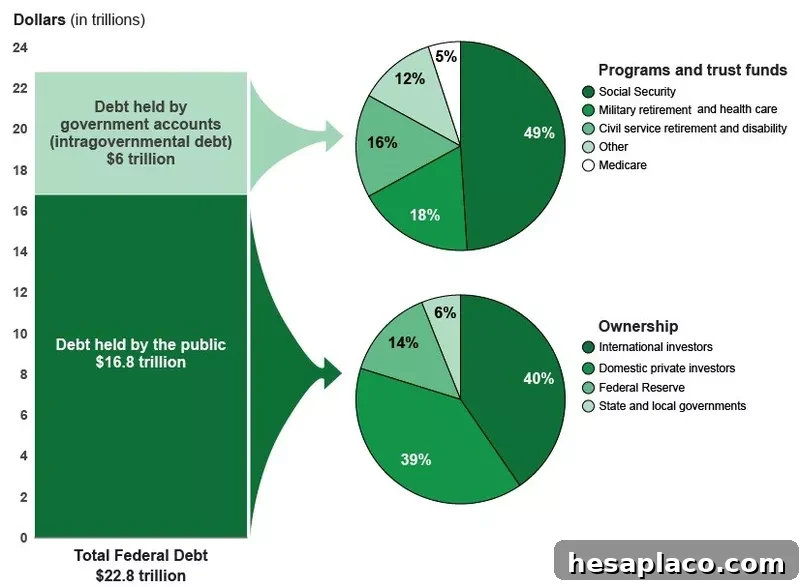
Federal debt is split between intragovernmental holdings (money the government owes itself, often held in trust funds like Social Security and Medicare) and debt held by the public (investors, foreign governments, financial institutions, and individuals). Public debt makes up the majority of outstanding federal debt.
Debt Per Capita in Every State Compared to the National Average
Howmuch.net
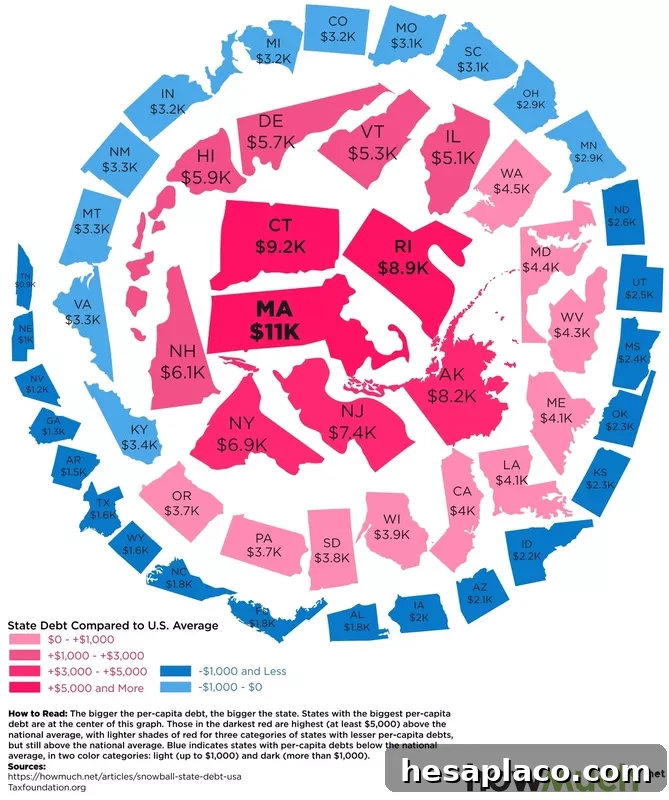
State-level per-capita debt varies widely. The national average per-person federal debt burden shown here is about $3,566. Tennessee ranks low, while Massachusetts and a few other states show much higher per-capita shares. Higher state debt isn’t always a negative indicator — some states borrow more to invest in infrastructure and services, while others may avoid borrowing and underinvest.
State Spending Vs. State GDP
Howmuch.net
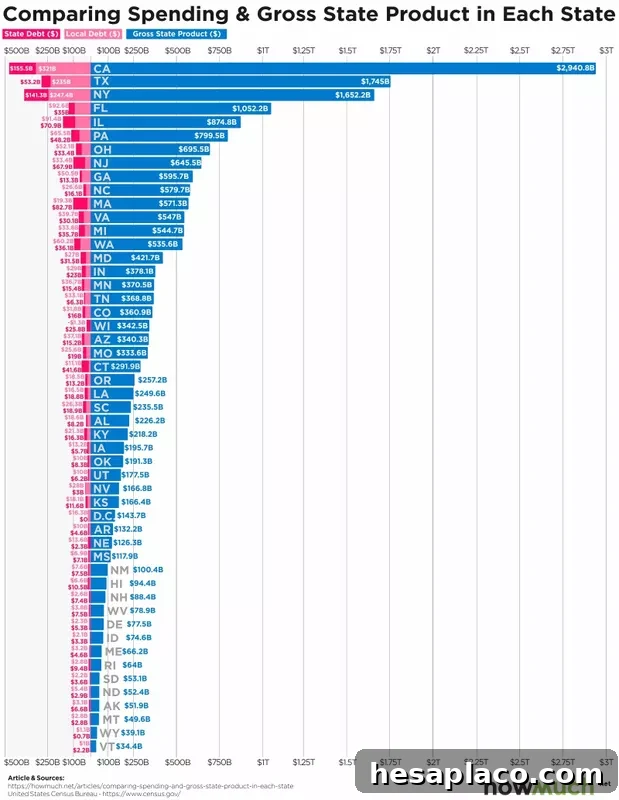
California leads by state GDP, approaching $3 trillion, followed by Texas and New York. Even the states with the smallest economies have GDPs that exceed their total debts, which suggests overall capacity to support obligations at the state level.
Total Debt Per Capita in Each State
Howmuch.net
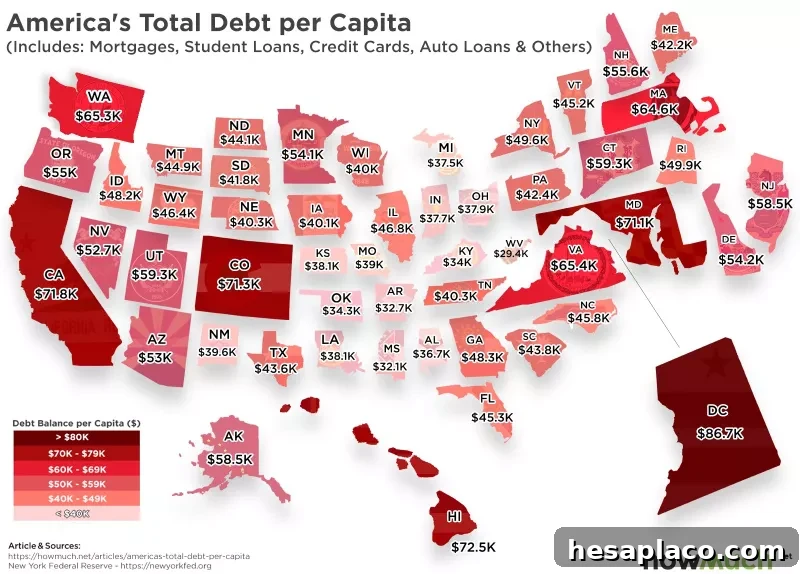
Consumer debt — mortgages, student loans, credit cards, auto loans and other personal liabilities — drives much of household-level debt. The average American carries tens of thousands of dollars in total debt. States such as the District of Columbia, Hawaii and California show high per-capita consumer debt, while West Virginia and several other states rank lower.
Breakdown of Debt-Per-Capita in Each State
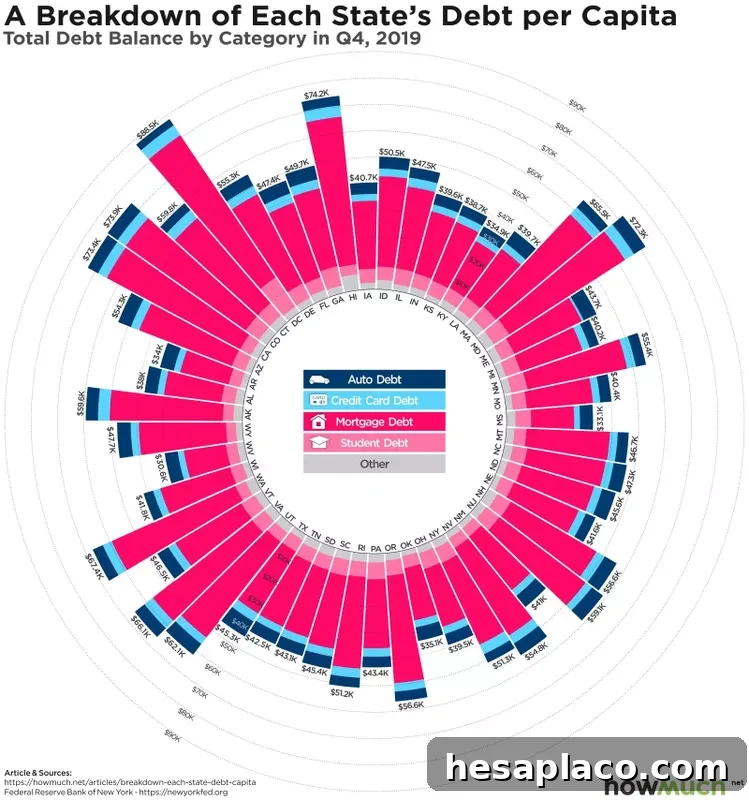
Howmuch.net
Much of household debt is mortgage debt, which many consider “good” debt because it finances homeownership and can build equity over time. Though high, mortgage obligations reflect housing market dynamics and rising home prices.
Total Outstanding Mortgage Debt Since 1953
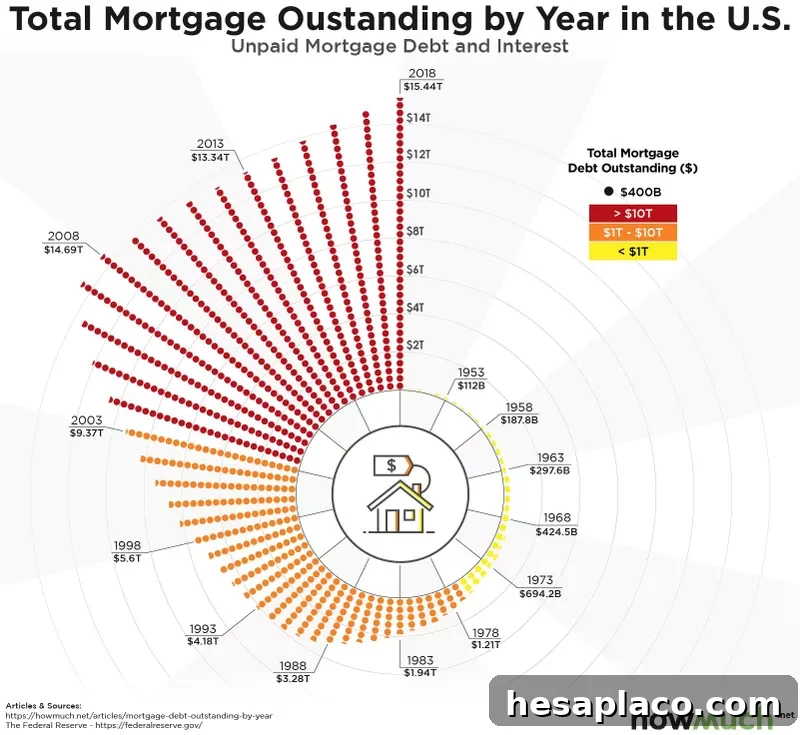
Howmuch.net
Mortgage debt has climbed as housing prices rose. Adjusted for inflation, home prices in mid-20th century America were far lower than today. By 2018 outstanding mortgage debt had grown into the tens of trillions, reflecting both higher home values and increased borrowing.
Assets and Debts Across Millennials, Gen Xers and Boomers (Adjusted for Inflation)
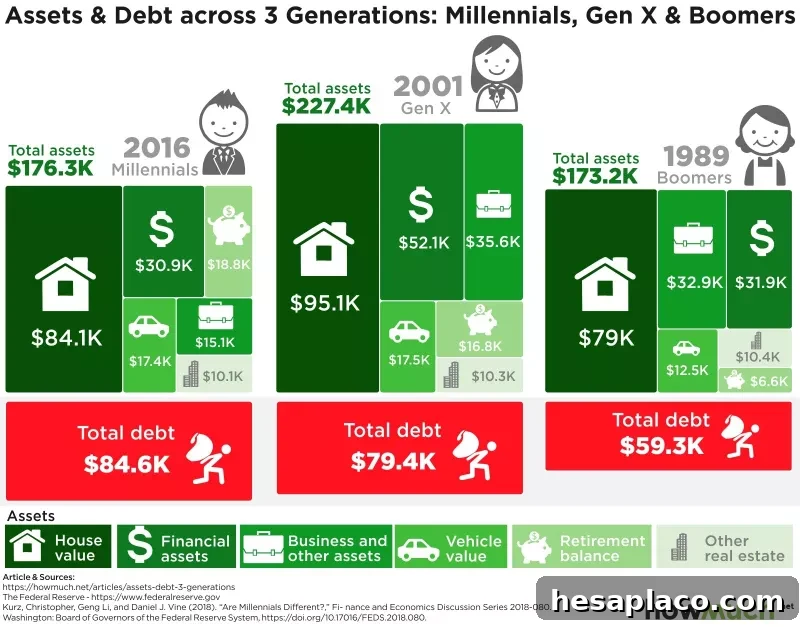
Howmuch.net
Generational comparisons show differences in assets and liabilities. Millennials often carry more student loan debt than earlier generations but may also hold more home equity in some cases and have different saving patterns. Gen X generally displayed stronger home equity in peak years, while baby boomers had different asset profiles earlier in life.
Student Debt Balance Per Capita By State
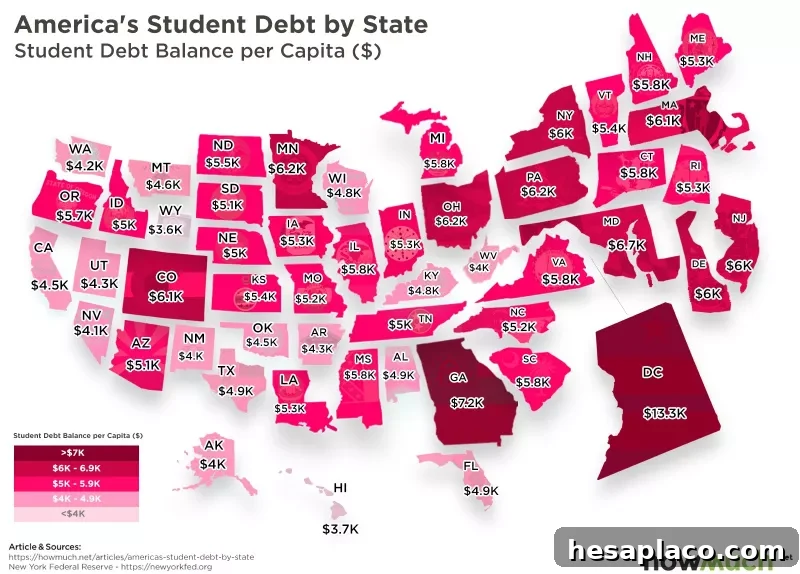
Howmuch.net
Student loan burdens vary by state. While a four-year degree can cost roughly six figures at many institutions, average borrower balances are often lower. States like the District of Columbia, Georgia and Maryland show relatively high per-capita student debt, while Wyoming, Hawaii and several others report lower per-capita figures.
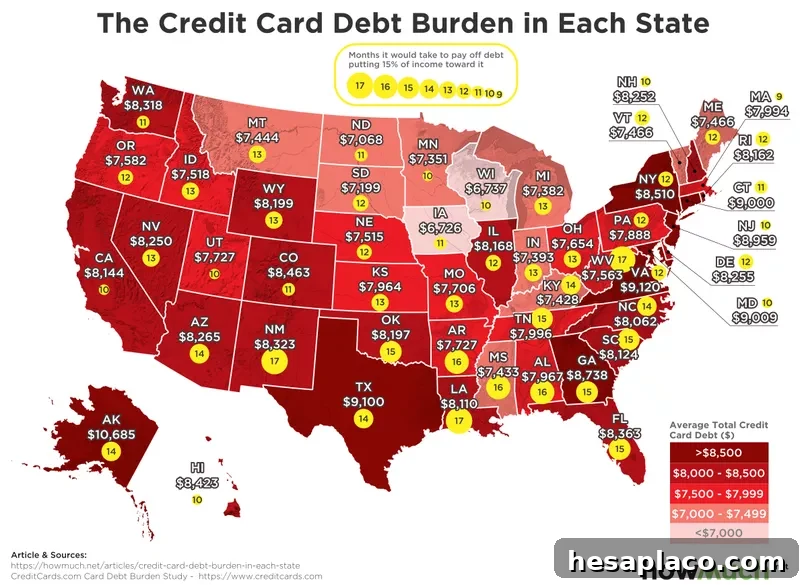
Average Credit Card Debt in Every State
Howmuch.net
Credit card debt nationwide totals roughly $1 trillion. The graphic breaks down average credit-card liabilities by state and estimates how long it would take to pay off those balances if households dedicated a portion of monthly income to repayment. Many households would still need a year or more to wipe out high credit-card balances.
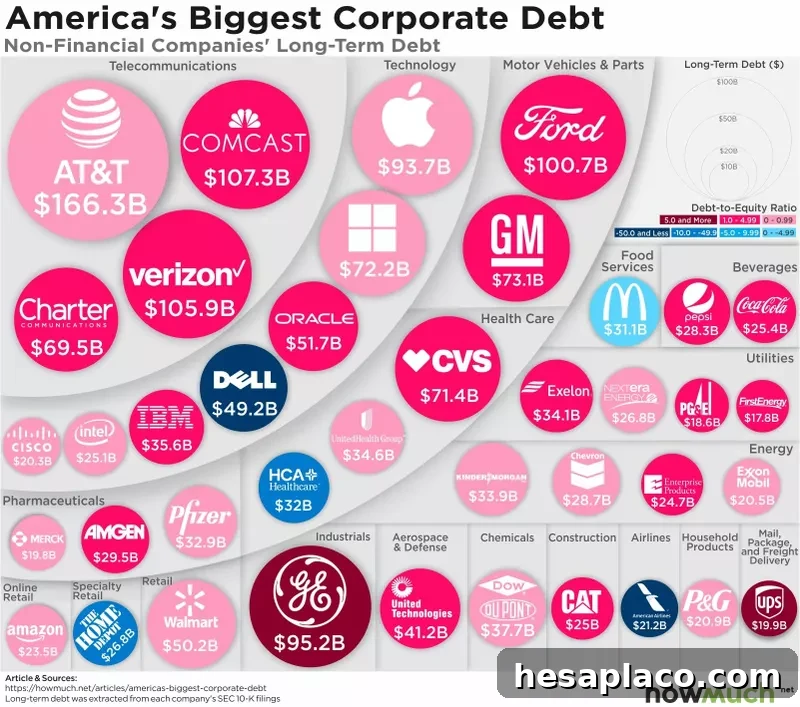
Biggest Owners of Corporate Debt
Howmuch.net
Non-financial corporations hold a large portion of private-sector debt. Several major companies carry significant long-term liabilities. Among the largest long-term debt holders are major telecommunications firms, automakers and industrial conglomerates. Debt-to-equity ratios vary across industries and signal how leveraged firms are relative to their equity.
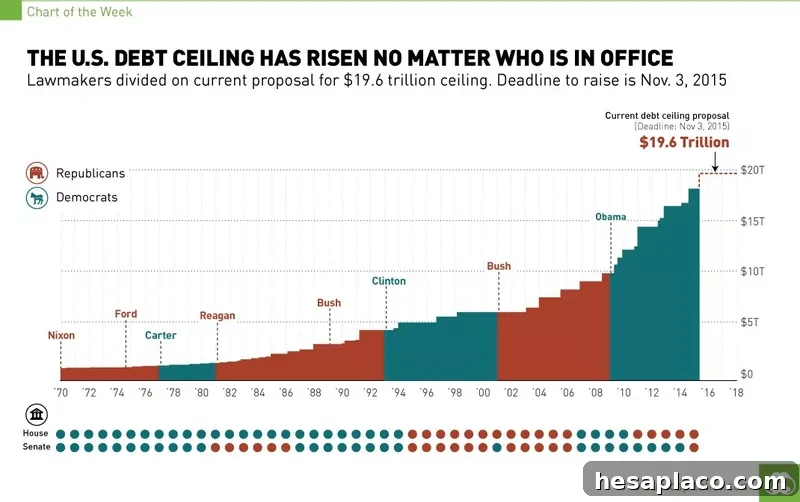
The Debt Ceiling Always Rises
Visual Capitalist
Historically, whenever the debt ceiling becomes binding, Congress has raised it to allow continued borrowing. The ceiling is often used as a political lever, but it does not directly address structural drivers of long-term debt growth such as demographics, tax policy and spending choices.
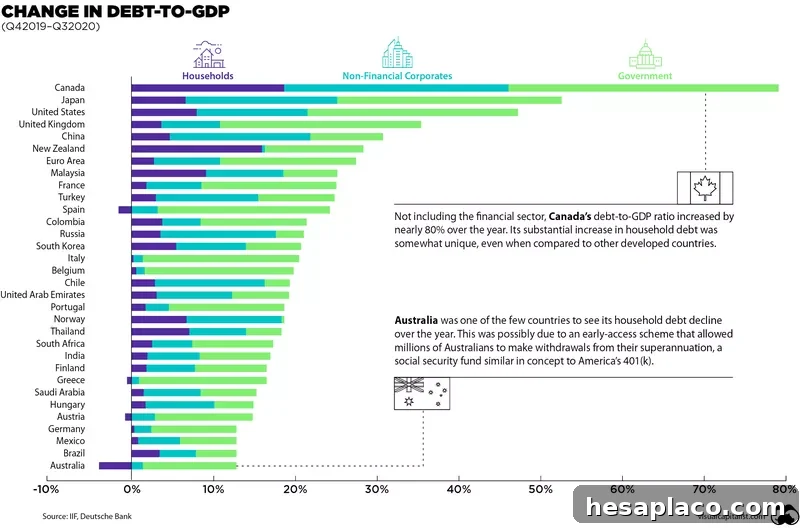
One-Year Change in Debt-to-GDP Ratio Around the World
Visual Capitalist
Between late 2019 and late 2020 global debt-to-GDP ratios rose sharply due to pandemic-related fiscal support and economic contraction. Global debt increased by roughly $20 trillion over that period, and the trend of rising public and private debt is visible across many countries. Canada, for example, saw a large increase tied to its emergency support programs, while other nations used different policies that affected private savings and retirement accounts.
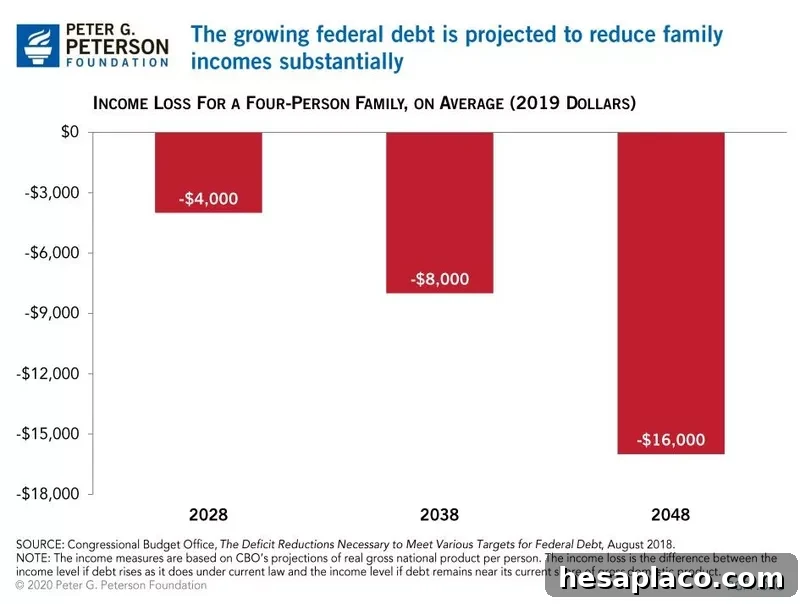
Projected Income Loss Due to Federal Debt
Peter G. Peterson Foundation
Long-term projections show the national debt can affect household incomes. Analysis by nonpartisan budget institutions suggests that rising federal debt under current policy could reduce average family income over time. For example, one estimate indicates a family of four could see cumulative income losses amounting to thousands of dollars over a multi-decade horizon if debt and interest costs grow as projected.