
Building wealth can give you the freedom and flexibility to pursue your goals, whether that means traveling, launching a business, supporting your family, or contributing more to your community. Money is not the final destination; it is a tool that can help you create choices, reduce financial stress, and make decisions with greater confidence, even when the broader economy is uncertain.
Cryptocurrency can be one way to participate in long-term wealth building, but it should not be viewed as a shortcut to becoming rich overnight. Digital assets such as Bitcoin and Ethereum are among the more established cryptocurrencies, yet they still carry risk and can experience significant price swings. If you are considering crypto investing, it is important to approach the market with patience, research, and a clear strategy.
To improve your chances of making informed decisions, focus on proven investment principles, understand the assets you are buying, protect your holdings, and avoid emotional trading.
Buy and Sell Crypto on a Trusted Exchange

Stock Focusing themetic investing protect risk and wealth from recession and inflation economic chart background primeimages / Getty Images
If you want to buy, sell, or trade cryptocurrencies, getting started is relatively simple. Crypto exchanges allow users to purchase digital assets, exchange one cryptocurrency for another, and in some cases access additional services such as staking or advanced trading tools. However, choosing the right platform is a major step and should not be rushed.
There are many cryptocurrency exchanges available around the world, and new platforms continue to appear. When comparing exchanges, consider important factors such as trading volume, security features, fees, supported coins, liquidity, ease of use, and customer support. Reputation also matters. Before opening an account, take time to research the platform, read about its history, and understand how it protects user funds.
Binance is widely known as one of the largest cryptocurrency exchanges by trading volume. For many investors, high volume can be useful because it often means better liquidity and smoother order execution. Still, size alone should not be the only reason to choose an exchange. Make sure the platform fits your needs and that you understand the risks involved in using any custodial service.
Digital assets such as Bitcoin can move sharply in price, creating opportunities for traders. The basic idea is often described as “buy low and sell high,” but applying that principle consistently is difficult. No strategy can guarantee profit, and timing the market accurately is extremely challenging. Market trends, technical indicators, investor sentiment, regulatory developments, and geopolitical events can all influence cryptocurrency prices.
Before making a trade, review the market conditions and consider whether the move supports your broader investment plan. Avoid making decisions based only on hype, fear, or sudden price movements.
Understand the Cryptocurrency Market

ozgurdonmaz / Getty Images
Before investing in cryptocurrency, it is essential to understand what is available and how different digital assets work. Bitcoin is often viewed as a store of value because its supply is limited by its protocol. Only 21 million Bitcoins will ever exist, and as more coins enter circulation, the remaining supply becomes increasingly limited.
Bitcoin is sometimes compared to gold because some investors see it as a hedge against currency weakness, inflation, or broader market uncertainty. However, Bitcoin is still volatile and should not be treated as a risk-free asset. It can rise or fall sharply within short periods, so investors should consider their financial situation and risk tolerance before buying.
Beyond Bitcoin, there are many other cryptocurrencies known as altcoins. In general, altcoins refer to cryptocurrencies other than Bitcoin, and they often aim to provide additional functions, technologies, or use cases. Some focus on faster transactions, lower fees, decentralized finance, gaming, smart contracts, or blockchain scaling.
Because there are so many altcoins, identifying those with long-term potential can be difficult. Do not invest in a coin simply because it is popular on social media or has recently increased in price. Instead, research its purpose, network activity, development team, token supply, use case, and market position. A strong project should have a clear reason to exist and a community or ecosystem that supports it.
Some investors look for undervalued altcoins that may have room to grow if adoption increases. Polygon, for example, has often been discussed by investors because of its role in blockchain scaling and its native token, MATIC. While price performance can vary, the key point is that any altcoin investment should be based on research rather than speculation alone.
Store Your Crypto in a Secure Wallet

martin-dm / Getty Images/iStockphoto
Many beginners buy cryptocurrency on an exchange and leave their holdings in the platform’s custodial wallet. This may be convenient, but it also means the exchange controls the private keys. If you want more direct control over your digital assets, you can transfer your crypto to a personal wallet.
Not all crypto wallets work the same way. Hot wallets are connected to the internet and can be useful for frequent transactions, while cold wallets store assets offline and are generally considered safer for long-term holdings. Hardware wallets and offline storage methods can help reduce exposure to hackers, phishing attempts, and exchange-related risks.
If you plan to hold Bitcoin, Ethereum, or other cryptocurrencies for several years, cold storage may be worth considering. However, self-custody also comes with responsibility. You must protect your private keys and recovery phrases carefully. If they are lost or stolen, you may lose access to your funds permanently.
For investors who do not plan to sell immediately, staking may offer a way to earn passive income on certain cryptocurrencies. Staking involves participating in the operation of a proof-of-stake blockchain and may provide rewards in the form of transaction fees or newly created tokens. Bitcoin uses proof of work and does not support staking, while Ethereum does support staking after its transition to proof of stake.
Some liquid staking solutions allow users to stake Ethereum while receiving tokens that may be used elsewhere in the crypto ecosystem. As with any investment product, staking carries risks, including smart contract risk, price volatility, and potential lock-up periods, so it is important to understand the terms before participating.
Set a Time Frame, a Stop Loss, and a Clear Goal

NanoStockk / Getty Images
Before investing in cryptocurrency, decide how long you are willing to hold your investment. Your time horizon might be several months, several years, or even longer. A long-term investor may be more willing to tolerate short-term volatility, while a short-term trader needs a more active strategy and stronger risk controls.
Cryptocurrency investments can generate gains over time, but they remain exposed to sudden market movements. To manage downside risk, consider using a stop-loss order when appropriate. A stop-loss can automatically sell an asset if it falls to a certain price, helping limit potential losses. It is not a perfect tool, but it can be useful for investors who want to avoid being fully exposed to extreme volatility.
It is also important to define why you are investing. A vague goal such as “I want to make money” is not enough. A stronger goal includes a specific purpose, a target amount, and a time frame. For example, you may want to build a long-term investment portfolio, save for a future purchase, or diversify part of your assets.
Write down your goals and review them regularly. Ask yourself what you are investing in, why you are investing, how much risk you can accept, and when you may need access to your money. Your income, age, savings, financial responsibilities, and future plans should all influence your crypto investment strategy.
Most importantly, avoid investing money you cannot afford to lose. Cryptocurrency can be a valuable part of a diversified portfolio for some investors, but it should be approached with discipline and realistic expectations.
Bottom Line: Be Patient and Invest Wisely
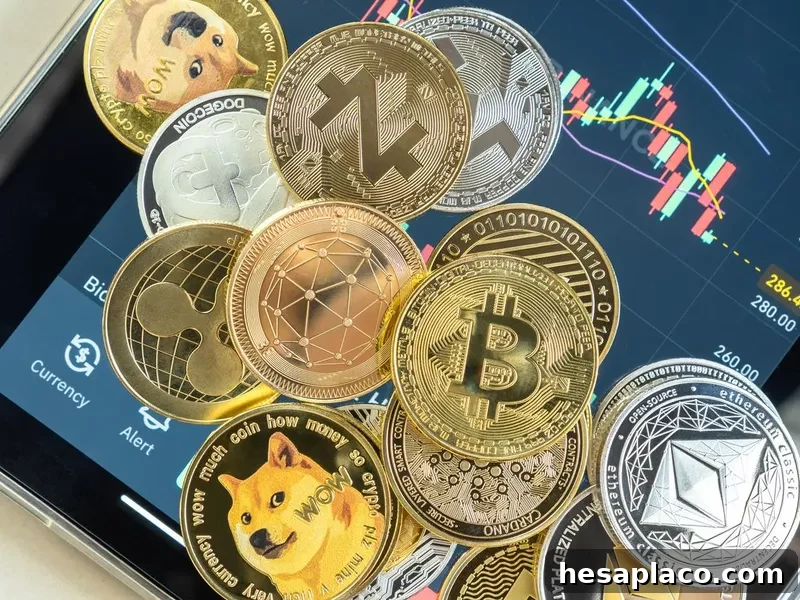
Chinnapong / Getty Images
The cryptocurrency market offers opportunities, but it also demands caution. Building wealth through crypto investing requires research, patience, security awareness, and a clear plan. Choose a reputable exchange, understand the assets you buy, protect your coins with the right wallet, and set realistic goals before committing your money.
Long-term success is rarely built on impulsive decisions. If you want to use cryptocurrency as part of your wealth-building strategy, take your time, manage your risk, and stay focused on your financial objectives.
This article is a partnership with Getx Local SRL.