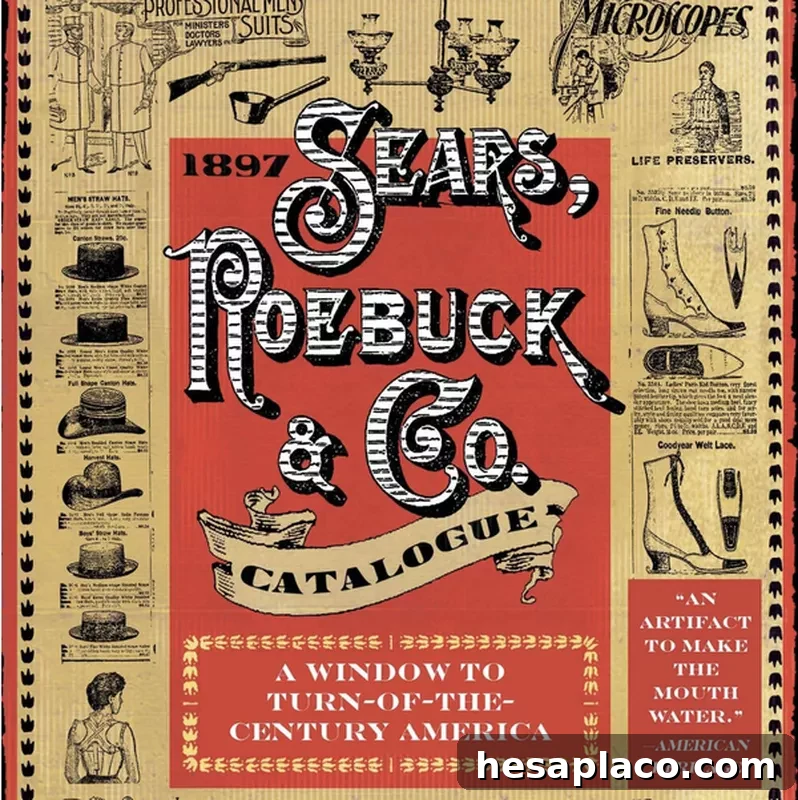
A century ago, long before Sears became a string of dwindling storefronts with sparse staff, it was an American retail giant.
From 1886 to 1924 Sears operated primarily as a mail-order business, offering an astonishing range of products that would rival many modern online retailers. Their hefty, illustrated catalogs advertised nearly everything a household could need—or dream of owning.
You could furnish a home, buy a prefabricated house, and fill its cabinets with patent medicines and gadgets of every persuasion. Below are some of the most remarkable and sometimes unsettling items Sears offered nearly 120 years ago.
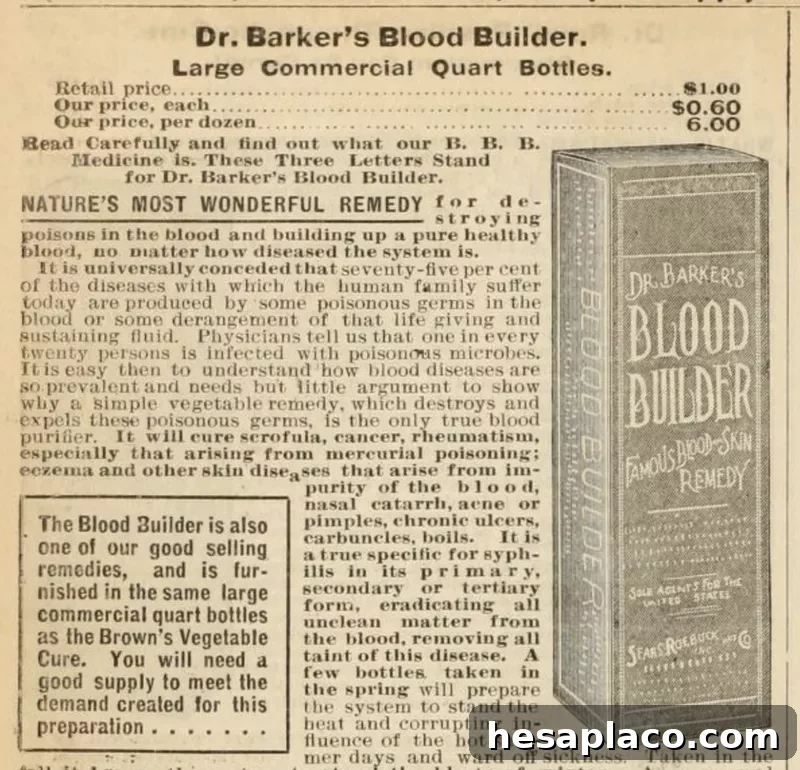
Dr. Barker’s Blood Builder
Sears, Roebuck and Company / Internet Archive
The florid advertising of the early 1900s is on full display in the 1902 Sears catalog. Among the tonics and cures sits “Dr. Barker’s Blood Builder,” sold by the dozen for $6. Promoted with hyperbolic claims, this liquid elixir promised to cure scrofula, cancer, rheumatism, acne, ulcers, boils, and to improve skin tone. According to the copy, it would bolster the immune system in summer and protect against cold in winter.
The product’s miraculous quality? It was supposedly made “purely” of vegetables—a vegetable drink touted as a universal restorative. Today we recognize such sweeping medical claims as dubious at best, but at the time these remedies were common and often unquestioned.
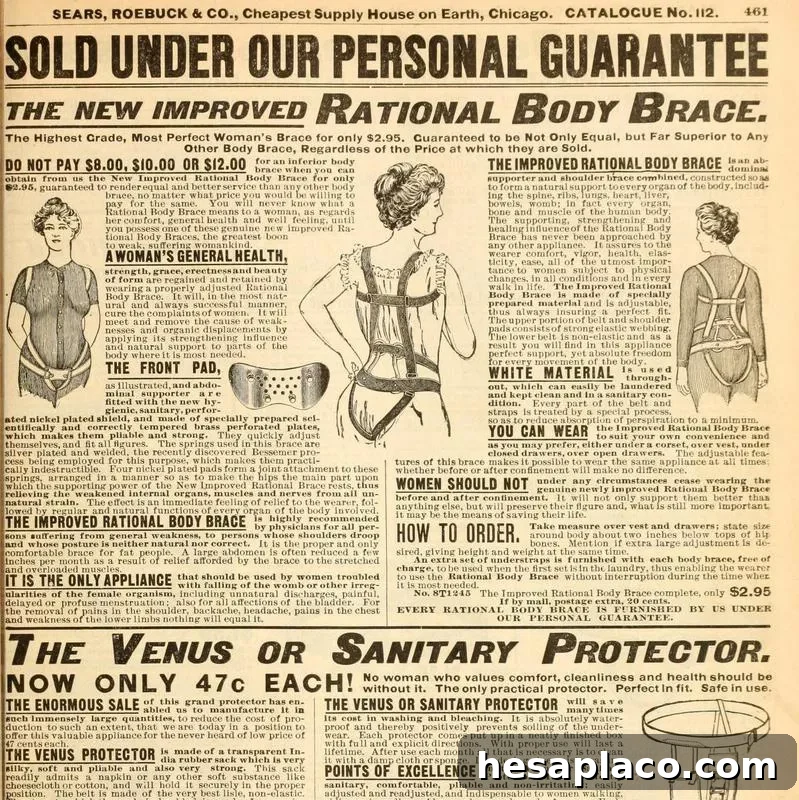
The Rational Body Brace
Sears, Roebuck and Company / Internet Archive
Marketed primarily to women, the “Rational Body Brace” was a spring-loaded contraption of plates, belts, and metal supports designed to pull the wearer into an upright posture. Advertisements claimed it relieved strain on internal organs, muscles, and nerves and was essential “before and after confinement” (pregnancy and childbirth). For $2.95 customers could purchase the brace—effectively a predecessor to modern corsets and posture aids—with promises of improved health and posture despite the device’s likely discomfort and long-term drawbacks.
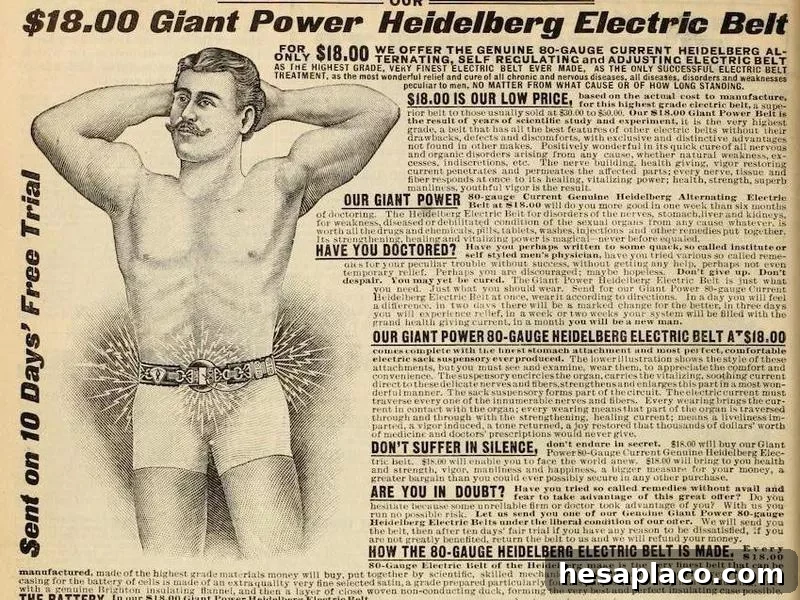
A Belt to Shock Your Groin
Sears, Roebuck and Company / Internet Archive
The Giant Power Heidelberg Electric Belt, priced around $18, represented early 20th-century electrotherapy salesmanship. Advertised to cure nervous disorders and erectile dysfunction, the belt featured electrodes intended to send an “alternating current” through the groin to stimulate circulation and restore “youthful vigor.” The elaborate promotional language described revived seminal glands, “dormant nerves” awakening, and a doubling of sexual power—claims that now read as pseudoscientific and dangerous rather than therapeutic.
Arsenic Complexion Wafers
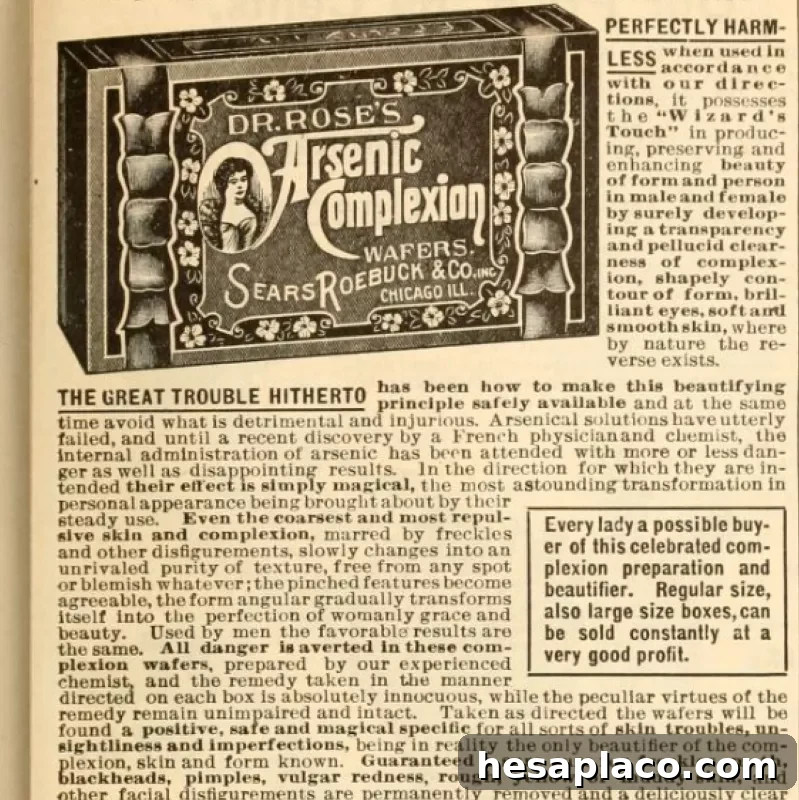
Sears, Roebuck and Company / Internet Archive
One of the more alarming products in the catalog was “Dr. Rose’s Arsenic Complexion Wafers,” sold for 35 cents a box. Marketed as “safe” and “perfectly harmless,” these ingestible wafers were intended to whiten and smooth the skin, producing the pale, translucent complexion fashionable in the Victorian era. They sometimes did achieve a noticeable effect—because arsenic induces a blanching and can damage the body. Today we know arsenic is a toxic poison, but at the time such dangerous substances were still used in beauty treatments in parts of the world.
Entire Fireplace Mantels
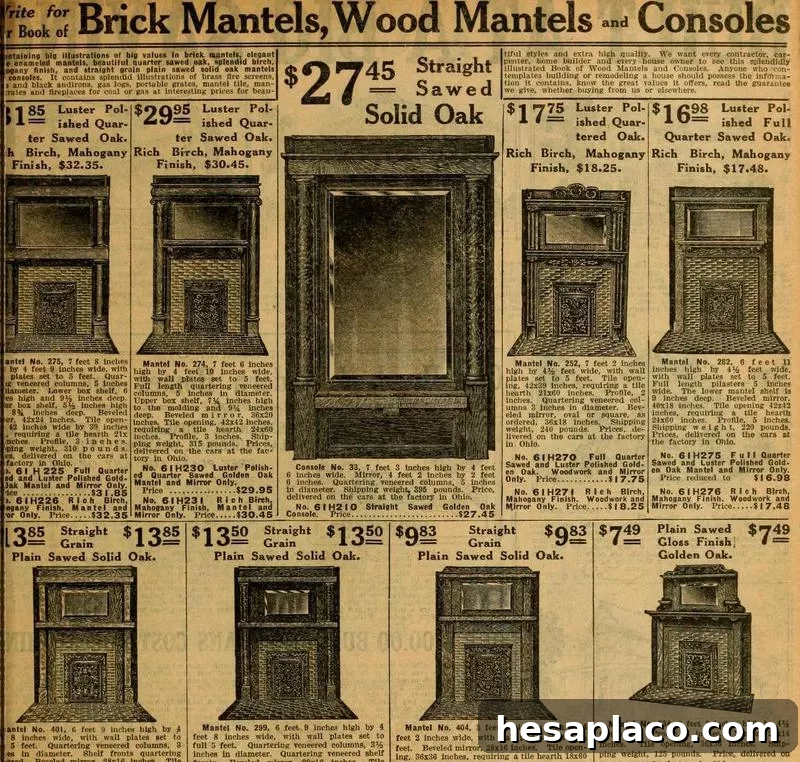
Sears, Roebuck and Company / Internet Archive
Sears sold full fireplace mantels that homeowners could order and install themselves if they had the skill and space. These substantial mantels were often over seven feet tall, crafted from solid wood with mirrored panels, and could weigh more than 300 pounds. Prices ranged roughly from $7.49 to $32.35, not including brickwork. Today, a solid mahogany mantel of similar size would be an expensive luxury.
Brain Pills
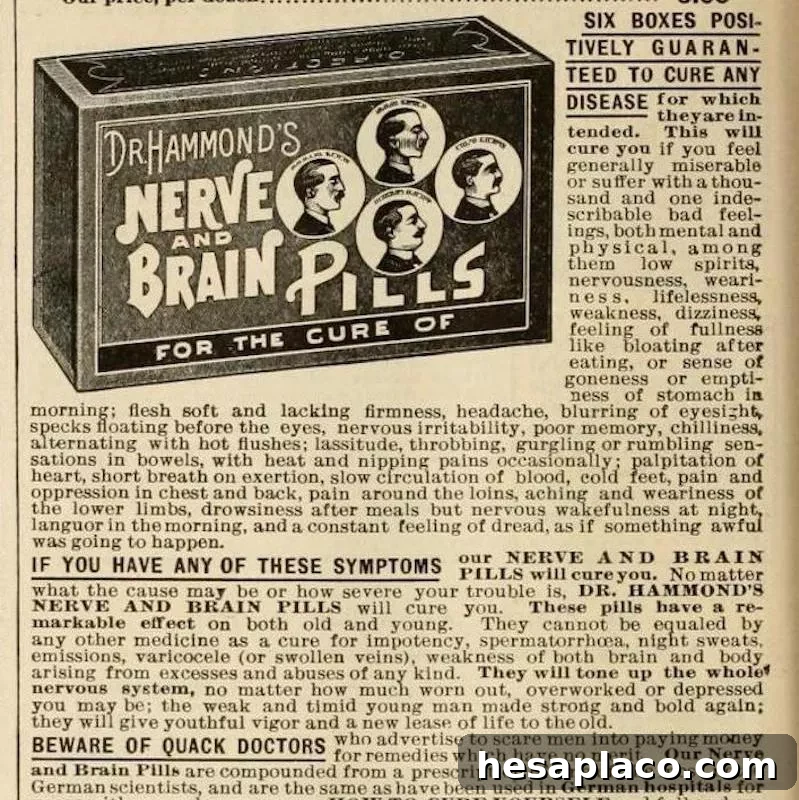
Sears, Roebuck and Company / Internet Archive
Before modern understandings of mental health, many common complaints were labeled “nervousness.” Products like “Dr. Hammond’s Nerve and Brain Pills” promised to cure nervous disorders, digestive troubles, poor memory, chills, backache, and more. While the exact ingredients are unclear, the advertising emphasized German scientific origins and hospital use, and warned readers to avoid “quack doctors.” These pills were sold at about 60 cents per box and reflect how broadly marketed remedies attempted to address a wide range of ailments.
The Beefsteak of Drinks
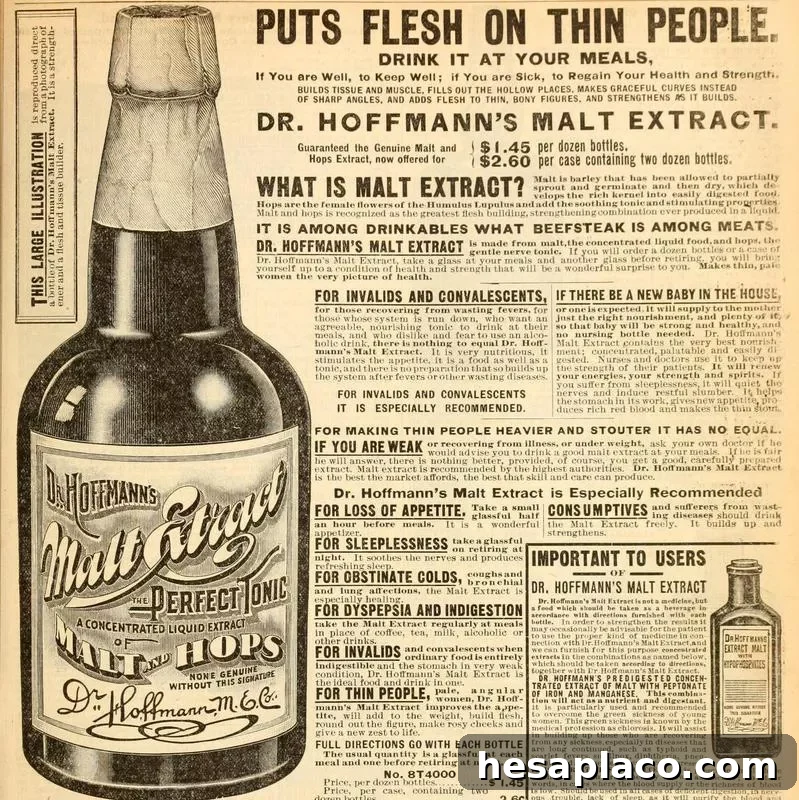
Sears, Roebuck and Company / Internet Archive
“Dr. Hoffman’s Malt Extract” was promoted as the beverage equivalent of beefsteak—something to build flesh and restore strength. Marketed for invalids, convalescents, the weak, and those suffering from consumption (tuberculosis), malt extract was essentially a sugary syrup derived from grains. It does contain some nutrients like proteins and B vitamins, so while it wasn’t a miracle cure, it could offer calories and some nourishment. A dozen bottles cost about $1.45.
Gravestones
Sears, Roebuck and Company / Internet Archive
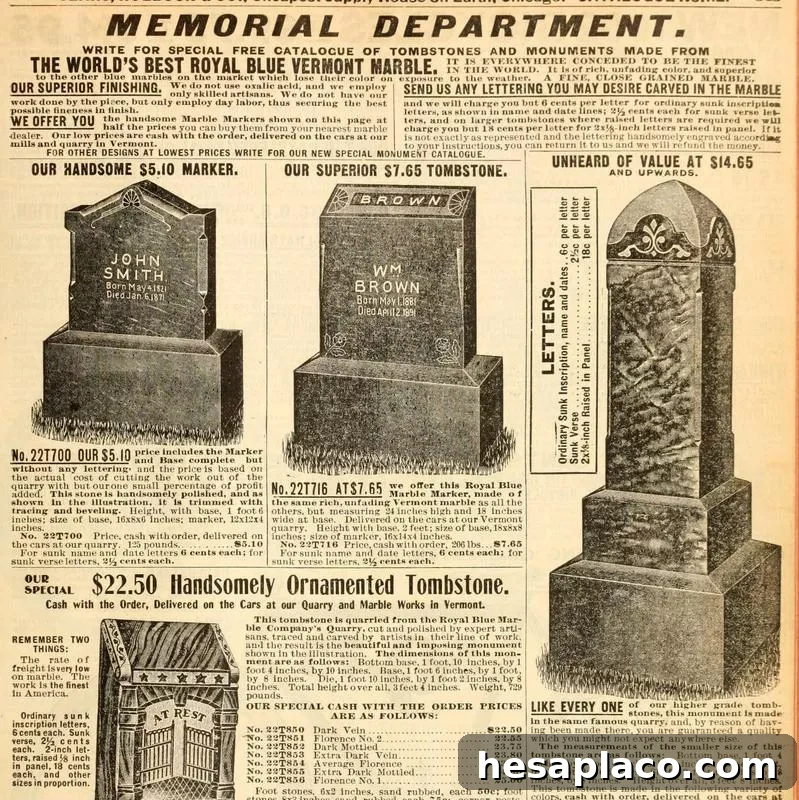
Sears even sold memorials. For as little as $5.10 customers could buy a simple gravestone, while larger, more ornate monuments started around $26.30. These tombstones were carved from marble and could weigh several hundred pounds; regular lettering was available for a modest additional fee.
The Old-Timey Version of Nicorette
Sears, Roebuck and Company / Internet Archive
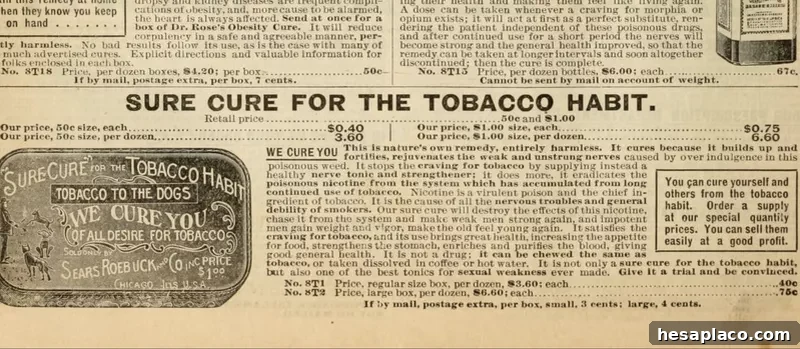
Attempts to quit tobacco are not new. Sears offered a product called the “Sure Cure for the Tobacco Habit,” an herbal remedy marketed as a nerve tonic and nicotine cleaner. It could be chewed like tobacco or dissolved in hot drinks and was also promoted as a remedy for sexual weakness. Sold in small tins for around 40 cents, the copy encouraged purchases in bulk so resellers could profit by selling to friends.
Vapor Bath Cabinets
Sears, Roebuck and Company / Internet Archive
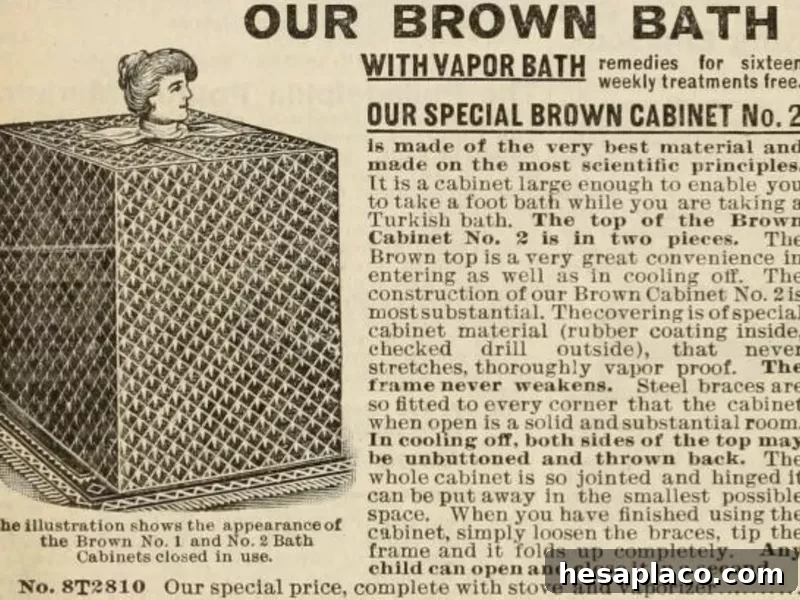
Vapor bath cabinets were early versions of personal steam saunas: rubber-lined cabinets heated by an alcohol burner that allowed a seated person to sweat inside. They promised to purge toxins, cure colds, and improve complexion. Options ranged from a basic $2.95 model to a deluxe $5.95 version with thicker walls and a “face steamer.” The modern equivalent might be a personal facial steamer, though these antique devices were far more elaborate.
Entire Houses
Sears, Roebuck and Company / Internet Archive
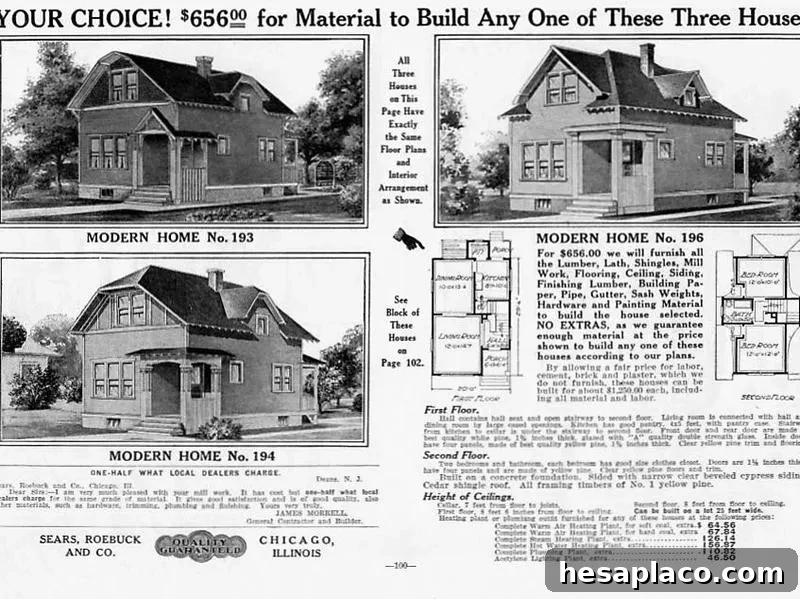
Beginning around 1908, Sears sold prefabricated “Modern Homes” by mail. For between roughly $300 and $1,500 customers could order blueprints and building materials for bungalows, two-story houses, barns, garages, and even agricultural buildings. These kit homes arrived with numbered materials and instructions, allowing buyers with some carpentry skill to assemble a complete house.
Police Equipment
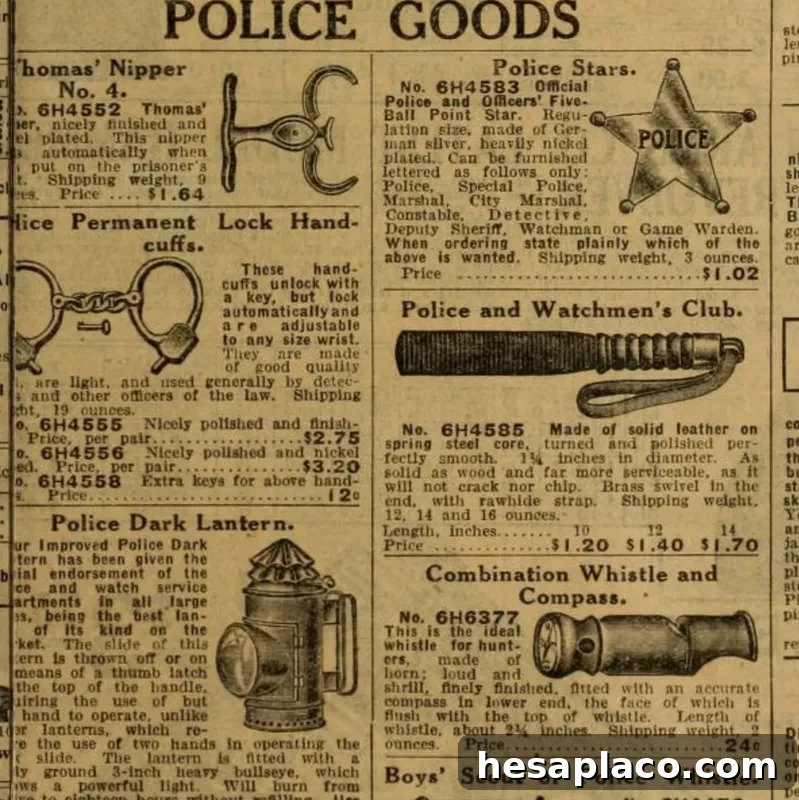
Sears, Roebuck and Company / Internet Archive
Sears offered items for law enforcement or costume purposes: handcuffs, lanterns, whistles, clubs, and police stars. The police star could be engraved with titles such as “Special Police,” “Marshal,” or “Detective” for about $1.02—an illustration of the era’s looser regulations around such equipment.
Food
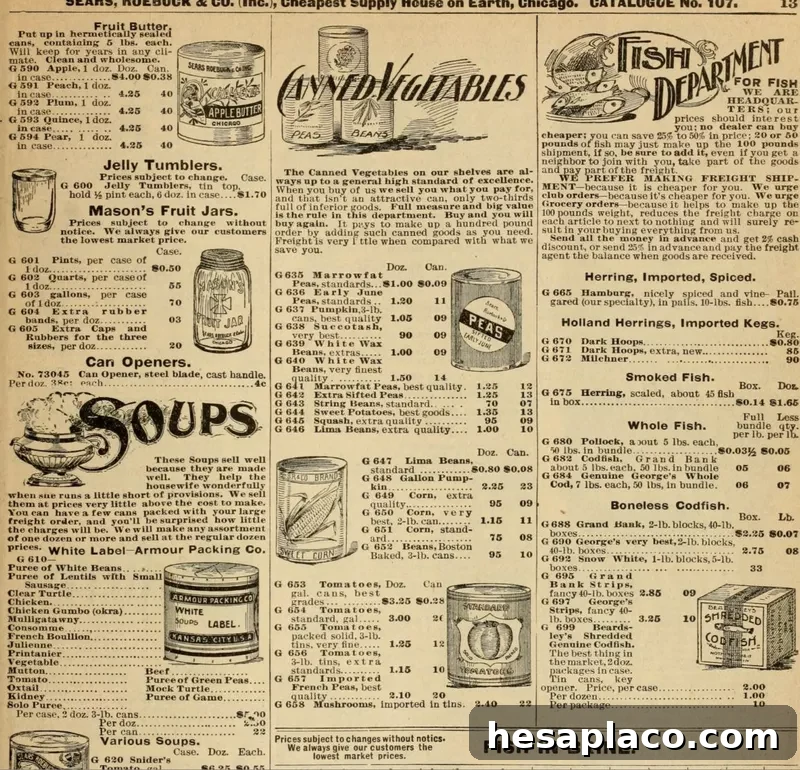
Sears, Roebuck and Company / Internet Archive
Mail-order groceries were well established by the turn of the 20th century. Customers could order soups, dried fruits, canned goods, spices, coffee, cheese, and even more unusual items like turtle soup or lamb’s tongue. Goods were shipped by mail and could take days or weeks to arrive, offering rural and urban customers alike access to a wider variety of foodstuffs than local stores might carry.
Big, Heavy Bicycles
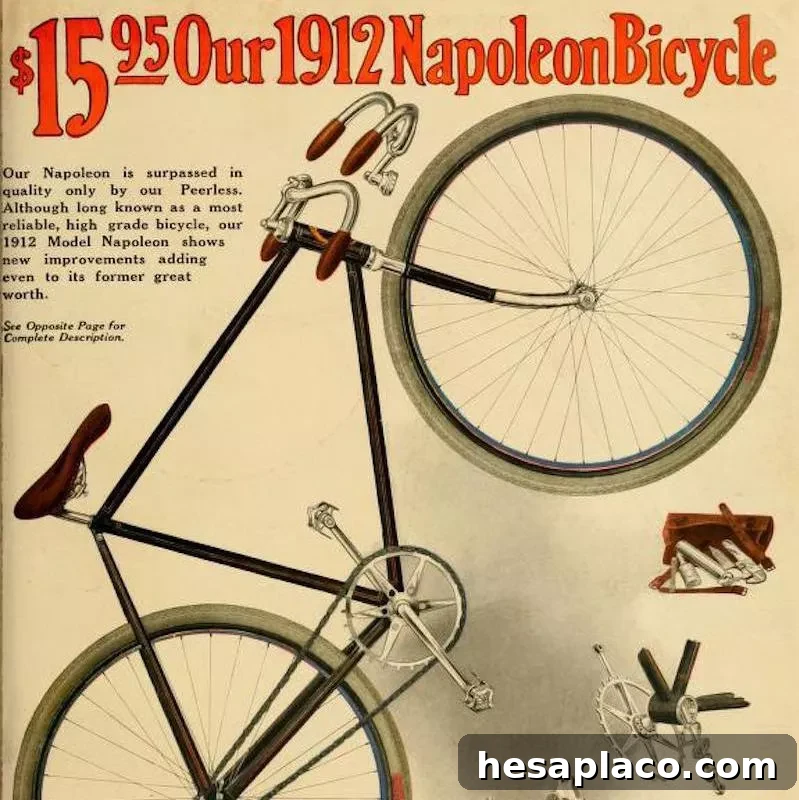
Sears, Roebuck and Company / Internet Archive
Sears sold bicycles such as the 1912 Napoleon model, equipped with heavy leather saddles and hard rock maple rims. These bikes were substantial, weighing roughly 50 pounds, with prices typically between $15 and $18 plus shipping—heavy and durable compared with many modern lightweight bikes.
Guns
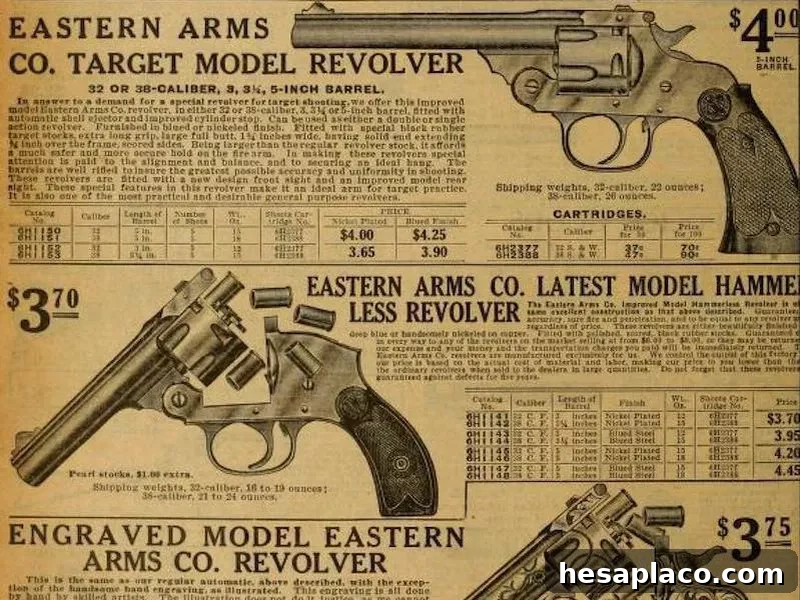
Sears, Roebuck and Company / Internet Archive
Sears’ catalogs included firearms and ammunition, reflecting a period with far fewer restrictions on mail-order weapon sales. Prices ranged from about $1.65 for a .22-caliber rifle to $22.40 for higher-end models like the Winchester 1907 self-loading rifle, and revolvers could be purchased for around $4.
These selections—from quack medicines and electric belts to prefabricated homes and gravestones—illustrate how Sears functioned as a comprehensive supplier for everyday life and extraordinary needs alike. The catalogs capture both the resourcefulness and the sometimes troubling medical and consumer practices of the era, offering a window into American life at the turn of the 20th century.