
Most people toss pennies into a drawer and forget about them because they barely register as money. The U.S. government agreed, and in 2025 it stopped producing pennies. That decision, however, made a number of discontinued issues scarce and highly sought after—meaning some pennies are now worth far more than their face value, even more than many people’s cars. Below are ten pennies that have become especially valuable due to rarity, minting errors, or historical significance.
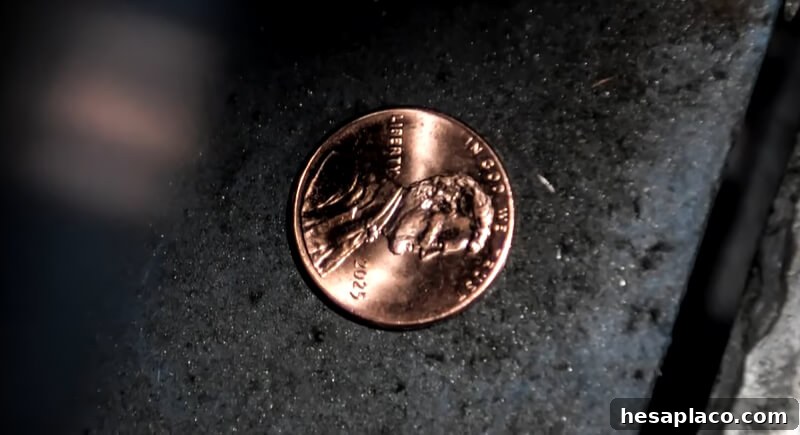
The 2025 Omega Penny
Credit: Youtube
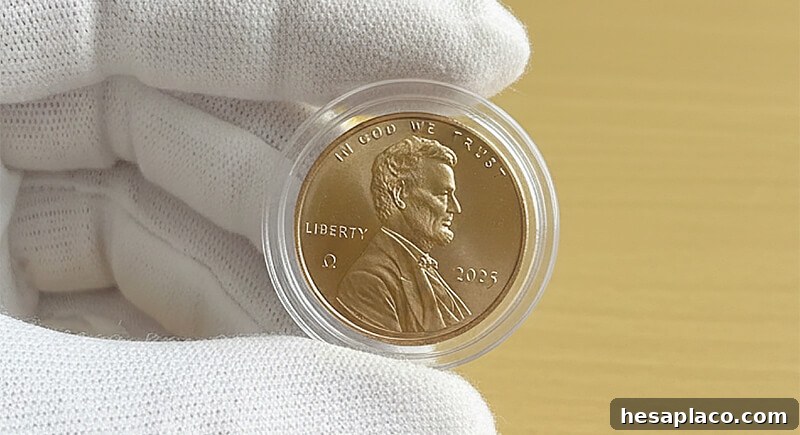
In 2025 the U.S. Mint stamped its final Lincoln cents with a finishing mark—a Greek letter Omega (Ω)—to signal the end of a 166-year run. The Mint sold 232 three-coin Omega sets at a December 2025 auction conducted by Stack’s Bowers Galleries on behalf of the U.S. Mint, raising $16.76 million total. Individual pieces from those sets are highly prized; one set that included the last pennies struck and the final Omega gold cent fetched $800,000.
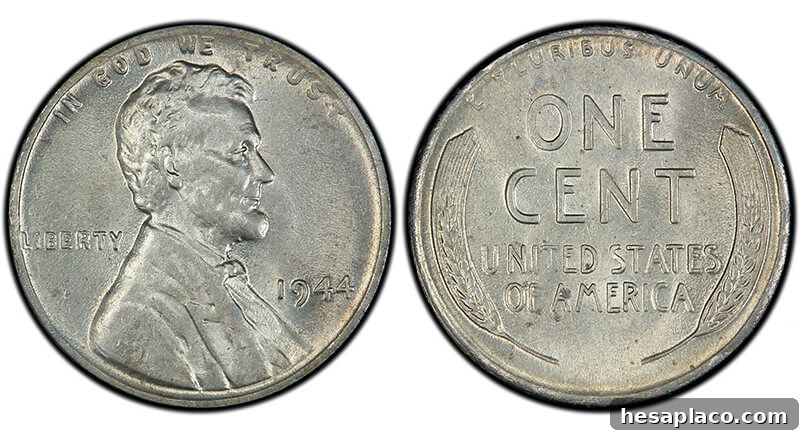
The 1944 Steel Penny
Credit: Wikimedia Commons
Although the Mint returned to copper in 1944, a few steel blanks from the previous year remained in the presses and were accidentally struck. A small number of 1944 steel pennies entered circulation as mistakes. One San Francisco example sold for $408,000 at Heritage Auctions in 2021. Philadelphia and Denver examples are known too, but they generally command lower prices.
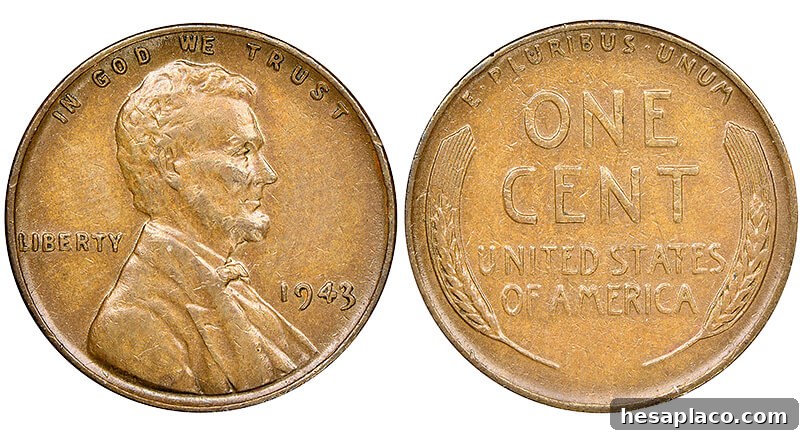
The 1943 Copper Penny
Credit: Wikimedia Commons
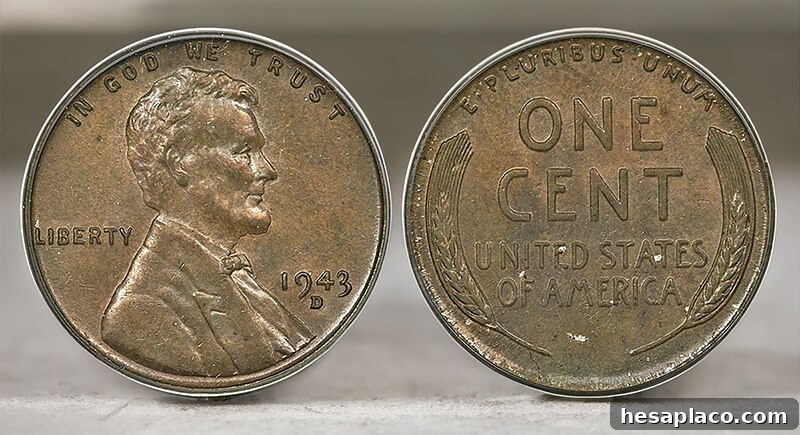
In 1943 the Mint substituted zinc-coated steel for copper to support wartime copper needs. A handful of leftover copper blanks from 1942 were mistakenly struck in 1943, producing just over 20 copper 1943 cents that were never intended to exist. The only known Denver specimen reportedly sold privately for $1.7 million in 2010. A simple magnet test can help screen for genuine copper examples, since copper is not magnetic.
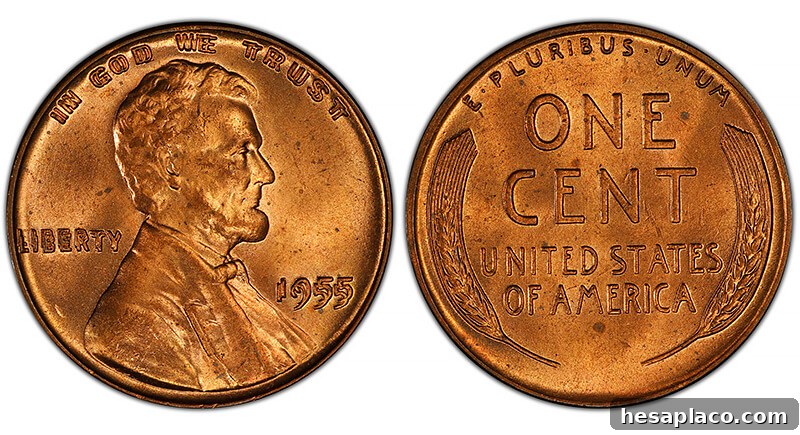
The 1955 Doubled Die Penny
Credit: Wikipedia
One of the most famous minting mistakes, the 1955 doubled die penny resulted when a die received multiple impressions at slightly different angles. The doubling is obvious in “LIBERTY,” “IN GOD WE TRUST,” and the date. Instead of removing the batch, the Mint released the coins into circulation, and many soon ended up in collectors’ hands. A high-grade example sold for $124,875 at GreatCollections in March 2020.
The 1909-S VDB Penny
Credit: Wikimedia Commons
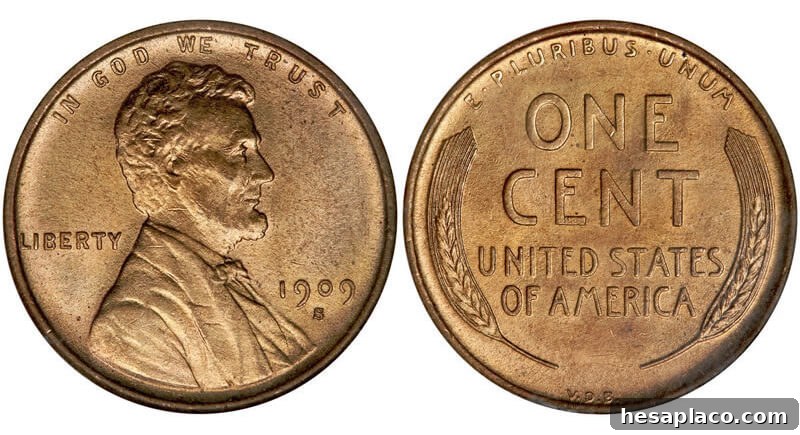
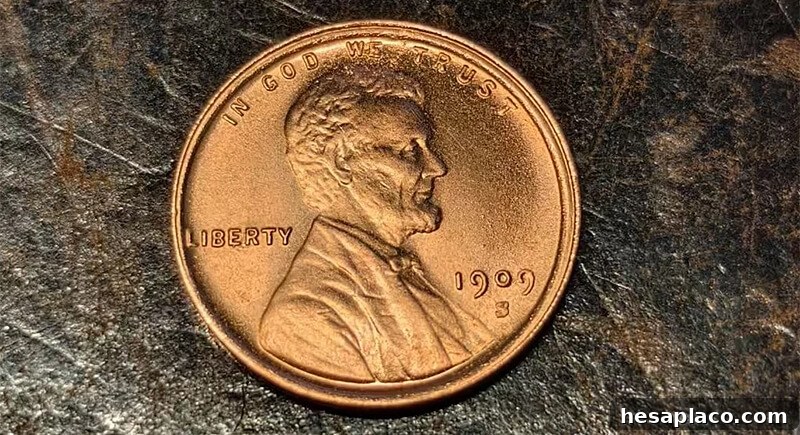
The Lincoln cent debuted on August 2, 1909, and soon after its release the initials “V.D.B.”—the designer Victor David Brenner’s initials—drew public attention. Three days later the Treasury ordered production halted and the initials removed. By then, over 480,000 VDB-marked coins had left the San Francisco Mint. Collectors quickly recognized their scarcity and saved many examples from circulation; one sold for $168,000 at Stack’s Bowers in April 2022.
The 1931-S Lincoln Wheat Penny
Credit: ebay
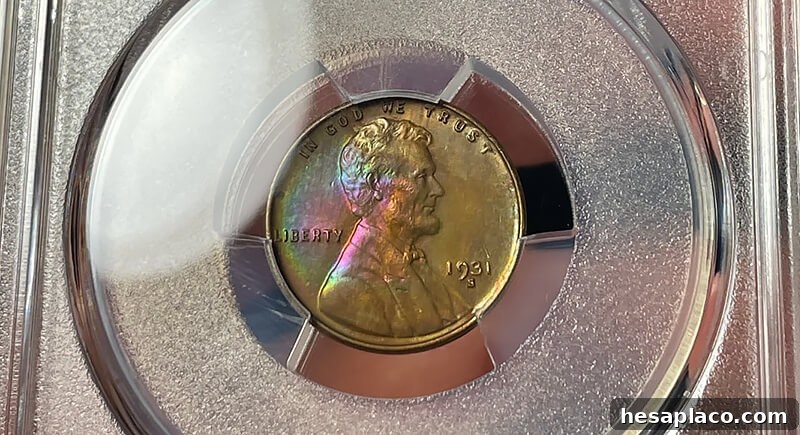
The Great Depression brought bank failures and reduced mint production, making the 1931-S penny scarce. The San Francisco Mint struck only about 866,000 pennies that year, one of the lowest mintages in the Lincoln wheat cent series. Collectors removed many from circulation early on. A PCGS-graded MS67 Red specimen sold for $38,400 at Heritage Auctions in January 2025, while even well-worn circulated examples can still fetch roughly $100 or more depending on condition.
The 2025 Gold Lincoln Cent
Credit: Facebook
As part of the 232 Omega sets sold in 2025, the Mint included a Lincoln cent struck in 24-karat gold—a first for a solid gold Lincoln cent. Because the gold cent was only available within those limited sets and not sold separately, it has become a rare modern collectible. Many owners retain the coin paired with its full Omega set, while a smaller number have separated the piece for individual sale.
The 1955-S Lincoln Wheat Penny
Credit: Youtube
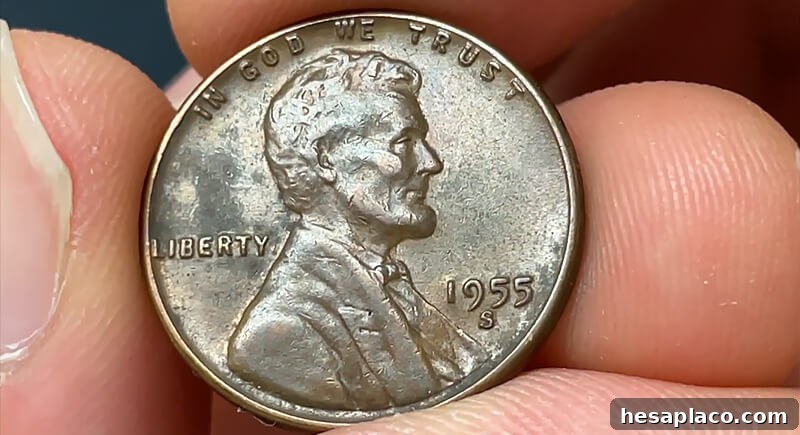
Rumors of a temporary closure at the San Francisco Mint prompted collectors to hoard 1955-S pennies, and that preservation mindset persisted even after the mint reopened. As a result, many examples exist in unusually good condition for their age. A high-grade 1955-S wheat penny sold for $7,475 at Heritage Auctions in 2002, and well-preserved specimens still command collectible prices today.
The 1943 Copper Discoveries
Credit: CoinWeek
For years collectors were cautious about 1943 copper penny claims because copper-plated counterfeits circulated widely. The first verified discovery of a genuine 1943 copper cent came in 1944, when collector Kenneth S. Wing Jr. found an authentic 1943-S copper coin. Another famous find occurred when schoolboy Don Lutes Jr. discovered a 1943 copper cent in his cafeteria change in 1947; that coin later sold for $204,000 in 2019. Verified specimens are exceedingly rare and prized by collectors.
The 1909-S VDB Coin
Credit: ebay
While not every coin appreciates dramatically, the 1909-S VDB has retained strong collector value for over a century. Its early scarcity and the tendency of collectors to remove examples from circulation helped preserve many high-grade specimens. Over time its market value rose from roughly $100,000 in the mid-2010s to auction records near $168,000. The “VDB” initials identify Victor David Brenner, the designer responsible for the Lincoln wheat cent.
Whether you find one of these pennies in an old box, a jar, or a forgotten drawer, it’s worth checking the date, mint mark, and any unusual features. Small minting errors, unique compositions, and limited mintages can transform a coin from pocket change into a valuable collectible.