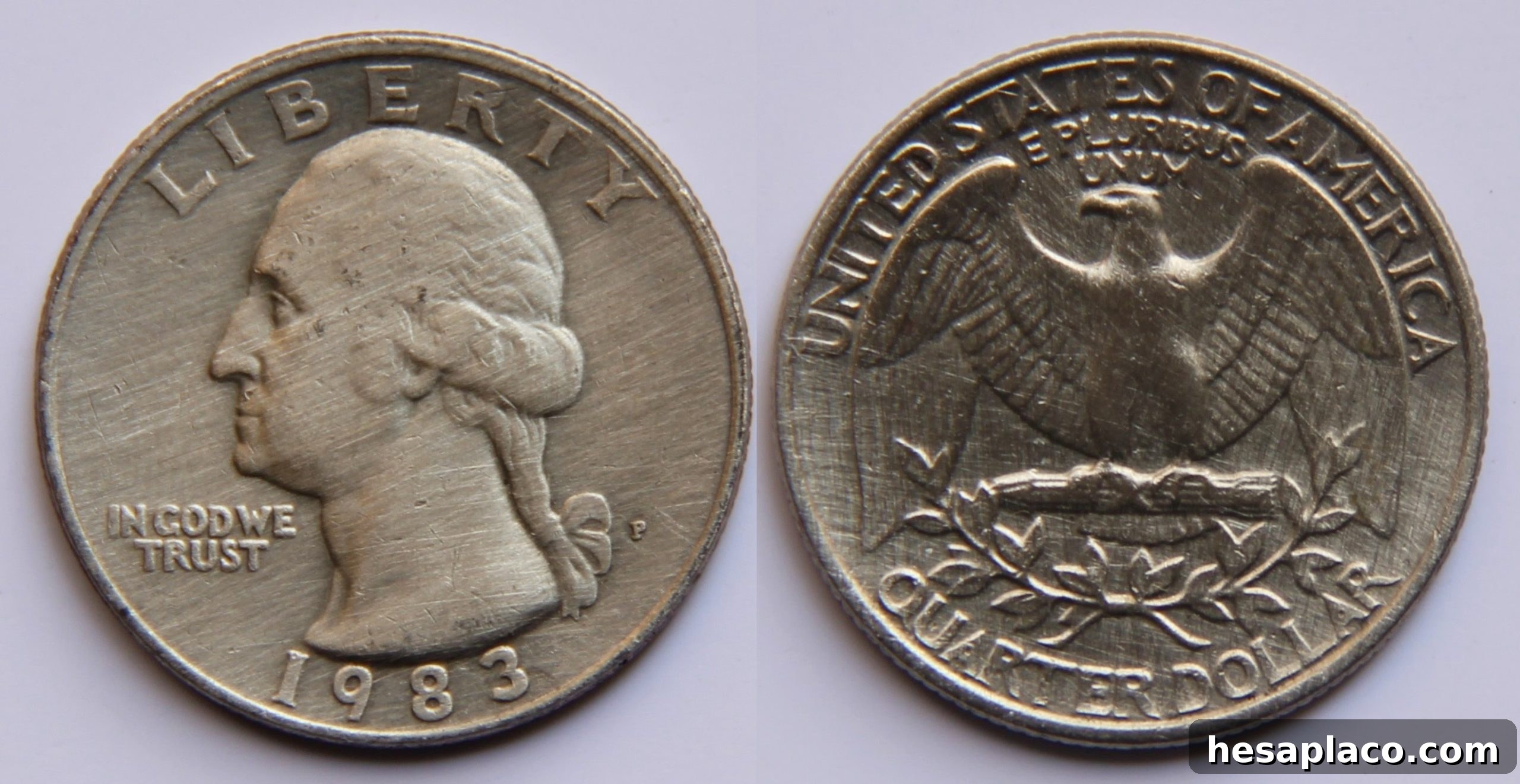
The U.S. quarter first entered circulation in 1796 following the Mint Act of 1792. However, production was intermittent and effectively halted until 1804 because public demand for the denomination was low. Since then, the quarter has evolved through seven distinct basic designs. The most recognizable today is the Washington quarter, introduced in 1932 to commemorate George Washington’s 200th birthday; its portrait has remained the basis for the coin’s obverse design ever since, with various reverse designs appearing over the years for different programs and commemorations.
Collectors pursue quarters for many reasons: historical interest, design variety, and the thrill of discovering rare or high-grade specimens. While most quarters are worth only their face value in everyday circulation, certain examples command significant premiums. Factors that increase a quarter’s value include limited mintage, minting errors, exceptional preservation (graded as “uncirculated” or higher by professional services), and historic significance tied to a particular year, mint, or variety.
Important series that attract collector attention include early Draped Bust and Capped Bust quarters of the late 18th and early 19th centuries, Seated Liberty quarters of the mid-1800s, Barber quarters produced from 1892 to 1916, Standing Liberty quarters from 1916 to 1930, and the Washington quarter series beginning in 1932. Within each series, key dates and low-mintage issues are typically the most valuable. Likewise, modern commemorative issues, state quarters, and America the Beautiful quarters can also fetch premiums when they are scarce, in pristine condition, or exhibit striking mint errors.
Some quarters have reached extraordinary auction prices, often because they are exceptionally rare, in superb condition, or historically significant. Collector interest and market demand can drive prices to levels far beyond face value. While typical circulated quarters remain inexpensive, the small subset of rare and high-grade pieces has created headline-grabbing valuations in the numismatic world—collectively totaling multimillion-dollar sums when the most prized specimens are combined.
For anyone interested in exploring quarter collecting, a few practical steps help determine potential value. First, identify the coin’s date and mintmark, usually located on the obverse near the portrait or on the reverse depending on the issue year. Next, assess the coin’s condition, looking for wear, scratches, or signs of cleaning that can reduce value. Reference current price guides, auction records, and price lists from reputable dealers and grading services to gauge market value. When in doubt about a high-value coin, seek professional authentication and grading to confirm rarity and condition before buying or selling.
Collecting quarters combines history, art, and market dynamics. From the earliest issues after the founding of the U.S. Mint to modern commemoratives, quarters provide a tangible way to connect with American numismatic history. For many collectors, the excitement of finding an uncommon date or a near-mint example in pocket change is as rewarding as the monetary value these coins may eventually command.