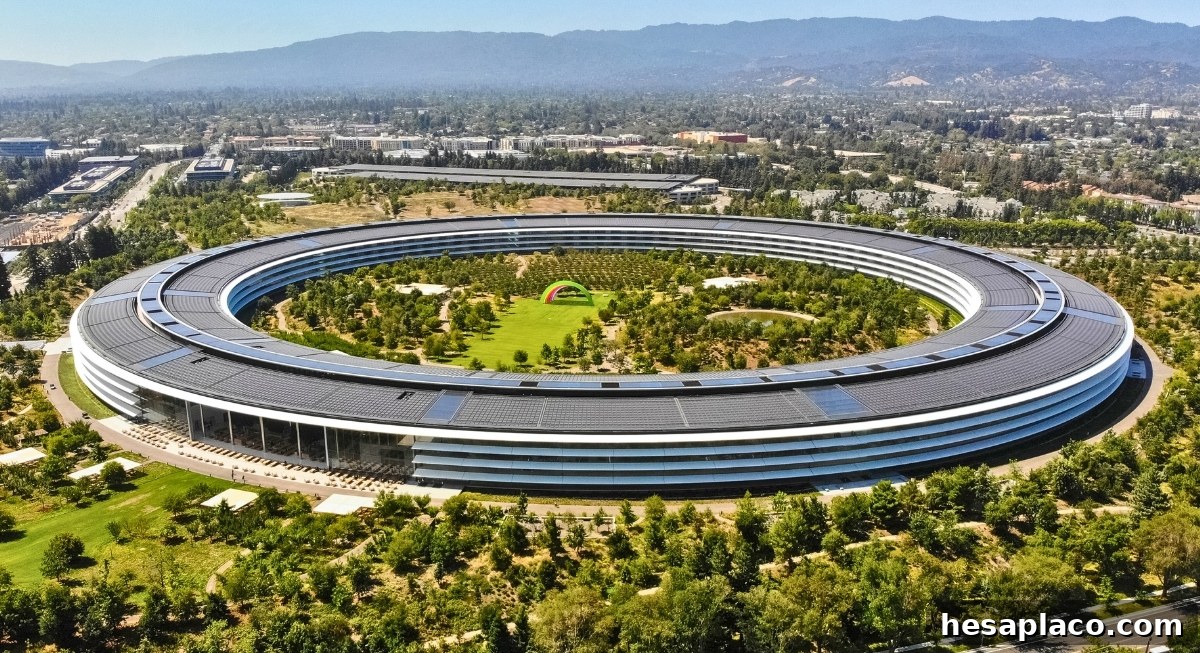
Some of the world’s largest companies treat their headquarters as more than just places to work. These corporate campuses are deliberate expressions of identity, ambition, and status, often built with multibillion-dollar budgets. They combine expansive green spaces, restaurant-quality dining, and amenities that resemble private resorts more than traditional office buildings. Below is a survey of the most expensive and architecturally distinctive corporate headquarters from around the world.
Apple Park – Cupertino, California
Credit: Wikimedia Commons
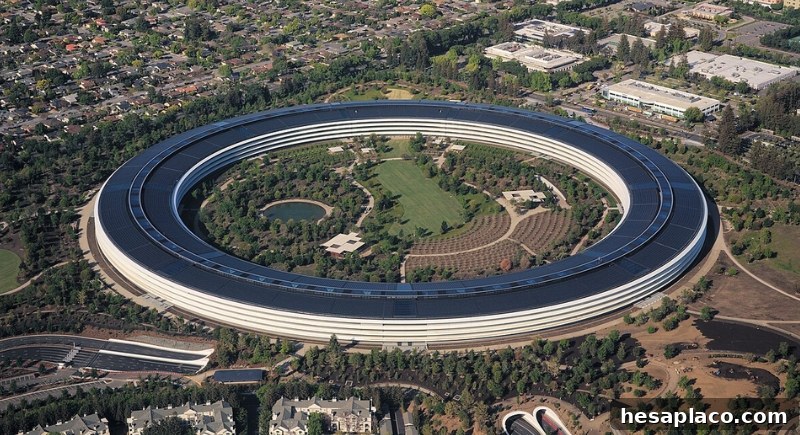
Apple Park, which cost roughly $5 billion to build, is a striking example of contemporary corporate architecture. Nicknamed “The Spaceship” for its perfect circular form, the campus accommodates more than 12,000 employees. It runs on 100 percent renewable energy, features immense curved glass walls that blur the boundary between interior and landscape, and includes the 1,000-seat Steve Jobs Theater. The design emphasizes simplicity, collaboration, and a close connection to the outdoors.
425 Park Avenue – New York City, New York
Credit: Instagram
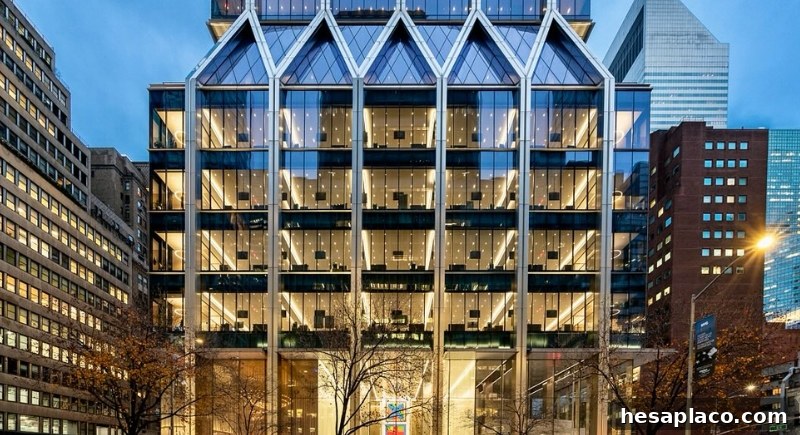
Designed by Norman Foster, 425 Park Avenue is a modern glass-and-steel tower that quickly established itself among Manhattan’s most premium office addresses. The building commands some of the city’s highest rents and drew a high-profile lease from hedge fund Citadel. Inside, tenants benefit from triple-height ceiling spaces, a sky garden, and a collaborative “club floor” intended to foster interaction and networking. The tower replaced a midcentury office block and became the first full-block tower on Park Avenue in decades.
Ferrari Headquarters – Maranello, Italy
Credit: Instagram
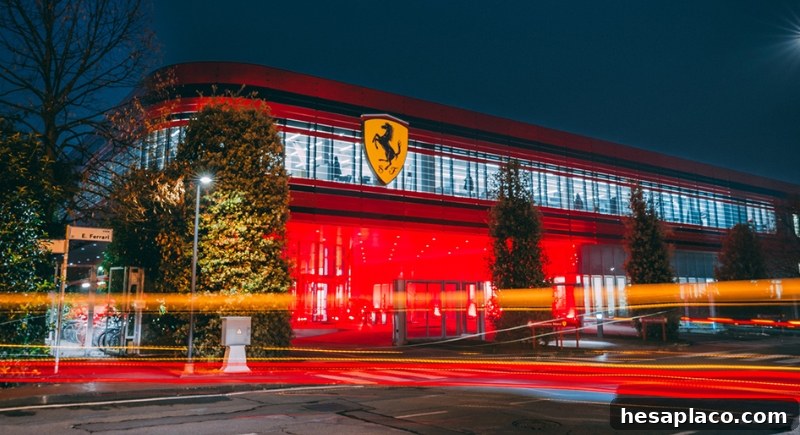
Ferrari’s campus in Maranello embodies the speed, craftsmanship, and design DNA of the marque. Designed by Renzo Piano, the site brings together a wind tunnel, an advanced research and development center, and a gallery that traces Ferrari’s storied history. The headquarters integrates sustainability goals, including LEED Platinum certification, abundant natural light, and energy-efficient systems that support focused, high-performance work.
Googleplex – Mountain View, California
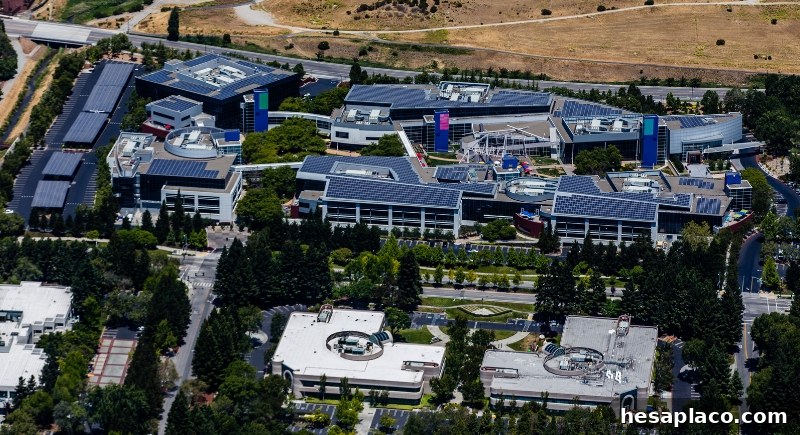
Credit: Wikimedia Commons
The Googleplex spans roughly 42 acres and blends playful workplace culture with serious infrastructure. The campus includes free-roaming bicycles, micro-kitchens, and varied collaboration zones, yet sustainability is a key priority: Google’s nearby Bay View campus features innovative dragon-scale solar panels and geothermal piles to reduce emissions. The overall design supports creativity, cross-team interaction, and a campus-like sense of community.
Samsung Town – Seoul, South Korea
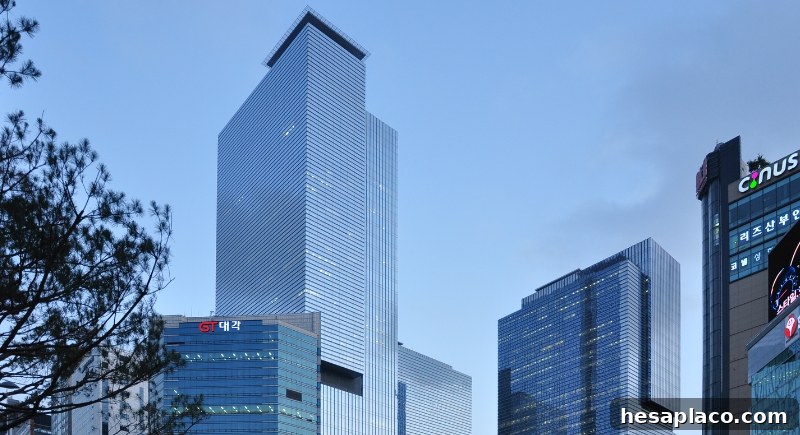
Credit: Wikimedia Commons
Samsung Town is the corporate hub for several Samsung affiliates, including Samsung Electronics and Samsung Life Insurance. The complex relies on advanced smart-building systems that manage lighting, communications, and energy use across its structures. Although public access is limited, visitors and employees describe the interiors as polished and minimalist, reflecting the company’s product design sensibility and emphasis on efficiency and control.
Facebook (Meta) – Menlo Park, California
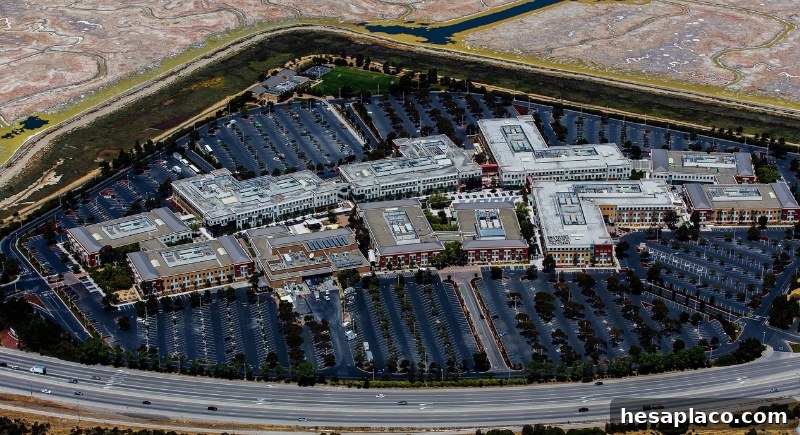
Credit: Wikimedia Commons
Meta’s MPK20 building, designed to accommodate rapid growth, spans roughly 430,000 square feet and is noted for one of the largest open-plan interiors in the world. Architect Frank Gehry gave the exterior a restrained look while designing highly flexible interior spaces. A nine-acre rooftop park crowns the structure, featuring walking trails and more than 400 trees. The rooftop and open floor plans are intended to keep teams visually and socially connected as the company scales.
Otemachi First Square – Tokyo, Japan
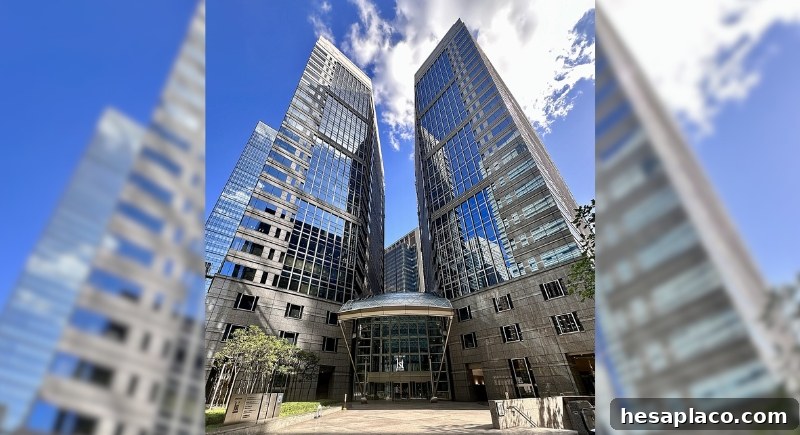
Credit: Wikimedia Commons
Otemachi First Square’s twin towers sit adjacent to the Imperial Palace grounds and connect directly to multiple subway lines, making them a prime location for major banks and insurance firms. The complex uses a central atrium and a sunken garden to introduce daylight and open space into an otherwise dense business district. Office rents here are among the highest in Asia, reflecting the location’s prestige and connectivity.
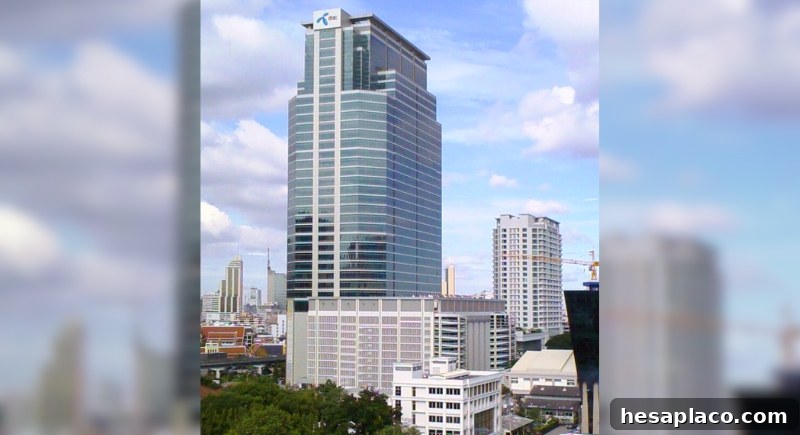
Dtac House – Bangkok, Thailand
Credit: Wikimedia Commons
Dtac consolidated multiple offices into a single 22-floor headquarters totaling about 650,000 square feet. Guided by a “play and learn” philosophy, the building reads more like a campus than a conventional tower. Features include an indoor soccer field, a circular amphitheater library, picnic-style meeting areas, and a terrace with views over Bangkok. The design aims to foster collaboration, wellbeing, and informal learning.
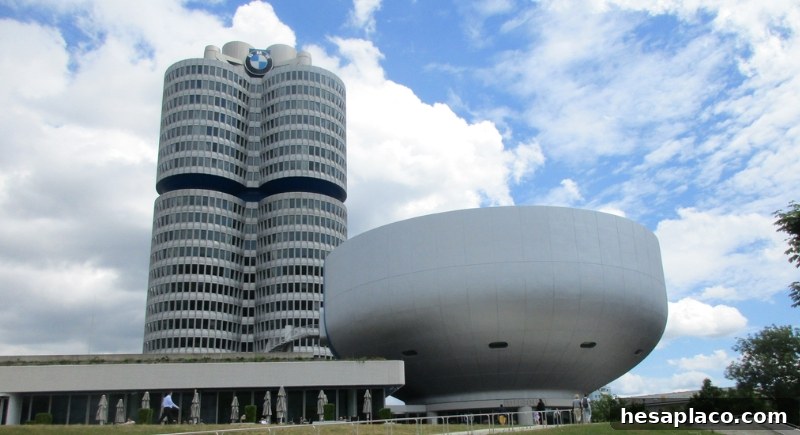
BMW Headquarters – Munich, Germany
Credit: Wikimedia Commons
Completed in the 1970s yet remaining remarkably futuristic in appearance, BMW’s headquarters in Munich was designed to echo engine cylinders—the tower’s four vertical segments suggest a mechanical core. The structure is ingeniously suspended from a central column, an engineering achievement that connects the building’s form to the company’s automotive heritage. Nearby BMW Welt serves as a museum and event venue for exhibitions and launches.
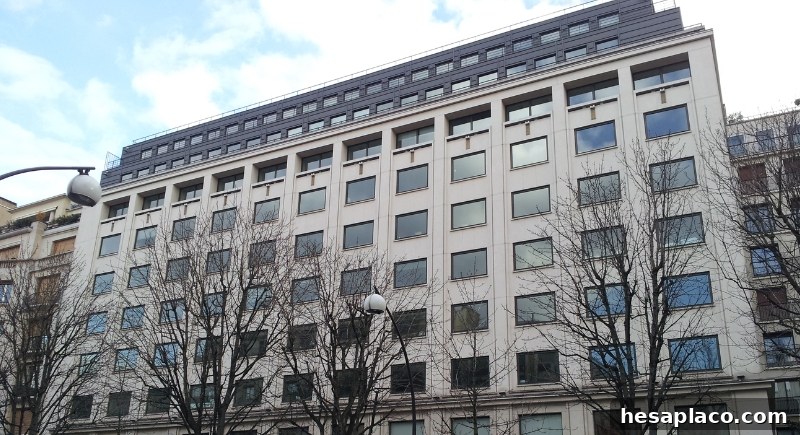
LVMH Headquarters – Paris, France
Credit: Wikimedia Commons
Jean Nouvel’s design for LVMH’s Paris headquarters embraces transparency and refined materials to reflect the group’s luxury identity. Located near the Seine, the building features a glass façade, intricate interior details, and a spiraling staircase that suggests upward movement and growth. Rooftop gardens offer panoramic views of Paris and provide serene outdoor space for employees and visitors alike.