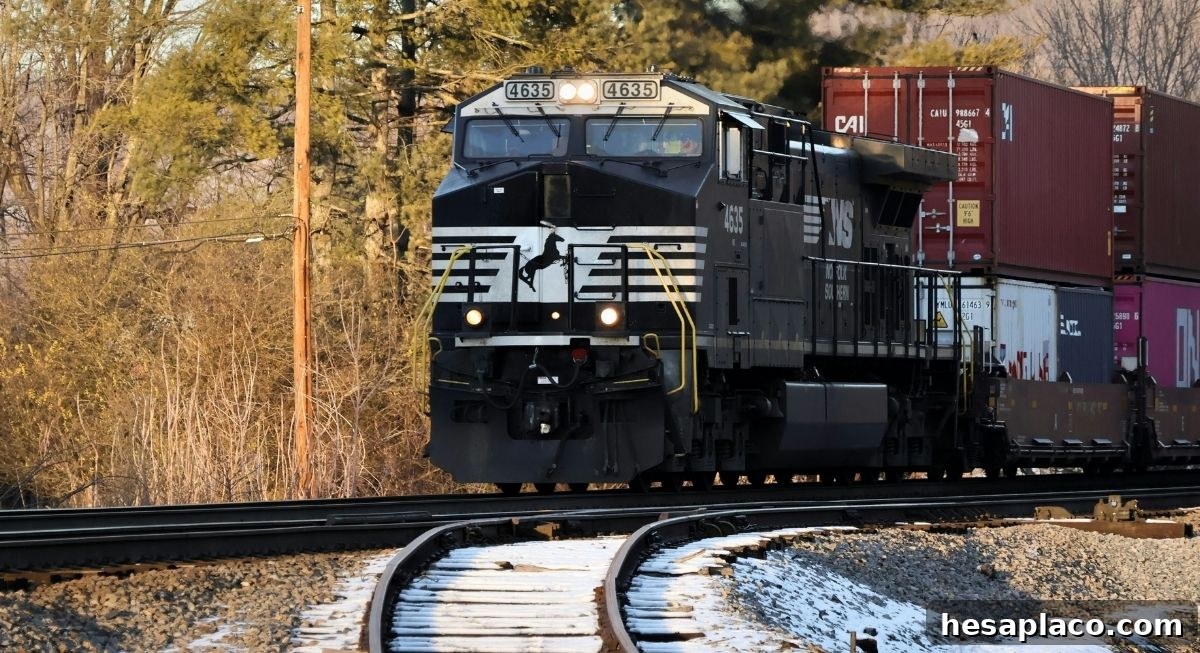
Out in the deserts of Arizona and California, freight trains have become targets for a striking wave of thefts: unreleased Nike drops and other high-value sneakers taken in transit, sometimes worth hundreds of thousands of dollars per haul. Over the past year, these rolling heists have emerged as one of the most unusual and lucrative crime patterns in retail.
Since March 2024, roughly ten separate robberies have struck freight trains running along remote stretches between Phoenix, Kingman, Seligman, and the Mojave. In nine of those incidents, thieves made off with Nike sneakers—limited-edition Jordans and high-demand collaboration releases. Law enforcement estimates the total value of goods stolen in these operations to be around $2 million.
How the Thefts Work

Image via Unsplash/Mateusz Zatorski
These are not opportunistic smash-and-grab shopliftings. The crews behind the train thefts plan and execute operations that resemble military-style raids more than petty theft. In January, for example, almost 2,000 pairs of the Nigel Sylvester x Air Jordan 4 were stolen from a train moving through Arizona—an estimated loss of $440,000. Those shoes were unreleased and had a suggested retail price of $225 per pair.
In many cases, police have recovered stolen inventory days later inside rented vehicles. One raid turned up a stash found via GPS trackers in a rented box truck. In another earlier incident, a U-Haul loaded with stolen Air Jordan 11s—still unreleased “Legend Blue” colorways—was located after investigators followed tracking leads.
The pattern for these crimes is consistent: thieves identify containers carrying high-value or scarce products, using tips from insiders at warehouses or shipping firms, leaked tracking numbers, publicly available cargo trackers, or knowledge of which brands are moved in secure cars. Once a target is identified, the crew waits for the train to slow down—often near a track switch or signal.
When the moment arrives, someone boards the train with tools—bolt cutters or power saws—to breach locks and doors. After locating the cargo, the thieves disable the train’s movement by cutting an air brake hose, which triggers the emergency brakes and brings the train to a stop. Trucks or accomplices then meet the train to remove the goods; sometimes merchandise is simply thrown to the roadside and picked up almost immediately.
Criminal Networks and Where the Goods End Up

Image via Unsplash/Anton
Freight trains can stretch up to two miles, making it nearly impossible for a single conductor to monitor every car. Company policies often instruct crew members not to intervene, and by the time authorities reach a remote location—if they are notified at all—the thieves have already disappeared. The operations move quickly: merchandise may be sold online the same day, taken to short-term storage, or transported to larger warehouses for distribution and resale.
Investigators say many stolen items flow toward California, where they enter secondhand markets or are shipped overseas. Enforcement actions have yielded significant seizures: more than 60 arrests have been tied to these thefts, and one raid uncovered over $3 million in stolen merchandise alongside detailed records listing preferred brands and shipment targets. Charges across state and federal levels are pending against numerous suspects.
Authorities report that some of the networks include teenagers and groups coordinating hits across county lines, communicating via encrypted messaging apps and burner phones. Cells operating in cities like Phoenix and Los Angeles appear to work in concert, prompting Homeland Security and other agencies to treat the incidents as organized criminal activity rather than isolated opportunistic thefts.
Experts such as Keith Lewis of Verisk CargoNet note that locating a particular container among hundreds on a single train requires insider knowledge or tracking information. Once the right car is identified, the theft is a matter of precise timing and force.
Weaknesses in America’s Supply Chain

Image via FreePik
These sneaker heists are part of a broader rise in cargo theft. Reported thefts in the U.S. increased roughly 40 percent last year, with over 65,000 incidents recorded in 2024. Government estimates place annual losses from truck, rail, and port theft between $15 billion and $35 billion.
Infrastructure and geography are significant factors: the United States maintains more than 140,000 miles of rail, much of it running through isolated areas that are difficult to monitor or reach quickly. Emergency response in remote locations can require helicopters or off-road vehicles, and many stretches of track simply lack continuous surveillance.
High-value sneakers introduce another incentive. The resale market for limited releases frequently pushes prices well above retail—sometimes doubling or tripling—making containers full of Jordans, collaboration drops, or other hyped footwear extremely valuable targets, sometimes more lucrative than electronics or jewelry shipments.
Large brands can mitigate risk with private security teams, GPS-tagged shipments, and investigators who monitor resale listings and coordinate with law enforcement. Smaller manufacturers and retailers, however, often rely on third-party logistics providers and may lose visibility once goods leave the warehouse. Budget constraints, subcontracted labor, and fragmented jurisdictional responsibilities further slow recovery efforts after a theft occurs.
The global resale market also fuels demand. Limited sneaker releases sell out within seconds and reappear on resale platforms and auction sites at steep markups. Buyers overseas, in Europe and Asia, contribute to strong demand and higher prices, which in turn increases the incentive for theft and the speed at which stolen goods disappear into secondary markets.
The costs of cargo theft extend beyond lost inventory. Companies face higher insurance premiums, greater spending on security and recovery operations, and the expense of technology to track and protect shipments—all of which can be reflected in higher consumer prices.
Sneakers as a Symptom of a Larger Problem

Image via Unsplash/Ox Street
It’s tempting to view these desert train robberies as a modern, almost cinematic oddity—bandits stealing Air Jordans under the sun. The reality is more troubling: well-organized, profitable criminal networks exploiting systemic vulnerabilities in supply chains. In these incidents, the visible product is sneakers, but the deeper issue is the fragility of logistics systems and the sophistication of groups that have learned to exploit them. Addressing the problem will require improved monitoring, tighter collaboration between private industry and law enforcement, and better safeguards across the entire transportation network.