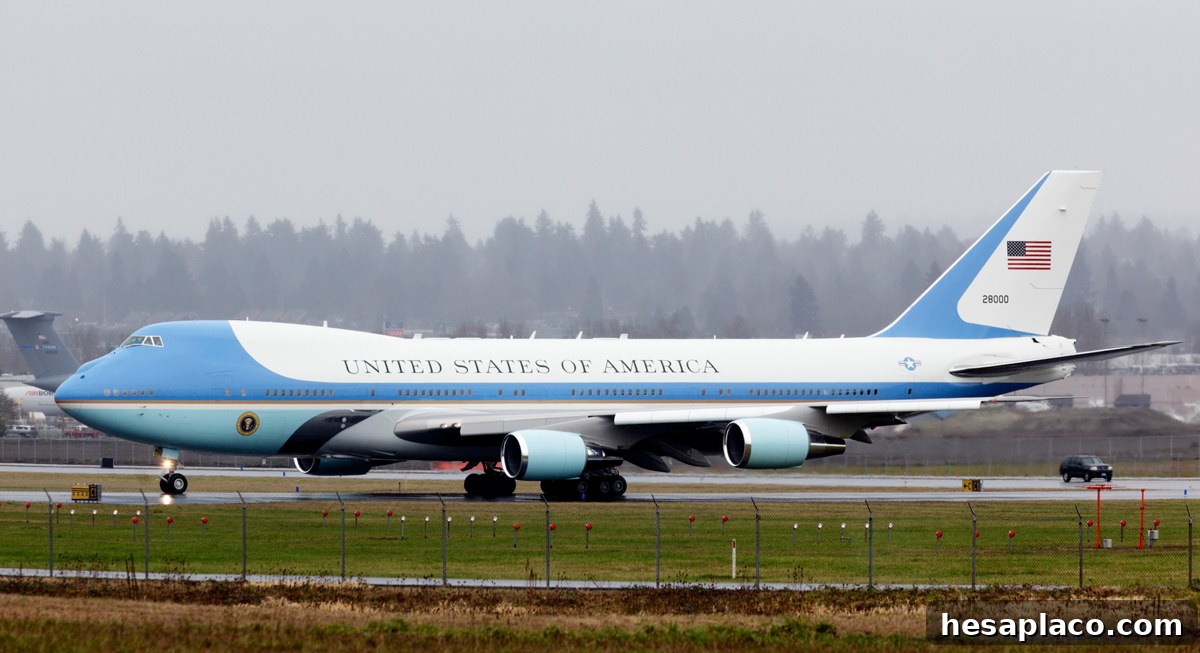
Air Force One has transported U.S. presidents across the globe for decades. While most people recognize the iconic blue-and-white jet with the presidential seal, the aircraft’s capabilities and design run much deeper than its paint job. Behind the scenes are engineering solutions, security measures, and practical features tailored to the unique demands of carrying the commander-in-chief. Below are 15 notable aspects that set this aircraft apart.
Any Aircraft Carrying the President Is Called Air Force One
Credit: Wikimedia Commons
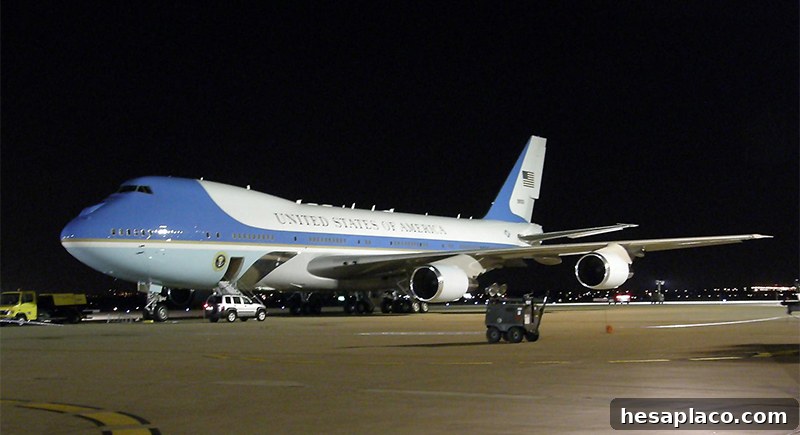
The name Air Force One is not tied to a single airplane model; it is a radio call sign that applies to any U.S. Air Force aircraft carrying the president. This rule was formalized in the early 1950s after an air traffic control mix-up involving President Dwight D. Eisenhower’s flight highlighted the potential for dangerous confusion. Regardless of size or type—whether a large jet or a small plane—if the president is aboard, that aircraft uses the Air Force One call sign.
There Are Multiple Dedicated Entrances
Credit: Getty Images
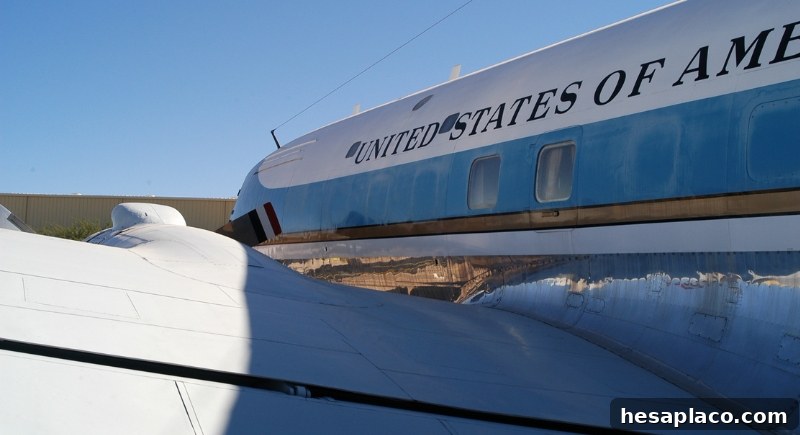
The jet features separate access points to keep boardings orderly and secure. The president typically uses a prominent forward door—ideal for brief public appearances—while senior staff and Secret Service personnel often use a rear staircase. Reporters and other credentialed travelers are usually routed to a different entrance, sometimes below the main cabin, to limit traffic near sensitive areas.
A Full Medical Suite Travels Onboard
Credit: Getty Images
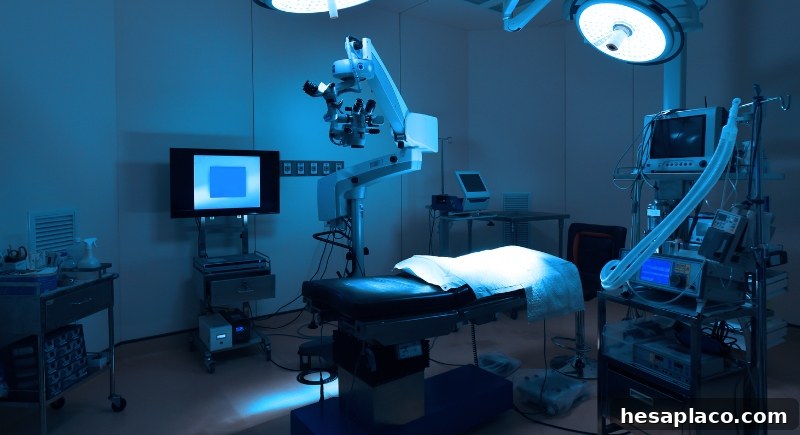
Air Force One contains a compact but well-equipped medical area that can function as an operating room if needed. The onboard medical resources include an operating table, emergency equipment, and a pharmacy, and a physician or trained medical team is present on nearly every flight. These capabilities ensure urgent care is available immediately, even during long-range missions.
Midair Refueling Extends Its Range
Credit: iStockphotos
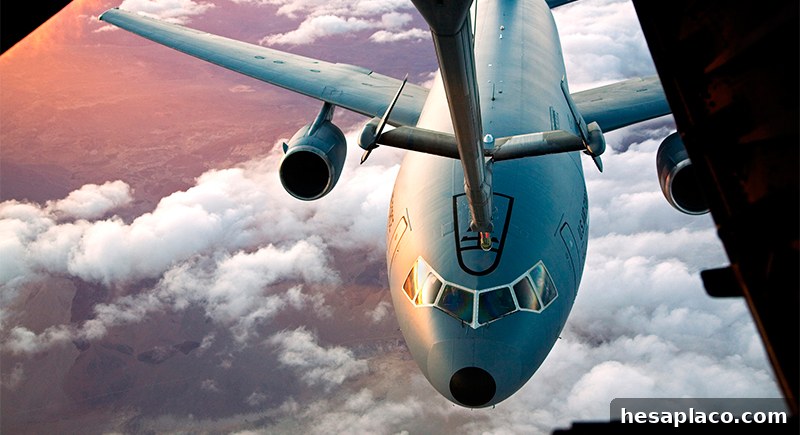
Air-to-air refueling capability allows the plane to stay airborne far longer than conventional commercial aircraft. A tanker aircraft can connect via a refueling boom to replenish fuel in flight, giving near-unlimited range if circumstances require. While this option is rarely used during routine travel, it exists to avoid risky landings or to maintain airborne operations during emergencies.
Large Galleys Feed a Large Group
Credit: iStockphotos
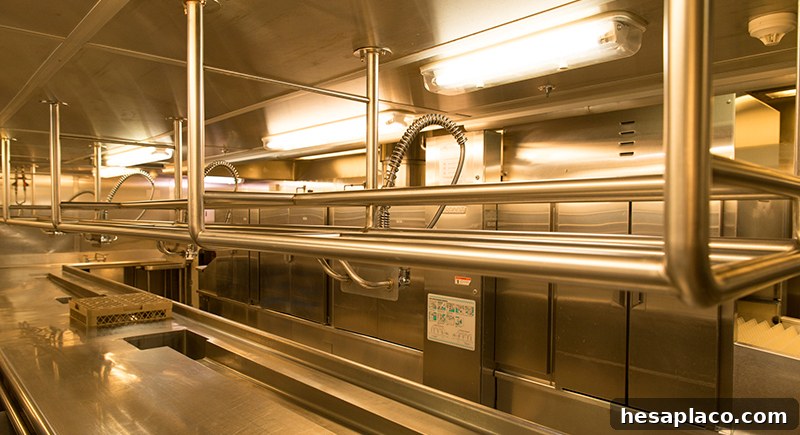
Air Force One includes two fully fitted galleys capable of preparing fresh meals for up to one hundred people. Ingredients and supplies are stocked for long flights, and the culinary staff can accommodate dietary restrictions and preferences for officials and guests. This greater-than-usual capacity ensures everyone onboard—from senior advisers to press corps members—can be served during extended travel.
Journalists Share the Cost of the Flight
Credit: Wikimedia Commons
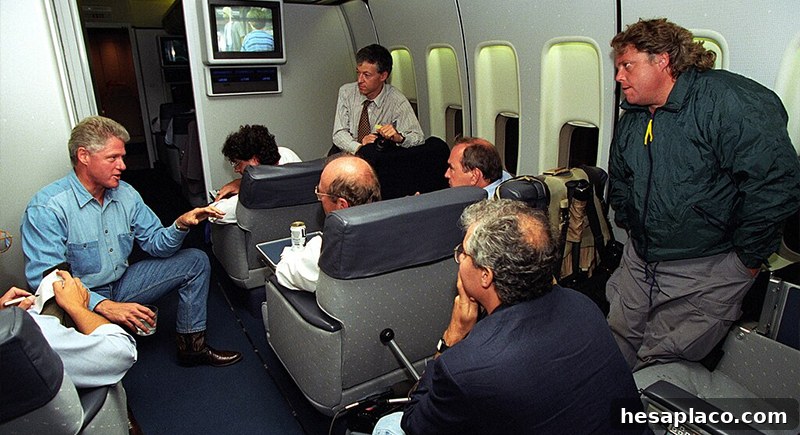
Reporters permitted to travel on the presidential aircraft are required to reimburse the government for their portion of trip costs. This practice helps offset the significant expenses associated with operating the jet. In addition, press areas are segregated toward the rear of the plane and access to the president’s private spaces is restricted. When the president speaks with the press aboard the aircraft, it is typically the president who approaches the reporters rather than the other way around.
Retired Presidential Aircraft Become Museum Pieces
Credit: Wikimedia Commons
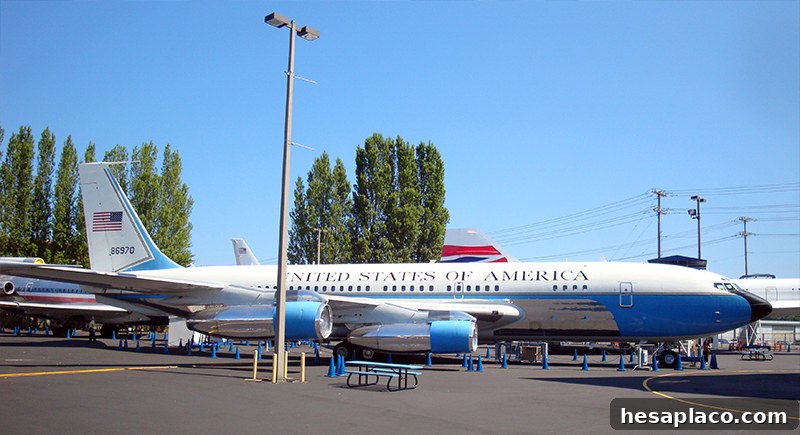
Several former presidential aircraft have been preserved as exhibits. SAM 27000, which served several presidents, is on public display at the Ronald Reagan Presidential Library in California, while other decommissioned jets are kept at museums across the United States. Touring these planes reveals how layouts, technology, and amenities evolved with each administration.
The Presidential Limousine Is Shipped Separately
Credit: Wikimedia Commons
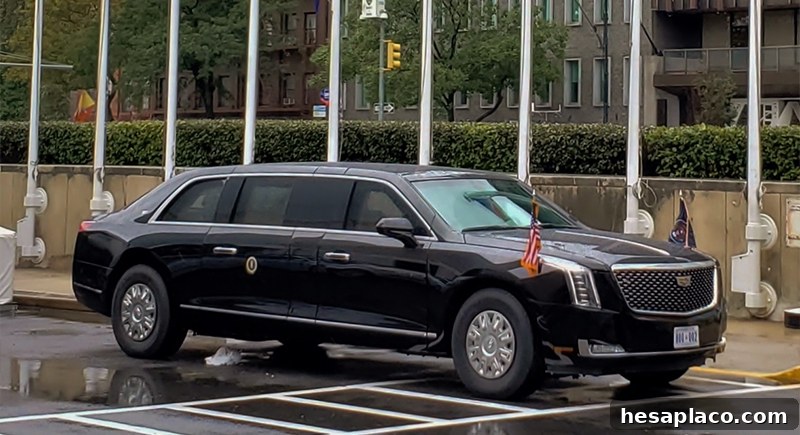
The armored presidential limousine—nicknamed the Beast—is not carried inside the passenger cabin. Instead, it is transported separately, usually by a heavy-lift cargo aircraft such as a C-17 Globemaster, and flown to the destination ahead of the president’s arrival. This method guarantees that secure ground transportation is available immediately on landing.
It Uses Remote Ramps, Not Passenger Gates
Credit: iStockphoto
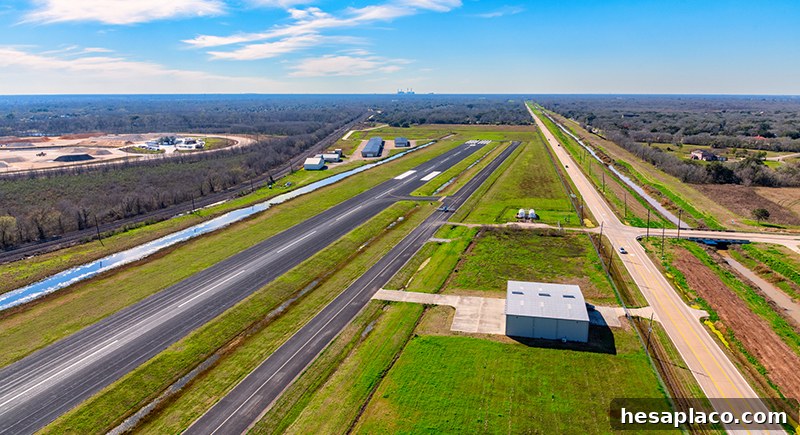
For operational security and rapid departure capability, the president’s plane avoids standard commercial gates. It usually uses remote ramps, military airfields, or secured areas of civilian airports, ensuring minimal exposure to crowds and quick access for takeoff. This approach reduces risk and keeps the operation flexible in case plans change suddenly.
Communications Systems Are Hardened and Secure
Credit: Facebook
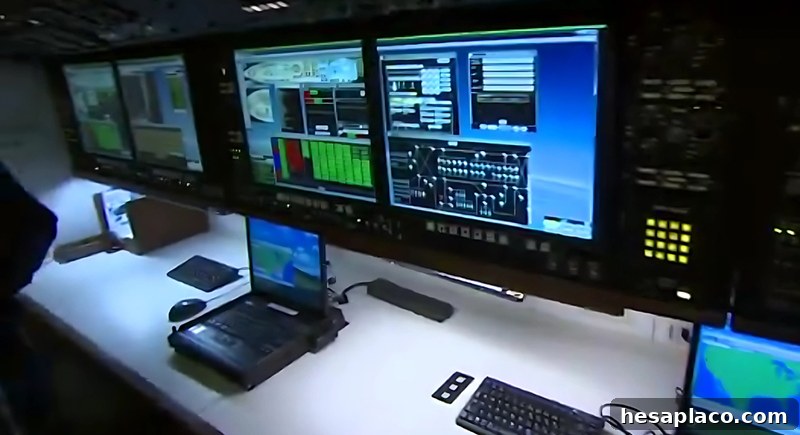
Air Force One features hardened and encrypted communications that allow the president to communicate securely with military commanders, cabinet members, and world leaders while airborne. Upgrades after major security events enhanced the aircraft’s resistance to electromagnetic interference and added redundant satellite links, encrypted phones, and other classified systems to maintain command-and-control capabilities at all times.
The Interior Functions Like a Flying Office
Credit: Wikimedia Commons
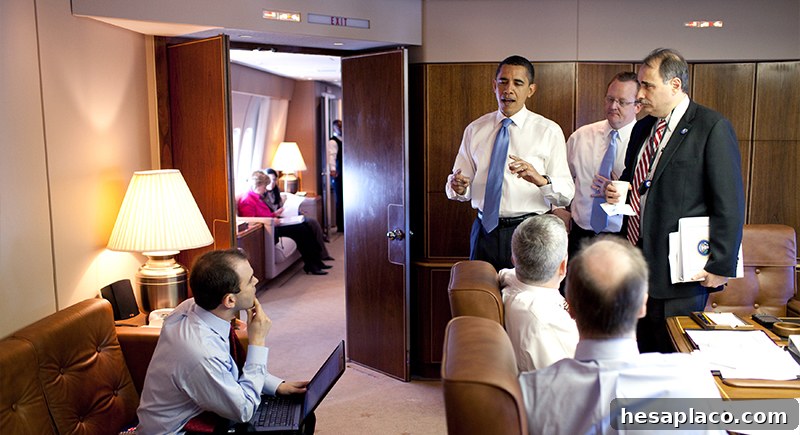
Rather than resembling a typical passenger cabin, the interior is organized to support continuous work. There is a presidential suite complete with a desk and private area, meeting and conference spaces with secure communications, and a small gym for exercise on long trips. Staff and advisers have workstations so the administration can remain productive and responsive while in transit.
A Backup “Doomsday” Plane Often Accompanies It
Credit: Wikimedia Commons
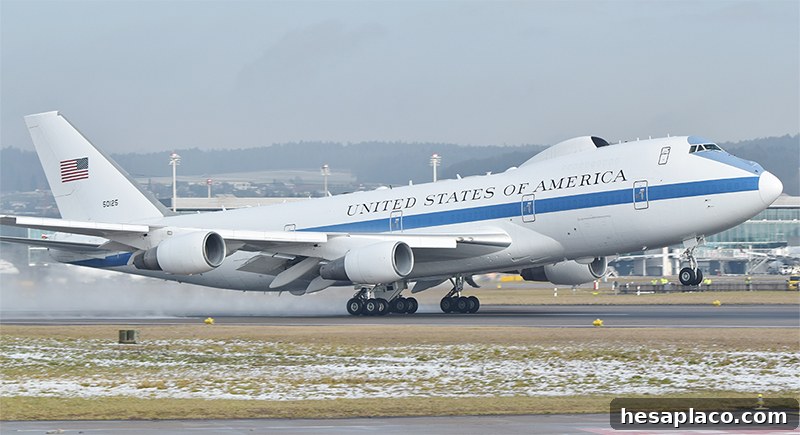
On certain missions—especially overseas—an E-4B National Airborne Operations Center, sometimes called the Doomsday Plane, may shadow Air Force One. Designed to act as a mobile Pentagon, the E-4B carries hardened communications systems and extensive satellite gear to serve as an airborne command post in case of catastrophic events. Its presence provides an added layer of contingency.
Performance Is Higher Than Many Assume
Credit: Wikimedia Commons
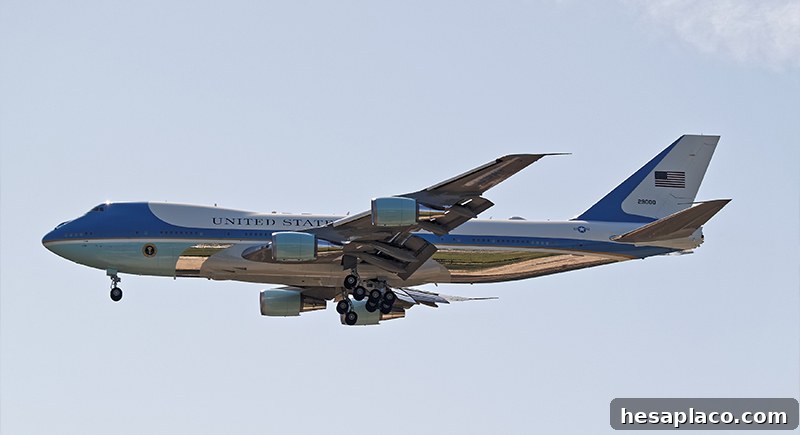
Despite its significant size and specialized equipment, the aircraft achieves cruising speeds around 630 miles per hour and can operate at altitudes above 45,000 feet. Powerful engines and aerodynamic modifications give it performance comparable to, or in some respects better than, many standard commercial long-haul jets—enabling faster routing and higher-altitude flight where beneficial.
The Exterior Design Was Carefully Selected
Credit: Wikimedia Commons
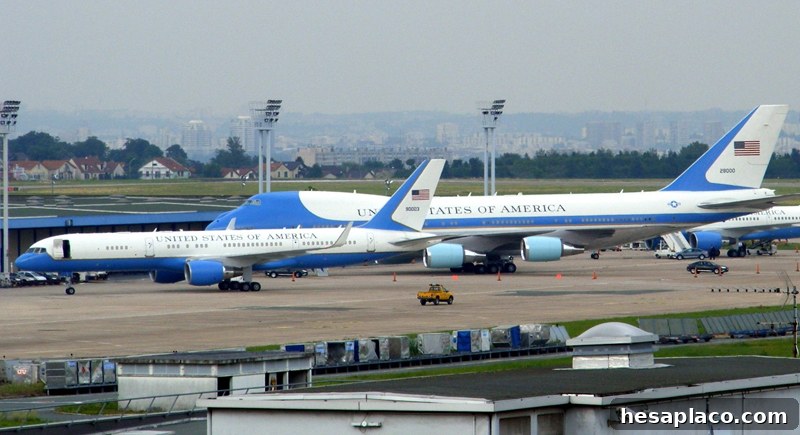
The familiar blue-and-white livery was introduced during the Kennedy administration after industrial designer Raymond Loewy developed a look intended to convey a modern, democratic image. Prior presidential aircraft had more overtly military styling. The current scheme has endured through multiple administrations and is now globally recognized as the president’s official aircraft.
Operating Costs Are Extremely High
Credit: Wikimedia Commons
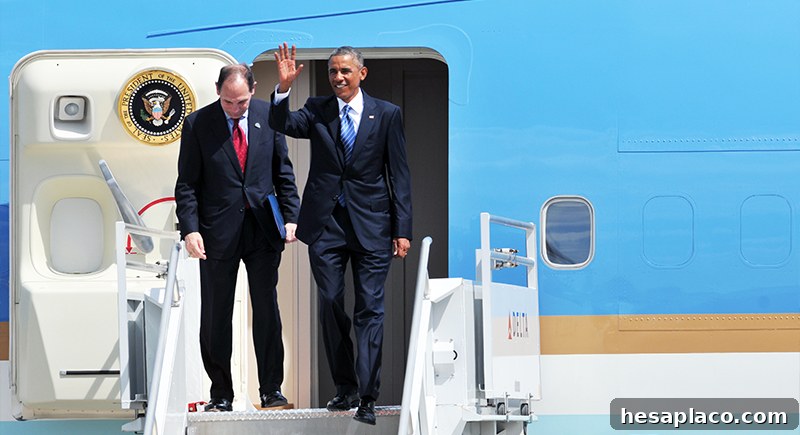
Operating and maintaining Air Force One is an expensive endeavor. Past administrations have shown hourly operating expenses that can reach into the hundreds of thousands of dollars per flight hour when fuel, crew, security, and support services are tallied. To address aging airframes and evolving requirements, the government has contracted for new presidential aircraft under multibillion-dollar programs that reflect both technological upgrades and rising costs.
Together, these features illustrate how Air Force One is far more than a presidential symbol: it is a highly specialized, mobile command center engineered for security, continuity of government, and sustained global travel. Every element—from communications and medical facilities to logistics and design—supports the singular mission of safely moving and maintaining the office of the presidency.