I first encountered ChatGPT, and artificial intelligence more broadly, through conversations about content creation. It was December 2022, and social media influencers were already presenting it as the next major shift in how people would write, work and create online.
As a professional writer, I was naturally uneasy. I had spent decades building a career around words, ideas and storytelling, and suddenly it seemed as if that career might be under threat. After a few restless nights, I decided to sign up and see for myself what ChatGPT could actually do.
My First Experience With ChatGPT
ChatGPT
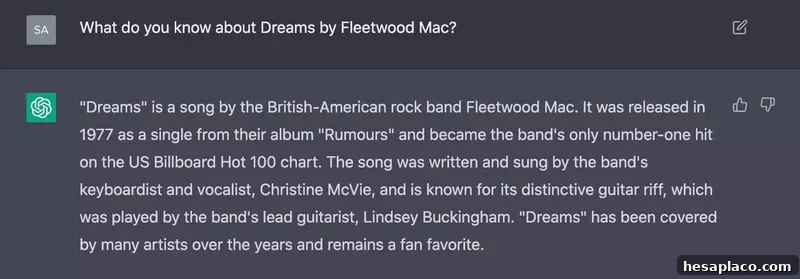
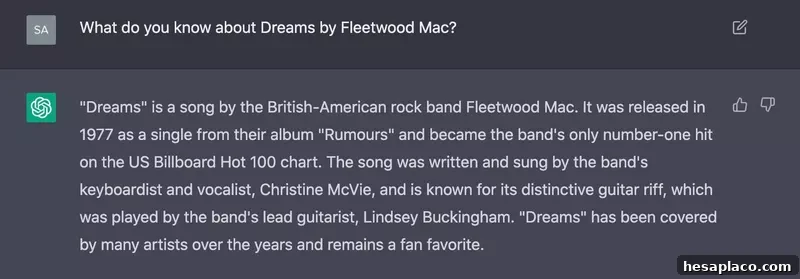
At the time, I was writing an article about Fleetwood Mac’s greatest songs, so I asked ChatGPT what it knew about “Dreams.” The response was polished and grammatically correct, but the information was wrong. It stated that Christine McVie wrote the song, when in fact Stevie Nicks wrote “Dreams.”
That mistake helped me sleep a little better. The end of my writing career, and perhaps the predicted downfall of human content creators, seemed to be greatly exaggerated.
Still, artificial intelligence is not going away. The cat is out of the bag. AI tools are already being used in customer service, human resources, healthcare, business operations and, most controversially, content creation. What remains unclear is how responsibly these tools will be used and where the boundaries should be drawn.
So far, the excitement around AI sometimes feels like a public relations campaign designed to satisfy investors eager to jump on the latest trend. In other cases, it looks like a race to the bottom, where accuracy and originality matter less than speed, scale and clicks.
So, How Does ChatGPT Work?
Getty Images
ChatGPT was introduced on Nov. 30, 2022, by its parent company, OpenAI. The reaction was immediate and divided. Some people panicked, while others dismissed it as overhyped. What few expected was how quickly it would become popular. By February 2023, Digital-Adoption.com ranked OpenAI as the 44th-most visited website in the world, with traffic rising dramatically from its launch period.
ChatGPT is a language model trained on large amounts of data. After training, it can generate responses in real time based on patterns in that data. As users interact with the system and provide feedback, the model can be refined and improved, although improvement does not mean it becomes automatically accurate or unbiased.
Artificial intelligence is already reshaping the workplace by automating routine tasks, organizing information and supporting decision-making. One of its most visible uses is conversational AI, where tools can interpret and respond to natural language. ChatGPT is one of the best-known examples, but other companies have also entered the space, including Microsoft’s Bing and Elon Musk’s proposed TruthGPT.
Potential Applications of ChatGPT in the Workplace
Getty Images
Businesses have used chatbots for years, but ChatGPT represents a more advanced version of that technology. In some industries, its potential is genuinely useful. In customer service, for example, AI can answer routine questions, allowing human representatives to focus on more complex or sensitive issues.
Human resources is another area where ChatGPT may become common. It can help draft job descriptions, write outreach emails, identify potential candidates, schedule interviews and respond to basic HR-related questions. In healthcare, it may assist with appointment scheduling, prescription refill requests and triage. It can also provide general information about conditions and treatments, although medical use requires strict oversight and careful verification.
Use AI, but Don’t Abuse It
Getty Images
Entrepreneurs are both excited and concerned about what AI means for the future of work. James Beattie, founder of WeTested, a site that publishes unbiased software reviews, told Work + Money that businesses built around repetitive tasks or heavy data processing face the greatest risk of automation. Manufacturing, customer service, data entry and parts of finance and accounting are among the most vulnerable areas.
However, Beattie does not believe this means workers are powerless. He argues that employees and companies can prepare by investing in continuous learning, adapting to new technologies and focusing on creative, strategic work that is harder to automate.
“AI may be able to augment human creativity and innovation in certain industries or roles, but it is unlikely to replace it entirely,” Beattie said. “Humans have a unique ability to think abstractly, empathize and make intuitive leaps that AI has not yet been able to replicate.”
Ronaldo Hare, founder of Prem Property, believes jobs in writing, customer service and accounting may be among the first to be heavily affected, with human input reduced to reviewing the final result. With enough machine learning, he suggests, even that review process could eventually shrink.
Hare began preparing his company as soon as ChatGPT became widely known. His team researched ways to use AI in property management, including ebook writing, rent calculation tools, blog drafts and email production. He says AI has reduced administrative and production hours, allowing the business to focus more on profitable areas.
His advice is simple: embrace the change thoughtfully. Businesses should discuss AI with their teams, understand how it is developing, identify where it can help and create an implementation plan that can adapt as the technology evolves. As Hare put it, use AI, but do not abuse it.
Journalism and Content Creation Is Where Things Get Murky
Getty Images
In April 2023, Business Insider’s global editor-in-chief Nicholas Carlson announced that the company would begin experimenting with AI in a memo it published on its site. Carlson encouraged writers to be open to ChatGPT’s possibilities, but warned them not to use its text verbatim because it could be false, plagiarized or simply dull.
A few months earlier, BuzzFeed said it would begin using ChatGPT for quizzes and other content. It was later reported that at least 40 of the company’s travel articles were largely AI-generated with little to no human involvement. The result was content that often felt repetitive and generic.
In BuzzFeed’s case, shares rose 120 percent after the company announced its use of ChatGPT, supporting the idea that some AI adoption is aimed more at investors than readers. About a month later, BuzzFeed shut down its news division and laid off about 180 people, or 15 percent of its workforce.
Just the Facts
Getty Images
ChatGPT does not always get the facts right. At this time, it does not function as a dedicated fact-checking tool. That means organizations and individuals using it must verify its output themselves. ChatGPT generates responses based on the information and patterns it has learned, but that information can be incomplete, outdated, biased or incorrect.
Future versions may include stronger fact-checking features, but users should not treat AI-generated answers as automatically reliable. Anyone using ChatGPT for research, journalism, business communication or educational content should evaluate the responses critically and confirm important information through trusted sources.
Plagiarism Is a Potential Problem
Getty Images
Because ChatGPT generates responses from patterns in existing data, it can produce text that resembles content already published elsewhere. It is not designed to intentionally plagiarize, but its output may still be similar to existing work.
For that reason, content creators should be careful when using AI-generated material. Plagiarism checkers such as Copyscape can help identify potential issues. OpenAI has also offered its own plagiarism checker, although such tools are still developing and may not be fully reliable.
Yas Ayub, founder of SEO consultancy Yaser.UK, sees plagiarism as a growing concern. He notes that SEO work often involves creating new content and improving existing pages, including blogs and articles. In his view, ChatGPT can become dangerous when writers use it to produce work they submit as entirely their own, raising questions about copyright and stolen content.
AI and Questionable Sources
Getty Images
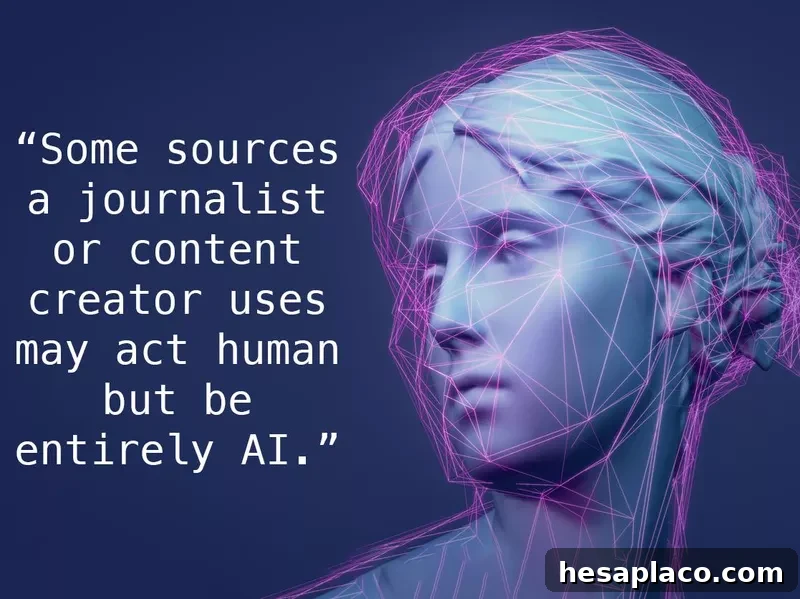
Another concern is that journalists and content creators may interact with sources that appear human but are actually AI-generated. This is especially troubling because the difference can be difficult to detect.
That has already happened. Julia Pugachevsky, a senior health reporter for Business Insider, posted a request on HARO for sources who had covered scars with tattoos. She was contacted by someone claiming to be a breast cancer survivor named Kimberly Shaw, who described tattoos as a way of reclaiming control over a body changed by cancer.
After running the statements through an AI text checker, Pugachevsky discovered she had likely been communicating with AI rather than a real person.
More Ethical Considerations of ChatGPT
Getty Images
ChatGPT may transform parts of the workplace, but organizations face serious ethical challenges when implementing it. Although AI systems are intended to be trained on diverse data, studies have shown that when ChatGPT is given certain personas, it can produce responses that range from toxic to overtly racist.
Bias and discrimination are among the biggest concerns. If the data used to train an AI system contains biased or discriminatory material, the system may reproduce or amplify those problems. Businesses must audit AI output regularly and make sure the data and prompts used do not reinforce harmful assumptions.
Ayub also points out that ChatGPT’s training data may not include the most current information. If the sources used to train the tool are outdated, incomplete or incorrect, its answers can be misleading. This is especially dangerous in fields such as medicine, where new research and guidance can change quickly.
Using AI to research symptoms, treatments or prescriptions without expert review could lead to outdated or inaccurate advice. The problem is made worse by the fact that ChatGPT often presents its answers confidently, even when they are wrong.
Privacy and Data Concerns of ChatGPT
Getty Images
Privacy and data security are also major concerns. Governments and businesses must ensure that data collected and processed through AI tools is protected and that users’ privacy rights are respected. Italy banned ChatGPT over concerns related to European privacy regulations and a possible data issue.
Italy’s privacy regulator, Garante, found that users could view titles of conversations other users had with the tool. The regulator also raised concerns about age restrictions, inaccuracies and bias.
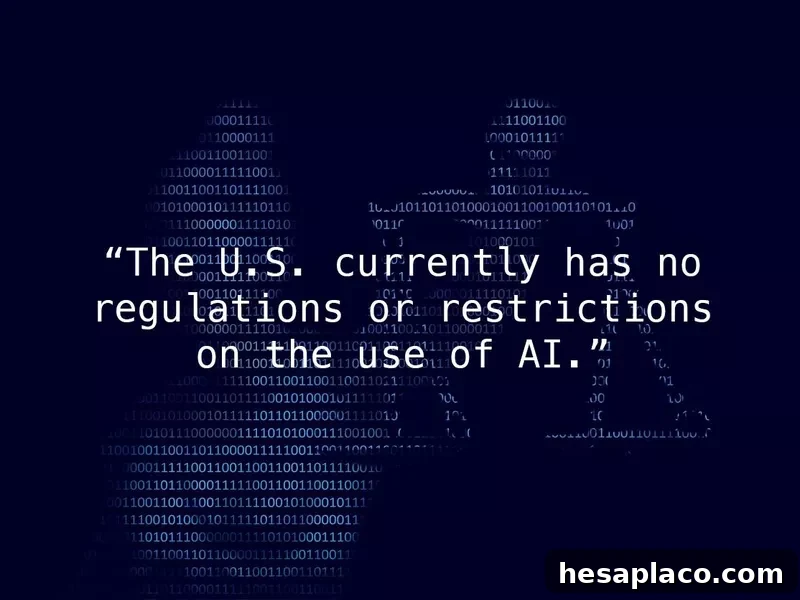
The European Union has been considering the European AI Act, which would restrict the use of AI in areas such as education, infrastructure, law enforcement and the judicial system. The United States currently has no broad federal restrictions on AI use. However, the Center for AI and Digital Policy submitted a complaint to the Federal Trade Commission, claiming the language model is biased, deceptive and a risk to privacy and public safety.
ChatGPT’s Environmental Impact
Getty Images
There is also an environmental cost. ChatGPT uses a significant amount of energy. In January 2023 alone, the tool reportedly used 1.287 gigawatt-hours, roughly comparable to the annual energy use of about 120 homes in the United States.
As environmental concerns grow and governments consider stricter regulations, large-scale AI use may face criticism for its energy demands. For companies promoting sustainability, this is another factor that cannot be ignored.
What Does All of This Mean for Human Content Creators?
Getty Images
There is no point pretending no one will lose work because of AI. Some jobs will likely be reduced or eliminated. At the same time, there may be growing demand for people who understand high-quality data, editing, brand voice, content strategy and accuracy. Human content creators may be needed to review AI output, improve tone, verify facts and make sure automated content aligns with a company’s message.
In many cases, writers may shift from producing every word from scratch to editing and shaping AI-assisted drafts. As AI becomes more integrated with other technologies, it may also support multimedia content creation.
Music journalist and educator Lily Moayeri said she would like AI to take over some of the less inspiring parts of the job, such as turning press releases into basic news items. That could free writers to focus on more meaningful work that requires personal experience, interpretation, opinions and perspective. Those are qualities AI cannot truly generate on its own.
The Future Is Now
ChatGPT
ChatGPT is here to stay, and in many business settings it can be a powerful tool. It can speed up workflows, support research, generate outlines and help people move past creative blocks. However, it also raises unresolved challenges involving accuracy, plagiarism, bias, privacy, employment and environmental impact.
In journalism and content creation, those concerns are especially serious. It is far too early to remove human creators from the process. As a writer, I often find that editing AI-generated text for tone, grammar, accuracy and humanity can take as much time as writing the piece myself.
That said, I will continue to use AI carefully for brainstorming, outlines and overcoming writer’s block. Used responsibly, it can be helpful. Used carelessly, it can damage trust, spread misinformation and weaken the quality of content online.
A few weeks after my first test, I asked ChatGPT again about Fleetwood Mac’s “Dreams.” This time, the answer was more accurate, but it read like a dry encyclopedia entry. It lacked emotion, nuance and a human voice.
Needless to say, I still sleep well at night.