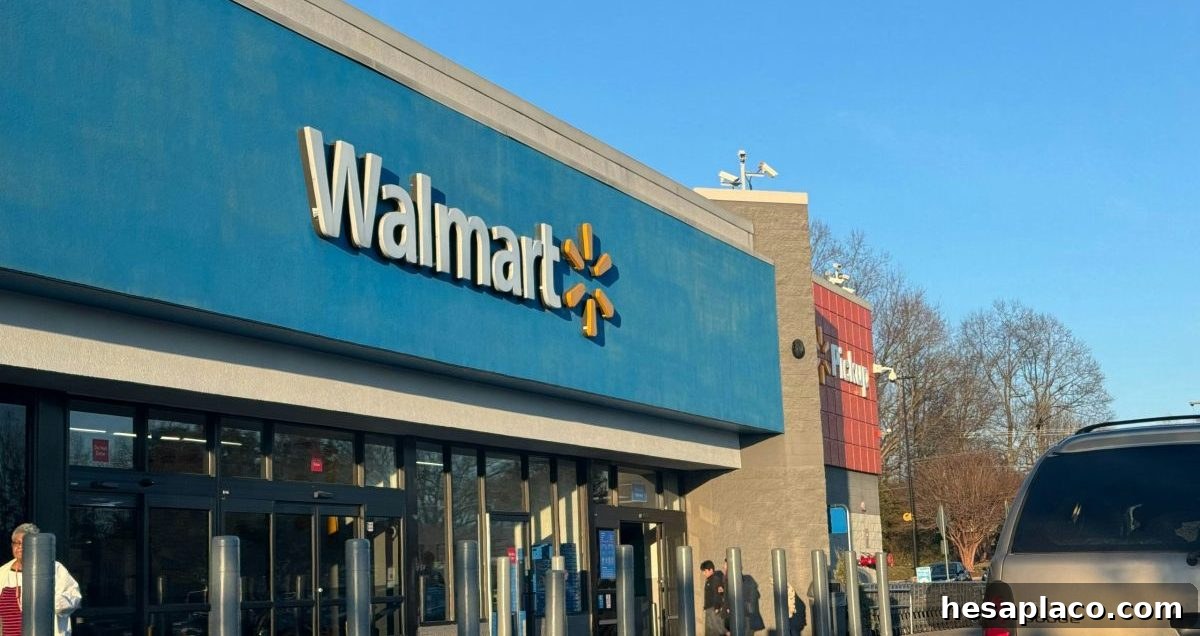
At the Walmart in Shrewsbury, just outside St. Louis, a simple change produced a surprising result: crime rates fell dramatically. After the store removed all self-checkout kiosks, police calls related to the store dropped almost in half. Reports of shoplifting, arrests, and the overall number of police visits all declined sharply.
In early 2024, Shrewsbury had become a frequent destination for local police. From January through May of that year, the department logged 1,915 calls, and more than a quarter of those were for incidents at Walmart. In April 2024 the store removed its self-checkout stations. By the same five-month period in 2025, Walmart-related police calls accounted for only 11% of the department’s total.
Shrewsbury Police Chief Lisa Vargas underscored the impact: “That’s a huge change. We really appreciate Walmart taking the initiative to remove those self-checkers.” Her remarks came during a city presentation in which the data suggested returning to staffed registers contributed significantly to the improvement.
The Checkout that Checked Out
Removing self-checkout may seem counterintuitive in an era when most major retailers have adopted it, but theft at self-checkout lanes has been a persistent problem across the industry. Losses can occur when items are “accidentally” missed, when a shopper scans a cheaper item instead of the correct one, or when a person simply exits without paying. Unattended kiosks lack the human judgment needed to spot suspicious behavior.
Walmart has not confirmed a company-wide rollback of self-checkout. In a statement to People, Charles Crowson, Walmart’s Director of Global Affairs, said decisions like this depend on local feedback, business needs, and customer shopping habits—so changes are not necessarily universal. Still, the Shrewsbury experience raises important questions about how effective kiosks really are at balancing convenience with loss prevention.
More Than Just Beeps and Scans

Image via Getty/Hispanolistic
Many shoppers tolerate or even prefer self-checkout for its speed and minimal interaction. But retailers contend with problems beyond shoplifting. Self-checkout kiosks can be vulnerable to credit card fraud and technical breakdowns that create long lines and frustrated customers who try to flag down the lone employee overseeing multiple machines.
To address these issues, Walmart has experimented with several measures. In 2024 the company tested handheld receipt scanners at some locations, enabling employees to verify that a customer’s receipt matched their cart before they left the store. Walmart has also taken steps to reduce card skimming—where criminals place fake PIN pads over card readers to steal data—by implementing simple physical countermeasures and testing newer secure technologies.
Despite these efforts, none received as much attention as the decision in Missouri to remove the self-checkout kiosks entirely.
Not Just a Walmart Thing
Walmart is not the only retailer reassessing self-service lanes. Dollar General removed self-checkout from thousands of stores after a rise in shoplifting, a move that reportedly helped the company’s sales performance. Sam’s Club, owned by Walmart, is experimenting with AI-driven “Scan & Go” systems that let shoppers use their phones to scan items as they shop, and Costco is testing similar mobile scanning technologies while still maintaining traditional self-checkout in many locations.
The industry now faces a trade-off: automation and speed on one side, and control, accuracy, and lower shrinkage on the other. Retailers are learning that shaving seconds off the checkout process may not be worth increased theft, higher security costs, and more frequent police interventions.
What’s Next?
For the moment, Walmart says it has no plans to remove self-checkout at additional stores, and that stance is likely to hold in the short term. However, if other locations replicate Shrewsbury’s results, broader changes could come quickly. The community response has been largely positive, and many employees say removing kiosks reduces stress and restores more direct interaction with customers.
It may be that the most effective answer to modern retail theft isn’t another camera or an advanced AI tool, but rather a return to staffed registers and the human vigilance that comes with them.