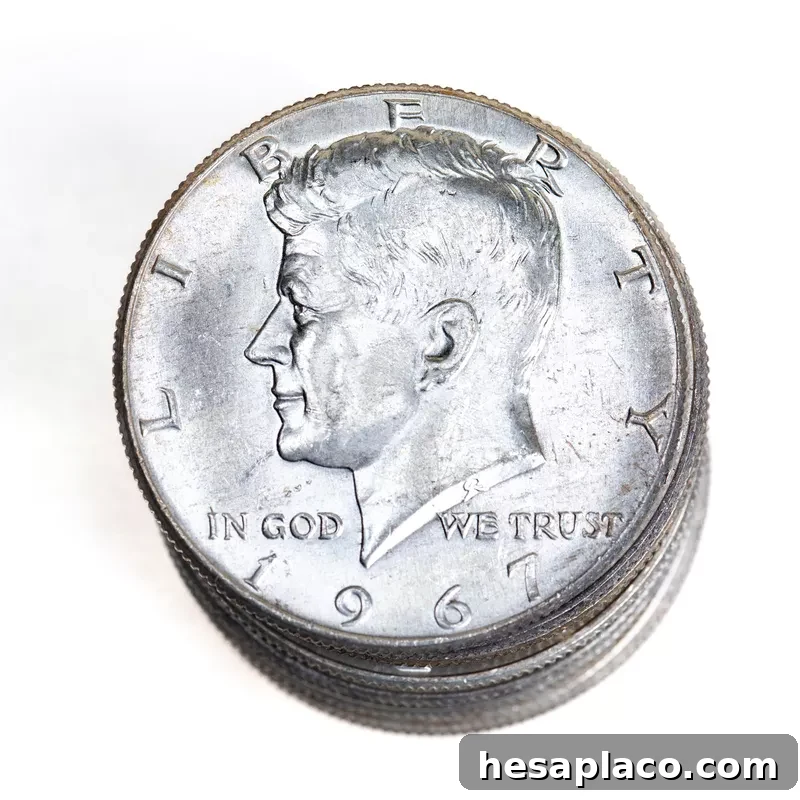
The first Kennedy half-dollar coins were struck in .900 fine silver, meaning those early pieces contain 90% silver and 10% copper. That high silver content makes certain Kennedy half-dollars more valuable for their metal content and collectible appeal.
How to Tell If a Kennedy Half-Dollar Is Silver
There are a few simple ways to check whether a Kennedy half-dollar contains significant silver. One quick test is a magnet: genuine silver and copper alloys used in these coins are not magnetic, so if a magnet clings to the coin, it is not silver. If the magnet does not stick, the coin could be silver or a non-magnetic base metal.
Another basic test is a careful inspection of the coin’s edge or a discreet scratch in an inconspicuous area. Scratching a tiny area with a sharp tool can reveal the underlying metal color: true silver will leave a silver mark, while copper-plated or copper-rich coins will show reddish tones. Note: scratching reduces a coin’s collectible value, so this method is best avoided for potentially valuable pieces.
Year Is a Key Clue to Silver Content
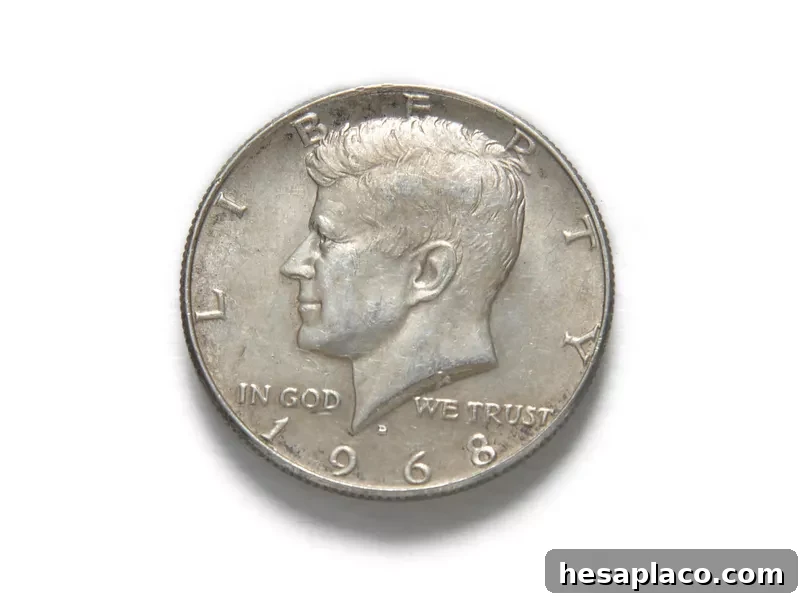
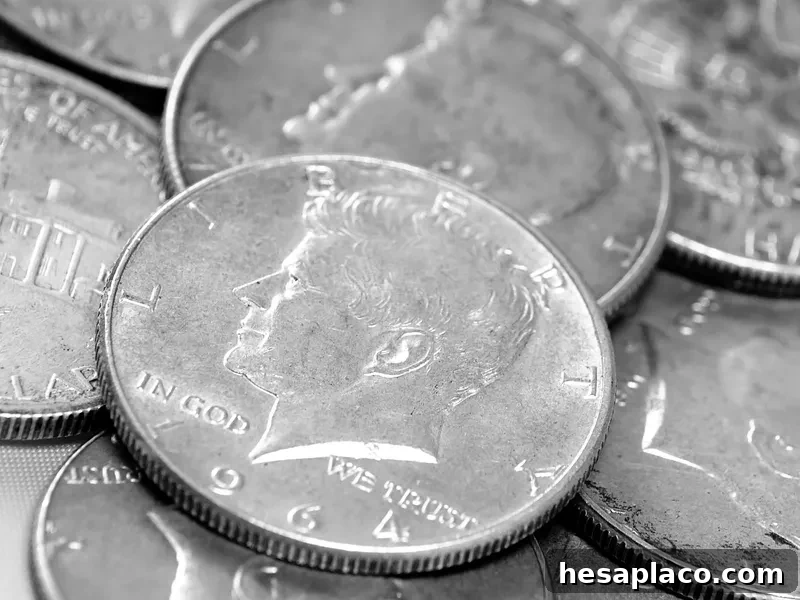
The minting year is the single most informative clue about a Kennedy half-dollar’s silver content. Kennedy half-dollars minted in 1964 are 90% silver. From 1965 through 1970, the silver content declined: coins minted in 1965–1967 still contain silver but at reduced percentages, while by 1970 the coins were largely copper-based and no longer carry significant silver content. In short, the earlier the date—especially 1964—the more silver and the higher the melt value.
Collectors and metal buyers often prioritize earlier dates when looking for melt value or silver content. If your interest is melt value rather than numismatic rarity, focus on coins from the earliest years of the series.
Melt Value Examples
The melt value of a Kennedy half-dollar depends on its silver content and current silver prices. For context, a 1964 Kennedy half-dollar—being 90% silver—had melt value near $10 as of 2022, though fluctuations in the silver market will change that figure. By contrast, late-1960s coins with lower silver percentages, and especially coins from 1969–1970, have substantially lower melt values. Adjusting for reduced silver content, a 1969 or 1970 half-dollar would have had an estimated melt value closer to around $4 based on earlier price levels. Always check current bullion prices to determine up-to-date melt values.
Inspect the Coin Edge
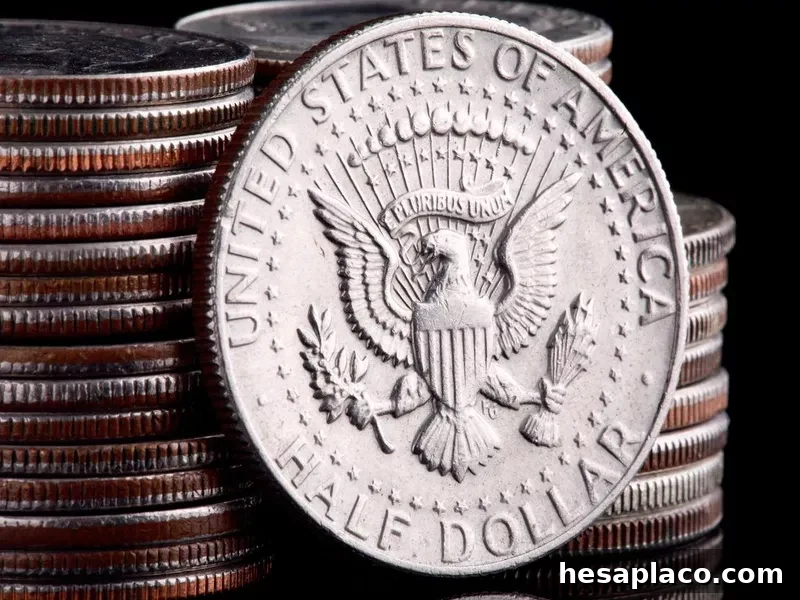
Examining the coin’s edge is a non-invasive way to assess composition. If a coin contains copper, you may notice a reddish-brown stripe or tint along the rim or edge where the metal is visible. A uniform silver-colored edge is a better sign that the coin contains a higher proportion of silver. Keep in mind that surface toning, wear, and dirt can affect appearances, so inspect under good light and consider a professional appraisal for a conclusive determination.
Common Questions About Kennedy Half-Dollars
Many collectors ask similar questions about these coins, including how to determine rarity, when the series began, and where to buy examples. Key points to remember:
- 1964 Kennedy half-dollars are 90% silver and generally have the highest melt values of the series.
- From 1965 through 1969, Kennedy half-dollars contain reduced silver content; the exact percentage varies by year.
- By 1970, production shifted to coinage with little to no silver content, significantly reducing melt value.
- Edges and color cues can help identify copper-containing pieces, but professional testing (specific gravity, XRF) is the most accurate non-destructive method.
- Avoid destructive tests if you suspect the coin has collectible or numismatic value—seek a professional evaluation instead.
Whether you’re determining melt value or assessing a coin’s collectible worth, start by checking the date, examining the edge, and using non-magnetic tests. For any coin that may be rare or valuable, consult a reputable coin dealer or grading service to get a definitive evaluation before taking actions that could reduce its value.
Getty Images
slovegrove / Getty Images
penfold / Getty Images
Getty Images
Cudger / Getty Images