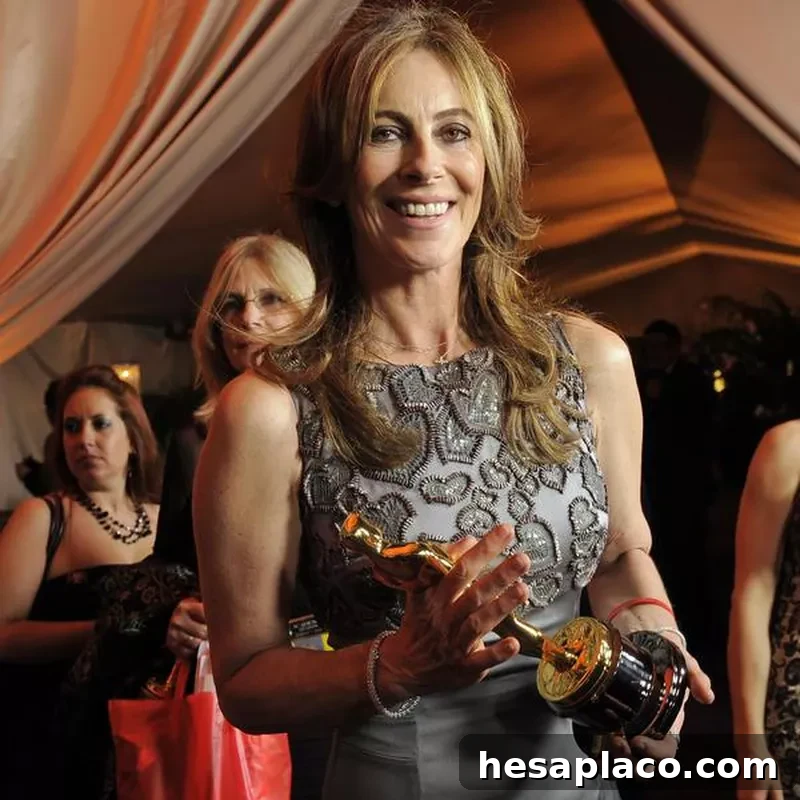
If there’s one thing you can say about Kathryn Bigelow, it’s that she doesn’t back down.
The enigmatic filmmaker is the first—and still the only—woman to win the Academy Award for Best Director (2009, for The Hurt Locker). She chooses daring material (“Zero Dark Thirty,” “Detroit”), demonstrates a sharp visual sensibility (“Near Dark,” “Strange Days”), and consistently works in genres often seen as masculine. That combination has made her one of the most admired—and scrutinized—directors working today.
Bigelow’s films frequently provoke controversy and debate, and critics often zero in on the political or ethical questions they raise. Fiercely independent in both life and work, she remains intensely private and, by her own account, somewhat shy. Yet her body of work speaks loudly: she is a director who follows her instincts and accepts the backlash that can come with bold choices.
Growing Up Fast
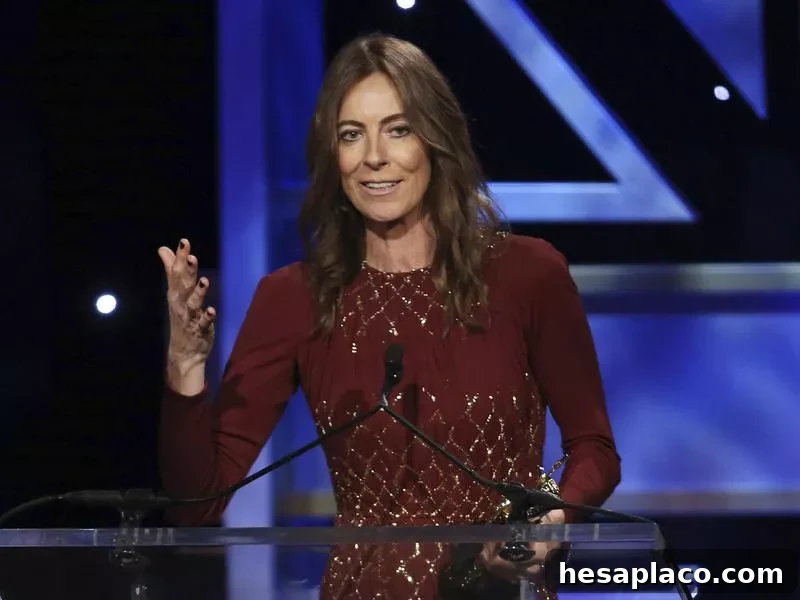
Bigelow accepts the John Schlesinger Britannia Award for Excellence in Directing during the 2013 BAFTA Los Angeles Britannia Awards in Beverly Hills, Calif. Matt Sayles / Invision/AP
Kathryn Bigelow was born on November 27, 1951, in San Carlos, California, the only child of Gertrude and Ronald Bigelow. Her parents fostered independence—Bigelow has recalled they let her make her own decisions from a young age, which she credits with creating a strong sense of autonomy. Her mother taught English and worked as a librarian after graduating from Stanford; her father managed a paint factory and drew cartoons, and his artistic ambitions influenced her interest in art.
Bigelow studied at the San Francisco Art Institute in the late 1960s, then moved to New York on a Whitney Museum fellowship. She eventually enrolled in Columbia University’s film program, where she found her voice behind the camera and began exploring themes that would recur throughout her work.
Exposed to Brilliance
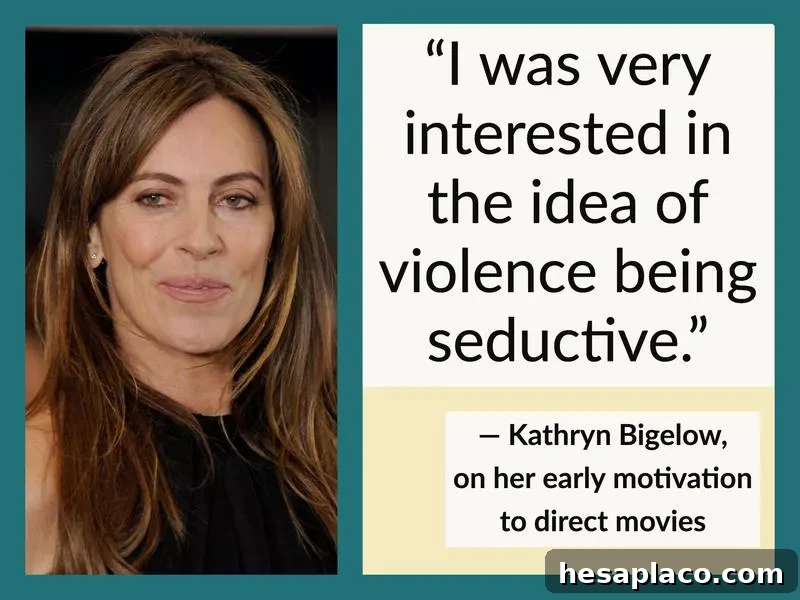
During her Whitney fellowship in New York, Bigelow studied with influential figures in the art world—Susan Sontag, Richard Serra, and Robert Rauschenberg among them. She struck up a friendship with composer Philip Glass and worked for performance artist Vito Acconci, experiences that shaped her cinematic approach. At Columbia, access to a film program chaired by Milos Forman and taught by thinkers like Peter Wollen expanded her understanding of film as both image and window into ideas.
For her Columbia master’s thesis she made the short film Set-Up (1978), which examined cinematic violence with an analytical eye. The piece—now in the Museum of Modern Art’s cinema library—foreshadowed the thematic intensity and interest in violence that would run through her feature films.
This Is a Man’s World
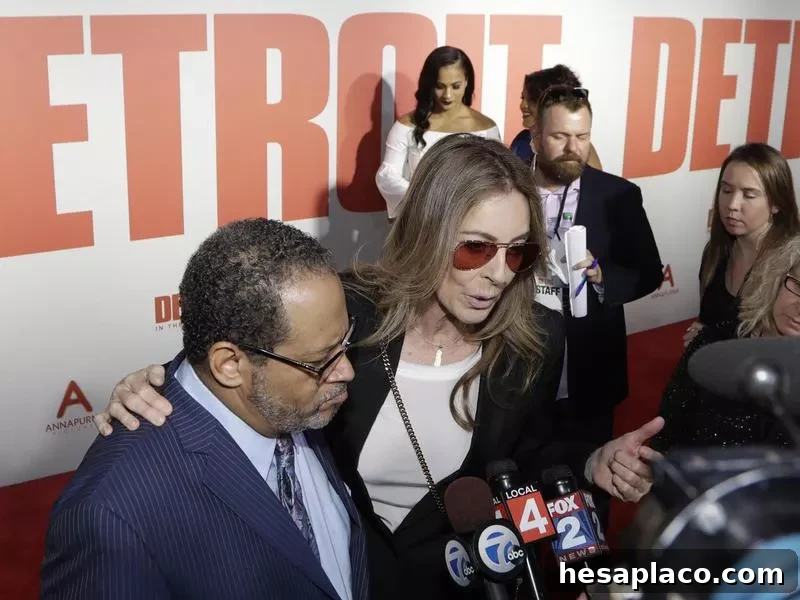
Bigelow and Michael Eric Dyson are interviewed on the red carpet before the premiere of “Detroit” at the Fox Theatre on July 25, 2017, in Detroit. Carlos Osorio / AP Photo
When Bigelow made her feature debut, she entered a film industry overwhelmingly dominated by men. Her first film, The Loveless (1982), which she co-wrote and directed and which marks Willelm Dafoe’s debut, positioned her among a very small group of women directing Hollywood features at that time. According to the Directors Guild of America, of the thousands of feature films produced between 1939 and 1979, only a tiny fraction were directed by women. Bigelow’s early career unfolded against that gendered backdrop, and she often resisted being pigeonholed into genres that studios assumed were “appropriate” for women.
Unwelcome to the Big Screen
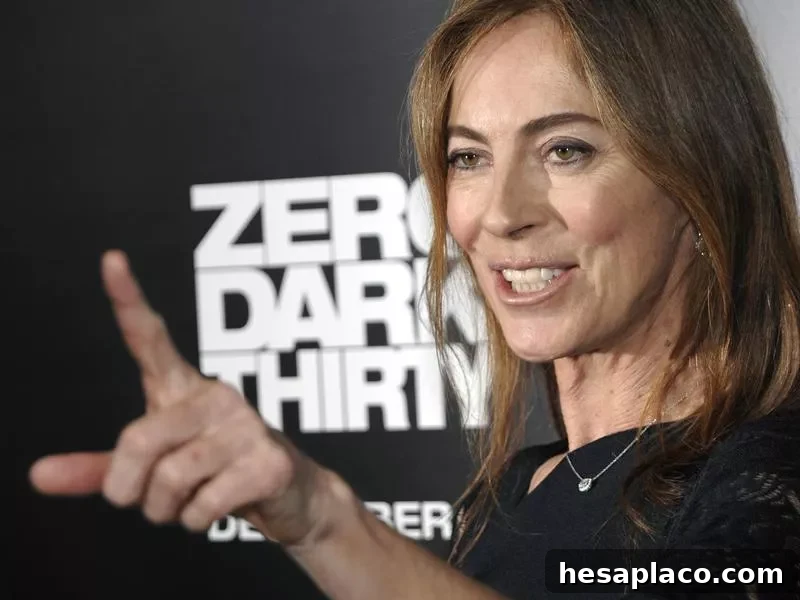
Bigelow arrives at the premiere of Zero Dark Thirty at the Dolby Theatre in Los Angeles on Dec. 10, 2012. Dan Steinberg / Invision/AP
After The Loveless earned critical attention, Hollywood sent Bigelow scripts that didn’t match her sensibilities—much of what she received were teen comedies, reflective of a narrow, gendered view of what kinds of stories women directors should tell. Rather than compromise, she took a teaching position at the California Institute of the Arts, and continued developing the distinct voice that would define her later work.
Bigelow Is Born
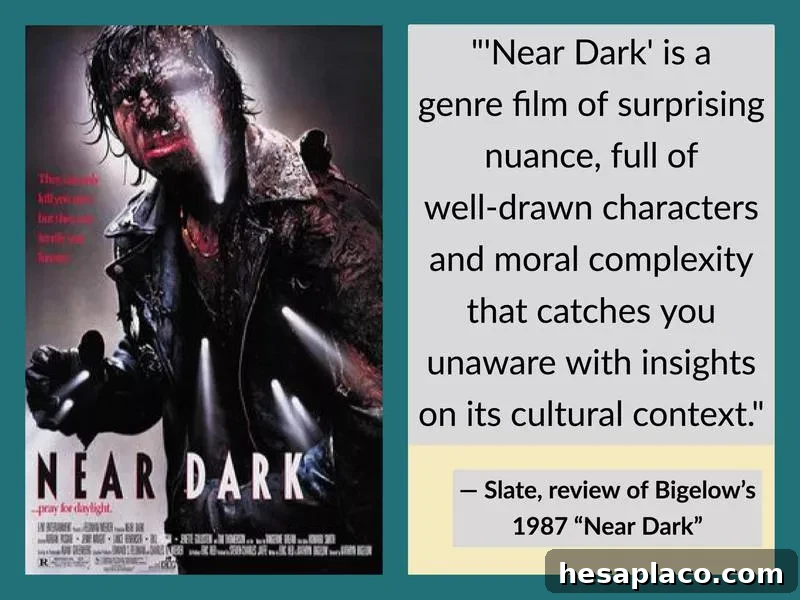
Bigelow returned with Near Dark (1987), a vampire western that has since become a cult favorite. Set in Oklahoma, the film follows a young man who becomes entangled with a vampire group and grapples with his new identity. Near Dark avoided genre clichés and blended action, horror, and Western elements with moral complexity and visual flair—traits that would become hallmarks of Bigelow’s filmmaking. Over the next several years she released a steady stream of work that cemented her reputation for stylish, genre-savvy films.
More Movies and a Brief Marriage
Bigelow followed with Blue Steel (1989), a tense police thriller she wrote that featured a strong female protagonist, and Point Break (1991), a high-adrenaline crime film that became a cult favorite. Both films reinforced her gift for kinetic visuals and taut pacing.
Kathryn and James
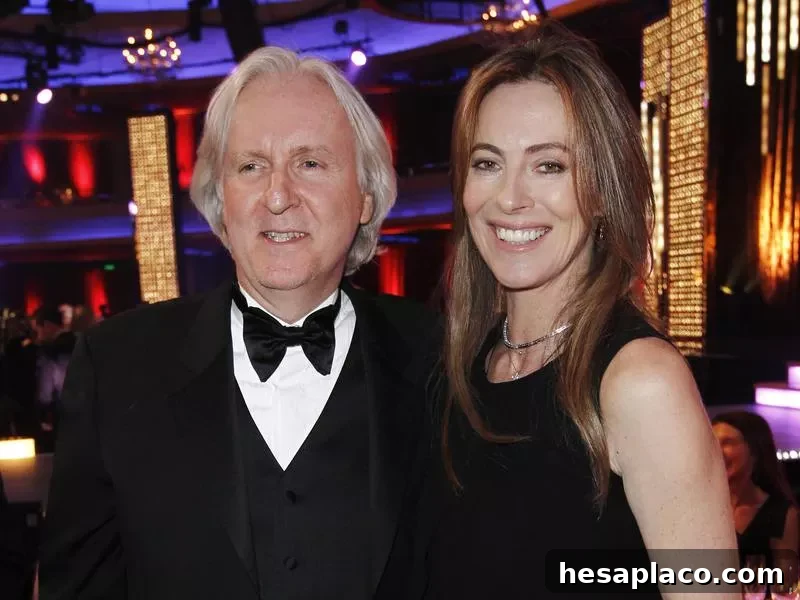
Bigelow poses with her former husband James Cameron at the 15th Annual Critics Choice Movie Awards in 2010 in Los Angeles. Matt Sayles / AP Photo
In 1989 Bigelow married fellow director James Cameron; the marriage ended in divorce two years later. During and after that period, she maintained a working relationship with Cameron—he wrote Strange Days (1995), a provocative sci‑fi noir that examines voyeurism, race, and power. Though some critics sought to minimize her achievements by tying them to her association with Cameron, Bigelow continued to build an unmistakable and independent artistic identity.
Breaking Through
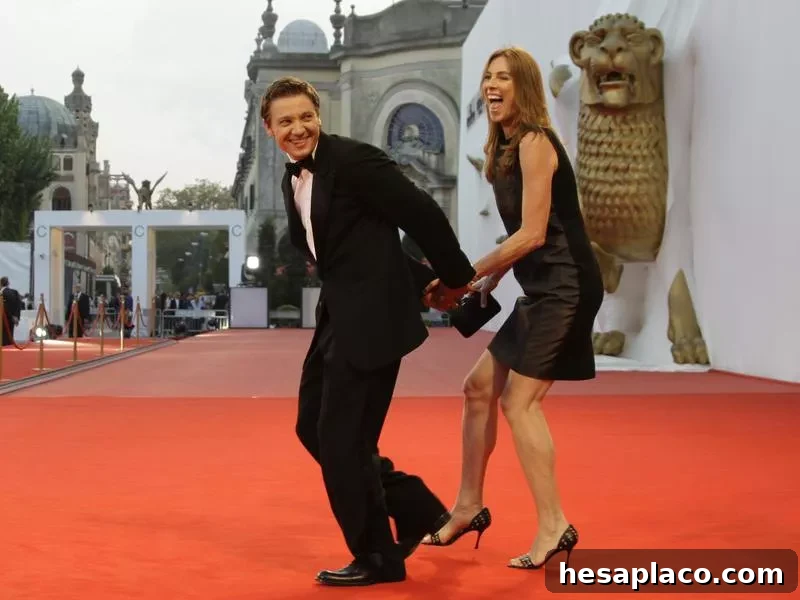
Actor Jeremy Renner and Bigelow arrive for the screening of The Hurt Locker at the 65th Venice Film Festival. Joel Ryan / AP Photo
After a couple of quieter years, Bigelow’s career reached a new peak with The Hurt Locker (2008). Co-written with Mark Boal, the film chronicles an Iraq war bomb disposal team and earned widespread critical acclaim for its tense, immersive depiction of combat and its psychological toll. Bigelow deliberately cast lesser-known actors to maintain unpredictability and to keep the focus on the film’s urgent atmosphere. Her insistence on independent production values and creative control—filming in the Middle East and retaining final cut—helped the film achieve a raw, realistic quality.
Her Greatest Success To Date
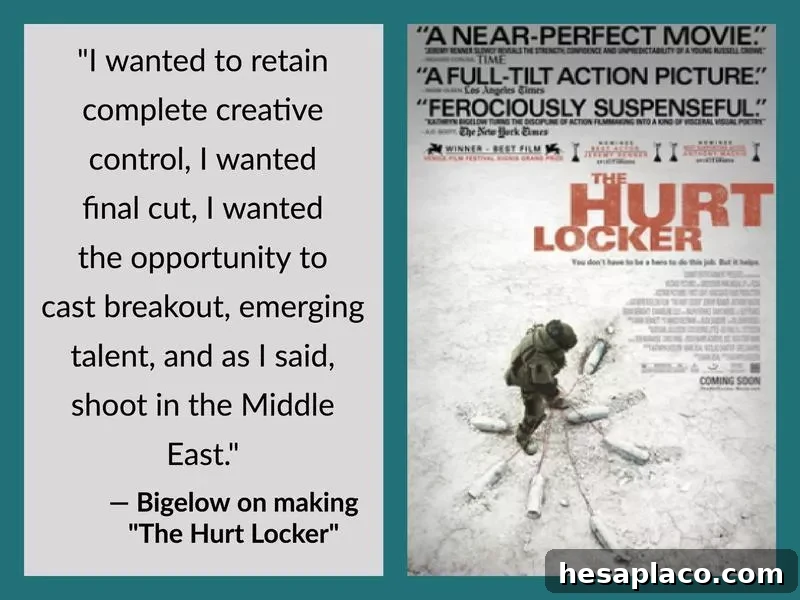
Filmed in Jordan and shot with a small, focused crew, The Hurt Locker became both an awards phenomenon and a milestone for women directors. At the 2010 Academy Awards it won six Oscars, including Best Picture and Best Director—making Bigelow the first woman to receive the Best Director Oscar. The film also won multiple BAFTAs and the Directors Guild of America award, breaking historic barriers in an industry that has long resisted female leadership in big-budget and prestige projects.
Shattering the Glass
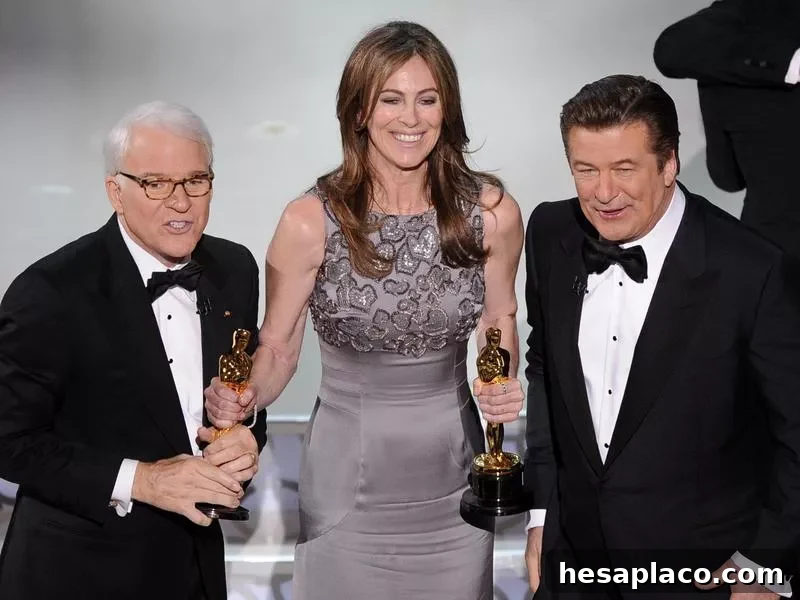
Bigelow holds her Oscars for Best Picture and Best Director for The Hurt Locker with hosts Alec Baldwin and Steve Martin at the 82nd Academy Awards. Mark J. Terrill / AP Photo
The awards validated Bigelow’s long career and her uncompromising approach. Her achievements helped shift conversations about who can direct the most challenging material in Hollywood, though the industry still lags in parity. Bigelow’s success did not end the debate over representation or the scrutiny she would face on future projects—it intensified it.
Living Legend
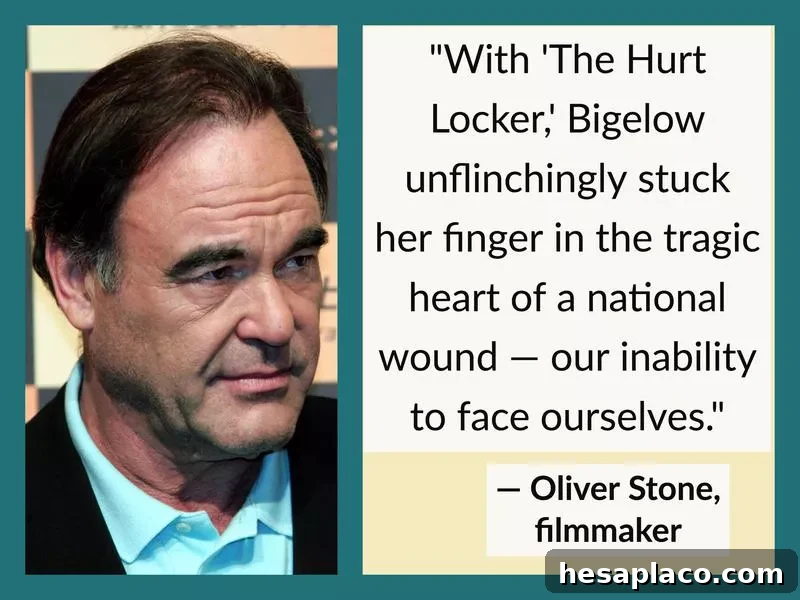
Following The Hurt Locker, Bigelow became a filmmaker many watched closely. Time magazine named her one of the 100 most influential people in the world, and commentators praised her willingness to confront difficult national subjects on screen. Her work has often forced audiences to face uncomfortable truths about violence, conflict, and national identity.
Under a Microscope

Bigelow stands on the set during shooting for Zero Dark Thirty in Chandigarh, India, March 2012. Anil Dayal / AP Photo
Her next major film, Zero Dark Thirty (2012), also written with Mark Boal, dramatized the decade-long hunt for Osama bin Laden. The film was a commercial success and earned praise for its tension and craft, but it also sparked intense debate over the depiction of CIA interrogation techniques and whether the film minimized or implicitly endorsed torture. Critics argued over the film’s portrayal of controversial methods; defenders noted its attempt to reflect the ambiguity and complexities of real-world events. Bigelow responded by emphasizing the film’s attempt to mirror the uncertainties of the historical record rather than offer simple moral judgments.
Keeping Her Private Life Private
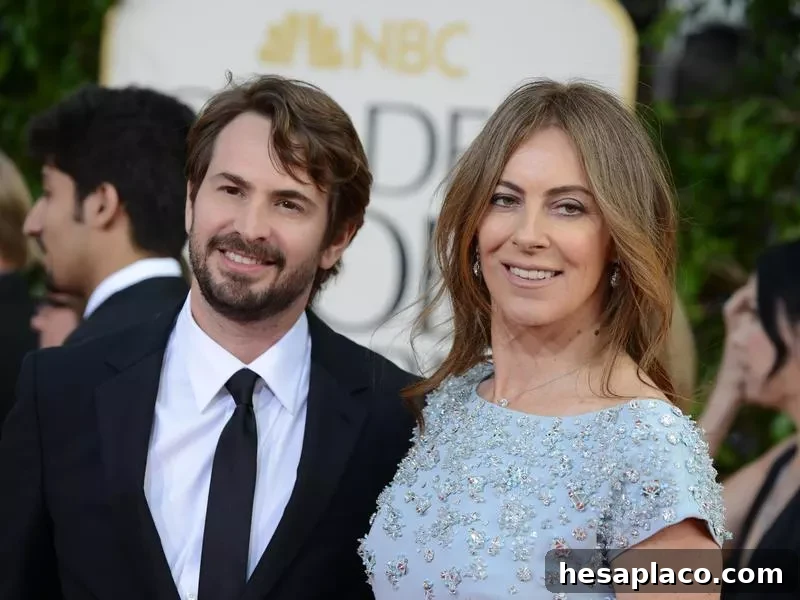
Bigelow and Mark Boal arrive at the 70th Annual Golden Globe Awards in 2013 in Beverly Hills, Calif. Jordan Strauss / Invision/AP
Bigelow keeps a low public profile: she has no active social media presence and maintains few public details about her private life. Known facts include her brief marriage to James Cameron, that she has no children, and that she paints and values time between projects. Her working relationship with Mark Boal has been long and productive, but Bigelow keeps her personal life out of the spotlight, letting her films do the talking.
Another Bold Choice

Moviegoers arrive at the Fox Theatre in Detroit for the premiere of Detroit, about the 1967 riots. AP Photo/Carlos Osorio
In 2017 Bigelow released Detroit, revisiting the horrific events at the Algiers Motel during the 1967 Detroit uprising. The film received critical praise for its urgency and craft but also faced criticism about who had the authority to tell this racially charged story. Some critics argued that a white director depicting Black pain risked misrepresentation; others emphasized the film’s importance in bringing this history to wider attention. Bigelow responded that the chief imperative was to tell the story and to prompt discussion and awareness.
Fighting Back
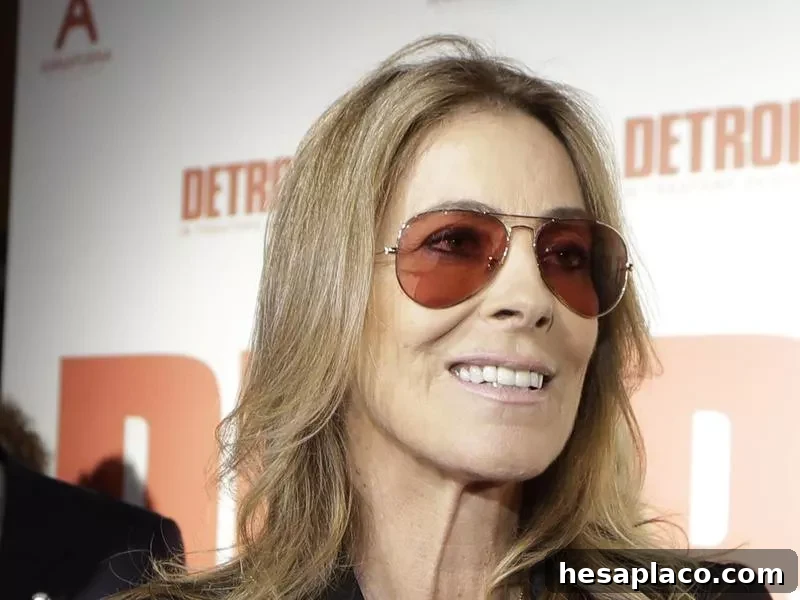
Bigelow on the red carpet before the premiere of Detroit at the Fox Theatre. Carlos Osorio / AP Photo
Controversy has followed many of Bigelow’s major projects, but so has recognition for tackling difficult subjects with cinematic rigor. Whether examining the seductions of violence, the fog of war, or fraught episodes in American history, she consistently returns to material that challenges audiences. Kathryn Bigelow remains a distinctive, uncompromising director whose work continues to provoke conversation about art, ethics, and power.