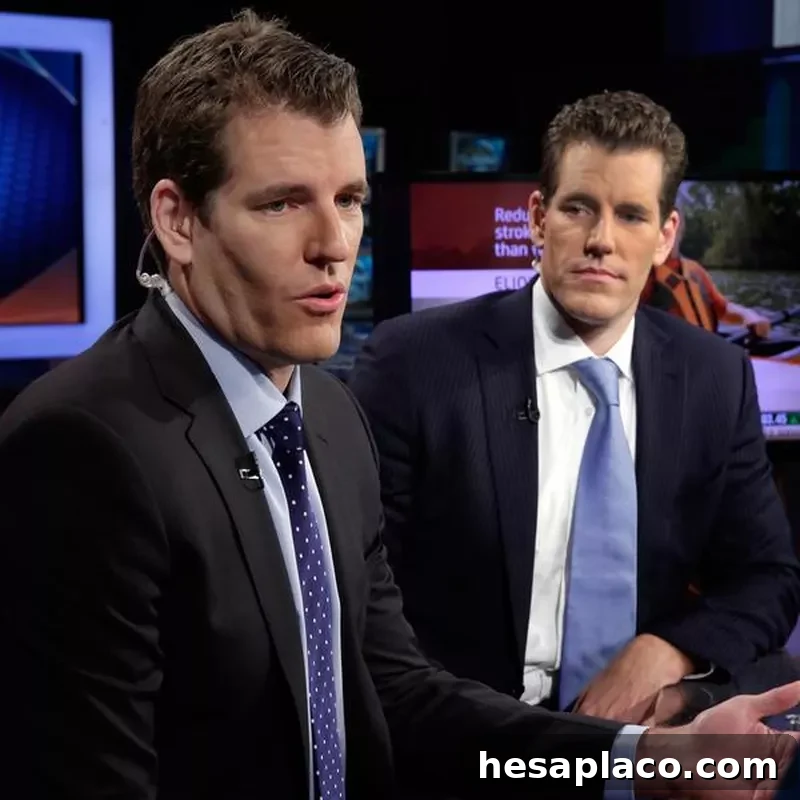
The Winklevoss twins often attract harsh judgments.
During their time at Harvard, then-President Larry Summers once called them “a**holes.” The 2010 movie The Social Network portrayed Cameron and Tyler as privileged, physically imposing but socially awkward, spawning nicknames like “Twinklevoss,” “Winklevii,” and “Testosterone Titans.” While some portrayals are exaggerated and unfair, the twins have nevertheless become prominent figures—today known as wealthy crypto investors whose fortunes could face new pressures.
Starting With Advantages
Kevork Djansezian / AP Images
Physically impressive and intensely competitive, the twins grew up in Greenwich, Connecticut, an affluent New York suburb. They founded their town’s sculler club, rowed for Harvard and Oxford, and ultimately represented the United States at the Olympics. Often inseparable, they present a polished image—fashion that blends GQ with Brooks Brothers, a near-telepathic rapport, and a knack for finishing each other’s sentences. For many years they were most publicly known for their litigation against Facebook’s founder, a legal battle that ended in a settlement. Since then, their public identity has shifted toward finance and cryptocurrency.
Seed Financing
Charles Krupa / AP
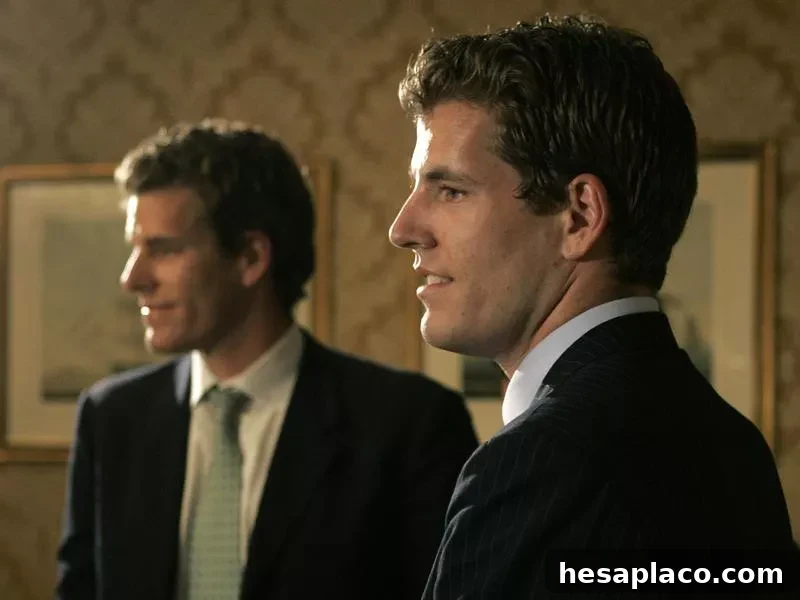
Their legal settlement with Facebook provided a substantial payout, but it was their investment choices—especially a large early bet on Bitcoin—that made them considerably wealthier. Despite price swings, Bitcoin remains dramatically higher than when they first accumulated it.
Silver Spoons and Golden Oars
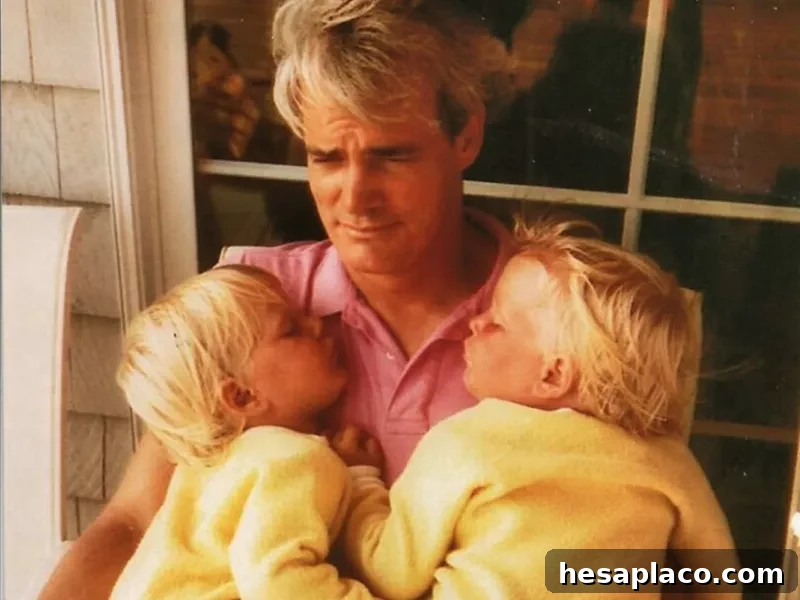
Cameron and Tyler Winklevoss were born in Southampton, New York, on August 21, 1981, to Howard and Carol Winklevoss, who raised them in a Christian household. The twins describe their family history as modest—stories of small-college attendance and multigenerational working-class roots—yet their upbringing included elite private schools. They attended Greenwich Country Day School and later Brunswick School, where they discovered and nurtured their interest in rowing.
Joining the Crew
Their mother introduced them to rowing. At the time Greenwich lacked a local club, so she drove them to Saugatuck. Their passion grew until they persuaded Brunswick School to start a rowing program, launching a path that would lead to collegiate and international competition.
Off to Harvard, then Oxford
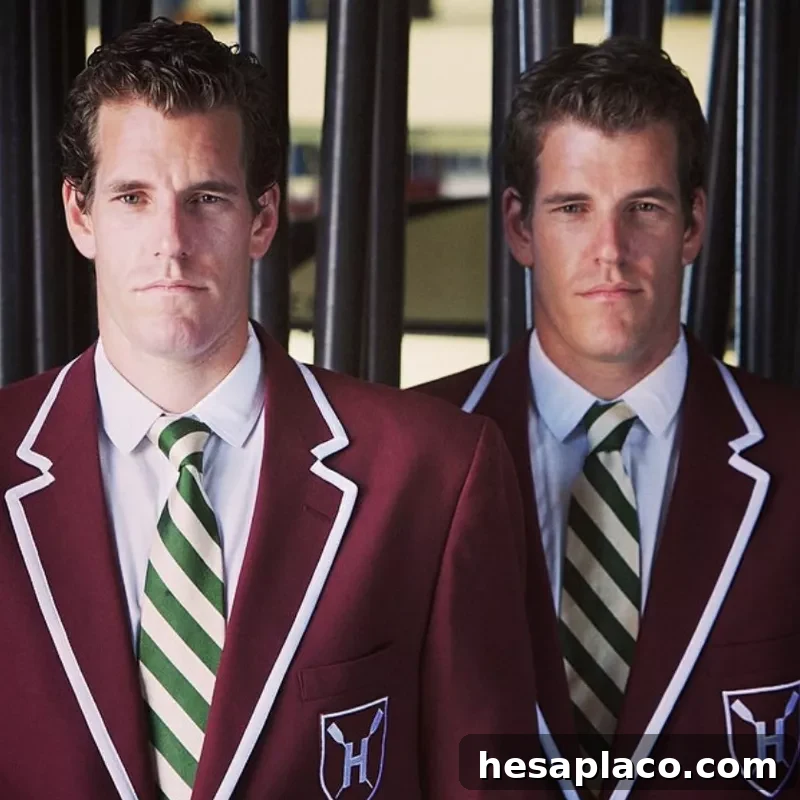
The twins matriculated at Harvard in 2000 and graduated in 2004 with business degrees. They rowed for Harvard and belonged to social clubs such as Procellian and Hasty Pudding. In 2009 they enrolled at Oxford’s Said Business School and earned MBAs in 2010, rowing for Christ Church and competing in the prestigious Oxford-Cambridge Boat Race. Their Harvard years also brought them into contact with Mark Zuckerberg and the events that led to the formation of Facebook.
How the Twins Met Zuckerberg

Paul Sakuma / AP Photo
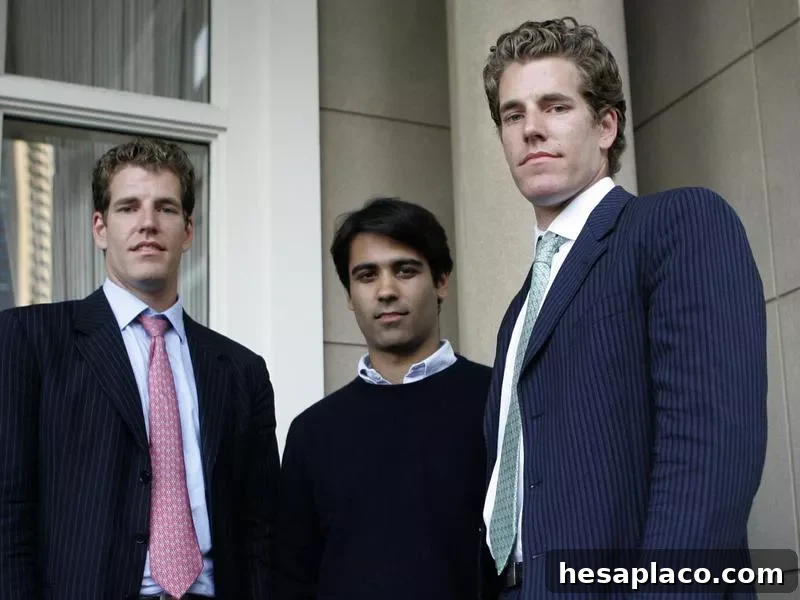
In late 2002, Cameron, Tyler, and their classmate Divya Narendra began developing HarvardConnection, a social network intended to link college students. They hired developers and in 2003 approached Zuckerberg, then known for Facemash—a campus site that ranked student photos. The twins asked Zuckerberg to build their network. While communication suggested he would, disputes over his level of commitment and the timing of Facebook’s own development later led to a lengthy legal conflict.
Was Zuckerberg Stalling?
No formal contract was signed specifying Zuckerberg’s obligations, but emails and messages implied he would work on their project. The twins alleged he stalled their site while building his own platform; instant-message exchanges and timelines were central to the dispute. Facebook launched in early 2004, shortly after Zuckerberg told the Winklevosses he was too busy to complete their project.
The Facebook Lawsuit
Charles Krupa / AP Photo
Facebook’s rapid rise left the Winklevosses furious. They completed a site called ConnectU, but it never gained traction compared with Facebook’s explosive success. By September 2004 ConnectU sued Facebook for breach of agreement and idea theft. Facebook countersued, and after years of litigation the parties reached a settlement in 2008 reportedly worth $65 million in cash and stock. The twins later challenged aspects of that settlement, but courts ultimately upheld the resolution.
Olympic Hopefuls
Gregory Bull / AP Photo
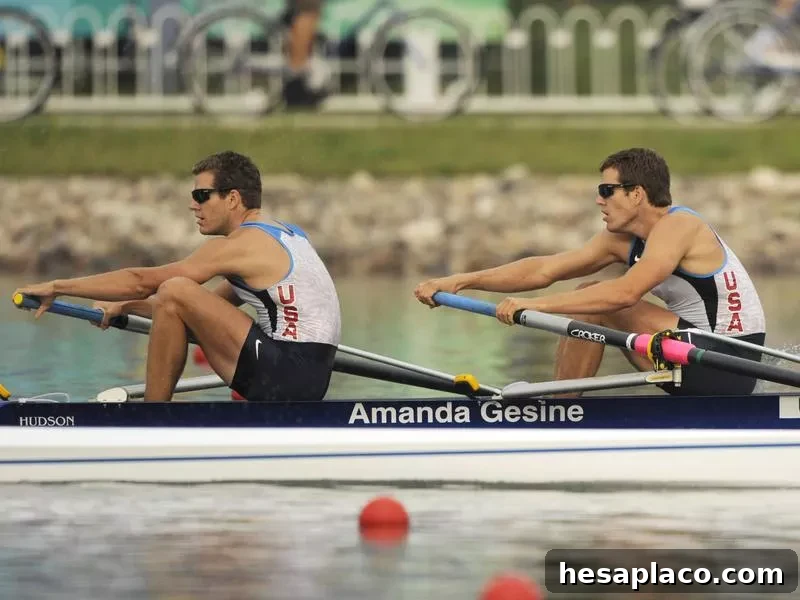
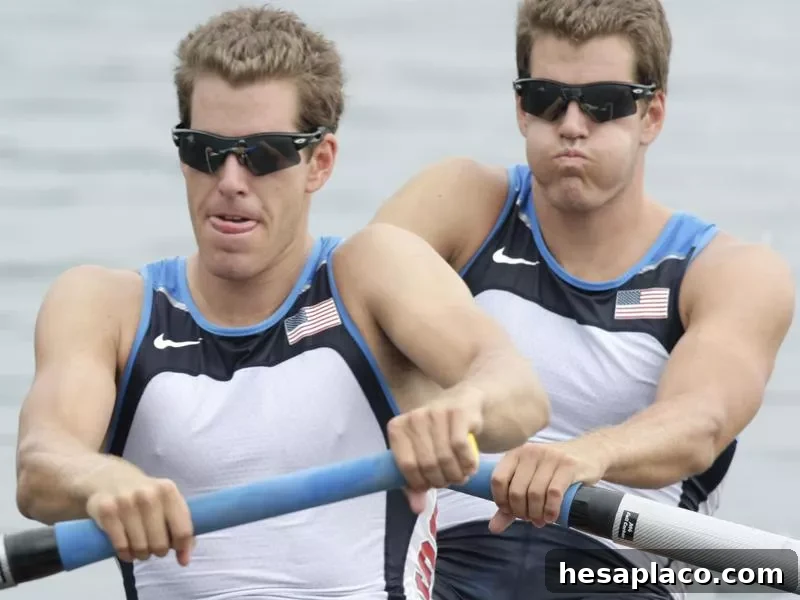
In 2008 the twins both competed as rowers in the Beijing Olympics. They advanced through heats to reach the six-boat final in the coxless pair event, ultimately finishing sixth. Their dedication to rowing remained a defining part of their identity, and while they considered a 2012 comeback, they shifted focus toward investing and business pursuits following the Olympics.
Time to Decompress
Mel Evans / AP Photo
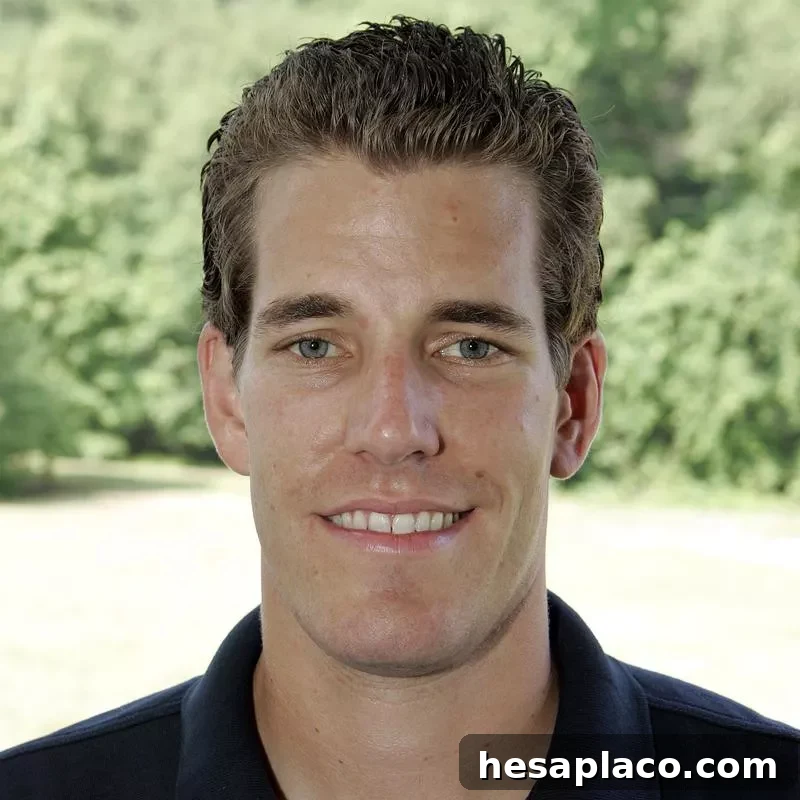
After Beijing, the brothers spoke about taking time to “relax, decompress, and take stock” before launching new ventures. That period of reflection led them to a new opportunity: Bitcoin.
No Risk, No Reward

The twins discovered Bitcoin while vacationing in Ibiza and soon began accumulating the cryptocurrency in significant amounts. Tyler described the moment as serendipitous—an unexpected discovery that turned into a deep commitment. Their early purchases, when Bitcoin cost pennies to a few dollars, set the stage for enormous future gains.
The Rise of Bitcoin
AP Photo
By 2013 the twins disclosed holdings worth about $11 million, largely purchased when Bitcoin traded near $10. As Bitcoin climbed—from hundreds to thousands of dollars per coin—their investments multiplied. By late 2017 and early 2018, when Bitcoin reached its peak levels, the Winklevosses were widely described as Bitcoin billionaires. Price volatility followed, but even declines left their positions far above the original entry prices.
Banking on Crypto
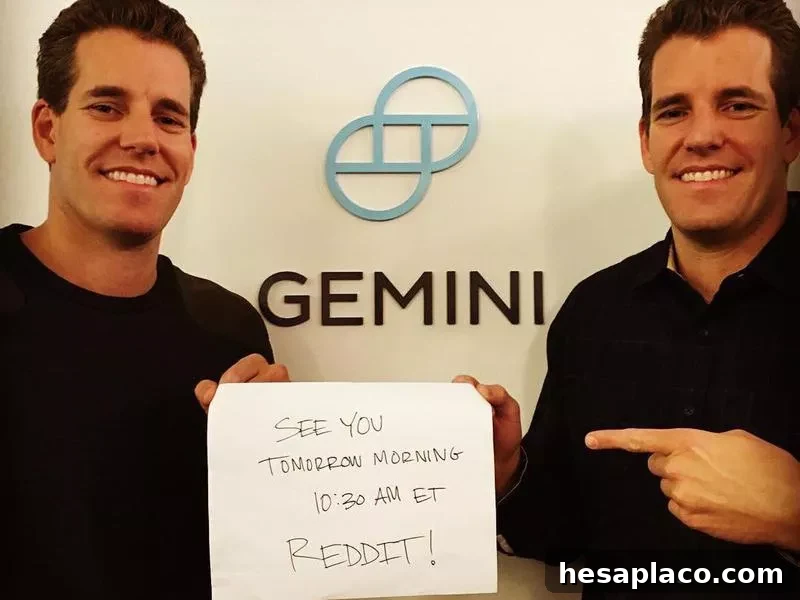
Rather than cashing out, the twins doubled down. They hold substantial Bitcoin and Ethereum positions and in 2015 launched Gemini, a regulated cryptocurrency exchange. Their decision to take part of their Facebook settlement in stock options helped, as those shares gained value when Facebook went public. By the end of 2017, their combined holdings were estimated in the billions, driven largely by crypto appreciation.
A Different View of Cryptocurrency
Craig Ruttle / AP Photo
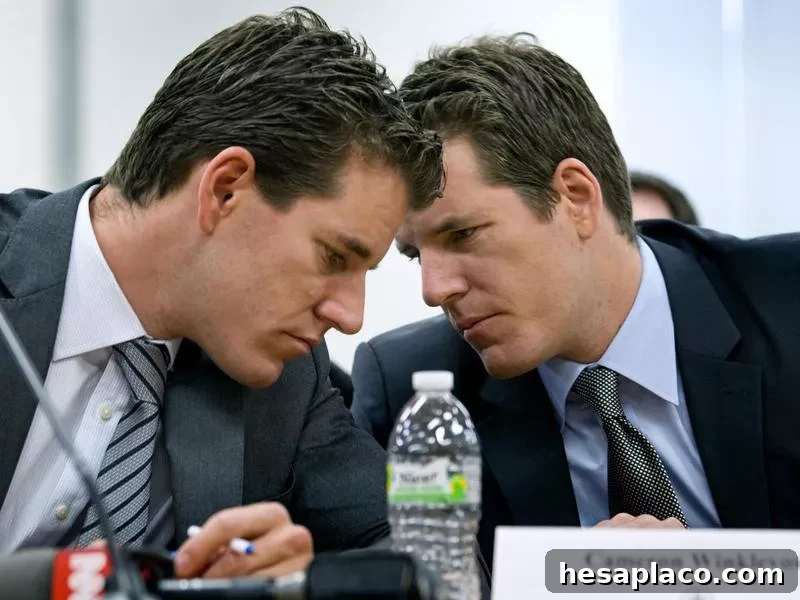
Unlike some crypto purists who champion total decentralization, the Winklevosses favor regulated markets. They designed Gemini to create a trusted, licensed environment for investing in digital assets, believing that regulation builds investor confidence and broader adoption. They also proposed a Bitcoin exchange-traded fund to give mainstream investors easier exposure, though regulators rejected that idea in 2017.
Where’s Their Wallet?
To secure private keys, the twins adopted an unconventional approach: they printed their private crypto keys, cut the printouts into pieces, and stored the pieces in multiple safe-deposit boxes across the country. That strategy mirrors Gemini’s focus on custody solutions and the safe storage of digital assets for clients and for themselves.
Mirror Image
Evan Agostini / Invision/AP
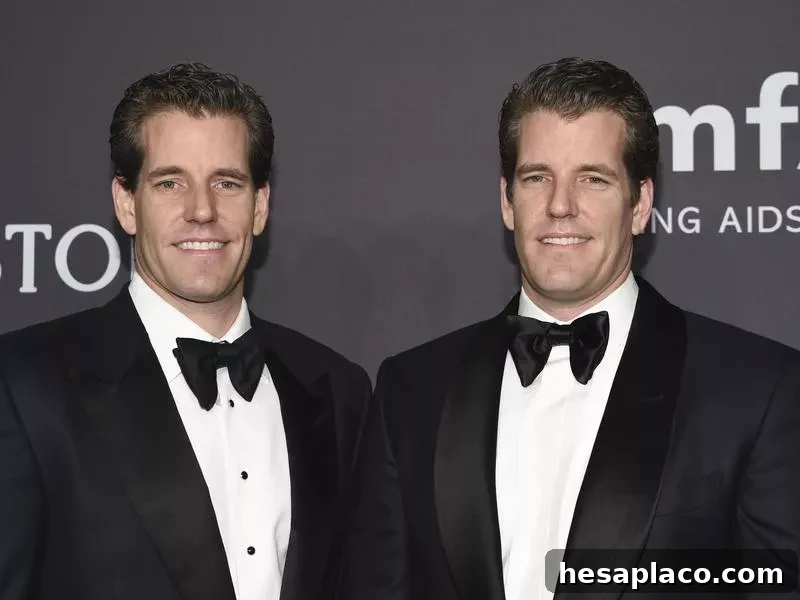
The twins remain remarkably similar in lifestyle and preference. They live, work, and travel together; they date as a pair on double dates; and their daily lives are closely intertwined. Subtle differences exist—Cameron is left-handed while Tyler is right-handed, and they have small differences in personal possessions—but they function as a unified team.
The Winklevosses Today
Evan Agostini / AGOEV/AP Photo
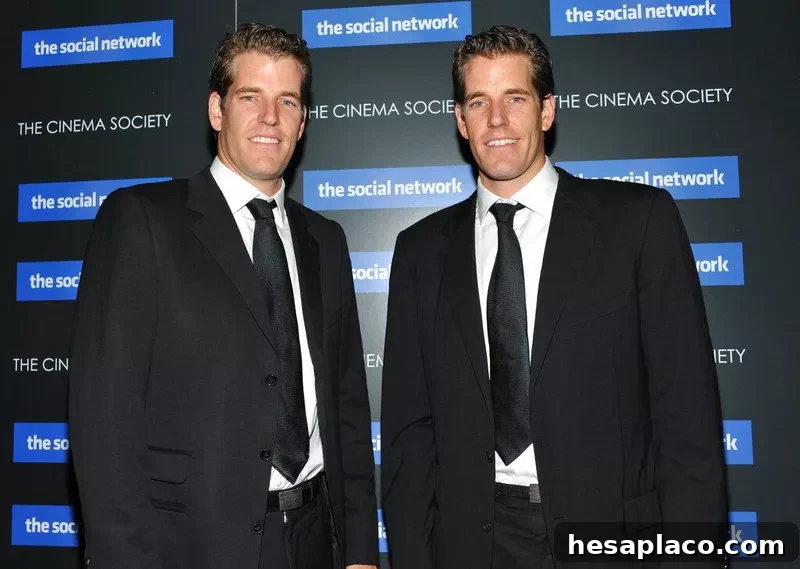
Beyond Gemini, the brothers have invested in multiple crypto-related businesses, including mining and wallet companies, and have backed major industry players. They expanded Gemini’s presence internationally, establishing a European hub in Dublin to align with evolving regulations. In January 2023, U.S. regulators charged Gemini and Genesis with allegations regarding the sale of crypto assets to investors, and related investigations and regulatory scrutiny have continued to shape the environment in which the twins operate. Their fortunes and influence remain tied to the success and regulation of the cryptocurrency ecosystem.