
If you’ve ever been drawn into a heated argument or felt overwhelmed in a discussion, it’s often because multiple factors are at play: strong emotions, misleading rhetoric, and faulty reasoning.
Information overload and logical fallacies are not limited to everyday conversations; they permeate advertising, social media, politics, and entertainment. They can be subtle or obvious, appearing in political speeches, marketing campaigns, and interpersonal disputes.
Winning an argument is one thing, but evaluating the quality and validity of claims is another. Rather than simply trying to convince someone to accept our view, understanding common logical errors helps us spot weak arguments and become better critical thinkers.
Below are some of the most common logical fallacies and practical ways to recognize and respond to them.
Ad Hominem
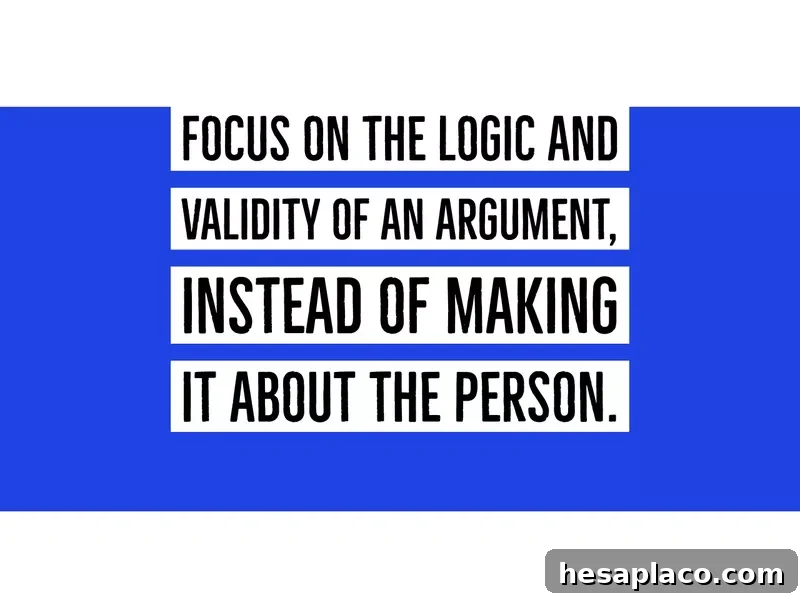
Ad hominem, Latin for “to the person,” occurs when someone attacks the individual making the claim instead of addressing the claim itself. Rather than engaging with the argument’s merits, the focus shifts to character attacks or insults.
This is common in casual banter as well as heated debates. For instance, personal jabs on TV sitcoms often derail a discussion from substance to ridicule.
The best response is to separate the person from the claim: examine the logic and evidence behind the argument rather than the character of the speaker.
Appeal to Authority

The appeal to authority assumes a claim is true solely because an expert or influential figure said it. In an era where celebrities and social media influencers can have broad influence, it’s easy to accept claims without checking the underlying evidence.
Even genuine experts can disagree, and expert endorsement alone doesn’t guarantee truth. For example, a popular TV personality might promote a supplement or diet claim that lacks robust scientific support. Always ask for the evidence behind an expert’s endorsement and look for independent verification.
Bandwagon Argument (Ad Populum)

The bandwagon fallacy assumes something must be true because many people believe it. Popularity doesn’t equal accuracy—history offers many examples where widely held beliefs were later disproved.
Being aware of this fallacy helps you evaluate claims based on evidence, not on how many people accept them.
Strawman
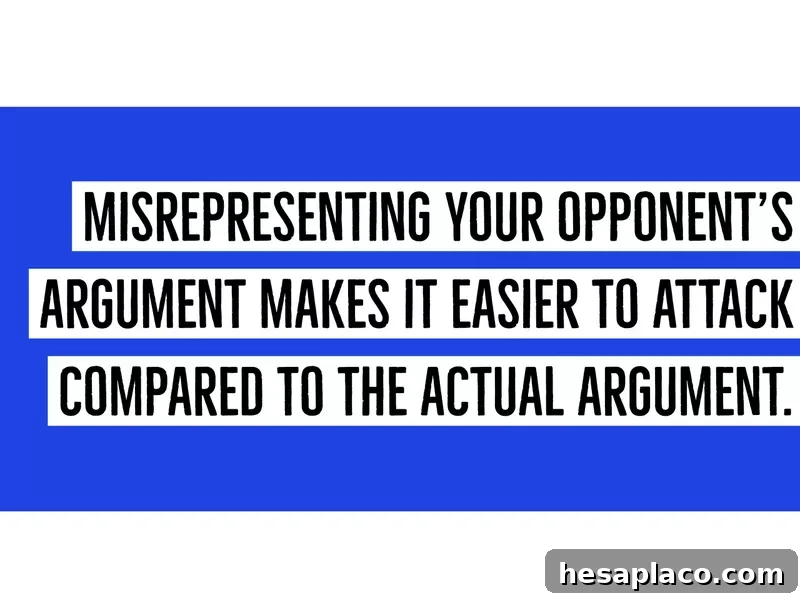
A strawman misrepresents an opponent’s argument to make it easier to attack. Instead of addressing the actual claim, one constructs a weakened or oversimplified version and criticizes that.
This tactic frequently appears in political debates and media discussions. The antidote is to restate the opponent’s position fairly and ask clarifying questions before countering.
Circular Reasoning
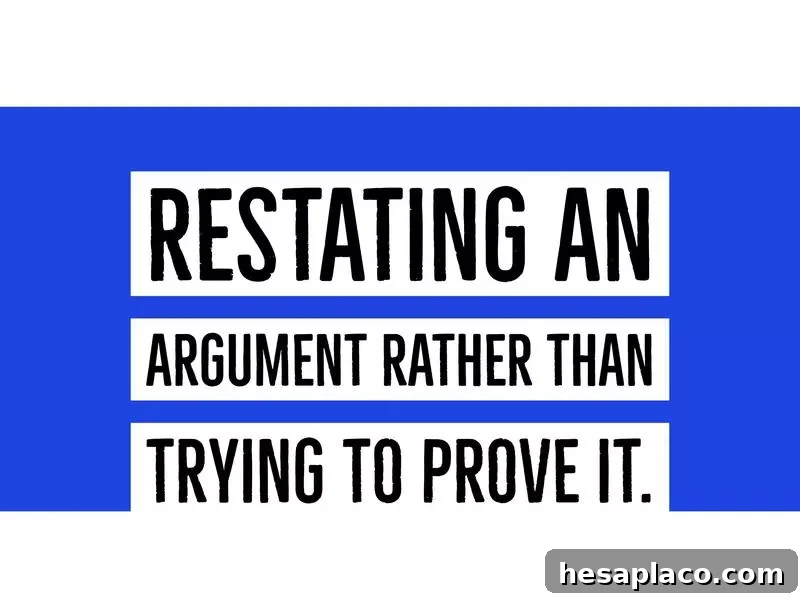
Circular reasoning occurs when the conclusion is simply a restatement of the premise, offering no independent support. Examples include statements like “We must cut prison spending because too much money is being spent,” which provide no new evidence.
To avoid circularity, demand independent evidence or reasons that substantiate the claim instead of repeating it in different words.
Genetic Fallacy
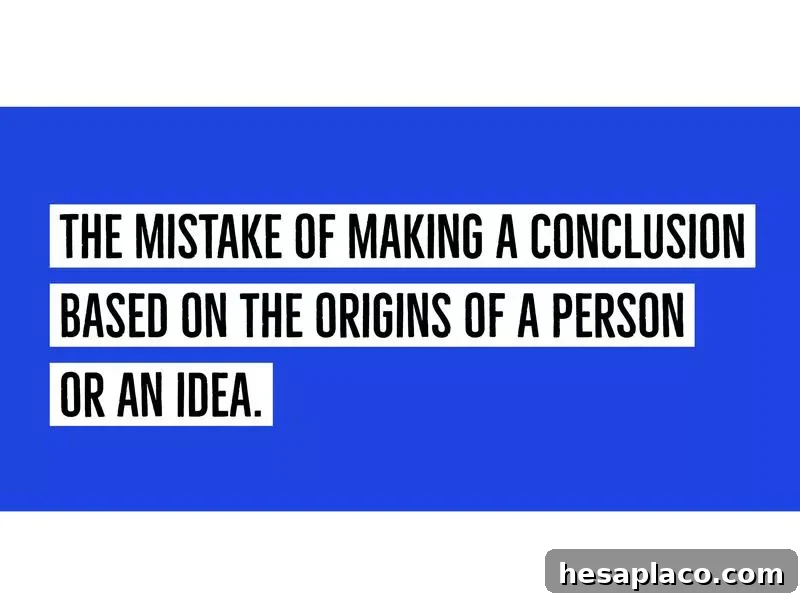
The genetic fallacy judges an idea based on its origin rather than its current merits. Dismissing an argument because of who presented it or where it came from is fallacious unless the origin directly undermines the argument’s validity.
Avoid discrediting claims solely because of the speaker’s background; instead, address the claim’s actual content and evidence.
Anecdotal Evidence
Anecdotes are personal stories that can be persuasive but don’t substitute for systematic evidence. One person’s experience may be compelling, but it’s not reliable proof for general conclusions.
Use anecdotes to illustrate a point, but avoid generalizing from isolated examples. Look for broader data or repeatable studies to support wide-ranging claims.
Appeal to Emotion

Appeals to emotion try to persuade by manipulating feelings—pity, fear, or outrage—rather than presenting logical reasons or evidence. While emotions are powerful and relevant in many contexts, they shouldn’t replace sound argumentation.
Recognize emotional appeals and ask for factual support. Emotions can highlight values, but they don’t automatically validate factual claims.
Slippery Slope
The slippery slope asserts that one small step inevitably leads to a chain of extreme, undesirable outcomes. It relies on speculative assumptions about probability rather than concrete evidence.
Rather than accepting worst-case scenarios, evaluate the likelihood of each step and consider safeguards or distinctions that prevent the supposed cascade.
Tu Quoque
Tu quoque, Latin for “you too,” deflects criticism by pointing out hypocrisy in the accuser instead of responding to the original claim. While exposing inconsistency can be relevant, it doesn’t refute the argument itself.
Focus on the claim’s merits and evidence rather than trading accusations.
Middle Ground

The middle ground fallacy assumes that a compromise between two opposing positions must be correct. While compromise can be reasonable in many situations, the midpoint between truth and falsehood isn’t necessarily true.
Evaluate claims on their own evidence rather than assuming the truth lies midway between extremes.
Gambler’s Fallacy
The gambler’s fallacy mistakes independent events as being influenced by previous outcomes. Believing that a coin that has landed heads several times is “due” for tails ignores that each flip remains statistically independent.
Recognize when events are independent and avoid inferring patterns where none exist.
Understanding these common fallacies improves critical thinking and helps you respond more effectively in discussions. When you can distinguish between emotional appeals, faulty reasoning, and evidence-based claims, conversations become clearer, more productive, and less prone to manipulation.