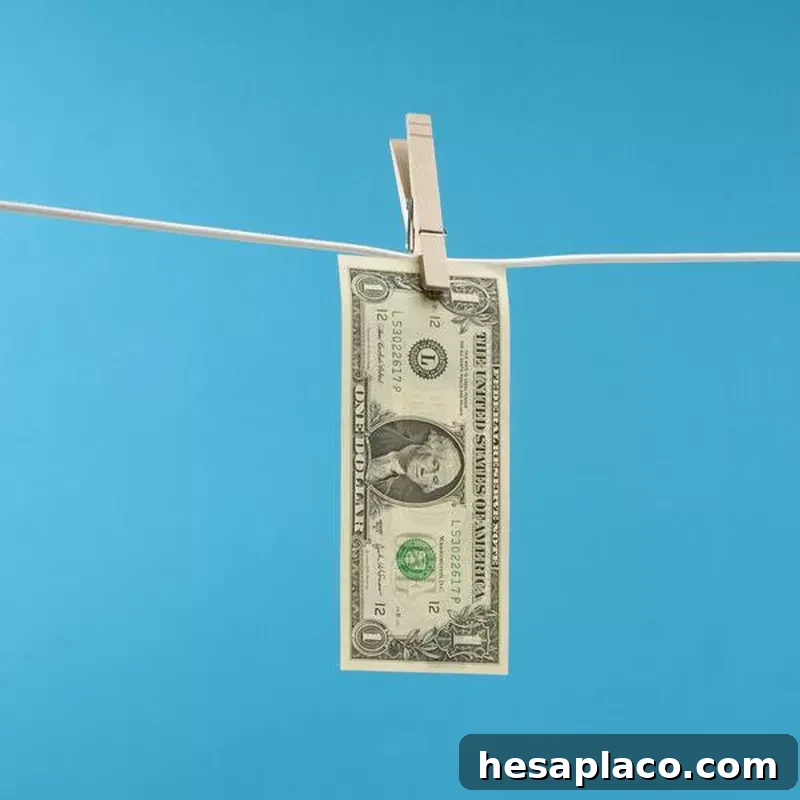
A dollar. A buck. A greenback. A single. A one. A George Washington. Whatever you call it, the U.S. one-dollar bill has a rich and intriguing history.
Given how often one-dollar notes change hands, it’s surprising how little many of us know about this ubiquitous piece of currency.
Look closely and you’ll notice a complex design filled with symbolic images, the Great Seal of the United States, and several Latin phrases. Over time, some of these design elements have inspired myths and conspiracy theories about hidden messages.
Below are 44 engaging facts and insights about the one-dollar bill that explain its materials, design, history, and cultural role.
1. $1 Bills Aren’t Made of Paper
Contrary to casual reference, U.S. banknotes are not made from ordinary paper. They’re made from a blend of 75% cotton and 25% linen, which gives them a distinct feel and durability compared with regular paper.
Getty Images
2. $1 Bills Are Durable
The cotton-linen composition, along with specialized inks and printing techniques, helps one-dollar bills endure frequent handling. That composition contributes to a lifespan longer than a comparable paper item.
Getty Images
3. You Can Spend Torn $1 Bills
Torn or damaged notes can remain legal tender if at least half of the bill is intact and the remaining portions can be verified. Severely damaged notes can be redeemed at the Bureau of Engraving and Printing for evaluation and potential replacement.
Getty Images
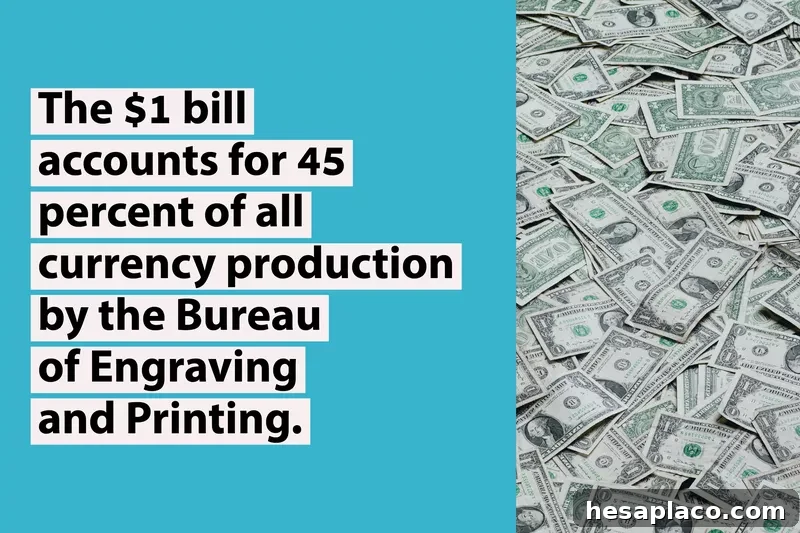
4. Almost Half of All Bills Made Are $1 Bills
The one-dollar bill is by far the most produced denomination. Because it’s used so often for ordinary transactions, it represents a substantial share of annual currency production.
Getty Images
5. How Many $1 Bills Are Made Annually?
The Bureau of Engraving and Printing manufactures billions of one-dollar notes over the course of a year to meet demand. Production figures vary by year, reflecting replacement needs and circulation patterns.

Getty Images
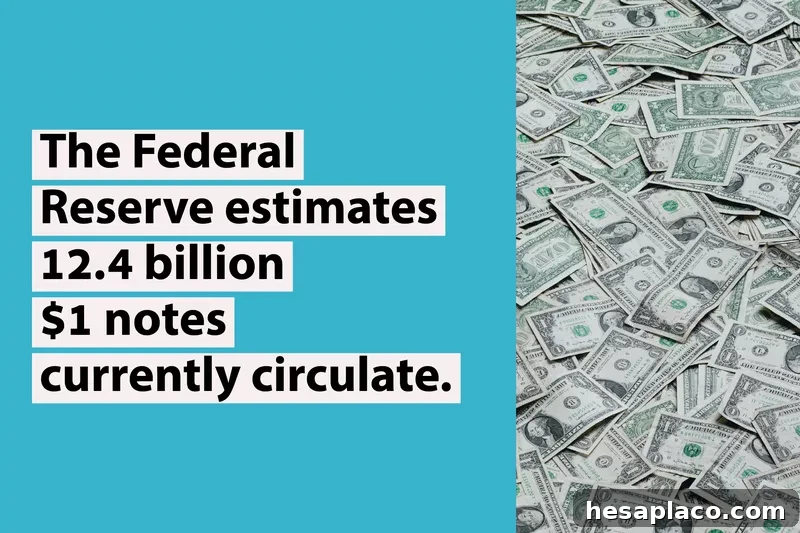
6. Just How Many $1 Bills Are Out There?
At any given time, there are billions of one-dollar bills in circulation. Their number changes as the Federal Reserve issues new notes and retires unfit ones.
Getty Images
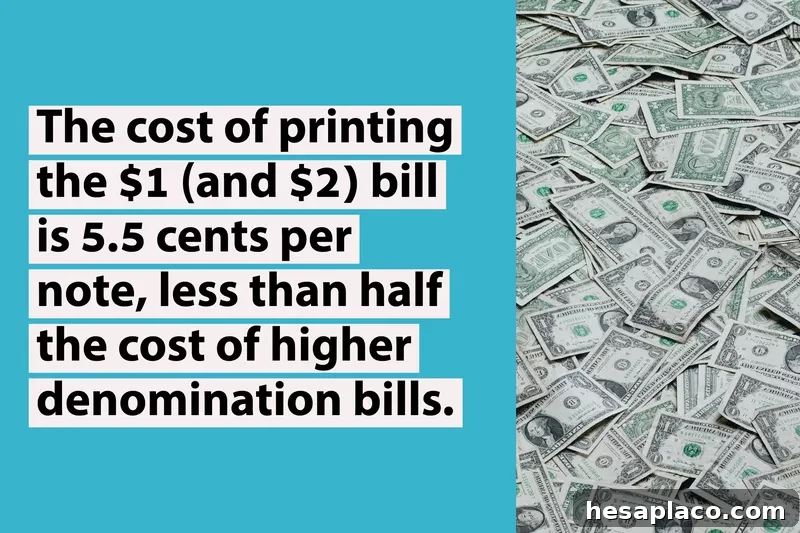
7. The Cost of Printing $1 Bills Is Low
Compared with higher denominations, the one-dollar bill is relatively inexpensive to produce. Its simple design and lack of some advanced security features used on larger notes keep costs down.
Getty Images
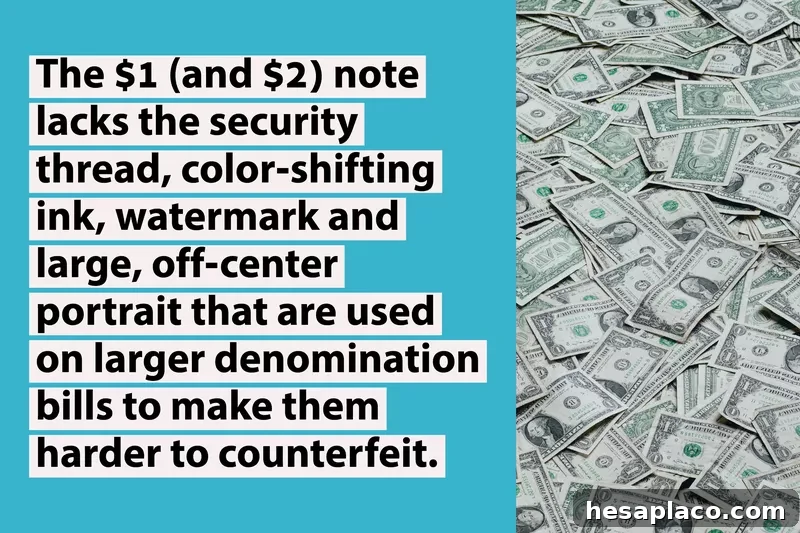
8. Why They’re Cheaper to Make
The one-dollar note lacks the multi-colored inks, embedded security threads, and other costly anti-counterfeiting features present on higher denominations. Since counterfeiting of the $1 bill is less financially rewarding, fewer advanced safeguards are necessary.
Getty Images
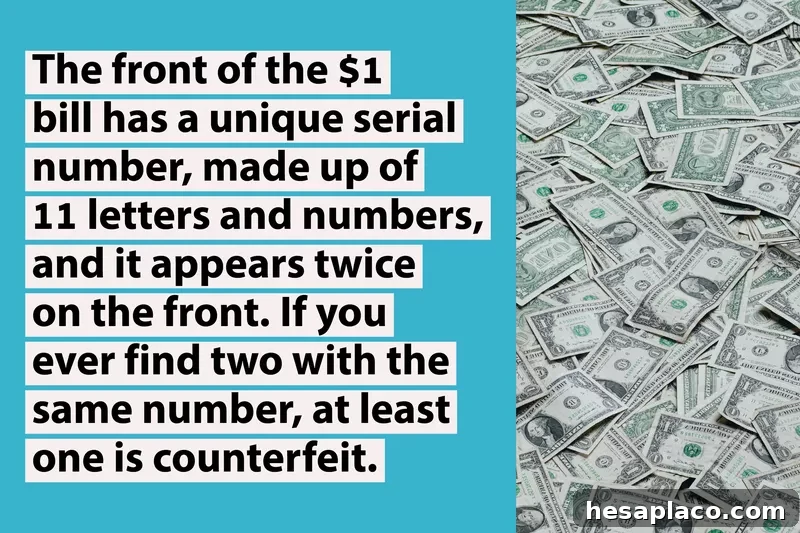
9. Every $1 Bill Has a Unique Serial Number
Each note carries a serial number that helps track production runs, identify series, and deter counterfeiting. Serial numbers are part of the security and record-keeping system used by the Treasury.
Getty Images
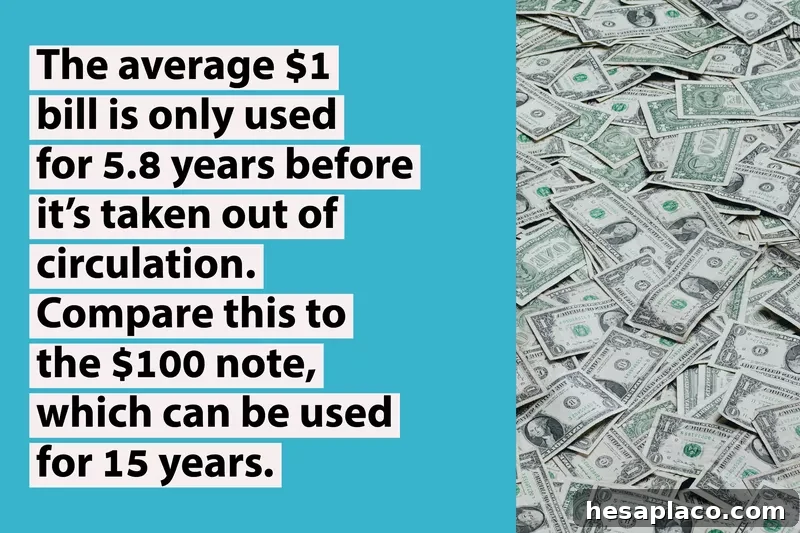
10. The Average Lifespan of a $1 Bill
One-dollar bills circulate heavily and typically remain in use for several years—on average longer than small coin production cycles but shorter than the life of some higher-denomination bills. Once they become too worn, the Federal Reserve withdraws them from circulation.
Getty Images
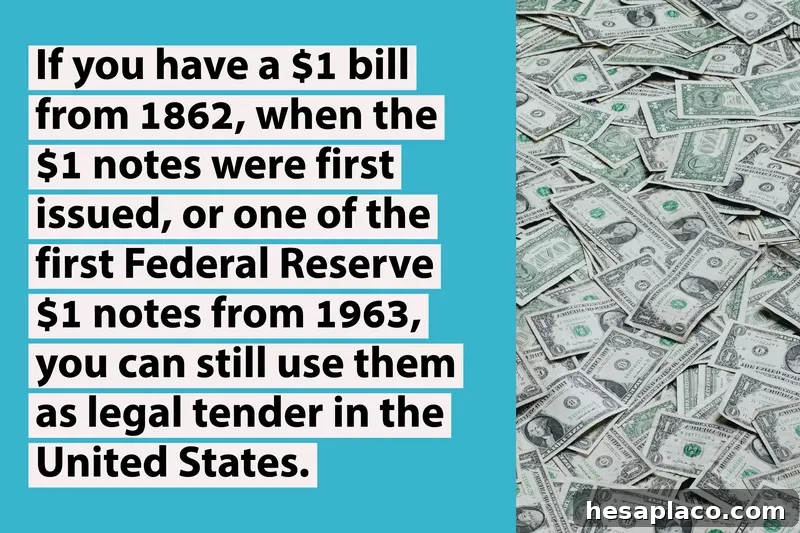
11. Old Bills Are Still Legal Tender
Outdated designs and older series of U.S. currency remain legal tender. A note produced decades ago is still valid for face value unless it has been demonetized by an official government action, which is rare.
Getty Images
12. But You’re Better Off Not Spending Old Bills
Even though old notes are legal tender, collectors may place higher value on well-preserved or rare series. If you suspect a bill has collectible worth, consult a currency expert before spending it.

Getty Images
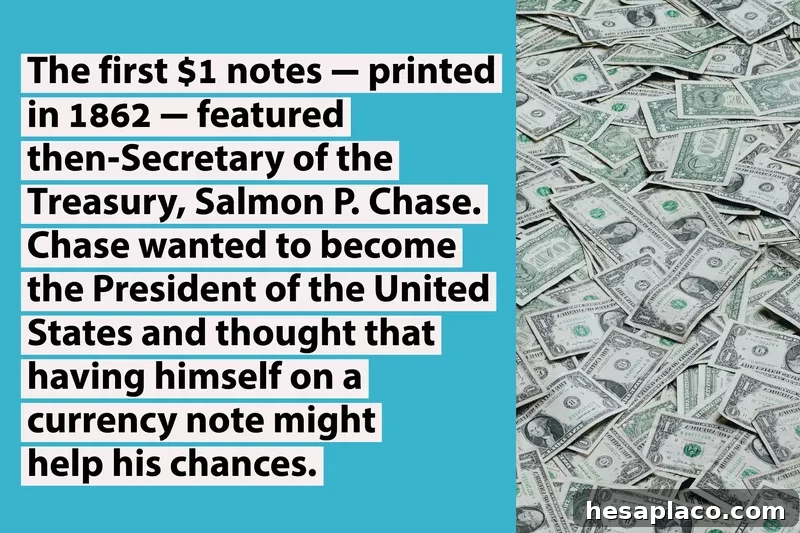
13. The First $1 Bills Didn’t Feature George Washington
Early U.S. banknotes sometimes displayed different portraits or allegorical images. The choice of Washington as the consistent face on the one-dollar note evolved over time as federal currency designs standardized.
Getty Images
Salmon P. Chase, once Secretary of the Treasury and later a Supreme Court Justice, proposed many changes in the 19th century, though his presidential ambitions never materialized.
14. George Washington First Appeared on the $1 Bill In…
George Washington’s portrait has been a long-standing feature of the one-dollar note. Over the years, his likeness became the standard image associated with this denomination.

Getty Images
15. The Portrait of George Washington on the Front of the $1 Bill Came From…
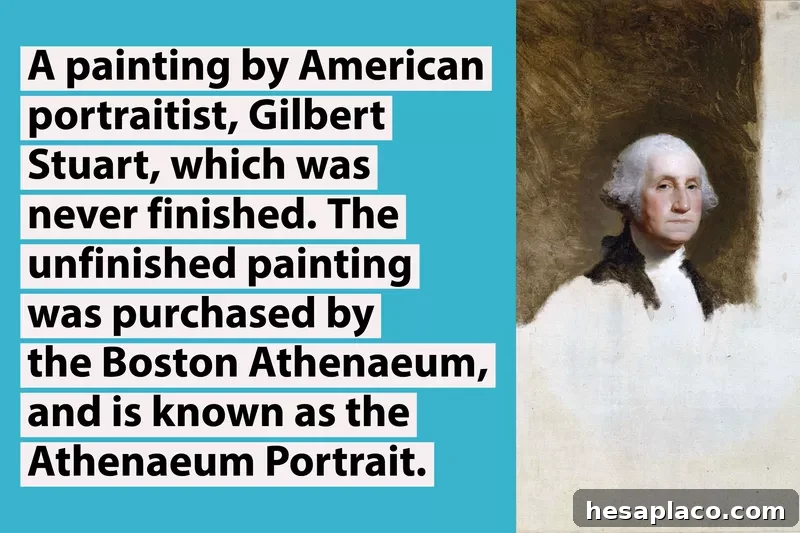
The portrait used on the modern one-dollar bill is based on a famous painting by Gilbert Stuart, known as the Athenaeum Portrait, which became a reference image for many reproductions of Washington’s likeness.
Getty Images
16. A Family Affair
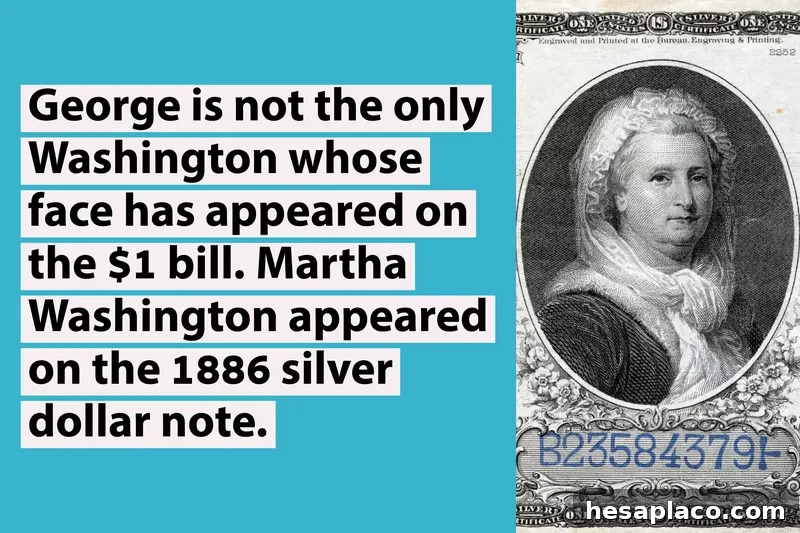
Portraits and design elements on U.S. currency have sometimes echoed earlier notes or family likenesses; historic images and older bill designs influenced the modern look in various subtle ways.
Getty Images
17. The Design Hasn’t Changed in Over 50 Years
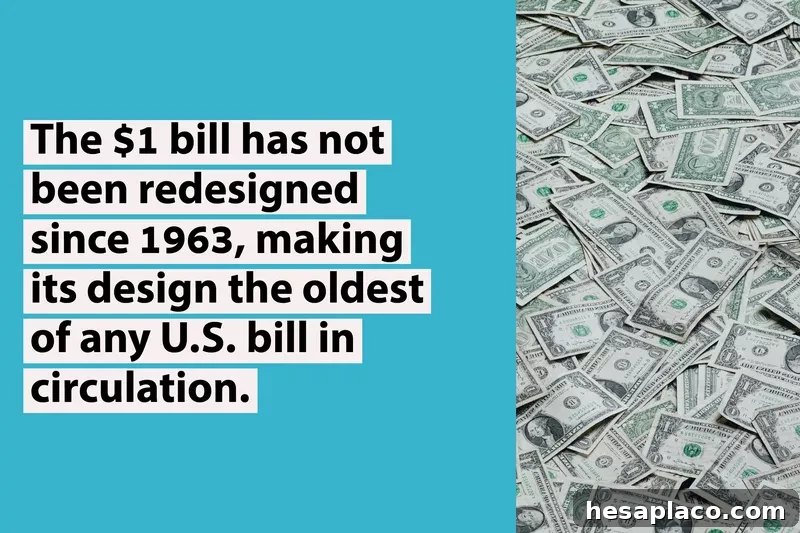
The basic appearance of the one-dollar bill has remained remarkably stable. While other denominations have undergone major redesigns to add security features, the one-dollar bill’s design has seen minimal change for decades.
Getty Images
18. The U.S. Government Has no Plans to Change the $1 Bill
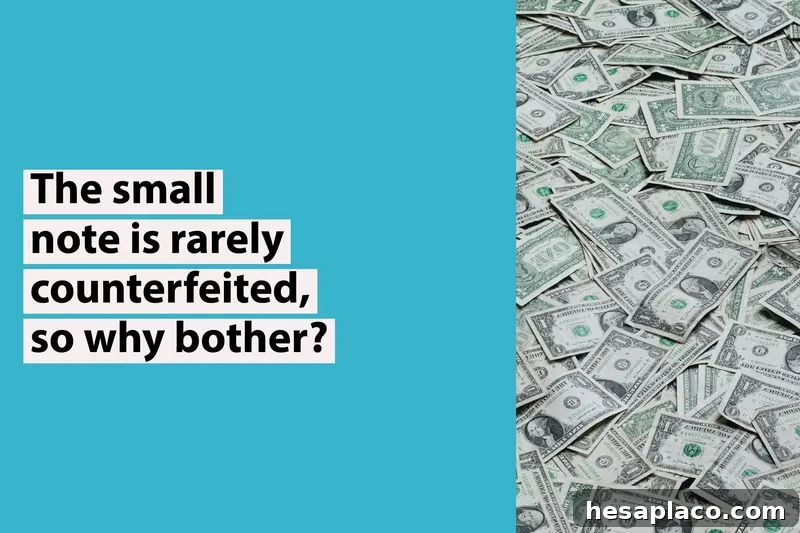
As of recent statements, there are no official plans to redesign or discontinue the one-dollar bill. The balance of production costs, public preference, and industry concerns keeps the status quo.
Getty Images
19. What’s That Date Again?
The series year printed on a bill indicates the design and signature combinations for that release, not necessarily the exact year it was printed. Small changes in signatures or minor design tweaks lead to new series dates.
Getty Images
20. Lucky 13
Thirteen is a recurring motif on the one-dollar bill: there are 13 stripes on the shield, 13 stars, 13 arrows, and other groupings of 13 throughout the design, symbolizing the original 13 colonies.
Getty Images
21. Lucky Thirteen, Part 2
Even the Latin mottos—“Annuit Coeptis” and “E Pluribus Unum”—contain symbolic letter groupings, and the Department of the Treasury seal includes 13 stars, reinforcing the theme of the original states.
Getty Images
22. Lucky 34
Another curious detail is the 34-sided emblem surrounding the treasury seal. Even though 11 states seceded during the Civil War to form the Confederacy, the 34-sided design remained, perhaps signaling hope for the nation’s preservation.
Getty Images
23. Conspiracy Theorists Have Other Ideas
Because of the layered symbolism, the one-dollar bill has been fertile ground for conspiracy theories connecting its imagery to secret societies or hidden agendas. Most such claims are speculative and not supported by historical records.

Getty Images
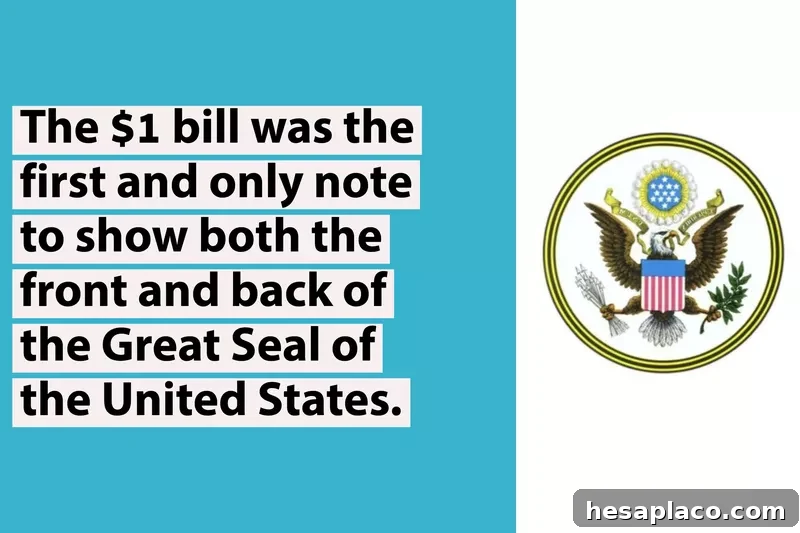
24. About the Great Seal
The Great Seal’s two sides—the obverse and reverse—depict an eagle with olive branch and arrows and a pyramid with an eye. These elements represent themes like unity, strength, and divine favor in the founders’ symbolic vocabulary.
Getty Images
25. War and Peace
The eagle clutches an olive branch in one talon and arrows in the other, symbolizing a preference for peace but readiness for defense. This dual symbolism was intentionally chosen to reflect national priorities.
Getty Images
26. The Olive Branch and the Arrows in the Eagle’s Claws Used to Be Reversed
Early seal designs showed the eagle holding the arrows in its right claw and the olive branch in its left. To emphasize peace as the preferred stance, designers later reversed the arrangement so the olive branch appears in the eagle’s right talon.
Getty Images
27. Is It a Bird?
Some observers have debated whether the stylized figure on the seal resembles an eagle or another bird form. The official intent was an eagle, standing for the nation and its aspirations.
Getty Images
28. Again, Conspiracy Theorists Have Other Ideas
Other interpretations connect Seal imagery to Freemasonry or other secret groups. While such theories persist in popular culture, mainstream historical evidence points to classical and Enlightenment influences rather than clandestine symbolism.
Getty Images
29. It’s Latin to Me
The bill includes several Latin phrases, most notably “Annuit Coeptis” (roughly, “He [Providence] has favored our undertakings”) and “E Pluribus Unum” (“Out of many, one”). These mottos reflect the founders’ use of classical language and ideals.
Getty Images
30. The Meaning of the Phrases
“Annuit Coeptis” expresses a belief that a higher power favors the nation’s endeavors, while “E Pluribus Unum” highlights unity emerging from many states and peoples. These mottos summarize key civic ideals from the republic’s founding era.
Getty Images
31. The Vending Machine Industry Doesn’t Want the $1 Bill Changed
Many vending machine operators oppose redesigning or eliminating the one-dollar bill because refitting machines to accept a new design or different denomination would be costly and disruptive.

Getty Images
32. Vending Machines, Continued
In the early 2000s, proposals to redesign the dollar were stalled in part because of concerns about the financial impact on vending and related industries. The logistical cost of updating machines nationwide was a major consideration.
Getty Images
33. Some People Do Want the $1 Bill to Go Away
Advocates for replacing the one-dollar bill with a coin cite cost savings from longer circulation life for coins, but efforts to pass such legislation have not succeeded. A 2012 bipartisan proposal to replace the bill with a coin did not pass.

Getty Images
34. It’s the Only Bill That Gets Tested
The one-dollar bill has been the subject of printing experiments, including trials with web presses used to test production methods. Some trial runs produced notes in limited series—bills from those experiments can be rare and valuable to collectors.
Getty Images
35. Never Put Your Money Where Your Mouth Is
Putting paper currency in the mouth is unhygienic and is not recommended. Currency circulates widely and can carry germs; it’s best handled with clean hands.

Getty Images
36. You Can Track Your Bills
There are community websites and programs that allow people to log serial numbers and track where particular bills travel. These projects are hobbyist-driven and offer an informal way to follow a note’s journey.
Getty Images
37. ‘In God We Trust’ Is Law
The motto “In God We Trust” is codified in U.S. law and appears on all U.S. currency. It reflects a historical decision to include the phrase as a national motto on coins and paper money.
Getty Images
38. ‘In God We Trust’ First Appeared on Paper Money in 1957
The phrase had been used on coins earlier but was not added to paper currency until the mid-20th century. Since then, it has been a permanent feature on U.S. notes.
Getty Images
39. The Seal of the Department of the Treasury Appears on Every $1 Note
Each one-dollar bill displays the Treasury seal, which identifies the issuing authority and is part of the official design elements required on U.S. currency.
Getty Images
40. Before 1996, U.S. Bills Featured the Seal of the Individual Federal Reserve Bank Where They Were Made
Older notes displayed an identifier for the Federal Reserve Bank district associated with the bill’s issuance. After changes in production and issuance practices, the uniform Treasury seal became standard across notes.
Getty Images
41. The First $1 Bills Issued With George Washington’s Face Didn’t Show the Great Seal
Early versions of notes featuring Washington sometimes lacked the modern arrangement of the Great Seal elements. The design settled into its current composition over several redesigns and standardizations.
Getty Images
42. Benjamin Franklin and Thomas Jefferson Wanted an Egyptian Pharaoh on the Great Seal
Some founding-era figures proposed bold and eclectic ideas while the nation’s symbols were being discussed. Early debates over the Great Seal included a wide range of artistic and cultural references, reflecting the founders’ diverse inspirations.
Getty Images
43. They Also Wanted to Put the Motto ‘Rebellion To Tyrants Is Obedience To God’ on the Great Seal
Various mottos and inscriptions were proposed during early design discussions. Not all suggestions were accepted; the final mottos chosen reflected a balance of classical references and republican ideals.
Getty Images
44. How Long Would $10 Billion $1 Bills Last You?
As a light thought experiment: $10 billion in one-dollar bills is a massive physical quantity. Stacked or stored, it would require enormous space and would last an individual many lifetimes if spent at ordinary rates. The sheer scale helps illustrate how many one-dollar notes circulate and how banking systems manage vast sums in small denominations.
Getty Images