
President Trump’s proposal for a 50-year mortgage ignited widespread debate because it touches on one of the nation’s most urgent problems: housing affordability. In recent years, home prices have outpaced wage growth, mortgage rates have stayed elevated, and the average first-time buyer is now about 40 years old. The idea of stretching loan terms to 50 years highlights tensions between easing monthly costs and the long-term financial trade-offs of homeownership.
Proponents contend that a much longer mortgage term reduces monthly payments enough to allow buyers who currently feel priced out to qualify for loans. Opponents counter that the structure alters how equity is built, increases lifetime interest costs, and shifts risk to borrowers and lenders. The proposal also raises practical and legal questions: how much it would actually cost consumers, how financial institutions would price and manage the new product, and whether such a measure addresses the root causes of high housing costs.
Lower Monthly Payments Drive Interest in the Idea

Credit: Canva
Stretching payments over 50 years reduces monthly obligations by spreading the principal over a longer period. Analysts testing sample loans found monthly savings in the range of a few hundred dollars in many scenarios. In a housing market where buyers often spend a large share of income on housing—sometimes nearly 40 percent—these savings could help some people qualify for mortgages they otherwise could not obtain.
The Loan Would Build Equity at a Slower Pace

Credit: Canva
A 50-year term changes the amortization profile so that interest dominates payments for a much longer period. That means principal is paid down more slowly and equity accumulates at a reduced pace. Estimates indicate a borrower on a half-century mortgage might still owe nearly the full balance after a decade, leaving limited home equity to fund moves, emergencies, or other financial needs.
Total Interest Costs Would Increase Dramatically
Credit: Getty Images
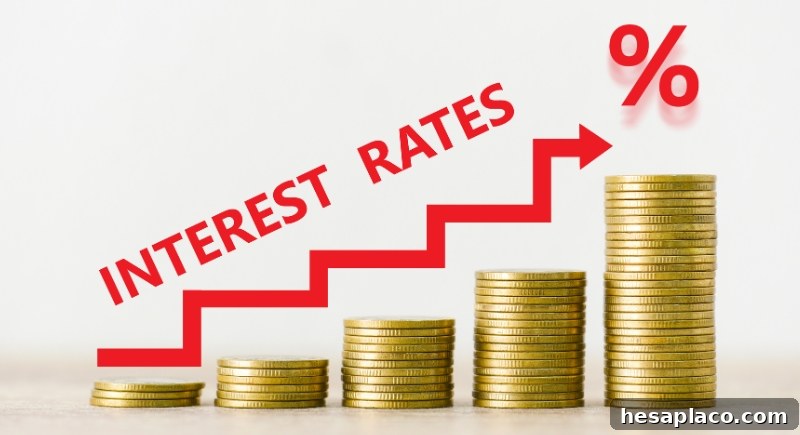
Extending the loan term substantially raises the total interest paid over the life of the mortgage. Analyses comparing typical loan amounts show that a 50-year mortgage can cost far more in interest than a 30-year loan. For example, on a $450,000 loan the cumulative interest difference can reach tens or even hundreds of thousands of dollars, with some scenarios projecting total interest payments that rival or exceed the original principal for higher-balance loans.
Financial Institutions Would Price the Risk into the Interest Rate

Credit: Canva
Because a mortgage that spans five decades carries greater uncertainty for lenders—longer exposure to interest rate shifts, borrower job changes, and housing market cycles—banks and investors would likely demand higher rates to compensate. Analysts estimate that a 50-year product could command interest rates noticeably above standard 30-year loans, potentially cutting into much of the monthly-payment advantage that longer terms promise.
The Proposal Faces Legal Limits Under Current Rules

Credit: Getty Images
Federal rules complicate implementing 50-year mortgages under existing frameworks. The Dodd-Frank Act caps the Qualified Mortgage (QM) category at 30 years. Because QM status limits lender liability and helps ensure uniform underwriting standards and pricing, any mortgage beyond 30 years would fall outside that category unless lawmakers change the law. Without such legal adjustments, many banks would view a 50-year loan as a nonstandard, higher-risk product and could decline to offer it.
Housing Experts Warn It Doesn’t Solve Supply Problems

Credit: Getty Images
Economists consistently point to constrained housing supply as the primary driver of high prices. Slow homebuilding tied to restrictive zoning, burdensome permitting, labor shortages, and rising material costs has limited inventory. Extending loan terms increases purchasing power but does not create additional homes. In a market with tight supply, boosting buyers’ ability to borrow can push prices up rather than make housing more accessible overall.
Support Inside Housing Circles Remains Mixed

Credit: Getty Images
Industry reaction has been divided. Some real estate professionals argue that a 50-year option could help marginal buyers enter the market now and later refinance into shorter-term loans as circumstances permit. Others warn it could saddle buyers with debt that stretches across most of their working lives, increasing vulnerability to future shocks. Political responses have been mixed as well; public comments from proponents and critics reflect both practical and ideological concerns.
Historical Attempts at Ultra-Long Mortgages Offer Warnings

Credit: Canva
Past experiments with very long mortgage terms provide cautionary examples. In the 1980s Japan introduced extremely long loans during a property boom; when the market collapsed many homeowners were left with debt that exceeded home values for decades. Other countries, including the United Kingdom and Canada, have tested longer terms as well; regulators in several places later tightened rules after finding that ultra-long loans could inflate prices without materially improving access for more buyers.
Refinancing Might Help Some Borrowers, but Isn’t Guaranteed

Credit: Getty Images
One argument in favor of a 50-year option is that many homeowners refinance or move before fully amortizing a mortgage. Using a longer term as an entry point could let buyers qualify today and later switch to a shorter-term loan via refinancing or sale. That strategy depends heavily on future interest rates, credit access, and home price trends—none of which are assured—so it is not a guaranteed path for all borrowers.
Affordability Still Depends on Building More Homes

Credit: Canva
Researchers at financial institutions and universities largely agree that expanding housing supply is the clearest long-term solution for affordability. Policy recommendations include easing restrictive zoning, streamlining permitting, addressing construction labor shortages, and lowering material costs tied to tariffs and supply-chain issues. Without meaningful action on supply, policymakers risk treating the symptom rather than the underlying cause of rising housing costs.
Overall, a 50-year mortgage would offer short-term relief for some buyers through lower monthly payments, but it brings significant trade-offs: slower equity accumulation, higher total interest payments, potential legal and regulatory obstacles, and mixed effects on the housing market. Many experts argue that to make housing genuinely more affordable, efforts must focus on increasing supply and improving the fundamentals of homebuilding and zoning policy.