
Americans are investing in the stock market at unprecedented levels, and that confidence shows up in record numbers. U.S. households now hold a larger share of their financial assets in stocks than at any point since the late 1990s, a trend that has raised both optimism and concern. While rising markets have boosted household wealth and consumer spending, many economists warn that the increased exposure to equities also heightens financial risk for the broader economy.
The Numbers That Have Experts Talking

Image via Canva/RyanKing999
Federal Reserve data indicate that stocks—held directly, in mutual funds, and in retirement accounts—now account for roughly 45% of household financial assets. That level eclipses the share seen before the dot-com crash and reflects both persistent gains in equity markets and broader participation by households. The S&P 500, for instance, has surged more than 30% since April 2025 and continues to set new highs.
Much of this rally is concentrated in a handful of mega-cap companies. Apple, Amazon, Microsoft, Nvidia, Alphabet, Meta, and Tesla have driven a significant portion of market gains: together they represent nearly a third of the index’s market capitalization and contributed roughly 40% of this year’s advance. That concentration has made the market more dependent on the performance of a few firms than in past cycles.
Several forces have increased household exposure to equities. Employer-sponsored retirement plans like 401(k)s automatically channel contributions into stock-based investments. At the same time, online trading platforms and lower transaction costs have made buying and holding stocks easier for millions of people who were previously sidelined.
As stock ownership broadens, more household balance sheets move in step with market swings. When prices rise, portfolios and consumer confidence climb; when markets fall, a large share of household wealth can evaporate quickly, denting spending and economic activity.
Economists Signal Caution
Analysts caution that widespread enthusiasm can amplify both gains and losses. Jeffrey Roach, chief economist at LPL Financial, notes that greater participation means market moves now have a bigger impact on consumer behavior, hiring, and corporate investment than in past decades. A sharp correction could ripple through the economy more forcefully than before.
Comparisons to previous asset bubbles are frequent. John Higgins of Capital Economics likens the current optimism to the buildup that preceded the early 2000s tech crash. Surveys add to the cautionary tone: a recent Bank of America poll found that more than 90% of fund managers view U.S. equities as overpriced—the highest proportion in over twenty years. High-profile investors have also expressed concern; veteran Jim Rogers has disclosed he sold his U.S. holdings, warning that the current exuberance resembles past speculative episodes.
Unequal Gains Behind the Rally
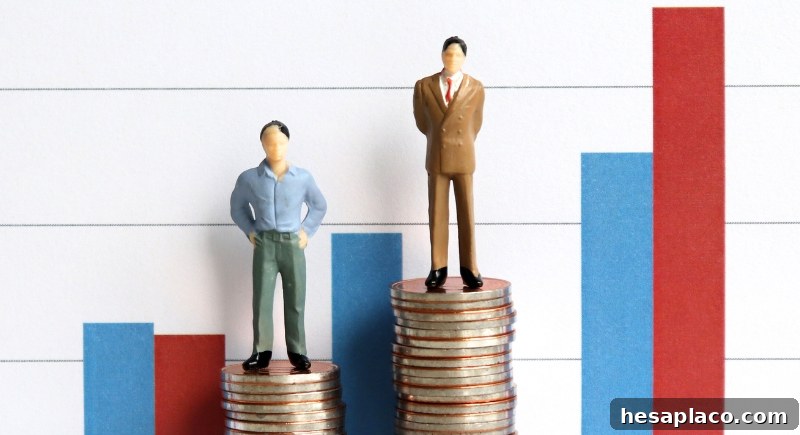
Image via iStockphoto/hyejin kang
The benefits of the market’s rise have been uneven. Wealthier households disproportionately own equities, while middle- and lower-income families rely mainly on wages, which in many cases have lagged behind inflation. Economists describe this divergence as a “K-shaped” recovery, where the financial fortunes of the affluent improve while others see little progress.
High-income families, supported by growing portfolios, have increased spending and helped sustain much of the current economic momentum. That dynamic, however, leaves the economy vulnerable: if stock prices fall, the spending power of those households could retract rapidly, weakening demand and slowing growth.
A Reality Check for Investors
Forecasts vary, but many experts agree that the exceptional returns of recent years are unlikely to continue at the same pace indefinitely. Rob Anderson of Ned Davis Research warns investors to temper expectations; when stock ownership reaches elevated levels across households, future long-term returns may moderate. Diversification and prudent risk management remain important as markets mature and concentration increases.
For now, markets appear resilient, but the economy’s growing reliance on equity performance has raised the stakes. That dependence makes households and the broader economy more sensitive to sudden shocks—an important consideration for investors, policymakers, and anyone whose financial health is tied to the market.