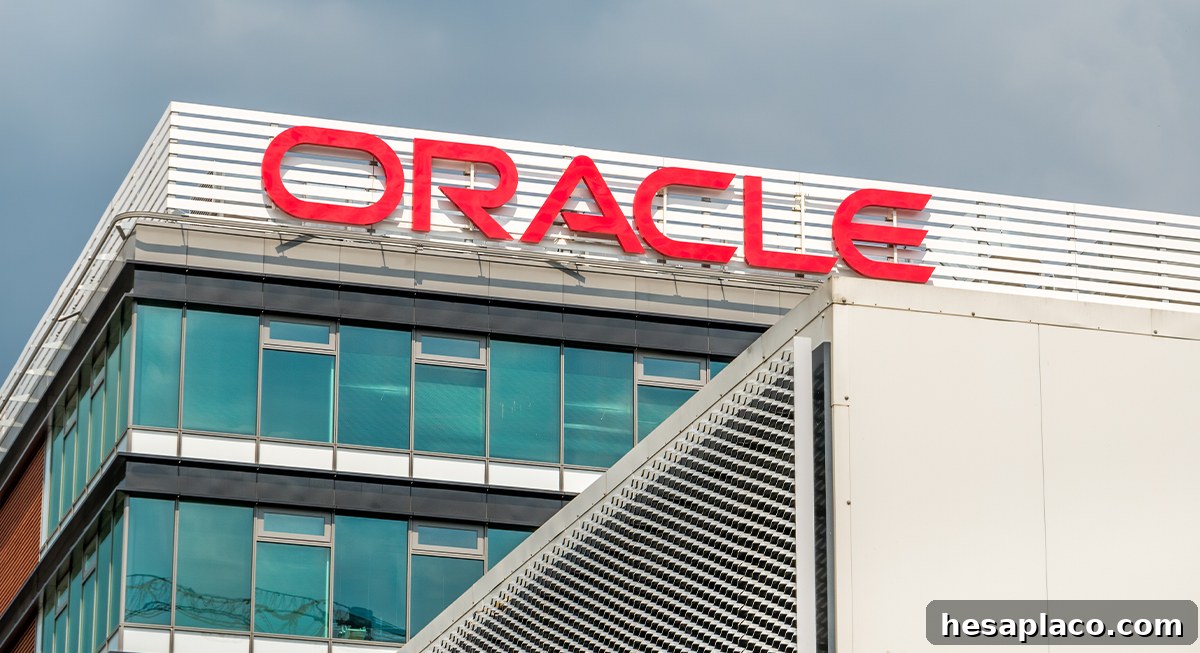
Larry and David Ellison exert influence that extends across Silicon Valley, Hollywood, Washington, and beyond. Larry’s career began in enterprise software, and over decades he transformed Oracle from a database company into a strategic force in AI infrastructure. His son David shifted from film production into media ownership, acquiring well-known entertainment and news properties. Together their financial success is significant, but the deliberate positioning of their assets across technology, politics, and media reveals a broader strategy that reshapes power dynamics in multiple industries.
Oracle’s AI Expansion Elevated Larry Ellison’s Role in Tech
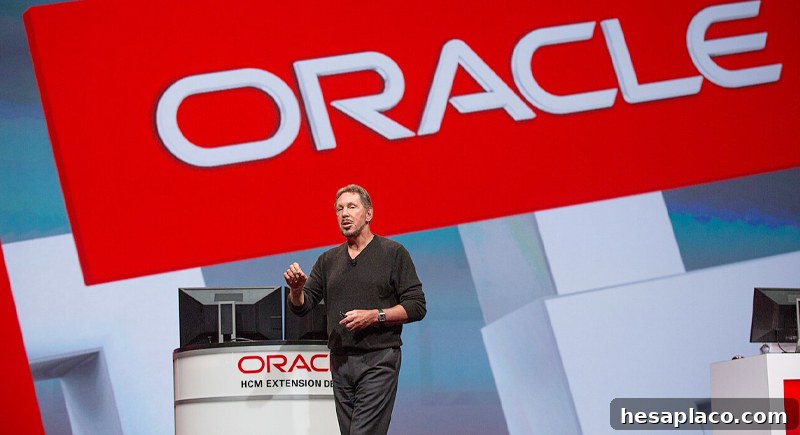
Image via Wikimedia Commons/Oracle PR
Larry Ellison co-founded Oracle in 1977 and remained intimately involved in the company’s direction for decades. Oracle gained initial traction by commercializing relational database technology built on SQL, and under Ellison’s leadership it expanded through strategic acquisitions such as PeopleSoft, BEA Systems, and Sun Microsystems. Those purchases broadened Oracle’s footprint in enterprise software, middleware, and hardware, positioning the company as a full-stack provider for corporate IT.
When cloud computing emerged and reshaped enterprise IT, Oracle was criticized for being slow to adapt. In response, Ellison directed massive investments to retool Oracle’s data centers, cloud software, and services. That infrastructure overhaul ultimately enabled the company to compete for large-scale cloud and AI workloads. A turning point came when Oracle secured a major, multi-year partnership to supply hyperscale infrastructure for a leading AI company. The deal dramatically expanded Oracle’s role in the AI supply chain and signaled its transition from legacy database vendor to critical AI infrastructure provider.
Reports tied this partnership to extremely high commercial valuations and placed Oracle at the center of an AI ecosystem that includes governments, major tech firms, and cloud providers. Ellison’s roughly 40% ownership stake in Oracle significantly increased his personal wealth, pushing him briefly to the top of global wealth rankings in 2025. More importantly, his strategic prioritization of AI infrastructure put Oracle into direct competition with hyperscale cloud providers and reshaped the company’s long-term technical and commercial trajectory.
Political Engagement Bolstered Oracle’s Access to Government Contracts
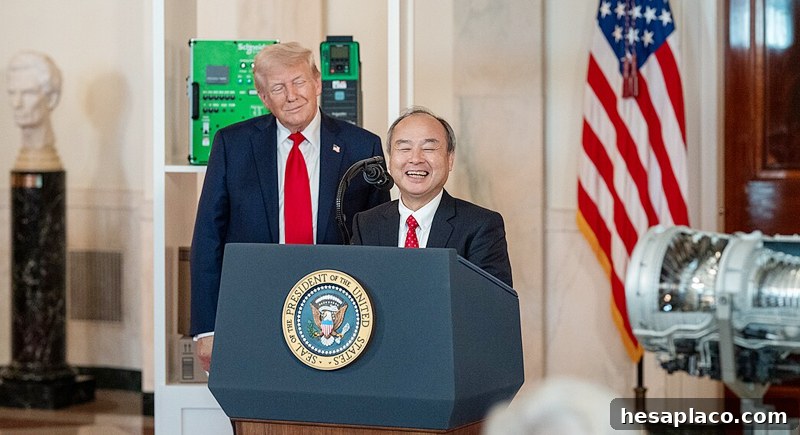
Image via Wikimedia Commons/The White House
Alongside corporate maneuvering, Ellison has developed substantial political relationships that have helped amplify Oracle’s influence in federal technology planning and procurement. Over the years he has made significant contributions to various political campaigns and hosted high-profile fundraisers. These activities increased his access to policymakers and positioned Oracle as a trusted contractor for sensitive government projects.
Ellison’s political involvement included high-profile fundraising and support for major political figures, and his visibility at the White House grew as Oracle’s national role expanded. In 2025, a high-profile government-backed AI infrastructure initiative was announced with participation from political leaders and major industry figures, underlining the intersection of public policy and private tech infrastructure. As Oracle deepened its engagement with federal initiatives, that relationship created both commercial opportunity and heightened scrutiny over the role of private firms in national tech strategy.
David Ellison Built Skydance and Moved Into Major Media Ownership
David Ellison founded Skydance Media in 2010 and gradually grew it into a multi-disciplinary entertainment company. Skydance produced commercially successful films including Top Gun: Maverick and entries in the Mission: Impossible franchise, then expanded into television and interactive content. These successes positioned Skydance as a prominent independent studio with the resources and creative partnerships to pursue larger strategic moves.
Skydance later merged with a legacy media company, a deal that placed David at the helm of a large portfolio of broadcast and cable brands and a valuable film library. The transaction was supported by substantial equity from his father, reinforcing the family’s combined presence across both technology and media sectors. Bringing together Skydance’s production capabilities with a major media distribution platform created scale, giving David operational control over brands with national audiences and significant cultural reach.
The acquisition required regulatory review and was subject to oversight by federal agencies tasked with ensuring competitive and editorial standards. In the process, the company agreed to internal changes that addressed concerns raised during the review, and the merger moved forward after those conditions were met. With the deal finalized, David now oversees a sprawling media operation covering broadcast networks, cable channels, and a deep film and television catalogue, while executives continue to evaluate further strategic acquisitions and partnerships.
The Ellisons’ Combined Strategy: Technology, Media, and Influence
Viewed together, Larry and David Ellison’s activities create a vertically and horizontally integrated footprint spanning technology infrastructure, political engagement, and media ownership. Larry’s investments and deals anchor a critical role in global AI infrastructure, while David’s media holdings control messaging platforms that reach millions. This combination amplifies the family’s economic power and creates strategic advantages across content distribution, technology deployment, and policy influence.
Such concentration of assets prompts varied responses: some observers highlight the commercial efficiencies and technological capabilities that result from scale, while others raise concerns about the influence that can accrue when a single family or corporate group holds significant sway across multiple, interdependent sectors. Policymakers and industry stakeholders continue to weigh those trade-offs as the Ellisons expand their presence in both public- and private-sector institutions.
As the pace of AI adoption accelerates and the media landscape continues to evolve, the Ellisons’ decisions will likely shape debates over competition, regulation, and the relationship between technology platforms and public discourse. Their story illustrates how strategic investments, political engagement, and media ownership can intersect to produce influence that extends well beyond balance sheets.