
The idea that Henry Ford invented the first gasoline-powered car has endured for more than a century, but the reality is more complex. Ford’s first vehicle was neither the earliest nor the most celebrated invention of its time, and other inventors reached important milestones before him.
The First Smoke and Steam Machines
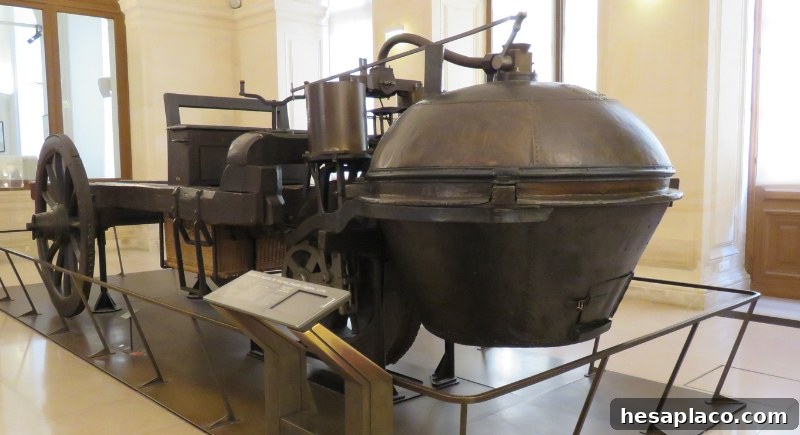
Image via Wikimedia Commons/Lomita
Long before Ford built his Quadricycle, European inventors were experimenting with ways to move people and goods without horses. In 1769 the French engineer Nicolas-Joseph Cugnot constructed a steam-driven vehicle known as the Fardier à vapeur. Resembling a cannon attached to a boiler, it crawled at roughly 2.5 mph and required frequent stops to replenish water. Although impractical, it demonstrated that engines could replace animal power.
Throughout the 19th century, inventors continued to refine steam propulsion, and incremental improvements eventually made internal-combustion engines viable. A major breakthrough came in 1885 when Karl Benz built the Benz Patent-Motorwagen. This three-wheeled vehicle used a gasoline engine and was reliable enough to be practical. In 1888, Bertha Benz famously took it on a long-distance trip, covering more than 60 miles while solving mechanical problems en route and obtaining fuel from a pharmacy—an early demonstration that cars could serve real transportation needs.
America Joins the Race
Automotive innovation arrived in the United States toward the end of the 19th century. In 1893 the Duryea brothers completed what is often cited as the first commercially successful gasoline automobile in America: they drove it, raced it, and managed to sell a few examples. A few years later, Detroit produced its own early gasoline vehicle. Charles Brady King built and drove a gasoline car through the streets of Detroit on March 6, 1896, attracting a crowd and receiving press attention. Following that demonstration, a young Henry Ford watched from his bicycle as the city witnessed one of its first gasoline-powered runs.
Ford’s Rough First Ride
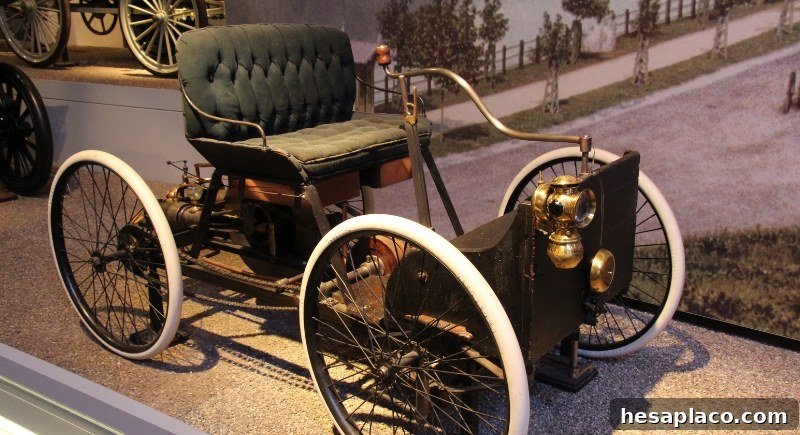
Image via Wikimedia Commons/Sicnag
Three months after King’s public drive, Ford completed his first motor vehicle, which he called the Quadricycle. Getting the machine out of his workshop was an ordeal: the vehicle did not fit through the door, so Ford removed bricks to make a way. On its short test run the Quadricycle suffered mechanical problems, although Ford managed quick repairs and kept it moving.
Unlike earlier public demonstrations, Ford’s initial trial lacked crowds or press—he worked quietly and practically. He later sold that original Quadricycle for $200 to fund further development while continuing his job as chief engineer at the Edison Illuminating Company and managing family finances with his wife, Clara. The early effort was modest, but it was a stepping stone.
Why Ford Still Matters
So why does Henry Ford’s name dominate popular accounts of automotive history even though he wasn’t the first to build a gasoline car? The distinction lies between invention and influence. Ford did not invent the automobile, but his contributions reshaped how cars were produced and who could afford them. In 1908 he introduced the Model T, designed to be practical, reliable, and affordable for ordinary Americans. Then, in 1913, he implemented and refined the moving assembly line, dramatically increasing production efficiency and reducing the time needed to build a car to about 93 minutes.
Those changes transformed the automobile from a luxury item for the wealthy into a mass-market tool for workers, farmers, and families. Ford’s innovations in manufacturing, pricing, and distribution had a far-reaching social and economic impact: cars became a common part of daily life and reshaped urban planning, commerce, and personal mobility across the United States and beyond. While pioneers such as Cugnot, Benz, the Duryeas, and Charles Brady King deserve recognition for their technical breakthroughs, Ford’s legacy rests on democratizing the automobile and making personal transportation broadly accessible.