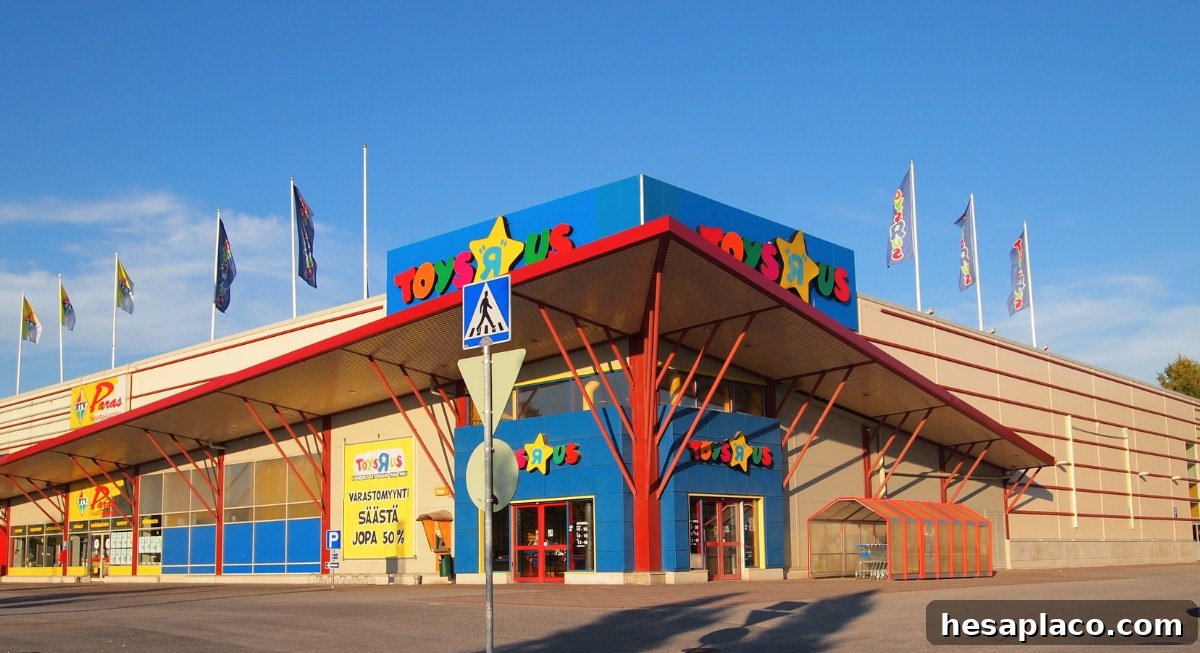
For decades, Toys “R” Us was the destination where children wandered aisles in search of the perfect toy and parents learned what “just one more” could mean. Yet the company that once defined toy retailing ultimately collapsed. What caused this fall—was Amazon the villain, or did a series of strategic mistakes and missed opportunities doom the company?
A Promising Partnership That Unraveled

Image via Canva/Khwanchai Phanthong’s Images
In the late 1990s, as the internet and e-commerce began to reshape retail, Toys “R” Us pursued a bold strategy: partner with Amazon to expand its online reach. The alliance, formalized in 2000, gave Amazon exclusive rights to sell Toys “R” Us products online. Initially this should have strengthened both parties’ positions, but the relationship soon deteriorated.
Amazon’s marketplace model evolved rapidly. Third-party sellers were allowed to list toys on Amazon’s site, introducing direct competition to the Toys “R” Us offering. By outsourcing its online operations, Toys “R” Us not only surrendered control over its digital storefront but also ceded valuable customer data and direct customer relationships to Amazon. Compounding the issue, the contract between the companies left Toys “R” Us poorly equipped to respond.
Legal Battles and a Bitter Breakup
By 2004, tensions escalated into litigation. Toys “R” Us sued Amazon, alleging the company violated their agreement by permitting other sellers to offer toys on its platform, and sought substantial damages. Amazon countered, accusing Toys “R” Us of failing to supply sufficient inventory to satisfy customer demand. The dispute culminated in a 2006 ruling that allowed Toys “R” Us to terminate the contract early.
Severing ties with Amazon was a move toward reclaiming control of the company’s online destiny, but it came late. The online market had already accelerated, and Toys “R” Us found itself lagging behind retailers that had invested more successfully in e-commerce infrastructure and customer experience.
Failing to Innovate as Competitors Closed In

Image via Getty Images/Air Done
Amazon’s rise contributed to Toys “R” Us’s decline, but it was far from the only factor. The retailer struggled to build a competitive e-commerce platform after the split, making only limited and belated efforts to catch up. Meanwhile, established omnichannel competitors like Walmart and Target invested heavily in their online businesses, leveraging scale, logistics, and competitive pricing to capture market share.
These rivals offered convenience and value that appealed to modern shoppers. Toys “R” Us, on the other hand, was burdened by outdated systems and an inability to rapidly innovate, which left it vulnerable as customer expectations shifted toward seamless online shopping experiences and fast, reliable fulfillment.
Financial Strain and Strategic Missteps
Arguably the most significant blow came from financial engineering rather than competitive dynamics alone. In 2005, Toys “R” Us was acquired in a leveraged buyout by private equity firms KKR, Bain Capital, and Vornado for about $6.6 billion. The deal loaded the company with substantial debt, diverting resources that might otherwise have funded technology upgrades, store modernization, and e-commerce growth toward servicing interest payments.
The heavy debt burden constrained management’s ability to invest, experiment, and respond to changing market conditions. Stores deteriorated, customer experience suffered, and the company’s capacity to execute a coherent turnaround strategy was severely limited. That financial pressure—combined with evolving retail economics—helped push Toys “R” Us toward bankruptcy.
What Really Happened

Image via Getty Images/Wild Pixel
So, did Amazon kill Toys “R” Us? Not entirely. Amazon’s expanding marketplace and the early outsourcing of Toys “R” Us’s online business certainly accelerated the company’s challenges, but the collapse was the result of multiple, compounding factors. Strategic errors—especially failure to prioritize a strong digital presence—combined with crippling debt from the leveraged buyout and fierce competition from nimble, well-capitalized retailers created a perfect storm.
Toys “R” Us’s story is a reminder that partnerships and market disruption matter, but so do internal strategy, investment choices, and balance-sheet health. The company’s downfall was not the product of a single villain but the cumulative effect of misjudgments, misaligned incentives, and an inability to adapt quickly enough to a transformed retail landscape.