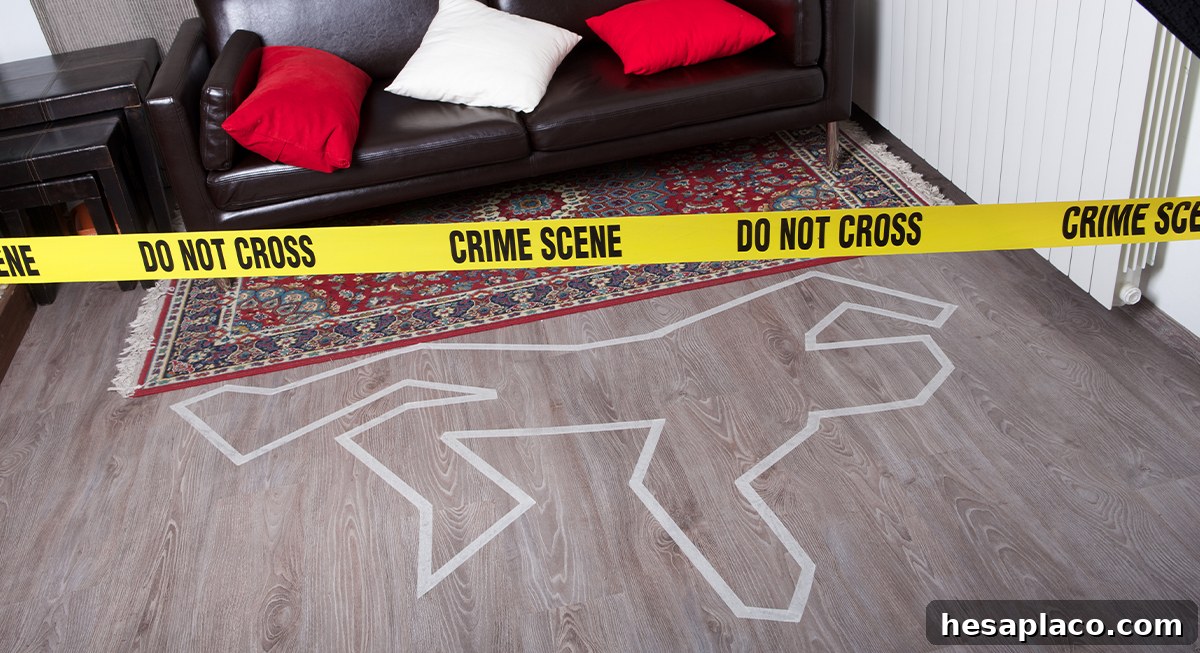
Every home has a history, but some stories are harder to overlook. When a death has occurred on a property, it can raise emotional concerns and, in some states, carry legal implications that affect a sale.
How can you discover whether the house you’re considering has a history you didn’t expect? The answer depends on where you live, how much research you’re willing to do, and how deeply you want to investigate the past.
What the Law Says

Image via Getty Images/AndreyPopov
Disclosure laws vary widely across the United States. In California, sellers must disclose any death in the home that occurred within the last three years. Other states, such as South Dakota and Alaska, make disclosure mandatory only for violent deaths. Some states, including South Carolina, do not require sellers to disclose deaths at all.
Because statutes differ so much, much of the responsibility falls on buyers to ask the right questions. If you ask directly, real estate agents who know about a past death are generally required to answer truthfully. The difficulty is that sellers and agents do not always have complete information, especially for older homes or properties with many previous owners. For that reason, buyer-initiated research often becomes necessary.
The First Steps
Start locally. Neighbors can be surprisingly informative: long-term residents may remember families, incidents, or news that never made it into official records. Visiting and speaking with neighbors can feel awkward, but it’s often one of the fastest ways to learn about a property’s history.
Next, use online searches. Search the exact address in quotation marks to locate news articles, archived listings, or other references tied to the property. Don’t limit yourself to the first page of results—older stories can be buried in archives. Social media and neighborhood forums may also reveal local discussions or recollections that won’t appear in formal records.
If web searches come up short, consult public records. Death certificates and vital records in the United States typically indicate where a person died, and local vital records offices maintain this information. Libraries and historical societies often keep newspaper archives that can show whether a death at the home was reported. Although many collections are digitized, some searches still require examining microfilm or physical clippings.
When you know the names of previous owners, cross-check obituaries to see if the place of death matches the property address. This work can require patience, but it frequently uncovers important details.
Paid Tools and Services

Image via Getty Images/AndreyPopov
Several websites and services specialize in uncovering whether a death, fire, or other notable event occurred at an address. For example, some platforms offer individual reports for a modest fee that list deaths and other incidents connected to a property.
Other services provide broader property histories, including ownership records and neighborhood data, typically for a monthly subscription. Crowd-sourced sites let users share stories and records about properties with unusual or tragic pasts; while these are unofficial, they can provide useful leads to verify through more authoritative sources.
If you want absolute certainty and are willing to pay for it, hire a private investigator. Investigators use public records, paid databases, and traditional investigative methods to build a detailed history of a property. This option is pricier than a quick online search, but it’s the most thorough approach when the home’s history could be a dealbreaker.
The Price of a Tragic Past
For some buyers, knowing whether a death occurred in a house is a matter of personal comfort. Moving into a home with a tragic past can affect how you feel about living there, regardless of any price reduction or the property’s size and amenities. Transparency about a property’s history also matters when assessing its market value.
Estimates from real estate professionals suggest that non-natural deaths—such as homicide or suicide—can reduce a home’s value, in some cases by 10 to 25 percent. By contrast, deaths from natural causes typically have little or no measurable effect on price or resale potential.
Ultimately, whether a past death matters depends on personal preferences, local disclosure laws, and how comfortable you feel living in a space with that history. Doing your due diligence—asking direct questions, searching public records, consulting neighbors, and using paid services if necessary—will help you make an informed decision before you commit to buying.