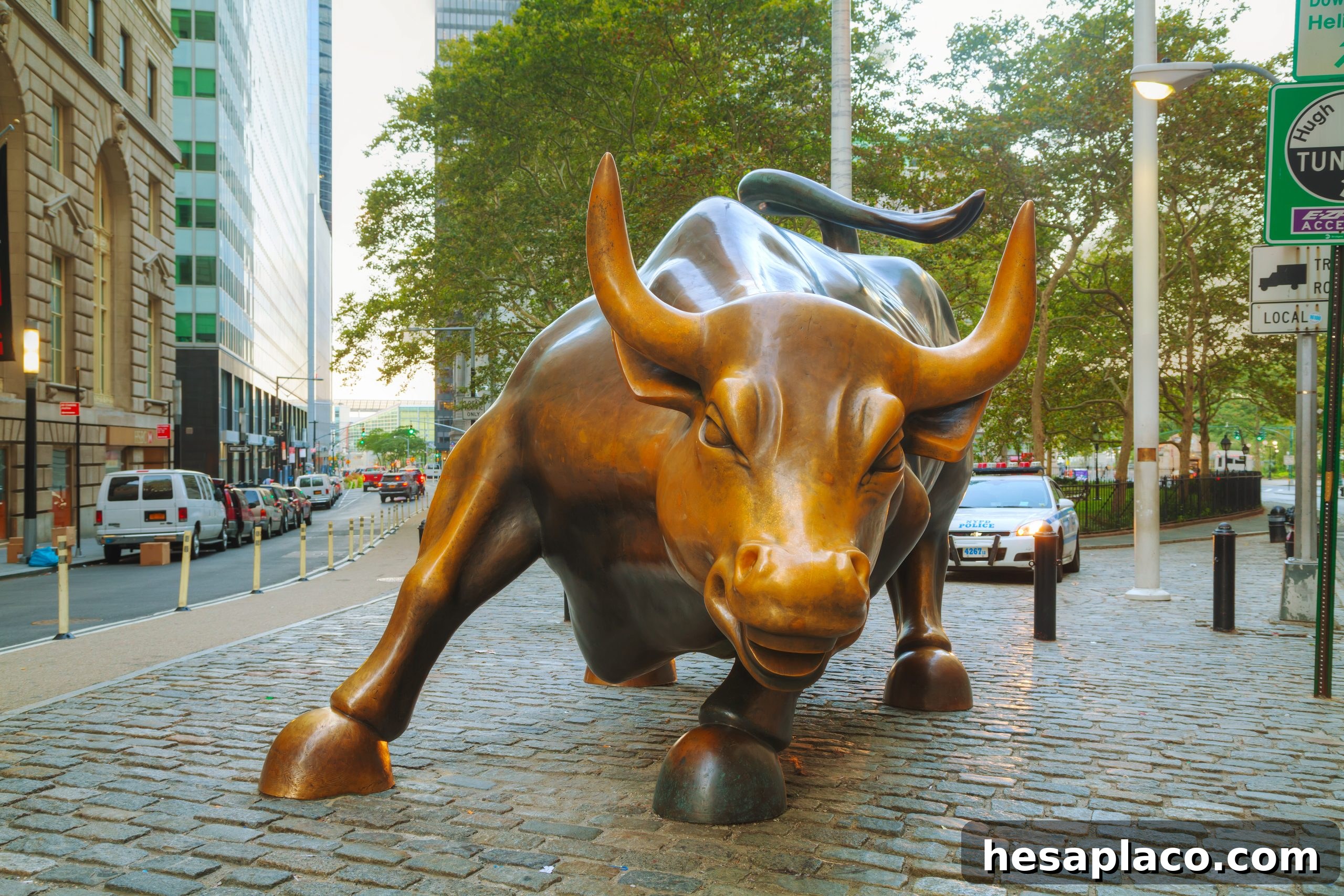
Market volatility almost always has an explanation, and today a large part of it stems from policy risk. Portfolio managers such as Mohit Mittal of PIMCO and Kevin Mahn of Hennion & Walsh point to tariffs and shifting government strategies as key drivers. When deadlines loom—like a scheduled tariff date—markets begin to brace for abrupt moves.
Stocks, bonds, and currencies become more sensitive to headlines, and investors face a bumpier ride. Traders must prepare for a wide range of outcomes—from no tariffs at all to broad, sweeping measures—each with distinct market consequences. That uncertainty keeps volatility elevated.
Beyond trade disputes, investors are constantly watching inflation readings, employment reports, and Federal Reserve rate decisions. Market participants have grown accustomed to sudden moves following Fed meetings and major data releases. Rather than establishing a steady upward or downward trend, markets often enter a prolonged back-and-forth pattern that can stretch for weeks.
The Wall of Cash That May Not Move
Trillions of dollars currently sit in money market funds, which have recently yielded roughly 4.3%—an attractive return for an instrument perceived as nearly risk-free. Some observers expect that when the Federal Reserve eventually cuts rates, a portion of the approximately $7.6 trillion in these funds will migrate into stocks and bonds. History suggests, however, that such shifts are typically modest. Money market balances usually decline sharply only when rates fall to near-zero levels during major crises. Even if yields ease to around 3%, money market funds would still offer substantially better returns than bank deposits, which commonly pay around 0.5%.
That dynamic means much of this cash is likely to remain put. Analysts estimate perhaps 10% might flow into riskier assets, but since roughly 60% of money market balances belong to corporations and institutions, the bulk will not move simply because interest rates slip. This reality weakens the popular “wall of cash” narrative that predicts a massive, rapid inflow into markets. Instead, the persistent size of money market funds underscores how investor incentives and behavior shape volatility.
Volatility Is Here to Stay
Volatility measures how far prices deviate from their average and is commonly tracked via standard deviation or the VIX, often called the “fear index.” A rising VIX signals that investors expect larger price swings ahead, which matters for asset pricing—particularly in options markets. Higher volatility raises option premiums because it increases the chance that contracts will expire in the money.
For long-term investors, volatility can be unnerving. For traders, it often presents opportunities. Volatility also tends to revert toward its long-term average, meaning quiet stretches are frequently followed by more active periods. That cyclical nature makes volatility a permanent feature of markets rather than a temporary problem that will disappear.
With trade risks, potential Fed rate cuts on the horizon, and a substantial pool of cash that likely won’t redeploy en masse, markets seem poised for continued ups and downs. Investors hoping for a prolonged calm are likely to be disappointed. Volatility is woven into how pricing and risk-taking function across the financial system. As Mohit Mittal recommends, investors can use market dislocations to buy high-quality bonds, while some equity investors treat sudden drops as buying opportunities. The prudent approach is not to wait for volatility to vanish, but to plan for it and use it to your advantage when appropriate.