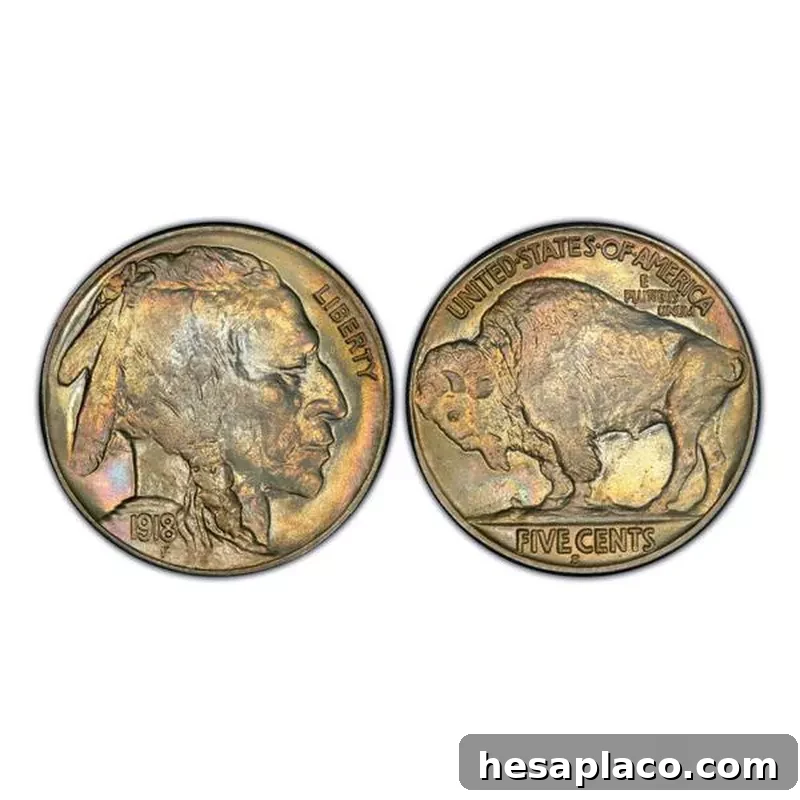
The first official U.S. five-cent piece was authorized in 1792, but the nickel as we know it did not enter circulation until 1866. On May 16, 1866, Congress approved a new five-cent coin composed of 25% nickel and 75% copper.
Over the following years the Mint struck both nickel five-cent pieces and silver half dimes, eventually discontinuing the half dimes and leaving the nickel as the nation’s five-cent coin. Four primary nickel designs have circulated: the Shield, Liberty Head (often called the Liberty), the Buffalo (Indian head on the obverse and a buffalo on the reverse), and the Jefferson. Minor variations appear among early issues; in 2004–2005 several designs honored the Lewis & Clark expedition, and the Jefferson nickel’s obverse received an update in 2006.
The market value of collectible nickels depends on rarity, condition, historical significance and collector demand. Two major third-party grading services—Professional Coin Grading Service (PCGS) and Numismatic Guaranty Corporation (NGC)—use the 70-point Sheldon Scale to assign numeric grades. Coins graded 60 and above are considered mint state; gem-quality examples typically score 66 or higher and show excellent strike, luster and minimal surface marks.
If you’re wondering which nickels are the most valuable, the list that follows highlights 20 of the rarest and most sought-after five-cent pieces. These are coins that collectors prize and that have fetched significant sums at auction.
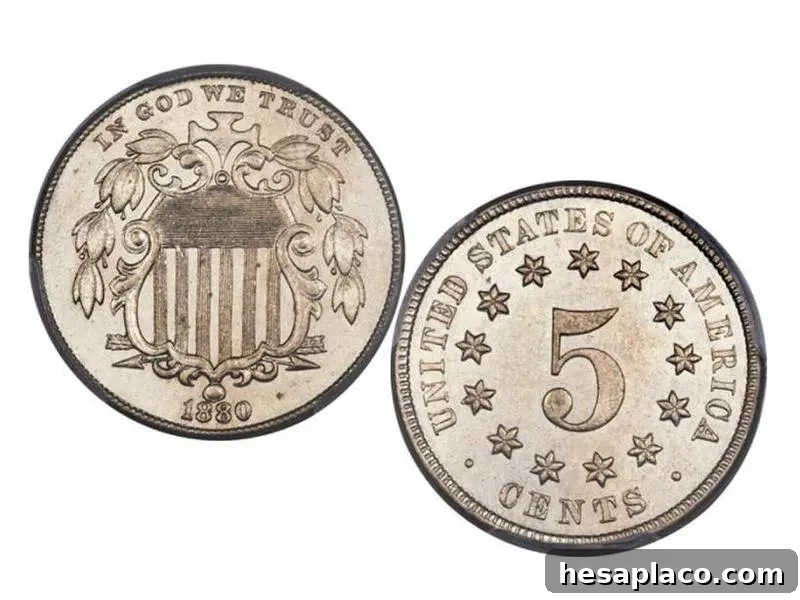
20. 1880 Shield Nickel
ngccoin.com
Sold at auction: $88,125
Only about 16,000 Shield nickels were struck in 1880, and surviving examples are extremely scarce—estimates place known survivors at roughly 100–150 pieces. Certain diagnostic features indicate circulation strikes rather than proofs. Gem-quality examples are exceptionally rare; only a handful grade higher than most survivors.
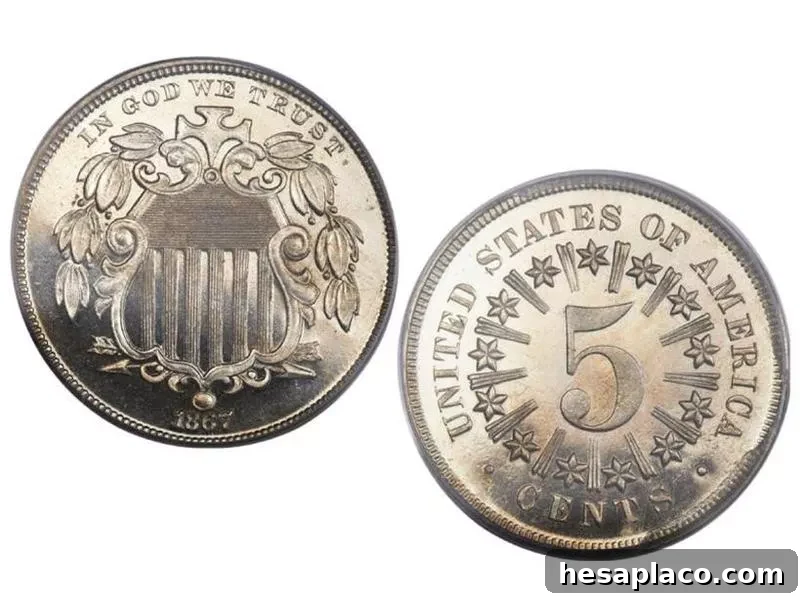
19. 1867 Rays Shield Cameo Nickel
coins.ha.com
Sold at auction: $109,250
The 1867 Rays Shield proof was struck using one of three obverse dies; a design problem led to removal of the rays later that year. Original proofs are scarce, and those with strong frosted devices and mirrorlike fields receive the cameo designation due to pronounced contrast between design and background.
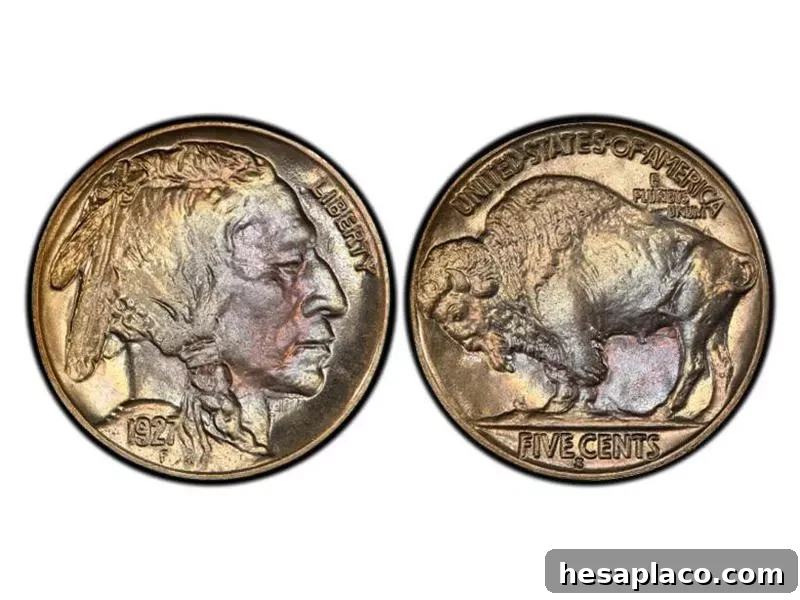
18. 1927-S Buffalo Nickel
pcgs.com
Sold at auction: $125,350
While the 1927-S Buffalo is common in worn grades, mint-state examples are rare; in gem condition this date ranks among the scarcest Buffalo nickels, with only a few years being rarer.
17. 1918-S Buffalo Nickel
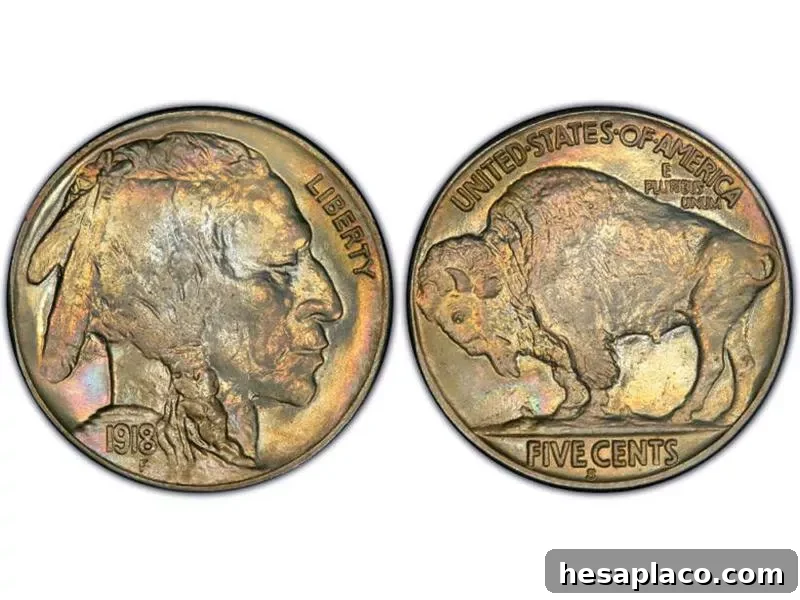
pcgs.com
Sold at auction: $125,350
The 1918-S is scarce in any condition and particularly rare in mint state. A gem-quality 1918-S Buffalo is among the rarest regular-strike Buffalos dated between 1913 and 1919.
16. 1867 Rays Cameo Proof Shield Nickel
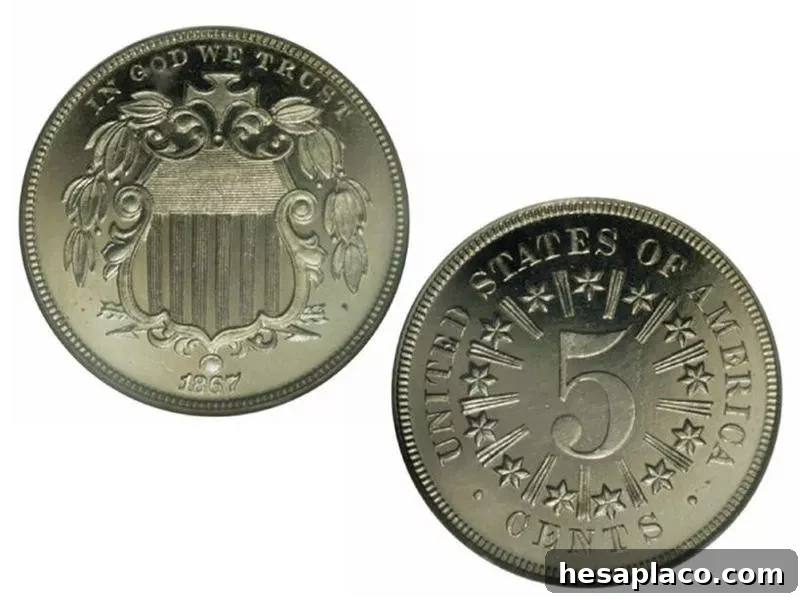
coins.ha.com
Sold at auction: $132,250
Original 1867 Rays proofs were likely struck on Feb. 8, 1867; fewer than 10 of the initial 25 proof strikes are believed to survive. Later restrikes exist, but the earliest originals with strong frosted devices and mirrored fields are the most desirable.
15. 1917-S Buffalo Nickel
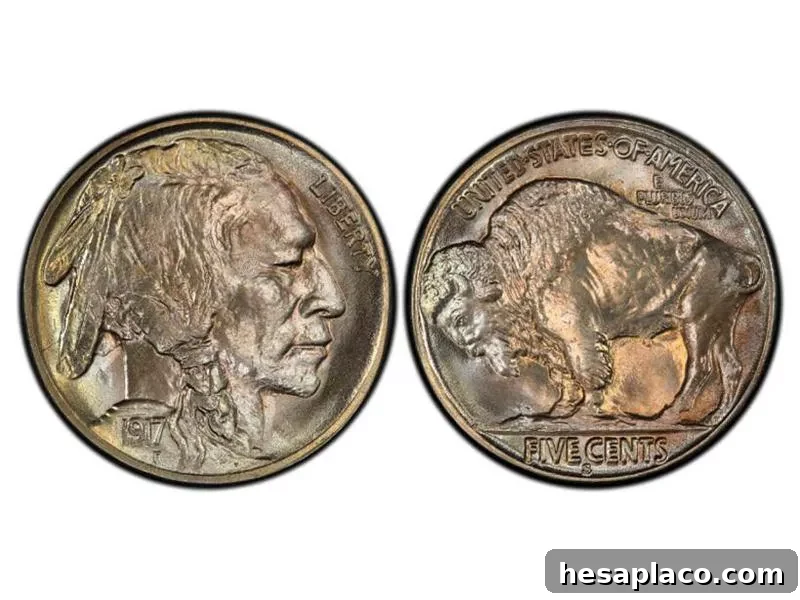
pcgs.com
Sold at auction: $138,000
Many 1917-S examples show weak strikes and die wear. The finest certified specimens, however, exhibit sharply struck details and minimal die erosion, making them highly desirable to specialists.
14. 1920-D Regular Strike Buffalo Nickel
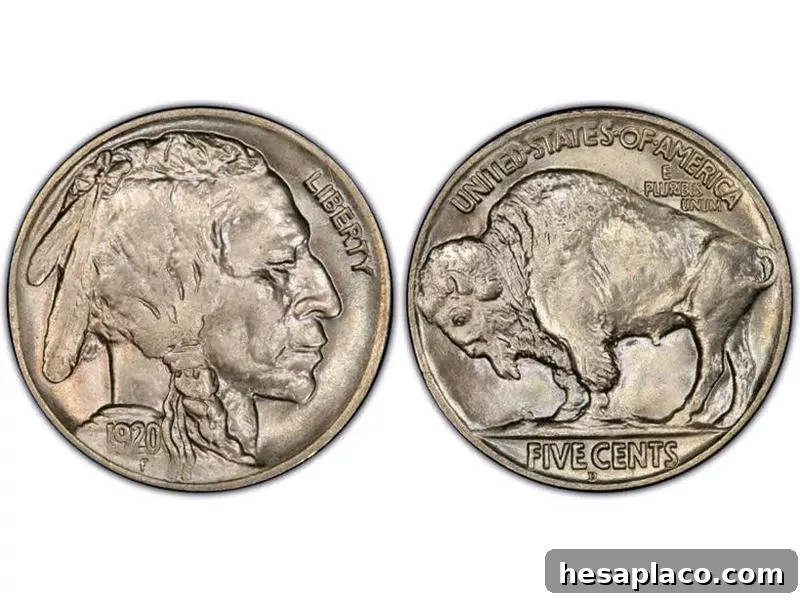
pcgs.com
Sold at auction: $138,000
Although Denver and San Francisco struck roughly 9.5 million nickels each in 1920, mint-state survivors from Denver are extremely scarce—estimates place surviving mint-state examples at only about 80 pieces—making the 1920-D a sought-after date in high grades.
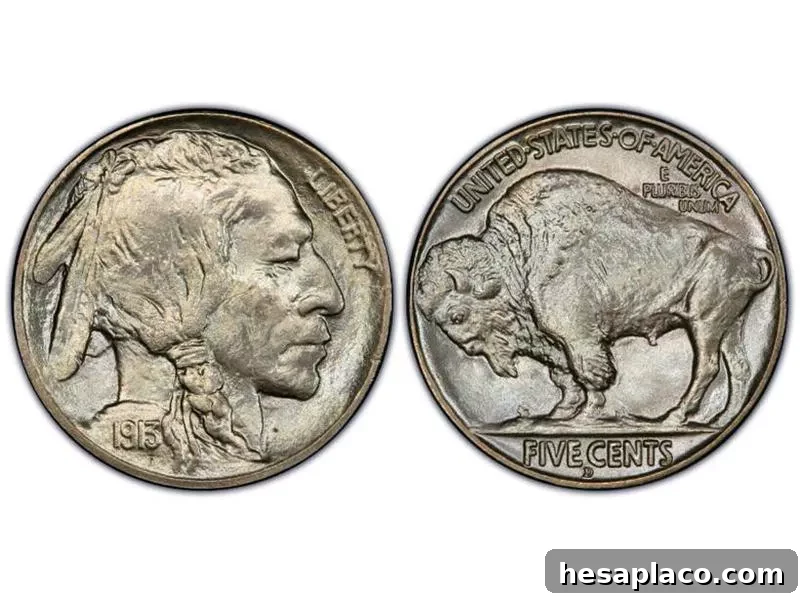
13. 1913-D Buffalo Nickel — Type 2
pcgs.com
Sold at auction: $143,750
Type 2 Buffalo nickels from 1913 are low-mintage issues from Denver and San Francisco. The 1913-D Type 2 is difficult to find in any condition, and high-grade examples rank among the most desirable early Buffalo nickels.
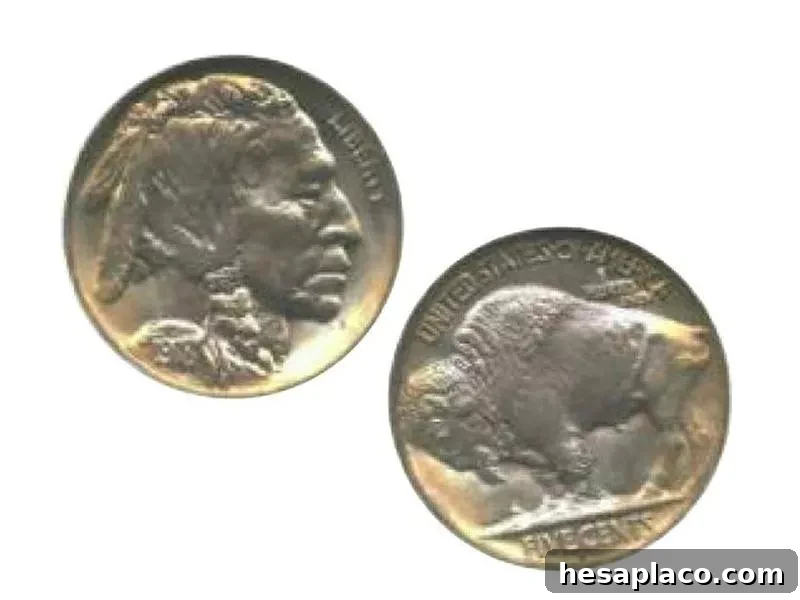
12. 1918/7-D Buffalo Nickel
coins.ha.com
Sold at auction: $155,250
This attractive overdate arises from a late-1917 hubbing error: a die previously impressed with “1917” received an additional impression of “1918,” producing the 1918/7 overdate. Mint-state survivors are scarce; the finest pieces display only minor imperfections and strong eye appeal.
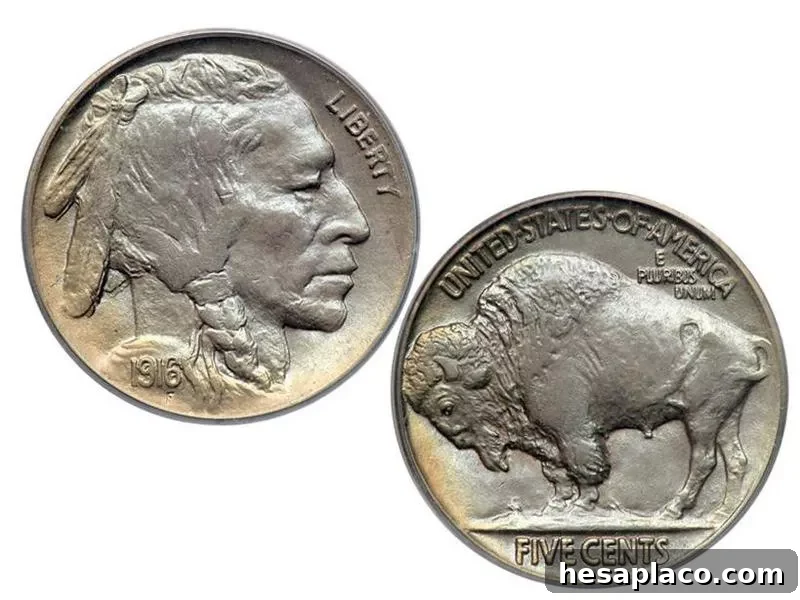
11. 1916 Doubled Die Obverse Nickel
goldbergauctions.com
Sold at auction: $163,000
Popular with specialists, the 1916 doubled die obverse nickel is prized for obvious doubling on the obverse elements. High-grade specimens rank among the finest known examples of the variety.
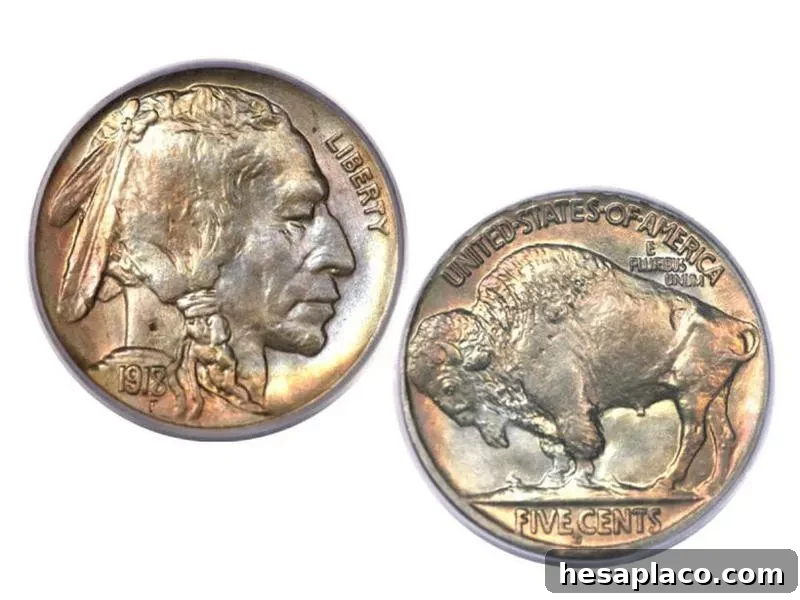
10. 1918/7-D Buffalo Nickel
coins.ha.com
Sold at auction: $161,000
Another outstanding 1918/7-D example, this coin ranks among the finest known for the issue. Minor carbon spots or small marks separate it from true gem status, but it remains a top-tier example.
9. 1880 Shield Nickel
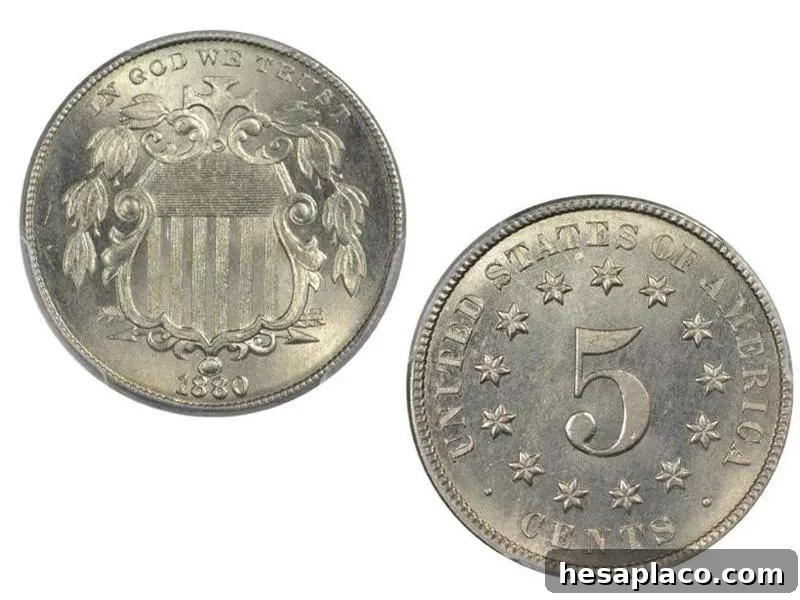
eBay
Sold on eBay: $175,000
With one of the lowest Shield nickel mintages at roughly 16,000 pieces, mint-condition 1880 Shield nickels are exceptionally rare. Only a couple of specimens achieve the highest known grades for the date.
8. 1916 Doubled Die Obverse Buffalo Nickel
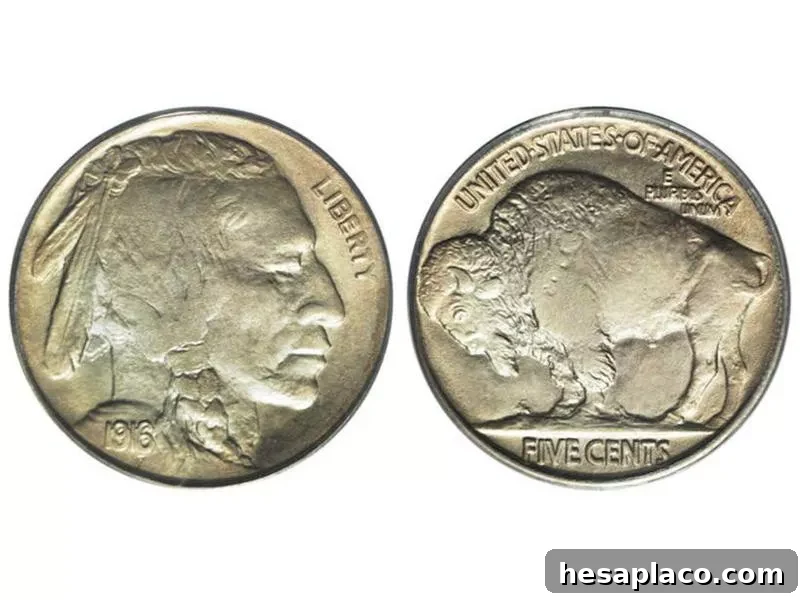
coins.ha.com
Sold at auction: $264,500
Only a small number of 1916 doubled-die Buffalo nickels remain in circulation condition—perhaps 100–150—and even fewer survive in mint state, with under 10 known. Despite a minor corrosion mark on the obverse, premium examples remain highly collectible.
7. 1916-D Buffalo Nickel — Doubled Die Obverse
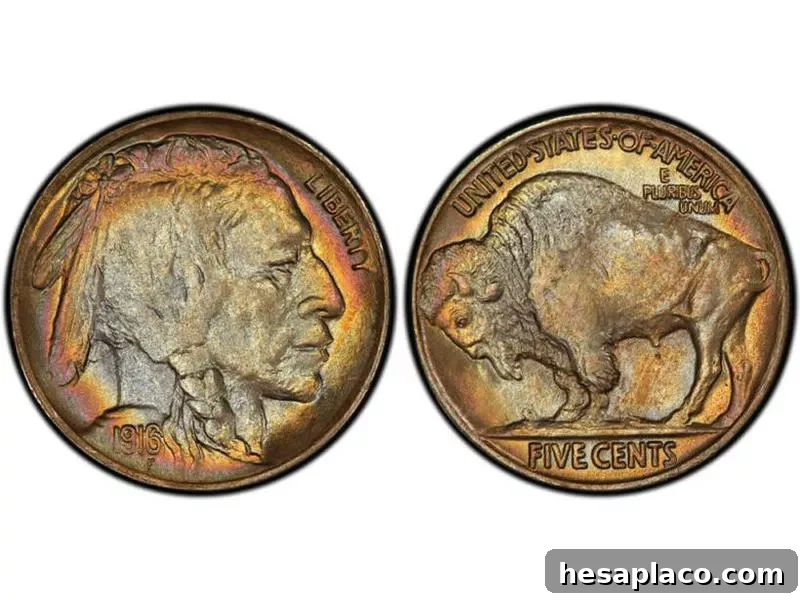
pcgs.com
Sold at auction: $281,750
About 200 examples of this doubled-die variety are known, and fewer than 15 are in mint condition. The doubling is visible on the date and on the Indian chief’s lip and chin, making it a dramatic and sought-after variety.
6. 1926-S Regular Strike Buffalo Nickel
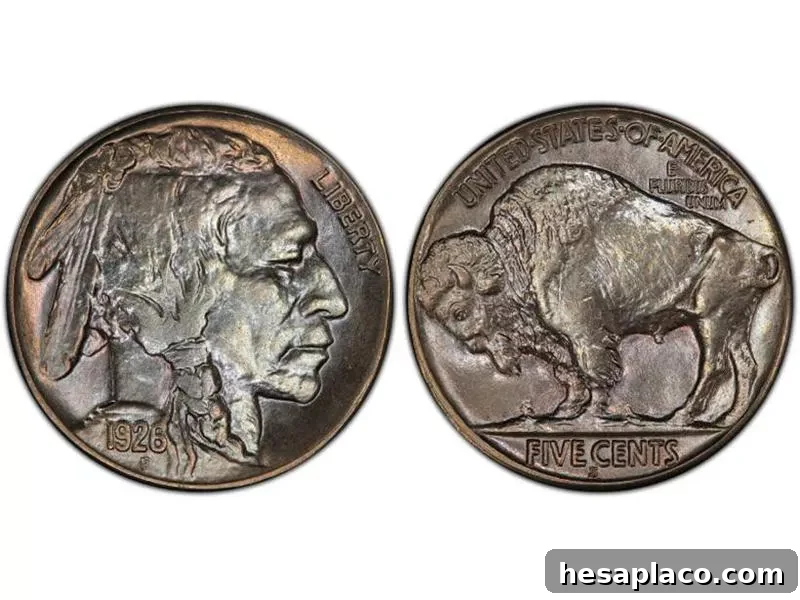
pcgs.com
Sold at auction: $322,000
The 1926-S is the rarest non-variety Buffalo nickel and scarce even in circulated grades. Only 970,000 were struck—far fewer than most other years—and only a very small number (around 17) are certified in gem condition, which drives strong collector demand.
5. 1918/7-D Buffalo Nickel
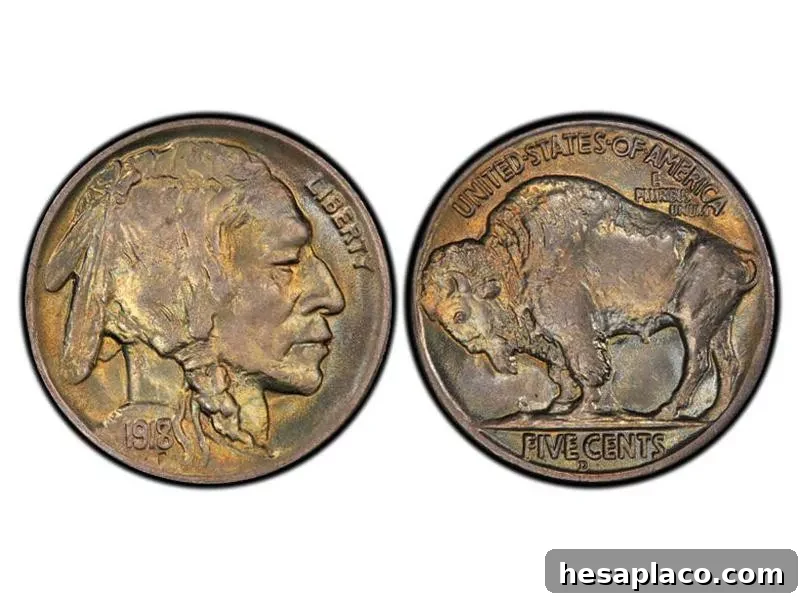
pcgs.com
Sold at auction: $350,750
Produced due to hubbing errors during a wartime rush to strike coins, the 1918/7-D overdate likely had a mintage in the hundreds of thousands, but surviving mint-state examples number only in the dozens. High-grade survivors—often with outstanding surfaces—are especially prized.
4. 1964 Jefferson Mirror Brockage on Reverse
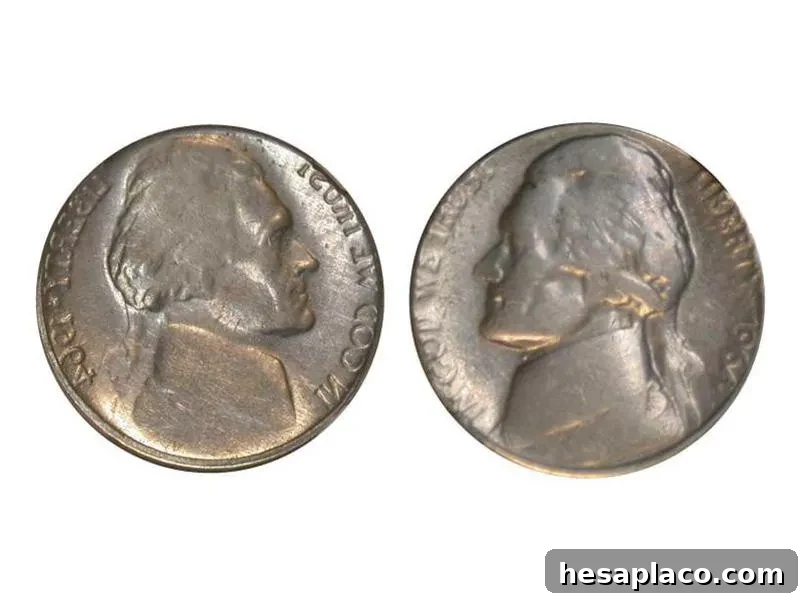
eBay
Sold on eBay: $1,150,000
Often described as a “two-headed” coin, this rare piece is actually a brockage error: a mirror-image impression of a coin was struck onto the opposite side of a blank, producing an impression on both faces. Only a tiny number of such examples exist, and the uniqueness of this specimen made it highly valuable.
3. 1913 Liberty Head Nickel
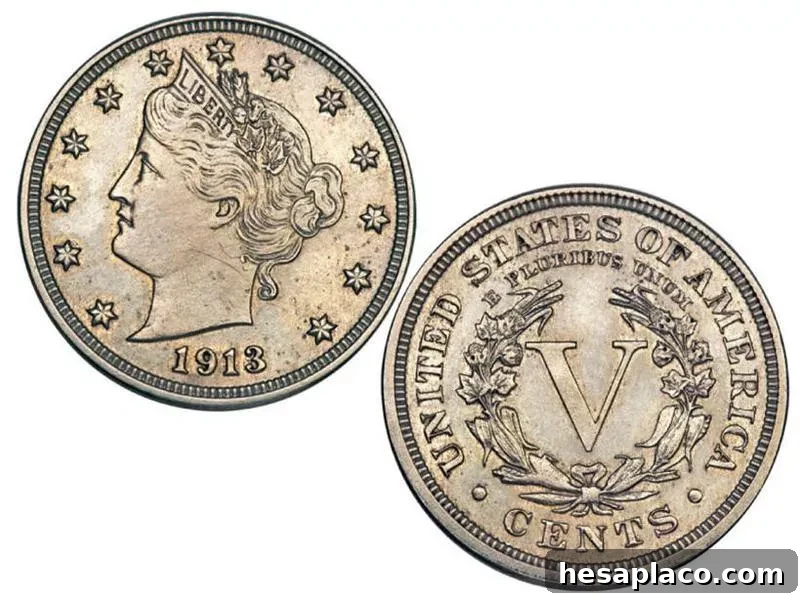
coins.ha.com
Sold at auction: $3,172,500
The 1913 Liberty Head nickel is legendary. Only five examples of this unauthorized design are known in uncirculated condition, and each has a storied provenance. The Walton specimen is among the survivors and, like the other examples, has passed through many hands over the last century. These coins are cornerstone rarities for serious collectors.
2. 1913 Liberty Head Nickel
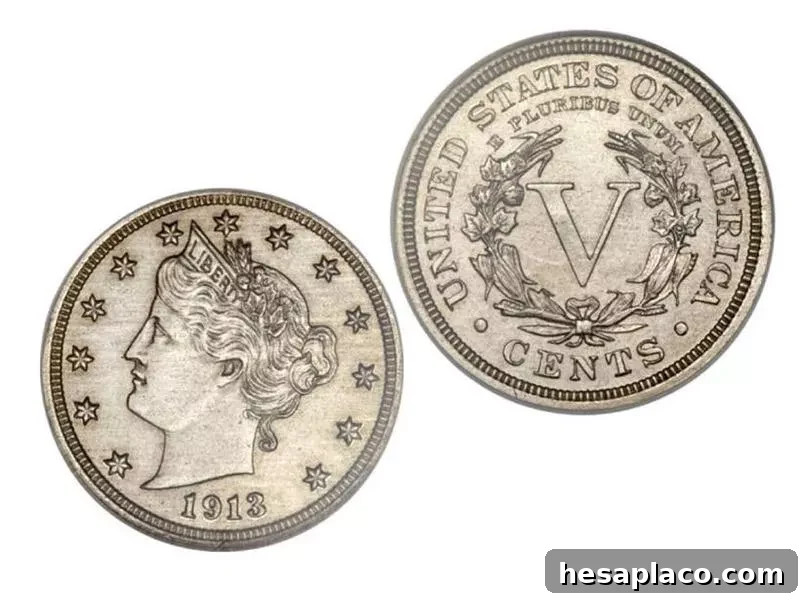
ngccoin.com
Sold at auction: $3,737,500
Another of the five known 1913 Liberty Head nickels, this specimen—often called the Olsen or a named specimen depending on provenance—has changed ownership multiple times and even passed through royal collections. Each of the five pieces is unique, which contributes to their extraordinary market values.
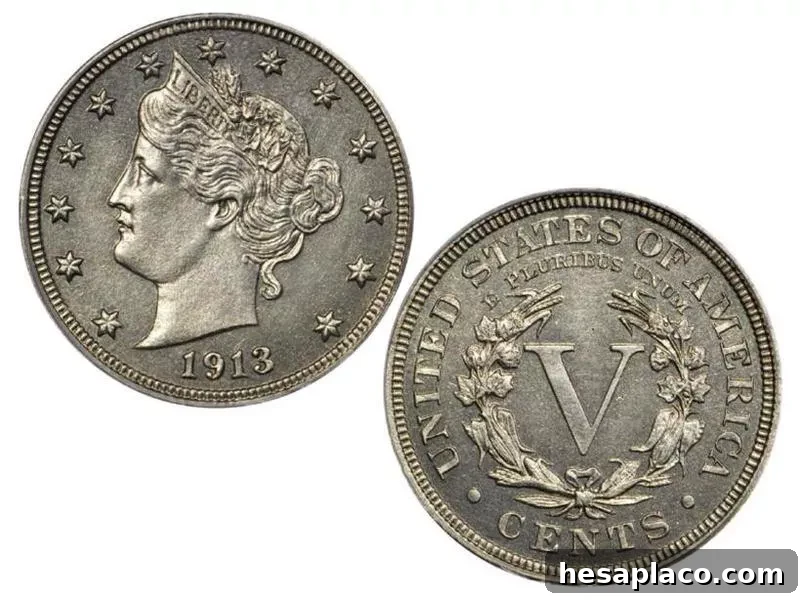
1. 1913 Liberty Head Nickel
auctions.stacksbowers.com
Sold at auction: $4,560,000
The most valuable of the known 1913 Liberty Head nickels, often referred to by the name of its most famous owner (for example the Eliasberg specimen), is regarded as the finest of the five surviving uncirculated examples. All five were in the hands of collector Samuel W. Brown by 1920 and later became part of Colonel E.H.R. Green’s collection; they have since been dispersed. Two of the five are now in public institutions, and the remaining pieces are the crown jewels of private nickel collections.
Summary: Rare dates, low mintages, dramatic die varieties and exceptional preservation are the key drivers of value in nickel collecting. From Shield and early Liberty Head rarities to prized Buffalo varieties and unique modern errors, these coins represent some of the most sought-after items in American numismatics.